Missouri
These ballot questions, including abortion access, certified for November ballot


Amendments and propositions on sports gambling, sheriffs retirement fund, voting rights and minimum wage also on ballot.
Four amendments to Missouri’s constitution and one proposition on minimum wage were certified Tuesday for the November ballot by Secretary of State Jay Ashcroft.
This includes one amendment that could eliminate Missouri’s abortion ban and enshrine abortion and contraception access.
More than 380,000 signatures were gathered in an initiative petition and were determined as sufficient in six of Missouri’s eight congressional districts. Republican lawmakers failed to pass initiative petition rule changes likely aimed at this issue during the Missouri General Assembly regular session earlier this year.
With the certification of the abortion access amendment, it likely takes the wind out of Republican sails for changing initiative petition rules next year, said Peverill Squire, professor of political science and Hicks and Martha Griffiths Chair in American Political Institutions at the University of Missouri, last month.
The abortion access question could help boost Democratic candidates in the November election, added Ben Warner, MU associate professor in the Department of Communication and co-director of the university’s Political Communication Institute.
“(Abortion rights) is a winner for Democrats if it is what voters have in mind when they go to the ballot box all over the country. It is unclear whether that will be top of mind for voters. That is why I would expect Democrats to do everything to make it top of mind,” Warner said last month.
The Amendment 3 ballot question will ask for a Yes or No vote to amend the Missouri Constitution to:
- establish a right to make decisions about reproductive health care, including abortion and contraceptives, with any governmental interference of that right presumed invalid;
- remove Missouri’s ban on abortion;
- allow regulation of reproductive health care to improve or maintain the health of the patient;
- require the government not to discriminate, in government programs, funding, and other activities, against persons providing or obtaining reproductive health care; and
- allow abortion to be restricted or banned after Fetal Viability except to protect the life or health of the woman?
Missouri Secretary of State Jay Ashcroft in ballot information online notes local governmental entities estimate costs of at least $51,000 annually in reduced tax revenues and significant state revenue losses. A full fiscal note explaining the the estimated losses was not yet available.
Other ballot questions
Ballot amendment questions also were certified by Ashcroft on sports gambling (Amendment 2), sheriffs retirement fund (Amendment 6), voting rights (Amendment 7), and a proposition on minimum wage (Proposition A). The only one that failed certification was an Osage River gambling boat license amendment.
Amendment 2 depending on how the vote goes in November could allow sports betting, puts an age limit on betting, imposes taxes and license fees on sports betting, and allows the Missouri General assembly to enact laws consistent with the amendment. There is an estimated one-time cost of $660,000 and annual costs of $5.2 million. Initial license fees are estimated at $11.75 million and betting revenues are estimated anywhere from $0 to $28.9 million annually for the state. Local government revenue estimates were not available. Advocates say this will boost education funding.
Amendment 6 reestablishes a retirement fund for county sheriffs, county prosecutors and circuit court attorneys that had used ticket fines and court costs as its funding source. A state law from 1983 originally set up the fund, but it was deemed unconstitutional in 2021. Two bills signed in 2023 by Gov. Parson set up the Sheriff’s Retirement System, but a person elected Sheriff has to serve two four-year terms before they are vested by it and must contribute 5% toward their own pension. Those already retired could lose out on their pension under the old fund, based on statements made by Boone County Sheriff Dwayne Carey during a primary election forum last month. Carey sits on the Missouri Sheriffs retirement board.
Amendment 7 makes it unlawful for non U.S. citizens to vote in elections, which already is state law; prohibits ranked-choice voting; requires whoever has the most votes winning the party nomination during a primary election that their name is what is on the ballot for the general election, which already is done in Missouri. Ranked-choice voting is an electoral system in which voters rank candidates by preference on their ballots, per Ballotpedia. There is an exception for the final part of the amendment for municipal elections where more than one candidate may fill a seat, such as at-large alder persons, council members or trustees.
The proposition could raise Missouri minimum wage by $1.25 each year on Jan. 1 until 2026, bringing the state minimum wage to $15. The statutory proposition also requires employers to provide one hour of paid sick leave for every thirty hours worked. State governmental entities estimate additional one-time costs of $0 to $53,000, and ongoing costs ranging from $0 to at least $256,000 per year by 2027. State and local government tax revenue changes are unknown and dependent on business decisions.
Charles Dunlap covers local government, community stories and other general subjects for the Tribune. You can reach him at cdunlap@columbiatribune.com or @CD_CDT on X, formerly Twitter. Subscribe to support vital local journalism.



Former Missouri Gov. Jeremiah “Jay” Nixon followed in his ancestor’s footsteps, 250 years to the day.
On July 8, 1776, Colonel John Nixon was the first person to publicly read the Declaration of Independence from the steps of the Pennsylvania State House, now Independence Hall.
Jay Nixon, along with other Missouri officials from local, state and national offices, participated in a semiquincentennial celebration at the Historical Greene County Courthouse on July 8, 2026.
“As we commemorate 250 years of American independence, may we remember not only the courage of those who signed the declaration, but also our responsibility to preserve the freedoms they declare,” said Connie Yen, director of the Greene County Archives and Records Center.
While the reading of the Declaration of Independence was the main event, patriotic music from the Salvation Army Band, Springfield Sound, the Patriotic Chorale — as well as the national anthem sung by former U.S. Attorney John Ashcroft and former judge and representative Max Bacon — rang throughout the courthouse’s rotunda, which was packed with people. The music itself, Ashcroft said, was a metaphor for the nation.
“There is something charming about America that doesn’t require that we be uniform. There’s a difference between unity and uniformity. As a matter of fact, you can’t have harmony if you only have one note. You have to sing different notes for things to be harmonic and it’s much more beautiful,” he said. “Maybe America is America not because of uniformity or everybody being in unison, but America may be America because we have disparity, but we’re in harmony. We believe in unity, not uniformity.”
Before reading the Declaration of Independence, Nixon shared part of a speech he gave at Fulton’s Westminster College in August 2025, where he encouraged people to “resist apathy with action” through involvement with civic and faith organizations, and by voting. Like others, he emphasized diversity as the strength of America.
“(We’re) a nation of immigrants. Many of our ancestors fled poverty, injustice and tyranny to build something better. We are the great-great-great-grandchildren of slaves, and those who enslaved them; the first families who inhabited these lands, and those who drove them from it,” Nixon said. “A nation of scrappy strivers stitched together by our ideals, marked by original sins, but redeemed by the courage and sacrifice that saved us from fascism and unleashed freedom and prosperity — the envy of the world. That is the true story we all need to tell, the promise we made to each other that we work every day to keep.”
The reading was followed by an ice cream social, co-hosted by the Greene County Democratic and Republican women’s clubs.
Missouri
UPDATE: Suspect wanted in Kansas captured near Columbia; Missouri State Highway Patrol aircraft plays key role | 93.9 The Eagle

The Missouri State Highway Patrol says one of its planes played a key role in Tuesday morning’s capture on I-70 near Columbia of a Kansas suspect wanted for child endangerment.
Missouri state troopers say they were on patrol near a rest area on eastbound I-70 in Cooper County, when they located a Dodge Durango wanted for an alleged incident in Topeka. Troopers say the suspect drove off after seeing troopers and that the Patrol plane was used to avoid a pursuit.
Troopers say they were able to get in position after the plane’s pilot located the vehicle and that the Patrol deployed stop sticks and safely deflated the suspect’s tires.
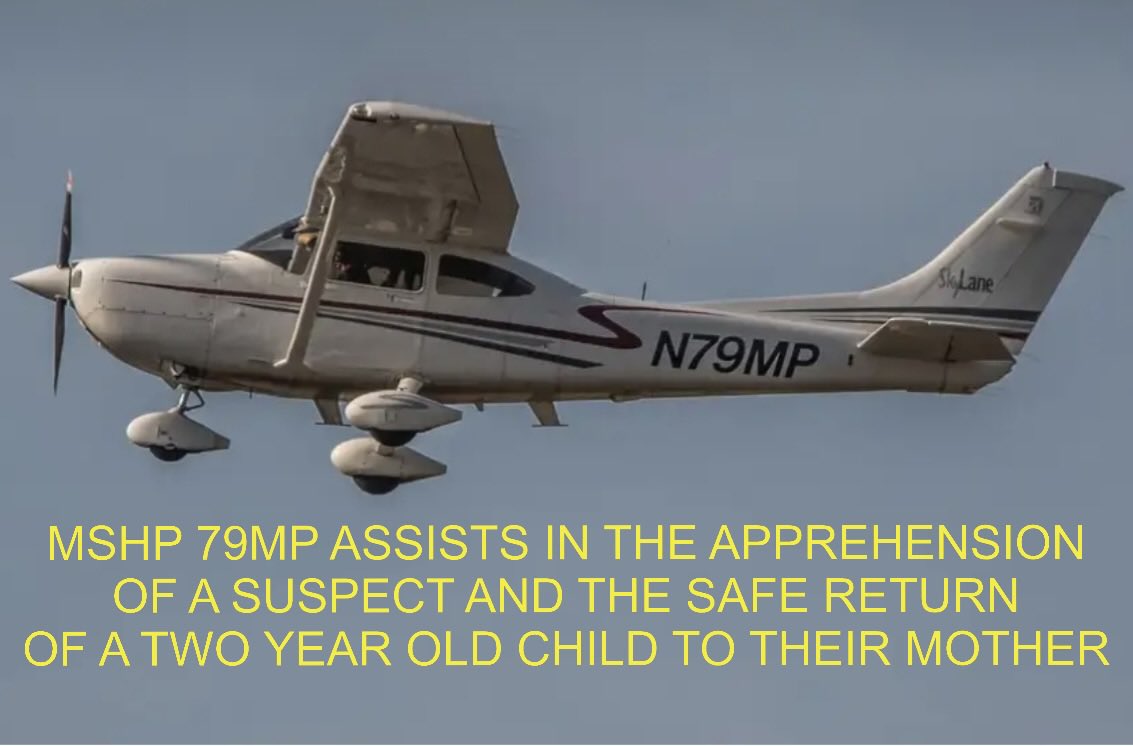
The Highway Patrol says the suspect was captured without incident and that the two-year-old child, who was unharmed, has been reunited with their mother.
The Missouri Lottery offers several draw games for those aiming to win big.
Here’s a look at July 7, 2026, results for each game:
Winning Mega Millions numbers from July 7 drawing
02-31-35-36-63, Mega Ball: 12
Check Mega Millions payouts and previous drawings here.
Winning Pick 3 numbers from July 7 drawing
Midday: 1-3-9
Midday Wild: 5
Evening: 8-5-4
Evening Wild: 0
Check Pick 3 payouts and previous drawings here.
Winning Pick 4 numbers from July 7 drawing
Midday: 8-1-4-4
Midday Wild: 0
Evening: 2-6-7-0
Evening Wild: 1
Check Pick 4 payouts and previous drawings here.
Winning Cash Pop numbers from July 7 drawing
Early Bird: 09
Morning: 08
Matinee: 15
Prime Time: 01
Night Owl: 10
Check Cash Pop payouts and previous drawings here.
Winning Show Me Cash numbers from July 7 drawing
12-16-17-28-31
Check Show Me Cash payouts and previous drawings here.
Feeling lucky? Explore the latest lottery news & results
Are you a winner? Here’s how to claim your lottery prize
All Missouri Lottery retailers can redeem prizes up to $600. For prizes over $600, winners have the option to submit their claim by mail or in person at one of Missouri Lottery’s regional offices, by appointment only.
To claim by mail, complete a Missouri Lottery winner claim form, sign your winning ticket, and include a copy of your government-issued photo ID along with a completed IRS Form W-9. Ensure your name, address, telephone number and signature are on the back of your ticket. Claims should be mailed to:
Ticket Redemption
Missouri Lottery
P.O. Box 7777
Jefferson City, MO 65102-7777
For in-person claims, visit the Missouri Lottery Headquarters in Jefferson City or one of the regional offices in Kansas City, Springfield or St. Louis. Be sure to call ahead to verify hours and check if an appointment is required.
For additional instructions or to download the claim form, visit the Missouri Lottery prize claim page.
When are the Missouri Lottery drawings held?
- Powerball: 9:59 p.m. Monday, Wednesday and Saturday.
- Mega Millions: 10 p.m. Tuesday and Friday.
- Pick 3: 12:45 p.m. (Midday) and 8:59 p.m. (Evening) daily.
- Pick 4: 12:45 p.m. (Midday) and 8:59 p.m. (Evening) daily.
- Cash4Life: 8 p.m. daily.
- Cash Pop: 8 a.m. (Early Bird), 11 a.m. (Late Morning), 3 p.m. (Matinee), 7 p.m. (Prime Time) and 11 p.m. (Night Owl) daily.
- Show Me Cash: 8:59 p.m. daily.
- Lotto: 8:59 p.m. Wednesday and Saturday.
- Powerball Double Play: 9:59 p.m. Monday, Wednesday and Saturday.
This results page was generated automatically using information from TinBu and a template written and reviewed by a Missouri editor. You can send feedback using this form.
-

 Nevada32 seconds ago
Odd and beguiling ‘Rose of Nevada’ will haunt viewers
-

 New Hampshire4 minutes ago
New Hampshire Gov. signs law requiring schools to out trans kids
-

 New Jersey9 minutes ago
What to know about Freedom Fuel Network as Trump urges cheaper gas prices in Pennsylvania, NJ
-
North Carolina13 minutes ago
NC Lottery Powerball, Pick 3 Day results for July 8, 2026
-

 New Mexico16 minutes ago
Wild rat in New Mexico tests positive for the plague after 4 confirmed cases in dogs
-

 North Dakota24 minutes ago
Today in History, 1975: Earthquake rattles portions of Minnesota and the Dakotas, including Fargo-Moorhead
-

 Ohio31 minutes ago
Is another team ready to take over the top of the Big Ten from Indiana and Ohio State?
-

 Oklahoma34 minutes ago
Kip Lewis reveals why he returned to Oklahoma for senior season

