Connect with us

Missouri

Missouri AG to Regulate Social Media Algorithims – Ozark Radio News

Published

on

Missouri AG to Regulate Social Media Algorithims – Ozark Radio News


JEFFERSON CITY, Mo. – In an effort to protect free speech and safeguard consumers from censorship, Missouri Attorney General Andrew Bailey announced he is issuing a regulation requiring Big Tech companies to offer algorithmic choice for social media users in Missouri. The first of its kind in the nation, Attorney General Bailey’s regulation will ensure Big Tech companies are transparent about the algorithms they use and offer Missouri consumers the option to select alternatives. Social media algorithms quietly control the news feed and content received by millions of users and have been used by tech companies to both censor speakers and manipulate the information they receive. 
 
“Social media companies are supposed to provide a space where users can share views, content and ideas. Instead, Big Tech oligarchs have manipulated consumers’ social media feeds for their own purposes and exercised monopoly control over content moderation. To that end, I am invoking my authority under consumer protection law to ensure Missourians get to control the content they consume on social media,” said Attorney General Bailey. “With this rule, Missouri becomes the first state in the nation to enshrine transparency and accountability for Big Tech into law at this scale. Big Tech companies who run afoul of this regulation will be held accountable.”
 
This rule will follow the roadmap laid out by the Supreme Court in the NetChoice decision issued last term. Under the authority of the Missouri Merchandising Practices Act, the new rule will clarify that it is an unfair, deceptive, fraudulent, or otherwise unlawful practice for any person to operate a social media platform unless the platform permits users the opportunity to select a third-party content moderator of their choice, rather than rely on the content moderation provided directly by the social media platform.
 
Social media platforms can satisfy Attorney General Bailey’s algorithmic choice requirements if:
 

  1. Users are provided with a choice screen upon account activation and at least every 6 months thereafter that gives them the opportunity to choose among competing content moderators;
  1. No selection is chosen by default;
  2. The choice screen does not favor the social media platform’s content moderator over those of third parties;
  3. When a user chooses a content moderator other than that provided by the social media platform, the social media platform permits that content moderator interoperable access to data on the platform in order to moderate what content is viewed by the user; and
  4. Except as expressly authorized below, the social media company does not moderate, censor, or suppress content on the social media platform such that a user is unable to view that content if their chosen content moderator would otherwise permit viewing that content.

As part of the rule promulgation process, Attorney General Bailey will be taking public comments and will announce forums to collect additional evidence about the deceptive practices of the social media companies. 
 
“This is the first prong of a comprehensive offensive to protect free speech in 2025,” said Attorney General Bailey. “Now that we have a presidential administration coming into office that will not silence disfavored speech, we’re turning our focus to corporate censorship. Missouri will continue to lead the way in defense of our most fundamental freedoms.”

Advertisement
Bridal Expo
Advertisement
Wood & Huston – 2025 Annual
Previous articleWPPD Seizes Drugs; Two Taken into Custody
Next articleMSU-WP graduate receives Citizen Scholar Award from MSU


Source link

Advertisement

Missouri

Boone Health files lawsuit against Missouri Heart Center, alleging contract breaches, data misuse

Published

on

Boone Health files lawsuit against Missouri Heart Center, alleging contract breaches, data misuse


COLUMBIA, Mo. (KMIZ) 

Boone Health is suing a Columbia-based cardiology group, alleging breaches of contract, misuse of confidential information and plans to engage in unlawful competition.

The lawsuit, filed in Boone County Circuit Court, targets Missouri Cardiovascular Specialists LLP, also known as the Missouri Heart Center or MO Heart, which has provided cardiology services to Boone Health for more than a decade. According to court documents, a renewed agreement was signed in 2021 covering professional services and management of Boone Health’s cardiology operations.

Boone Health alleges it paid the cardiology group millions of dollars under those agreements for staffing, administrative oversight and revenue cycle management, which included access to sensitive financial and patient-related data. In return, MO Heart and its physicians agreed to noncompete and confidentiality provisions designed to protect Boone Health’s business interests.

Advertisement

The health system claims MO Heart violated those agreements by preparing to launch a competing cardiology practice in the Columbia area, potentially as soon as the contracts expire on May 6, 2026. The lawsuit alleges the new venture would fall within a restricted geographic area and time frame outlined in the noncompete clause, which Boone Health argues is enforceable under Missouri law.

Boone Health also accuses MO Heart of disclosing or misusing confidential information, including billing rates, reimbursement data and strategic business details during its transition to new partnerships with outside organizations. Boone Health alleges in the lawsuit those actions could cause “severe and irreparable injury.”

In addition, Boone Health claims MO Heart obstructed access to critical systems and data. The lawsuit alleges the cardiology group cut off Boone Health’s access to a key billing and patient information platform and stopped sharing necessary data, raising concerns about continuity of patient care.

Boone Health alleged that MO Heart indicated that it intends to operate independently and has taken the position that the noncompete provisions are unenforceable, according to the filing.

Boone Health is asking a judge to rule the noncompete agreements that MO Heart signed are valid, as well as having MO Heart return or destroy confidential information, and delay starting a competing practice until May 2027. 

Advertisement

A jury trial has been requested.

A spokesperson for Boone Health told ABC 17 News that it would provide additional details early next week. 

Dr. James T. Elliott of MO Heart disagreed with allegations in the lawsuit through a written statement.

“For months, we have tried to meet with leadership team at Boone Health to work constructively towards a new, collaborative arrangement that would preserve access to and expand high‑quality care for our patients and for the entire community. Unfortunately, Boone refused to engage with us in any meaningful way. Instead, we have been met with a series of escalating legal threats, culminating in today’s filing,” the statement reads.

“Earlier today Boone Health filed a lawsuit against Missouri Heart Center. We disagree with the lawsuit’s allegations and believe those claims are both legally and factually incorrect. This litigation does not change our commitment to caring for patients.”

Advertisement


Source link

Continue Reading

Missouri

Missouri bill that would split Jackson County and Kansas City gets little support from lawmakers

Published

on

Missouri bill that would split Jackson County and Kansas City gets little support from lawmakers


A Missouri House committee had its first hearing this week on a proposed constitutional amendment that would split Kansas City and Jackson County upon approval by voters.

The legislation is nicknamed “Jackxit,” a nod to Brexit, the withdrawal of the United Kingdom from the European Union in 2020.

Republican state Rep. Mike Steinmeyer is sponsoring the bill. He said eastern Jackson County voters feel underrepresented in the county government, and this legislation would give them the power to change that.

At the hearing, committee members listened to Steinmeyer’s presentation of the bill before asking questions and sharing their thoughts.

Advertisement

Democratic state Rep. Bridget Walsh Moore compared what the bill proposes to “The Great Divorce” that saw the legal separation of the city of St. Louis from St. Louis County in 1876.

Several committee members criticized a part of the bill that says if it’s signed into law, the question of whether to split the county in two would appear on the Missouri ballot every 10 years.

Moore called it a “never-ending clause.”

“There’s a provision that says every 10 years this has to go back on the ballot, whether you like it or not,” Moore said. “And we’re going to keep voting on it, until you vote the way we think you should.”

Democratic state Rep. Jeff Hales said the bill’s language suggests the question would reappear on the ballot every 10 years until it’s approved by voters.

Advertisement

“Why does it end when it’s approved if the importance and the value here is giving the voters of Jackson County a right to weigh in on their charter and their government?” Hales said.

Steinmeyer said that clause exists to give Jackson County voters the opportunity to weigh in on their form of government.

“It gives them the right to speak and say we want change, or we want to abolish and start over,” Steinmeyer said. “That’s all we’re asking for.”

Democratic state Rep. Ashley Aune questioned how the ballot question would protect the right of voters. Steinmeyer said it protects their right to vote and be heard, specifically on their governance.

Lobbyist Shannon Cooper testified on behalf of the city of Kansas City, the Greater Kansas City Chamber of Commerce and the Civic Council of Greater Kansas City. He said during a public comment period that the bill was “the most befuddling piece of legislation” that he’s had to testify for or against.

Advertisement

Cooper brought up the historic recall election of County Executive Frank White Jr. and said the recall showed the system Steinmeyer is trying to fix with this bill can work.

“If the voters are not happy, they can deal with their problems,” Cooper said. “They’ve proven that in the last year.”

No action was taken on the bill, and it is not yet scheduled for a future hearing.


Source link

Advertisement
Continue Reading

Missouri

Kansas City, Missouri, City Council voted Thursday to approve the city’s $2.6 billion budget for 2026-27

Published

on

Kansas City, Missouri, City Council voted Thursday to approve the city’s .6 billion budget for 2026-27


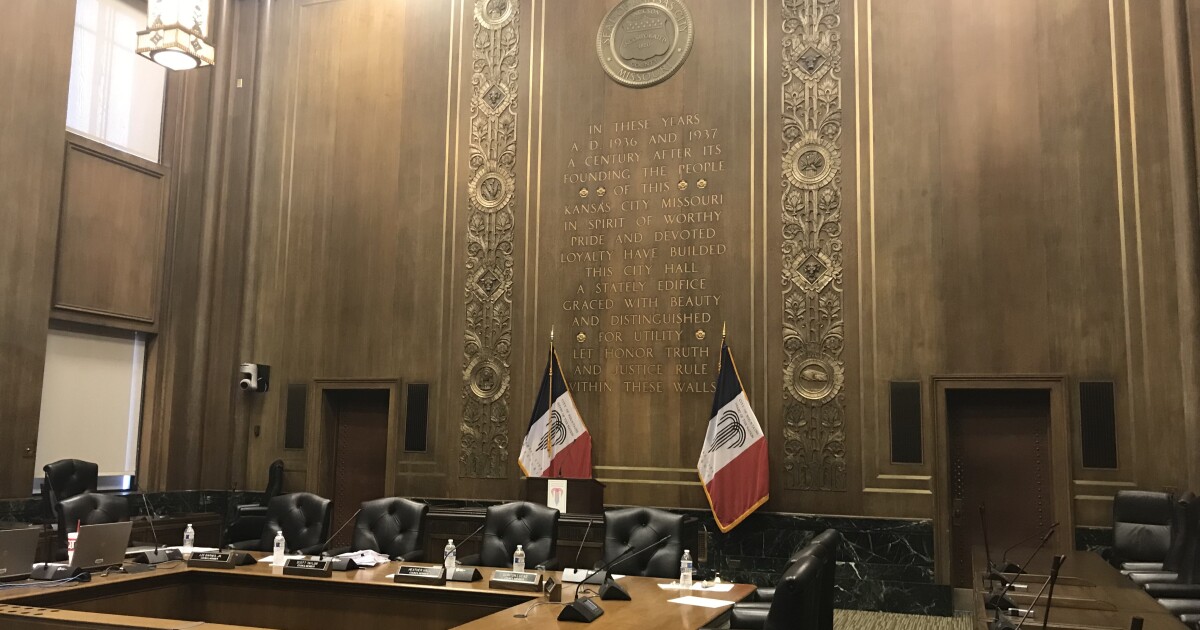
KANSAS CITY, Mo. — The Kansas City, Missouri, City Council voted Thursday to approve a $2.6 billion budget for the city’s fiscal year of 2026-27.

The budget includes $744 million in spending for public safety, including $26.3 million for a new Department of Community Safety and $4.2 million to hire 50 new KCMO Police Department officers, along with 10 call takers and 10 dispatchers.

“Our budget respects the strong fiscal foundation the taxpayers have helped Kansas City build, maintaining a rainy-day fund of over $200 million, increasing road resurfacing, hiring more public safety and city workers, and investing in all Kansas City neighborhoods,” Mayor Quinton Lucas said in a news release from the city. “In a city that can walk and chew gum, we are proud to welcome the world while delivering strong basic services for Kansas City’s families.” 

The council voted to spend $83.8 million for the Kansas City Area Transportation Authority to provide bus services, but the KCATA may have to make cuts in bus services even with a $6 million boost in funding from the city.

Advertisement

In addition, the council approved spending $39.4 million for citywide street resurfacing and $1.5 million for tearing down dangerous buildings.
 
“This budget reflects a collaborative effort across the city, and provides a clear path for Kansas City to keep moving forward with discipline, accountability and a focus on service,” City Manager Mario Vasquez said in the news release. “Thank you to the council for its thoughtful deliberation and input in crafting this budget.” 

More information on the fiscal year 2026-27 budget can be found on the city’s website.


Source link

Advertisement
Continue Reading

Trending