Missouri
'Locked in': Surging Missouri State women take pride in their defensive approach – Springfield Daily Citizen
Like most Division I coaches in the transfer portal era, Beth Cunningham had the chore of mixing new and old ingredients in the pursuit of a winning flavor.
Teams don’t marinate like they use to, but Missouri State’s third-year coach appears to have assembled a cohesive, defensive-minded group that’s, yet again, among the best in the Missouri Valley Conference.
The Lady Bears (11-4, 3-1 MVC), winners of three straight after Sunday’s 75-37 demolition of Southern Illinois at Great Southern Bank Arena, are playing with the sort of fluidity you’d see in a team that wasn’t widely assembled in the span of a few months.
Missouri State welcomed eight players this past offseason to mesh with six returners who came a bucket-at-the-buzzer short of an NCAA Tournament berth last March.
From transfers who felt slighted or under-utilized at previous programs to proven returners soured by last season’s finish, Cunningham has been able to employ the chips on their respective shoulders.
“It feels like they’re playing for something every night and had a (bad) taste in their mouth with something to prove, too,” Cunningham said after Sunday’s rout of the Salukis, Missouri State’s seventh win in eight games.
While returners like Lacy Stokes (13.1 points per game, 60 assists), Kyrah Daniels (11.3 ppg, 5.5 rebounds a game), Kaemyn Bekemeier (10.3 ppg) and Paige Rocca (8.1 ppg) picked up where they left off from the 23-win campaign, veteran newcomers like Mizzou transfer Sarah Linthacum (10.9 ppg, 5.4 rpg) and Kiley Bess (5.5 ppg) from Indiana State are getting the most of their final year of eligibility. Cady Pauley (5.1 ppg), a transfer from Virginia, is coming off the bench.
“We’ve been really locked in. We’re reading each other well right now, but it’s all flowing from practice,” said Bekemeier, the former Republic guard who had 12 points and 13 rebounds on Sunday. “You can see it in practice when we’re all getting after it.”
Since going 1-2 in an early-season tournament in the Virgin Islands against the likes of national brands Gonzaga, Florida State and Texas Tech at the end of November, the Lady Bears have been flummoxing teams defensively.
Missouri State has held six of its last eight opponents to 55 or fewer points and forced an average of 18 turnovers during that stretch, its last three games in MVC best conveying the offensively diverse and defensively hard-nosed effort.
Against Belmont (9-7, 4-1 MVC), the Bears were able shorten the court in a 57-55 win over the Bruins. Two days later, the Lady Bears proceeded to run the floor with one of the nation’s highest-scoring teams in Murray Sate (10-4, 4-1), holding the Racers 17 points below their average in a 85-78 win.
On Sunday, Missouri State proceeded to clamp down on one of the worst teams in the Valley and continue its annual dominance against the Salukis, yielding 17 points in the first half.
Linthacum, who was a perfect 7-for-7 from the field on Sunday and filled a major interior void for MSU this season, embraces a defensive identity.
“Our defense has to fuel our wins. We’ve gotten these past few wins because of our defense,” Linthacum said. “We shifted out mindset to focus on our defense no matter what the ball is looking like on the other end. That needs to carry over for this next stretch.”
Similar effort on the glass helps. The Lady Bears have outrebounded all but one opponent this season and rank 35th in Division I in rebounding margin (7.7).
Currently at the top of a parity-riddled MVC is defending champion Drake (11-4, 5-0), who the Lady Bears entertain on Jan. 24.
Through 15 games, Cunningham, who is 30-0 all-time when she holds teams to fewer than 60 points, likes her team’s resolve since suffering a 69-62 upset at UIC to start the new year.
“Collectively, a really great group. They’ve always been exremely hard-working,” she said. “They want to be coached, they want to get better. I don’t have to motivate them to work every day. It’s enjoyable to coach a team like that. I think we have a group of kids that are hungry.”
Missouri State travels to Evansville (4-11, 0-4 MVC) on Friday
Missouri
Barry County man breaks Missouri state record with yellow bass catch
SHELL KNOB, Mo. (Edited News Release/KY3) -A Barry County man recently broke the Missouri state record after catching a yellow bass on Table Rock Lake.
According to the Missouri Department of Conservation, Danny Naugle, of Cassville, reeled in the record-breaking fish while fishing on Table Rock Lake on May 13. The fish broke the state record previously set in 1995.
The fish weighed 2 pounds, 7 ounces, and measured 16.5 inches. It was just two ounces shy of the world record, the department said.
MDC said Naugle normally casts for crappie, using an ultra-light rod and lights to draw baitfish.
The previous record was set in 1995 by a 9-ounce fish caught from a slough off the Mississippi River, according to MDC.
The department said Naugle plans to get the yellow bass mounted. His catch marks the first state record fish recorded for 2026.
To report a correction or typo, please email digitalnews@ky3.com. Please include the article info in the subject line of the email.
Copyright 2026 KY3. All rights reserved.
Missouri
Missouri farmers facing higher fuel, fertilizer costs from Iran war
Increased fertilizer prices have farmers concerned
Let’s look at how economic and farming experts see this playing out in the coming months, and what that means for all of us.
While industries across the U.S. are experiencing shortages as a result of the war in Iran, it appears Missouri farmers could come out without much impact — this year, at least.
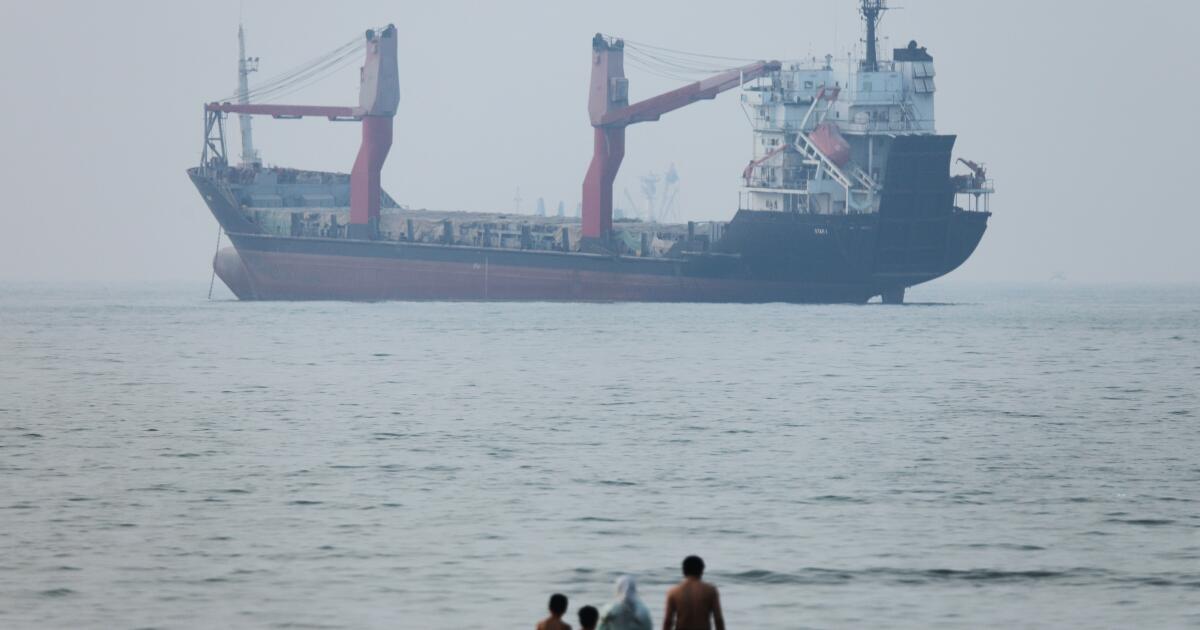
The conflict has seen closure of the Strait of Hormuz, a waterway for one-fifth of the world’s oil and natural gas. All the shipping disruption has increased the price of fuel, vital to the production of fertilizer, and has limited the export of nitrogen-based fertilizers manufactured in the Persian Gulf.
Ultimately, experts say, it could disrupt the supply chain for months to come and further drive up grocery prices. The World Bank has even warned that the conflict could threaten food security worldwide.
Most Missouri row crop producers — whose fields yield corn, soybeans, cotton, rice and peanuts — had secured the majority of the fertilizer they needed for the year before the conflict began, said Ben Brown, University of Missouri Extension’s state crop row economist.
“There’s probably about 15% of our fertilizer needs still left from the row crop space that would have been used in-season,” Brown said. “The majority of it was already here and already paid for. For this growing season, there’s not as much of a concern about fertilizer as it would be next year.”
Dr. Joana Colussi, research assistant professor in Purdue University’s Department of Agricultural Economics, points to a late March survey of nearly 1,000 corn growers conducted by the National Corn Growers Association. Eight out of 10 corn growers said their 2026 corn acreage plans have not been impacted by the Middle East conflict, which has seen fertilizer prices spike as high as 45%.
In April, an American Farm Bureau Federation Fertilizer Availability Survey of more than 5,700 farmers and ranchers across the country plainly stated that “rising input costs tied to the conflict in the Middle East are adding strain to an already challenging farm economy.”
But the survey also found pronounced variance in fertilizer pre-booking rates by region. Fully 67% of Midwestern commodity farmers typically relying on soybean and corn — the nation’s two largest crops — reported having made fertilizer purchases ahead of the planting season that is now at its peak.
It’s a number more than twice as high as any other region.
“Given these crop rotations, pre-booking is more common in the Midwest, where fertilizer needs are typically larger and purchasing decisions are often made well ahead of planting,” the American Farm Bureau Federation stated. “As a result, a larger share of Midwestern farmers reported being able to secure the inputs they need before recent price increases.”
Looking ahead to this fall
None of this means the Midwestern farm economy is barreling onward and upward, impervious to the effects of the Iranian conflict.
Timing is everything in agriculture. The conflict in Iran broke out when farmers were on the precipice of their spring plant of corn and soybeans, typically used for livestock feed, food and biofuels. Fertilizers are applied just before or at planting time.
Most Midwestern farmers may have pre-purchased their fertilizers for this crop season — but farmers must plant with one eye fixed firmly on the future, said Brady Holst, vice chairman of the Illinois Soybean Association.
“Around 20% (of Midwest farmers) that put nitrogen (fertilizer) on (their farmland) in the spring or in (planting) season would be hit hard by higher prices because they are buying now or in the next month or two,” said Holst, who farms soybeans, corn and wheat on 3,600 acres in West Central Illinois.
“It has all farmers worried because usually they will buy fertilizer for this coming fall ahead of time. And fertilizer prices move slowly around the world, so it takes a long time for fertilizer prices to move down. So even if the (Iranian) conflict ended today, the price for fall fertilizer would still be elevated.”
Veronica Nigh, senior economist at The Fertilizer Institute, points out that the United States produces about 60% of its own total needs for the phosphate fertilizer used extensively in corn and soybean production.
The U.S. still imports a significant portion from Saudi Arabia, Nigh said during an April 23 seminar of the International Food Policy Research Institute and the Agricultural Market Information System.
“We have significant exposure from the Middle East,” she said. “From a timing perspective, however, those phosphate imports tend to come in earlier in the year, so much of that product was already in place prior to the Strait (of Hormuz) closure.”
But Nigh said one of the Fertilizer Institute’s members had reminded her that “we’re an industry that builds product for four months and then applies it for two.”
“So we’re now certainly getting into the time of the year where we’re looking and thinking and worrying about building those supplies for the fall application,” she said.
‘The whole world revolves around diesel fuel’
The war in Iran, in addition to issues with U.S. oil refineries, has led to record prices.
“Diesel fuel here in the U.S. is actually more expensive than it was in the run-up to the COVID-19 outbreak and the conflict that we saw in Russia and Ukraine. That’s how high diesel prices have gotten here lately,” Brown said. “It’s a combination of the Middle East plus some refinery issues in the U.S.”
Part of this is due to the fact that most of the oil produced in the U.S. is used for gasoline production, while heavy crude oil, which is used to produce diesel for tractors and trucks, is imported. This could lead to higher prices at the grocery store, Brown said.
“Any time we see higher oil prices, it increases the cost from farm gate to retail,” Brown said. “So much of the food dollar now comes from that part of the equation, that the real impact to producers is going to be the higher diesel fuel cost on all of this (and) the lack of production of agriculture commodities.”
Dairy farmer Jim Good, farm manager of Michigan State University’s Dairy Cattle Teaching & Research Center, pointed to a surge in diesel prices that, Good says, is putting the hurt on him.
Everything burns diesel fuel on a dairy farm — everything from tractors to semi-trucks, Good said.
“Everything is freighted in and freighted out (by semi trucks) on the dairy farm,” he said. “We’ve got feed coming in. We’ve got milk going out. The whole world revolves around diesel fuel, so when it goes from $3 a gallon to $6 a gallon, it gets to be pretty pricey.
“Some of our products — if you’re not raising your own grain products, those all have to be trucked in. We don’t have processing on site, so we’ve got to haul that milk out.”
The Iran war’s disruption of global energy production has led to steeper petrol, diesel and jet fuel prices. Diesel, which was averaging more than $5.70 a gallon in Michigan and Indiana as of May 1, according to AAA, remained above $4.40 on average following Memorial Day weekend. If the higher energy prices continue, that will also put pressure on Missouri producers.
“We are starting to see higher energy prices feed into the inflationary pressures,” Brown said. “Part of the expectation would be that if this continues, we’d see higher interest expenses for producers later in the year.”
During an April 13 visit to Michigan State University’s Dairy Cattle Teaching and Research Center, U.S. Agriculture Secretary Brooke Rollins brought some help for Michigan’s specialty crop sectors — an increase from $165 million to $275 million in Specialty Crop grants.
Taking the long view
If the war with Iran continues, there will likely be impacts on Missouri producers next season, Brown said. Higher fertilizer prices would result in producers having to make changes to their crops.
“We’ll probably see a bit of higher fertilizer prices if (the war is) still around,” Brown said, which will likely result in farmers shifting “to the less fertilizer-dependent crops; reducing fertilizer, which potentially has an impact on yield — those would be things we expect for next year.”
The Illinois Soybean Association’s Holst finds hope in a push within Congress to let gas stations sell E-15 — gasoline blended with 15% ethanol — nationwide and year-round to ease fuel costs without forcing stations to overhaul their equipment. The U.S. House passed the legislation May 13 but it faces an uncertain future in the Senate.
The Environmental Protection Agency has issued temporary emergency fuel waivers to allow nationwide sales of E-15 in past years, but Holst said he and other farmers want it to be permanent.
“They were worried about that becoming a smog problem, but there’s been lots of queries and studies with more modern vehicles and how the gasoline system is now,” he said. “There’s not really a concern for that, so it’s just kind of the slow grinding cogs of the government. Technology’s advanced a lot faster than we can advance the legislation that’s out there.”
If fertilizer prices don’t come down for farmers by the middle of summer or this fall, Holst said, there will be noticeable “acreage shifts” — a move away from planting corn to planting soybeans, which require less nitrogen fertilizer, meaning lower production costs.
That would be felt in Illinois, the nation’s largest soybean producing state and second-largest corn producing state.
In a recent survey of 4,000 farmers across 26 states, Chicago-based Farmer’s Keeper LLC found considerable sentiment for such a shift.
“Since March 1, 21% of farmers said they plan to decrease their corn acres,” Farmer’s Keeper CEO Nick Tsiolis said in a recent episode of Ag Marketing IQ in Depth.
The Farmer’s Keeper survey tracks with findings from a recent Farm Futures Q1 survey, which showed 43% of farmers planning to grow less corn. But it also clashes with a March 31 USDA Prospective Plantings report that predicted only a 3.4% decrease from last year’s corn plantings.
Tsiolis told Ag Marketing IQ in Depth that farmers must make future cropping decisions with great care.
“Soybeans could fall out of bed really quickly if oil prices drop and diesel costs come down,” he said.
“Farming is a long-term game,” Tsiolis said. “Profitability comes from balancing agronomic and budgeting decisions, not making drastic swings year to year.”
Looking ahead, Purdue’s Colussi and Langemeier say the U.S. and Brazil — the world’s largest soybean producer and exporter — must better protect themselves in the future from “external shocks” like the conflict in Iran. They called on the two nations to more aggressively expand their fertilizer production.
“This is a long-term challenge, but it is becoming increasingly necessary for both countries to remain competitive in the global grain market,” they wrote. “Greater supply security would reduce vulnerability to geopolitical disruptions and provide more stability in input costs for producers.”
News-Leader reporter Susan Szuch contributed to this story.
Missouri
Photo 5 of 16 in Asking $1.9M, This Gilded Age Missouri Estate Is a…
-
Rhode Island2 minutes agoR.I. House Finance budget phases in millionaires tax over three years – The Boston Globe
-
South-Carolina3 minutes agoSouth Carolina Lottery Mega Millions, Pick 3 results for May 29, 2026
-
South Dakota15 minutes agoHow to watch South Dakota State vs. Arizona State baseball today, time
-
Tennessee18 minutes ago
What channel is Tennessee softball vs Texas Tech on today? Time, TV schedule to watch WCWS game
-
Texas23 minutes agoUSC squanders late lead, falls to Texas State in NCAA regional opener
-
Utah30 minutes agoDHHS issues emergency actions against Utah behavioral school attended by Paris Hilton
-
Vermont33 minutes agoVermont’s only theme park opened in the 50s. How Santa’s Land got its start
-
Virginia38 minutes ago‘I didn’t know I could go that fast’: Virginia pizza maker breaks record – WTOP News