Connect with us

Missouri

Latest work from mid-Missouri poet Elijah Burrell conveys needed messages

Published

on

Latest work from mid-Missouri poet Elijah Burrell conveys needed messages


A holy wink opens “Skies of Blur,” the third and latest collection from mid-Missouri poet Elijah Burrell.

The wink travels from Jesus to the future St. Peter, but also from the poet to his reader across these initial lines: “In Simon Peter’s native tongue, / I wonder if boat and doubt sound slant.”

Here, Burrell raises questions of what a poem — what our language — can be, and how we locate ourselves in relationship. Should we take words, passed from one soul to another, so serious? Not really. Do we ever take our words seriously enough? Again, no echoes in our ears.

Over the course of these poems and pages, Burrell reveals an in-plain-sight mystery: We are always translating. Our experiences, someone’s pigeon-carried letters, the low brass hum of everyday life — each needs to be massaged and manifest in ways we might understand, if not act upon.

Advertisement

In “Skies of Blur,” the poet takes his turn putting his hand to the plow of translation, making our world make at least a few percentage points more sense. Burrell, a longtime professor at Lincoln University in Jefferson City, will continue this act of translation live when he reads from “Skies of Blur” at Skylark Bookshop Tuesday.

How the poet learns to listen — and models listening for us

Burrell reinforces this mission in the book’s second poem “Doing My Best to Listen.” Here, beneath the carbon-copy shelter of a gas station, he tunes his antennae to “a dozen voices calling—coyotes frenzied beneath a moon / they couldn’t see for the clouds.”

These are not simply wild, wordless voices, Burrell comes to understand, but sound and wonder, a fulfillment of the atmosphere around him, just one way of relaying “a message in transit to me my whole life.”

Advertisement

These messages, of what should and shouldn’t be, of simple glories and the stretch into oneness, face unsound barriers. The strangeness of the American dream labors to stop, or at least strain, them. Under his “American Umbrella,” Burrell slips into the guise of a cross-eyed dreamer who sees better than most.

“I spin plates every moment of my life. / I see nothing but yard sale pianos with songs inside them. / I have what they call a can-do attitude,” the poet writes in opening lines that, again, both wink and lament through the white spaces.

By poem’s end, in light of our national reliance on the almighty gun, the narrator’s plates crash, their umbrella ruptures.

Stories we can’t personally approach slow our understanding — until we tell them to each other, as Burrell’s narrator does in “Death and the King of Rock ‘N’ Roll.” Following the voluminous fill, then fade of an Elvis radio song, he shares the King’s life with his daughter, noticing how absences near and far call out in antiphon:

After Elvis has filled our car with a song,

Advertisement

my youngest daughter asks if he’s still

alive. “No, baby,” I say. “He died the year

Grandma had me.” In the rearview mirror

her faint flinch at the mention of mom.

Subtraction. I sense the math fill her mind.

Advertisement

Another domestic scene unspools through “In a World Gone Mad,” exhibiting the noise of our lives, and the need to listen between the lines.

“October in Missouri, / and I wake up to mass murder out west, / my daughter humming ‘Yer So Bad’ / while spoon-plinking the well of her / white bowl of Cheerios,” Burrell writes.

Poems of memories and messages

As we commit ourselves to translate, and to listen, messages break the noise — and conspicuous silences — in sundry, surprising ways.

Memories collide, then convey their kindnesses, through “the little symphonies from childhood synesthesia” (“Do Not Drive Into Smoke”); distant friends broadcast fragments of speech across “opposite ends / of quiet woods” (“Hailing Old Ghosts from My Silo on the Moon”); and, when everything fails, we keep sitting down to silent pianos, straining our ears for hushed voices, making music until the music comes back (“Unable to Sing”).

Words and their meanings come together, links in an imperfect, exquisite chain; they articulate our blessed smallness in a world of social-media dopamine and ancient weather (“Life in the Gush of Boats”); set us in motion to reconcile all our tenses (“Midlife”); bring our definitions of prayer and belonging into sad relief, so we might see ourselves as we are (“I Was Old When I Left Home”).

Advertisement

And, in one of the book’s late, great poems, we learn the power of exhausting the language for glorious synonyms. “Never Say Love In a Poem” captures the poet at work, trying to evade conventional sincerity and stumbling into something better.

“Listen: The small of her back / is drift, her mouth supermax,” Burrell writes.

And, in two of his finest poems, Burrell pays staggering tribute to his fellow translators, offering hope that we will keep at this work, keep breaking through.

Perhaps my favorite poem of the young year, “This is That Song by Alex Chilton (‘Thirteen’)” honors too-good-for-this-world troubadour Elliott Smith, tracing the passage of sound and “Arizona silence” from a 1997 live show to where the rock bard felt safest.

He closes his eyes. He’s back in Portland,

Advertisement

alone in bed, headphones on, and the birch-

white limbs inside him tremble and bend

from the weight of something cold and falling.

Five lines, “Postlude/Grace” ends the collection and begins something else entirely as the poet hands a guitar and his “indistinct” music to his daughter, whose “miraculous fingers / move down the neck like a surgeon closing a wound / that’s lain open too long.”

These words picture what we are always doing for one another. Here, Burrell writes out his translations, then passes them down to us that we might keep going, keep healing wounds borne alone and shared with others.

Advertisement

Burrell will read at 6:30 p.m. Tuesday; learn more about the evening at https://www.skylarkbookshop.com/new-events.

Aarik Danielsen is the features and culture editor for the Tribune. Contact him at adanielsen@columbiatribune.com or by calling 573-815-1731. He’s on Twitter/X @aarikdanielsen.



Source link

Missouri

Missouri Farm Bureau to host agritourism conference in Hermann | Fulton Sun

Published

on

Missouri Farm Bureau to host agritourism conference in Hermann | Fulton Sun


Missouri Farm Bureau’s 2026 Agritourism Conference will be held Sunday through Tuesday in Hermann, bringing together agritourism stakeholders to explore opportunities in Missouri’s growing agritourism sector.

The conference usually draws 60-70 attendees annually, said Janet Adkison, director of public affairs and advocacy with Missouri Farm Bureau. This includes farmers, agribusiness leaders, tourism professionals and local economic development partners.

At the conference, participants will see firsthand how farms, wineries, orchards and other value-added agriculture business and rural destinations are connecting tourists and consumers with the state’s agriculture scene, while diversifying revenue streams for farm families and rural communities.

“Whenever folks think of agritourism, they think of a pumpkin patch or a flower farm,” Adkison said. “But agritourism is really anything that gets folks to connect with the agriculture industry. So from your Airbnbs that are out in rural Missouri to the wineries that you see across the countryside, to even a tree farm or just a simple orchard, those are all part of Missouri’s agritourism industry.”

Advertisement

The conference kicks off Sunday with welcome remarks by Missouri Farm Bureau president Garrett Hawkins and a dinner at Hermann Farm Store Barn. Participants will spend the nights at The Inn at Hermannhof.

Monday will include an agritourism bus tour, with stops at Thierbach Orchard, Heritage Valley Tree Farm, White Mule Winery & BNB and Cool Cow Cheese, where participants have the opportunity to speak to business owners.

It will be followed by a farm-to-table, wine-pairing dinner at Hermannhof Winery Court with the Missouri Wine & Grape Board.

“If you are somebody who’s interested in agritourism, you get to hear from somebody who’s been there and done that, and some of the hurdles that they may have experienced along the way,” Adkison said. “You’ll have that exposure both on the tour and also during the programs that they’ll provide on Tuesday.”

On the final day of the conference, participants will attend educational workshops and network with other vendors at Hermannhof Festhalle. Topics discussed in the workshops include marketing, risk management, USDA Rural Development resources for agricultural businesses.

Advertisement

“You’ll hear from some folks as far as the missteps or wins that they had while trying to market and get those crowds to come to the farm, and sometimes something might work, (or) something surprises you and it doesn’t work,” Adkison said.

The conference location rotates around the state each year — past stops have included northeast and west central Missouri, which Adkison said gives the conference a chance to showcase how agritourism looks based on the terrain and agricultural strength of each region.

Find out more about the event or register for it at mofb.org/event/2026-agritourism.


Source link

Advertisement
Continue Reading

Missouri

Missouri politicians champion unity, diversity on America’s 250th

Published

on

Missouri politicians champion unity, diversity on America’s 250th


Former Missouri Gov. Jeremiah “Jay” Nixon followed in his ancestor’s footsteps, 250 years to the day.

On July 8, 1776, Colonel John Nixon was the first person to publicly read the Declaration of Independence from the steps of the Pennsylvania State House, now Independence Hall.

Jay Nixon, along with other Missouri officials from local, state and national offices, participated in a semiquincentennial celebration at the Historical Greene County Courthouse on July 8, 2026.

“As we commemorate 250 years of American independence, may we remember not only the courage of those who signed the declaration, but also our responsibility to preserve the freedoms they declare,” said Connie Yen, director of the Greene County Archives and Records Center.

Advertisement

While the reading of the Declaration of Independence was the main event, patriotic music from the Salvation Army Band, Springfield Sound, the Patriotic Chorale — as well as the national anthem sung by former U.S. Attorney John Ashcroft and former judge and representative Max Bacon — rang throughout the courthouse’s rotunda, which was packed with people. The music itself, Ashcroft said, was a metaphor for the nation.

“There is something charming about America that doesn’t require that we be uniform. There’s a difference between unity and uniformity. As a matter of fact, you can’t have harmony if you only have one note. You have to sing different notes for things to be harmonic and it’s much more beautiful,” he said. “Maybe America is America not because of uniformity or everybody being in unison, but America may be America because we have disparity, but we’re in harmony. We believe in unity, not uniformity.”

Before reading the Declaration of Independence, Nixon shared part of a speech he gave at Fulton’s Westminster College in August 2025, where he encouraged people to “resist apathy with action” through involvement with civic and faith organizations, and by voting. Like others, he emphasized diversity as the strength of America.

Advertisement

“(We’re) a nation of immigrants. Many of our ancestors fled poverty, injustice and tyranny to build something better. We are the great-great-great-grandchildren of slaves, and those who enslaved them; the first families who inhabited these lands, and those who drove them from it,” Nixon said. “A nation of scrappy strivers stitched together by our ideals, marked by original sins, but redeemed by the courage and sacrifice that saved us from fascism and unleashed freedom and prosperity — the envy of the world. That is the true story we all need to tell, the promise we made to each other that we work every day to keep.”

The reading was followed by an ice cream social, co-hosted by the Greene County Democratic and Republican women’s clubs.


Source link

Continue Reading

Missouri

UPDATE: Suspect wanted in Kansas captured near Columbia; Missouri State Highway Patrol aircraft plays key role | 93.9 The Eagle

Published

on

UPDATE: Suspect wanted in Kansas captured near Columbia; Missouri State Highway Patrol aircraft plays key role | 93.9 The Eagle


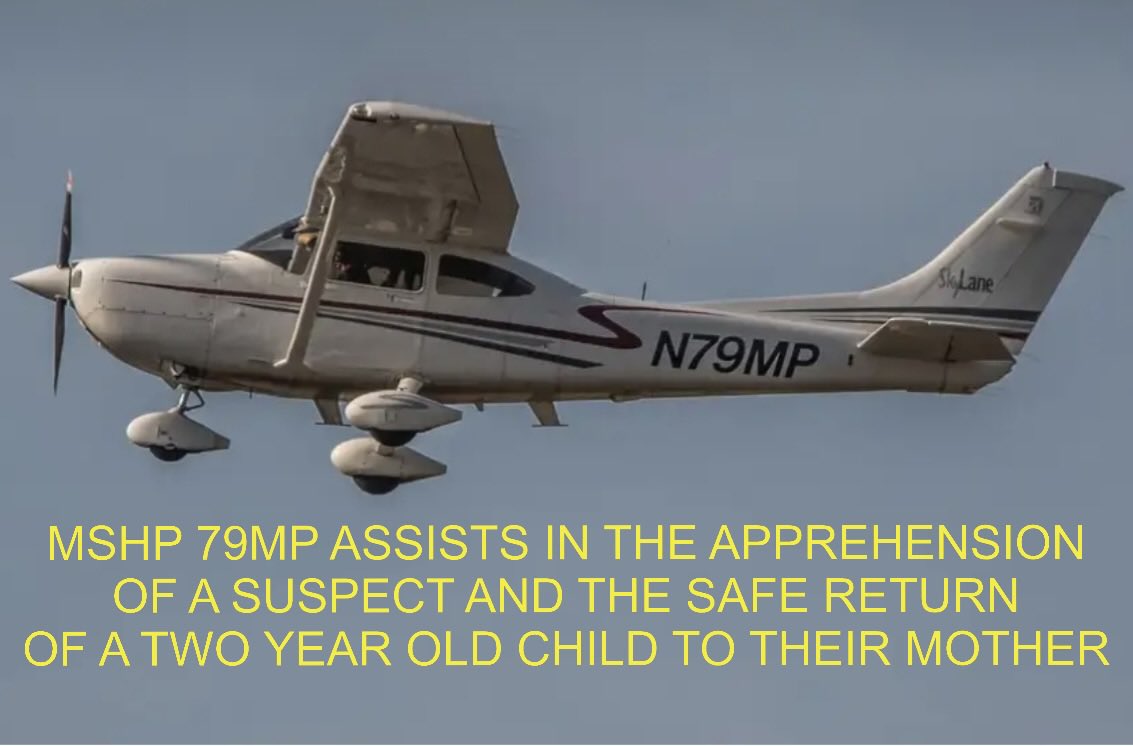
The Missouri State Highway Patrol says one of its planes played a key role in Tuesday morning’s capture on I-70 near Columbia of a Kansas suspect wanted for child endangerment.

Missouri state troopers say they were on patrol near a rest area on eastbound I-70 in Cooper County, when they located a Dodge Durango wanted for an alleged incident in Topeka. Troopers say the suspect drove off after seeing troopers and that the Patrol plane was used to avoid a pursuit.

Troopers say they were able to get in position after the plane’s pilot located the vehicle and that the Patrol deployed stop sticks and safely deflated the suspect’s tires.

hmqqi61wwaa0bs7
A Missouri State Highway Patrol aircraft played a key role in Tuesday morning’s capture in mid-Missouri (July 2026 graphic courtesy of Highway Patrol Twitter)

The Highway Patrol says the suspect was captured without incident and that the two-year-old child, who was unharmed, has been reunited with their mother.

Advertisement


Source link

Continue Reading
Advertisement

Trending