Missouri
How many people died in the 2011 Joplin, Missouri tornado? Looking back at historic devastation


U.S. severe weather: Over 30 reported dead across the country
Nearly three dozen people have reportedly died across the central and southern U.S. amid a massive storm that fueled violent tornadoes, high winds, dust storms and icy conditions.
Fox – 26 Houston
A deadly tornado that raged through Joplin, Missouri 14 years ago is once again in the spotlight after the release of a new Netflix documentary.
“The Twister: Caught in the Storm” is a feature-length documentary that tells the story of the EF-5 tornado that swept through Joplin, a city of approximately 50,000 about 75 miles west of Springfield, in May 2011 through the lens of a group of young people whose high school graduation day was affected by the natural disaster.
The film is directed by Alexandra Lacey, a UK-based filmmaker known for working on projects like “Tinder Swindler,” “American Nightmare” and “Three Identical Strangers.”
“This catastrophic event ravaged Joplin, and yet its community overcame, rebuilt and became an enduring symbol of hope,” the documentary’s synopsis reads adding the film “features adrenaline-inducing real-life footage, filmed by people in Joplin, taking us into the eye of the storm.”
Here’s what to know about one of the deadliest natural disasters to hit the United States.
When and where was the Joplin, Missouri tornado?
The Joplin tornado hit land in the early evening of May 22, 2011 which started as a typical spring Ozarks day in which severe weather was looming, Steve Runnels, warning coordination meteorologist with the National Weather Service office in Springfield told USA TODAY on the tornado’s 10-year anniversary.
“We were predominantly looking at storms likely to produce very large hail,” Runnels said. “Tornadoes were a possibility, but not one we were necessary keying in on.”
Late that afternoon, the NWS saw indication on the radar that debris had been thrown way up into the atmosphere − well above 10,000 feet, Runnels said.
“That was the first time in my career up to that point that I had seen that (height),” he said. “We had seen it in other radars in other parts of the country, but it was the first time in southwest Missouri.”
The tornado touched down around 5:30 p.m. on Joplin’s west side and moved east, destroying homes, businesses, and significantly damaging the city’s medical center and Joplin High School over the course of approximately 48 minutes.
How big was the 2011 Joplin tornado? What was its rating?
The tornado’s path on the ground was 22 miles long, with 13 miles of it cutting through Joplin’s city limits, USA TODAY previously reported. At its peak, it was about three-fourths of a mile wide with winds hitting more than 200 mph.
Runnels said the tornado, rated EF–5 on the Enhanced Fujita tornado intensity scale, was “moving anywhere from 15 to 30 miles per hour over a densely populated area.”
“To put that in context, it would have taken two minutes to pass over your house,” he had said.
How many people died in the 2011 Joplin tornado?
The massive tornado killed 158 people, according to NOAA, and injured more than 1,000 people and displaced 9,200 after some 4,000 homes were damaged.
While the National Weather Service’s official count of “direct fatalities” was 158, there were additional indirect deaths that added up to or even beyond 162 deaths, Runnels explained.
An NWS Central Region Service Assessment of the Joplin tornado found that the “majority of Joplin residents did not immediately take protective action upon receiving a first indication of risk (usually via the local siren system), regardless of the source of the warning,” despite the region being prone to tornados.
“Most first chose to further assess their risk by waiting for, actively seeking, and filtering additional information before taking protective actions,” the report said, adding the reasons behind their actions were “quite varied, but largely depended on an individual’s ‘worldview’ formed mostly by previous experience with severe weather.”
The report added that most Joplin residents did not take protective action until the threat was confirmed through either observing or hearing the tornado, “seeing or hearing confirmation, and urgency of the threat on radio or television, and/or hearing a second, non-routine siren alert.”
What is the biggest tornado ever recorded in the US?
While the Joplin tornado was the deadliest tornado of 2011 and has become known as the deadliest tornado in Missouri history, it is ranked as the seventh deadliest tornado in U.S. history. The deadliest tornado, called the Tri-State Tornado, occurred a 100 years ago on March 18, 1925 and killed 695 people across the states of Missouri, Indiana and Illinois.
However, the National Weather Service ranks the Joplin tornado as the deadliest since modern record-keeping began in 1950. Overall, 2011 was the fourth deadliest tornado year in U.S. history, according to NWS.
The Joplin tornado was also the costliest tornado on record, with losses approaching $3 billion, a report by the National Institute of Standards and Technology (NIST) said.
Contributing: Greta Cross, USA TODAY; Jackie Rehwald, Springfield News-Leader
Saman Shafiq is a trending news reporter for USA TODAY. Reach her at sshafiq@gannett.com and follow her on X and Instagram @saman_shafiq7.



Former Missouri Gov. Jeremiah “Jay” Nixon followed in his ancestor’s footsteps, 250 years to the day.
On July 8, 1776, Colonel John Nixon was the first person to publicly read the Declaration of Independence from the steps of the Pennsylvania State House, now Independence Hall.
Jay Nixon, along with other Missouri officials from local, state and national offices, participated in a semiquincentennial celebration at the Historical Greene County Courthouse on July 8, 2026.
“As we commemorate 250 years of American independence, may we remember not only the courage of those who signed the declaration, but also our responsibility to preserve the freedoms they declare,” said Connie Yen, director of the Greene County Archives and Records Center.
While the reading of the Declaration of Independence was the main event, patriotic music from the Salvation Army Band, Springfield Sound, the Patriotic Chorale — as well as the national anthem sung by former U.S. Attorney John Ashcroft and former judge and representative Max Bacon — rang throughout the courthouse’s rotunda, which was packed with people. The music itself, Ashcroft said, was a metaphor for the nation.
“There is something charming about America that doesn’t require that we be uniform. There’s a difference between unity and uniformity. As a matter of fact, you can’t have harmony if you only have one note. You have to sing different notes for things to be harmonic and it’s much more beautiful,” he said. “Maybe America is America not because of uniformity or everybody being in unison, but America may be America because we have disparity, but we’re in harmony. We believe in unity, not uniformity.”
Before reading the Declaration of Independence, Nixon shared part of a speech he gave at Fulton’s Westminster College in August 2025, where he encouraged people to “resist apathy with action” through involvement with civic and faith organizations, and by voting. Like others, he emphasized diversity as the strength of America.
“(We’re) a nation of immigrants. Many of our ancestors fled poverty, injustice and tyranny to build something better. We are the great-great-great-grandchildren of slaves, and those who enslaved them; the first families who inhabited these lands, and those who drove them from it,” Nixon said. “A nation of scrappy strivers stitched together by our ideals, marked by original sins, but redeemed by the courage and sacrifice that saved us from fascism and unleashed freedom and prosperity — the envy of the world. That is the true story we all need to tell, the promise we made to each other that we work every day to keep.”
The reading was followed by an ice cream social, co-hosted by the Greene County Democratic and Republican women’s clubs.
Missouri
UPDATE: Suspect wanted in Kansas captured near Columbia; Missouri State Highway Patrol aircraft plays key role | 93.9 The Eagle

The Missouri State Highway Patrol says one of its planes played a key role in Tuesday morning’s capture on I-70 near Columbia of a Kansas suspect wanted for child endangerment.
Missouri state troopers say they were on patrol near a rest area on eastbound I-70 in Cooper County, when they located a Dodge Durango wanted for an alleged incident in Topeka. Troopers say the suspect drove off after seeing troopers and that the Patrol plane was used to avoid a pursuit.
Troopers say they were able to get in position after the plane’s pilot located the vehicle and that the Patrol deployed stop sticks and safely deflated the suspect’s tires.
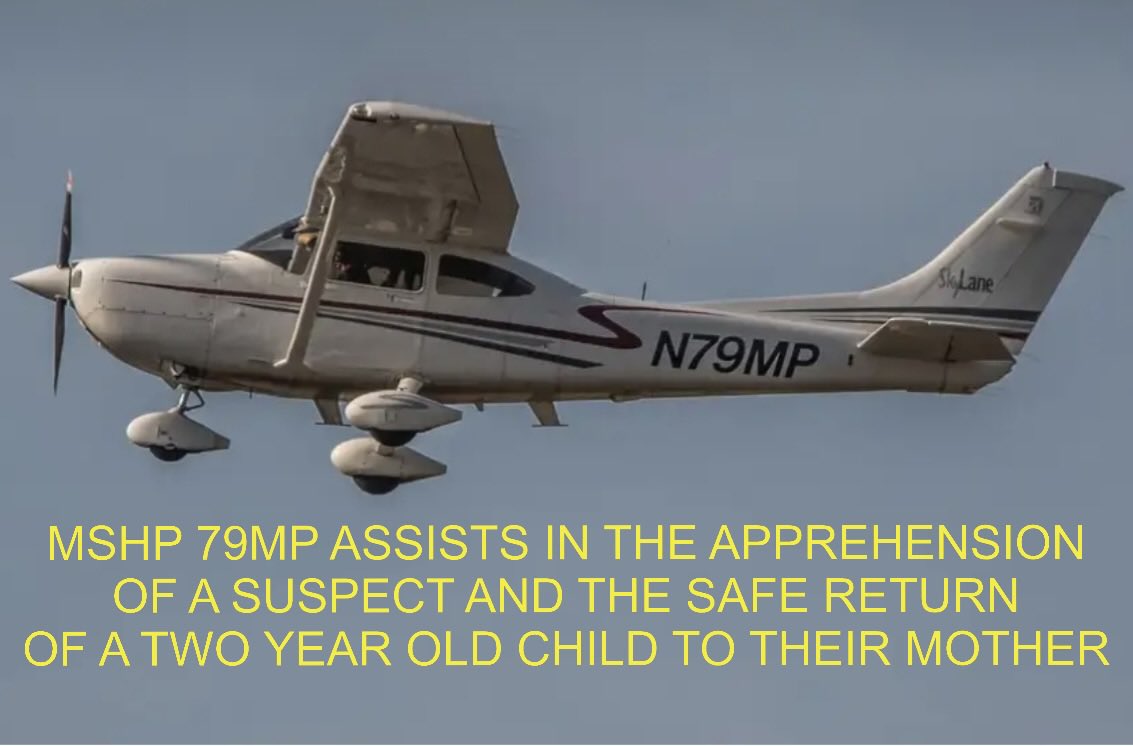
The Highway Patrol says the suspect was captured without incident and that the two-year-old child, who was unharmed, has been reunited with their mother.
The Missouri Lottery offers several draw games for those aiming to win big.
Here’s a look at July 7, 2026, results for each game:
Winning Mega Millions numbers from July 7 drawing
02-31-35-36-63, Mega Ball: 12
Check Mega Millions payouts and previous drawings here.
Winning Pick 3 numbers from July 7 drawing
Midday: 1-3-9
Midday Wild: 5
Evening: 8-5-4
Evening Wild: 0
Check Pick 3 payouts and previous drawings here.
Winning Pick 4 numbers from July 7 drawing
Midday: 8-1-4-4
Midday Wild: 0
Evening: 2-6-7-0
Evening Wild: 1
Check Pick 4 payouts and previous drawings here.
Winning Cash Pop numbers from July 7 drawing
Early Bird: 09
Morning: 08
Matinee: 15
Prime Time: 01
Night Owl: 10
Check Cash Pop payouts and previous drawings here.
Winning Show Me Cash numbers from July 7 drawing
12-16-17-28-31
Check Show Me Cash payouts and previous drawings here.
Feeling lucky? Explore the latest lottery news & results
Are you a winner? Here’s how to claim your lottery prize
All Missouri Lottery retailers can redeem prizes up to $600. For prizes over $600, winners have the option to submit their claim by mail or in person at one of Missouri Lottery’s regional offices, by appointment only.
To claim by mail, complete a Missouri Lottery winner claim form, sign your winning ticket, and include a copy of your government-issued photo ID along with a completed IRS Form W-9. Ensure your name, address, telephone number and signature are on the back of your ticket. Claims should be mailed to:
Ticket Redemption
Missouri Lottery
P.O. Box 7777
Jefferson City, MO 65102-7777
For in-person claims, visit the Missouri Lottery Headquarters in Jefferson City or one of the regional offices in Kansas City, Springfield or St. Louis. Be sure to call ahead to verify hours and check if an appointment is required.
For additional instructions or to download the claim form, visit the Missouri Lottery prize claim page.
When are the Missouri Lottery drawings held?
- Powerball: 9:59 p.m. Monday, Wednesday and Saturday.
- Mega Millions: 10 p.m. Tuesday and Friday.
- Pick 3: 12:45 p.m. (Midday) and 8:59 p.m. (Evening) daily.
- Pick 4: 12:45 p.m. (Midday) and 8:59 p.m. (Evening) daily.
- Cash4Life: 8 p.m. daily.
- Cash Pop: 8 a.m. (Early Bird), 11 a.m. (Late Morning), 3 p.m. (Matinee), 7 p.m. (Prime Time) and 11 p.m. (Night Owl) daily.
- Show Me Cash: 8:59 p.m. daily.
- Lotto: 8:59 p.m. Wednesday and Saturday.
- Powerball Double Play: 9:59 p.m. Monday, Wednesday and Saturday.
This results page was generated automatically using information from TinBu and a template written and reviewed by a Missouri editor. You can send feedback using this form.
-

 Washington, D.C4 minutes ago
Police search for suspect caught on camera slashing tires in Georgetown
-

 Cleveland, OH11 minutes ago
Ohio ICAC Task Force’s “Operation Guardians’ Watch” Results in 25 Individuals Arrested and Charged for Attempting to Meet with an Underage Child to Engage in Sexual Activity
-

 Austin, TX14 minutes ago
Texas’ Goosby hosts camp to benefit heart research
-

 Alabama19 minutes ago
Alabama teen charged with stabbing mom to death issued vile threat to dad — as new pic shows bloodbath left behind
-

 Alaska26 minutes ago
Outmigration, inflation, choice schools: Alaska school closures likely to continue without changes
-
 Arizona29 minutes ago
WATCH: Arizona’s health insurance marketplace is seeing dropping enrollment
-

 Arkansas34 minutes ago
ARKANSAS SIGHTSEEING: Randolph County can claim many firsts in Arkansas | Northwest Arkansas Democrat-Gazette
-

 California41 minutes ago
Toddler sustains brain injury in fall after California childcare worker threw him into the air, lawsuit says

