Missouri
Abortion-rights coalition launches campaign to put amendment on Missouri ballot • Missouri Independent

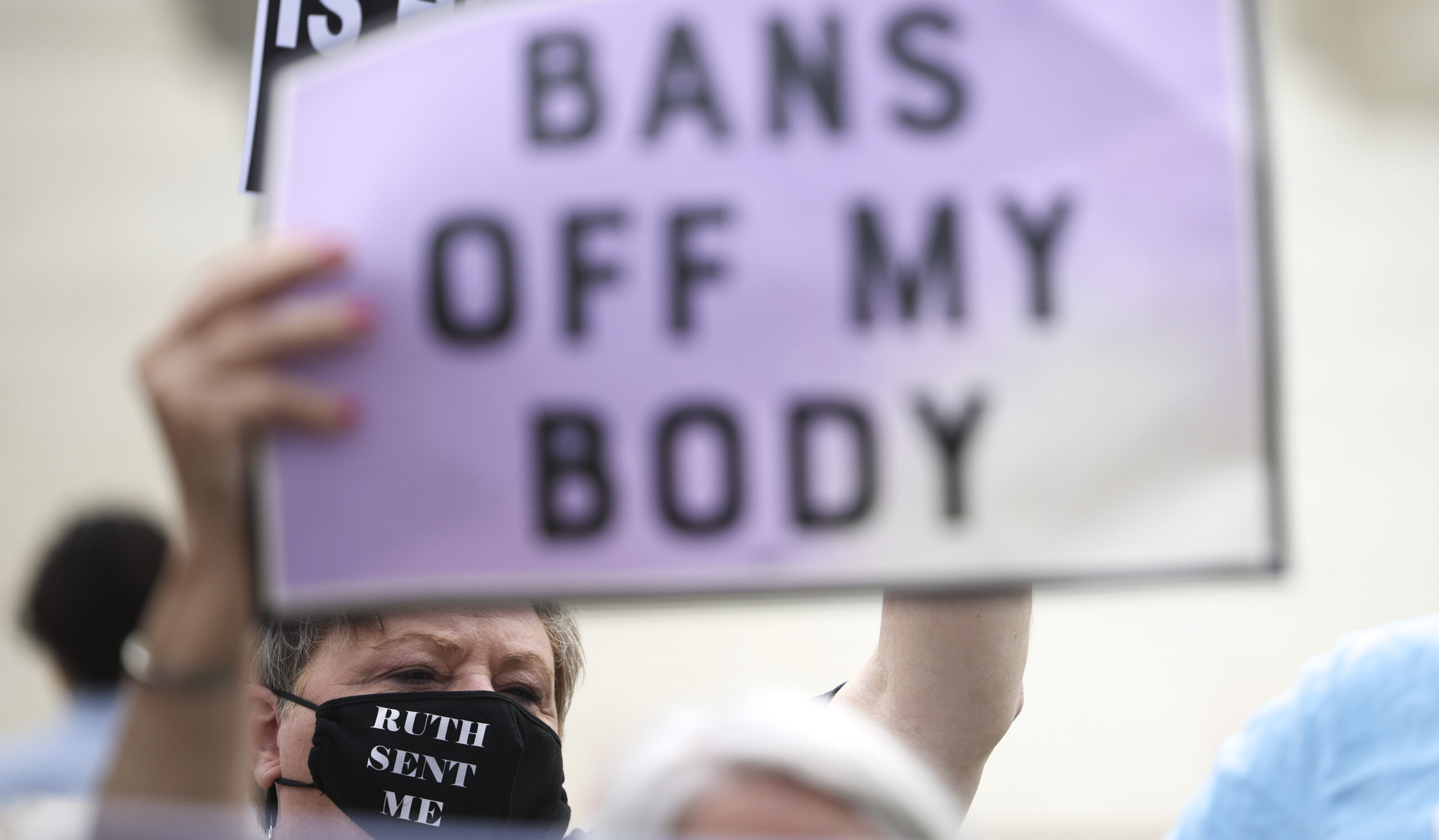
After months of court battles and internal squabbles, a coalition of Missouri abortion-rights organizations plan to officially launch an effort Thursday to put a constitutional amendment on the 2024 ballot to legalize abortion up until the point of fetal viability.
Despite reports of discord within the coalition, the campaign has the support of Abortion Action Missouri, the ACLU of Missouri and Planned Parenthood affiliates in Kansas City and St. Louis.
Missouri has one of the most restrictive laws in the country, banning all abortions except in the case of medical emergencies. A political action committee called Missourians for Constitutional Freedom announced Thursday it would begin to gather signatures to put an initiative petition on the statewide ballot rolling back that ban.
Missouri abortion-rights amendments face ‘torturous’ process to make it to 2024 ballot
The organization has settled on a version of its 11 initiative petitions that would allow the legislature to “regulate the provision of abortion after fetal viability provided that under no circumstance shall the government deny, interfere with, delay or otherwise restrict an abortion that in the good faith judgment of a treating health care professional is needed to protect the life or physical or mental health of the pregnant person.”
The proposed constitutional amendment won out over other versions, including one that would have sought to make abortion legal up to 24 weeks of pregnancy and another that would have removed any gestational limits on abortion completely.
“Missouri’s cruel and restrictive ban on abortion is tying the hands of doctors and preventing necessary care,” Dr. Iman Alsaden, advisor to Missourians for Constitutional Freedom and chief medical officer for Planned Parenthood Great Plains, said in a statement. “Missourians are taking a critical step to make their own medical decisions and kick politicians out of the exam room.”
The coalition has until May 5 to gather more than 171,000 valid signatures from across the state. If they succeed in this expensive endeavor, the amendment will appear on the statewide ballot.
A competing Republican-led ballot initiative, which started collecting signatures in November, is seeking to enshrine abortion rights in the constitution up to 12 weeks. It would also allow exceptions for rape and incest.
Dr. Selina Sandoval, who works as a full-time abortion provider in Kansas, said that practically every day she sees patients traveling from Missouri to Kansas for care. She said after the “devastating” news that the U.S. Supreme Court overturned Roe v. Wade, she’s hopeful change may be on the horizon.
“We’re very optimistic. We know that the majority of Americans and the majority of Missourians feel that abortion should be legal and accessible,” said Sandoval, who is also associate medical director at Planned Parenthood Great Plains. “They are risking financial security, they’re having to travel across state lines. And it’s just a very unnecessary, cruel, very unjust ban that we’re facing.”
Viability language
In the nearly 19 months since the June 2022 Dobbs v. Jackson Women’s Health Organization decision put abortion laws in state’s hands, voters in seven states have approved ballot measures to preserve or expand abortion access.
Abortion-rights advocates have said they are confident an attempt to expand access would also pass in Missouri. But they were less sure of just how far to go in a state that has veered from a swing state to staunchly Republican over the last two decades.
Proponents settled on viability language, defined in the initiative petition as the point in pregnancy when “there is a significant likelihood of the fetus’s sustained survival outside the uterus without the application of extraordinary medical measures.”
Viability language is also drafted into proposed ballot measures this year in Arizona, Florida, Nebraska and Nevada. Last fall, Ohioans voted to legalize abortion up to the point of viability.
Viability can be difficult to define, though it’s usually determined to be between 20 and 25 weeks gestation. Despite the language being somewhat common in state laws, it’s also controversial. The American College of Obstetricians and Gynecologists has dissuaded the use of viability limits in legislation, as there is no single clinical definition of viability.
“Legislative bans on abortion care often overlook unique patient needs, medical evidence, individual facts in a given case, and the inherent uncertainty of outcomes in favor of defining viability solely by gestational ages,” the college wrote in a statement online. “Therefore, ACOG strongly opposes policy makers defining viability or using viability as a basis to limit access to evidence-based care.”
Mallory Schwarz, executive director of Abortion Action Missouri, said the coalition believes the viability language meets most Missourians where they are.
“Many members of our coalition are out talking about abortion with Missourians every day, and we know that Missourians often have complex or nuanced positions on abortion, but there is one thing that they are aligned in, and it’s that they want to end the abortion ban,” Schwarz said. “That they do not support the abortion ban we are living under today, and we are confident this is our best path forward.”
Race to gather signatures

Abortion-rights groups around the state have blamed Secretary of State Jay Ashcroft for the delay in getting a petition off the ground.
In November, Missourians for Constitutional Freedom, backed by the Missouri ACLU, won a legal battle over the ballot summary language, giving the coalition the green light to move ahead with signature gathering.
“Any campaign that would move forward is left to contend with a myriad of challenges, including a severely constricted timeline,” Schwarz said following a November court ruling. “At the same time there is incredible opportunity and there’s hope here because we continue to see abortion rights and access remain a top priority for voters across the country.”
Now Schwarz said she is confident they can raise the money to get the signatures they need despite the short timeline, though she didn’t provide clarity on how much money has been raised, or how soon signature gathering will begin.
In Ohio, more than $70 million was spent on both sides in the fight over enshrining abortion rights in the state constitution, the Associated Press reported. This included several million in donations toward the pro-abortion movement from national funders.
The question remains for both of Missouri’s coalitions: Is there enough time and financial support to successfully gather the necessary signatures by May?
As of their January quarterly fundraising report filed to the Missouri Ethics Commission on Tuesday, the group had no cash on hand. They raised just shy of $13,500 in 2023, mostly in in-kind donations from the ACLU of Missouri for legal representation.
In mid-November, Jamie Corley, a longtime GOP Congressional staffer, launched a campaign effort for an initiative petition that would add rape and incest exceptions to Missouri’s abortion ban and legalize the procedure up to 12 weeks.
Like Missourians for Constitutional Freedom, Corley’s initiative also seeks to protect doctors and pregnant patients from prosecution. Currently, any health care providers who violate the law can have their medical licenses suspended or revoked and face a class B felony, and five to 15 years in prison.
As of Tuesday, Corley had raised more than $61,000, and had spent little of it, according to the Missouri Ethics Commission. The majority of the donations were given by Corley herself.
Experts have called Missouri’s signature gathering process costly and “tortuous.”
Jack Cardetti, who helped run a number of successful initiative petition campaigns in Missouri, previously told The Independent that high dollar donations can be an indicator of success as the deadline to collect signatures from six of Missouri’s eight congressional districts draws near.
Anti abortion group mobilizes against ballot efforts
Last week, a political action committee called Missouri Stands with Women was launched to “push back against the Big Abortion Industry.”
The committee, whose president is veteran anti-abortion activist Sam Lee, was formed to fight any abortion initiative petitions that make it to the ballot.
“Out-of-state extremists pushing Big Abortion’s agenda are intent on using the initiative petition process to reverse all the pro-life work our state has undertaken to protect the dignity of life, safety of women and parental rights,” Stephanie Bell, a spokeswoman for Missouri Stands with Women and a lawyer based out of Jefferson City, said in a news release Tuesday.
As of Thursday morning, the group had received one donation of just over $5,000, from the Missouri Catholic Conference.
In the December issue of The Messenger, a publication by the Missouri Catholic Conference, a letter from Missouri bishops encouraged Missourians to vote against any abortion initiatives that make it to the ballot.
“Even with legal protections for the unborn, as we have in our state today, more can still be done to build a culture of life,” the bishops wrote.
Missouri has long been a national example of what a state might look like post-Roe.
Since 2018, Missouri was already down to just one abortion clinic. Prior to the trigger law, abortion was banned after eight weeks in Missouri.
Missouri anti-abortion lawmakers for years have been making abortion access more difficult.
Before abortion became illegal, Missouri law required doctors to have admitting privileges at close hospitals before performing abortions. Patients sought abortions first had to receive state-mandated counseling from the doctor which discouraged abortion. If the woman still wanted to proceed, she then had to wait 72 hours to get the procedure, which had to be done by the same doctor who issued the counseling.
As a result, the number of abortions performed in Missouri dropped dramatically. In 2021, only 150 abortions were performed in Missouri, according to state health department data.
But many thousands of Missouri women are still getting abortions. In 2020, more than 3,200 Missourians received abortions in Kansas, according to the state health department. The same year, more than 6,500 Missourians received abortions in Illinois.
Thursday’s news release from the coalition also highlighted Missouri’s alarming rates of maternal mortality and morbidity, in part due to pregnancy complications.
“OBGYNs and maternity practices are packing up and moving away to avoid political harassment and criminalization,” the release read. “We don’t have time to wait. Together, we are going to end Missouri’s cruel abortion ban.”



Former Missouri Gov. Jeremiah “Jay” Nixon followed in his ancestor’s footsteps, 250 years to the day.
On July 8, 1776, Colonel John Nixon was the first person to publicly read the Declaration of Independence from the steps of the Pennsylvania State House, now Independence Hall.
Jay Nixon, along with other Missouri officials from local, state and national offices, participated in a semiquincentennial celebration at the Historical Greene County Courthouse on July 8, 2026.
“As we commemorate 250 years of American independence, may we remember not only the courage of those who signed the declaration, but also our responsibility to preserve the freedoms they declare,” said Connie Yen, director of the Greene County Archives and Records Center.
While the reading of the Declaration of Independence was the main event, patriotic music from the Salvation Army Band, Springfield Sound, the Patriotic Chorale — as well as the national anthem sung by former U.S. Attorney John Ashcroft and former judge and representative Max Bacon — rang throughout the courthouse’s rotunda, which was packed with people. The music itself, Ashcroft said, was a metaphor for the nation.
“There is something charming about America that doesn’t require that we be uniform. There’s a difference between unity and uniformity. As a matter of fact, you can’t have harmony if you only have one note. You have to sing different notes for things to be harmonic and it’s much more beautiful,” he said. “Maybe America is America not because of uniformity or everybody being in unison, but America may be America because we have disparity, but we’re in harmony. We believe in unity, not uniformity.”
Before reading the Declaration of Independence, Nixon shared part of a speech he gave at Fulton’s Westminster College in August 2025, where he encouraged people to “resist apathy with action” through involvement with civic and faith organizations, and by voting. Like others, he emphasized diversity as the strength of America.
“(We’re) a nation of immigrants. Many of our ancestors fled poverty, injustice and tyranny to build something better. We are the great-great-great-grandchildren of slaves, and those who enslaved them; the first families who inhabited these lands, and those who drove them from it,” Nixon said. “A nation of scrappy strivers stitched together by our ideals, marked by original sins, but redeemed by the courage and sacrifice that saved us from fascism and unleashed freedom and prosperity — the envy of the world. That is the true story we all need to tell, the promise we made to each other that we work every day to keep.”
The reading was followed by an ice cream social, co-hosted by the Greene County Democratic and Republican women’s clubs.
Missouri
UPDATE: Suspect wanted in Kansas captured near Columbia; Missouri State Highway Patrol aircraft plays key role | 93.9 The Eagle

The Missouri State Highway Patrol says one of its planes played a key role in Tuesday morning’s capture on I-70 near Columbia of a Kansas suspect wanted for child endangerment.
Missouri state troopers say they were on patrol near a rest area on eastbound I-70 in Cooper County, when they located a Dodge Durango wanted for an alleged incident in Topeka. Troopers say the suspect drove off after seeing troopers and that the Patrol plane was used to avoid a pursuit.
Troopers say they were able to get in position after the plane’s pilot located the vehicle and that the Patrol deployed stop sticks and safely deflated the suspect’s tires.
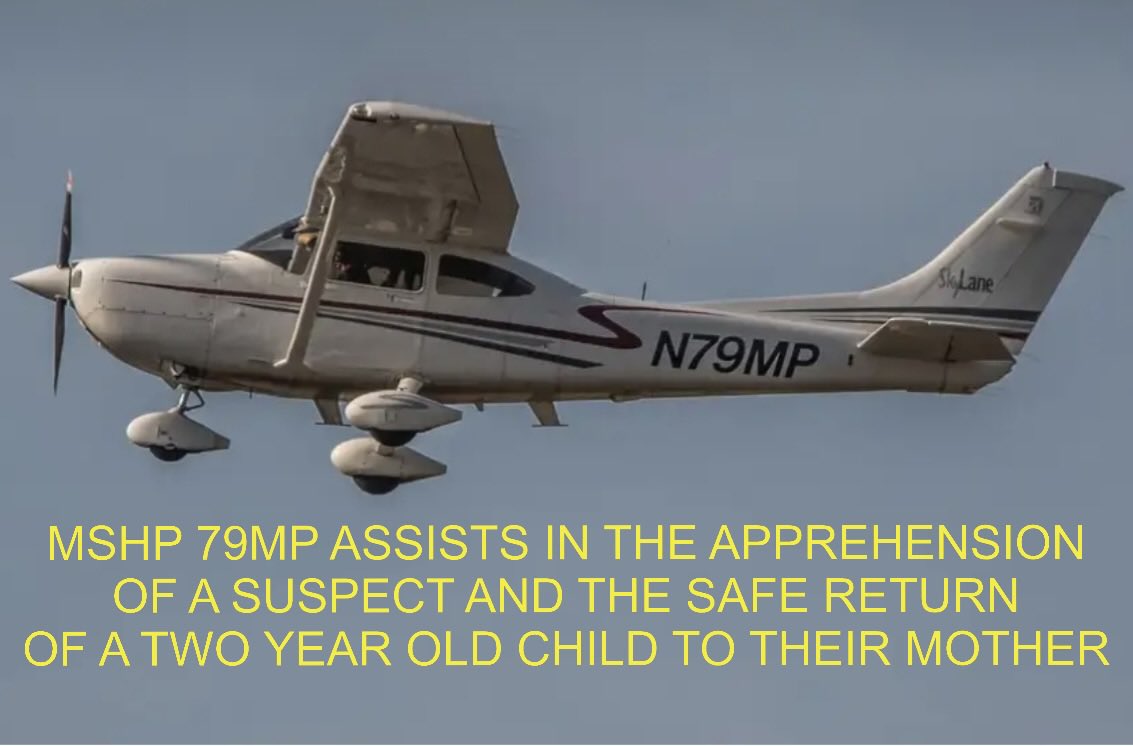
The Highway Patrol says the suspect was captured without incident and that the two-year-old child, who was unharmed, has been reunited with their mother.
The Missouri Lottery offers several draw games for those aiming to win big.
Here’s a look at July 7, 2026, results for each game:
Winning Mega Millions numbers from July 7 drawing
02-31-35-36-63, Mega Ball: 12
Check Mega Millions payouts and previous drawings here.
Winning Pick 3 numbers from July 7 drawing
Midday: 1-3-9
Midday Wild: 5
Evening: 8-5-4
Evening Wild: 0
Check Pick 3 payouts and previous drawings here.
Winning Pick 4 numbers from July 7 drawing
Midday: 8-1-4-4
Midday Wild: 0
Evening: 2-6-7-0
Evening Wild: 1
Check Pick 4 payouts and previous drawings here.
Winning Cash Pop numbers from July 7 drawing
Early Bird: 09
Morning: 08
Matinee: 15
Prime Time: 01
Night Owl: 10
Check Cash Pop payouts and previous drawings here.
Winning Show Me Cash numbers from July 7 drawing
12-16-17-28-31
Check Show Me Cash payouts and previous drawings here.
Feeling lucky? Explore the latest lottery news & results
Are you a winner? Here’s how to claim your lottery prize
All Missouri Lottery retailers can redeem prizes up to $600. For prizes over $600, winners have the option to submit their claim by mail or in person at one of Missouri Lottery’s regional offices, by appointment only.
To claim by mail, complete a Missouri Lottery winner claim form, sign your winning ticket, and include a copy of your government-issued photo ID along with a completed IRS Form W-9. Ensure your name, address, telephone number and signature are on the back of your ticket. Claims should be mailed to:
Ticket Redemption
Missouri Lottery
P.O. Box 7777
Jefferson City, MO 65102-7777
For in-person claims, visit the Missouri Lottery Headquarters in Jefferson City or one of the regional offices in Kansas City, Springfield or St. Louis. Be sure to call ahead to verify hours and check if an appointment is required.
For additional instructions or to download the claim form, visit the Missouri Lottery prize claim page.
When are the Missouri Lottery drawings held?
- Powerball: 9:59 p.m. Monday, Wednesday and Saturday.
- Mega Millions: 10 p.m. Tuesday and Friday.
- Pick 3: 12:45 p.m. (Midday) and 8:59 p.m. (Evening) daily.
- Pick 4: 12:45 p.m. (Midday) and 8:59 p.m. (Evening) daily.
- Cash4Life: 8 p.m. daily.
- Cash Pop: 8 a.m. (Early Bird), 11 a.m. (Late Morning), 3 p.m. (Matinee), 7 p.m. (Prime Time) and 11 p.m. (Night Owl) daily.
- Show Me Cash: 8:59 p.m. daily.
- Lotto: 8:59 p.m. Wednesday and Saturday.
- Powerball Double Play: 9:59 p.m. Monday, Wednesday and Saturday.
This results page was generated automatically using information from TinBu and a template written and reviewed by a Missouri editor. You can send feedback using this form.
-
Montana3 minutes ago
Montana Lottery Powerball, Lotto America results for July 8, 2026
-

 Nebraska8 minutes ago
Nebraska softball coaching staff finalized with a contract extension
-

 Nevada15 minutes ago
Odd and beguiling ‘Rose of Nevada’ will haunt viewers
-

 New Hampshire18 minutes ago
New Hampshire Gov. signs law requiring schools to out trans kids
-

 New Jersey23 minutes ago
What to know about Freedom Fuel Network as Trump urges cheaper gas prices in Pennsylvania, NJ
-
North Carolina28 minutes ago
NC Lottery Powerball, Pick 3 Day results for July 8, 2026
-

 New Mexico30 minutes ago
Wild rat in New Mexico tests positive for the plague after 4 confirmed cases in dogs
-

 North Dakota38 minutes ago
Today in History, 1975: Earthquake rattles portions of Minnesota and the Dakotas, including Fargo-Moorhead

