Missouri
4 Missouri prison workers fired after an investigation into an inmate's death


KANSAS CITY — Four Missouri prison workers were fired after an investigation into the death of an inmate whose family is demanding to know what happened.
Othel Moore died Dec. 8 at the Jefferson City Correctional Center after cells in a housing unit were searched for weapons, drugs and other contraband, Missouri Department of Corrections spokesperson Karen Pojmann said in an email Friday.
She said a cause of death hasn’t been determined and provided no specifics about what happened during the search. She also declined to release additional details about the terminations, saying that the Cole County Sheriff’s Department is investigating.
The Associated Press left messages for the county sheriff, prosecutor and medical examiner seeking comment.
The family’s attorney, Andrew M. Stroth, said Moore, a 38-year old Black man, was pepper-sprayed, strapped in a restraint device and had blood coming out of his ears and nose. He blamed members of the prison’s Corrections Emergency Response Team, which handles disturbances and emergency situations. Stroth said several inmates heard Moore screaming that he couldn’t breathe and alleged that he was left to die.
No litigation has been filed, but Stroth alleged that Moore’s death was part of a broader problem.
“The Missouri prison system has a pattern and practice of abusing Black inmates,” he said. “So it’s a big civil rights issue. And Othel Moore is just one of the most egregious cases.”
He said the family is calling for authorities to provide video, investigative reports and the names of the terminated officers.
Pojmann declined to release the names of the workers, who were terminated Feb. 22, saying that individually identifiable personnel records are closed to the public. She said video and reports were provided to the sheriff’s department.
Moore, who grew up in St. Louis, was serving a 30-year sentence for second-degree domestic assault, first-degree robbery, armed criminal action, possession of a controlled substance and violence to an inmate or employee of Corrections Department, Pojmann said.



Missouri
Missouri bill that would split Jackson County and Kansas City gets little support from lawmakers

A Missouri House committee had its first hearing this week on a proposed constitutional amendment that would split Kansas City and Jackson County upon approval by voters.
The legislation is nicknamed “Jackxit,” a nod to Brexit, the withdrawal of the United Kingdom from the European Union in 2020.
Republican state Rep. Mike Steinmeyer is sponsoring the bill. He said eastern Jackson County voters feel underrepresented in the county government, and this legislation would give them the power to change that.
At the hearing, committee members listened to Steinmeyer’s presentation of the bill before asking questions and sharing their thoughts.
Democratic state Rep. Bridget Walsh Moore compared what the bill proposes to “The Great Divorce” that saw the legal separation of the city of St. Louis from St. Louis County in 1876.
Several committee members criticized a part of the bill that says if it’s signed into law, the question of whether to split the county in two would appear on the Missouri ballot every 10 years.
Moore called it a “never-ending clause.”
“There’s a provision that says every 10 years this has to go back on the ballot, whether you like it or not,” Moore said. “And we’re going to keep voting on it, until you vote the way we think you should.”
Democratic state Rep. Jeff Hales said the bill’s language suggests the question would reappear on the ballot every 10 years until it’s approved by voters.
“Why does it end when it’s approved if the importance and the value here is giving the voters of Jackson County a right to weigh in on their charter and their government?” Hales said.
Steinmeyer said that clause exists to give Jackson County voters the opportunity to weigh in on their form of government.
“It gives them the right to speak and say we want change, or we want to abolish and start over,” Steinmeyer said. “That’s all we’re asking for.”
Democratic state Rep. Ashley Aune questioned how the ballot question would protect the right of voters. Steinmeyer said it protects their right to vote and be heard, specifically on their governance.
Lobbyist Shannon Cooper testified on behalf of the city of Kansas City, the Greater Kansas City Chamber of Commerce and the Civic Council of Greater Kansas City. He said during a public comment period that the bill was “the most befuddling piece of legislation” that he’s had to testify for or against.
Cooper brought up the historic recall election of County Executive Frank White Jr. and said the recall showed the system Steinmeyer is trying to fix with this bill can work.
“If the voters are not happy, they can deal with their problems,” Cooper said. “They’ve proven that in the last year.”
No action was taken on the bill, and it is not yet scheduled for a future hearing.
Missouri
Kansas City, Missouri, City Council voted Thursday to approve the city’s $2.6 billion budget for 2026-27
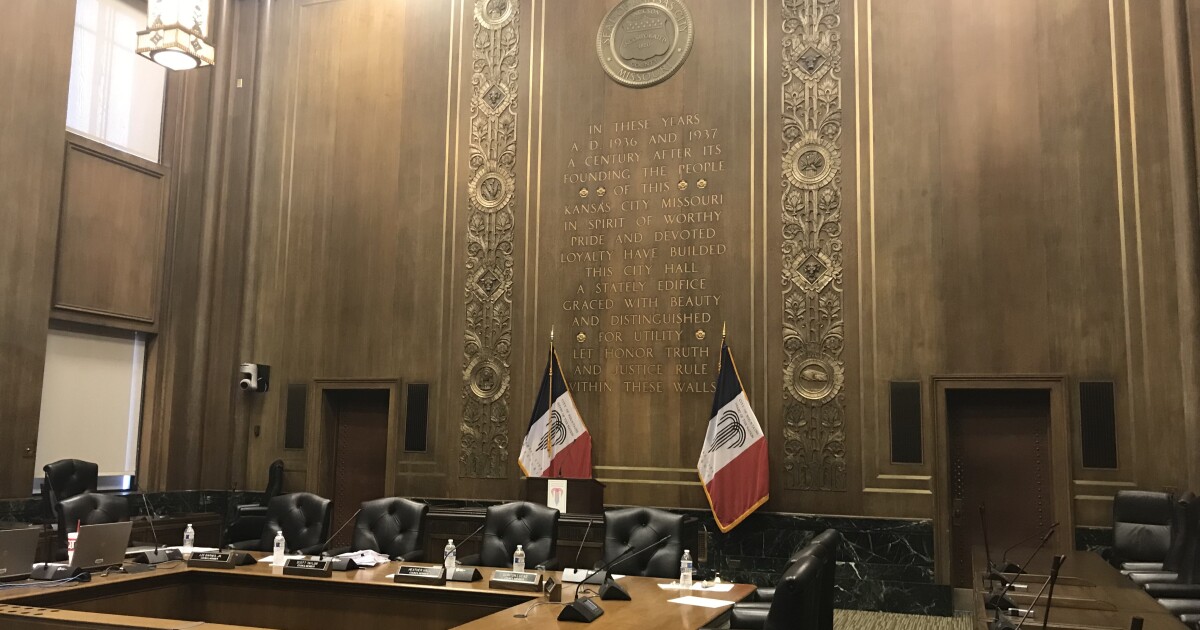
KANSAS CITY, Mo. — The Kansas City, Missouri, City Council voted Thursday to approve a $2.6 billion budget for the city’s fiscal year of 2026-27.
The budget includes $744 million in spending for public safety, including $26.3 million for a new Department of Community Safety and $4.2 million to hire 50 new KCMO Police Department officers, along with 10 call takers and 10 dispatchers.
“Our budget respects the strong fiscal foundation the taxpayers have helped Kansas City build, maintaining a rainy-day fund of over $200 million, increasing road resurfacing, hiring more public safety and city workers, and investing in all Kansas City neighborhoods,” Mayor Quinton Lucas said in a news release from the city. “In a city that can walk and chew gum, we are proud to welcome the world while delivering strong basic services for Kansas City’s families.”
The council voted to spend $83.8 million for the Kansas City Area Transportation Authority to provide bus services, but the KCATA may have to make cuts in bus services even with a $6 million boost in funding from the city.
In addition, the council approved spending $39.4 million for citywide street resurfacing and $1.5 million for tearing down dangerous buildings.
“This budget reflects a collaborative effort across the city, and provides a clear path for Kansas City to keep moving forward with discipline, accountability and a focus on service,” City Manager Mario Vasquez said in the news release. “Thank you to the council for its thoughtful deliberation and input in crafting this budget.”
More information on the fiscal year 2026-27 budget can be found on the city’s website.
—
The Missouri Lottery offers several draw games for those aiming to win big.
Here’s a look at March 25, 2026, results for each game:
Winning Powerball numbers from March 25 drawing
07-21-55-56-64, Powerball: 26, Power Play: 4
Check Powerball payouts and previous drawings here.
Winning Pick 3 numbers from March 25 drawing
Midday: 3-2-0
Midday Wild: 7
Evening: 0-0-5
Evening Wild: 5
Check Pick 3 payouts and previous drawings here.
Winning Pick 4 numbers from March 25 drawing
Midday: 2-6-3-9
Midday Wild: 4
Evening: 9-5-6-8
Evening Wild: 1
Check Pick 4 payouts and previous drawings here.
Winning Cash Pop numbers from March 25 drawing
Early Bird: 07
Morning: 09
Matinee: 04
Prime Time: 14
Night Owl: 07
Check Cash Pop payouts and previous drawings here.
Winning Show Me Cash numbers from March 25 drawing
12-14-22-26-28
Check Show Me Cash payouts and previous drawings here.
Winning Powerball Double Play numbers from March 25 drawing
35-38-41-43-62, Powerball: 08
Check Powerball Double Play payouts and previous drawings here.
Feeling lucky? Explore the latest lottery news & results
Are you a winner? Here’s how to claim your lottery prize
All Missouri Lottery retailers can redeem prizes up to $600. For prizes over $600, winners have the option to submit their claim by mail or in person at one of Missouri Lottery’s regional offices, by appointment only.
To claim by mail, complete a Missouri Lottery winner claim form, sign your winning ticket, and include a copy of your government-issued photo ID along with a completed IRS Form W-9. Ensure your name, address, telephone number and signature are on the back of your ticket. Claims should be mailed to:
Ticket Redemption
Missouri Lottery
P.O. Box 7777
Jefferson City, MO 65102-7777
For in-person claims, visit the Missouri Lottery Headquarters in Jefferson City or one of the regional offices in Kansas City, Springfield or St. Louis. Be sure to call ahead to verify hours and check if an appointment is required.
For additional instructions or to download the claim form, visit the Missouri Lottery prize claim page.
When are the Missouri Lottery drawings held?
- Powerball: 9:59 p.m. Monday, Wednesday and Saturday.
- Mega Millions: 10 p.m. Tuesday and Friday.
- Pick 3: 12:45 p.m. (Midday) and 8:59 p.m. (Evening) daily.
- Pick 4: 12:45 p.m. (Midday) and 8:59 p.m. (Evening) daily.
- Cash4Life: 8 p.m. daily.
- Cash Pop: 8 a.m. (Early Bird), 11 a.m. (Late Morning), 3 p.m. (Matinee), 7 p.m. (Prime Time) and 11 p.m. (Night Owl) daily.
- Show Me Cash: 8:59 p.m. daily.
- Lotto: 8:59 p.m. Wednesday and Saturday.
- Powerball Double Play: 9:59 p.m. Monday, Wednesday and Saturday.
This results page was generated automatically using information from TinBu and a template written and reviewed by a Missouri editor. You can send feedback using this form.

Retired Detroit sergeant faces new sexual assault charge involving 14-year-old victim from 2002

Trump floats sending federal agents to San Francisco to tackle crime

Dallas ISD will offer free pre-K starting next school year

Norwegian Cruise Line offers a first look at Luna, new cruise ship setting sail from PortMiami – WSVN 7News | Miami News, Weather, Sports | Fort Lauderdale

Live: CPAC 2026 Day 2

Florida High School Football Rankings: Top 25 teams – Oct. 21

How old is Bo Nix? What to know about Oregon quarterback ahead of 2024 NFL Draft

Cleary's 21 help Le Moyne down Central Connecticut State 69-64 in OT

99th annual Pony Swim held in Virginia

Indiana Members Credit Union announced as new anchor tenant at Bottleworks District
Live: CPAC 2026 Day 2

Video: Will ICE Change Under Its New Leader?

DHS shutdown breakthrough comes at cost for Republicans as funding fights nears end

Rubio joins crucial G7 talks as Iran war set to dominate second day

A surprise resignation could open the door for an independent to win a Montana Senate seat
-

 Detroit, MI1 week ago
Drummer Brian Pastoria, longtime Detroit music advocate, dies at 68
-

 Science1 week ago
How a Melting Glacier in Antarctica Could Affect Tens of Millions Around the Globe
-

 Movie Reviews1 week ago
‘Youth’ Twitter review: Ken Karunaas impresses audiences; Suraj Venjaramoodu adds charm; music wins praise | – The Times of India
-

 Sports6 days ago
IOC addresses execution of 19-year-old Iranian wrestler Saleh Mohammadi
-

 New Mexico5 days ago
Clovis shooting leaves one dead, four injured
-
 Business1 week ago
Disney’s new CEO says his focus is on storytelling and creativity
-

 Technology5 days ago
YouTube job scam text: How to spot it fast
-

 Tennessee4 days ago
Tennessee Police Investigating Alleged Assault Involving ‘Reacher’ Star Alan Ritchson