Midwest
Missouri sets execution date for second death row inmate this year


The Missouri Supreme Court on Wednesday set a June execution date for David Hosier, who is on death row for killing a Jefferson City woman in 2009.
MISSOURI SETS EXECUTION DATE FOR MAN ACCUSED OF SEXUALLY ASSAULTING COUSIN’S CORPSE AFTER KILLING HER
Hosier is scheduled to die by injection at 6 p.m. June 11 at the state prison in Bonne Terre, Missouri. It is the second execution in the state scheduled for this year. Brian Dorsey is scheduled to be put to death April 9 for killing his cousin and her husband in 2006.
Missouri has set an execution date for convicted murderer David Hosier. (Fox News Digital)
Hosier, 69, was sentenced to death for killing Angela Gilpin. He had a relationship with Gilpin while she was separated from her husband, who also was shot to death in her Jefferson City apartment.
Hosier claimed in an appeal that his trial attorney was inadequate, and that the trial judge had a conflict of interest. The Missouri Supreme Court turned aside that appeal in 2019.
Messages were left Wednesday with Hosier’s attorney.
Read the full article from Here

The South Dakota Lottery offers multiple draw games for those aiming to win big.
Here’s a look at June 29, 2026, results for each game:
Winning Powerball numbers from June 29 drawing
10-14-41-53-59, Powerball: 03, Power Play: 2
Check Powerball payouts and previous drawings here.
Winning Lotto America numbers from June 29 drawing
08-13-29-30-31, Star Ball: 04, ASB: 03
Check Lotto America payouts and previous drawings here.
Winning Millionaire for Life numbers from June 29 drawing
04-25-26-31-36, Bonus: 04
Check Millionaire for Life payouts and previous drawings here.
Feeling lucky? Explore the latest lottery news & results
Are you a winner? Here’s how to claim your prize
- Prizes of $100 or less: Can be claimed at any South Dakota Lottery retailer.
- Prizes of $101 or more: Must be claimed from the Lottery. By mail, send a claim form and a signed winning ticket to the Lottery at 711 E. Wells Avenue, Pierre, SD 57501.
- Any jackpot-winning ticket for Dakota Cash or Lotto America, top prize-winning ticket for Lucky for Life, or for the second prizes for Powerball and Mega Millions must be presented in person at a Lottery office. A jackpot-winning Powerball or Mega Millions ticket must be presented in person at the Lottery office in Pierre.
When are the South Dakota Lottery drawings held?
- Powerball: 9:59 p.m. CT on Monday, Wednesday, and Saturday.
- Mega Millions: 10 p.m. CT on Tuesday and Friday.
- Lucky for Life: 9:38 p.m. CT daily.
- Lotto America: 9:15 p.m. CT on Monday, Wednesday and Saturday.
- Dakota Cash: 9 p.m. CT on Wednesday and Saturday.
- Millionaire for Life: 10:15 p.m. CT daily.
This results page was generated automatically using information from TinBu and a template written and reviewed by a South Dakota editor. You can send feedback using this form.

The Wisconsin Badgers basketball offseason has looked slightly different than normal through the month of June.
Head coach Greg Gard’s class of 2027 rounds out the month of June, featuring three high-profile high school talents. Headlined by four-star in-state sensation Jalen Brown, the class also features three-star center Jack Thelen and Baboucarr Ann, Minnesota’s No. 1 prospect for the class of ’27.
Advertisement
While 247Sports considers Brown the No. 70 player, No. 13 shooting guard, and No. 5 recruit from Wisconsin for the class of 2027, Ann’s status as a small forward is certainly comparable. The outlet’s composite ranking ranks Ann as the No. 63 overall player, No. 18 small forward, and top-rated recruit from his state, making the tandem one of the most prestigious duos to commit to UW in recent history.
247Sports’ director of scouting Adam Finkelstein had this to say about Ann in his recruiting profile:
“Ann is a long-armed, two-way wing who already has versatile tools and yet plenty of potential to keep improving for the foreseeable future… Ann is a long-armed, two-way wing who already has versatile tools and yet plenty of potential to keep improving for the foreseeable future.”
But how did Ann perform during his latest season with Maple Grove High School in Maple Grove, Minnesota?
Advertisement
Through 31 games, he averaged 18.9 points, 4.3 rebounds, 3.5 assists, and 1.4 steals per appearance, according to StribVarsity. If Ann can provide even half of that production as a freshman, Wisconsin’s wing depth could look quite scary when he arrives in Madison.
Contact/Follow @TheBadgersWire on X (formerly Twitter) and like our page on Facebook to follow ongoing coverage of Wisconsin Badgers news, notes and opinion.
This article originally appeared on Badgers Wire: What did prized Wisconsin commit Baboucarr Ann average in 2025-26?

Looking for the newest family attractions in Metro Detroit? You’re in luck! Just halfway through 2026, southeast Michigan has welcomed an incredible lineup of new playgrounds, museums, indoor play spaces, splash pads, interactive exhibits, and family attractions. Whether you’re planning a weekend adventure, looking for somewhere new to explore with toddlers, or trying to keep older kids entertained this summer, these brand-new destinations deserve a spot on your family’s bucket list.
Here’s where families are heading in Metro Detroit this year.
Detroit’s newest riverfront attraction features an interactive water garden where kids can run through playful fountains while enjoying spectacular views of the Detroit River. The surrounding park also includes nature-inspired playgrounds, walking paths, picnic areas, and one of the city’s most beautiful waterfront destinations.

Michigan Science Center has unveiled a giant cardboard maze experience that celebrates Detroit neighborhoods, landmarks, and creativity. Families can wander through immersive pathways filled with colorful murals while also enjoying hands-on STEM activities like robot challenges, cardboard building stations, and interactive games. Best of all, the exhibit is included with general admission.
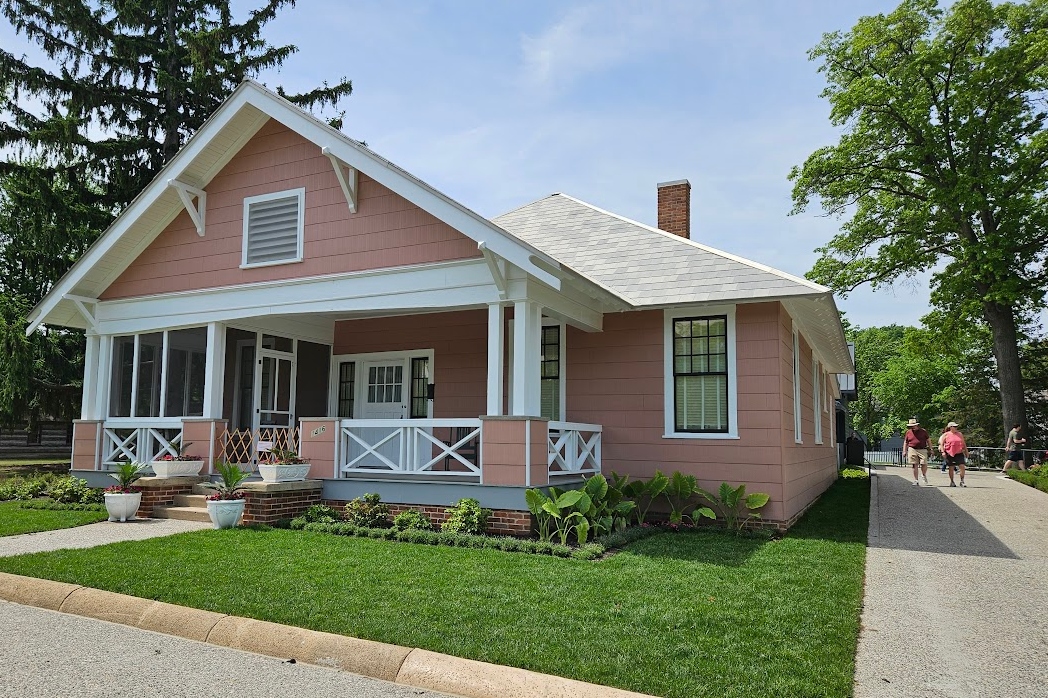
History comes to life in a powerful new way at Greenfield Village with the opening of the Jackson Home, relocated from Selma, Alabama. The home belonged to Dr. Sullivan and Richie Jean Sherrod Jackson, close friends of Dr. Martin Luther King Jr., and served as an important meeting place during the Civil Rights Movement.

West Lincoln Well Park (Birmingham)
West Lincoln Well Park is located on the south side of Lincoln Street at Westchester Way. The park contains open space, two tennis courts and play equipment including swings, slides, shaded sandbox, a play structure and rockers. Address: 1801 W Lincoln St, Birmingham, MI 48009

The new Erb Discovery Trails at the Detroit Zoo is a 7-acre immersive experience set to open on Saturday, May 23rd. The trails will feature a mix of new animal habitats, hands-on encounters, and nature-inspired play spaces where kids can climb, explore, and engage their senses. Guests can expect interactive experiences like feeding animals, exploring multi-sensory pathways, and even encountering species like stingrays and bamboo sharks, all while learning about conservation through storytelling and outdoor adventure. Created to blend education with play, the Discovery Trails aim to inspire curiosity, connection to nature, and memorable family experiences in an entirely new section of the zoo.

Step into a world of magic this summer at The Lost World of Dragons at Sloan Museum of Discovery, running May 16 through September 13. This exciting, family-friendly exhibit brings dragon legends to life with interactive displays that blend science, history, and imagination—perfect for curious kids and adventurous families. Admission is $25 for ages 12+, $17 for kids ages 2–11 (under 2 free) and includes full access to the museum, making it an easy and unforgettable day trip option.

Great Lakes Serpentarium brings reptiles out of the pages of books and into the real world with more than 100 animals from around the globe. From snakes and turtles to iguanas and alligators, this unique reptile house lets visitors see and interact with creatures most people only read about.

At Slick City Troy is the most popular place in town! The action lineup is packed with thrilling attractions you won’t find anywhere else. Feel the rush of wind as you zoom down, enjoying a safe and thrilling descent that’s fun for all ages – thing the adrenaline rush of a roller coast but on massive slides. In addition to giant slides, there are also traditional multi-level climbing structures for school age kids and toddlers. Location: 1820 Crooks Rd, Troy

2D DIY Studio has opened a brand-new location in Sterling Heights, offering a fun, welcoming space where kids, teens, and adults can tap into their artistic side. Whether you’re planning a girls’ night out, a birthday party, or a family outing, this DIY studio delivers colorful, crafty fun for all skill levels — no experience required.
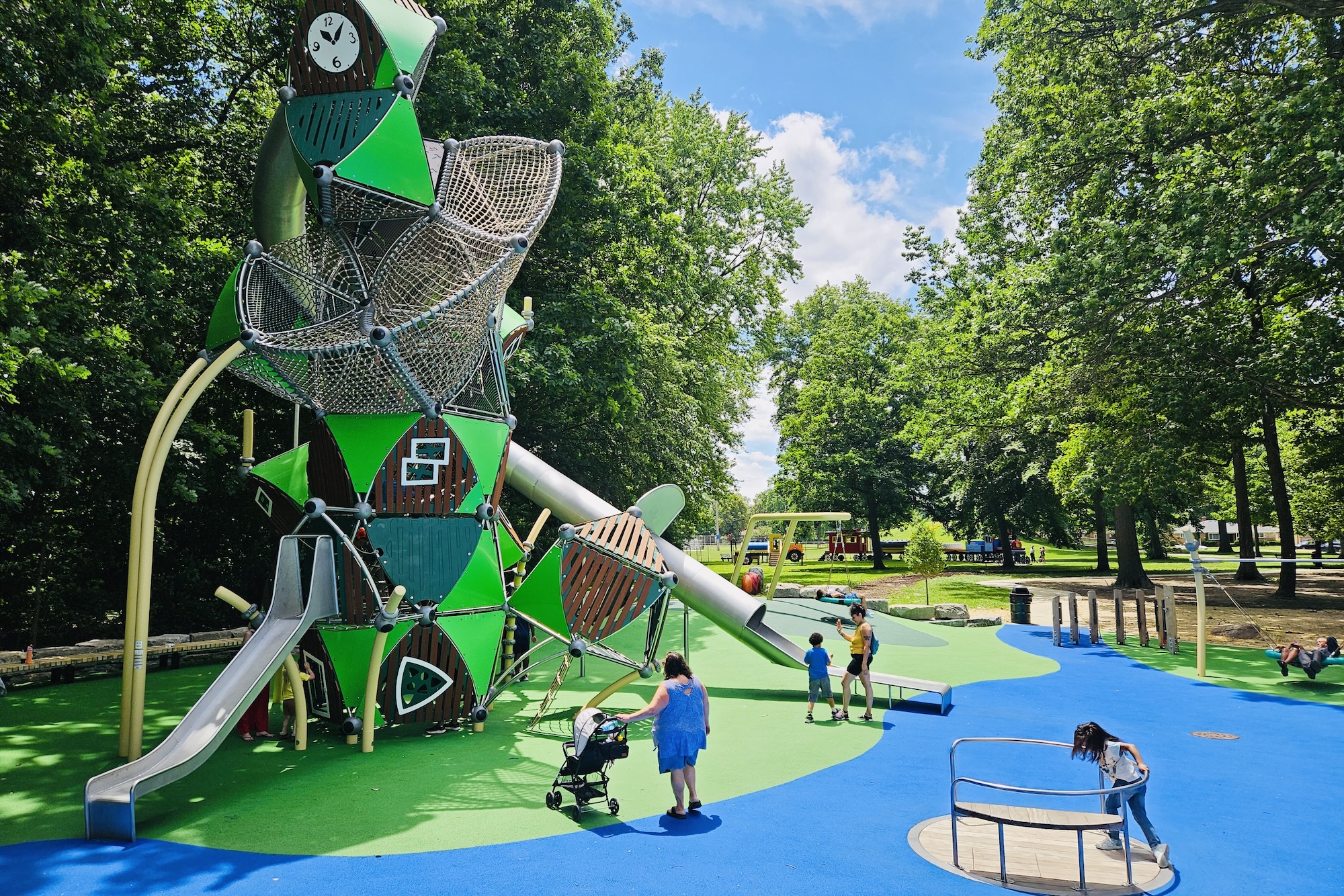
Oak Park Woods Playground (Oak Park)
Uniquely designed, Oak Park Woods features towering green play structures, connected by rope bridges, climbing nets, tunnels, and elevated pathways. . The massive play structure features towering climbing elements, a giant slide, inclusive play equipment, and plenty of room for kids to explore. Lower climbing features, smaller slides, and ground-level play elements create opportunities for toddlers and preschoolers to safely explore. Best of all the park’s signature train and monster truck have been refurbished and remain at the park. Address: 24198 Church St, Oak Park, MI 48237

At Kids Castle Fun Center guests can race around in exciting bumper cars, bounce in colorful and safe bounce houses—including obstacle courses and an adventurous Pirate Ship—play a variety of arcade games from classic favorites to modern hits, and enjoy kiddie ride-ons and prize-filled crane games. Address: 5100 Dixie Highway, Suite 400

A new entertainment destination for families has arrived in metro Detroit. Gotta Gacha brings together classic arcade fun, modern gaming, and collectible culture all under one roof—making it a must-visit spot for kids, teens, and gamers of all ages. Address: 29200 Dequindre Rd Ste 3, Warren

One of the most unique new play spaces in Metro Detroit, Sandverse brings the beach indoors with Michigan’s first immersive indoor sandbox experience. Kids can dig, build, and create in soft, natural sand, using tools and prompts that encourage open-ended, sensory-rich play. Designed especially for younger children, the space blends creative exploration with early learning and motor skill development, while also offering a sand-free zone for additional play.

ITAVA IMAGINATION Station is all about hands-on discovery, creativity, and imaginative play. This interactive space encourages kids to explore, build, and engage in STEAM-inspired activities that blend learning with fun – inside AND out! Designed for a wide range of ages, it offers an environment where kids can experiment, problem-solve, and let their imaginations run wild.

Specializing in children’s art classes, camps and art themed birthday parties, Kidcreate Studio is an art studio just for kids. At Kidcreate Studio, your child will create fridge-worthy masterpieces, learn art concepts, and experiment with many different art materials.

After renovations and updates, Plymouth District Library is celebrating its grand reopening this June. Families can explore refreshed spaces, updated collections, and community-centered improvements designed to make the library even more welcoming for children and visitors of all ages.

The wait is over! Ford Field Park is finally reopened in downtown Northville and the signature wooden playground is now trek! Say bye to splinters an wood chips in sandals and enjoy a similar playtime experience in a modern, more enjoyable environment. Address: 151 N. Griswold, Northville, MI 48167

The RED Children’s Museum is a first-of-its-kind children’s visual arts museum focused entirely on hands-on creativity, expression, and imagination. Families can explore interactive exhibits that encourage kids to paint, build, design, and experiment with art in a completely immersive way. Unlike traditional museums, this space invites kids to be active participants—making it perfect for curious minds who love to create.

-

 Oklahoma30 seconds ago
Oklahoma’s Kyle Dillingham, Peter Markes to perform at Great American State Fair
-

 Oregon3 minutes ago
Baker County was 1st official jurisdiction in Eastern Oregon – La Grande Observer
-

 Pennsylvania8 minutes ago
Editorial: Classrooms reflect Pennsylvania’s demographic reality
-

 Rhode Island16 minutes ago
Rhode Island wins 5 gold medals at 2026 Special Olympics
-

 South-Carolina18 minutes ago
Hricik launches no-money pledge campaign for SC attorney general
-
South Dakota23 minutes ago
SD Lottery Powerball, Lotto America winning numbers for June 29, 2026
-

 Tennessee31 minutes ago
PHOTOS: The Strawberry Moon lights up Middle Tennessee Monday night
-

 Texas33 minutes ago
Hot, muggy and breezy conditions continue for North Texas ahead of Fourth of July

