Minnesota
Walz, Democratic governors say abortion will be on the November ballot • Minnesota Reformer


Gov. Tim Walz used the second anniversary of the U.S. Supreme Court Dobbs decision to highlight what he said would be the “major role” abortion will play in the November presidential election, and he argued that limiting access to reproductive health care is still a priority for many Republicans.
Walz, who serves as chair of the Democratic Governors Association, was joined by six other Democratic governors, including some facing close reelection battles in their home states. They said a person’s geography shouldn’t determine whether they can get an abortion.
Since the U.S. Supreme Court struck down Roe v. Wade and gave states permission to set abortion policy, 14 states enacted total abortion bans, and many more have enacted bans with gestational limits.
Walz leaned into the stakes of the presidential election on one of the few issues that has been a clear winner for Democrats during the presidency of Joe Biden.
“You’re going to get a choice in November, whether it’s to vote for President Biden to protect those rights to continue on making sure that women have bodily autonomy, or to turn that clock back,” Walz said. “As Donald Trump said, he was so proud to be the architect in bringing down Roe v. Wade, so it becomes critically important.”
Minnesota Democrats last year passed a law codifying the right to abortion and reproductive health care, and pregnant people appear to be coming to Minnesota as a safe haven. According to the Guttmacher Institute, the proportion of abortions obtained by out-of-state residents in Minnesota increased from about 9% in 2020 — when Roe was still in place — to about 21% in 2023. There were about 14,700 clinician-provided abortions in Minnesota last year, according to the Guttmacher Institute.
The U.S. Supreme Court earlier this month upheld broad access to an abortion pill — mifepristone — used in medication abortions. Medication abortions account for the vast majority of abortions in the U.S.
Minnesota Democratic Sen. Tina Smith last week introduced a bill to repeal the 1873 Comstock Act, which bans the mailing of obscene material, including abortion-related materials. Although the law is not being enforced, Smith and abortion advocates say a future Trump administration could weaponize the law to ban abortion pills from being sent in the mail.
“Now that Trump has overturned Roe, a future Republican administration could try to misapply this 150-year-old Comstock law to deny American women their rights, even in states where abortion rights are protected by state law,” Smith said in a press release. “This is why I’m introducing legislation to repeal Comstock. It is too dangerous to leave this law on the books.”
A few of the governors during the Monday press conference criticized their Republican opponents challenging them in November.
Kentucky Gov. Andy Beshear said his state has one of the most restrictive abortion bans in the country, only allowing exceptions if the mother’s life is at risk.
Beshear said leaving abortion access up to individual states endangers people in GOP states, particularly abuse survivors.
“There shouldn’t be a state in the United States of America where victims of rape and incest should have no options or where someone has to carry a non-viable pregnancy. That’s just wrong,” Beshear said.
Walz said the right to an abortion is sure to be among the factors people consider when voting.
“This is one that’s very personal to people. It’s not theoretical. Republicans keep trying to tell you that ‘Oh, this is over.’ Whatever, keep saying that because it’s far from over,” he said.
At the end of the press conference, Walz addressed the flooding caused by heavy rains affecting cities across Minnesota. Walz said that the damage could rival the 1997 Red River flooding that devastated many cities along the Minnesota-North Dakota border.
Walz said the state is preparing mitigation efforts and is ready to perform evacuations when necessary. He also said he’s ready to call a special legislative session if needed to allocate more funding to combat the flood, but the state isn’t at that point yet and the situation is developing.



Minneapolis police are investigating a shooting that seriously injured a man on the city’s north side Wednesday afternoon.
The shooting happened just before 2 p.m. on the 1200 block of 36th Avenue North, according to the Minneapolis Police Department.
Upon arrival, officers found a man inside the living room of a residence suffering from a life-threatening gunshot wound. Police provided medical aid to the victim before he was transported by ambulance to an area hospital.
Officers are working to determine what led up the shooting, including if it was accidental, according to officials.
No arrest have been made so far.

The National Weather Service (NWS) has confirmed that the tornado that struck the Detroit Lakes area of northwestern Minnesota on July 6 was rated EF2, with estimated peak winds of 185 km/h (115 mph).
The tornado touched down at 19:47 local time (LT), approximately 3 km (2 miles) south-southwest of Westbury, according to the NWS.
It remained on the ground for about 10 minutes. The tornado had a path length of 10.93 km (6.79 miles) and reached a maximum width of more than 730 m (2 400 feet). It dissipated approximately 6 km (4 miles) northeast of Detroit Lakes at 19:57 LT.
The Becker County Sheriff’s Office (BCSO) said deputies and other emergency responders began monitoring the severe weather around 19:30 LT after receiving reports of a possible funnel cloud north of Lake Park.
At approximately 20:14 LT, the Sheriff’s Office received a report of a tornado near the Oakland Beach area, where it caused extensive damage to homes, buildings, and trees.
The NWS confirmed two injuries associated with the event, one of which was directly caused by the tornado.
“1 injury can be directly attributed to the tornado, as a homeowner was injured in their home when their roof was removed by the tornado. The second injury was after the tornado during the cleanup stage and could be due to shock or trauma, according to the county emergency manager,” the NWS reported.
“Responders went from home to home looking for residents and checking for the injured. Two individuals were transported to Essentia St. Mary’s Hospital with non-life-threatening injuries. One other patient went to the hospital by private vehicle,” the BCSO said.
-

Tornado damage in Detroit Lakes, Minnesota on July 6, 2026. Credit: Becker County Sheriff’s Office
-
Tornado damage in Detroit Lakes, Minnesota on July 6, 2026. Credit: Becker County Sheriff’s Office
-
Tornado damage in Detroit Lakes, Minnesota on July 6, 2026. Credit: Becker County Sheriff’s Office
-
Tornado damage in Detroit Lakes, Minnesota on July 6, 2026. Credit: Becker County Sheriff’s Office
-
Tornado damage in Detroit Lakes, Minnesota on July 6, 2026. Credit: Becker County Sheriff’s Office
-
Tornado damage in Detroit Lakes, Minnesota on July 6, 2026. Credit: Becker County Sheriff’s Office
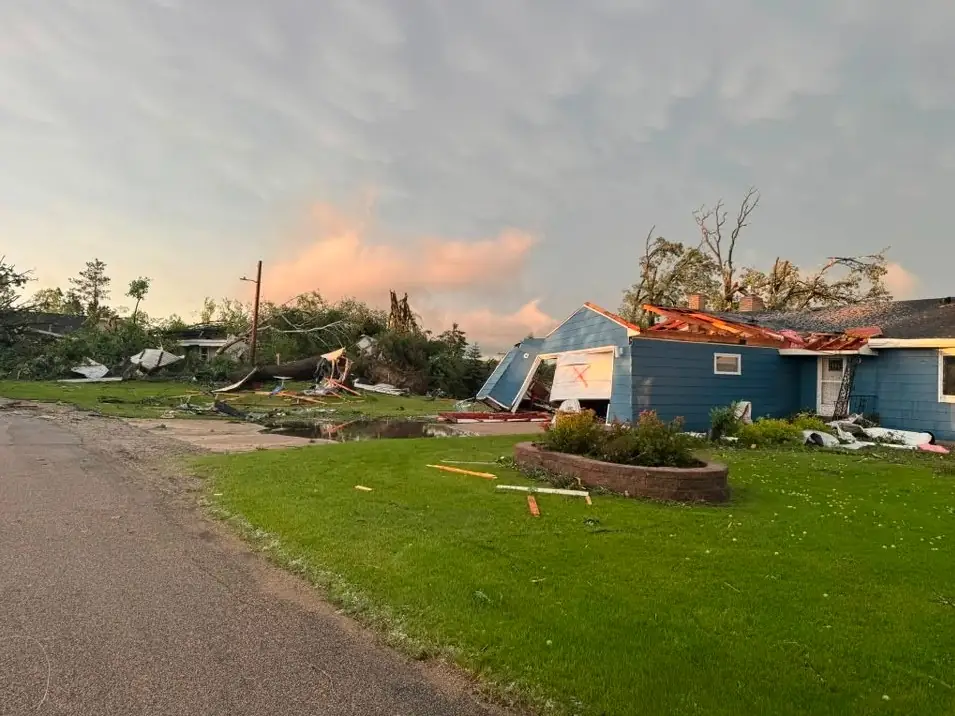
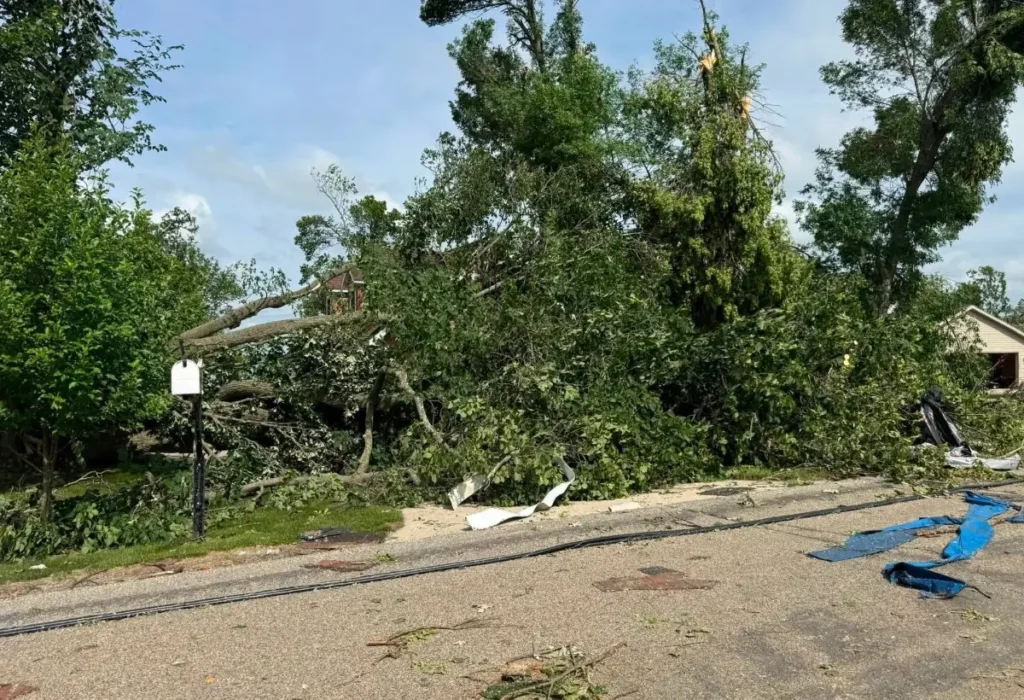
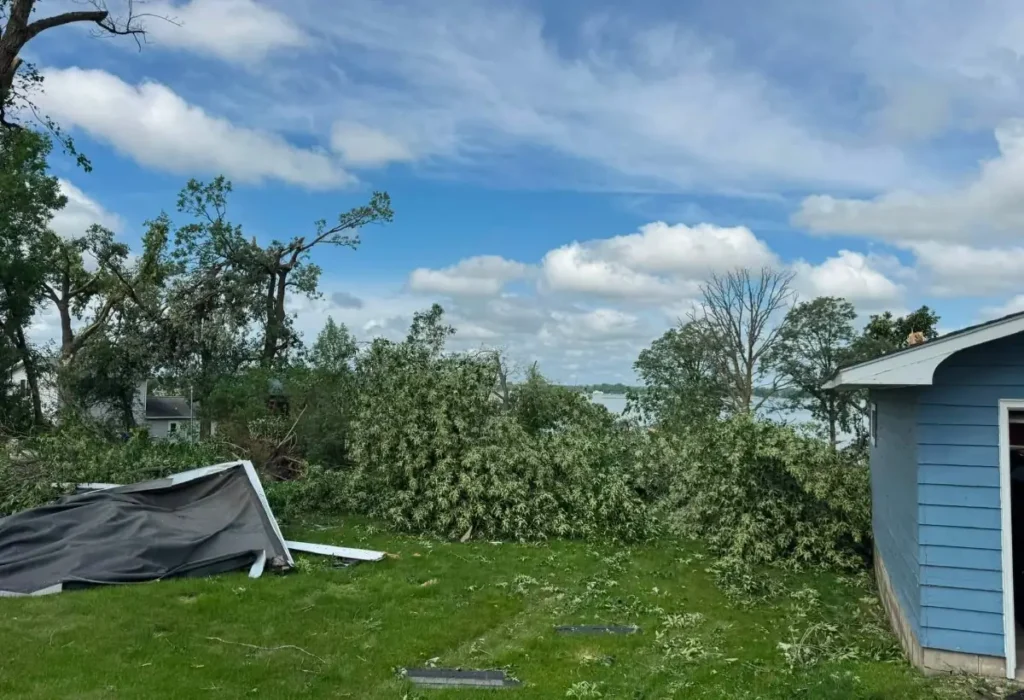
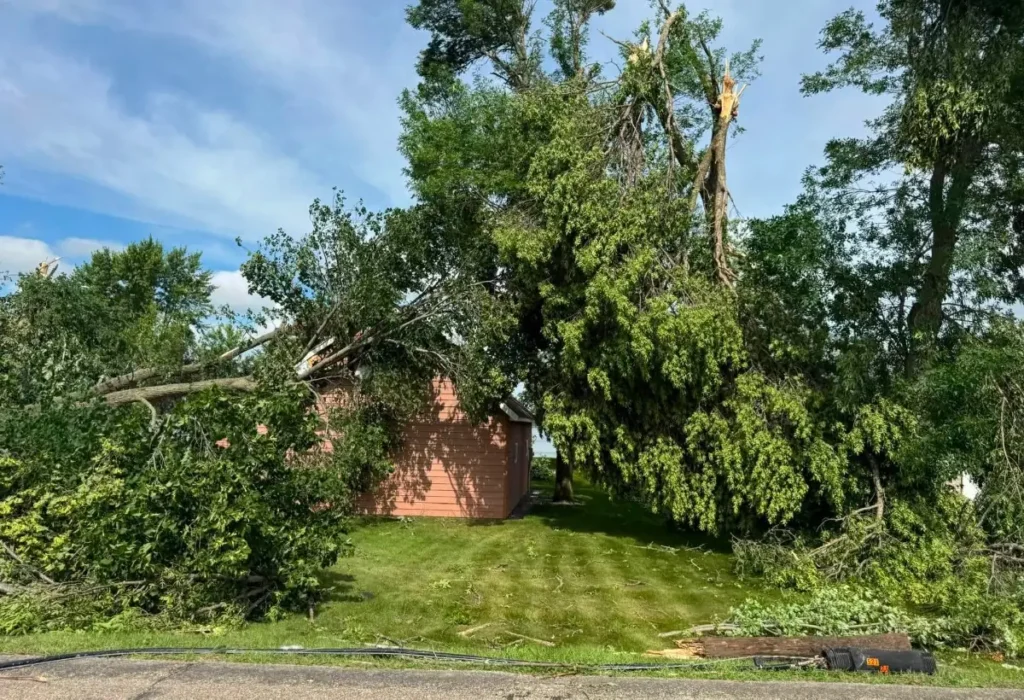
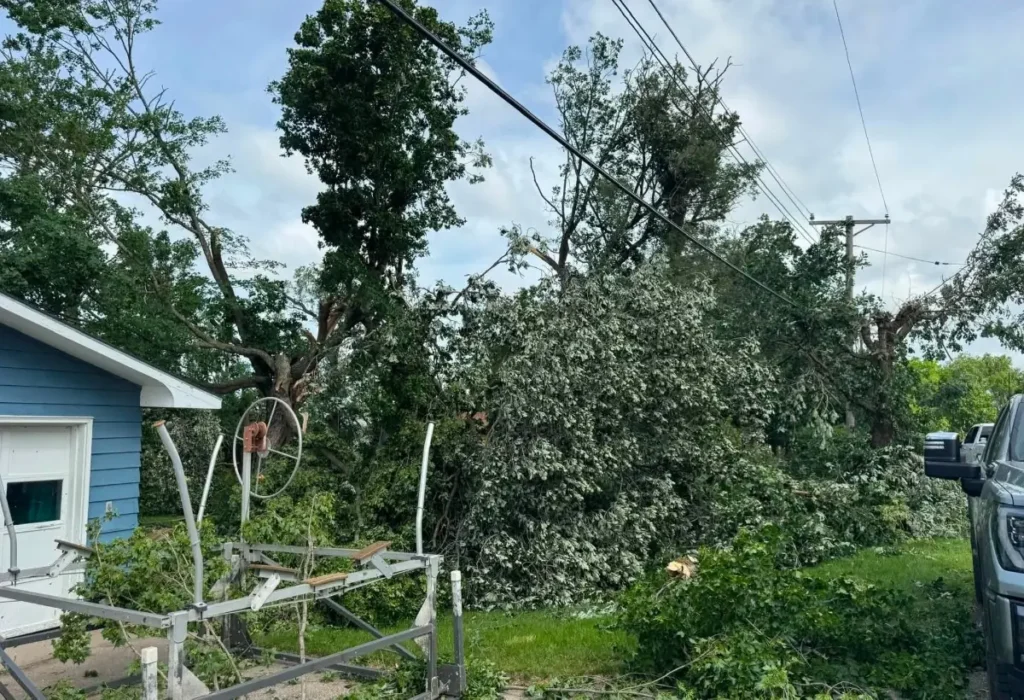
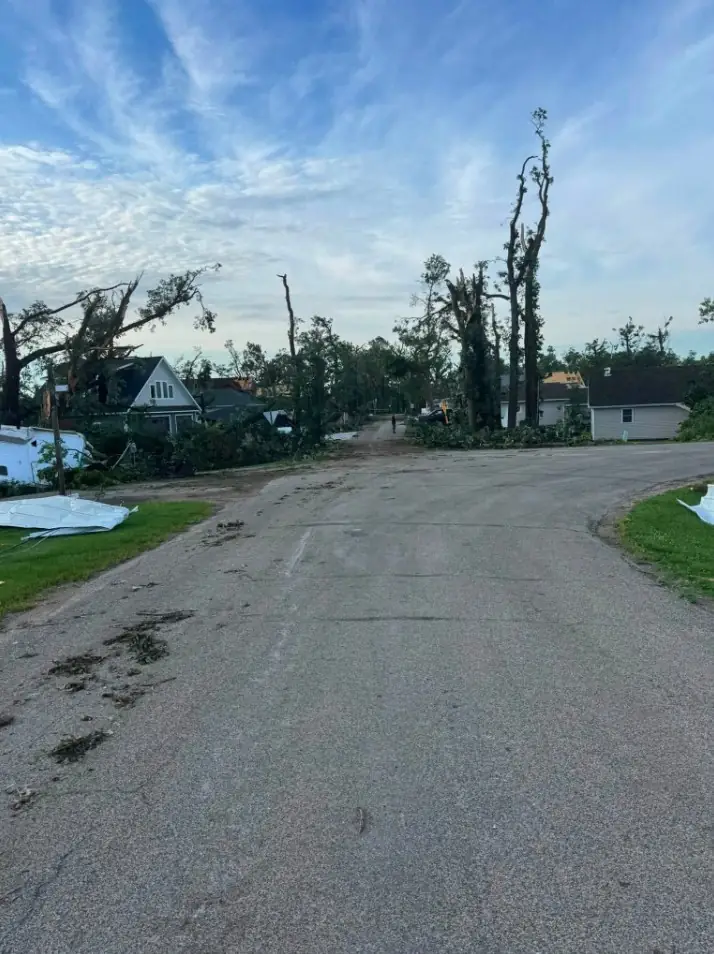
The tornado began about 2 km (1 mile) northwest of Wheeler Lake before crossing the lake, where it damaged the roofs of several homes and snapped the trunks of large oak and poplar trees.
It reached its maximum width near the western shore of Big Floyd Lake, with the Oakland Beach neighborhood sustaining the most severe damage.
Multiple garages and lighter outbuildings were swept away, while widespread roof and tree damage was reported. A 2 x 4 m (6 x 12-foot) horse trailer was lofted and carried about 200 m (656 feet) before the tornado crossed Big Floyd Lake and continued east. The last visible damage was identified near the intersection of County Highway 25 and Anchor Road.
More than 500 customers lost power as a result of the storms, according to Detroit Lakes Public Utility.
As the storm tracked east-southeast, strong winds, hail, and heavy rain affected areas north of Audubon before a tornado warning was issued for the Callaway and Rochert areas. Reports of downed trees, power lines, and debris soon followed from Detroit Township between U.S. Highway 59 and County Highway 21.
References:
1 Public Information Statement – NWS – July 7, 2026

Giordano’s, the famous pizzeria known for their deep-dish style Chicago pizza, is opening a second location in Minnesota at the Mall of America.
The pizza chain also has a location in Richfield, and previously had a location some years ago in Minneapolis in Uptown.
The grand opening of the Mall of America location will be on Thursday, July 16. The restaurant there will be unique, with the restaurant’s first self-service kiosk ordering. It will also have a grab-and-go area and a normal seated restaurant experience.
The Chicago deep-dish chain has been around since 1974, with the vast majority of locations in the Chicagoland area. They have 60 restaurants in nine states and are currently expanding nationwide.
-

 Missouri5 seconds ago
Missouri Farm Bureau to host agritourism conference in Hermann | Fulton Sun
-
Montana3 minutes ago
Montana Lottery Powerball, Lotto America results for July 8, 2026
-

 Nebraska8 minutes ago
Nebraska softball coaching staff finalized with a contract extension
-

 Nevada15 minutes ago
Odd and beguiling ‘Rose of Nevada’ will haunt viewers
-

 New Hampshire18 minutes ago
New Hampshire Gov. signs law requiring schools to out trans kids
-

 New Jersey23 minutes ago
What to know about Freedom Fuel Network as Trump urges cheaper gas prices in Pennsylvania, NJ
-
North Carolina28 minutes ago
NC Lottery Powerball, Pick 3 Day results for July 8, 2026
-

 New Mexico30 minutes ago
Wild rat in New Mexico tests positive for the plague after 4 confirmed cases in dogs

