Minnesota
Study to use trail cameras for research on northern Minnesota deer


GRAND RAPIDS — The Minnesota Department of Natural Resources wants a better handle on the deer population in northeastern and north-central areas of the state and is starting a three-year research project to get the answers.
DNR wildlife researchers will be placing trail cameras across a broad swath of St. Louis, Itasca and Cass counties, with a bit of Beltrami and Aitkin counties included in the study area as well — deer management units 169, 176, 177, 178, 197 and 679.
In the coming weeks, some private landowners will receive letters from the DNR requesting permission to put a camera on their property so the DNR can get results from a mix of public and private land across the region.
Gary Meader / Duluth Media Group
Landowners who receive the letter are asked to respond as soon as possible.
“One of the things we want to know is if there’s a different distribution of deer on private land compared to public land,” said Eric Michel, DNR wildlife biologist leading the project. “Across this study area, it’s almost 50/50 public to private land ownership.”
There will be 40 cameras placed at random locations across the entire study area, each taking photos every five minutes from July through August. The DNR will then pick up the cameras before hunting seasons begin. The cameras will be moved to different locations in 2025 and 2026.
Computer programs using artificial intelligence will be used to sift through the tens of thousands of time-lapse images and come up with estimates on not only the overall population of those areas but also the ratio of bucks to does and does to fawns.
“By July, the bucks are starting to grow antlers, the fawns are moving around more, but they still have spots, so we can differentiate between adult does, bucks and fawns pretty easily,” Michel said.

Steve Kuchera / 2018 file / Duluth Media Group
The time-lapse camera research technology and methodology were successfully used in earlier test studies conducted in 2021 and 2023, but this is the first time Minnesota DNR researchers have used it on a broad scale, Michel said.
Traditional deer population modeling relies heavily on hunter-harvest data and computer modeling. The camera project will provide additional data to increase confidence in making management decisions in the study area.
Some DNR wildlife managers have noted that deer in forested parts of the state seem to congregate near areas with at least some agricultural fields, if available, which may bring more deer onto private land.
The camera study, with results expected by 2027, could also help determine if the DNR should issue antlerless permits based on land ownership, potentially with more permits offered on private land if more deer are located there. Wisconsin already issues doe tags separately for public and private land.
“That’s one theory. But we really don’t know yet whether more deer are on private land in this area,” Michel said.
Deer across much of Northeastern Minnesota have been hit hard over the past decade, with seven of the past 10 winters being extremely harsh, with deep snow likely causing higher than normal deer mortality. That’s caused a big drop in the deer population, reduced antlerless permits available to hunters, and cut hunter success by half or more in some areas, especially north of Duluth, where the state’s heaviest snowfall occurs.
The record warm and snowless winter of 2023-24 should help the region’s deer to recover some, although several mild winters will be needed for deer populations to fully rebound to the all-time record levels of the early 2000s.
Meanwhile, deer in the Northland face ongoing issues of reduced habitat quality and predation by wolves year-round. In June, newborn fawns are also eaten by black bear and bobcat.
“One of the reasons we want to get three years of data is to compare the impact of winter on (deer) abundance,” Michel said. “We’re probably going to see at least one of the three study seasons come after a winter that’s higher on the winter severity index.”
Michel said that deer management unit 678 around Grand Rapids has seen the region’s only deer that tested positive for chronic wasting disease. Increased data on deer numbers in that area should help the DNR monitor any spread of the always fatal disease.
Meanwhile, DNR officials in Minnesota and Wisconsin remind people to leave any newborn fawns they find alone. It’s common for does to leave their fans alone for long periods each day, but they almost always return, and there’s usually no need for any human intervention.

John Myers reports on the outdoors, natural resources and the environment for the Duluth News Tribune. You can reach him at jmyers@duluthnews.com.



Minneapolis police are investigating a shooting that seriously injured a man on the city’s north side Wednesday afternoon.
The shooting happened just before 2 p.m. on the 1200 block of 36th Avenue North, according to the Minneapolis Police Department.
Upon arrival, officers found a man inside the living room of a residence suffering from a life-threatening gunshot wound. Police provided medical aid to the victim before he was transported by ambulance to an area hospital.
Officers are working to determine what led up the shooting, including if it was accidental, according to officials.
No arrest have been made so far.

The National Weather Service (NWS) has confirmed that the tornado that struck the Detroit Lakes area of northwestern Minnesota on July 6 was rated EF2, with estimated peak winds of 185 km/h (115 mph).
The tornado touched down at 19:47 local time (LT), approximately 3 km (2 miles) south-southwest of Westbury, according to the NWS.
It remained on the ground for about 10 minutes. The tornado had a path length of 10.93 km (6.79 miles) and reached a maximum width of more than 730 m (2 400 feet). It dissipated approximately 6 km (4 miles) northeast of Detroit Lakes at 19:57 LT.
The Becker County Sheriff’s Office (BCSO) said deputies and other emergency responders began monitoring the severe weather around 19:30 LT after receiving reports of a possible funnel cloud north of Lake Park.
At approximately 20:14 LT, the Sheriff’s Office received a report of a tornado near the Oakland Beach area, where it caused extensive damage to homes, buildings, and trees.
The NWS confirmed two injuries associated with the event, one of which was directly caused by the tornado.
“1 injury can be directly attributed to the tornado, as a homeowner was injured in their home when their roof was removed by the tornado. The second injury was after the tornado during the cleanup stage and could be due to shock or trauma, according to the county emergency manager,” the NWS reported.
“Responders went from home to home looking for residents and checking for the injured. Two individuals were transported to Essentia St. Mary’s Hospital with non-life-threatening injuries. One other patient went to the hospital by private vehicle,” the BCSO said.
-

Tornado damage in Detroit Lakes, Minnesota on July 6, 2026. Credit: Becker County Sheriff’s Office
-
Tornado damage in Detroit Lakes, Minnesota on July 6, 2026. Credit: Becker County Sheriff’s Office
-
Tornado damage in Detroit Lakes, Minnesota on July 6, 2026. Credit: Becker County Sheriff’s Office
-
Tornado damage in Detroit Lakes, Minnesota on July 6, 2026. Credit: Becker County Sheriff’s Office
-
Tornado damage in Detroit Lakes, Minnesota on July 6, 2026. Credit: Becker County Sheriff’s Office
-
Tornado damage in Detroit Lakes, Minnesota on July 6, 2026. Credit: Becker County Sheriff’s Office
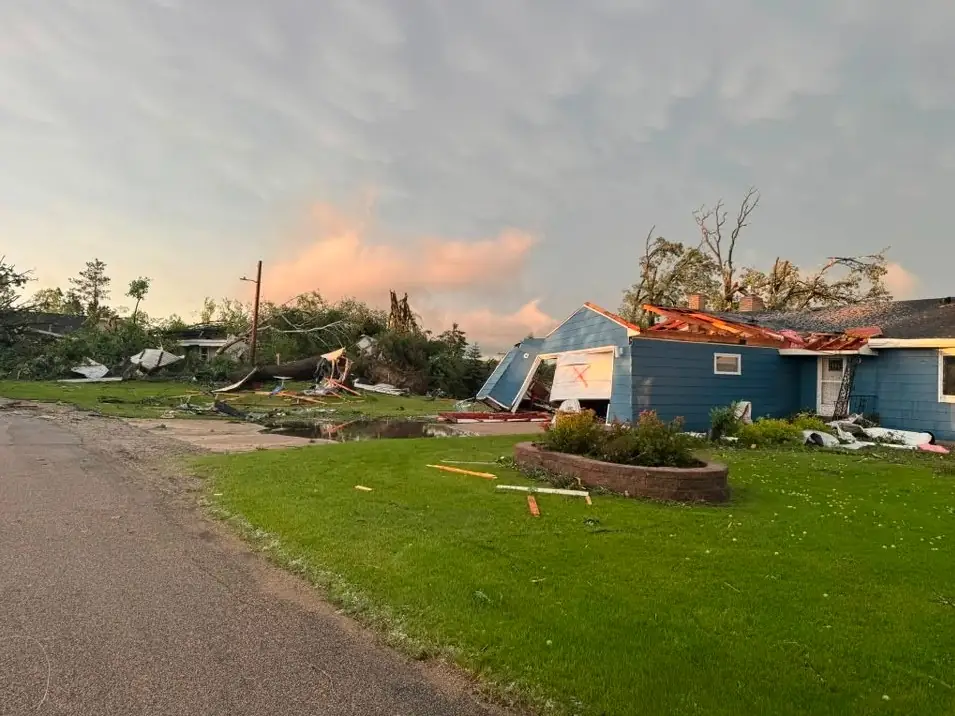
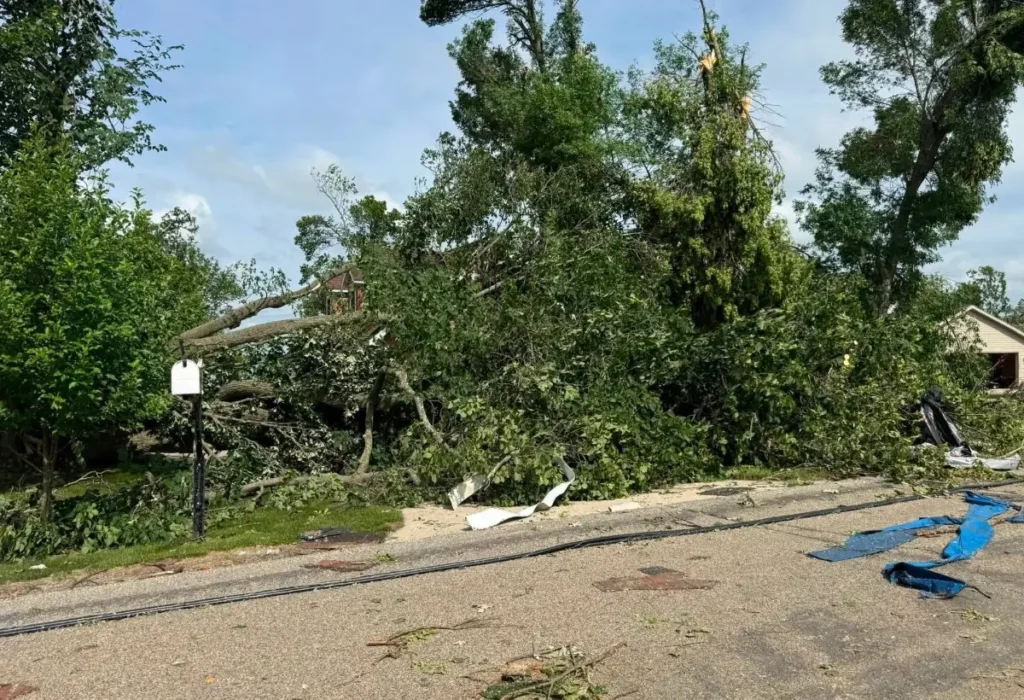
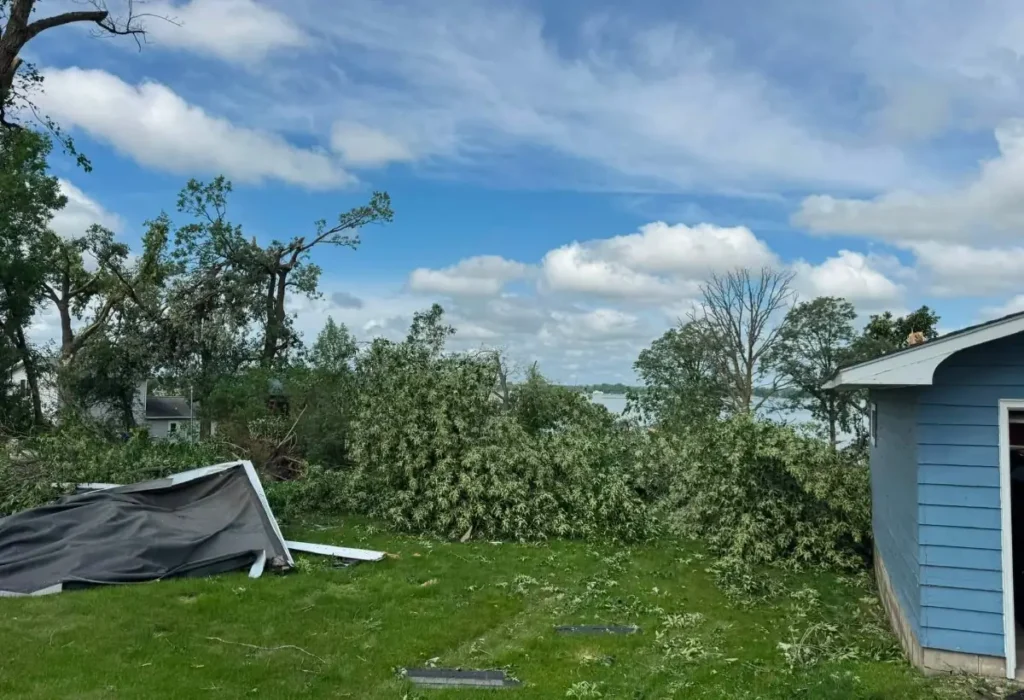
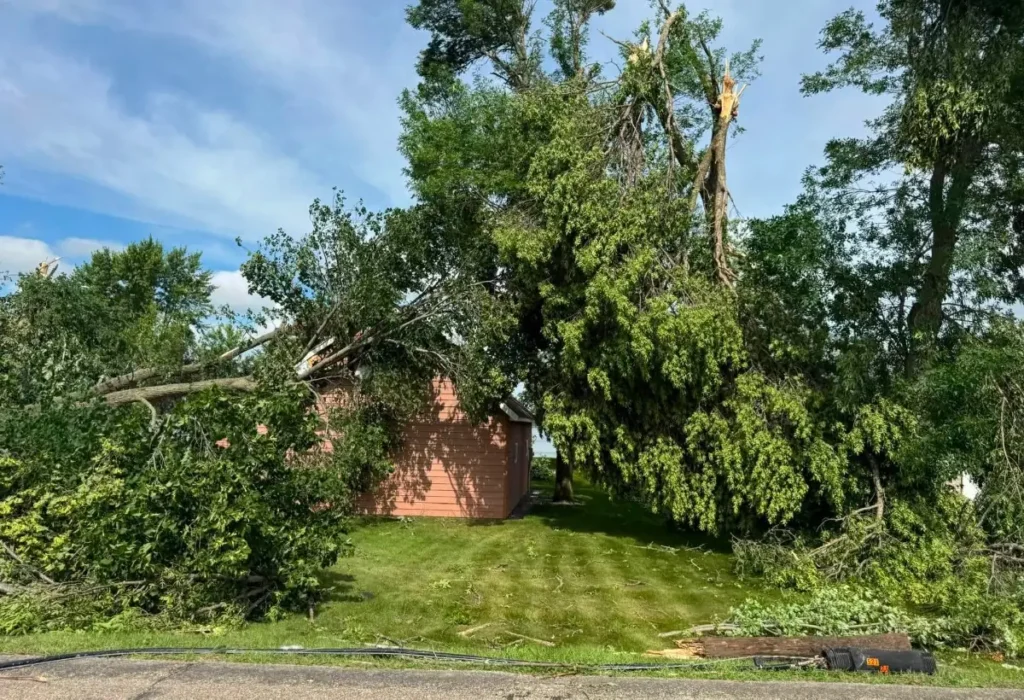
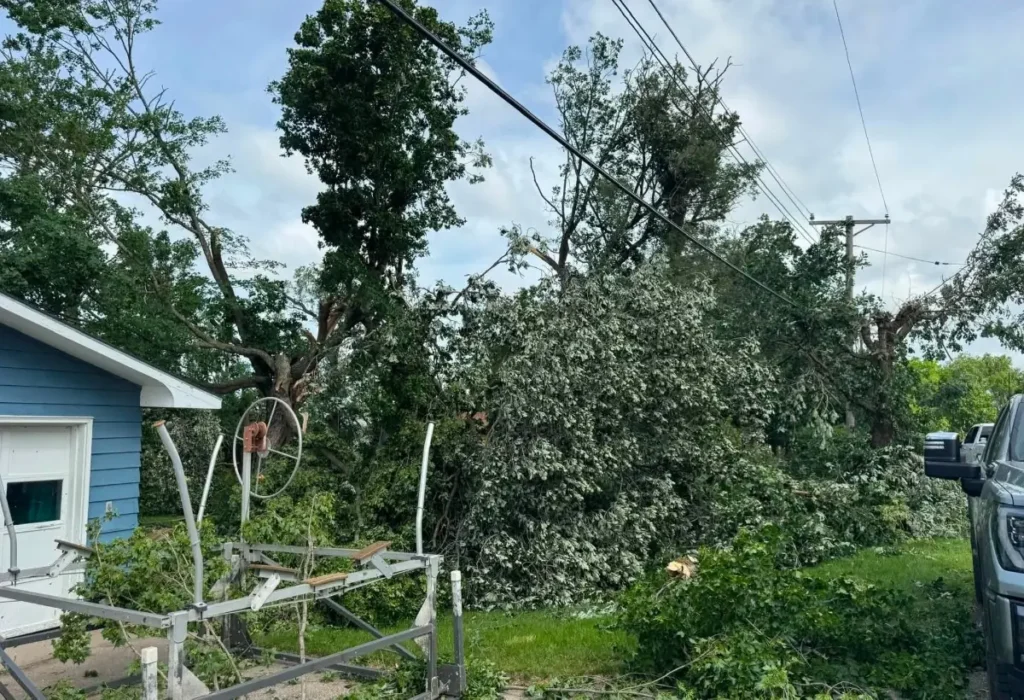
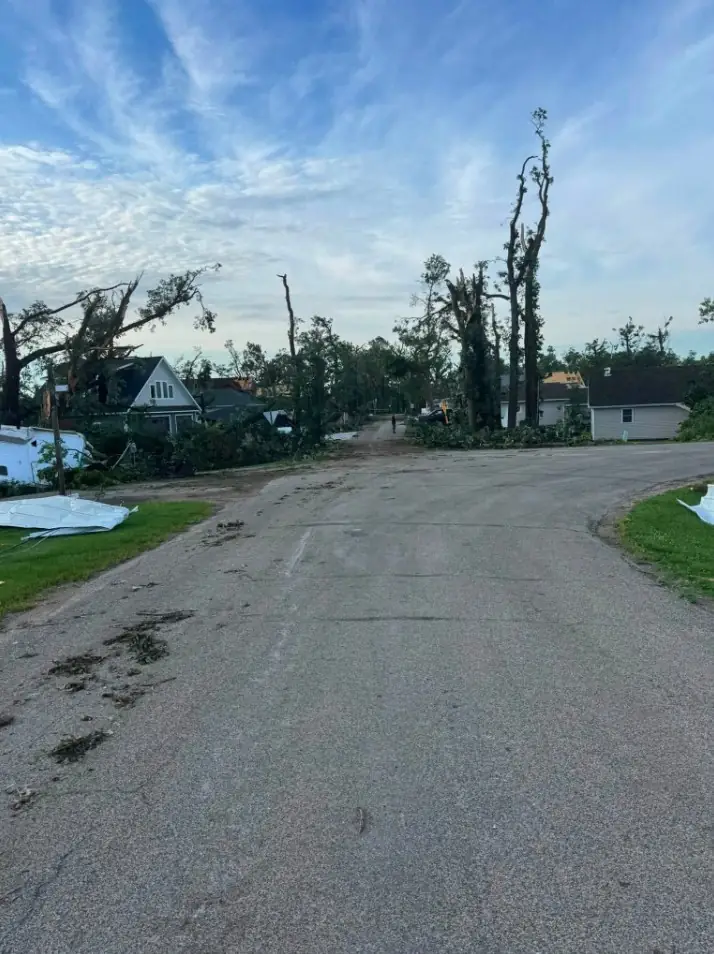
The tornado began about 2 km (1 mile) northwest of Wheeler Lake before crossing the lake, where it damaged the roofs of several homes and snapped the trunks of large oak and poplar trees.
It reached its maximum width near the western shore of Big Floyd Lake, with the Oakland Beach neighborhood sustaining the most severe damage.
Multiple garages and lighter outbuildings were swept away, while widespread roof and tree damage was reported. A 2 x 4 m (6 x 12-foot) horse trailer was lofted and carried about 200 m (656 feet) before the tornado crossed Big Floyd Lake and continued east. The last visible damage was identified near the intersection of County Highway 25 and Anchor Road.
More than 500 customers lost power as a result of the storms, according to Detroit Lakes Public Utility.
As the storm tracked east-southeast, strong winds, hail, and heavy rain affected areas north of Audubon before a tornado warning was issued for the Callaway and Rochert areas. Reports of downed trees, power lines, and debris soon followed from Detroit Township between U.S. Highway 59 and County Highway 21.
References:
1 Public Information Statement – NWS – July 7, 2026

Giordano’s, the famous pizzeria known for their deep-dish style Chicago pizza, is opening a second location in Minnesota at the Mall of America.
The pizza chain also has a location in Richfield, and previously had a location some years ago in Minneapolis in Uptown.
The grand opening of the Mall of America location will be on Thursday, July 16. The restaurant there will be unique, with the restaurant’s first self-service kiosk ordering. It will also have a grab-and-go area and a normal seated restaurant experience.
The Chicago deep-dish chain has been around since 1974, with the vast majority of locations in the Chicagoland area. They have 60 restaurants in nine states and are currently expanding nationwide.
-

 Los Angeles, Ca28 minutes ago
Loved ones search for missing 34-year-old Southern California woman
-

 Detroit, MI48 minutes ago
Chickens, geese found at vacant home after nonprofit reports them stolen
-

 San Francisco, CA58 minutes ago
What’s next for San Francisco Giants as MLB trade deadline approaches?
-
 Dallas, TX1 hour ago
Dallas millionaire files lawsuit against groundwater district
-

 Miami, FL1 hour ago
7 more women arrested at southwest Miami-Dade massage parlors, accused of prostitution in undercover sting
-

 Boston, MA1 hour ago
‘They’re my buddies’: 96-year-old Back Bay woman befriends French soccer team
-

 Denver, CO1 hour ago
Denver officers cited for separate incidents, 1 fired
-

 Seattle, WA1 hour ago
Study finds dangerous chemicals in the breast milk of Seattle moms

