Midwest
Minnesota lawmaker expresses concern after reviewing voter rolls, finding 3,000 people missing information

NEWYou can now listen to Fox News articles!
A Minnesota state representative is questioning the integrity of voter roll data in the state’s most populous county, setting off a dispute over access to election records.
“Why is there such an effort to block us or any election integrity group to see this information?” state Rep. Pam Altendorf said Saturday.
“If they’re clean, that’s great. And if not, if [Minnesota Secretary of State] Steve Simon is unable or unwilling to clean our voter rolls, then we absolutely have to get federal help because this is disenfranchising every legal voter in Minnesota.”
Altendorf said the dispute stems from her attempt to obtain active voter roll data from multiple Minnesota counties. She submitted data requests to four counties after reviewing state statutes and consulting with election integrity groups, arguing that as vice chair of the Minnesota House Elections Committee, she has the authority to access the information.
MINNESOTA FRAUD CASE IS ‘CANARY IN THE COAL MINE’ FOR GOVERNMENT SYSTEMS — INCLUDING ELECTIONS, LAWYER WARS
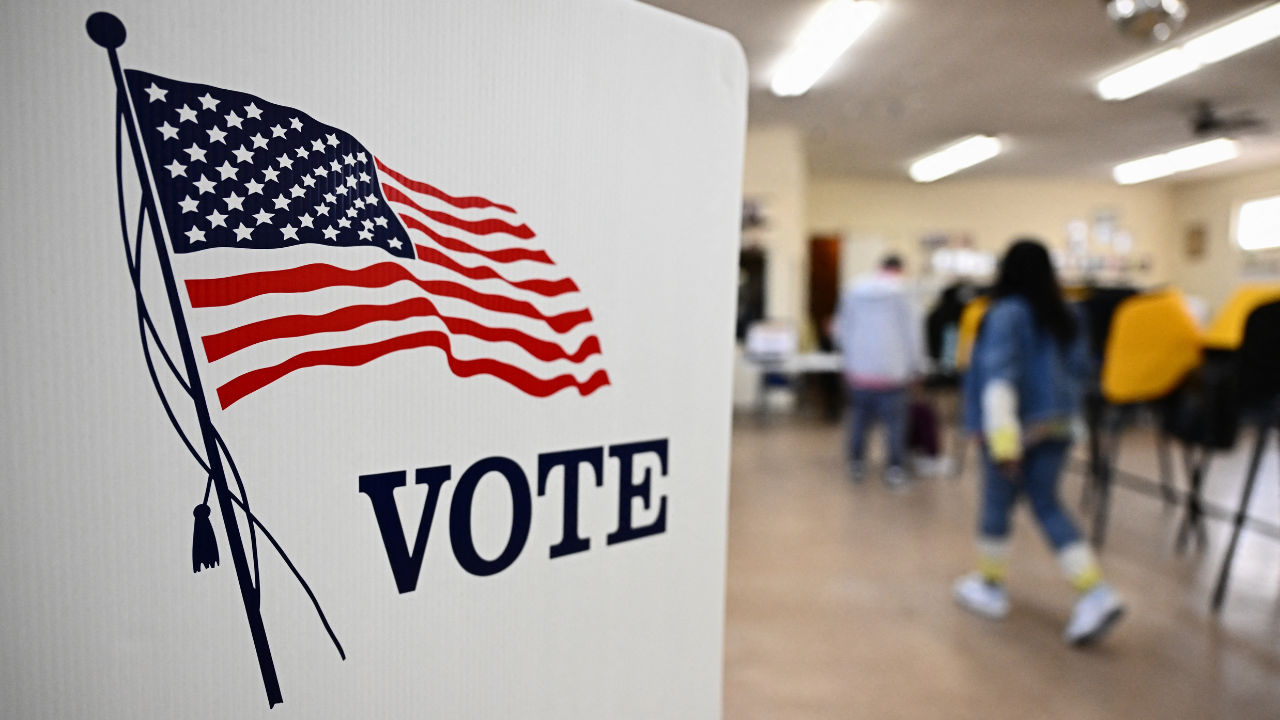
A voter casts a ballot during the Super Tuesday primary at a polling station in an American Legion Post in Hawthorne, Calif., March 5, 2024. (PATRICK T. FALLON/AFP via Getty Images)
According to Altendorf, Minnesota’s secretary of state directed counties not to provide her with the information. Three counties declined to comply with her request, while Hennepin County — the state’s largest county by population — provided the data.
After reviewing the Hennepin County records, Altendorf said she identified nearly 3,000 active voter entries missing key identifying information, such as birthdates, names and addresses, as well as what she described as potential duplicate records.
Though she did not provide specific examples, she also said she found voters listed as over 100 years old.
However, according to Alpha News, 1900 was used as a placeholder birth year for voters who registered before 1983 since they were not required to provide their date of birth.
DOJ TORCHES DEMOCRATS FOR ‘SHAMELESSLY LYING’ ABOUT MINNESOTA VOTER ROLL REQUEST
The sun shines on the Minnesota State Capitol in St. Paul on Monday, Feb. 12, 2024, the opening day of the 2024 session of the Minnesota Legislature. (Steve Karnowski/AP)
A spokesperson for Hennepin County told the outlet that they administer elections in accordance with state law and guidance from the secretary of state’s office.
The spokesperson also said that “address verification is a routine reason a voter record may be flagged as challenged, ‘including when a registration confirmation postcard is returned as undeliverable.’”
Altendorf began pursuing the data after learning that the Department of Justice had sought voter roll information from states across the country as part of broader election integrity efforts, which she said Minnesota declined to provide due to privacy concerns.
She then reviewed state statutes and worked with election integrity groups, including Minnesota Voters Alliance, before determining she had the authority to request the data herself.
CLICK HERE TO DOWNLOAD THE FOX NEWS APP
Altendorf said Simon is “actively working to deny” her, as a sitting member of the House Elections Committee, the ability to access voter roll information to determine whether the records are accurate.
The Minnesota Secretary of State’s Office did not immediately respond to a request for comment.
Read the full article from Here



Wisconsin guard Andrew Rohde reflects on early March Madness exit
Wisconsin guard Andrew Rohde said the Badgers ‘thought we could do so many things’ in the NCAA Tournament before it ended abrupty with an upset loss.
Wisconsin men’s basketball has added a sharpshooting wing via the transfer portal.
Miami (Ohio) transfer Eian Elmer has signed with the Badgers, the team announced April 18. The 6-foot-7 wing will join UW with one year of eligibility remaining.
Elmer averaged a career-high 12.7 points and 5.9 rebounds while shooting 49.8% from the field and 42.9% from 3-point range in 2025-26. His production helped the RedHawks go 32-2 and earn an at-large NCAA Tournament bid.
“We are really excited to add another excellent addition to our spring signees,” UW coach Greg Gard said in a release. “Eian brings a wealth of experience and scoring punch as a 6-7 wing. … A terrific shooter, his skillset and production fit excellently into our plan as we build out next year’s team. Throughout our evaluation process, our staff loved his size, power and skill and truly believe he will thrive in our system.”
Elmer is Wisconsin’s third transfer portal addition since the end of the 2025-26 season, joining former George Washington guard Trey Autry and former Hofstra forward Victory Onuetu. UW also added Australian guard Owen Foxwell.
The additions of Autry, Onuetu and now Elmer leave Gard’s staff with three more roster spots to fill ahead of the 2026-27 season.
The Badgers are looking to replace much of their production from a 2025-26 team that went 24-11. Nolan Winter is expected to be the team’s only returning starter after John Blackwell and Aleksas Bieliauskas entered the transfer portal and Nick Boyd and Andrew Rohde exhausted their eligibility.

A Detroit woman was arrested in the aftermath of a hit-and-run collision and shooting on Interstate 94, Michigan State Police reported.
Emergency dispatchers were called shortly after midnight Saturday about the altercation. Troopers reported the caller said while they were driving eastbound on I-94, near Martin Luther King Jr. Boulevard, a black Jeep sideswiped them and sped off.
The caller then decided to follow the Jeep.
In response, police said, the driver of the Jeep fired several gunshots in the caller’s direction.
None of the gunshots struck the vehicle.
Troopers were able to use license plate reader camera technology to locate the Jeep while it was on the Lodge Freeway, made a traffic stop. The driver and two passengers were taken into custody without incident.
The passengers were released shortly afterwards; troopers believe that the 19-year-old driver was the shooter. She has been lodged pending further review by the prosecutor’s office.
In addition, a firearm was recovered from the vehicle.
The above video originally aired on Aug. 19, 2025.

MILWAUKEE – A Milwaukee man, previously named one of Wisconsin’s Most Wanted, has been sentenced to prison for shooting and killing his cousin in 2020.
In court
What we know:
A Milwaukee County jury found 39-year-old Brandon Gladney guilty of first-degree reckless homicide and possession of a firm by a felon earlier this year.
FREE DOWNLOAD: Get breaking news alerts in the FOX LOCAL Mobile app for iOS or Android
Judge Michelle Havas sentenced Gladney to 29 years in prison on Friday, April 17. He was granted credit for more than a year’s time served and further sentenced to 14 years of extended supervision.
Arrested in Arizona after years on the run, court records show Gladney has also been ordered to pay the Milwaukee County District Attorney’s Office more than $1,800 for extradition costs.
Homicide investigation
The backstory:
The shooting happened in May 2020. Investigators said Gladney was captured on video apparently arguing with the victim, his cousin, outside a Milwaukee convenience store near 21st and Meinecke.
“It’s all on video, and it’s devastating for that family,” the marshal on the case told FOX6 when Gladney was profiled on Wisconsin’s Most Wanted. “You have a family member that shot and killed another family member.”
SIGN UP TODAY: Get daily headlines, breaking news emails from FOX6 News
Prosecutors said Gladney walked away but then returned with a gun pointed directly at the victim and shot him. The victim died from his gunshot wounds at a nearby hospital. Multiple bullet casings were found at the scene.
Gladney went on the run for years. He was arrested in Arizona in January 2023, years after he was charged.
The Source: FOX6 News referenced information from the U.S. Marshals Service, Wisconsin Circuit Court and prior coverage.
-

 Texas4 minutes ago
Co‑worker confesses to killing missing North Texas man and stealing his car, police say
-

 Utah10 minutes ago
Embattled Utah Rep. Trevor Lee loses county GOP convention — but wins enough support to make primary
-

 Vermont16 minutes ago
Women’s Lacrosse Bested in Burlington by Vermont – University at Albany Great Danes
-

 Virginia22 minutes ago
Skydiver rescued after crashing into scoreboard during Virginia Tech football scrimmage
-

 Washington28 minutes ago
Washington football displays depth, talent at first spring scrimmage
-

 Wisconsin34 minutes ago
Wisconsin basketball signs Miami transfer Eian Elmer, who gives ‘scoring punch’
-

 West Virginia40 minutes ago
West Virginia American Water set to upgrade water lines in Fayetteville
-

 Wyoming46 minutes ago
(LETTERS) Wyoming Supreme Court judges, congressional responsibility, pregnancy and US involvement in the Middle East