Minneapolis, MN
Utility regulators hosted annual conference in Minneapolis with money from entities they oversee


Minnesota’s utility regulators hosted a record more than 600 people in downtown Minneapolis last week for an annual regional conference, but some of the sponsors helping to pay for the event are also at the whim of the regulators’ rulings.
That financial relationship at the center of the Mid-America Regulatory Conference (MARC) has some energy advocacy groups feeling uneasy about what they worry is a conflict of interest. But the lead organizer of this year’s event, Katie Sieben, the DFL chair of the Minnesota Public Utilities Commission (PUC), argued the gathering helps commissioners foster connection and make stronger decisions, not blur the lines between government and business.
This year, most of the sponsors for the conference that wrapped last week either have regular business before the PUC, participate in major cases or represent those that do. That includes: unions; trade groups for power developers; trade groups that represent electric and gas companies; prominent local environmental nonprofits; and several law firms that help businesses navigate the regulatory system.
“It creates an optics and public trust issue that could be particularly damaging to commissions that are doing their jobs in good faith and trying to invite diverse voices to the table as the Minnesota PUC has begun to do,” said Karlee Weinmann, a Minnesota-based researcher for the national advocacy group Energy and Policy Institute that is broadly critical of influence from utilities and fossil fuel interests. “It gives the impression that access can be bought.”
Sponsorships are commonplace for MARC and other utility regulator associations but still periodically draw criticism, including MARC’s event last year in Michigan.
Sieben, however, said she deliberately worked to highlight voices from tribes, unions, diversity and equity advocates and consumer groups during the four-day Minneapolis conference, which MARC has put on since the 1950s. She said the conference broke no ethics rules and it is good for regulators to meet during an “increasingly complex” energy transition.
“Our access as regulators is not for sale,” Sieben said. “I stand by the decisions that the Minnesota Public Utilities Commission have made since I’ve been the chair of the commission, and the public interest is always what we’re striving for, and I think that we have protected and will continue to protect [it].”
Big spenders
Top sponsors in Minneapolis were Google, regulatory consulting firm AESL and three unions: the International Brotherhood of Electrical Workers, the Laborers’ International Union of North America (LIUNA) and the International Union of Operating Engineers Local 49. Each chipped in at least $20,000, though there were sponsorships as low as $1,500. Signage on booths, TV displays, hotel key cards and flower arrangements promoted sponsors around the Renaissance Hotel.
MARC bans entities it directly regulates from sponsoring the event, including utility companies such as Xcel Energy or CenterPoint Energy in Minnesota since the PUC oversees their rates and business. Trade groups representing utility companies were sponsors, however, including Edison Electric Institute and the American Gas Association.
Kevin Pranis, marketing manager for LIUNA in Minnesota, said “MARC provided a unique opportunity to show other states what organized labor can contribute, and that’s why you saw so many unions step forward. We’re ready to be at the table and tired of being on the menu.”
Beyond sponsors, MARC’s other income comes from registration fees for the event, which top out at $775 for the general rate. Minnesota’s biggest electric and gas utilities had several people sign up for the conference — registrations that would add up to thousands of dollars — as did environmental groups, energy developers and state officials.
MARC, made up of utility regulators in 14 states from Minnesota to Texas, rotates its annual conference among member states. The event is the nonprofit’s moneymaker, bringing in a net profit of $92,480 last year and $103,350 in 2022.
That cash funds the conference itself, as well as other basics like audits and the salary of a part-time executive coordinator. It also pays for travel stipends — $500 this year — for commissioners to attend the conference.
MARC also covers travel, hotels and food for members who attend a commissioners-only meeting typically held in January in warm-weather states such as Texas or Oklahoma. In Houston this year, the stipend was up to $1,000. Sieben said MARC tends to prioritize cities with direct flights and less risk of disruptive winter storms. MARC also sometimes pays for commissioners to attend trainings on utility rates.
Coming together
The Minneapolis conference included substantive panels on energy topics such as electrifying transportation, data centers, the Inflation Reduction Act, building a workforce, equity and affordability. This year, panels featured regulators from the state and federal level, utility executives and industry leaders, including Xcel President Ryan Long, U.S. Sen. Tina Smith and Lower Sioux Indian Community President Robert Larsen.
MARC organized tours of big or notable energy facilities. And there was entertainment, including a walking tour of downtown Minneapolis, a Minnesota Twins game and a reception with food and drinks that LIUNA hosted and featured Sieben.
Weinmann, helping a consumer advocate group in a case about Xcel gas rates at the PUC, said it’s helpful for regulators to be on the cutting edge of hard topics during a challenging transition away from fossil fuels. She also said Minnesota is better than other commissions in being more inclusive of underrepresented voices in debates about utility rates and power projects.
Larsen praised the PUC’s steps to work with tribes during a keynote panel for the event. Sieben said it was good for other states to hear about how Minnesota incorporates tribal voices and other perspectives, such as an Xcel foreman who spoke on a panel about the benefits of the company’s massive Becker solar project as the huge coal plant next door retires.
Pranis also said the the PUC is “increasingly recognized as a national leader in efforts to bring the priorities and voices of working families into regulatory decisions that have historically been dominated by energy companies and environmental advocates.”
Still, John Farrell, a critic of the regulated monopoly system for power companies and co-director of the Institute for Local Self-Reliance, said not everyone has the opportunity to be high-level financial sponsors for events like MARC. Weinmann said state legislators could approve more funding to cover events with utility regulators.
Donors are “getting decisions that are the basis for whether or not their business is successful or not, and here they are having a financial relationship with their regulators outside of that,” Farrell said. “It’s really bothersome.”


MINNEAPOLIS (FOX 9) – A 16-year-old boy was pulled from the water at Minnehaha Falls after going missing while swimming with family.
Fire crews respond to missing swimmer at Minnehaha Falls
What we know:
Minneapolis Fire Department crews arrived at Minnehaha Falls around 5:20 p.m. after reports that a teenager had gone underwater and did not resurface. Firefighters put on swift-water rescue gear, set up rope safety lines and entered the water at the spot where the boy was last seen.
Crews quickly found the teen submerged in the water and brought him to shore. Firefighters started lifesaving efforts, including CPR, before the boy was taken to a local hospital. According to the Minneapolis Fire Department, he was in critical condition.
Minneapolis Park Police say the area the teen was in is not authorized for swimming but had attracted swimmers due to hot weather.
What we don’t know:
There are no updates on the teen’s current condition or further details about how the incident happened.
The Source: Information from the Minneapolis Fire Department and the Minneapolis Park police.
Minneapolis, MN
People facing drug addiction in Minneapolis voice difficulties amid planned crackdown

On Friday afternoon, a Minneapolis police car drove slowly down Blaisdell Avenue towards Lake Street.
In response, a group of several dozen people moved further down the street, congregating at the KFC at the intersection. Minutes later, they returned to a spot that three of them admitted to be a spot to hang out, purchase and use fentanyl.
“The majority of us are addicted to fentanyl. The majority of us don’t want to be,” a man who wanted to go by Alon said. “It’s just really difficult getting off without having someone to hold our hand and guide us in the right direction.”
Alon said that he fell into a pattern of fentanyl use after becoming homeless. It was a similar story for Jeremiah and Mohamed, who told WCCO that they didn’t know where they were going to sleep on Friday night. But Blaisdell Avenue and Lake Street had become a reliable place to spend the day.
“It’s a place to go. A lot of times people don’t have a place to go,” Mohamed said.
Both men said that drugs are abused on the block, but claimed that no one else in the neighborhood was getting hurt.
“[There’s] not a lot of crime going on as far as like harming other people. We’re harming ourselves doing these drugs,” Jeremiah said.
The city would likely designate the area as an open-air drug market. Just this week, Mayor Jacob Frey was joined by local law enforcement and Native American organizations to announce a crackdown on drug users and sellers in these kinds of public spaces.
“You can get services that we will offer and you can get better. We’ll make sure that those services are readily accessible,” Frey said. “But if you don’t accept those services, you can’t continue to hurt our neighborhoods and make our streets less safe.”
The announcement comes as concerns continue to grow over public fentanyl use, discarded needles and criminal activity in areas like Cedar Avenue and Highway 55. City officials emphasized that enforcement will be paired with efforts to connect people to resources. Those with the city say they will continue helping individuals find housing and addiction treatment while expanding access to Brixadi, a medication that helps reduce opioid cravings and withdrawal symptoms.
Naomi Wilson, a community organizer who has criticized Frey’s approach towards drug markets and homeless encampments in the past, said that “criminalization” will only create more harm, and that the city should explore designating safe, public areas for drug use while creating more stable housing options.
“All we are asking from the mayor is to partner with advocates to partner with City Council on an interim step that’s not criminalization,” Wilson said. “I think the issue is that with all the fencing around the city, people don’t have anywhere to be. They don’t have anywhere where they can be safe at nighttime.”
On social media, Councilmember Jason Chavez likened Mayor Frey’s announcement to the city starting a “War on Drugs.”
“Our community has told us what it actually needs. A safe location, safe outdoor spaces, tiny home villages, real pathways off the street, and housing first, a compassionate approach, not another arrest that leaves someone with a record, further from housing, further from a job, and further from the stability they need to get well,” Chavez posted online.
He ignored a request for comment from WCCO.
On Blaisdell Avenue, Jeremiah was blunt. He said he knew city services were available, noting that many simply weren’t interested.
“Whether people are a drug addict or just lazy, they don’t tend to go for it. But they’re [services] definitely available,” Jeremiah said.
During Thursday’s announcement, Frey argued that the goal is not criminalization.
“After years of outreach, we cannot stand by while drug use continues to harm our neighbors,” Frey said.
Minneapolis, MN
Minneapolis police officer was fired in February for liking pro-lynching comment, department document shows

The Minneapolis Police Department fired an officer in February for liking a comment on social media supporting the lynching of a Black man, according to Internal Affairs documents.
The comment in question was made in March 2024 in a Facebook group called Minneapolis Police Officers and Civilian Employees, Current and Retired, which has no official affiliation with the department, police said.
In response to a news article about a suspect accused of killing a police officer, someone commented, “Get a [r]ope and find a tree,” and Klimmek liked the comment from his personal account, the MPD investigation found. The suspect appeared to be Black.
Klimmek admitted to liking the comment in an investigative interview, but said he did not know the phrase carried any racial connotations. He said he liked it because, “I was probably supportive of that post, uh, the death penalty for someone who murdered a police officer,” MPD documents show.
WCCO has reached out to the Police Officers Federation of Minneapolis for comment.
“Officer Klimmek’s claim of not knowing that the phrase, ‘Get a rope and find a tree’ is affiliated with an unquestionably violent history of racism and slavery, and his claimed lack of knowledge demonstrates how out of touch he is with history,” then-Chief Brian O’Hara wrote in his findings. “The public cannot trust his judgment, and I cannot trust his judgment.”
In his investigative interview, Klimmek “did not express any remorse for his actions,” the department said, and he “just does not understand or appreciate his role in upholding the public trust or the betrayal of that trust inherent in the comment that he liked.”
O’Hara said Klimmek’s conduct “has had a serious negative impact on the professionalism of the MPD and has demonstrated a serious lack of integrity, ethics and character related to his fitness to hold his position.”
He added later in the document that “officers do not have the power of ‘judge, jury, and executioner.’ Even if Officer Klimmek believes in the death penalty, which he is certainly entitled to, officers must respect due process and conduct themselves accordingly so as to not call into question their fitness to serve.”
The department terminated Klimmek on Feb. 20 for violating its social media conduct policies. He received one-on-one social media policy training in 2015, the investigation noted.
Minneapolis Police Department records show three previous disciplinary measures for Klimmek, all suspensions. In 2020, he stood by while a security officer punched a handcuffed suspect in the stomach. In 2021, he ran a red light and caused a crash. And in 2024, he failed to properly search a suspect and allowed him to bring a loaded handgun into the Hennepin County Jail.
The department’s online dashboard shows at least 20 complaints against Klimmek since 2012, four of which are still open.
O’Hara noted in his decision that Klimmek’s actions came after the murder of George Floyd and investigations by both the Minnesota Department of Human Rights and U.S. Department of Justice that found a pattern of racial discrimination by the department.
O’Hara himself resigned in May after an internal investigation found he interfered with a probe into his own actions.
-

 Politics5 minutes ago
Expert who fled Cuba warns of ‘vicious cycle’ that will lead to ‘communists in double digits’ in Congress
-

 Health12 minutes ago
July 4 heat delays America 250 celebration as State Fair guests share love of USA
-

 Sports15 minutes ago
Toronto Maple Leafs top pick Gavin McKenna reveals that he’s changing his jersey number
-

 Technology20 minutes ago
China’s robot-run hotel opens to public in 2027
-
 Business27 minutes ago
China-backed AI tool behind fake Brad Pitt fight making Hollywood inroads
-
 Entertainment30 minutes ago
Don Was produced the Rolling Stones, Bob Dylan and Ozzy. At 73, he found his voice in Detroit — and the Dead
-
 Politics42 minutes ago
Commentary: Happy Birthday, America! You’ve weathered another rough year
-
 Sports50 minutes ago
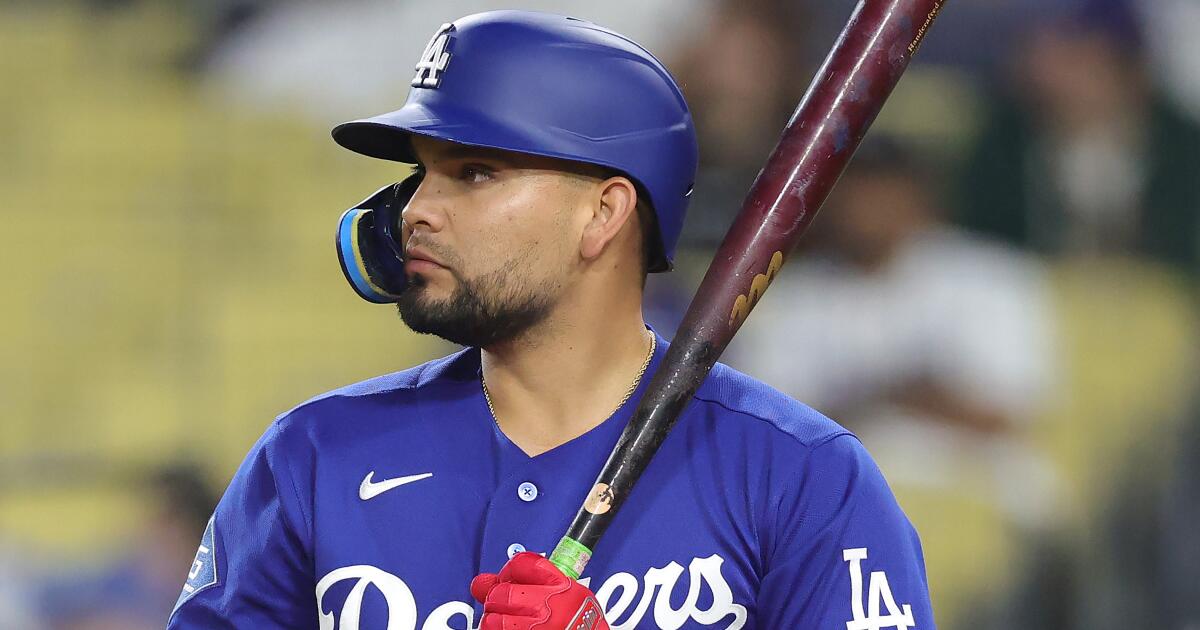
Dodgers’ Eliezer Alfonzo praying his sister and stepmother will be found in Venezuela

