Minneapolis, MN
Camp Nenookaasi Brings Minneapolis' Policies Against its Unhoused Residents to the Forefront – UNICORN RIOT


Minneapolis, MN — The city of Minneapolis evicted Camp Nenookaasi, the city’s largest encampment of unhoused people, three times over the past month in an attempt to prevent encampments of this size and level of infrastructure from forming. After each eviction, Nenookaasi pops up again in a different spot. It gets smaller each time, but it has not disbanded.
Even after these evictions, residents and supporters of Camp Nenookaasi continue fighting to change the city’s prohibition of encampments. The camp has garnered support from legislators, housing service providers, and housed neighbors who are turning the camp into a launching pad for a campaign for a better approach to encampments.
In recent years, advocates have made numerous attempts to end the practice of evictions. They often point to the high price tag — each eviction costs anywhere from $40,000 to $265,000, per the city’s reporting — and the near-constant state of displacement that encampment sweeps force upon residents. Activists defending camps against eviction frequently get into scuffles with police. In October 2022, unsheltered people protesting eviction policies pitched their tents on the sidewalk in front of City Hall. Still, the evictions continued.
Camp Nenookaasi, a Beacon of Hope to the Unhoused, Faces Eviction
Minneapolis Continues Encampment Evictions, Displacing Hundreds in May
Nicole Mason, an organizer of Camp Nenookaasi, said, “I’m really dedicated this year to changing homelessness here in East Phillips and showing that if we listen to the people, we can make programs that work for them.”
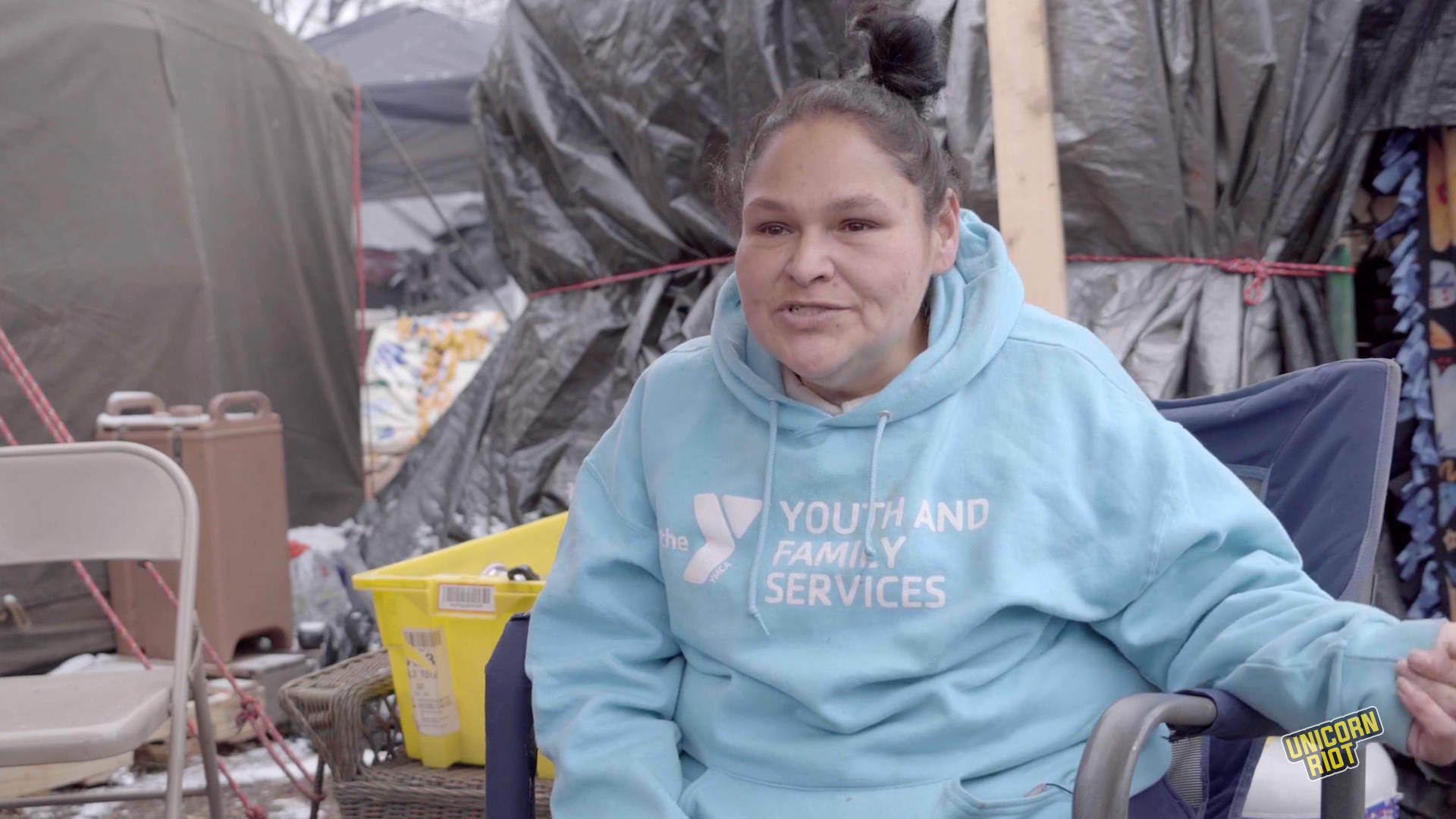
During the five months of its existence, hundreds of unsheltered people have called Camp Nenookaasi home. Christin Crabtree, another camp organizer, said the recent wave of support for the camp has played a significant role in its staying power. Crabtree said, “We’ve been able to build more awareness. We’ve been able to help draw the connection between people who are experiencing homelessness and other things that help people see how this affects them too. That solidarity has really been a part of it, having people show up.”

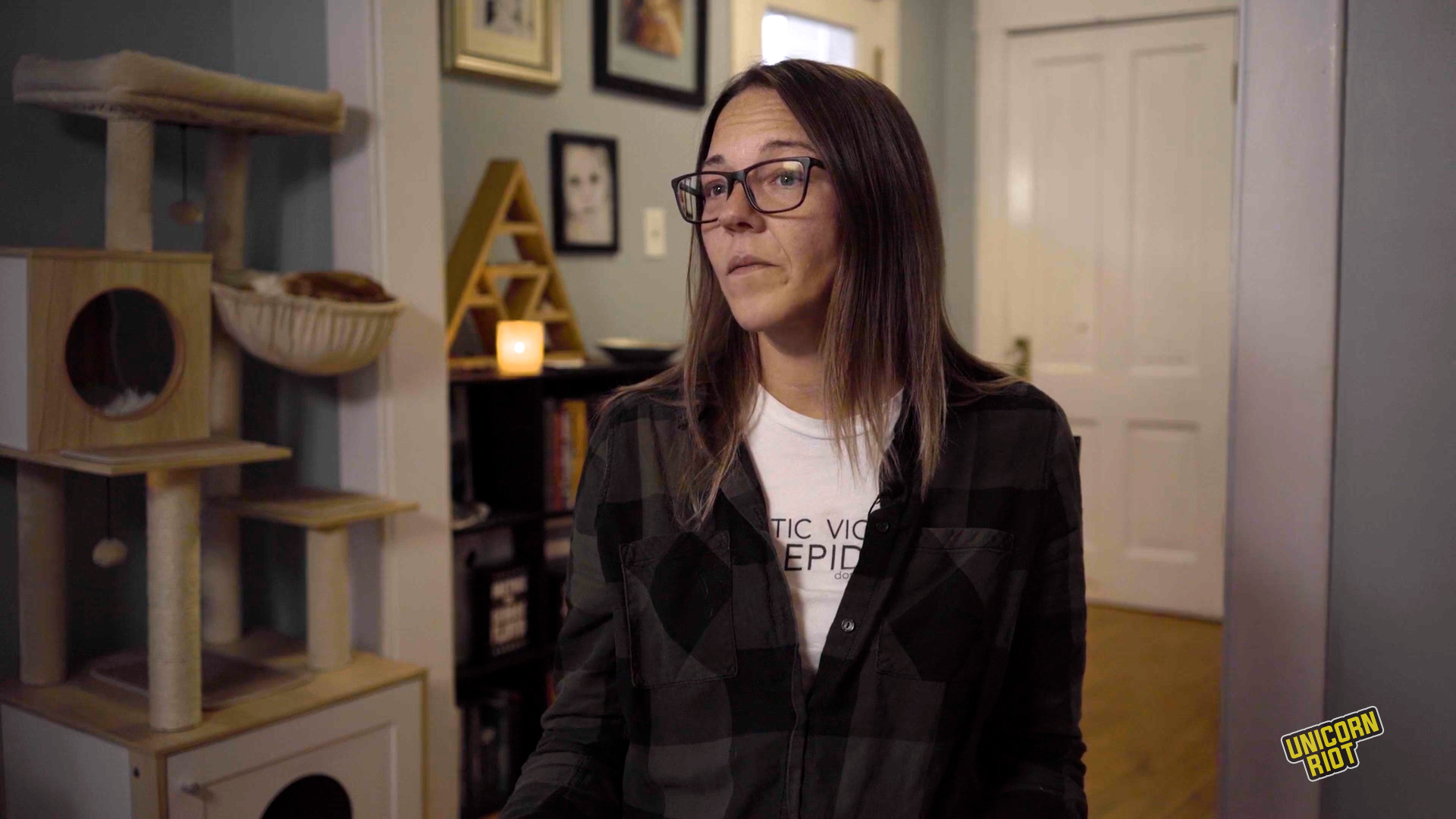
Lex Horan stood outside Camp Nenookaasi in the predawn darkness on a January morning with a box of fliers to distribute and a pile of trash bags to fill. Horan, a resident of the Phillips neighborhood where all four iterations of Camp Nenookaasi have been, was part of a group that had self-organized to clean up the camp area and foster conversations with housed neighbors. The group provided information about the camp, invited neighbors to ask questions, and urged them to take action in pressing city officials to create long-term solutions.
“The city of Minneapolis and the Frey administration are fanning tensions between housed and unhoused neighbors by not providing the support that our unhoused neighbors at Nenookaasi need. We’re here to say that actually, a city that works for housed and unhoused neighbors is possible by providing the solutions that folks at Nenookaasi want,” Horan said.
Community members are coordinating widespread efforts to make sure the camp has what it needs to operate. A group that calls itself the Autonomous Yurt Union has built dozens of yurts with wood-burning stoves for Nenookaasi and other encampments across the Twin Cities. Supply drives and meal deliveries keep the camp stocked and fed. They have received over $65,000 in donations. The city delivered portable toilets and trash cans, services that organizers fought for months to receive.
Over 100 former residents of the camp have found permanent housing and started recovery programs since late August. Many organizers and housing service providers attribute those numbers to the relative stability of the camp.


“When evictions happen, it’s hard for outreach to do their job. It’s hard for people who live in that camp to stay connected with their provider and do the work they need to do to get to that next step if that’s what they want. That often gets disrupted. It is a really strange way of trying to house people because it’s disruptive to the process,” Crabtree said.
John Tribbett, the director of the Ending Homelessness division of Avivo, a prominent housing organization in the Twin Cities, said, “If encampment displacements worked, then we would not have a situation where we have well over 100 people still here today in our community.”
Despite fierce campaigning to allow the camp to stay, police came to evict three times since the beginning of the year. According to a Minneapolis city ordinance, temporary structures used for shelter are prohibited on any public or private property. The city cited drug use, unsanitary conditions, a high volume of complaints from neighbors, and violence, among other concerns, in its reasoning for closing the camp.

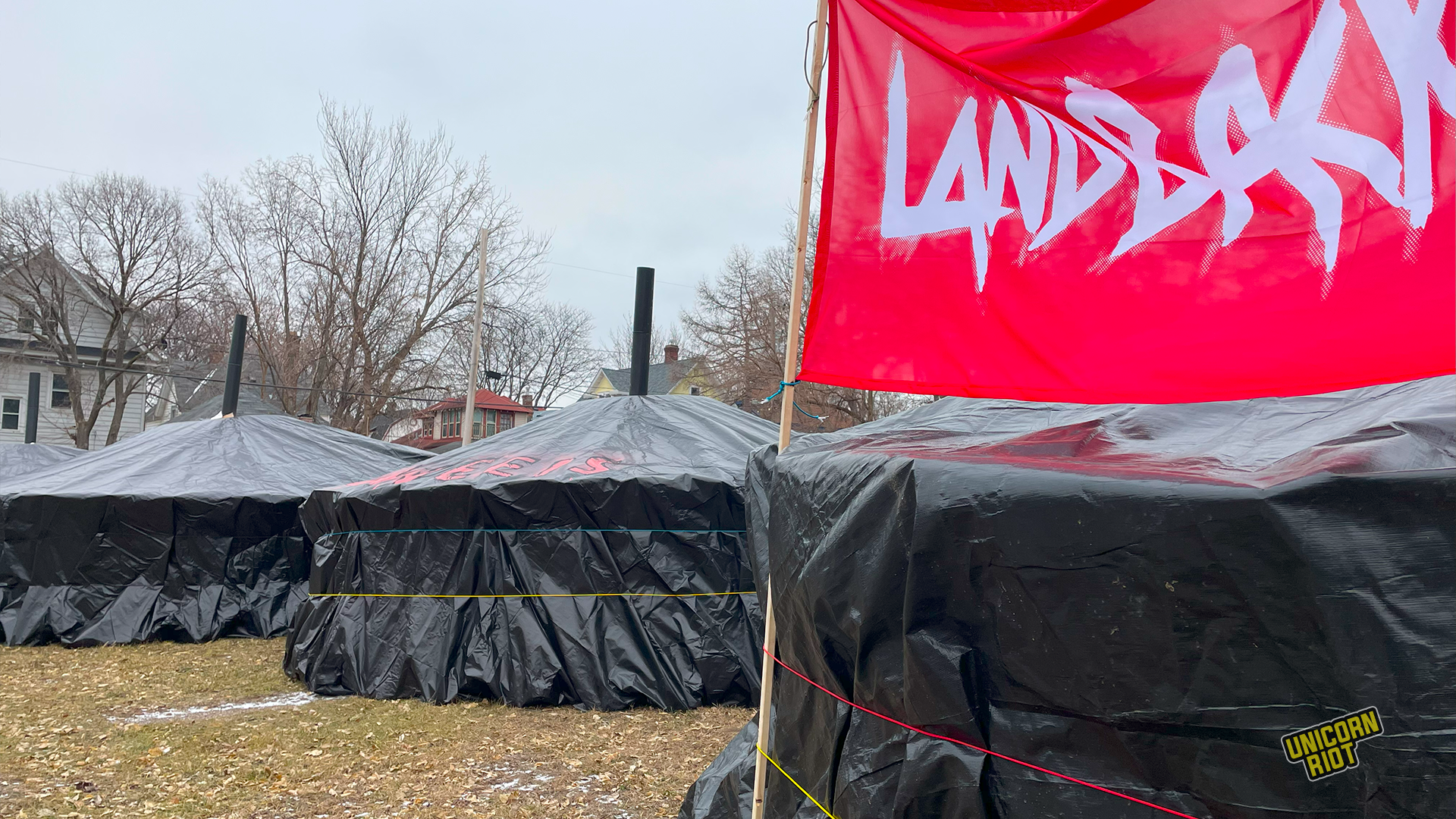
The encampment response guidelines that the Frey administration established in 2022 require notice of eviction to be posted at encampments facing closure 72 hours in advance. However, the guidelines state that less than 72 hours notice is acceptable if the encampment meets any one of a list of broad criteria such as posing “imminent community safety risks,” or “inhibiting or interfering with the normal operation of a business, school, daycare, or sober living facility.”
The eviction tactics escalated as the city’s tolerance for the encampment thinned — for each of the three sweeps within one month, police arrived earlier in the morning and with less prior notice than the previous one. The taped-off area grew. Community Safety Commissioner Toddrick Barnette estimated that 70 Minneapolis Police Department officers were dispatched for the first eviction on January 4, and 90 were dispatched for the second on January 30. Fewer volunteers were allowed to enter the enclosure to assist residents. Squad cars guarded more intersections and alleyways. By the third eviction on February 1, police were stationed at vacant lots around the neighborhood to prevent unhoused people from settling there.
City Operations Officer Margaret Anderson Kelliher said at a City Council hearing on January 31, “We need to continue to do our work as a city per our ordinances to have continuous and coordinated efforts to deter encampments within the city.”
Several resolutions have been proposed in the City Council in recent years aimed at stopping evictions altogether or restricting their use. All have been voted down or vetoed by the mayor. On January 25, three city councilmembers tried a different approach, giving notice to introduce new legislation regarding encampments. If passed, the three proposed ordinances would provide “safe outdoor spaces” for unsheltered people, establish a “humane encampment response policy,” and require the city to prepare after each eviction a comprehensive public report.
Councilmember Jason Chavez, whose Ward 9 includes the new Camp Nenookaasi, coauthored the three ordinances. “It’s time that we as the City of Minneapolis restored the dignity of unhoused residents across the city,” Chavez said.
Camp organizers and residents met with Mayor Frey and representatives from several city departments in January to discuss possibilities for the future of the camp. In the following weeks, Kelliher announced that the city had identified two possible sites for construction of the Indigenous cultural healing center that camp advocates have pushed as one of their top priorities. She did not specify where the sites are.
With the fight continuing to play out in city government, the residents of Camp Nenookaasi are trying their best to stay together and survive the winter.
Jorge “Chico” Grijalva was unhoused in the Twin Cities on and off for eight years before he moved to Camp Nenookaasi. After the eviction of the first camp on January 4, he moved with his girlfriend and his tent to the next spot. Chico said he cycled in and out of the shelter system during that time, but he prefers camp life to the restrictions and dangers he experienced in shelters.
Shelters in Minneapolis opened 90 additional temporary beds — cots and mats in an overflow room — in early January. Crabtree said the arduous process of getting a spot in a single-night shelter deters many camp residents from even trying.
“It’s a really big risk to your life to go stay in a shelter bed because the next day, you may not get another one. If you go stay in this shelter, and you can’t have all your stuff in there, your stuff could get stolen or go missing. Also, you could lose connection with whoever you’ve been with outside, who you’re staying safe with. So it actually can be worse for people to choose a shelter bed for a night than it is for them to stay outside,” Crabtree said.
Chico said that the reliability of the camp compared to shelters or being alone on the streets made it worthwhile to stay there. “The fact that I don’t have to set up camp every day, and I’m not worried about me being evicted on a daily basis is the best part for me. Knowing that resources and food and water is constantly brought here is comforting — to know that there’s some kind of help other than us finding it all on our own.”
On January 30, the day of the second eviction, Chico had whatever belongings he could salvage piled high into a shopping cart and a wheelbarrow. He said he was going to spend the day in a library and figure out where to go next.


Camp organizers said they understand that the camp is not forever — nor do they want it to be — but they weren’t ready to pack up yet. They had four months, then three weeks, then two days between evictions. “Before we had to leave, we wanted to at least be stable where we were to hopefully get more permanent indoor solutions for the relatives and move in,” Mason said.
Now, in their fourth location, the roughly 70 people of Camp Nenookaasi are putting down roots again while they still can.
Looking ahead to the future she wants for the camp, Mason said, “Tearing our community apart here? I’m not going to let that happen. I’m going to keep everybody together until we have some real results.”
Unicorn Riot’s 2020-23 Unhoused Crisis in Minneapolis:
- Crisis of the Unhoused – Landing Page for Unicorn Riot Coverage
- Camp Nenookaasi, a Beacon of Hope to the Unhoused, Faces Eviction – Dec. 14, 2023
- ‘Wall of Forgotten Natives’ Encampment Revived After Five Years, Gets Evicted – Sept. 4, 2023
- Minneapolis Continues Encampment Evictions, Displacing Hundreds in May – May 26, 2023
- Samatar Encampment Eviction Leaves 100 Displaced Mid-Winter – January 24, 2023
- Dozens of Police Evict Quarry Encampment – January 2, 2023
- Quarry Encampment Faces Eviction in Minneapolis – December 28, 2022
- Three Encampments and Halfway House Evicted, Displacing Hundreds – October 12, 2022
- Personal Belongings Trashed as Minneapolis Encampment Evicted – July 22, 2022
- Minneapolis Community Resists Encampment Eviction – July 20, 2022
- Southside Minneapolis Encampment Faces Eviction Threat – June 28, 2022
- Eviction Defense Successful Despite Aggressive Contractors – June 9, 2022
- Uptown Streets Blocked During Protest Against Police Attack on Houseless – March 23, 2021
- Five Arrested as Minneapolis Police Attempt Raid on Near North Houseless Encampment – March 23, 2021
- Homeless Tenants Union: Unhoused Self-Advocacy in the Twin Cities – February 17, 2021
- Winter of Coronavirus: Seeking Shelter in Minneapolis During COVID–19 – December 14, 2020
- Unhoused Community Forms Tenants Union, Constituents Protest at Commissioner’s Home – November 11, 2020
- Minneapolis Prioritizing Park Sweeps Over Sheltering the Unhoused – October 29, 2020
- ‘No KKKops, No Pipelines’ Banner Dropped in Minneapolis – October 6, 2020
- Reclaimed Space Sprouts From Uprising’s Embers – September 28, 2020
- Peavey Park Sanctuary Homeless Camp Evicted in Minneapolis – September 24, 2020
- New Month Brings Added Urgency To Minneapolis’ Housing Needs – September 2, 2020
- Sanctuary Camp Residents Pressured To Move, No Housing Solution In Sight – August 22, 2020
- Minneapolis Police Sweep West Powderhorn Encampment, Pepper Spray Defenders – August 15, 2020
- Authorities Visit Loring Park Tent Encampment, Bring Eviction Scare – August 10, 2020
- Minneapolis’ Unhoused Speak Out Against Years of Evictions – August 3, 2020
- Minneapolis Park Police Displace Sanctuary Encampment – July 22, 2020
Follow us on X (aka Twitter), Facebook, YouTube, Vimeo, Instagram, Mastodon, Threads, BlueSky and Patreon.
Please consider a tax-deductible donation to help sustain our horizontally-organized, non-profit media organization:




“Like so many good queer stories, ours starts in the closet,” said Iggy Gehlen, board vice president of the Quatrefoil Library in Minneapolis — one of the country’s oldest and largest collections of LGBTQ+ literature.
The closet is in this case both physical and metaphorical: before being publicly out in the 1980s, avid reader Dick Hewetson stored his ever-growing queer pulp collection in his partner David Irwin’s linen closet. Until then, he had resorted to reading these books with haste at the local bookseller. Possessing them, he worried, would out him by proxy.
While Hewetson’s personal collection expanded, general access to queer stories didn’t. The AIDS crisis, which resulted in the deaths of 125 Minnesotans by 1987, only reinforced the stigmatization. Irwin and Hewetson were soon running a quasi-library out of their home. Friends and their friends lent texts at such a high frequency and with such apparent thirst that when the opportunity presented itself for the pair to establish a publicly accessible library at the Minnesota Civil Liberties Union (now the ACLU of Minnesota) building in 1986, they took it. Christened the Quatrefoil Library, the collection made it out of the closet along with its founders.
In the 40 years since, Quatrefoil’s materials, most of which are donated, have outgrown various locations. In 2011, the library found its current home: a comfortable brick-and-mortar building on East Lake Street. More than 27,000 materials (including films and magazines) are accessible seven days a week due to the efforts of dedicated volunteers who staff the library. In 2025 alone, about 150 people participated in some volunteer capacity.
In that number lie countless stories of chosen family, social groups and even romantic partnerships.
The stacks host no shortage of thoughtfully curated books that fit tight, but right. There are several displays (including a current one that exhibits books published around 1986, the year of the library’s founding) and gathering areas that seem to beckon you to stay a while. The front desk is covered in rainbow flags with a coffee station manned by volunteers who are happy to gently guide first-time visitors or chat with the regulars.

Community forming space
In the past few years, Quatrefoil has reinvigorated its purpose: memberships have “basically doubled,” Gehlen said, a symptom to him of increased legislative uncertainty for queer folks around the nation. Quatrefoil provides a space for community forming, which manifests in craft circles, recovery and support groups, tarot readings and many different book clubs.
“We’re finding that people are needing that space more (today),” said Ollin Montes, board president of the library. “Since 2023, when there was this wave of criminalization of gender-affirming care, and widespread targeting of queer folks, we’ve had folks migrating to Minnesota and coming to the library.”
New groups form and congregate in the library often. Recently, migrant volunteers from the southern United States created a group that welcomes transplants from all parts of the country. Those who come to the library hoping it will bridge them to queer community find that it offers just that.
“It’s really important that people have safe spaces, where they feel affirmed, and where they can just let their hair down,” Montes said. “I feel grateful that we’re able to provide that space for folks who are needing it.”
He first connected with Quatrefoil as an escape from feelings of burnout from his day job as an immigration organizer in 2019.
“I came in and I just fell in love,” Montes said. “It was surreal to be in a space where all of the content was focused on queer issues and topics.”
Shared identities
What touched him most upon his arrival were the two older front-desk volunteers willing to plunge into deep conversation with him immediately — a moment he soon realized was one of his first experiences of conversation with queer elders.
Intergenerational connection is especially challenging in queer communities because unlike other minority groups, LGBTQ+ people don’t traditionally congregate in a central hub. Youth are less likely to grow up around people with shared identities after which they can model, or at least visualize their future. This makes positive representation in physical media all the more important.
But at Quatrefoil, patrons have the chance to hear stories of survival straight from the source. Current head librarian Karen Hogan, for example, became a visiting patron of the library in 1987 and has volunteered since the ’90s. She’s a resource beyond her role, a walking archive of sorts, and has been especially helpful in planning the 40th anniversary celebration that the library will host in October.
This intergenerational aspect is something Montes says keeps him in the space. Talking to queer elders about their personal experiences has helped him through several milestones in his life, like presenting his boyfriend to his parents for the first time.
“Hearing those stories gives you a sense of power,” Montes said. “Our history is passed down both through what we write and the stories we’re told. Some of those stories are told by virtue of having the opportunity to have a conversation with somebody who was alive during that time.”
Queer people have long relied on pioneers within the community to recognize, safeguard and circulate materials relevant to their lives. Thanks to the efforts of Jean-Nickolaus Tretter, for example, who donated his large lifelong collection of LGBTQ+ related materials, the University of Minnesota now has one of the largest LGBTQ-specific archival repositories in the country.
Digitizing the collection
Clubs and bars are nice places to find community, Montes says, but spaces to “nerd out” are just as important.
Volunteers have started to digitize the collection as well. As some Pride events are tabled in rural areas this month, library volunteers will be able to point curious minds to the virtual site.
For closeted kids in rural Minnesota, virtual access could help prevent the same issue founder Dick Hewetson faced.
“It gives you a kind of plausible deniability,” Gehlen said. “You don’t have to hide the book in your backpack. You can just close out of the app if you don’t want somebody to see what it is that you’re reading.”
Montes says that having access to queer history as a young person gave him strength.
“Learning about all the things that queer people did to protect ourselves, to care for each other, to support one another … made me understand that (we) are so resilient,” Montes said. “We have the capacity to meet these moments of crisis and uncertainty.”
He points to a quote by writer James Baldwin, who said: “You think your pain and your heartbreak are unprecedented in the history of the world, but then you read.”
A bittersweet anniversary
The name of the library pays homage to the seminal 1950 queer novel “Quatrefoil” by James Fugaté (pen name James Barr), one of the first texts to depict gay characters in a positive romantic light. The lessons taken from history and fiction is what continues to guide the space into the future.

“There’s a lot of scariness outside in the rest of the world, and we don’t want to downplay that,” Gehlen said. “But within this space, we have a lot of people who care a lot about protecting great stories, and share their time and expertise to continue to create something that is even bigger, beautiful and accessible, while really staying true to that original mission that was created by Dick and David.”
The anniversary will be bittersweet because both founders have passed — Hewetson just last July through medically-assisted death in California. In his self-written obituary, he wrote how he “had a wonderful life but was discouraged with the state of the world and the U.S.A.,” and encouraged continued activism.
Ten years ago, Hewetson stood in front of a crowd as he was honored at Quatrefoil’s 30th anniversary party. He described witnessing the growth from his hidden linen closet stash as “amazing.”
“Other cities brag about their gay resources, but we have a lot to be proud of,” Hewetson said. “What may have seemed a crazy idea has become a primary resource for the Twin Cities community.”

A shooting in north Minneapolis injured two men on Friday night.
Minneapolis police said officers responded around 9:30 p.m. Friday after multiple reports of gunfire near Lowry Avenue North and North Logan Avenue.Police said they found two men with gunshot wounds outside a home.
Officers said both men were outside when the gunfire started and a nearby hospital treated both men for non-life-threatening injuries.
Police are still investigating. Officers said no arrests have been made.
This is a developing story; check back for updates.

A 19-year-old man is injured after a shooting in north Minneapolis on Friday, according to police.
Officers responded to the incident on the 2600 block of North Humboldt Avenue at 5:03 p.m. Officials said they found the man inside a home with apparent gunshot wounds that were not life-threatening.
The officers provided medical aid before the man was taken to the hospital, police said.
According to investigators, the man was outside the home when shots were fired and ran inside after he was injured.
Police said Friday night that no arrests had been made and that they were working to learn what led to the shooting.
-

 New York47 minutes ago
Metropolitan Diary Challenge Day 1: What Is Your N.Y. Story?
-

 Los Angeles, Ca54 minutes ago
LASD releases video of man shot by deputy after allegedly charging them with knife
-

 Detroit, MI1 hour ago
Rick Mahorn returns to coaching Detroit basketball with BIG3 Amps
-

 San Francisco, CA1 hour ago
Suspect arrested after shooting near San Francisco Pride events, police say
-

 Dallas, TX1 hour ago
Dallas shooting injures 2 as police search for suspect
-

 Miami, FL2 hours ago
Colombia wins Group K after 0-0 draw with Portugal in Miami Stadium; both teams advance to World Cup knockouts
-

 Boston, MA2 hours ago
Beyond the frame: ‘Where’s Boston?’ revisited through new oral histories – Boston News, Weather, Sports | WHDH 7News
-

 Denver, CO2 hours ago
Arizona Cardinals will face Denver Broncos QB Bo Nix for 1st time

