Milwaukee, WI
Milwaukee shoppers frustrated by grocery prices as election year nears


Wisconsinites share their thoughts on recent grocery prices
Wisconsinites share their thoughts on recent grocery prices and how it’s effecting their daily shopping habbits.
Adriana Maldonado is a yoga therapist in Wauwatosa with two children at home and three who are grown up that she tries to help with groceries. She has a one-word description for the economy.
“Awful.”
Maldonado said she’s had to pick up extra work to pay bills and other expenses.
“I also bartend at Gibraltar’s, and I also drive for Veyo, which picks up medical patients,” Maldonado said. “And whatever odds and ends I can do, I will do.”
Maldonado added she has cut back on some spending.
“I had to get rid of car insurance for a little while and then I just picked up a cheaper (policy),” Maldonado said. “I cut back on any eating out.”
Maldonado said her faith in the political system and in politicians is broken.
“This is just playing a game on humans,” Maldonado said of the political process.
Maldonado said she encourages people to shop at small local businesses.
“Stop shopping at large companies, come to more local places, put money back into our community,” Maldonado said. “It makes more sense. If we continue to shop the big (stores) we’re going to lose people. There’s so many businesses closing right now, it’s so sad.”
Maldonado is in the sweet spot for one of the most consequential discussions happening across the country: How is the country doing economically? Is daily life affordable? Are we facing sticker shock at the grocery store?
And the enduring political question: Are we better off today than the last time we voted?
President Donald Trump says the Golden Age is upon us, complaints about affordability are a hoax, and any concerns are the fault of the Biden administration combined with the Federal Reserve’s refusal to slash interest rates.
Countering that perspective:
- National consumer sentiment sits near all-time lows, according to the University of Michigan’s monthly survey. The latest survey released Dec. 5 found sentiment improved slightly from November but remained 28 percentage points below December 2024 levels. “Consumers see modest improvements from November on a few dimensions, but the overall tenor of views is broadly somber, as consumers continue to cite the burden of high prices,” University of Michigan Surveys of Consumers Director Joanne Hsu said.
- The U.S. job market is showing signs of slowing, adding just 64,000 jobs in November, according to the most recent employment report from the Bureau of Labor Statistics. The unemployment rate rose to 4.6%, the highest in four years. Preliminary data for October 2025 released Dec. 16 showed a loss of 105,000 jobs that month, largely driven by layoffs of federal workers.
- The Urban Institute reported in October that Americans are struggling to afford essentials like food, childcare and housing. Nearly four in five Americans believe the U.S. economy will not improve in the year ahead.
- The U.S. job market has been stagnant in recent months, and paycheck growth has been falling steadily for more than three years.
- Consumers never adjusted to the supply chain chaos and dramatic rise in prices during the COVID pandemic. Many of those prices never came down. “The price level changed so much because we had such high inflation for a couple of years there and you’re continuing to add inflation to an already high price level … people haven’t had time to adjust to that,” said Dominic Ceci, chief investing officer for Johnson Financial Group. “In the last five years, we’ve had more inflation than we did in a long time. If you think about prices in 2020, pre-pandemic versus now, it’s a huge difference. It’s a whiplash effect.”
Marquette Poll indicates widespread pessimism
According to the most recent Marquette Law School Poll, 47% of those surveyed in early November said their groceries have “gone up a lot,” and 28% said groceries have “gone up a little.”
In the same poll, people were asked to predict if the cost of living would increase, decrease or stay the same in the next 12 months. Two-thirds said they expect the cost of living to go up.
Historically, the party in power performs poorly in midterm elections. That means Republicans and Trump are running short on time to change people’s minds, according to Marquette Law School Poll director Charles Franklin.
“He is now suffering from this widespread perception, and especially with swing voters, these policies aren’t helping inflation, they’re really exacerbating it,” Franklin said. “That’s tied to tariffs but also other things.”
The widespread frustration with the economy helped Democratic candidates in New York, Virginia, New Jersey and Miami win races in 2025.
“Politicians need to react to that,” Ceci said of voters’ feelings on the economy. “There’s some stuff they can do. There’s tax policy. There’s all kinds of things, but is it realistic that any of that gets done or gets done effectively? Probably not. You really need all of the people to come together to agree to pass bills and make things happen.”
People coming together is not exactly a hallmark of today’s politics.
Milwaukee resident Blanca Rivera, a former parent educator with Bay View Community Center, said food in particular has gotten more expensive. She has three children, and two of them have already moved out or contribute financially to her household.
Even with fewer people to feed, Rivera said she’s spending around $400 per week on food for her family.
“The same amount of money that we spend now for only us three, it’s the same amount of money I used to spend for four to six people before,” said Rivera, who sometimes also shops for other relatives.
To save money, Rivera has cut back on trips to see family members in El Salvador. She used to visit at least two or three times per year, but her budget now only allows for one.
“When you want to go over there, you don’t want to go empty handed. You wanted to bring something” for relatives, Rivera said. “I used to bring seven luggage bags – now I bring two.”
Rivera is also reducing personal care-related expenses to save more money for her family’s more basic needs.
“Before, I used to go and do my nails, my hair, maybe go to buy a nice perfume,” she said. “Now, I’ve got to wait three, four months to do my hair.”
The Journal Sentinel went shopping last year. And then went back.
President Trump said prices would start falling shortly after he took office in January 2025, and in recent months said his administration is bringing down some prices and slowing inflation.
But lower prices have not been seen in Milwaukee area grocery stores.
In August 2024, the Milwaukee Journal Sentinel collected the price of a basket of groceries at five Milwaukee-area stores: Walmart, Pick ‘n Save, Target, Festival Foods and Woodman’s.
On Dec. 2, 2025, the Journal Sentinel returned to the same stores to compare how prices changed over the past 16 months. Totals were collected using the same list of common staple items across all five stores. Name brand items were purchased; some stores offer house brands that would significantly bring down prices.
The full grocery list was:
- Almond Milk: 64 ounces
- 100% whole wheat bread: 24-ounce loaf
- Bacon: one pound
- Bananas
- Beef: one pound, 80% lean, not certified Angus
- Butter: one pound
- Cheerios: 8.9-ounce box
- Cheez-its: 12.4-ounce box
- Eggs: one dozen
- Flour: five pounds
- Green beans (canned)
- Strawberry jelly/jam: 18 ounces
- Iceberg lettuce: one head
- Milk: one gallon
- Oranges
- Paper towel: two-roll package
- Peanut butter: 18 ounces
- Toilet paper: six pack
At Walmart, 401 E. Capitol Drive in Milwaukee, the cost was $63.84 in August 2024, and $69.31 on Dec. 2 2025, up around 8.6%. Walmart remains the cheapest of the five stores.
At Woodman’s, 8131 S. Howell Ave. in Oak Creek, the cost was $61.38 in 2024 and $69.80 on Dec. 2, an increase of 13.7%.
At Festival Foods, 11111 W. Greenfield Ave., in West Allis, the cost was $85.62 in 2024 and $94.58 on Dec. 2, an increase of 10.5%.
At Target, 2950 S. Chase Ave., in Milwaukee, the cost was $69.88 in 2024 and $70.21 on Dec. 2, an increase of 0.5%. However, this Target does not carry a name-brand bag of flour, the house brand was substituted, likely lowering the overall cost.
Finally, at Pick ‘n Save, 605 E. Lyon St. in Milwaukee, the price was $83.18 in 2024 and $81.53 on Dec. 2. That’s a decrease of 2%.
Substituting store-brand alternatives for name-brand grocery items does offer some savings for customers. For example, Pick ‘n Save’s store-brand grocery list cost $57.33 in December.
Some items fluctuated wildly in price since August 2024. A bird flu epidemic drove national egg prices to more than $6 per dozen in March 2025. Prices have dropped significantly since then, but the national average price of a dozen eggs in September 2025 remained above August 2024 levels.
The cost of a dozen Grade A large eggs at the five Milwaukee-area stores ranged from $1.97 to $2.49 on Dec. 2.
Is the affordability issue overblown?
Chris Dare was at the Milwaukee Public Market with his son Jake and noticed that meat prices were higher than at their butcher shop back home in Oshkosh.
Still, both wondered if the broad reaction to elevated prices wasn’t a bit exaggerated.
“I don’t think it’s as bad as people are making it sound,” Chris Dare said. “The disappointing thing for me was COVID was an open door for prices to go up, with somewhat legitimate reasons, but of course when those reasons went away, prices didn’t go back down, which we knew was going to happen.”
His son Jake believes candidates will “weaponize” prices in upcoming elections.
“The cost of living and the cost of buying things, the purchasing power of the wages you make is going to affect politics,” Jake Dare said. “After the elections come and go, I think it’ll flatten back out again and you’ll have two years of, probably, steady increases … it’s cyclical, any time the elections come around.”
Both father and son think about how prices impact them when they go to the polls, and they encourage other voters to research candidates and vote based on what impacts them personally.
“I don’t think anybody wants to admit it,” Chris Dare said, but “let’s be realistic, I’m voting 100% selfishly how things affect me.”
Chris and Jake consider themselves conservative, but question what Trump could do in the near-term to lower prices.
“And unfortunately I don’t think any president has that much immediate control over the economy,” Chris Dare said. “As much as you’d like to have somebody march in and suddenly things turn around. … it doesn’t happen that quickly on the economy side.”
Shoppers want specifics from candidates on solutions
Karen and Lee Veldboom live in the city of Waukesha and have learned to be more selective when at the grocery store.
“We don’t buy beef,” Karen Veldboom said, adding that her family has cut back on sweets and other treats as well. “Everything is so volatile right now, you kind of go with what it is.”
Both believe prices and the economy will play a role in how people vote in 2026. And both yearn for the days of more civility and less anger.
“We lean conservative but there’s so much craziness going on now, you don’t even know who to support,” Lee Veldboom said. “You can’t go two days in a row without hearing something totally outrageous.”
Heather Wiese from Pewaukee has taken up thrift shopping since doing it with her daughter in 2020.
It’s a good way for her to save money and support smaller businesses, she said.
But it’s a different feeling at the grocery store.
“Prices are high, holy moly,” Wiese said. “The price of beef is way up. The price of everything is way up.”
Wiese doesn’t expect the issue of affordability to go away anytime soon.
“People really can’t afford a lot of stuff right now,” Wiese said.
What she doesn’t want to hear is a lot of rhetoric without specifics.
“I would like more details,” Wiese said. “I don’t think on day one everything is going to go down.”
Despite promises, they certainly haven’t in the past.
The grocery bill is just one of many factors affecting households each month. Here’s the price of other common household expenses as of Dec. 16, 2025, compared to a year ago:
- Gas, Milwaukee- Waukesha metro average: $2.499
- Utility Bill, Typical We Energies customer: $135.94 per month
- 30-Year Fixed Mortgage Rate, U.S. average: 6.22%
- Rent, Milwaukee average: $1,250



Milwaukee, WI
Travelers see shorter lines at Milwaukee Mitchell despite the ongoing partial government shutdown

MILWAUKEE — Despite a partial government shutdown causing long TSA lines at airports across the country, travelers at Milwaukee Mitchell airport are experiencing short wait times ahead of spring break.
John Wahlen and his colleague Joe Orendorf were coming back home from North Carolina and prepared for a much different scene.
“We were remarkably surprised that it was as easy as it was,” Wahlen said.
Brendyn Jones/TMJ4
A national TSA spokesperson told TMJ4 that over 3,450 TSA officers called out across the country on Thursday. The national call-out rate was at 11.83% percent, the highest since the shutdown began.
While the TSA could not provide specific numbers for Milwaukee Mitchell, the airport was not in the top-10 for call-out rates.
The highest percentages of call-offs came from much larger airports, including George Bush Intercontinental in Houston at 44 percent, Atlanta at almost 41 percent, and Baltimore at 37 percent.
“We were in smaller airports, Raleigh-Durham, I think we waited for two people, and one of them was him,” Orendorf said.
Watch: Travelers see shorter lines at Milwaukee Mitchell despite the ongoing partial government shutdown
Travelers see shorter lines at Milwaukee Mitchell despite the ongoing partial government shutdown
A spokesperson for Milwaukee Mitchell told TMJ4 that around 11,000 people are expected this Friday and Saturday, and next Friday and Saturday as spring break travel peaks.
President Trump signed an executive order to pay TSA agents, meaning a resolution may be on the horizon. Travelers, including Selena Mauricio, said they are thankful for the agents who are still showing up.

Brendyn Jones/TMJ4
“Their jobs aren’t easy, and I commend the ones that still come to work, definitely,” Mauricio said.
This story was reported on-air by Brendyn Jones and has been converted to this platform with the assistance of AI. Our editorial team verifies all reporting on all platforms for fairness and accuracy.
Let’s talk:
Hey there! At TMJ4 News, we’re all about listening to our audience and tackling the stuff that really matters to you. Got a story idea, tip, or just want to chat about this piece? Hit us up using the form below. For more ways to get in touch, head over to tmj4.com/tips.
It’s about time to watch on your time. Stream local news and weather 24/7 by searching for “TMJ4” on your device.
Available for download on Roku, Apple TV, Amazon Fire TV, and more.
Report a typo or error // Submit a news tip
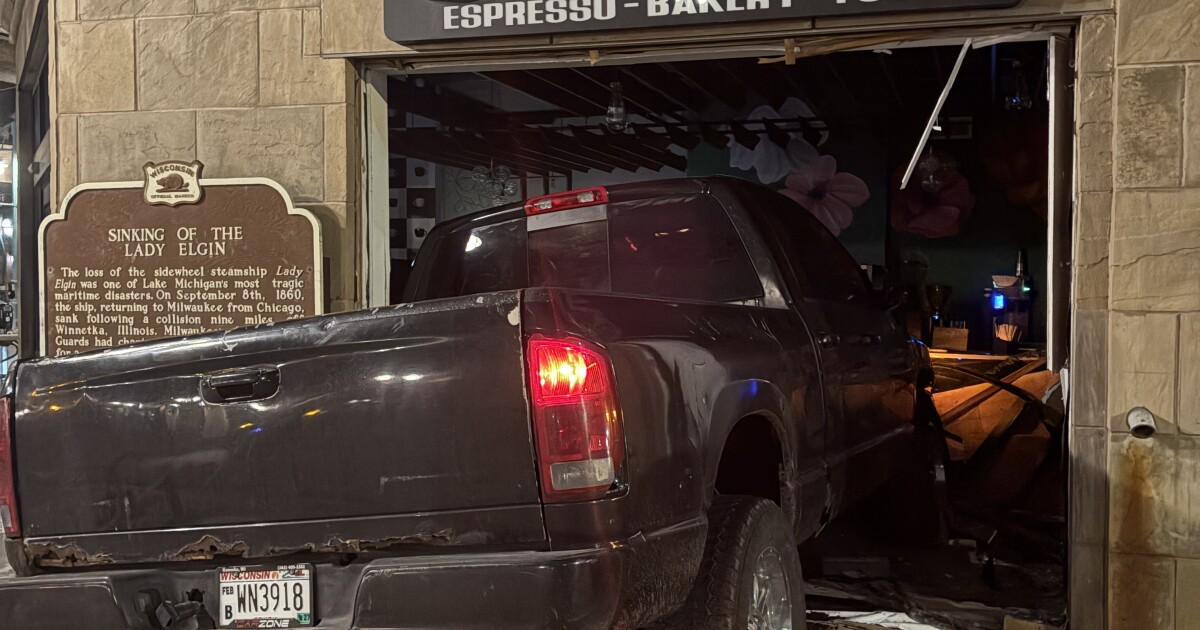
MILWAUKEE — A truck drove through the Grace Coffee Co. in Milwaukee’s Historic Third Ward on early Friday morning, the owners announced in a social media post.
Due to the extensive damage that was done, the coffee shop will be closed until further notice.
TMJ4
“We’re incredibly grateful no one was hurt, and we’ll keep you updated as we begin repairs,” the coffee shop said in the post.
TMJ4 reached out to the Milwaukee Police Department but have yet to hear back.
Let’s talk:
Hey there! At TMJ4 News, we’re all about listening to our audience and tackling the stuff that really matters to you. Got a story idea, tip, or just want to chat about this piece? Hit us up using the form below. For more ways to get in touch, head over to tmj4.com/tips.
It’s about time to watch on your time. Stream local news and weather 24/7 by searching for “TMJ4” on your device.
Available for download on Roku, Apple TV, Amazon Fire TV, and more.
Report a typo or error // Submit a news tip

MPS cuts face backlash
Milwaukee Public Schools plans about 200 layoffs to close a $46 million budget gap, but union leaders say cuts could impact student safety while district leaders say no classroom teachers will be eliminated.
MILWAUKEE – Milwaukee Public Schools is planning to cut roughly 200 positions next school year as the district works to close a multi-million-dollar budget gap — but there’s disagreement over which roles will be impacted.
What we know:
District leaders say the goal is to close a roughly $46 million shortfall, prompting changes that Superintendent Brenda Cassellius says are necessary.
Milwaukee Public Schools said about 201 staff members will be impacted. District leaders say no classroom teachers, counselors or social workers will be cut — something the teachers’ union disputes.
FREE DOWNLOAD: Get breaking news alerts in the FOX LOCAL Mobile app for iOS or Android
The reductions stem from a previously approved plan to eliminate about 260 non-classroom roles. The final number dropped after retirements and existing vacancies. The Milwaukee Board of School Directors approved that plan on March 9.
What they’re saying:
“We have a $50 million deficit, we are for sure not going to be able to do business the same way that we’ve been able to do business,” Cassellius said. “Change is just hard. It’s just hard. And every single one of our employees is so important.”
But some educators say the cuts go too far.
“MTEA is setting up a distress signal. We are talking about our teachers, art teachers, music teachers, physical education teachers, counselors — things that the voters of referendum of Milwaukee actually voted for,” said Ingrid Walker-Henry, president of the Milwaukee Teachers’ Education Association. “Staffing is being cut to the extent that they are concerned about student safety.”
Cassellius acknowledged the uncertainty and asked school leaders for patience.
“We just have to for sure know our budget situation, where we’re at with that after these cuts are made in order to make those decisions,” she said. “So I’m asking my principals, be patient with us.”
By the numbers:
The district outlined the 201 affected positions as:
- 70 central office roles
- 62 educators with a teaching license but not assigned to one classroom
- 59 assistant principals
SIGN UP TODAY: Get daily headlines, breaking news emails from FOX6 News
MPS says the savings will support new class size guidelines, including:
- 18 students per teacher in K3
- 20 students per teacher in K4
- 22 students per teacher in K5
Milwaukee Public Schools (MPS)
District leaders say no students will be asked to leave a school to meet class size guidelines. Officials say they are working with schools that may not have space or that require larger classes based on specific programs.
What’s next:
Milwaukee Public Schools plans to present its proposed 2026–27 budget to the Milwaukee Board of School Directors in May.
The Source: Information in this post was provided by Milwaukee Public Schools and prior FOX6 coverage.

North Dakota medical professionals gather for brain injury education

Math plan would help a generation of Ohio students | Opinion

OU basketball vs South Carolina prediction, our pick for Women’s NCAA Tournament Sweet 16
Oregon Lottery Mega Millions, Pick 4 results for March 27

Pa. House committee advances bill to require radon testing and mitigation in schools

Florida High School Football Rankings: Top 25 teams – Oct. 21

How old is Bo Nix? What to know about Oregon quarterback ahead of 2024 NFL Draft

Cleary's 21 help Le Moyne down Central Connecticut State 69-64 in OT

99th annual Pony Swim held in Virginia

Indiana Members Credit Union announced as new anchor tenant at Bottleworks District

Dem senators dodge crucial question on illegal alien accused of killing Chicago college student

EU Parliament unblocks key political hurdle in digital euro talks

Man arrested in plot to firebomb Palestinian activist’s home after undercover op

WATCH: Senate hearing goes silent after Angel Father confronts top Dem over daughter’s death

US diplomat Marco Rubio denounces settler violence, tolls in Hormuz strait
-

 Detroit, MI1 week ago
Drummer Brian Pastoria, longtime Detroit music advocate, dies at 68
-

 Movie Reviews1 week ago
‘Youth’ Twitter review: Ken Karunaas impresses audiences; Suraj Venjaramoodu adds charm; music wins praise | – The Times of India
-

 Sports7 days ago
IOC addresses execution of 19-year-old Iranian wrestler Saleh Mohammadi
-

 New Mexico6 days ago
Clovis shooting leaves one dead, four injured
-
 Business1 week ago
Disney’s new CEO says his focus is on storytelling and creativity
-

 Technology6 days ago
YouTube job scam text: How to spot it fast
-

 Tennessee5 days ago
Tennessee Police Investigating Alleged Assault Involving ‘Reacher’ Star Alan Ritchson
-

 Texas1 week ago
How to buy Houston vs. Texas A&M 2026 March Madness tickets