Kansas
Kansas Republicans may have veto-proof majorities to end mail ballot grace period


What is the Kansas Supermajority? How leaders react to 2024 election
The 2025 Legislative Session begins Jan. 12 with Republicans controlling the House and Senate under Democratic Gov. Laura Kelly.
Kansas Republican lawmakers are getting close to repealing the three-day grace period for mail ballots, a law that was broadly popular when it was enacted eight years ago.
The Republican-led Legislature has passed Senate Bill 4, sending it to Democratic Gov. Laura Kelly’s desk. While the bill faces a likely veto, the GOP supermajorities appear to have the votes for an override.
Under Kansas election law, voters are allowed to advance vote by mail. As long as they are postmarked by Election Day, the ballots can be counted if they are delivered within three days.
That three-day grace period would be repealed by SB 4, meaning all mail ballots would have to arrive by 7 p.m. Election Day in order to be counted. The proposed change would take effect in 2026.
What lawmakers say about repealing grace period
That law was enacted in 2017 with bipartisan support in a near-unanimous Legislature. It had the backing of then-Secretary of State Kris Kobach, who said the motivation behind the law was concern about mail delays.
“Our opposition to this bill is simple: it’s wrong for the government to throw out votes for no good reason,” said Davis Hammett, president of Loud Light Civic Action, in a statement. “That is the only thing this bill would do if passed into law — throw out Kansans’ valid ballots because of slow mail. Mail delays are a government failure — a failure that this same legislature, with near unanimous support, voted to help fix in 2017 when they added additional mail processing days for ballots cast on election day to arrive.”
Senate Minority Leader Dinah Sykes, D-Lenexa, said during floor debate last month that mail processing problems “have honestly only gotten worse” since 2017.
But Republicans have largely flipped their view after mail voting was politicized following President Donald Trump’s claims of fraud in the 2020 election.
Sen. Bill Clifford, R-Garden City, said that he believes Kansas has secure elections. But after previously supporting the three-day grace period, he said he changed his mind out of concerned that the perception of fraud will dampen voter turnout.
“Being a party chair in western Kansas of the Republican Party, I certainly have to deal with individuals who still think there’s fraud in Kansas elections,” Clifford said. “Although I would disagree with that, that perception is the reality for many voters.”
Sen. Mike Thompson, R-Shawnee, is the chair of the Senate Federal and State Affairs Committee. He cited a federal appeals court ruling from a different circuit than Kansas where the judges found that grace periods for mail ballots are unconstitutional. The ruling doesn’t apply to Kansas.
“That gives us additional justification for eliminating this three-day grace period,” Thompson said.
Sen. Brenda Dietrich, R-Topeka, was the only Senate Republican to vote against the bill.
“I voted no on that,” Dietrich said while speaking to Greater Topeka Partnership officials last month. “I have 22 nursing homes, and that’s too important to them.”
Rep. Pat Proctor, R-Leavenworth, is the chair of the House Elections Committee.
“Voter confidence that the results of our elections reflect their will, that every vote is counted, lies at the very heart of our form of government and our way of life,” Proctor said in a statement. “According to the Secretary of State, the three-day grace period disenfranchised as many as a thousand voters last year. Joining the 32 states that have decided that Election Day should be Election Day is a positive step toward restoring voter confidence and ensuring every vote is counted in Kansas.”
Rep. Alexis Simmons, D-Topeka, is a member of the House Elections Committee.
“Election misinformation is the true cause of any issue with voter confidence,” Simmons said in a statement. “This bill was passed through a campaign of election misinformation, in part because of the chairman’s continued peddling of fake data. The Secretary of State’s Office has shared the data they collected about the issues Rep. Proctor raised during this debate and there is no evidence to back up his claims.
“In fact, the data shows the opposite of what Rep. Proctor is saying. Very clearly, the 3-day mail processing period protects Kansans who rely on mail voting from being disenfranchised due to slow mail. I am particularly concerned about this due to the recent news that Elon Musk’s absurd DOGE efforts will soon be focused on slicing and dicing the USPS.”
How many mail ballots benefit from 3-day grace period?
Eliminating the three-day grace period could mean that thousands of votes are not counted in future elections.
Secretary of State Scott Schwab’s office provided lawmakers with data from the 2024 general election in Kansas.
There were 163,405 mail ballots sent out, of which 147,359 were returned by the voter.
Of that, 2,110 ballots were received during the three-day grace period after Election Day. Those ballots were counted.
There were 603 ballots received after the grace period. Those ballots weren’t counted. Neither were 104 ballots received after Election Day that didn’t have a postmark.
The Secretary of State’s Office remained neutral on SB 4, but provided lawmakers with a summary of arguments for and against. It also lobbied to keep ballot drop boxes as an option for voters.
Ann Mah, a former Topeka lawmaker and former member of the Kansas State Board of Education, testified about statistics she got from the Shawnee County Election Office. In the 2020 election, there were 217 mail ballots received during the three-day grace period. In the 2022 election, there were 291 ballots.
“If passed, this bill would likely disenfranchise thousands of voters across the state of Kansas,” Mah said.
Republicans likely have veto-proof majorities for expected veto
While the governor is expected to veto the bill, Republicans likely have the votes for an override.
The Senate passed SB 4 on Thursday with a 30-10 vote, which is three above the supermajority needed for an override. One Republican sided with the Democrats.
A week before, the House passed the bill 80-39. While the House was four votes shy of a veto-proof supermajority, there were four Republicans absent that day — all four of whom previously voted to repeal the three-day grace period in 2023. There were four Republicans who sided with Democrats.
In 2023, the Legislature passed Senate Bill 209 to repeal the three-day grace period, but failed to override Kelly’s veto. The governor raised concerns for voters in the military.
In her veto message, Kelly said it would “likely result in too many rural Kansans not having their votes counted in important elections. That is unacceptable. We should be doing everything we can to make it easier — not harder — for Kansans to make their voices heard at the ballot box.”
The Senate mustered 25 votes for an override, two short of a supermajority. While the override attempt did not make it to the House for a vote, that chamber had 76 votes to pass the bill, which would have been eight short of the number needed to override a veto.
Republicans tried again in 2024, but the Senate GOP sank their own three-day grace period repeal bill by anchoring down the already controversial proposal with even more controversial proposals. The additions made it a sweeping bill to ban ballot drop boxes and ban electronic voting machines, among other provisions. The bill failed to pass because several Republicans sided with Democrats.
Jason Alatidd is a Statehouse reporter for The Topeka Capital-Journal. He can be reached by email at jalatidd@gannett.com. Follow him on X @Jason_Alatidd.



KSHB 41 reporter Isabella Ledonne reports on stories in Overland Park, Johnson County and topics about government accountability. Share your story idea with Isabella.
—
Saturday marks the final FIFA World Cup 26 match in Kansas City with Argentina set to meet Switzerland on the pitch at Kansas City Stadium.
Kansas City to reduce bus transit frequency, extended hours after World Cup
Public transportation received a big boost during the World Cup.
Johnson County launched JOCO United, and according to leaders, the airport drop and ride service that was implemented for the tournament will stick around.
“It has been very smooth every time,” Johnson County resident Mariah Wickham said. “I’ve been up and down so many times.”
Kansas City, Missouri, also bumped up its transit options, but not all of the those will be sticking around once the final whistle blows.
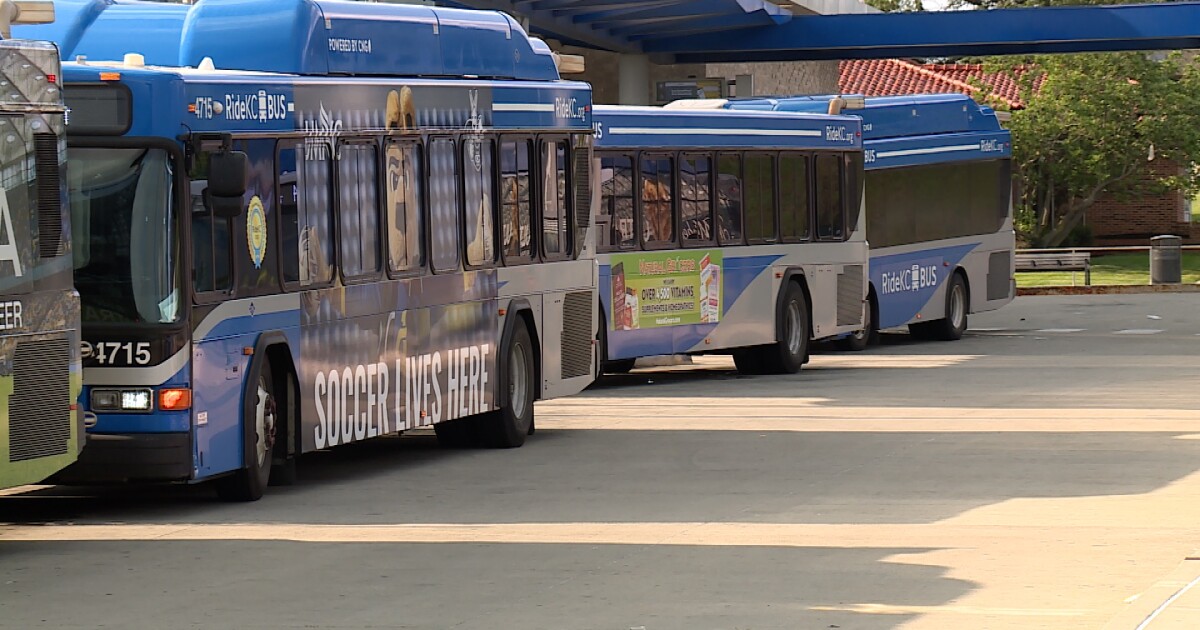
Tens of thousands of people have been using the airport link, streetcar and the buses to get around Kansas City. The city poured millions of dollars into building up its public transit infrastructure. The KCATA added more frequency to bus transit lines and the streetcar, pushing more fans to use public transportation during the tournament.
Brian Luton
“With the World Cup here, I was able to exercise using the streetcar more frequently and that was really fun,” Trish Luancing said. “It wold be nice to not have to drive everywhere and not have to worry about parking.”
But thousands have been relying on public transit for years, regardless of what event was in town.
“It’s been busier since the World Cup,” Jeffrice Jackson, a bus rider, said. “It’s been smooth sailing.”
The KCATA added streetcar ‘bus bridge’ links, extended bus service hours and increased frequency on East-West routes to link riders to the streetcar. It’s benefited both travelers and commuters.
Brian Luton
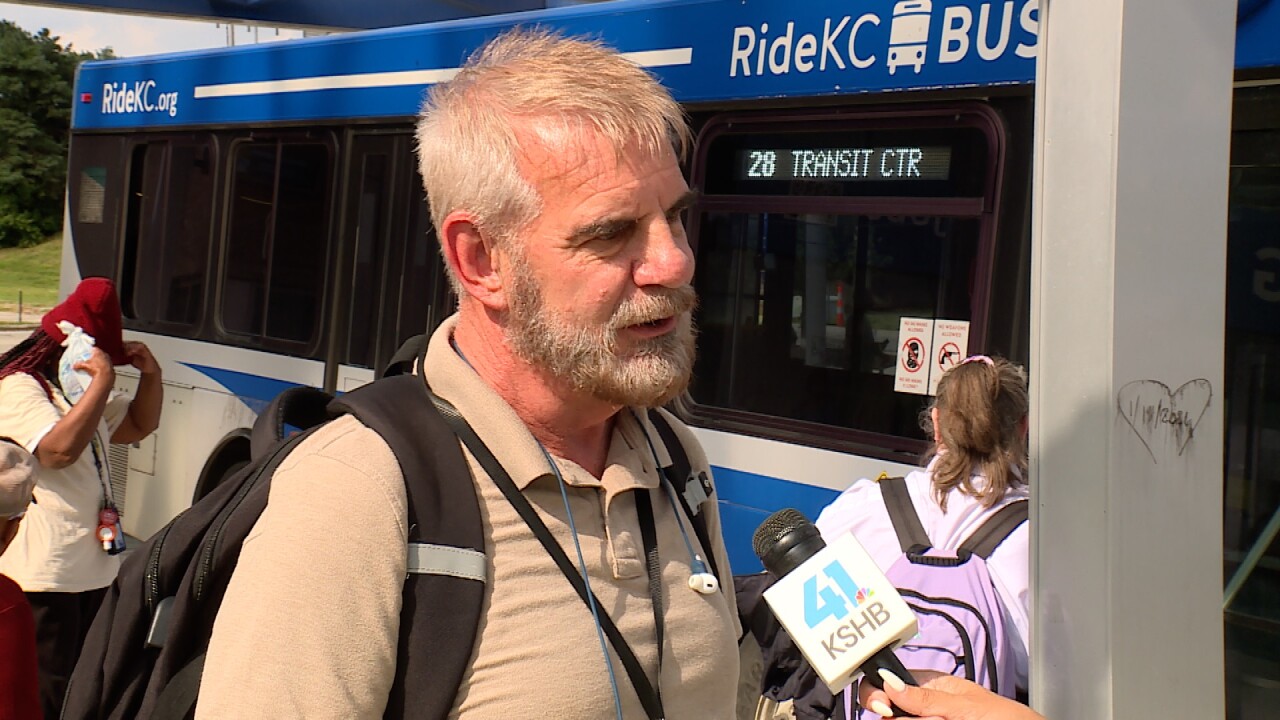
“[Service] has been more consistent with the World Cup than it was previously,” Jerry Breault, a rider said. “We were missing buses or routes because there weren’t enough drivers to drive that route.”
But the add-on’s stop on Sunday, July 12. If the transit authority can’t find more money, more than a dozen routes will be cut, potentially impacting more than 8,000 riders.
“It’s a little frustrating,” Breault said. “A lot of us rely on it just to get back and forth to work, to take care of our daily needs. It looks like we may be having to find alternatives and we’re not very happy about that.”
The KCATA will potentially suspend these weekday and weekend routes by September:
Weekday Route Eliminations:
- 9 – 9th Street, 365 average weekday ridership
- 21 – Cleveland Antioch, 512 average weekday ridership
- 23 – 23rd Street, 266 average weekday ridership
- 25 – Troost Local, 1,460 average weekday ridership
- 27 – 27th Street, 422 average weekday ridership
- 57 – Wornall, 411 average weekday ridership
- 71 – Prospect Local, 464 average weekday ridership
Weekend Route Eliminations:
- 9 – 9th Street, 349 average weekend ridership
- 21 – Cleveland Antioch, 312 average weekend ridership
- 23 – 23rd Street, 312 average weekend ridership
- 25 – Troost Local, 1,431 average weekend ridership
- 27 – 27th Street, 455 average weekend ridership
- 57 – Wornall, 595 average weekend ridership
- 71 – Prospect Local, 982 average weekend ridership
Bus fares came back earlier this summer to offset some of the operation costs, but many have reported issues with the free fare cards and eligibility.
“There’s always funding challenges with the KCATA,” Kansas City, Missouri, Mayor Quinton Lucas said. “How are the fare re-institutions working right now?”
Brian Luton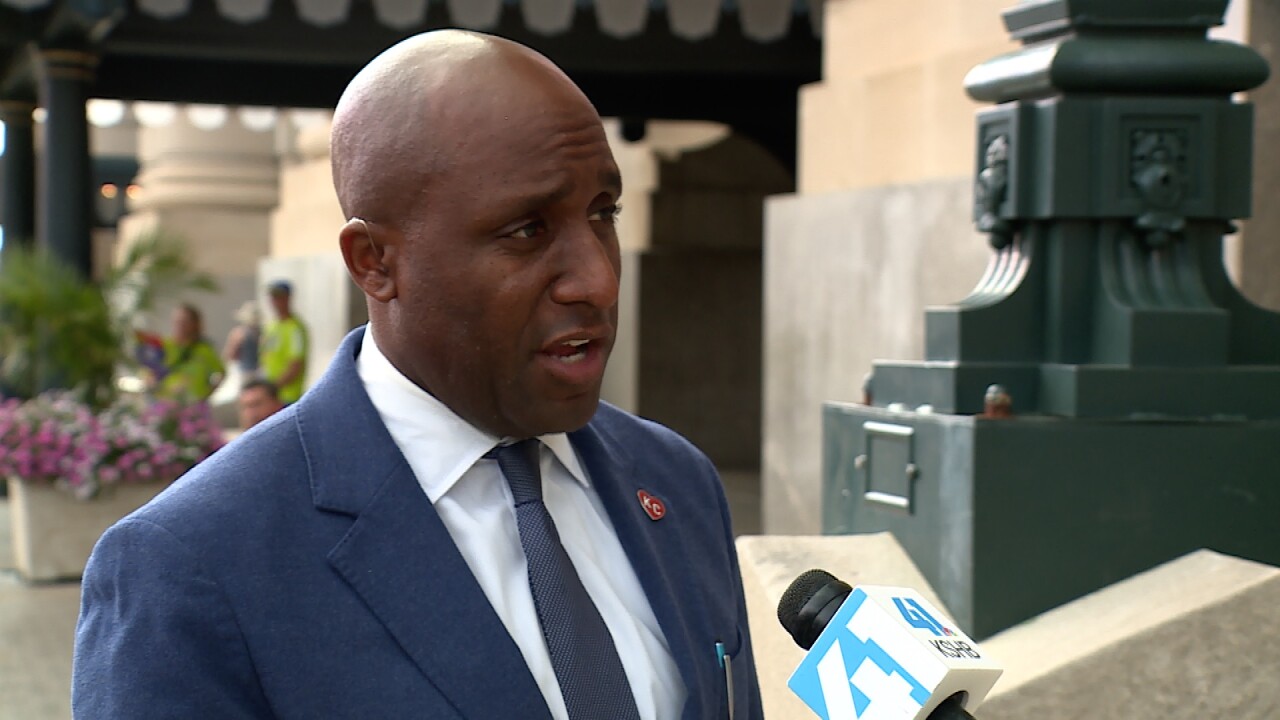
Mayor Lucas told KSHB 41 News Reporter Isabella Ledonne the transit improvements implemented for the World Cup “should continue,” and there are plans to talk with the KCATA commissioners to “make it work”.
“KCATA cannot just be Kansas City supported alone forever,” Mayor Lucas said. “Our approach and our preference is that the region got to see how much they would like [expanded service] during the World Cup. It was always intentional that if they liked it, maybe they would invest and maybe they would want this thing to go further.”
That’s good news to the thousands of daily riders.
Brian Luton
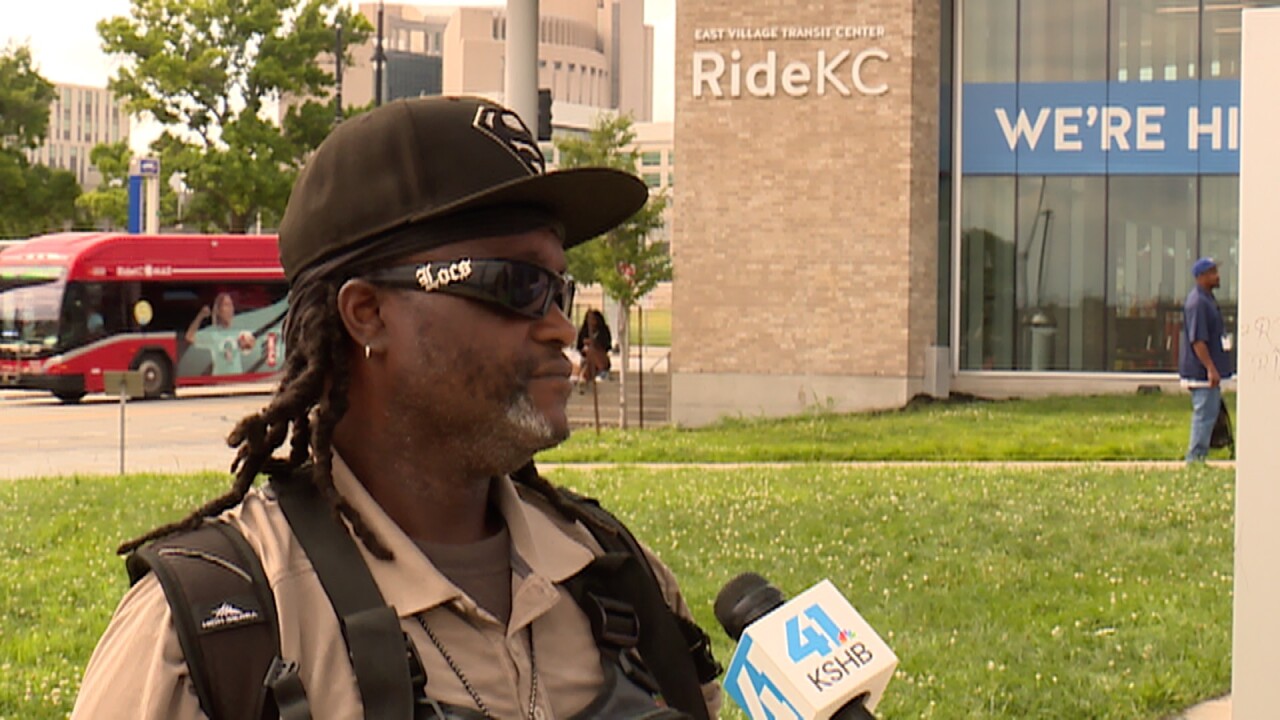
“I think it’s good because it helps people get around if they need to get around,” Jackson said.
The KCATA did not make themselves available for an interview.
—

One of the top prospects in the 2027 boys’ high school basketball recruiting class recently trimmed his list of suitors, and the Kansas Jayhawks find themselves firmly in the mix.
KU is one of eight schools to make the cut for 2027 five-star small forward Demarcus Henry, according to On3 National Basketball Reporter Joe Tipton. His list of eight includes some of the best programs in the country: Kansas, Ohio State, Kentucky, North Carolina, BYU, Arkansas, UConn, and Louisville.
The 6-foot-7 Charlotte, North Carolina, native is one of the best players in the 2027 class. He’s currently ranked as the No. 5 player overall and the No. 1 player at his position, according to the most recent On3.com 2027 player rankings.
As a junior this past year at Compass Prep High School in Chandler, Arizona, Henry averaged 15.5 points, 8.2 rebounds, and 2.2 steals per game as he helped lead his team to a 25-3 record.
He followed that up with an impressive performance at the NBPA Top 100 camp this summer, leading all attendees in scoring (20.0 points per game) and rebounding (9.3 rebounds per game). He was also a member of the 2026 USA Men’s U18 National Team that earned a silver medal at the FIBA U18 AmeriCup earlier this summer in León, Mexico.
When speaking about his game, Henry mentions his versatility and how he’s developed over the past year.
“I’m just very versatile,” Henry told Rivals in a previous interview. “I can play one through four and just help my teammates and hit shots and play defense. I watch a lot of KD (Kevin Durant) and Paul George. How they score it, and how they could shoot off the dribble, shoot off the catch. I’ve gotten tougher and just more aggressive when I transferred AZ Compass and just being able to get downhill, I feel like that’s really developed for me.”
When asked about what he’s looking for in a potential home at the college level, Henry says he wants to be challenged and grow his game for the NBA.
“What I’m looking for in school is someone that just pushes me to be better,” Henry said. “Help me grow into the person I know I can be and someone who will help me reach my potential. I want to play for a coach that will hold me accountable and help me make me uncomfortable and keep growing and keep getting better and just help me reach the NBA, which is my ultimate goal.”
Early Contenders
Right now the early favorite to land Henry may be the basketball program with the least amount of notoriety of the final eight schools – and that is Ohio State.
Henry has a lot of familial ties to the university as his older brother Chris Henry Jr. is a five-star incoming freshman wide receiver for the Buckeyes football team this year, and his older sister Seini Henry is a talented women’s basketball player at Ohio State.
He’s already taken an unofficial visit to the school and has also taken an unofficial visit to BYU. Thus far, they are the only schools to have received a visit.
Follow

The Royals have been linked to shortstop Jacob Lombard out of Gulliver Prep (Fla.) — if he makes it that far — left-hander Gio Rojas out of Stoneman Douglas (Fla.) HS, outfielder Eric Booth Jr. out of Oak Grove (Fla.) HS, UC Santa Barbara right-hander Jackson Flora and Georgia Tech outfielder Drew Burress, among others. Maybe they shake up the board and go with Huntington Beach (Calif.) HS left-hander/outfielder Jacob Grindlinger, who is just 17 years old after reclassifying for this year’s Draft and has legitimate upside as a two-way player. Grindlinger is No. 16 on MLB Pipeline’s Top 250 Draft prospects list and is rising on boards as Draft day nears.
Prep players usually mean a lot of upside but with more risk, while college players bring a higher floor and more experience — often with a chance to move quickly. Over the full Draft, the Royals are going to value both.
“There’s a good mix of high school and college,” Bridges said. “To tell you the truth, our range is pretty broad. There’s a clear-cut four players, five players in this Draft, and then believe it or not, where we’re picking, you can go a number of different directions. So we have a pretty good balance of what we’re looking at, both high school and college.”
-

 Connecticut7 minutes ago
Marian Katz Obituary
-

 Delaware9 minutes ago
DE health officials ‘on pins and needles’ after measles cases in PA
-

 Florida14 minutes ago
Florida man accused of driving drunk, causing head-on crash and seriously injuring 2
-

 Georgia21 minutes ago
Georgia cops’ alleged misuse of Flock license plate tracking data fuels privacy concerns
-

 Hawaii25 minutes ago
3 candidates to be considered for District 18 seat
-
 Idaho29 minutes ago
“We won’t insure you”: Robie Creek homeowners struggle to get home insurance due to wildfire risks
-

 Illinois37 minutes ago
After recent Illinois lightning strikes, officials share safety tips
-

 Indiana39 minutes ago
Kelsey Mitchell winner completes Fever comeback against Mercury, without Caitlin Clark

