Kansas
Kansas Bird Flu Tops Nation


Kansas is suffering from the worst outbreak of highly pathogenic avian influenza in the country, with nearly 414,000 birds affected, according to the U.S. Department of Agriculture.
HPAI, an umbrella term for avian influenza that includes highly contagious strains such as H5 and H7, is considered a low public health risk, although it can pass to humans through birds and dairy products from infected cattle, according to the U.S. Centers for Disease Control and Prevention.
“H5 bird flu is widespread in wild birds worldwide and is causing outbreaks in poultry and U.S. dairy cows with sporadic human cases in U.S. dairy and poultry workers,” according to CDC.
As of Friday, there are four affected commercial flocks and six affected backyard flocks reported in Kansas, according to the U.S. Department of Agriculture. Avian influenza kills almost 100% of the birds it infects.
The bulk of the infected birds, about 380,000, in Kansas were reported to be in a commercial operation in Pottawatomie County, USDA reports said.
In a map highlighting outbreaks across the nation, Kansas is the only state showing the most severe reports during the past 30 days. It is followed by Indiana, with about 87,000 birds affected, including two commercial flocks and five backyard flocks.
Kansas has not had a reported instance of avian bird flu in a human, according to CDC records. Since 2024, there have been 74 reported bird flu cases in humans and two deaths.
This year’s outbreak is similar to those during the last few years, said a spokeswoman for the Kansas Department of Agriculture.
“December and January have been the months when we have seen the highest number of positive cases since this outbreak began in 2022,” said Heather Lansdowne. “The winter of 2023-2024 was more active than this year, both in total cases and in number of birds affected. We are hoping this year follows the trajectory of those years and we begin to see a decline in cases moving forward.”
This year’s outbreak has spread primarily from migrating wild waterfowl, she said. The agency has encouraged poultry farmers and others to protect their birds from contact with migratory birds and their habitats.
“We have been promoting these actions to poultry owners from the start of the outbreak, both in public information and directly through veterinarians, extension agents, 4-H and FFA programs, to poultry owners we have through our systems, etc.,” Lansdowne said.
When the state discovers birds positive for avian flu, they work directly with the business owner to develop a response plan that includes a quarantine and long-term recovery plan, she said.
_ _ _
Story via Kansas Reflector



TOPEKA, Kan. — A proposed legal settlement with the U.S. government would require the Keystone Pipeline system’s operator to pay a $26.9 million civil penalty over a major oil spill in Kansas in December 2022 and spend about $40 million more to prevent future accidents.
The agreement would resolve allegations from the U.S. Environmental Protection Agency and Kansas that South Bow, based in Canada, violated U.S. and state clean water laws. The rupture dumped nearly 13,000 barrels of heavy crude oil into a creek running through a rural pasture in Washington County, Kansas, about 150 miles (241 kilometers) northwest of Kansas City.
The accident was the largest onshore crude pipeline spill in the U.S. in nine years and surpassed all 22 previous ones on the same pipeline system combined, according to a 2021 report from the U.S. Government Accountability Office. The total amount of oil spilled would have nearly filled an Olympic-sized swimming pool.
South Bow also would pay Kansas more than $3 million for environmental restoration projects under a proposed decree filed Friday in U.S. District Court in Kansas. A judge would have to approve the proposal after a 30-day public comment period.
South Bow also would pay Kansas more than $3 million for environmental restoration projects under a proposed decree filed Friday in U.S. District Court in Kansas. A judge would have to approve the proposed decree after a 30-day public comment period.
“The oil spill blanketed land and water, rendering the waterway lifeless and useless and requiring extensive cleanup and remediation,” Jeffrey Hall, the EPA’s assistant administrator for its enforcement office, said in a statement. “The substantial penalty reflects the seriousness of the environmental harm.”
South Bow officials did not respond immediately Sunday to a phone message and email seeking comment, but the company told The Canadian Press that it “proactively” began cleaning up the area before receiving directives from U.S. officials. The cleanup was completed early in 2024.
The company that built the pipeline, TC Energy, spun off South Bow as a separate firm in 2024, after the Kansas cleanup was done.
No pipeline workers or area residents were injured, and officials said public water supplies weren’t affected by the spill. However, a complaint filed Friday by the U.S. government along with the proposed settlement said more than 2,700 animals were harmed or killed. The area is home to an endangered species, the long-eared bat.
In a May 2023 report for the U.S. government, an engineering consulting firm said that a bend in the Keystone system where the spill occurred had been “overstressed” since its installation in December 2010 — likely because construction activity itself altered the land around the pipe. The complaint filed Friday in court said soil under the pipe had been “improperly compacted” and that while the company re-excavated the site in 2013, it did not replace that section of pipe.
The 2,689-mile (4,327-kilometer) Keystone system carries thick, Canadian tar sands oil to refineries in Illinois, Oklahoma and Texas.
In April, President Donald Trump gave the go-ahead for South Bow and another company to build a second pipeline from Canada to Wyoming, a smaller version of a massive $8 billion pipeline project known as Keystone XL blocked by former President Joe Biden’s administration in 2021 over environmental concerns.
—

The housing industry saw a sharp drop in construction starts nationwide in May, both compared with the previous month and with the same period a year earlier. The broader Midwest region showed resilience, but Missouri builders still reported weaker business activity during this time.
According to the U.S. Census Bureau, privately owned housing starts across the country fell 15.4% in May compared to April and 8.7% compared to May 2025. The collapse was driven largely by multifamily construction, which dropped 41.6% in a single month and 12.3% year-over-year, while single-family construction declined slightly, by 1.9%.
The Midwest appeared as the lone regional outlier, as housing starts rose 3.7% from April and 5.9% from a year ago. But, building permits in the Midwest fell 18.1% month-over-month, compared to a 0.7% national decline.
Missouri also has a mixed picture in terms of housing permits in metro areas. According to the Census Bureau, permits in the Kansas City metropolitan statistical area rose 5.7% from April and 66.7% from May 2025. St. Louis permits fell 10.8% from April but rose 14.1% year-over-year. In Columbia, there were 101 permits in May, up 2% from April but down 17.9% from a year ago.
The ground picture, however, doesn’t tell a clean growth story for the housing industry. Builders mostly reported significant declines in their business in recent months, compared to previous years.
What builders are saying
Jeff Hemme is the owner of Hemme Homes and Remodeling, which is based in Columbia and serves the mid-Missouri region. He said the company had a flying start to the year, but business has dropped off sharply in the subsequent months. When the mortgage rate briefly went below 6% earlier this year, his company sold 15 homes in just four weeks. Then mortgage rates climbed back up, and his business slowed down.
“If we don’t think buyers are out there, we’re not going to build,” Hemme said.
He said his company now builds about 25 homes a year in mid-Missouri, down from 50 to 60 just a few years ago. Hemme said this confidence crisis, as much as any cost pressures, shaped the conditions the housing construction industry found itself in this spring.
Shawn Woods, CEO of Ashlar Homes in Blue Springs, also had a similar experience.
“January and February, we started off the year incredibly well, so sales were way ahead of where they were in the previous year,” he said. “And then March, April, and May have kind of been lackluster.”
He estimated his company sold 20% to 25% fewer homes over the three months compared to the same period in 2025.
Parker Girard is a co-owner of Girard Homes, which has been constructing homes in Columbia and mid-Missouri for around 12 years. He also said his business was under strain. He said Columbia has strong underlying demand for housing, but high costs and interest rates make new homes hard to sell at the prices most buyers can afford.
Not every builder experienced similar market swings. Chris DeGuentz is the president of the Home Builders Association of St. Louis and Eastern Missouri and the vice president of Fischer and Frichtel Homes. He said his company saw a flying start this year.
“Relative to this time last year, we have seen an increase of 15% to 20% across all price points we offer due to the type and locations of projects we offer,” he said.
He, however, said many of these business trends may be company-specific.
“There are certain builders that maybe echo the Midwestern trend, and perhaps their growth is only 1% or 2%, which is on par with national data with some cases being flat growth, which may be tied to scarcity of land or poor locations,” he said.
He said he doesn’t see any builders losing ground as the demand is still present in the region.
Contributing factors
According to data from the Housing Affordability Institute, the median price for new homes in Missouri was $437,500 in Dec. 2025, roughly 73% more than the median existing home price at $253,000.
Nick Erickson, the executive director of the institute, said a new home purchase would have consumed 46.5% of Missouri’s median household income in mortgage payments at the end of last year, compared with less than 30% for an existing home. Housing that costs below 30% of income is considered affordable under standard mortgage lending guidelines.
A major reason behind the high cost is new building codes. Jeff Hemme said updated building requirements are adding more expense to each home.
“They are making us do so many things with energy, and making the houses so energy efficient, that they are adding tens of thousands of dollars to an average house every time they change the codes,” Hemme said.
Erickson pointed to Kansas City as a recent case study. The city adopted one of the most aggressive energy codes in the country, and “production in Kansas City ground to a halt for a few months because of this,” he said.
The energy conservation code, which was adopted by the city in 2023, required new homes to be more tightly sealed, better insulated and subject to additional inspections. In February 2026, the city rolled back portions of the code, easing some of the requirements.
Woods mentioned some other factors that are raising costs – stream setback ordinances, wetlands permitting and rising municipal fees.
“Municipalities continue to adopt more and more stringent codes that continue to increase pricing, most of which are not life safety codes but more things that should be left to consumer choice,” Woods said.
Alongside rising costs, Girard pointed to competition from existing homes.
“A lot of times you can go and buy a bigger home with more square footage, that’s an older home that was already built, for less money, than you can build a newer home with smaller square footage, at a higher price point,” he said.
What lies ahead
The season that, as builders say, was supposed to be the strongest one has ended in the red for many. Woods said the market may stay slow for another one or two months before stabilizing.
“For any large uptick or large increase, I think we’re going to have to wait till spring of next year, and see what the interest rates hold,” he said.
Erickson said that an uptick in homebuilding activity will depend greatly on whether government officials enact certain changes.
“Until we see real changes in housing policy at the state, local and federal level, we’re not really going to see much movement,” he said. “We do need to be building more housing, but until we see regulatory relief or a change in rates, there’s not going to be much change in housing production.”
DeGuentz downplayed the national volatility as being very subjective and tied to multifamily starts.
“Starts and permits always fluctuate and you can point to a lot of different things that may affect one builder over another, but overall as single-family home builders we recognize that there’s ups and downs,” he said. “However, builder and new homebuyer sentiment and demand in our region remains above national data.”
This story was originally published by Missouri Business Alert, a fellow member of the KC Media Collective.

KSHB 41 reporter Fernanda Silva covers stories in the Northland, including Liberty. She also focuses on issues surrounding immigration. Share your story idea with Fernanda.
—
Soccer may be wrapping up in Kansas City, but the city is about to take center stage again.
The new season of “Ted Lasso,” filmed in Kansas City, is just days away, and for families like the Brownes, the excitement is hard to contain.
“My boys were so excited. Like I’ve seen them do a lot of things they like, but I’ve never, ever seen them that level of joy and excitement for days,” Kerry Browne said.
KSHB 41
The show holds a special place for the family, who were among those caught up in the buzz when production came to town last summer.
Fernanda Silva/KSHB
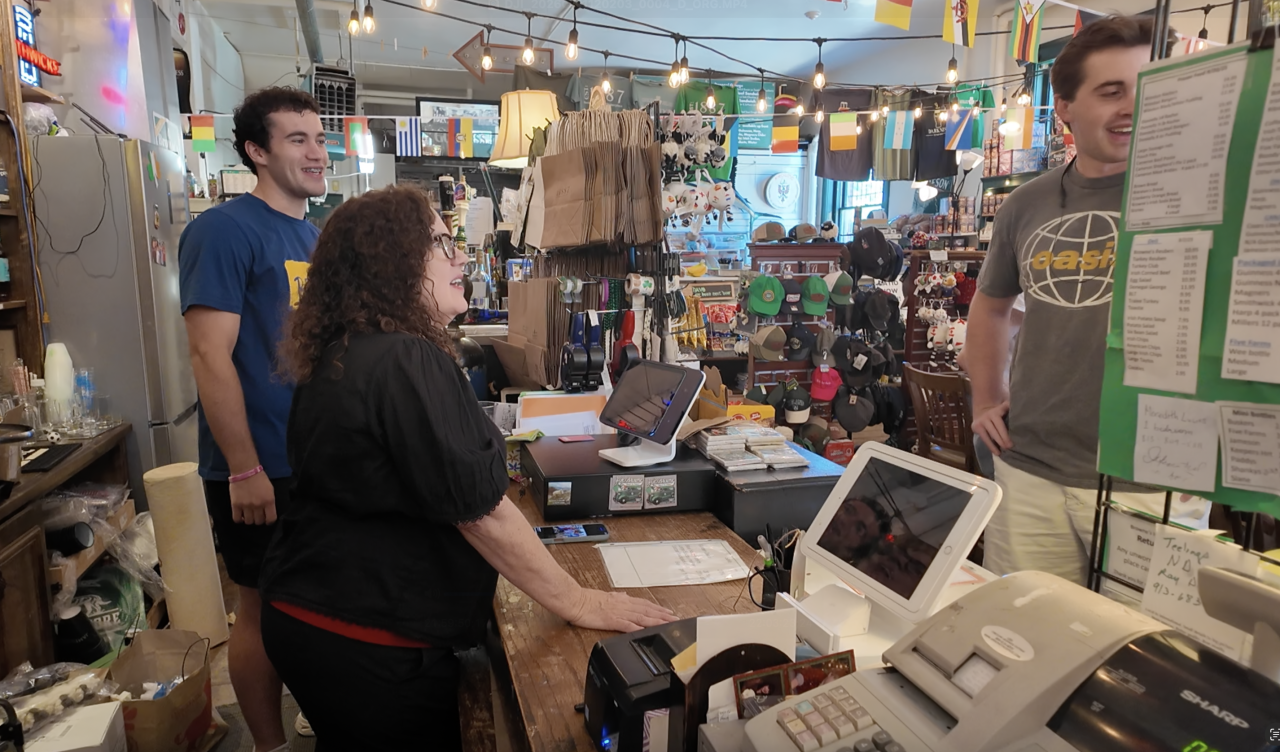
That show has changed me more than anything else has,” Rory Browne McClain said. “
KSHB 41 reporter Fernanda Silva had the chance to ask cast members questions ahead of the new season and brought along a question from the Browne family — what were their favorite parts of Kansas City?
KSHB 41

“For me, it’s the American Jazz Museum,” Jeremy Swift said. He plays Leslie Higgins in the show.
Brendan Hunt, who plays Coach Beard, pointed to CPKC Stadium, where the press conference was held.
Fernanda Silva/KSHB
“I like so much of Kansas City, but truly, honestly, like one of my favorite things is this stadium,” Hunt said.
Juno Temple, “Keeley Jones” in the show, reflected on what the city meant to her personally.
KSHB 41

“I was really moved by this place, and that’s something that I will forever hold close to my heart,” Temple said.
Jason Sudeikis, who plays the show’s title character, spoke about what he hopes Kansas City viewers take away from the new season.
“I’d like to think that they feel, that we from Kansas City feel well represented by the characters and by the characters from Kansas City, the characters that he met in Kansas, like Coach Beard,” Sudeikis said.
KSHB 41

Hunt drew a direct parallel between the World Cup’s effect on Kansas City’s global profile and what viewers are about to see play out on screen.
“It kind of ends up being like, you know, all this media that’s happened the last month of like the world discovering Kansas City and the vibe — like that is exactly what happens to Keely,” Hunt said. “So, you’re about to have déjà vu real hard when this thing comes along.”
For Browne, the timing could not be better.
“I love that the world will get to see what we love about Kansas City,” Browne said.
This story was reported on-air by a journalist and has been converted to this platform with the assistance of AI. Our editorial team verifies all reporting on all platforms for fairness and accuracy.
—

-

 Indiana4 minutes ago
Indiana seeks coal ash program as feds move to rollback regulations
-

 Iowa10 minutes ago
Several Iowa High School Baseball Standouts Selected In MLB Draft
-

 Kentucky22 minutes ago
How one small KY town put aside its differences to celebrate America | Exclusive
-

 Louisiana28 minutes ago
Meta’s Louisiana Data Center to Surpass $250 Billion Price Tag
-

 Maine34 minutes ago
6 concerts, theater productions planned this week in central Maine
-

 Maryland40 minutes ago
Readers vote for best ice cream shop on Lower Shore of Maryland
-
Michigan46 minutes ago
Michigan Sen. Gary Peters backs Democratic Rep. Haley Stevens in contentious race to succeed him
-

 Massachusetts52 minutes ago
Man dead after apparent drowning in Randolph pond


