Kansas
Kansas bills would end grace period for mail ballots and ban ranked-choice voting


Fact-checking Trump’s claims about windmills and the Panama Canal
President Trump made some questionable claims about birthright citizenship, renewable energy costs and voter turnout in the 2024 election.
Kansas’s two election committees are fast at work in the Kansas Statehouse this year and have already had hearings on some of the more controversial election bills being considered.
Kansas has taken on a flurry of election security bills since 2020, when President Donald Trump baselessly blamed widespread voter fraud for his defeat. Some of the laws that passed in the Statehouse fell flat in the courts, namely the prohibition of “impersonating an election employee.”
Democrats have signalled that they’re not willing to work on many of the bills being considered.
“Anything that makes voting more difficult for Kansans is going to be a nonstarter with us,” said Senate Minority Leader Dinah Sykes, D-Lenexa.
Kansas bill considers ending the ballot grace period
In 2017, the Kansas Legislature approved a three-day grace period for ballots that were sent before Election Day, but received by a county election office up to three days after the election. A bill that would make a hard deadline of 7 p.m. on Election Day for ballots was recommended to be passed by the Senate Committee on Federal and State Affairs despite substantial pushback from opponents.
Identical bills have passed the Senate and House over the past few years, but they’ve failed to overcome Gov. Laura Kelly’s veto.
Election Day is the mail-ballot deadline for most states, with 32 states requiring the return of mail-in ballots as the polls close. The other 18, plus Puerto Rico, Washington, D.C., and the Virgin Islands allows ballots after Election Day if it is postmarked with the date it was sent.
Written testimony for the bill largely skewed oppositional, with more than 50 organizations and private citizens asking the committee to reject the bill compared to 10 proponents.
Proponents argued that the U.S. Postal Service postmarks are unreliable, would speed up tabulation and would make elections more secure.
“Nothing in this bill does anything to change voters access. Kansas makes it very easy to vote. This law would also make it harder to cheat,” said Jason Sneed, executive director of Honest Elections Action Project, a Washington, D.C.-based organization that advocates for tougher election security laws.
Sneed previously managed the Heritage Foundation’s election fraud database, which found 16 cases of voter fraud in Kansas since 2005.
Opponents included several civil rights groups and civic organizations like the American Civil Liberties Union, the League of Women Voters and the Disability Rights Center. Opponents argued that the bill was uncontroversial when it passed in 2017, and responded to delayed USPS service that has only gotten worse since. Some also said this would throw out ballots and cause confusion among voters.
“Could you tell me your mail delivery time? How long it’s going to take for any letters? You don’t know,” said Davis Hammet, president of the youth voter access and engagement advocate Loud Light. “Weather events can happen that create mail delays that are outside of anyone’s control. So this is just a common sense simple thing. It’s about protecting people from some of the failures of the federal government.”
Ann Mah, former Democratic representative from Topeka and former Kansas State Board of Education member, called the bill “pure voter suppression” of Democrats, who are more likely to vote by mail than Republicans.
The bill was also opposed by the Kansas County Clerks and Election Officials Association, which represents the county clerks and election officials in the state.
“Most properly mailed advance ballots are returned the day after the election but diminishing quantities continue to be received after Election Day,” said Rick Piepho, the elections committee chair of the KCCEOA.
An identical bill, House Bill 2017, is submitted to the House, but so far the House Elections Committee hasn’t scheduled a hearing on it.
Bill would ban ranked-choice voting in Kansas
Sen. Mike Thompson, R-Shawnee, introduced a bill that would ban ranked-choice voting in Kansas, which hasn’t been adopted by any city thus far. Current state law doesn’t have a method for ranked-choice voting outlined in statute, meaning cities couldn’t do it unless lawmakers passed a law allowing it according to the Kansas Revisor of Statutes.
Madeline Malisa, a visiting fellow at Opportunity Solutions Project, argued that ranked-choice voting has been a “nightmare” in Maine, where she lives. She said the tabulation process throws out ballots, is too complicated and increases the chance of less-popular candidates to gain office.
Maine adopted ranked-choice voting in 2018, but several Republican-led states have soured on the idea after Alaska elected its first Democrat in decades in its first ranked-choice election.
Ranked-choice voting advocates argued that the practice could improve the voting process and that several of the proponents’ ideas aren’t backed up by evidence. About 75% of Utah voters who participated in a ranked-choice voting pilot found it easy, though neither ranked-choice or single-vote plurality voting reached majority support.
Resolution would say noncitizens can’t vote in Kansas
A House resolution proposed slightly altering the Kansas Constitution to more explicitly state that noncitizens aren’t allowed to vote, though Kansas’s laws have interpreted the current language as doing just that for over 100 years.
Some municipalities across the country have allowed noncitizens to vote in local elections, though they’re barred from participating in federal elections. No city in Kansas has followed suit.
The bill was supported by two out-of-state advocacy organizations, Americans for Citizen Voting and Opportunity Solutions Project. The ACLU, Loud Light and League of Women Voters opposed it.
Currently, Kansas enfranchises “every citizen of the United States who has attained the age of 18 years and who resides in the voting area in which he or she seeks to vote.” Proponents of the bill argue that it still leaves some wiggle room for municipalities to allow noncitizen voting.
“It does not prohibit a municipality from allowing a non-citizen to vote legally. It is granting the right to vote to citizens of the United States but not reserving the right to vote to only citizens of the United States,” Becky Arps, director of research for Americans for Citizen Voting, wrote to the House Elections Committee.
About 15 states have language explicitly barring noncitizens from voting. Arps said some states with similar language to Kansas’s statutes have cities that allow noncitizen voting. But Arps couldn’t point to any currently existing city in Kansas that allows noncitizen voting.
“I am unaware of any situations where noncitizens are voting,” Arps said. “You are at risk for a municipality that maybe even considers themselves a sanctuary city, I don’t know if you have any of those or that consider themselves that, they would be a municipality that might decide to allow noncitizens to vote.”
The committee hearing turned contentious when Hammet, president of Loud Light, could give people the impression that illegal immigrants are voting in elections and increase incendiary rhetoric surrounding immigration. He referred to the Garden City bombing plot in 2016 as an example of violence targeted at immigrants.
“In their legal defense, they tried to say that they thought it was OK because of the political rhetoric about immigrants. And I know that’s no one’s intention here, to be clear, but I just want you to think about this. Legally and practically, it won’t do anything, but it could create fuel on the fire for some radical groups,” Hammet said.
Lawmakers grilled Hammet, who is frequently an oppositional voice in committee hearings, for invoking political violence and his use of the term xenophobic.
“It’s a little distasteful that we got into this,” said Rep. Ricky James, R-La Cygne.
If it passes, the resolution would require approval by voters in a statewide election.
Bill would require comparison of voter rolls to temporary drivers’ licenses
House Bill 2020 was the least controversial of the election bills that got a committee hearing this week, with even opponent testimony saying it agreed with the concept of the bill but had concerns about how it would work in practice. The bill would require the Division of Motor Vehicles to provide a list of all temporary drivers’ licenses issued to noncitizens to the secretary of state, who would compare the list with voter registration rolls and delete any noncitizens on the rolls.
General counsel for the Kansas Secretary of State’s Office said the process is similar to what the office has been doing on its own.
“Essentially what this bill does is it makes a statutory requirement of something that’s been going on for about 15 years, and we recently worked with Gov. Kelly on this where the Department of Motor Vehicles would give us a list of people that have a temporary driver’s license, and we would compare it to the voter rolls, trying to identify anyone that might be a noncitizen,” Clay Barker said.
Loud Light and the ACLU submitted testimony in opposition to the bill, but Hammet said the system should required investigation and due diligence before removing people from voter rolls.
“The most dangerous thing you could do is assume that you can take two lists and perfectly compare them,” Hammet said.



WICHITA, Kan. (KSNW) — Two Kansas parents were charged Thursday in connection with the shooting deaths of their two children.
The Ellsworth County Attorney’s Office charged Aaron French and Makayla French of Brookville with four counts each of aggravated child endangerment.
On March 28, law enforcement responded to a home near Kansas Highway 141 and Avenue N near Kanopolis Lake.
A 5-year-old girl and an 8-year-old boy had been shot, according to the Kansas Bureau of Investigation. The 5-year-old was pronounced dead at the scene. The 8-year-old was taken to a Wichita hospital, where he died almost a week later.
The KBI said a young child in the home picked up a loaded, unsecured shotgun and shot the siblings.
Aaron French, 37, and Makayla French, 28, have been ordered to appear in court on July 28.
For more Kansas news, click here. Keep up with the latest breaking news by downloading our mobile app and signing up for our news email alerts. Sign up for our Storm Track 3 Weather app by clicking here. To watch our shows live on our website, click here.
KSHB 41 reporter Isabella Ledonne reports on stories in Overland Park, Johnson County and topics about government accountability. Share your story idea with Isabella.
—
Saturday marks the final FIFA World Cup 26 match in Kansas City with Argentina set to meet Switzerland on the pitch at Kansas City Stadium.
Kansas City to reduce bus transit frequency, extended hours after World Cup
Public transportation received a big boost during the World Cup.
Johnson County launched JOCO United, and according to leaders, the airport drop and ride service that was implemented for the tournament will stick around.
“It has been very smooth every time,” Johnson County resident Mariah Wickham said. “I’ve been up and down so many times.”
Kansas City, Missouri, also bumped up its transit options, but not all of the those will be sticking around once the final whistle blows.
Tens of thousands of people have been using the airport link, streetcar and the buses to get around Kansas City. The city poured millions of dollars into building up its public transit infrastructure. The KCATA added more frequency to bus transit lines and the streetcar, pushing more fans to use public transportation during the tournament.
Brian Luton
“With the World Cup here, I was able to exercise using the streetcar more frequently and that was really fun,” Trish Luancing said. “It wold be nice to not have to drive everywhere and not have to worry about parking.”
But thousands have been relying on public transit for years, regardless of what event was in town.
“It’s been busier since the World Cup,” Jeffrice Jackson, a bus rider, said. “It’s been smooth sailing.”
The KCATA added streetcar ‘bus bridge’ links, extended bus service hours and increased frequency on East-West routes to link riders to the streetcar. It’s benefited both travelers and commuters.
Brian Luton
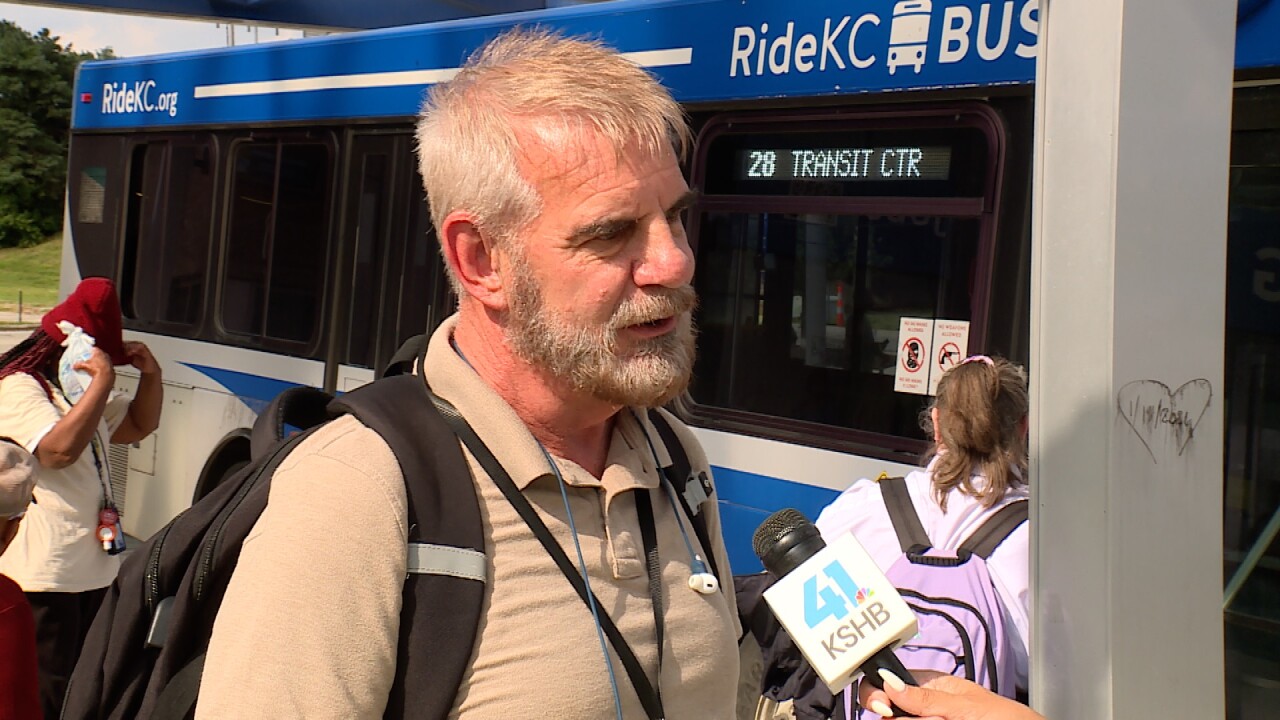
“[Service] has been more consistent with the World Cup than it was previously,” Jerry Breault, a rider said. “We were missing buses or routes because there weren’t enough drivers to drive that route.”
But the add-on’s stop on Sunday, July 12. If the transit authority can’t find more money, more than a dozen routes will be cut, potentially impacting more than 8,000 riders.
“It’s a little frustrating,” Breault said. “A lot of us rely on it just to get back and forth to work, to take care of our daily needs. It looks like we may be having to find alternatives and we’re not very happy about that.”
The KCATA will potentially suspend these weekday and weekend routes by September:
Weekday Route Eliminations:
- 9 – 9th Street, 365 average weekday ridership
- 21 – Cleveland Antioch, 512 average weekday ridership
- 23 – 23rd Street, 266 average weekday ridership
- 25 – Troost Local, 1,460 average weekday ridership
- 27 – 27th Street, 422 average weekday ridership
- 57 – Wornall, 411 average weekday ridership
- 71 – Prospect Local, 464 average weekday ridership
Weekend Route Eliminations:
- 9 – 9th Street, 349 average weekend ridership
- 21 – Cleveland Antioch, 312 average weekend ridership
- 23 – 23rd Street, 312 average weekend ridership
- 25 – Troost Local, 1,431 average weekend ridership
- 27 – 27th Street, 455 average weekend ridership
- 57 – Wornall, 595 average weekend ridership
- 71 – Prospect Local, 982 average weekend ridership
Bus fares came back earlier this summer to offset some of the operation costs, but many have reported issues with the free fare cards and eligibility.
“There’s always funding challenges with the KCATA,” Kansas City, Missouri, Mayor Quinton Lucas said. “How are the fare re-institutions working right now?”
Brian Luton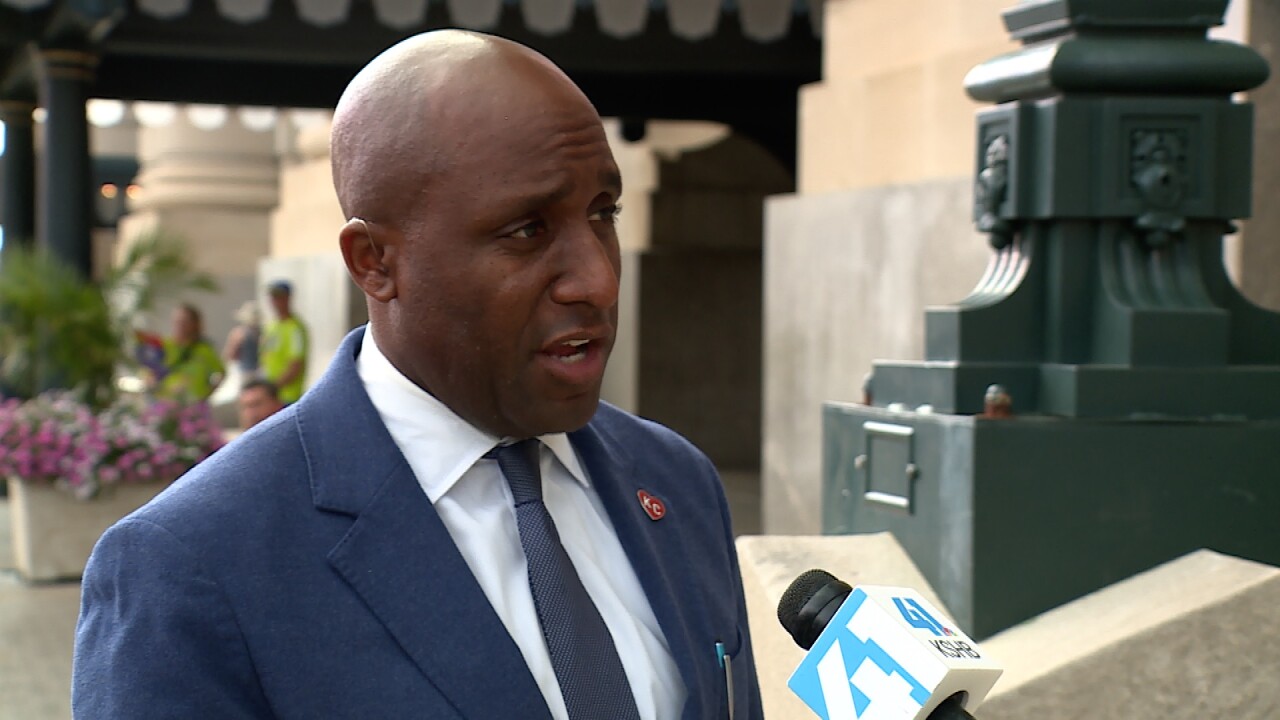
Mayor Lucas told KSHB 41 News Reporter Isabella Ledonne the transit improvements implemented for the World Cup “should continue,” and there are plans to talk with the KCATA commissioners to “make it work”.
“KCATA cannot just be Kansas City supported alone forever,” Mayor Lucas said. “Our approach and our preference is that the region got to see how much they would like [expanded service] during the World Cup. It was always intentional that if they liked it, maybe they would invest and maybe they would want this thing to go further.”
That’s good news to the thousands of daily riders.
Brian Luton
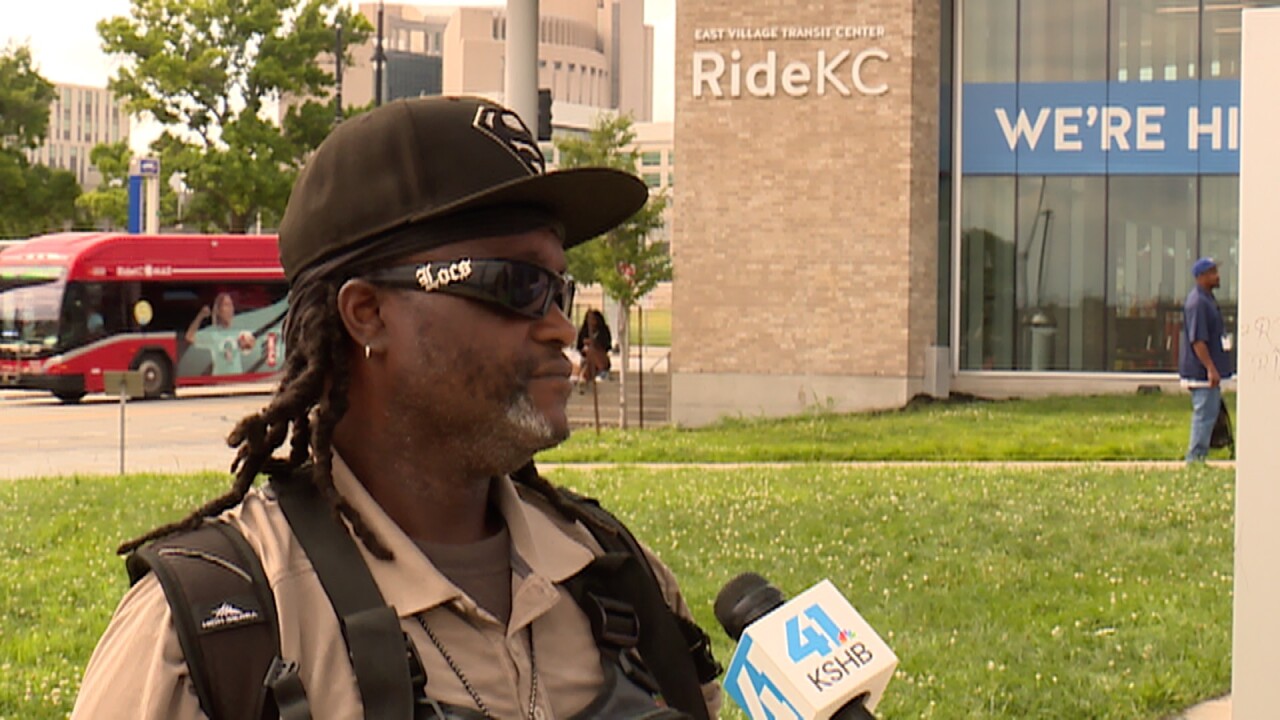
“I think it’s good because it helps people get around if they need to get around,” Jackson said.
The KCATA did not make themselves available for an interview.
—

One of the top prospects in the 2027 boys’ high school basketball recruiting class recently trimmed his list of suitors, and the Kansas Jayhawks find themselves firmly in the mix.
KU is one of eight schools to make the cut for 2027 five-star small forward Demarcus Henry, according to On3 National Basketball Reporter Joe Tipton. His list of eight includes some of the best programs in the country: Kansas, Ohio State, Kentucky, North Carolina, BYU, Arkansas, UConn, and Louisville.
The 6-foot-7 Charlotte, North Carolina, native is one of the best players in the 2027 class. He’s currently ranked as the No. 5 player overall and the No. 1 player at his position, according to the most recent On3.com 2027 player rankings.
As a junior this past year at Compass Prep High School in Chandler, Arizona, Henry averaged 15.5 points, 8.2 rebounds, and 2.2 steals per game as he helped lead his team to a 25-3 record.
He followed that up with an impressive performance at the NBPA Top 100 camp this summer, leading all attendees in scoring (20.0 points per game) and rebounding (9.3 rebounds per game). He was also a member of the 2026 USA Men’s U18 National Team that earned a silver medal at the FIBA U18 AmeriCup earlier this summer in León, Mexico.
When speaking about his game, Henry mentions his versatility and how he’s developed over the past year.
“I’m just very versatile,” Henry told Rivals in a previous interview. “I can play one through four and just help my teammates and hit shots and play defense. I watch a lot of KD (Kevin Durant) and Paul George. How they score it, and how they could shoot off the dribble, shoot off the catch. I’ve gotten tougher and just more aggressive when I transferred AZ Compass and just being able to get downhill, I feel like that’s really developed for me.”
When asked about what he’s looking for in a potential home at the college level, Henry says he wants to be challenged and grow his game for the NBA.
“What I’m looking for in school is someone that just pushes me to be better,” Henry said. “Help me grow into the person I know I can be and someone who will help me reach my potential. I want to play for a coach that will hold me accountable and help me make me uncomfortable and keep growing and keep getting better and just help me reach the NBA, which is my ultimate goal.”
Early Contenders
Right now the early favorite to land Henry may be the basketball program with the least amount of notoriety of the final eight schools – and that is Ohio State.
Henry has a lot of familial ties to the university as his older brother Chris Henry Jr. is a five-star incoming freshman wide receiver for the Buckeyes football team this year, and his older sister Seini Henry is a talented women’s basketball player at Ohio State.
He’s already taken an unofficial visit to the school and has also taken an unofficial visit to BYU. Thus far, they are the only schools to have received a visit.
Follow
-

 Austin, TX3 minutes ago
Texas Has One Trait Almost Every National Champion Shares
-

 Alabama10 minutes ago
Final 2026 MLB mock draft projections for Alabama’s Justin Lebron
-
 Alaska13 minutes ago
Watch My Buddy Matt Not Get Eaten by Bears in Alaska
-

 Arizona18 minutes ago
Roller derby still has a home in Arizona despite myriad obstacles
-

 Arkansas25 minutes ago
Freshman OL Tucker Young never wavered through Arkansas football coaching changes | Whole Hog Sports
-

 California28 minutes ago
Northern California high school graduation shooting suspect arrested in Texas
-

 Colorado33 minutes ago
Colorado to weigh daily hunting limits, ban on fur sales for wildlife hunted for fur
-

 Connecticut40 minutes ago
Woman arrested, accused of murdering man in Farmington in March

