Iowa
After Iowa abortion ruling, should voters boot Justice David May? Rekha Basu weighs in.


Opponents of same-sex marriage waged ideological warfare against the courts in 2010. This time, Kim Reynolds, lawmakers and justices are responsible for the ideological warfare.

Dr. Sarah Traxler talks about the future of abortion care in Iowa
Dr. Sarah Traxler talks about the future of abortion care in Iowa on the last day before the six-week abortion ban takes effect.
Fifteen years ago, a group of evangelical political activists, furious over the Iowa Supreme Court’s unanimous ruling for same-sex marriage, plotted revenge. Led by Bob Vander Plaats of the The Family Leader, they formed the ironically named “Iowans for Freedom.”
Funded partly by out-of-state money, it campaigned against three of the Supreme Court justices who happened to be up for retention elections in 2010. And it succeeded in unseating three fine ones: Chief Justice Marsha Ternus and Justices Michael Streit and David Baker.
Fast forward to this year, when a reconstituted Iowa Supreme Court, a majority hand-picked by Iowa’s anti-abortion Gov. Kim Reynolds, turns back the clock 50 years with a 4-3 ruling effectively outlawing abortions after six weeks into a pregnancy. In doing so, the justices overturned precedent that had withstood previous Supreme Court challenges, deciding that abortion laws should not be assessed under the strict-scrutiny standard previously invoked.
And now, in response, some women are taking a cue from what Iowans for Freedom accomplished in 2010. They’re encouraging others to turn the page on the November ballot — literally — to the side where judicial retention votes are, and vote against Justice David May. He’s the only one who voted for the six-week ban who’s up this year.
So, how could anyone who opposed the 2010 campaign support the same tactic? Comparisons between the two efforts get complicated. Retention elections used to be mostly pro forma shows of support for sitting judges appointed on a nonpartisan basis, who were doing their jobs properly. In 2010, same-sex marriage opponents couldn’t accept that their religious-based agenda had lost in a court of law bound by the Iowa Constitution. So it used the elections to wage ideological warfare.
This time the ideological warfare has been waged by the governor, state lawmakers and the court’s new majority, by tampering with the once nonpartisan, constitutionally based process. Reynolds, an outspoken abortion opponent, called a special one-day session of the Legislature last summer to vote on the ban. Six weeks is before most women even know if they’re pregnant. Iowa’s Republican-led Legislature complied by passing it, though a nearly identical 2018 law had been permanently blocked. Reynolds had over the years appointed four new justices, including May, who could reliably be predicted to vote as they did.
More: Kim Reynolds picked this Legislature, and it steamrolled an extreme path for Iowa
The victims now will be untold numbers of pregnant women and girls, and children born to people ill-equipped to care for them.
“The ideological bias of this court does not reflect the will of most Iowans, and I’m not sure how far it follows the constitution,” said Des Moines’ Lea DeLong, the reproductive rights advocate who penned a letter making the case for opposing May’s retention. “My reading of the constitution is that it is intended to expand the rights and liberties of people.”
Her letter is being widely circulated by email. It points out that, as Reynolds’ appointee, May helped give Iowa “one of the most restrictive rulings in the nation against the rights of women.” It goes on to say, “It is an unfortunate development in our society that these kinds of actions against judges must happen, but I’m afraid we have had to learn some sad lessons from those who deny the rights of women. It is well known that most Iowans do not support these draconian restrictions on women’s lives and decisions.”
That’s true: 61% of Iowans polled support abortion rights in all or most cases. Still, the governor saw fit to impose her personal beliefs over the will of the majority.
DeLong is co-founder with Charlotte Hubbell of a group of some 15 women known as Iowans for Reproductive Freedom (one word but light years away from the group that waged the 2010 ballot battle). Formed in November, 2022, it has placed billboards defending reproductive rights on display around Des Moines.
They carry such captions as:
- Reproductive Freedom Is KEY to a Strong Family.
- Keep Government OUT of Women’s Health Care.
- If Men Got Pregnant, We Wouldn’t Be Discussing This.
Though individual members support the ballot idea and are circulating DeLong’s letter, the organization isn’t officially involved in the effort. DeLong herself doesn’t doubt May is a good person. And she’s mindful that Reynolds would likely replace him with another justice of the same ideological bent. But she wants this to be a wake-up call. “It sends a message,” she said. “Maybe it will encourage people to think very seriously about what this court is doing to women.”
Unlike Vander Plaats’ well financed and heavily publicized initiative, she says, “We’re not trying to organize a campaign. We will do what women have always done before: Spread information to our friends.”
More importantly, the goal this time is protecting rights, not undermining them.
“Much as I don’t like the fundamental concept of doing this,” DeLong said, “I think so many destructive lines have been crossed.”
And she’s right. They have been.
Rekha Basu is a longtime syndicated columnist, editorial writer, reporter and author of the book, “Finding Your Voice.” She retired in 2022 as a Des Moines Register columnist. Her column, “Rekha Shouts and Whispers,” is available at basurekha.substack.com.



What happens when you call 911?
Here’s everything a dispatcher does to get emergency services to your location when you dial 911.
Miguel Fernandez, NorthJersey.com
A 14-year-old Dyersville girl has died from injuries caused by a watercraft collision on Clear Lake on the 4th of July.
The crash involved five people in two personal watercrafts and occurred around 5:30 p.m. near the McIntosh Woods State Park boat ramp on a part of the lake called Little Lake, according to a release from the Iowa Department of Natural Resources.
Passengers on a nearby pontoon immediately helped the victims before the Iowa DNR water patrol and conservation officers, Ventura and Clear Lake fire departments, Iowa State Patrol, Clear Lake Police Department and the Cerro Gordo County Sheriff’s Office came on scene.
The release does not give the names of the four children involved.
A 35-year-old woman, an 11-year-old girl and a 12-year-old boy, all from Greenwood, South Carolina, were treated at the Mercy-One Medical Center in Mason City and released on July 4. A 15-year-old Mason City girl was transferred to the Mayo Clinic in Rochester, Minnesota, and is in serious condition.
While the investigation is ongoing, Iowa DNR officers have ruled out alcohol or other impairments as contributing factors to the crash, the release states.
Isabelle Foland is a communities reporter for the Register. Reach her at ifoland@registermedia.com.

As the Iowa State Cyclones get set for the 2026 campaign, the program is also looking toward the future and rebuilding a program that was hit hard by departures.
Last season, Iowa State battled a lot of injuries, but was still able to have a pretty good year. However, following the campaign coming to an end and before bowl season kicked off, the team lost head coach Matt Campbell to the Penn State Nittany Lions.
As expected, a lot of players from the program ended up leaving, leaving the team with nearly an entire roster to rebuild. However, new head coach Jimmy Rogers has been able to come in and make a good impression early on.
While Iowa State might not be as talented as they were last year, they have a good coach and a lot of depth. The Cyclones will be hoping that he can develop and get the most out of some of these new players, but the team certainly won’t be competing for a Big 12 title next season.
For Iowa State, with at least this year being a rebuild for the program, they will be looking toward the future. With that comes a need to recruit well, and that is something Rogers and the staff have been impressive at so far.
Iowa State Recruiting Class Shaping Up Nicely
Following the four-star addition of Chuck Alexander, who flipped from the Louisville Cardinals, the 2027 recruiting class is looking really strong right now for Iowa State. According to Rivals, they rank 49th in the country right now, and that is a strong place to be for the team.
With Alexander being the new top recruit for the team, he will be joining a class that has been highlighted by some good offensive talent so far. Running back Isaiah Hansen is regarded as a very good player at his position, and the team also has offensive lineman Will Slagle.
With the three top recruits so far being offensive players, a future core might be starting to come together for Rogers and the program. While the team might be a bit more defensive-minded this year, there is clearly a focus on improving offensively for the future.
Overall, with time still to go, this class could continue to get better. However, it is really encouraging to see what Rogers and the staff have been able to accomplish so far. Recruiting will be key for Iowa State to get back to where they want to be, and they are off to a strong start.
Add us as a preferred source on GoogleFollow

SOLON, IOWA — As holiday weekend crowds head to Iowa lakes and rivers, state and national law enforcement agencies are urging boaters to make safety a priority — especially when it comes to alcohol and drugs on the water.
The push is part of Operation Dry Water, a national awareness campaign aimed at deterring impaired boating, reducing alcohol and drug-related incidents, and enforcing Iowa’s boating while intoxicated laws.
Iowa Department of Natural Resources officials say the holiday weekend is a time when they often see a spike in enforcement activity. Last year, the Iowa DNR reported interacting with more than 1,200 vessels and issued 382 citations.
Rachel Allis, the Iowa DNR’s boating education coordinator, said conditions on the water can intensify impairment.
“We don’t realize the effect the sun, water, the waves have. Simply stated, you can get dehydrated much quicker when you’re out on your boats,” Allis said. “So, all of those compounds with medication and everything else, so impaired drivers are really what we’re on the lookout for and what we’re concerned for. Nationally, about a third of all incidents occur with an impaired driver.”
At Lake Macbride State Park, boaters and paddlers said they’re also taking steps to avoid trouble on busy waterways.
“All of us love to be out here in nature and Macbride is so pretty. So, it’s just a good togetherness function,” said Angela Ranaud, who was kayaking during the holiday weekend. “Fisherman, we try to stay away from them, so we don’t interfere their catching. We try to stay away from the wakes; they tend to capsize. Other than that kayaks a pretty low danger type of sport, so we just like to be out in the water.”
Corey Scott, a holiday boater at Lake Macbride, said the lake’s horsepower restriction helps keep speeds down between Memorial Day and Labor Day, but he still watches closely for smaller craft and stressed the importance of sober operation.
“Macbride is nice and easy, 9.9 horsepower between Memorial Day and Labor Day,” Scott said. “So, that’s the nice part you don’t have people speeding up and down and everywhere, so really the only thing to look out for is anybody on paddleboats, kayaks, things like that. Again, out here people say well you’re only going 9.9 so it’s not ‘hey you can have a few beers’ and stuff like that; but that’s the main thing to be aware of. Making sure you have a sober driver and just be aware of your surroundings.”
To learn more about boater safety visit Iowa’s DNR website.
-
 Entertainment5 minutes ago
Inside the all-star America250 concert at the L.A. Coliseum
-

 Lifestyle12 minutes ago
Luxury Clients Want Meaning More Than Status
-
 Politics15 minutes ago
Commentary: Even in ugly times, the bicentennial united us. America 250 still can
-
 Sports27 minutes ago
‘I wish she was alive.’ Eliezer Alfonzo has emotional day as Dodgers lose to Padres
-

 World35 minutes ago
Photos: Khamenei funeral procession under way in Tehran
-
 News1 hour ago
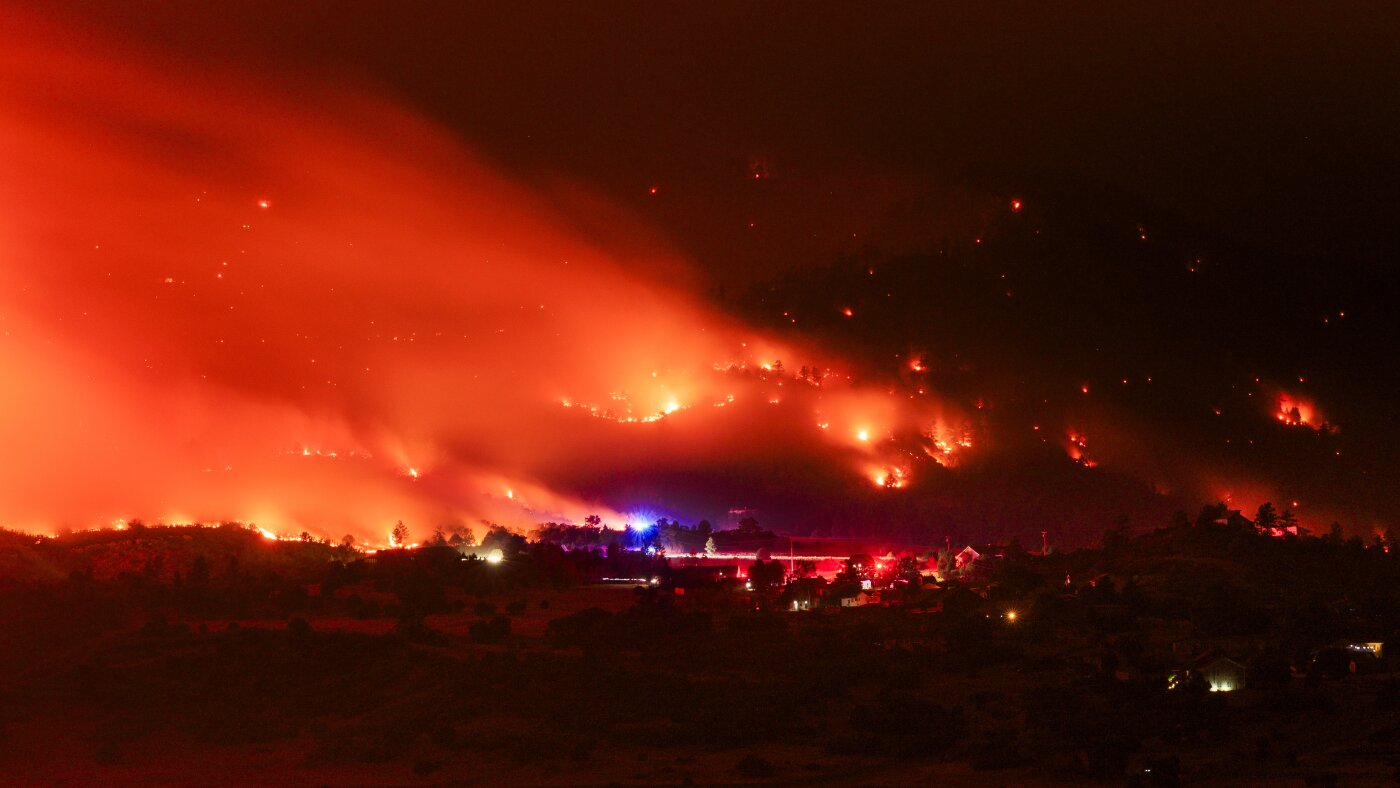
Thunderstorms, heat and wind will hamper efforts to contain Colorado wildfires
-

 New York2 hours ago
10-Minute Challenge: The Ceiling at Grand Central
-

 Los Angeles, Ca2 hours ago
1 killed, multiple people injured in Tarzana 4-car crash

