Indianapolis, IN
The Twisted Tale of Indianapolis’ White River

First-time visitors to Indianapolis might look at the White River and see a natural oasis in a vast urban landscape. They could spend a day paddling through some of Indianapolis’ most populated neighborhoods, but not see another person on the water. Towering oak trees line the banks for much of its path through the city, in the summer offering some needed respite from the sweltering sun. Underneath the clear water, visitors might see dozens of carp, sunfish, and smallmouth bass dart beneath their boat as a blue heron stands in the shallows, waiting for its next meal.
This idyllic scene is just the latest chapter of the White River saga, which has almost as many twists and turns as the waterway itself: Historic blunders. Massive pollution. Unchecked environmental racism. A $2 billion infrastructure project called DigIndy promises to solve many of the problems facing the river. But as the pollution decreases, city officials’ desires to use the river as an economic driver and recreational amenity continue to increase. After years of living next to polluted waterways, the questions for the surrounding residents are now: Will they be able to afford to stay and enjoy the revitalized river? And with other contaminants continuing to flow into the water unchecked, combined with centuries of neglect and abuse, just how clean is the river actually?
Known as the Wapahani by the Indigenous Miami Nation, the White River was a major reason European settlers laid the foundations of Indianapolis here more than two centuries ago. After quickly realizing the river was too shallow for shipping goods, they found other, ultimately much more damaging, ways to utilize it.
Almost from the start, Indianapolis sewage discharged directly into the river, along with industrial waste from factories and slaughterhouses. As the city grew, so did the amount of pollution, becoming a problem that generations of officials believed was too big to solve, a mindset that would continue into the 1980s and 1990s. Reports from the time described the surface of the river routinely being coated with a “black scum,” while “bubbles of gas rise to the surface,” according to late local historian Paul Mullins.
With the river too dirty to safely swim or recreate in, beginning in the 1920s the city constructed more than 20 public swimming pools—all but one of which were earmarked for white residents only. Black residents had two choices: the Douglass Park pool or Belmont Beach, the city’s unofficial Black beach. The beach was located on one of the most polluted spots on the river, so children often swam in water contaminated by dead fish and human feces.
In the 1950s, Indianapolis constructed a series of combined sewage and storm water sewers; in the ensuing decades, every time a large rain event would occur, human waste would back up and spill out into the waterways. The stench coming off the river and its tributaries—such as Fall Creek—after a rainstorm was enough to make even the strongest person retch.
After years of mostly white residents on the northside of Indianapolis complaining about their own sewage backups in the late 1980s and early 1990s, the city surreptitiously began piping more than two million gallons of sewage annually away from wealthier neighborhoods and into Fall Creek, which drained into the White River. It’s no coincidence the surrounding neighborhoods were inhabited by minority and low-income families. The racist overtones couldn’t be ignored, local historian and advocate Leon Bates told Sierra. That’s when the federal government stepped in.
A group of social- and environmental-justice advocates filed a complaint with the Environmental Protection Agency, alleging the sewage issues disproportionately affected minority residents. The EPA agreed, and in 2006, mandated Indianapolis solve the issues once and for all. In 2011, Citizens Energy Group began to oversee the $2 billion DigIndy project. Six huge tunnels totaling 28 miles would store up to 250 million gallons of wastewater before being treated at the Southport Advanced Wastewater Treatment Plant. DigIndy is slated to wrap up in 2025 with the completion of the Fall Creek and Pogues Run tunnels, the last major sewage-overflow contributors to be remediated.
Residents are already seeing huge improvements. After a massive fish kill in 1999, marine life has returned to the river. Routine volunteer cleanup events help remove tires, old mattresses, and other trash recklessly discarded on and around the river. A canoe and kayak rental shop opened on the banks earlier in 2023, encouraging more people to explore the river. After nearly 200 years of being one of the most polluted waterways in the US, the White River received a C grade for overall health (in Indiana, a C student is called a Hoosier valedictorian). With E. coli levels still dangerously high, the water is clean enough for boating, but not swimming. Most of the experts who spoke to Sierra admitted it likely never will be. And yet, things are looking up enough that along with fish and birds, humans are also returning to utilize the river.
“I’m on the river three or four times a week,” says Ed Fujawa, author of “Vanished Indianapolis” and a local resident.
In November, officials broke ground on the $13 million Riverside Adventure Park, which will include boat ramps and trails for hiking and biking. And Belmont Beach has also been resurrected, this time as a pop-up park run by the city’s parks department. Talks are ongoing between the city and residents of the Haughville neighborhood about making the site a permanent park.
“[The Belmont Beach] project has always been led by Haughville residents, for Haughville residents,” says Ebony Chappel, Friends of Belmont Beach executive director. “The president of our board is a fourth-generation child of Haughville and I’m third generation … We’re aware and sensitive to concerns from others in the community, which is why we’re always including their thoughts in the forefront of everything we do.”
Some residents have expressed concern that the much-anticipated river improvements could lead to gentrification. After years of living next to the horribly polluted river, the resulting cleanup and renewal could lead to long-suffering residents being priced out of their homes. Both the city and Haughville neighborhood group are optimistic that won’t happen, but Bates remains skeptical.
“We’ve already seen people get priced out of the neighborhoods” nearby, Bates says, adding that Indianapolis should proactively make efforts to slow or stop widespread gentrification, such as freezing property taxes for long-term Haughville residents until they die or sell the property.
The city’s White River Vision Plan promises to “explore the enormous potential of our river to enhance regional vibrancy, ecological integrity, livability, and economic vitality.” Tourism and city economic officials have traveled as far away as Singapore to study how communities best use their rivers, says Carmen Lethig, Long-Range Planning Administrator for Indianapolis. In the works for riverside developments are plans for a multimillion-dollar retail and entertainment complex centered around a new soccer stadium, as well as the new corporate headquarters for a pharmaceutical company. But there doesn’t seem to be much, if any, political will to improve the water quality even further; surface level improvements seem to be enough.
One of the most polluted states in the nation, Indiana has the most miles of rivers and streams deemed too polluted to swim in of any state, according to a report by the Environmental Integrity Project. Pollution from farm runoff—which contains herbicides, fertilizers, and animal waste—and other contaminants continue to flow into the White River from upstream.
Testing should be done daily, says Sierra Club Heartland Group chair Jesse Kirkham, as the pollution levels can vary wildly day-to-day. But water-quality testing by the Indiana Department of Environmental Management in the White River and its tributaries has dropped precipitously over the years for lack of funding. Volunteers with the Sierra Club, White River Alliance, and other groups have picked up some of that slack. Considering its history, the White River’s comeback thus far is nothing short of miraculous, but there’s still a long way to go before a true happy ending can be written.



This time last year, we were debating Anthony Richardson vs. Daniel Jones. Now we’re debating whether or not Jones is worth $50 million per year. Coming off a breakout season, Jones would be a safe bet to stay hot in 2026, but a torn Achilles muddies the waters for his second season in Indianapolis.
Get ready for 2026 fantasy football drafts with in-depth previews for all 32 teams throughout the summer.
2025 Indianapolis Colts Stats (Rank)
Points per game: 27.4 (8th)
Total yards per game: 345.9 (9th)
Plays per game: 59.9 (19th)
Dropbacks per game: 37.9 (19th)
Dropback EPA per play: 0.1 (11th)
Designed rush attempts per game: 25.4 (20th)
Rush EPA per play: 0.05 (1st)
Make or break year for Shane Steichen and Co.
Shane Steichen and the Colts entered the 2025 season at a crossroads. The team desperately wanted Richardson to be a thing, but Jones had different plans. He decisively won that camp battle and never looked back. Jones was putting up career efficiency numbers midway through the season and Steichen looked like a lock to make the playoffs for the first time in three seasons as the Colts’ boss. The Colts were at 7-1, but even before Jones suffered his season-ending Achilles injury, cracks in the facade were beginning to form. His efficiency dropped in his final five games and the Colts lost four of those contests. Things got so bad after Jones went down that Phillip Rivers was drawn out of retirement for “one last job” that went as well as it does in the movies. The late-season collapse left Steichen out of the playoffs for the third time in three tries. The Colts bet the house on this iteration of the roster when they brought back Jones and Alec Pierce on pricey deals. It’s now or never for Steichen and his staff.
▶ Passing Game
QB: Daniel Jones, Riley Leonard, Anthony Richardson
WR: Alec Pierce, Ashton Dulin
WR: Josh Downs, Anthony Gould
WR: Nick Westbrook-Ikhine, Deion Burks
TE: Tyler Warren, Mo Alie-Cox
We’ll get to Jones’ midseason slump in a minute, but viewing his Colts debut as a whole, he was wildly impressive. Jones ranked top-10 in both EPA per play and completion percent over expected. Pro Football Focus charted him with top-10 rates of both accurate and accurate plus throws. Add in five rushing touchdowns and Jones was on pace to finish as the QB8 by points per game before exiting Week 14 early. This, however, isn’t the complete story. Jones turned the ball over a staggering five times in Week 9 versus the Steelers. He stemmed the bleeding on bad plays over the next few weeks but still struggled in most efficiency metrics. Four of his five worst games by EPA per play came from Week 9 to Week 14. Jones went from averaging .344 EPA per play over his first eight games to -.03 over his final five. The big shift was his inability to handle pressure. Jones threw six touchdowns and had a 9.8 percent pressure-to-sack rate in his early-season split. Those numbers dropped to one score and a 22 percent P2S when defenses got to him from Week 9 onward. Jones has never been particularly good under pressure, so maybe it shouldn’t be a surprise that his numbers came crashing back to earth. Even if that aspect of his game is here to stay, it’s also hard to deny how efficient he was to start the season. All signs point to Jones being ready for Week 1, and fantasy managers are only being asked to pay a QB25 pricetag to find out who the real Daniel Jones is.
As long as Jones retains his deep ball, Alec Pierce will be happy. The veteran wideout posted a breakout season in 2025 with 1,007 yards on a paltry 47 grabs. He scored seven times and led the league in yards per reception for the second season in a row. Despite the career year, Pierce’s role as a modest-volume deep threat didn’t change. He simply hit more home runs than the previous season. It was the first 1,000-yard season for a player with an aDOT over 20 since the turn of the century. There have only been five 20+ aDOT seasons accompanied by even 700 yards over that timeframe. Naturally, Pierce’s 2024 is another one of the five. Though it’s possible Pierce keeps up his league-leading efficiency for a third straight season, he is already doing something almost no receiver in my lifetime has. Realistically, he will need to earn more intermediate and short targets to hit four digits again. With foot surgery sidelining him for the entire offseason and potentially most of training camp, it’s hard to imagine his role changing much in 2026.
With Michael Pittman gone, the Colts now need a new player to step up as their top option for easy-button targets. At receiver, Josh Downs is almost the only option. Downs looked like a player worth running the entire passing game through in 2024. He was targeted on a monstrous 28 percent of his routes and, while not an every-down player, still took the field for 75 percent of the passing plays. That player vanished in 2025. Downs posted a pedestrian .22 targets per route while the Colts cut his route rate to 67 percent. This can, in part, be explained by a series of injuries. Downs missed much of training camp with a hamstring issue. He eventually sat out one game with a concussion and was listed on the injury report with hip, knee, and ankle issues throughout the year. As of late June, the Colts’ primary WR3 option is between Ashton Dulin and Nick Westbrook-Ikhine. As long as they don’t add a free agent before camp, it’s going to be hard to get Downs off the field this year.
While Downs appears to be the best bet to lead the receiver room in targets, Tyler Warren, coming off a dominant rookie season, should pace the team in opportunities overall. Warren already led the Colts in targets last year at 112, one more than Pittman. His 76 grabs go down as the fourth-most for a rookie tight end in league history. As expected, Warren was used primarily as an underneath option and he excelled in that role. He earned seven yards after the catch per reception on catches shorter than 10 yards downfield. That ranked sixth among all tight ends. He was the only tight end who ranked top-20 in YAC on short throws while also seeing more than 70 of these targets. He had 81 such opportunities. Warren’s ability to consistently churn out YAC despite defenses knowing where he’s going to be targeted was his calling card in college and it translates to the NFL right away. Warren is unsurprisingly going off draft boards as the TE4, but there’s nearly a 20-pick gap between him and Colston Loveland as the TE3.
▶ Running Game
RB: Jonathan Taylor, Seth McGowan, DJ Giddens
OL (L-R): Bernhard Raimann, Quenton Nelson, Tanor Bortolini, Matt Gonclaves, Jalen Travis
Much like the passing attack, you can’t talk about Indy’s ground game without looking at the splits with and without Jones. Jonathan Taylor was pushing for a legendary season with nearly 24 PPR points per game and a 2,000 scrimmage yard pace when his quarterback was healthy. Jones gets hurt and he posts 13.3 PPR points per game in the final month of the season, sinking most of the regular-season juggernauts he had built for fantasy managers.

Taylor averaged 1.5 yards before contact per carry and 3.9 after contact with Jones active. Those marks fell to 1.1 and 2.1 post-Jones. On the season, ESPN charted the Colts’ line with the seventh-best run block win rate. If the Colts can return to form through the air and the line continues to play well, Taylor won’t have any issues paying off his RB3 overall cost.
There isn’t much of note going on in this backfield behind Taylor. The team spent all summer last year hyping rookie backup DJ Giddens, only to keep him on the bench for most of the season. Ameer Abdullah occasionally relieved Taylor on passing downs but is now with the Jags. That leaves the RB2 job up for grabs, but Giddens isn’t being handed the keys. The Colts drafted Seth McGowan in the seventh round. McGowan brings a similar profile to Giddens. At 6’/223, Giddens has the size of a workhorse running back and did a little bit of everything in college, even if he isn’t a special runner or receiver. This will be a crucial camp battle for Zero RB drafters to watch.
▶ 2026 Indianapolis Colts Win Total
DraftKings Over/Under: 7.5
Pick: Under (+115)
The Colts enter the 2026 season teeming with upside, but they’re also tremendously fragile. Their quarterback is coming off a torn Achilles. Even before that, his efficiency was grinding to a halt for a few weeks. Their No. 1 receiver underwent offseason ankle surgery and is targeting a return late in training camp. This isn’t to say they are guaranteed to hit the under, only that they are a team with a high ceiling and a staggering floor. If you want to bet the over, you may be better off doing so by taking them to make the playoffs (+170) or win the division outright (+380).

Indianapolis Motor Speedway Dirt Track results from the finale of the BC39
USAC Midgets are on the grounds in Indianapolis, IN. The bullring dirt track is set to host the finale of the BC39 paying $20,039 to the winner.
View BC39 results below.
Drake and Danner set the front row. 39 laps of dirt track racing are up next…
Main Event
Report
Green flag, Drake gets the jump on the outside lane and he’s clear off turn two.
35 to go, Danner is all over the bumper of the leader.
31 to go, Danner heads for the cushion. A lap later, he slides Drake for the lead into turn three. Drake crosses under him but Danner holds the lead.
29 to go, three cars tangle, caution.
Green, Danner leads Drake. Cars tangle, caution.
Green, Danner knocks the cushion. He bicycles and still holds the lead.
27 to go, McIntosh to 2nd.
23 to go, Danner bounces off the wall and he keeps rolling. Car stalled behind them, caution.
Green, McIntosh slides Danner for the lead! Danner crosses under him and he slides him back. McIntosh crosses under him. McIntosh returns to the lead.
19 to go, Danner knocks the cushion. He bounces around the corner and takes the lead.
17 to go, Edwards jumps the cushion and he collects Peck, caution.
Green, McIntosh works the inside and he clears Danner for the lead. Danner slides him and Kevin Thomas Jr makes it three wide for the lead. Danner is clear on the top.
9 to go, car upside down in turn four, caution.
Green, Danner leads McIntosh.
Briggs Danner wins the BC39!
BC39 Results
July 1, 2026
The following includes full results:
Practice
Dirt Draft Hot Laps: 1. 40X-Briggs Danner, 12.397[4]; 2. 71K-Cannon McIntosh, 12.566[10]; 3. 19-Drew Sherman, 12.646[30]; 4. 40L-Mack Leopard, 12.666[53]; 5. 19M-Ethan Mitchell, 12.667[35]; 6. 3J-JJ Yeley, 12.671[22]; 7. 19H-Joel Myers Jr, 12.674[39]; 8. 7U-Karter Sarff, 12.685[42]; 9. 98K-Brandon Carr, 12.690[47]; 10. 3P-Justin Peck, 12.696[8];
11. 40D-Drake Edwards, 12.698[15]; 12. 19X-Adyn Schmidt, 12.703[28]; 13. 4-Kale Drake, 12.703[11]; 14. 14-Kevin Thomas Jr, 12.704[3]; 15. 14K-Jakeb Boxell, 12.734[27]; 16. 22H-Rylan Gray, 12.754[34]; 17. 57-Logan Seavey, 12.757[20]; 18. 05-Alex Midkiff, 12.763[40]; 19. 19AZ-Hayden Reinbold, 12.766[9]; 20. 54-Jake Swanson, 12.780[5];
21. 11-Kaylee Bryson, 12.791[23]; 22. 87-Justin Grant, 12.814[6]; 23. 67K-Colton Robinson, 12.818[26]; 24. 5P-Wesley Smith, 12.820[29]; 25. 63-Cale Coons, 12.824[17]; 26. 67-Jacob Denney, 12.842[12]; 27. 45-Bradley Cox, 12.884[14]; 28. T21-Kade Taylor, 12.891[33]; 29. 3G-Kyle Cummins, 12.909[18]; 30. 36-Jonathan Beason, 12.915[21];
31. 1-Zach Wigal, 12.944[2]; 32. 20Q-Brecken Reese, 12.959[24]; 33. 7T-Adam Taylor, 13.025[54]; 34. 5D-Zach Daum, 13.034[16]; 35. 32A-Alex Sewell, 13.071[38]; 36. 8L-Cooper Miller, 13.085[50]; 37. 8B-Jeffrey Abbey, 13.088[46]; 38. 3N-Logan Julien, 13.147[36]; 39. 43-Gunnar Setser, 13.164[19]; 40. 32J-Tanner Thorson, 13.229[61];
41. 97-Gavin Miller, 13.236[1]; 42. 19K-Riley Kreisel, 13.269[43]; 43. 89-Steven Snyder Jr, 13.309[13]; 44. 1R-Ricky Thornton Jr, 13.333[7]; 45. 20W-Cody Weisensel, 13.340[32]; 46. 86-Daison Pursley, 13.342[25]; 47. 19R-Beau Doyle, 13.378[60]; 48. 7TX-Kyle Jones, 13.382[55]; 49. 1M-Dodge Carlbert, 13.466[41]; 50. 14J-Wout Hoffmans, 13.483[31];
51. 5U-Jake Robinson, 13.497[49]; 52. 81-Frank Flud, 13.601[37]; 53. 8XL-Christian Miller, 13.692[52]; 54. 33-Cameron Hagin, 13.717[51]; 55. 32-Eric Heydenreich, 13.745[48]; 56. 35-Josh Hodge, 14.000[44]; 57. 7W-Tyler Watkins, 14.046[56]; 58. 21K-Cord Kisthardt, 14.055[45]; 59. 99K-Robert Carson, 14.165[59]; 60. 35S-Christopher Hartman, 14.681[57]; 61. 27-Austin Wood, 14.681[58]
Qualifying Races
K1 Race Gear Qualifying Race 1 (10 Laps): 1. 43-Gunnar Setser[3]; 2. 86-Daison Pursley[2]; 3. 89-Steven Snyder Jr[4]; 4. 1R-Ricky Thornton Jr[5]; 5. 97-Gavin Miller[6]; 6. 7TX-Kyle Jones[10]; 7. 81-Frank Flud[7]; 8. 32J-Tanner Thorson[11]; 9. 19K-Riley Kreisel[8]; 10. 14J-Wout Hoffmans[1]; 11. 5U-Jake Robinson[9]
TJ Forged Qualifying Race 2 (10 Laps): 1. 67K-Colton Robinson[2]; 2. 57-Logan Seavey[3]; 3. 3P-Justin Peck[5]; 4. 45-Bradley Cox[4]; 5. 1-Zach Wigal[6]; 6. 32A-Alex Sewell[7]; 7. 8L-Cooper Miller[9]; 8. 7W-Tyler Watkins[10]; 9. 35-Josh Hodge[8]; 10. 20W-Cody Weisensel[1]
KN Filters Qualifying Race 3 (10 Laps): 1. 40D-Drake Edwards[4]; 2. 14K-Jakeb Boxell[2]; 3. 14-Kevin Thomas Jr[6]; 4. 19H-Joel Myers Jr[7]; 5. 36-Jonathan Beason[3]; 6. 19AZ-Hayden Reinbold[5]; 7. 33-Cameron Hagin[9]; 8. 21K-Cord Kisthardt[8]; 9. T21-Kade Taylor[1]; 10. 35S-Christopher Hartman[10]
Indy Powersports Qualifying Race 4 (10 Laps): 1. 71K-Cannon McIntosh[4]; 2. 40X-Briggs Danner[5]; 3. 3J-JJ Yeley[3]; 4. 22H-Rylan Gray[1]; 5. 05-Alex Midkiff[6]; 6. 8B-Jeffrey Abbey[7]; 7. 19X-Adyn Schmidt[2]; 8. 8XL-Christian Miller[8]; 9. 5D-Zach Daum[9]; 10. (DNS) 27-Austin Wood
Qualifying Race 5 (10 Laps): 1. 4-Kale Drake[5]; 2. 98K-Brandon Carr[8]; 3. 19M-Ethan Mitchell[1]; 4. 11-Kaylee Bryson[3]; 5. 54-Jake Swanson[6]; 6. 40L-Mack Leopard[9]; 7. 99K-Robert Carson[10]; 8. 1M-Dodge Carlbert[7]; 9. 63-Cale Coons[4]; 10. 5P-Wesley Smith[2]
Qualifying Race 6 (10 Laps): 1. 19-Drew Sherman[2]; 2. 3N-Logan Julien[1]; 3. 67-Jacob Denney[5]; 4. 7U-Karter Sarff[7]; 5. 3G-Kyle Cummins[4]; 6. 20Q-Brecken Reese[3]; 7. 87-Justin Grant[6]; 8. 7T-Adam Taylor[9]; 9. 32-Eric Heydenreich[8]; 10. 19R-Beau Doyle[10]
C Mains
C-Main 1 (12 Laps): 1. 7U-Karter Sarff[1]; 2. 05-Alex Midkiff[3]; 3. 8B-Jeffrey Abbey[5]; 4. 40L-Mack Leopard[6]; 5. 22H-Rylan Gray[2]; 6. 5P-Wesley Smith[9]; 7. 8L-Cooper Miller[7]; 8. 19X-Adyn Schmidt[4]; 9. 14J-Wout Hoffmans[10]; 10. T21-Kade Taylor[8]; 11. 7T-Adam Taylor[12]; 12. 19R-Beau Doyle[15]; 13. 32-Eric Heydenreich[11]; 14. 99K-Robert Carson[14]; 15. 5U-Jake Robinson[13]
C-Main 2 (12 Laps): 1. 20Q-Brecken Reese[1]; 2. 63-Cale Coons[2]; 3. 19K-Riley Kreisel[9]; 4. 32A-Alex Sewell[3]; 5. 7TX-Kyle Jones[5]; 6. 81-Frank Flud[4]; 7. 20W-Cody Weisensel[10]; 8. 33-Cameron Hagin[8]; 9. 1M-Dodge Carlbert[6]; 10. 32J-Tanner Thorson[14]; 11. 7W-Tyler Watkins[11]; 12. 35S-Christopher Hartman[13]; 13. 8XL-Christian Miller[12]; 14. 21K-Cord Kisthardt[7]
B Main
Semi-Feature (15 Laps): 1. 86-Daison Pursley[2]; 2. 19-Drew Sherman[1]; 3. 3G-Kyle Cummins[6]; 4. 14K-Jakeb Boxell[4]; 5. 3J-JJ Yeley[3]; 6. 11-Kaylee Bryson[7]; 7. 98K-Brandon Carr[5]; 8. 3N-Logan Julien[9]; 9. 19M-Ethan Mitchell[12]; 10. 63-Cale Coons[16]; 11. 36-Jonathan Beason[8]; 12. 7U-Karter Sarff[13]; 13. 5D-Zach Daum[11]; 14. 19K-Riley Kreisel[18]; 15. 20Q-Brecken Reese[14]; 16. 40L-Mack Leopard[19]; 17. 05-Alex Midkiff[15]; 18. 19H-Joel Myers Jr[10]; 19. 8B-Jeffrey Abbey[17]; 20. 32A-Alex Sewell[20]
Main Event
BC39 by AVANTI (39 Laps):
1. 40X-Briggs Danner[1]
2. 14-Kevin Thomas Jr[3]
3. 67-Jacob Denney[9]
4. 71K-Cannon McIntosh[4]
5. 4-Kale Drake[2]
6. 97-Gavin Miller[6]
7. 89-Steven Snyder Jr[12]
8. 98K-Brandon Carr[26]
9. 43-Gunnar Setser[8]
10. 87-Justin Grant[18]
11. 57-Logan Seavey[14]
12. 86-Daison Pursley[19]
13. 54-Jake Swanson[13]
14. 1R-Ricky Thornton Jr[11]
15. 19AZ-Hayden Reinbold[17]
16. 3G-Kyle Cummins[21]
17. 19-Drew Sherman[20]
18. 11-Kaylee Bryson[24]
19. 32J-Tanner Thorson[28]
20. 14K-Jakeb Boxell[22]
21. 63-Cale Coons[27]
22. 3J-JJ Yeley[23]
23. 3P-Justin Peck[7]
24. 20Q-Brecken Reese[25]
25. 45-Bradley Cox[15]
26. 40D-Drake Edwards[5]
27. 67K-Colton Robinson[16]
28. 1-Zach Wigal[10]
BC39
Video Highlights
Pending
Links
Indianapolis Motor Speedway | USAC Racing

INDIANAPOLIS (WISH) — Nearly 25,000 Central Indiana residents are expected to attend Fourth Fest, the city’s July Fourth celebration, in downtown Indianapolis featuring live music, food and a fireworks show.
City public safety officials say that while they’re excited about the festival, their top priority is making sure everyone celebrates safely.
Any emergency updates will be shared on Fourth Fest’s main stage and displayed on event screens, while the Indianapolis Metro Police Department says its officers will be patrolling the festival area and all through downtown on Saturday.
“They’ll be intentionally patrolling key locations, assisting with traffic flow, and insuring that both visitors and residents feel safe and supported,” said IMPD Deputy Chief Matthew Thomas.
Thomas says parents have the responsibility of knowing where their kids are at all times, and that everyone attending should be respectful. He also stresses that public safety is a shared responsibility.
“Anyone coming downtown must behave responsibly,” Thomas said. “Reckless or disruptive behavior will not be tolerated. If juveniles are found in violation of curfew or involved in disruptive behavior, officers may take appropriate enforcement action. We are all working to keep this city safe.”
Other things to keep in mind: you can not bring your own fireworks or drones to Fourth Fest. As temperatures are expected to be hot, free water will be available at stations throughout the event.
Fourth Fest takes place Saturday at the American Legion Mall. The street party starts at 6 p.m., while the fireworks show starts just after 10 p.m.
-

 Finance5 minutes ago
New questions about Trump’s taxes after financial disclosure release
-

 Fitness8 minutes ago
Our Editors Found the Best Fitness Deals—Save Nearly 50% on Home Gym Equipment
-

 Movie Reviews20 minutes ago
Film Review: “looky loo: PART II” – MediaMikes
-

 World23 minutes ago
US Resumes Dollar Transfers to Iraq, NYT Reports
-

 Health53 minutes ago
She Ate High-Protein Ice Cream Daily and Lost 193 Lbs—Her Keys to Success
-
 Lifestyle1 hour ago
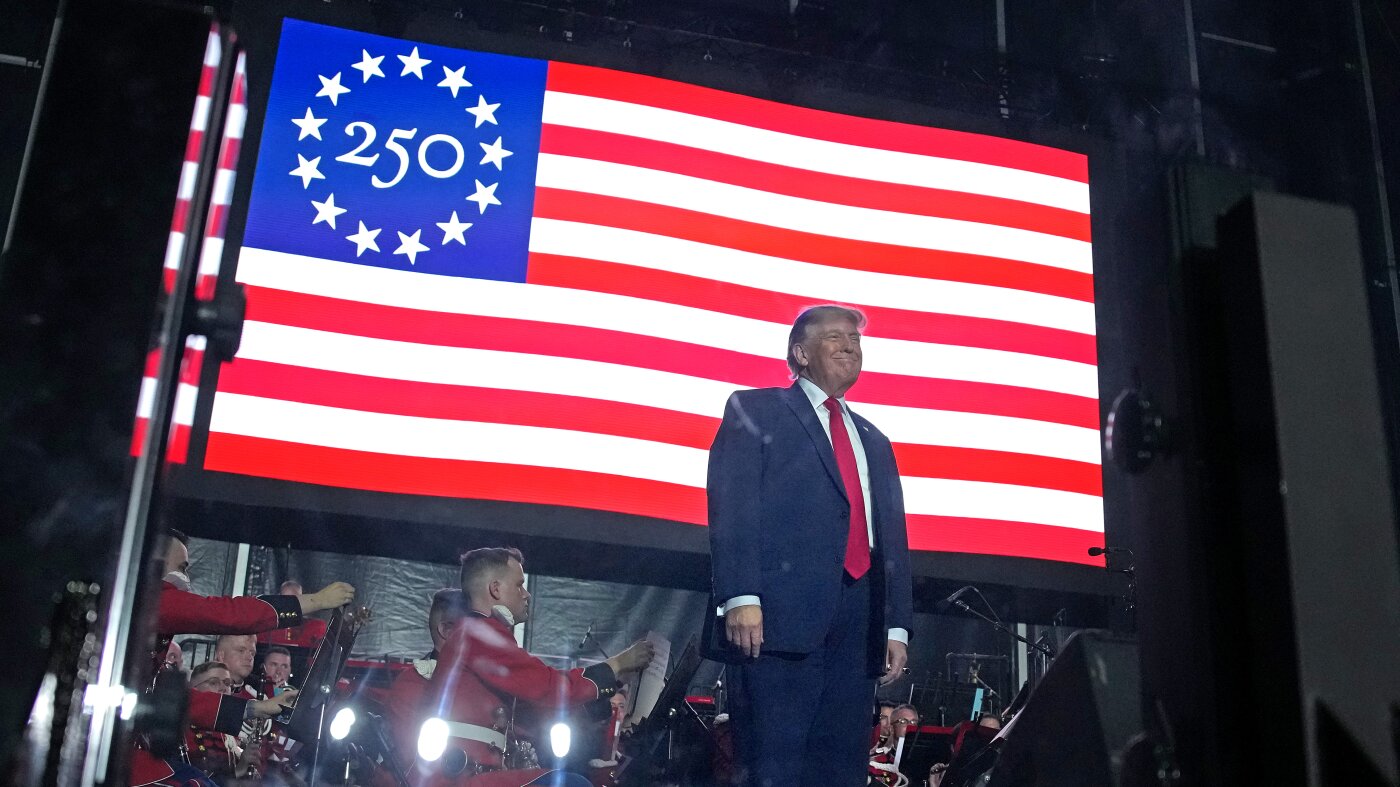
House Democrats accuse Trump of ‘hijacking’ America’s 250th birthday for his own gain
-

 Technology1 hour ago
Tesla driver faces manslaughter charges over Texas crash that killed a woman inside her home
-

 World1 hour ago
Six Kurdish fighters killed in IRGC ambush as clashes spread across western Iran

