Indiana
Will UCLA’s Mick Cronin be the next Indiana basketball coach? Here’s what he said


Indiana basketball can’t take control in final minute in loss vs UCLA
It felt like if the Hoosiers were going to push for March Madness, stacking on a win at Michigan State would be the launching point.
Mick Cronin got to take a test drive as a coach on the sidelines at Assembly Hall, and he lead his UCLA team to a victory, though not without drama. Two stories programs dreaming of yesteryear to varying degrees met as Indiana basketball hosted the Bruins in a Big Ten Conference game.
One coach, Cronin, seems unhappy with his arrangement, and could very well replace the man who stood on the opposite sideline. In fact, IndyStar columnist Gregg Doyel wrote as much after the Bruins beat Indiana, led by Mike Woodson who is stepping down at season’s end which, for the moment, appears to be a minimum of six games — five regular season and a Big Ten Tournament opener.
Only 15 teams in the 18-team league will descend on the Circle City for the event March 12-16 at Gainbridge Fieldhouse. The Hoosiers (15-11, 6-9 Big Ten) are 1 ½ games up on Northwestern and Washington, which are tied for 16th, and three games up on Penn State. But IU’s road could cause them to miss the tournament: vs. Purdue, vs. Penn State, at Washington, at Oregon and vs. Ohio State.
“I just think it’s tough to do that stuff during the season. The whole thing has gotten so crazy, and I don’t like to see that. As far as me, I would never comment on a coaching situation. It would be wildly inappropriate,” Cronin said, while continuing on. “I’m the son of a coach and the way that I look at it, Mike Woodson is the coach at Indiana. He was a national champion and I happen to know him and his staff. I have tremendous respect for their kids and their team. To me, no one should say anything that distracts from what they’re doing. I think it would be wildly inappropriate, mostly because of my respect for coach Woodson. He’s over there coaching his team. That’s my stance.”
Regardless, the Hoosiers will be looking for a new coach with a hope of returning to the glory days. Their last Sweet 16 was in 2016 and they’ve only been to the NCAA tournament twice since, both in Woodson’s first two seasons. IU’s last Elite Eight was in 2002, the year Indiana lost to Maryland in the national championship game.
Indiana is starved for success, longing to win its sixth national championship. It claims fame to the last undefeated national champion, which was 49 years ago. Of course, UCLA has won 11 national championships, including seven straight from 1967 to 1973. Three of those were undefeated seasons, plus another in 1964. And Cronin even led the Bruins to a Final Four four years ago.
The parallels are similar, and Cronin said so Friday.
“To be a great program you have to have great tradition and the backbone of support of all the guys in your tradition that played. I’ve got guys like Kareem [Abdul-Jabbar] and Mike Warren and Jamaal Wilkes, the tremendous support of guys at every game,” he said. “You need tradition, support, your fanbase, and your former players. I don’t know the answer to what’s intact here, but I know my mentality. I walk out and see coach (Bob) Knight like I walk out at my facility and see coach (John) Wooden.”
But UCLA (19-7, 10-5) is in severe financial debt and Cronin has stressed the burden travel has been on his team, and he equated it to NBA teams struggling with similar travel. Friday’s win over IU was this season’s Bruins’ first in the Central or Eastern time zones.
He’s a popular name on hot boards, and is included in IndyStar’s hot board. So, too, was Brad Stevens, the Boston Celtics president who made a statement saying he’s happy in his role. Should athletic director Scott Dolson have Cronin on his list of coaching candidates, here’s what UCLA’s big whistle said about the rumors.
“Some people would be happy because some people want me fired. When you’re a coach, you have to check your ego,” Cronin said. “They booed John Calipari at Kentucky. They wouldn’t have booed Bob Knight, if he walked in here, I can promise you that. That’s just the way it is. I’m well aware that I might be on a board for a job, but somebody might want me to lose my job. We got beat on Tuesday, go ahead and check on those boards.”
A trend of hiring coaches who can bring players with them fits Cronin. It’s a strategy that already worked out for Dolson when he hired Curt Cignetti to lead Indiana football, which made its way to the College Football Playoff with a host of James Madison transfers. Even Cignetti had to deny he was lobbying for someone Saturday.
But Cronin has a winning background: won the Ohio Valley and reached two NCAA tournaments in three seasons at Murray State, made nine straight NCAA tournaments and won two American Athletic Conference regular-season titles at Cincinnati and has continued success at UCLA with the Final Four in his second season and winning the Pac-12 in 2022-23.
Dylan Andrews, who was 1 for 7 from the field and a two-year starter, iced the game with free throws and would fit into that category. Four starters do, too, and reserves in 7-foot-3 post, Aday Mara, and Chicago native Sebastian Mack could give Cronin a core to build around in Bloomington, easing the learning curve and roster management.
“We’re playing at Assembly Hall — you don’t just come to Indiana and win a game like that,” Andrews said. “It was a gritty win. It’s just a credit to my team, to my coach, credit to everybody. This is a big win for us.”
Was the Valentine’s Day win love at first sight? The carousel will continue turning until there’s an answer.



Fairfield native, David K. Wells, 69, and his wife Aileen, were found dead inside their home in Newburgh, Indiana, Monday night. Warrick County Sheriff Michael Wilder said that deputies responded to the residence just before 8:00 p.m. after dispatch received a call around 7:40 p.m. from a friend of the family requesting a welfare check. When officers didn’t get an answer at the door, they entered through the back of the home and found the couple deceased. Officers cleared the home and waited for detectives to arrive. Investigators also obtained a search warrant to do a further examination of the residence. Authorities were able to notify family members and conduct interviews to gather additional information. Sheriff Wilder said investigators believe the couple had been dead for less than 24 hours before they were found. He also said there is no indication of any forced entry or an intruder. Sheriff Wilder has not made a formal determination as to what happened. Autopsies for the couple were scheduled for yesterday morning to help determine a cause. David Wells grew up in Fairfield and graduated from Fairfield High School in 1975. He had a long career in television commercial production in Evansville and had more recently operated the Cigar! Cigar! tobacco store in Evansville.

INDIANAPOLIS (WRTV) — Indiana saw a significant decline in veteran homelessness last year, despite the total number of homelessness rising across the state.
According to the U.S. Department of Housing and Urban Development (HUD) annual estimation of the homeless population, known as the Point in Time (PIT) count, Indiana saw an 18.7% decline in veteran homelessness in 2025 compared to the year before.
That marked the second-largest decline of any state by percentage.
Helping Veterans and Families (HVAF) of Indiana specializes in assistance for veterans facing homelessness. CEO Emmy Hildebrand told News 8 the formula that’s finding success is the same that works with any at-risk group: housing and wrap-around services.
Hildebrand said that the formula needs support from the state.
“There is no state funding supporting homeless services in our state,” Hildebrand said. “And very little local funding outside Indianapolis.”
Safety net programs have faced budget cuts, with lawmakers eliminating funding for the Housing First program in 2025. It supported organizations helping people secure stable housing.
And housing advocates have criticized Indiana’s public camping ban as essentially making it illegal to be homeless.
HVAF client Terri Massey, a 34-year-old Navy veteran, said the stigma of being homeless was the most difficult challenge to overcome.
“I’m still trying to provide for my kids,” Massey said “I’m (not) out here being lazy or not trying to do better.”
Massey was working, supporting her children, but found herself sleeping in cars and hotel rooms because she didn’t have stable housing. “Going to that work, working 10 hours, leaving, going to sleep in my car.”
HVAF helped place Massey in a permanent apartment. HVAF also placed Massey in a different kind of “bootcamp” years after her time in the military, learning job skills. She’s looking for a job, but thankful to do it from a place she can call home.
“I am beyond grateful and thankful. I literally pray and thank God every day,” Massey said. “Because for the longest I felt like I was alone. And I had to figure everything out by myself. I didn’t.”
It’s estimated that seven percent of Indiana’s homeless are veterans. Hildebrand said there are federal funds for organizations working with veterans, which support HVAF’s programs.
Still, finding permanent housing is a struggle.
According to the National Low Income Housing Coalition, for every 100 extremely low-income households in Indiana, just 34 rental homes are affordable and available.
“There are so many people on the bubble that are just one emergency away from living in their car, staying with friends and family, or living on the streets because we don’t have the appropriate system here in Indiana,” Hildebrand said.
Hildebrand said lawmakers assured her they would work to support homeless services, but she hasn’t seen any drafted legislation that might be introduced in the next legislative session.
Across the country, about one in 25 people experiencing homelessness previously served active duty in the armed forces, according to numbers from HUD. Veteran homelessness declined 56% between 2009 and 2025.

The Indiana Department of Environmental Management has issued an Air Quality Action Day for July 8th in Northwest Indiana.
Ozone levels are expected to be in the Unhealthy for Sensitive Groups range, also known as the “orange” level. While not everyone will notice or be effected by the conditions, and while they may not be as severe as recent wildfire smoke events, individuals with asthma, COPD, and other health issues should proceed with caution when exercising outside.
Ozone levels are expected to be in the Unhealthy for Sensitive Groups range, also known as the “orange” level. (WSBT Photo)
The affected area is all of Northwest Indiana, including the cities of: Crown Point, Gary, Hammond, Kentland, LaPorte, Michigan City, Portage, Rensselaer, Valparaiso and all other cities in the region, especially those near Lake Michigan.
Warm temperatures, mostly sunny skies, and light and varied winds coming off of Lake Michigan are expected to contribute to elevated ozone levels.
To stay up to date on issuances and quality levels in Indiana, visit SmogWatch.IN.gov.
-
Politics7 seconds ago
Column: Trump decries ‘communism’ while his government takes ownership of companies
-
 Science3 minutes ago
‘I’d rather my house burn down than get cancer’: Herbicide use upends California’s fight to save forests
-
 Sports8 minutes ago
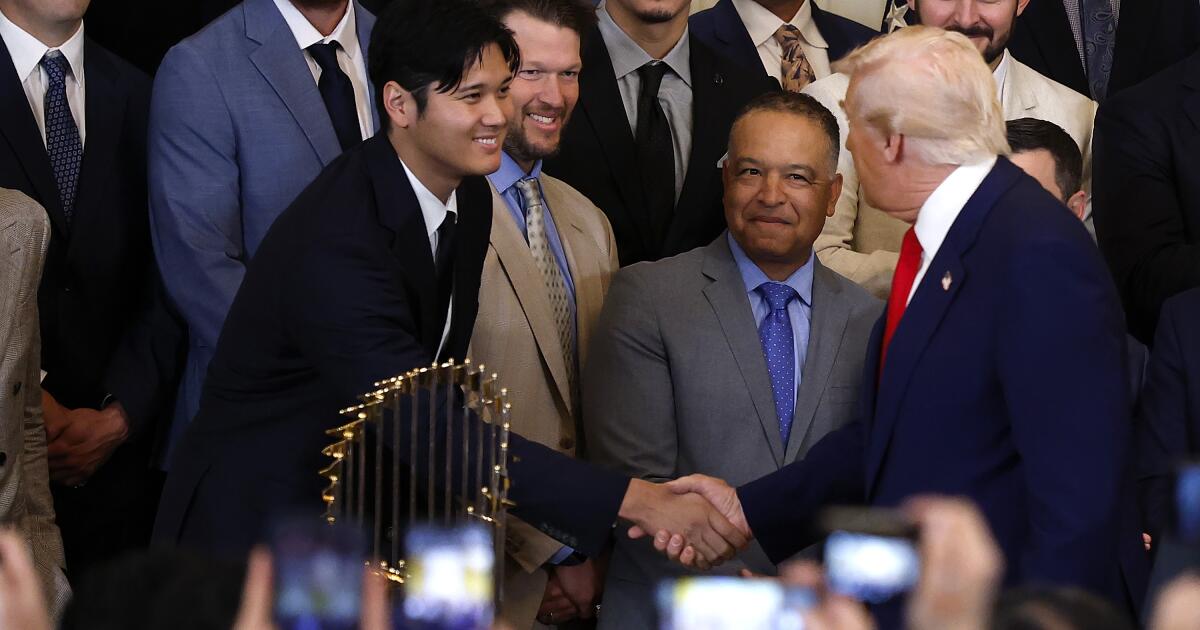
Dodgers scheduled to visit White House in late July to celebrate 2025 World Series win
-

 World18 minutes ago
Former US Olympian pleads not guilty in DC reflecting pool vandalism case
-
 News45 minutes ago
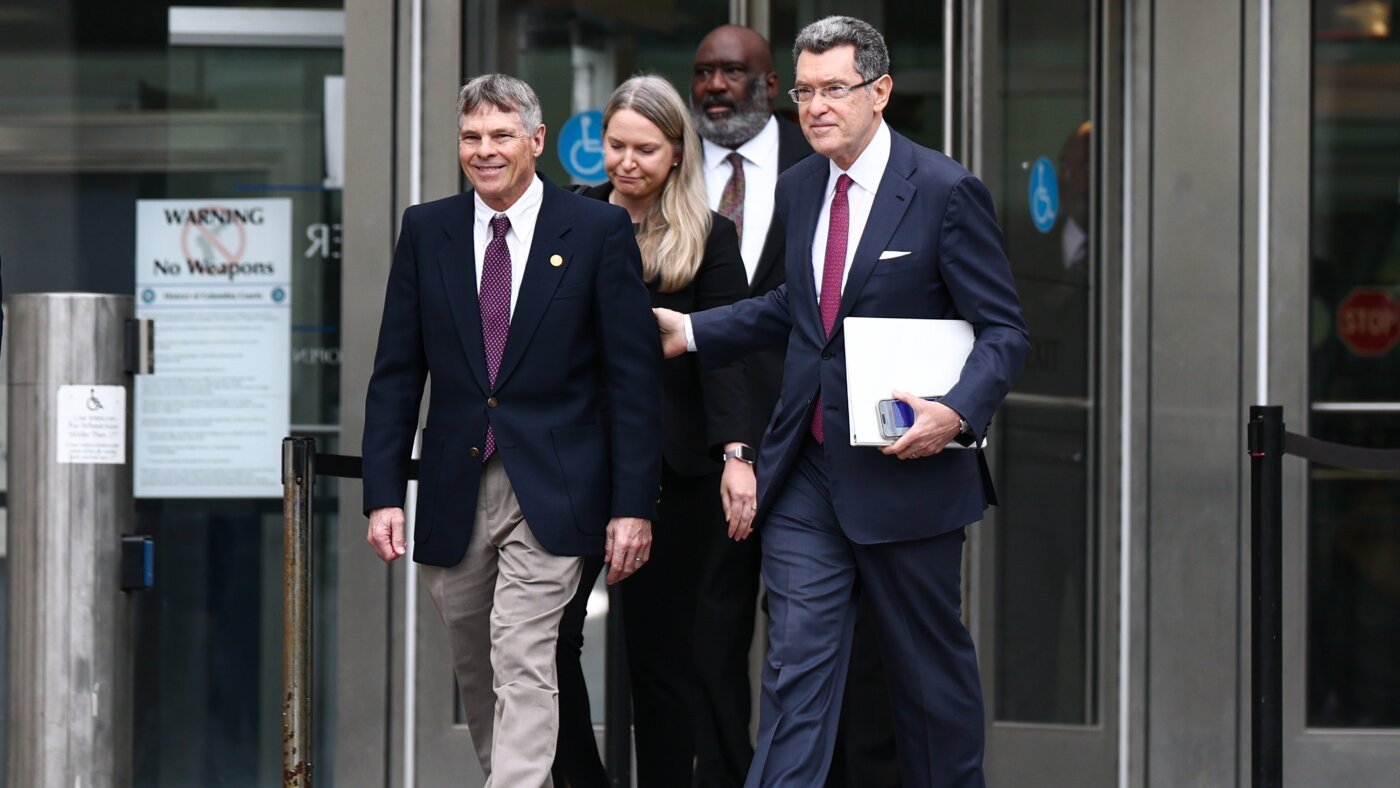
Former Olympian pleads not guilty in reflecting pool vandalism charges
-

 Los Angeles, Ca2 hours ago
Heat advisory, beach hazards in effect as Southern California sizzles
-

 Detroit, MI2 hours ago
Teen on moped hit by car after cruising through stop sign in Detroit
-

 San Francisco, CA3 hours ago
Flight of fancy: San Francisco moves to build private luxury airport terminal


