Indiana
Pornhub ‘ban’ in Indiana blocked by judge


INDIANAPOLIS (WXIN) — A judge has blocked a new Indiana law from going into effect which would have effectively cut off Hoosiers from accessing adult content websites, such as Pornhub. In his decision, the judge called the law “likely facially unconstitutional.”
Previously, Indiana lawmakers passed Senate Bill 17 which was signed into law by Governor Eric Holcomb and set to go into effect on July 1. Under the restrictive bill, websites hosting “material harmful to minors” would have required Hoosiers to upload sensitive documents, such as driver’s licenses, in order to prove their age.
While proponents of the law argued the age-verification law was meant to protect minors from accessing explicit material, such as pornography, critics pointed out that the law was not only a potential violation of the First Amendment but also opened up Hoosiers to substantial risk of having their sensitive information and documents stolen.
While Indiana Attorney General Todd Rokita defended the age-verification law as a “shield” to protect children from “the psychological and emotional consequences associated with viewing porn,” the Free Speech Coalition filed a lawsuit to stop the law from going into effect.
“We will continue to fight for the rights of adults to access the internet free of shame and surveillance,” said Alison Boden, executive director of Free Speech Coalition. “While they may sound reasonable on their face, laws like SB17 have effectively functioned as state censorship.”
On Friday, a judge with the United States District Court of Southern Indiana issued a preliminary injunction blocking the law from going into effect on July 1. In his decision, the judge concluded that the law “likely violates the First Amendment” and echoed many of its critics such as pointing out how the law could be easily circumvented with technology and the broad, vague scope of the law.
The vagueness of the law was previously called out by the ACLU of Indiana who sounded the alarm against the age-verification law and its vague use of “material harmful to minors,” which the ACLU speculated could go beyond just blocking pornography and be used to also block “age-appropriate LGBTQ+” or be used to censor sex education content.
The ACLU also pointed out how the law could be easily circumvented, needlessly putting Hoosiers’ sensitive information at risk.
“The worst part, the law won’t even work,” said the ACLU of Indiana. “Minors will just go to sites that aren’t regulated by Indiana law or use technology to bypass the verification method. A @CommonSenseMedia report found 6 in 10 older teenagers already use VPNs to browse the internet.”
As part of his decision, the judge wrote in defense of his injunction by stating, “Indiana’s legislature chose an ineffective and more broad method to protect minors from harmful materials than other alternatives. The First Amendment does not allow such imprecision.”
The injunction will remain in effect until a final judgment is made or a higher court dissolves the injunction.



WESTFIELD, Ind. (WISH) — Police have arrested someone in connection to a homicide earlier this month in the Hamilton County city.
In a Friday night social media post, the Westfield Police Department announced the arrest but gave no details, including who was arrested or what preliminary charges the person may face.
“Due to the active nature of this case, limited details are available for release at this time,” the post said.
As WISHTV.com previously reported, James “Matt” Lushin, 47, was found dead shortly after 7:25 p.m. March 12 with trauma at his home in the 3900 block of Westfield Road, also known as State Road 32.
Social media posts from the scene showed police tape and emergency vehicles at a red brick house between Shady Nook Road and Gray Road.
Lushin’s obituary said the Kokomo native was a key partner with the real estate investment company, FLF Property. The obituary also said, “Matt was also a respected and accomplished member of the international poker community. He traveled the world competing in tournaments and built an impressive and successful career.”
Police have previously said the death was believed to be isolated, posing no ongoing threat.
Officials have not released a specific cause or manner of death.

Just three days before Selection Sunday in March of 2020, the NCAA announced that March Madness, like so many other events that spring, would be cancelled due to the new virus upending life. The decision marked the first time in tournament history that the final weeks of the college basketball season would not be played, squashing Atlanta’s plans to host the Final Four.
When the following year rolled around, the NCAA decided that March Madness would not succumb to the virus once more.
With a vaccine only on the horizon and hundreds of Americans still dying each day, the organization announced in November of 2020 that while the tournament would go on, it would certainly not be business as usual. All 67 games, NCAA officials said, would be held in one location. Central Indiana was the first choice as Indianapolis had been on tap to host the Final Four April 3-5.
The plan, said NCAA senior vice president of basketball Dan Gavitt in a November 2020 IndyStar article was to present “a safe, responsible and fantastic March Madness tournament unlike any other we’ve experienced.”
In January the NCAA made it official: All games would be played in and around Indianapolis in a modified version of a bubble.
Holding the tournament in one place just made sense, NCAA officials told IndyStar. Unlike in a typical year when a winning team would travel multiple times before the championship, this system would minimize travel, which could inadvertently expose players and coaches to the virus.
Two months later when the tournament kicked off on March 18, 55 of the 67 games were scheduled to be played in Indianapolis venues, such as Gainbridge (then Bankers Life) Fieldhouse, Lucas Oil Stadium, Indiana Farmers Coliseum and Butler’s Hinkle Fieldhouse. Purdue’s Mackey Arena and IU’s Assembly Hall also hosted games.
While the first Covid vaccine had arrived a few months earlier, few people outside of first responders and the most vulnerable had been immunized, so in an effort to avoid large crowds, the Indianapolis sites all capped tickets at 25% capacity. That meant only 17,500 people could attend games at the largest venue, Lucas Oil Stadium. The college arenas allowed far smaller audiences, with IU limiting attendance to 500 people.
A week before the tournament began Marion County Public Health Department officials and Mayor Joe Hogsett asked attendees to make smart public health choices, such as social distancing and obeying the face masks mandate. Referees donned masks as much as possible as did coaches and players on the bench.
The NCAA regularly tested athletes, administering 28,311 tests Covid tests during the tournament, 15 of which came back positive.
Post-mortems after the tournament asked whether the NCAA had made the right call. Two high profile deaths occurred in the aftermath of the tournament — one a University of Alabama superfan who had traveled to Indy for the games and the other a St. Elmo bartender. But proving a direct link between their deaths and the tournament would prove impossible, and some public health experts said the NCAA had done everything it could to protect athletes and fans short of canceling the event.
A study conducted by IU, Regenstrief researchers and others that appeared in August 2021 in the Journal of the American Medical Association found that while mask wearing had theoretically been compulsory, about a quarter of attendees at the games were either not wearing masks or doing so inappropriately. Still, in an IndyStar article about the study Indiana Sports Corps president Ryan Vaughn termed the event “a resounding success.”
The following year, with a vaccine widely available and far fewer daily deaths from the virus, the tournament returned to a typical schedule, concluding in New Orleans’ Ceasars Superdome. More than 69,00 fans attended the final games, according to the NCAA. Local authorities had lifted the mask requirement by this point.
“Last year was about survival. Just having championships in any way, single site, keep everybody safe and be successful,” Gavitt said in an NCAA news release in late April 2022. “I think this year was about advancing.”
Indiana
Federal legislation that Braun calls ‘crazy’ is aimed at Bears and Indiana – Indianapolis Business Journal


Yaxel Lendeborg stars as top-seeded Michigan beats Alabama in Sweet 16

‘Just-add-water living at its finest’: An Alaska bike journey rolls along

Diamondbacks vs. Dodgers live updates. Arizona DH back in the lineup

All of Arkansas under high fire danger in March as burn bans spread statewide
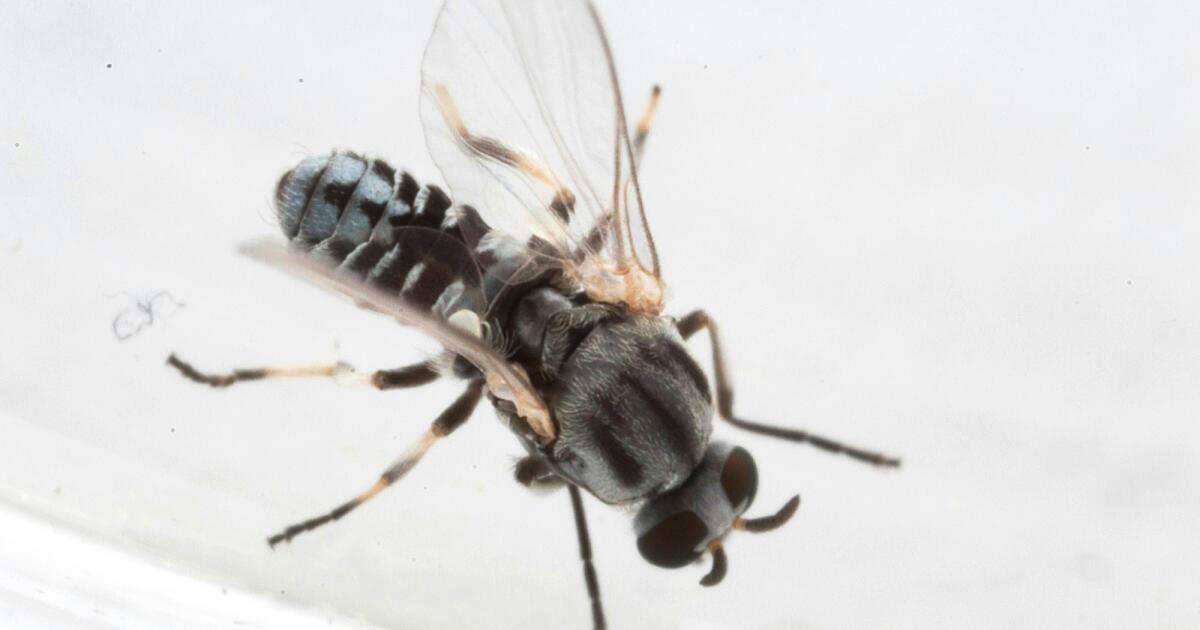
Eye-biting black flies are ‘like little demons’ in San Gabriel Valley, residents say

Florida High School Football Rankings: Top 25 teams – Oct. 21

How old is Bo Nix? What to know about Oregon quarterback ahead of 2024 NFL Draft

Cleary's 21 help Le Moyne down Central Connecticut State 69-64 in OT

99th annual Pony Swim held in Virginia

Indiana Members Credit Union announced as new anchor tenant at Bottleworks District

WATCH: Senate hearing goes silent after Angel Father confronts top Dem over daughter’s death

US diplomat Marco Rubio denounces settler violence, tolls in Hormuz strait

Iran-linked hackers have breached FBI Director Kash Patel’s personal emails | CNN Politics

Live: CPAC 2026 Day 2

Video: Will ICE Change Under Its New Leader?
-

 Detroit, MI1 week ago
Drummer Brian Pastoria, longtime Detroit music advocate, dies at 68
-

 Movie Reviews1 week ago
‘Youth’ Twitter review: Ken Karunaas impresses audiences; Suraj Venjaramoodu adds charm; music wins praise | – The Times of India
-

 Sports6 days ago
IOC addresses execution of 19-year-old Iranian wrestler Saleh Mohammadi
-

 New Mexico5 days ago
Clovis shooting leaves one dead, four injured
-
 Business1 week ago
Disney’s new CEO says his focus is on storytelling and creativity
-

 Technology5 days ago
YouTube job scam text: How to spot it fast
-

 Tennessee4 days ago
Tennessee Police Investigating Alleged Assault Involving ‘Reacher’ Star Alan Ritchson
-

 Texas1 week ago
How to buy Houston vs. Texas A&M 2026 March Madness tickets