Indiana
New York Liberty decimate Indiana Fever, win 104-68


The Indiana Fever have not had it easy to start the season. Sunday night’s matchup with the New York Liberty marked their 11th game in 20 days, the previous ten giving them a 2-8 record and a whole, whole lot of scrutiny and media attention, much of it directed toward a player you may have heard of: Caitlin Clark.
Sunday night even marked a back-to-back for the Fever, 24 hours after securing their second win of the season, a game that was overshadowed by the reaction to a hard foul by Chennedy Carter on Clark.
The WNBA has retroactively assessed Chennedy Carter a flagrant 1 foul for her contact on Caitlin Clark
Carter was originally only given a foul away from the ball pic.twitter.com/TdC5BnobaV
— Bleacher Report (@BleacherReport) June 2, 2024
Everything about their season — injuries, their subpar pay, the media circus around Clark and its inability to prevent itself from turning into said circus — has been exhausting.
But before they could enjoy four precious off days before their next game on Friday evening, they had to face the Libs at the Barclays Center. And the WNBA is not a league that prizes sympathy.
New York took the lead four seconds into the game after Jonquel Jones directed the opening tip-off to Breanna Stewart in the front-court, igniting a one-woman fast-break. That was it. With 39 minutes and 56 seconds of game to play, the Liberty scored the game-winning bucket, refusing to let the score approach even.
Sandy Brondello’s team had taken early double-digit leads in their last two victories as well, but unlike those games, the Libs didn’t take their foot off the gas pedal in quarters 2 and 3. Indiana’s Kelsey Mitchell and NaLyssa Smith, whose respective seasons have been choppy thus far, combined for 38 points and made some nice plays to cut their deficit from 21 points to 14, but their efforts were ultimately a speed-bump.
The Liberty were completely locked in on defense, and held Caitlin Clark to just three points, five assists, and three turnovers on 1-of-10 shooting. They switched pick-and-rolls, trapped them, hedged them, and everything in between for 40 minutes, with Jones executing whatever was asked of her…
Liberty are locked in with their PnR D right now after It being an issue the last couple games. Able to mix up coverages on the fly.
1: Betnijah directs a scram-switch after the initial action, TO.
2: Then an aggressive hedge forces a rushed pick-up from CC: pic.twitter.com/wuIGmbyvnP— Lucas Kaplan (@LucasKaplan_) June 2, 2024
Jones posted a monster 18/13/4/2/1 stat-line, but was merely the centerpiece of a defense that got contributions from everybody wearing sea foam. Betnijah Laney-Hamilton took the Clark assignment and aced it, while getting help from a flurry of limbs every time the ball entered the paint…
“I think it’s our job to help B out,” explained Jones. “She has a tough responsibility every night to guard the best perimeter players, and she does a great job of that. Teams are definitely going to try to do what they can to get her away from those players, to make the game a little bit easier for them … as much as she’s doing a great job, we have to make sure that we’re backing her up.”
New York recorded more blocks and steals than Indiana, but the turnovers were even at 13 apiece, and there was hardly a difference in transition offense. But Indiana just couldn’t get clean looks in the half-court while the Liberty stumbled into them by accident, ending the game shooting 57.6% from the floor to Indiana’s 37%,
Laney-Hamilton led the way with 20 points on a hyper-efficient 7-of-9 performance, while Sabrina Ionescu added 16/6/6 (though her turnover problems continued with four) and Stewart contributed a calm 13/6/5 on 5-of-11 shooting. The only starter who didn’t crack double-digits was Courtney Vandersloot, who returned after a one-game absence with back tightness, and she still put up nine points and seven assists on 4-of-4 shooting.
Nobody had more than 11 shot attempts, and yet, the Liberty recorded 30 assists on their 38 made baskets, passing up good looks at the rim for great ones…
Brondello described the team’s offensive philosophy after the game: “How do we get the best looks every single time? When we’re sharing it and playing selfless like that, that’s beautiful basketball. It’s fun to watch, it’s fun to play. But then, just making sure we have good inside-outside attack. I think that’s critical for us. We established B, we established JJ early in the game and that kind of opens up the outside.”
Their domination on Sunday wasn’t about any one player, and even the bench turned in their best performance of the season to date. They combined for 28 points — a season-high — despite Nyara Sabally’s absence with a back injury.
“I thought we had great production from the bench,” said Brondello. “We created for each other, I thought we played poised and we got two feet in the paint, we got some open looks near the end, too. It was fun to watch them play that way, and we’re getting there.”
Without Sabally to rely on, the Libs turned to Kennedy Burke in an extended role, and she delivered: ten points on 2-of-2 from three, in addition to three steals and three blocks.
“I felt like today, I had I had more time on the court, so I was able to get in the flow of everything,” said Burke of her performance.”
Along with Leonie Fiebich and Kayla Thornton, she was part of a trio of wings off the bench that kept the Liberty’s 5-out spacing principles flowing while bringing the length and defensive versatility the team envisioned in the preseason.
Burke credited the group’s success to “the trust that we have with each other. There were some lapses where it was a miscommunication, but I feel like throughout the season, it’s gonna get better, it’s gonna get stronger. We just got to keep building off each other and trusting each other.”
No, the Fever were not the most fearsome opponent, especially not on the second half of a back-to-back. But if the Liberty can keep building off this type of performance and indeed get stronger, as Burke predicts, the whole league has to watch out.
After two grind-it-out wins that had the Liberty talking about winning ugly, their Sunday night beatdown of the Fever was a two-hour celebration in front of a sold-out Barclays Center that opened up the entire second deck for Clark’s second trip to NYC.
And, if nothing else, it was a reminder to the 17,401 fans in attendance that New York can still put teams in the dirt.
Final score: New York Liberty 104, Indiana Fever 68
Commissioner’s Cup begins with a bang
Sunday marked the first day of Commissioner’s Cup play for the Liberty, who now sit in a tie with the still-undefeated Connecticut Sun in the Eastern Conference Cup standings.
As a reminder, each team will play the other five teams in its conference once. The team in each conference with the best record in those five games (with point differential as a tie-break) will advance to the championship game on June 25.
New York is the defending Cup champion after their win over the Las Vegas Aces last season, in which they took home the $500,000 prize pool. This season, they will be playing for Women Creating Change, an organization that would receive more money from the W based on how well the Libs do.
Next Up
The New York Liberty begin a three-game road trip on Tuesday, seeking revenge against the Chicago Sky, who handed them their first loss of the season on May 23. Tip-off is scheduled for 8:00 p.m. ET from the Windy City.



INDIANAPOLIS (WRTV) — Indiana saw a significant decline in veteran homelessness last year, despite the total number of homelessness rising across the state.
According to the U.S. Department of Housing and Urban Development (HUD) annual estimation of the homeless population, known as the Point in Time (PIT) count, Indiana saw an 18.7% decline in veteran homelessness in 2025 compared to the year before.
That marked the second-largest decline of any state by percentage.
Helping Veterans and Families (HVAF) of Indiana specializes in assistance for veterans facing homelessness. CEO Emmy Hildebrand told News 8 the formula that’s finding success is the same that works with any at-risk group: housing and wrap-around services.
Hildebrand said that the formula needs support from the state.
“There is no state funding supporting homeless services in our state,” Hildebrand said. “And very little local funding outside Indianapolis.”
Safety net programs have faced budget cuts, with lawmakers eliminating funding for the Housing First program in 2025. It supported organizations helping people secure stable housing.
And housing advocates have criticized Indiana’s public camping ban as essentially making it illegal to be homeless.
HVAF client Terri Massey, a 34-year-old Navy veteran, said the stigma of being homeless was the most difficult challenge to overcome.
“I’m still trying to provide for my kids,” Massey said “I’m (not) out here being lazy or not trying to do better.”
Massey was working, supporting her children, but found herself sleeping in cars and hotel rooms because she didn’t have stable housing. “Going to that work, working 10 hours, leaving, going to sleep in my car.”
HVAF helped place Massey in a permanent apartment. HVAF also placed Massey in a different kind of “bootcamp” years after her time in the military, learning job skills. She’s looking for a job, but thankful to do it from a place she can call home.
“I am beyond grateful and thankful. I literally pray and thank God every day,” Massey said. “Because for the longest I felt like I was alone. And I had to figure everything out by myself. I didn’t.”
It’s estimated that seven percent of Indiana’s homeless are veterans. Hildebrand said there are federal funds for organizations working with veterans, which support HVAF’s programs.
Still, finding permanent housing is a struggle.
According to the National Low Income Housing Coalition, for every 100 extremely low-income households in Indiana, just 34 rental homes are affordable and available.
“There are so many people on the bubble that are just one emergency away from living in their car, staying with friends and family, or living on the streets because we don’t have the appropriate system here in Indiana,” Hildebrand said.
Hildebrand said lawmakers assured her they would work to support homeless services, but she hasn’t seen any drafted legislation that might be introduced in the next legislative session.
Across the country, about one in 25 people experiencing homelessness previously served active duty in the armed forces, according to numbers from HUD. Veteran homelessness declined 56% between 2009 and 2025.

The Indiana Department of Environmental Management has issued an Air Quality Action Day for July 8th in Northwest Indiana.
Ozone levels are expected to be in the Unhealthy for Sensitive Groups range, also known as the “orange” level. While not everyone will notice or be effected by the conditions, and while they may not be as severe as recent wildfire smoke events, individuals with asthma, COPD, and other health issues should proceed with caution when exercising outside.
Ozone levels are expected to be in the Unhealthy for Sensitive Groups range, also known as the “orange” level. (WSBT Photo)
The affected area is all of Northwest Indiana, including the cities of: Crown Point, Gary, Hammond, Kentland, LaPorte, Michigan City, Portage, Rensselaer, Valparaiso and all other cities in the region, especially those near Lake Michigan.
Warm temperatures, mostly sunny skies, and light and varied winds coming off of Lake Michigan are expected to contribute to elevated ozone levels.
To stay up to date on issuances and quality levels in Indiana, visit SmogWatch.IN.gov.

-

 Sports6 minutes ago
Caitlin Clark’s return falls flat after Fever coach limits her in loss to shorthanded Sparks
-
Business14 minutes ago
Commentary: Trump wants to let companies make fewer disclosures, thus keeping investors in the dark
-
 Entertainment21 minutes ago
Justin Baldoni and wife break silence after ‘It Ends With Us’ legal battle with Blake Lively
-
 Lifestyle24 minutes ago
A meal with an animated Mona Lisa? Immersive dining goes high tech — but will L.A. eat it up?
-
 Politics29 minutes ago
Nexstar launches its first digital subscription service with The Hill Insider, aimed at political junkies
-
 Science36 minutes ago
Not everyone is leaving California. A new commercial battery maker just landed in Sacramento
-
 Sports39 minutes ago
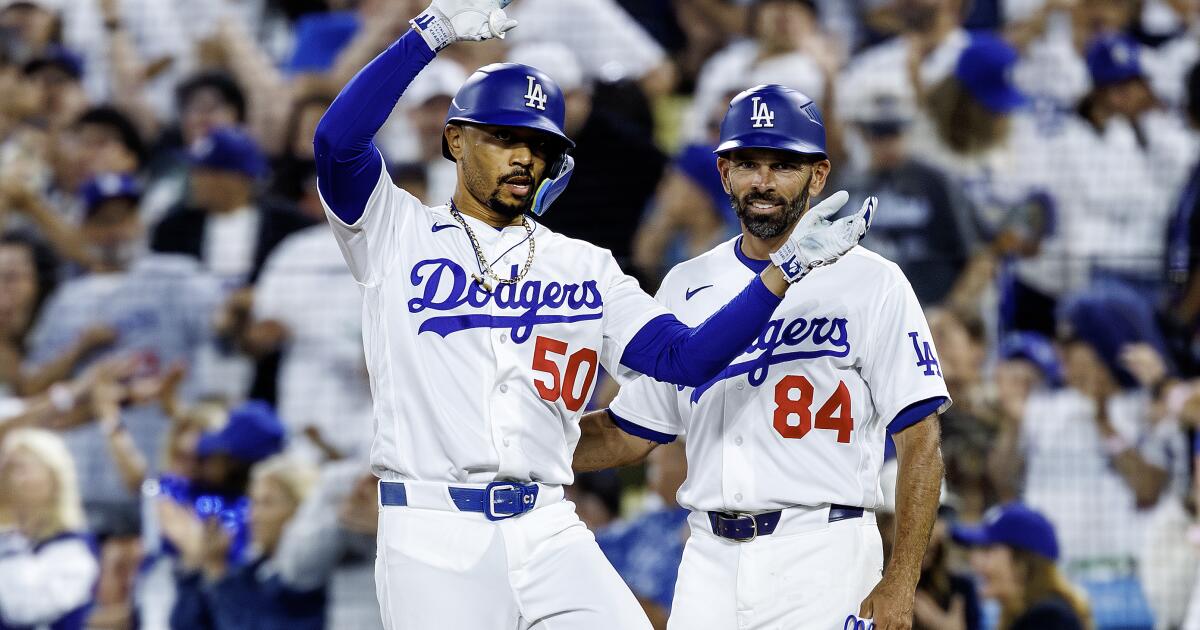
Mookie Betts’ eighth-inning single gives Dodgers the win over the Rockies
-
World51 minutes ago
From sewers to swimming sites: how Europe's cities reclaim their rivers


