Indiana
Former IU football star Carl Barzilauskas dies at 72


Carl Barzilauskas, IU’s earliest NFL draft pick in the last 50 years, died in Bloomington on Dec. 20, 2023. He was 72.
Barzilauskas, a native of Waterbury, Conn., played football at Indiana University from 1970-73. A defensive tackle, Barzilauskas was a Sporting News All-American and played in the East-West Shrine Game and the Senior Bowl All-Star Game.
Barzilauskas was selected by the New York Jets with the sixth overall pick in the 1974 NFL draft; the third-highest selection in program history. As a rookie, Barzilauskas recorded five sacks and won NFL Rookie Defensive Lineman of the Year. He was also runner-up behind Pro Football Hall of Famer Jack Lambert for the 1974 Defensive Rookie of the Year. Barzilauskas spent four years with the Jets before playing the last two seasons of his career with the Green Bay Packers.
After retiring from football, Barzilauskas began a life of entrepreneurship. While he was still on the Jets, Barzilauskas opened Barzo’s Blitz, a bar in downtown Bloomington. Barzilauskas also opened Barzo’s Fitness Center on North Walnut Street in Bloomington before moving to 100 N. Curry Pike in Bloomington. The fitness center eventually became the Orthopedic and Sports Physical Therapy Center with a second location in Mooresville at the Center for Hip and Knee Surgery. Barzilauskas had an interest in the treatment and rehabilitation of athletes after he suffered a career-ending neck injury with the Packers.
Barzilauskas was also a part of several real estate investments, including Realco, Small Town Properties, and First Care Associates. He was a partner and manager at several operating companies like A-1 Printing, First Health Care, which operated two walk-in medical clinics, Colorado Steakhouses in Bloomington and Indianapolis, and Advanced Medical, Inc.
Barzilauskas was the longtime president of the Indiana National Football League Players Association (INFLPA). He also was a member of the National Football Foundation (NFF), where he served as president of the Indiana chapter. Barzilauskas introduced an annual scholar-athlete banquet, where local athletes are rewarded postgraduate scholarships for their athletic, academic, and leadership accomplishments.
The Indiana Sports Writers and Sportscasters Association gave Barzilauskas the Joe Boland Award in 2000 for his service to the youth. He was also inducted into the Indiana Football Hall of Fame in 2000. The NFF recognized Barzilauskas as the Midwest Region recipient of the NFF Chapter Leadership Award at the Waldorf-Astoria in New York City in 2005.
Barzilauskas is survived by his wife, Cathi D. (Harrah) Barzilauskas, and their son, Robert F. (Bo) Barzilauskas. He is also survived by three cousins, Robin Wessman, Michael Zukauskas, and John Zukauskas.
Bo won IndyStar Mr. Football and a state championship at Bloomington South in 1993 before playing college football at IU and Valdosta State. Carl Barzilauskas believed in manual labor to build smaller muscle groups, so before the 1993 season, he had Bo and some teammates pulling engine blocks on chains, digging ditches and flipping road tires in open fields.
Barzilauskas was an avid football fan. He and his family had season tickets to IU games until his bout with sepsis in the mid-2010s. Barzilauskas still frequently watched IU games from home. He rooted for the Colts and Patriots in the NFL.
Barzilauskas was described as as a “gentle giant” by his longtime friend Geoffrey Bradley. Bradley says that despite Barzilauskas’ intimidating 6-6, 280-pound stature, he was a good guy.
Visitation for Carl will take place on Thursday from 4-8 p.m. at The Funeral Chapel, 3000 E. Third St. in Bloomington. A Mass of Christian Burial will be held on Friday at 11:00 a.m. at Saint Agnes Catholic Church in Nashville, Indiana. There will be a graveside service at Greenlawn Cemetery near Nashville.
In lieu of flowers, memorial contributions for postgraduate scholarships awarded to high school football scholar athletes may be made to the National Football Foundation, Central Indiana Chapter, 4922 West 16th Street, Indianapolis Indiana 46224.



INDIANAPOLIS (WRTV) — Indiana saw a significant decline in veteran homelessness last year, despite the total number of homelessness rising across the state.
According to the U.S. Department of Housing and Urban Development (HUD) annual estimation of the homeless population, known as the Point in Time (PIT) count, Indiana saw an 18.7% decline in veteran homelessness in 2025 compared to the year before.
That marked the second-largest decline of any state by percentage.
Helping Veterans and Families (HVAF) of Indiana specializes in assistance for veterans facing homelessness. CEO Emmy Hildebrand told News 8 the formula that’s finding success is the same that works with any at-risk group: housing and wrap-around services.
Hildebrand said that the formula needs support from the state.
“There is no state funding supporting homeless services in our state,” Hildebrand said. “And very little local funding outside Indianapolis.”
Safety net programs have faced budget cuts, with lawmakers eliminating funding for the Housing First program in 2025. It supported organizations helping people secure stable housing.
And housing advocates have criticized Indiana’s public camping ban as essentially making it illegal to be homeless.
HVAF client Terri Massey, a 34-year-old Navy veteran, said the stigma of being homeless was the most difficult challenge to overcome.
“I’m still trying to provide for my kids,” Massey said “I’m (not) out here being lazy or not trying to do better.”
Massey was working, supporting her children, but found herself sleeping in cars and hotel rooms because she didn’t have stable housing. “Going to that work, working 10 hours, leaving, going to sleep in my car.”
HVAF helped place Massey in a permanent apartment. HVAF also placed Massey in a different kind of “bootcamp” years after her time in the military, learning job skills. She’s looking for a job, but thankful to do it from a place she can call home.
“I am beyond grateful and thankful. I literally pray and thank God every day,” Massey said. “Because for the longest I felt like I was alone. And I had to figure everything out by myself. I didn’t.”
It’s estimated that seven percent of Indiana’s homeless are veterans. Hildebrand said there are federal funds for organizations working with veterans, which support HVAF’s programs.
Still, finding permanent housing is a struggle.
According to the National Low Income Housing Coalition, for every 100 extremely low-income households in Indiana, just 34 rental homes are affordable and available.
“There are so many people on the bubble that are just one emergency away from living in their car, staying with friends and family, or living on the streets because we don’t have the appropriate system here in Indiana,” Hildebrand said.
Hildebrand said lawmakers assured her they would work to support homeless services, but she hasn’t seen any drafted legislation that might be introduced in the next legislative session.
Across the country, about one in 25 people experiencing homelessness previously served active duty in the armed forces, according to numbers from HUD. Veteran homelessness declined 56% between 2009 and 2025.

The Indiana Department of Environmental Management has issued an Air Quality Action Day for July 8th in Northwest Indiana.
Ozone levels are expected to be in the Unhealthy for Sensitive Groups range, also known as the “orange” level. While not everyone will notice or be effected by the conditions, and while they may not be as severe as recent wildfire smoke events, individuals with asthma, COPD, and other health issues should proceed with caution when exercising outside.
Ozone levels are expected to be in the Unhealthy for Sensitive Groups range, also known as the “orange” level. (WSBT Photo)
The affected area is all of Northwest Indiana, including the cities of: Crown Point, Gary, Hammond, Kentland, LaPorte, Michigan City, Portage, Rensselaer, Valparaiso and all other cities in the region, especially those near Lake Michigan.
Warm temperatures, mostly sunny skies, and light and varied winds coming off of Lake Michigan are expected to contribute to elevated ozone levels.
To stay up to date on issuances and quality levels in Indiana, visit SmogWatch.IN.gov.

-

 Sports7 minutes ago
Caitlin Clark’s return falls flat after Fever coach limits her in loss to shorthanded Sparks
-
Business15 minutes ago
Commentary: Trump wants to let companies make fewer disclosures, thus keeping investors in the dark
-
 Entertainment22 minutes ago
Justin Baldoni and wife break silence after ‘It Ends With Us’ legal battle with Blake Lively
-
 Lifestyle25 minutes ago
A meal with an animated Mona Lisa? Immersive dining goes high tech — but will L.A. eat it up?
-
 Politics30 minutes ago
Nexstar launches its first digital subscription service with The Hill Insider, aimed at political junkies
-
 Science37 minutes ago
Not everyone is leaving California. A new commercial battery maker just landed in Sacramento
-
 Sports40 minutes ago
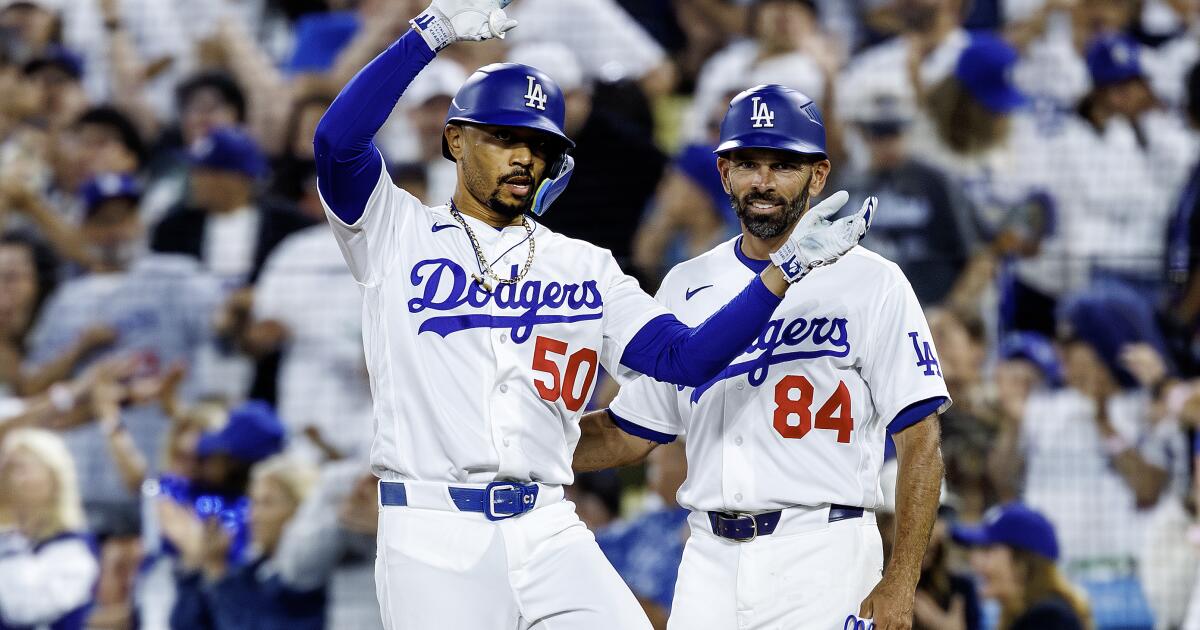
Mookie Betts’ eighth-inning single gives Dodgers the win over the Rockies
-
World52 minutes ago
From sewers to swimming sites: how Europe's cities reclaim their rivers


