Indiana
Climate change is here. This is how it is affecting Indiana and what’s to come


How climate change will impact Indiana
Climate change is here in Indiana and its effects are growing stronger, Purdue researchers say. We can expect more flooding in spring and drought conditions in summer, among other changes.
Dwight Adams, Indianapolis Star
Indiana may seem isolated from the effects of a changing climate, but increasing temperatures and changes in precipitation are already affecting Hoosiers.
The impact as greenhouse gas emissions continue to warm the planet will touch everything from native wildlife and plant hardiness zones to poison ivy and potholes.
Researchers have been studying the effects of human-caused climate change, and while many reports point to dire consequences, many groups are working toward solutions to help avoid the worst scenarios.
Here’s what Indiana is facing under climate change:
Increasing temperatures
The Indiana Climate Change Impacts Assessment, put together at Purdue University, says the statewide annual average temperature has been increasing since 1895 and will see “significantly more warming by century’s end.”
Much of that increase, according to Purdue, has occurred since the 1960s, leading to spring arriving much earlier than a century ago. This warming trend has sped up in recent decades, and even small changes lead to serious local impacts.
The warming will increase the number of extreme heat stress days, putting Hoosier health at risk. IU’s ERI projects southern Indiana will face 38-51 days at or exceeding 95 degrees each year by 2050. This is an increase from the seven days of extreme temperatures the region historically experienced.
This warming trend also contributes to the phenomenon Gabe Filippelli, executive director of IU’s Environmental Resilience Institute, called Loss of Winter.
“A lot of our natural ecosystems are designed to have a nice hard winter,” Filippelli said. “A nice hard winter kills back insects. A nice hard winter sets certain fish species up for success. And a nice hard winter also ensures that some of our flowering and seeding plants emerge at the time that they’ve always have. So, we’re losing that.”
The changes in temperature and precipitation can also add to stress on Indiana’s key agricultural products like corn, soybeans and wheat, leading to a reduction in crop yields.
Recently: Indiana State University professor and colleagues say climate warming faster than expected
Changing precipitation patterns
As temperatures rise, rainfall increases throughout the state. Purdue’s study says Indiana has seen a 15% annual increase in precipitation since 1895, which is about an extra 5.6 inches each year.
While the rainfall accumulation will not fall evenly across the state, it’s expected to increase the risk of flooding. This flooding could be exacerbated by the state’s historic loss of wetlands, which have recently lost even more protections after Gov. Eric Holcomb signed Alan Morrison’s (R-Terre Haute) HB1383 into law.
“Rainfall is not coming at the same time, it’s coming as big flooding events more often than not,” Filippelli said. “So that’s causing real challenges in communities as they’re getting flooded more and more frequently.”
Those floods not only affect roadways and basements. Filippelli said in a lot of communities heavy rains push a lot of raw sewage into local waterways, which has its own impacts.
Threats to water quality
Indiana was listed as the state with the dirtiest waterways in a 2022 report, and climate change could add more stress on the vital resource.
Fallow farmland in the winter will experience increased rainfall, potential washing fertilizer and sediment off fields and degrade waters downstream, Purdue’s study says. As temperatures rise, Indiana’s waters will also warm. This warmer water will allow more harmful bacteria to grow enhancing health threats.
There is hope: Hoosiers working toward solutions
As consequences of climate change to Indiana’s environment, human health and the economy stack up, Filippelli said it would have been great to act 40 or even 20 years ago, but “the next best time to act is now.”
“One positive aspect of the science that has come out is that we know that once we achieve net-zero (meaning we are not producing more carbon dioxide than is being removed), that our temperature stabilizes immediately,” Filippelli said.
While the problem is global, there are things we can do locally.
There are tree planting programs with Keep Indianapolis Beautiful and other organizations that help make communities more resilient, large-scale painting of industrial roofs to white, and providing better education.
“There’s a lot that people can do to help us be more resilient, but a lot of it has to come from their voice,” Filippelli said. “They need to be aware there’s concern and they need to be hopeful: ‘Hey, it’s a concern, but it’s not an impossible daunting challenge. I can make local changes to make up my local environment better.’”
Karl Schneider is an IndyStar environment reporter. You can reach him at karl.schneider@indystar.com. Follow him on Twitter @karlstartswithk
IndyStar’s environmental reporting project is made possible through the generous support of the nonprofit Nina Mason Pulliam Charitable Trust.



Indiana
Federal legislation that Braun calls ‘crazy’ is aimed at Bears and Indiana – Indianapolis Business Journal


INDIANAPOLIS (WISH-TV) – Strong thunderstorms likely later this evening with all severe weather threats possible. It is going to be warm and windy with record highs today. Much cooler air works into Indiana for the end of the week.
TODAY: Partly cloudy conditions later this afternoon with warm and breezy conditions. It is going to be a beautiful and summer-like day across parts of Indiana. We will look for high temperatures to climb into the lower eighties which will set a new daily high record. The record for today is 80 set back in 1907. Winds will be gusty out of the southwest near 20 to 30 mph.
TONIGHT: A cold front approaches the state bringing a really good chance of strong to severe thunderstorms. A few thunderstorms may develop out ahead of the main line and some of those thunderstorms could contain some large hail along with a tornado risk as well. We are under a level 3 risk of strong storms out of a level 5. So there is confidence that a lot of these storms could reach severe criteria. Threats would be damaging winds and large hail. The tornado risk is low across parts of Indianapolis but it is not zero. A slightly higher risk of tornadic activity is possible in northern sections of Indiana.
Heavy rainfall could also lead to some flooding in parts of the state. Areas may see anywhere between 1 to 3 inches of rainfall.
Best timing on the thunderstorm activity will be anytime after 8:00 p.m. and lasting until Friday morning around 4.
TOMORROW: A few early morning rain showers will be possible on Friday. The main weather story is that it will be much cooler. High temperatures will climb around 49 which is below our normal high of 56. Winds switch direction out of the northeast and it will be a bit breezy at times as well. Low temperatures late Friday night into Saturday morning will drop into the upper twenties.
7 DAY EXTENDED FORECAST: A chilly start early Saturday morning but we will see lots of sunshine for the afternoon. High temperatures will climb around 52 for the afternoon.
Cloud cover returns on Sunday but it will be dry for the most part. Look for high temperatures to climb into the lower 60s.
Warmer next week with temperatures reaching the low and even middle and upper 70s by the middle part of the week. A dry start on Monday with some scattered showers possible on Tuesday and Wednesday.

INDIANAPOLIS (WISH) — Indiana University is making sure all the visitors in town for the Final Four don’t forget who won the football national championship.
A photo of former IU quarterback Fernando Mendoza and wide receiver Charlie Becker is displayed at the Indianapolis International Airport when visitors arrive and go to baggage claim.
IU football won its first national championship in program history in the 2025 season, defeating Miami in the national championship game. The Hoosiers completed the season with an undefeated, 16-0 record.
Mendoza won the Heisman Trophy, becoming the first IU player to win the prestigious award.
Mendoza threw for 3,535 yards and 41 touchdowns last season. He is projected to be the top pick in the 2026 NFL Draft.
Becker had 34 catches for 679 yards and four touchdowns last season.
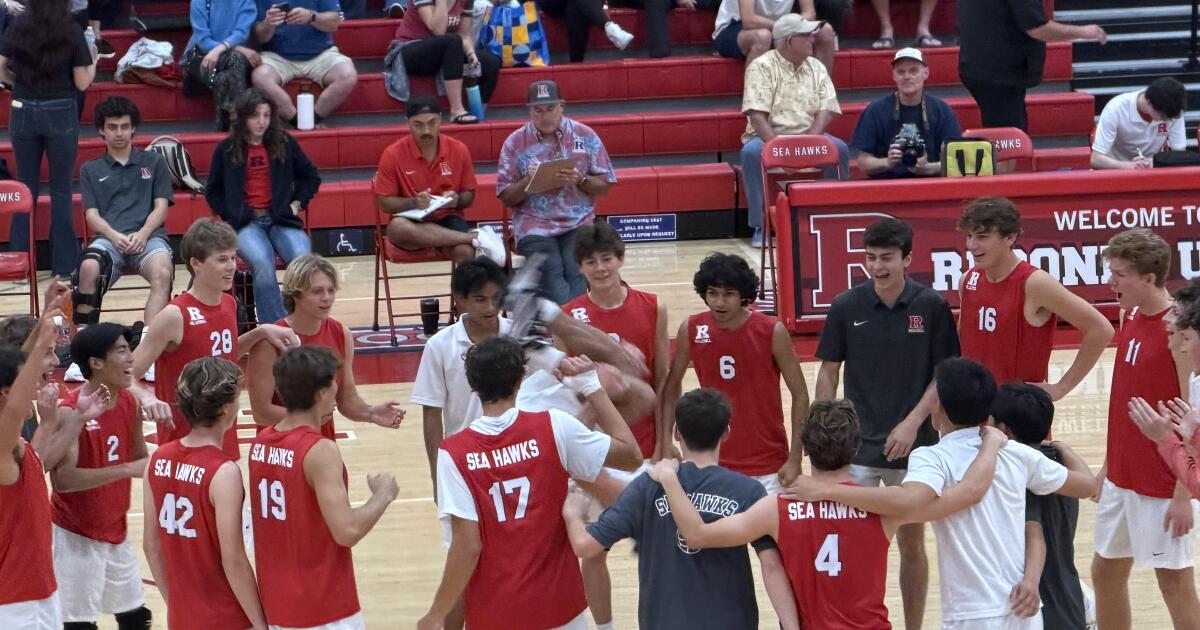
Prep sports roundup: Redondo Union takes down No. 1 Mira Costa in boys volleyball

Rubio joins crucial G7 talks as Iran war set to dominate second day

A surprise resignation could open the door for an independent to win a Montana Senate seat

Metro Detroit weather forecast, March 26, 2026 — 11 p.m. Update

Man convicted in the deadly 2021 assault of a Thai grandfather in San Francisco avoids prison

Florida High School Football Rankings: Top 25 teams – Oct. 21

How old is Bo Nix? What to know about Oregon quarterback ahead of 2024 NFL Draft

Cleary's 21 help Le Moyne down Central Connecticut State 69-64 in OT

99th annual Pony Swim held in Virginia

Indiana Members Credit Union announced as new anchor tenant at Bottleworks District
Rubio joins crucial G7 talks as Iran war set to dominate second day
A surprise resignation could open the door for an independent to win a Montana Senate seat

Video: Savannah Guthrie Says She Believes Her Mother Was Taken for Ransom

Stefanik grills University of Michigan leader on lack of audit after string of Chinese national arrests

Photos: More than one million displaced by Israel’s evacuations in Lebanon
-

 Detroit, MI1 week ago
Drummer Brian Pastoria, longtime Detroit music advocate, dies at 68
-

 Science1 week ago
How a Melting Glacier in Antarctica Could Affect Tens of Millions Around the Globe
-

 Movie Reviews1 week ago
‘Youth’ Twitter review: Ken Karunaas impresses audiences; Suraj Venjaramoodu adds charm; music wins praise | – The Times of India
-
 Science1 week ago
I had to man up and get a mammogram
-

 Sports6 days ago
IOC addresses execution of 19-year-old Iranian wrestler Saleh Mohammadi
-

 New Mexico4 days ago
Clovis shooting leaves one dead, four injured
-

 Texas7 days ago
How to buy Houston vs. Texas A&M 2026 March Madness tickets
-

 Tennessee3 days ago
Tennessee Police Investigating Alleged Assault Involving ‘Reacher’ Star Alan Ritchson