Illinois
Restrictions on face masks proposed around country, but ACLU of Illinois has concerns


CHICAGO (CBS) — Just four years ago, a mask requirement for indoor spaces was issued in Illinois at the height of the COVID-19 pandemic, and masks were still required on the Chicago Transit Authority and other mass transit as recently as the spring of 2022.
But now, there is a growing movement of lawmakers and communities who want to ban masks. Civil liberties advocates have some major concerns about that idea.
In surveillance videos of crimes being committed, the perpetrators are often wearing masks over their noses and mouths. In many cases, the coverings help hide the faces and identities of those responsible.
“They’re not wearing those masks to protect themselves from COVID,” said Ald. Ray Lopez (15th). “They are doing it for a very intentional reason.”
For anyone caught committing a crime while wearing a mask, Lopez is proposing an enhanced penalty on top of any sentence a judge hands down.
“I’m not trying to ban wearing masks in the city of Chicago,” Lopez said, “but only trying to specifically target those individuals who are intentionally trying to conceal their identities while breaking the law.”
In northwest suburban Lake in the Hills, face coverings will not be allowed at the Rockin’ Rotary Ribfest unless for medical or health purposes. Organizers singled out decorative masks—such as skeleton, ski, or character masks.
This comes after fights broke out at a festival earlier this spring in Lake in the Hills.
Lake in the Hills police said in part, “[W]e can’t ignore that we are seeing a trend locally and nationally of individuals with ill intent using face coverings to hide or disguise their identities.”
But the American Civil Liberties Union of Illinois has expressed concerns.
“I think one of the things we are concerned about is the broadness and breadth of a lot of these sorts of bans,” said Edwin Yohnka, director of communications and public policy for ACLU Illinois.
Masks have also been used to conceal people’s faces during protests—including at the pro-Palestinian protest encampments at universities around the area and the country this past spring, and other events—notably including a protest that happened at 2:30 a.m. this past Saturday outside the home of U.S. Rep. Brad Schneider (D-Illinois) in Highland Park and left many neighbors alarmed and on edge.
After concerns about people shielding their faces while committing antisemitic acts, New York state Gov. Kathy Hochul is considering a mask ban on public transit.
“We’re talking about people who use facial coverings to cover up their identity,” Hochul said.
Yohnka said similar bans could unlawfully target people’s right to protest anonymously.
“What we’re seeing—I think largely in response to, you know, recent protests—are a sense that, you know, people should not be able to be masked in public for any reason,” Yohnka said. “We’ve never required that someone to identify themselves to speak. These laws suggest that people must be uncovered.”




The men’s 2026 NCAA Tournament continues with Elite Eight action Saturday with No. 3 Illinois vs. No. 9 Iowa on the two-game schedule.
USA TODAY Sports’ college basketball experts have analyzed all the angles and determined a path to victory for each side. Here’s everything you need to know before the Elite Eight matchup tips off.
USA TODAY has a team of journalists covering the men’s NCAA Tournament to keep you up to date with every point scored, rebound grabbed and game won in the 68-team tournament.
Illinois will win Elite Eight game vs Iowa if…
- John Leuzzi: It replicates what it did defensively against Houston.
- Jordan Mendoza: It controls the interior.
- Ehsan Kassim: Wagler can win the matchup against Stirtz.
- Austin Curtright: If its defense plays like it did against Houston.
Iowa will win Elite Eight game vs Illinois if…
- John Leuzzi: It limits Illinois on offensive rebounds, and second chance opportunities.
- Jordan Mendoza: it’s knocking down 3-pointers.
- Ehsan Kassim: Hawkeyes can make the game slower paced and Illinois misses shots.
- Austin Curtright: Its bench contributors of Alvaro Folgueiras, Tate Sage and others continue their strong play.
Illinois vs Iowa: 1 Stat to watch
- John Leuzzi: Bennett Stirtz vs. Keaton Wagler at the point guard battle.
- Jordan Mendoza: 3-point shot.
- Ehsan Kassim: Illinois 3-point shooting.
- Austin Curtright: Illinois’ defense has been outstanding in the NCAA Tournament, despite ranking outside the top 20 in KenPom’s adjusted defensive efficiency.
Illinois vs Iowa Elite Eight prediction
- John Leuzzi: Iowa
- Jordan Mendoza: Illinois
- Ehsan Kassim: Illinois
- Austin Curtright: Illinois
3 Illinois vs 9 Iowa
- Opening Moneyline: Illinois (-275), Iowa (+227)
- Opening Spread: Illinois (-6.5)
- Opening Total: 139.5
How to Watch Illinois vs Iowa in the Elite Eight
No. 3 Illinois takes on No. 9 Iowa at Toyota Center on March 28 at 6:09 PM The game is airing on TBS.
Stream March Madness on Sling
2026 Men’s March Madness full schedule
See the schedule, live scores and results for all of the NCAA Tournament action here.
- March 17-18: First Four
- March 19-20: First Round
- March 21-22: Second Round
- March 26-27: Sweet 16
- March 28-29: Elite 8
- April 4: Final Four
- April 6: National Championship

Publicly funded stadium deals can involve questionable incentives for politicians. The megaprojects bill in Illinois would drive up neighbors’ property taxes.
Any deal between Illinois and the Chicago Bears for a new stadium must avoid giveaways to lawmakers and property tax increases for others.
The Bears own the former Arlington Park Racecourse in Arlington Heights and have said they’re also considering Northwest Indiana for a stadium development. A bill in the Illinois General Assembly would offer property tax breaks to such “megaprojects.”
Agreements for publicly funded stadiums in other cities often have included luxury suites and free tickets for lawmakers. Local officials in Kansas City have been criticized for getting access to tickets and suites during ongoing stadium negotiations. Officials in Arizona have repeatedly used free access to publicly funded stadiums to host guests.
A bill in Ohio would prohibit state lawmakers from knowingly accepting free or discounted tickets to pro sports events. The proposal comes amid negotiations with the Cleveland Browns over public funding for a new stadium.
Offering free admission and luxury suites to lawmakers who make decisions about publicly funding stadiums creates a clear conflict of interest.
From a taxpayer perspective, such perks can divert public resources if lawmakers have an incentive to offer a team or other megaproject a tax break when that revenue could go toward broadly shared public benefits. From a free-market standpoint, these arrangements distort competition by subsidizing select teams and projects rather than encouraging municipalities to make themselves attractive for private investment.
Illinois legislators should ensure that any stadium agreement with the Bears does not include free tickets or luxury accommodations for lawmakers.
Perks for politicians are only half the story. The proposed incentive package in Springfield, HB 910 House Amendment 1, would be devastating for taxpayers.
Much of the current discussion revolves around the massive property tax reductions the bill would provide for so-called megaprojects as an attempt to spur economic development.
While negotiating targeted tax incentives is bad policy to begin with, the legislation would make Illinois’ property tax crisis even worse for other taxpayers. Although approved megaprojects would pay steeply discounted property taxes, a clause in the bill allows a taxing body to count the cash value of the megaproject in its total assessed value.
In other words, taxing bodies can still increase taxes as if the project were paying normal tax rates, generating increased revenue, but the project would not pay those higher taxes. Neighboring businesses, homeowners and renters would pay more to make up for the team’s discount.
Here is some of what’s in the bill, which has passed out of committee and could be called for a full House vote any time:
- To qualify, a project must have at least $500 million in eligible costs, which can include the property purchase and can be retroactive up to five years before the megaproject certificate is issued. The project must be completed within seven to 10 years, but that can be extended by five years. The site must be operated for at least 20 years; the tax incentive would last at least 23 years and up to 40 years.
- The megaproject’s assessment would be frozen so that its property tax bill is calculated on the “base year” of the project, meaning the value of the property before any improvements, such as a stadium.
- However, for purposes of issuing bonds and property tax extension limitation calculations, the taxing body could use the current fair cash value of the property. In other words, new development, which is generally exempt from Property Tax Extension Limitation Laws, would allow for the levy to grow beyond the limited rate, which other taxpayers will have to cover.
The bill’s “incentive agreement” allows for separate payments from the megaproject entity, such as the Bears, or an alternative source, to affected taxing bodies in addition to property taxes bill. The payment amount would be negotiated with taxing bodies.
Illinoisans already pay the highest property taxes in the nation. Homeowners in Arlington Heights pay average annual property taxes of more than $8,000. HB910 would make it even worse. One simple solution is to strike this language from the bill:
“Projects to be valued at fair cash value for purposes of bonded indebtedness and limitations on property tax extensions. Projects to which an assessment freeze applies pursuant to this Division shall be valued at their fair cash value for purposes of calculating a municipality’s general obligation bond limits and a taxing district’s limitation on tax extensions.”
Removing that language would ensure that businesses, homeowners and renters in the megaproject area would not face higher property taxes because of an incentive agreement.


DHS attorney said agents in Los Angeles should have ‘started hitting’ protesters, emails show
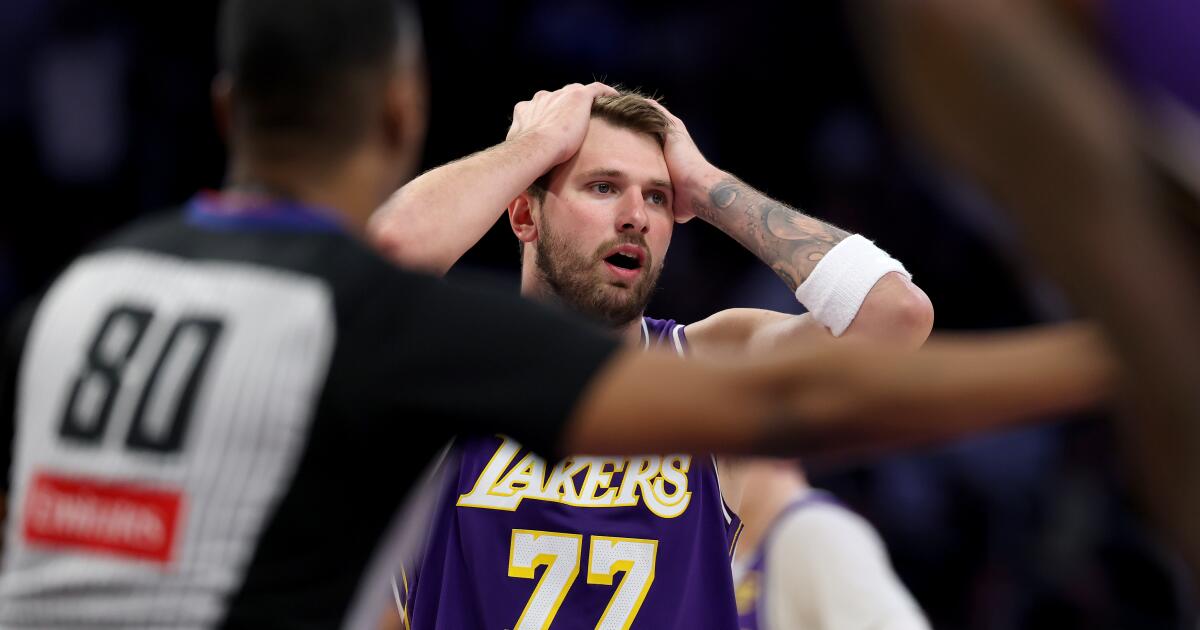
Lakers beat Nets, but Luka Doncic is facing suspension again after 16th technical

EU Parliament unblocks key political hurdle in digital euro talks

Man arrested in plot to firebomb Palestinian activist’s home after undercover op

Video: We Analyzed the Deadly Crash at LaGuardia

Florida High School Football Rankings: Top 25 teams – Oct. 21

How old is Bo Nix? What to know about Oregon quarterback ahead of 2024 NFL Draft

Cleary's 21 help Le Moyne down Central Connecticut State 69-64 in OT

99th annual Pony Swim held in Virginia

Indiana Members Credit Union announced as new anchor tenant at Bottleworks District
EU Parliament unblocks key political hurdle in digital euro talks
Man arrested in plot to firebomb Palestinian activist’s home after undercover op

WATCH: Senate hearing goes silent after Angel Father confronts top Dem over daughter’s death

US diplomat Marco Rubio denounces settler violence, tolls in Hormuz strait

Iran-linked hackers have breached FBI Director Kash Patel’s personal emails | CNN Politics
-

 Detroit, MI1 week ago
Drummer Brian Pastoria, longtime Detroit music advocate, dies at 68
-

 Movie Reviews1 week ago
‘Youth’ Twitter review: Ken Karunaas impresses audiences; Suraj Venjaramoodu adds charm; music wins praise | – The Times of India
-

 Sports7 days ago
IOC addresses execution of 19-year-old Iranian wrestler Saleh Mohammadi
-

 New Mexico5 days ago
Clovis shooting leaves one dead, four injured
-
 Business1 week ago
Disney’s new CEO says his focus is on storytelling and creativity
-

 Technology6 days ago
YouTube job scam text: How to spot it fast
-

 Tennessee4 days ago
Tennessee Police Investigating Alleged Assault Involving ‘Reacher’ Star Alan Ritchson
-

 Texas1 week ago
How to buy Houston vs. Texas A&M 2026 March Madness tickets