Illinois
Household Hazardous Waste site opens in Rockford for Illinois residents


ROCKFORD, Ill. (WIFR) – Illinois residents can drop their hazardous waste items off at the site for free.
The facility opened with a ribbon-cutting at 9 a.m. Dec. 5 at 3315 Kishwaukee St. in Rockford.
The City of Rockford works with Four Rivers Sanitation Authority to operate the site.
Illinois residents can dispose of common household hazardous waste items like aerosols, corrosives, oxidizers, solvents, oil-based paints, waste oil, pesticides, fertilizers, batteries (no alkaline), and fluorescent lamps. Items can be dropped off for free.
“Worst thing people can do it either pour them down the storm sewer or the sanitary sewer,” says Robert Wilhelmi, Brownfields Redevelopment Specialist. “So, ultimately the best thing and most responsible thing for residents to do is bring them down here where products can be safely disposed of or recycled.”
The facility is open open Saturdays from 8 a.m. to 4 p.m. and Sundays from noon to 4 p.m.
For more information, visit the website.
Copyright 2024 WIFR. All rights reserved.



CHICAGO (WLS) — The big party might be over, but we are still celebrating 250 years since America declared its independence.
That includes highlighting the people of Illinois, their achievements, their stories, and their contributions to this country.
ABC7 Chicago is now streaming 24/7. Click here to watch
Leading the way for all of this is the Illinois America 250 Commission.
“The mission is to really make sure that everyone in Illinois feels connected and feels like they have an opportunity to be part of our country’s story,” says Commission Chair and Executive Director of Illinois Humanities Gabrielle Lyon. “And secondly, to make sure that we’re accessible and truly statewide.”
Lyon says one of her favorite experiences chairing the commission “is the everyday realization of the connections between what has happened in Illinois and our country’s story.”
“That’s everything from before we were a state. We weren’t a state until 1818. All the way up until now, I mean, the organizers, the labor movements, the artists, the musicians. You can’t really tell the story of America without the influence of Illinoisans,” Lyon said.
The Illinois America 250 Commission is highlighting the people of Illinois and their contributions to this country.
One of the commission’s major initiatives was to create a passport.
“This passport has a collection of 60 people, places, sites, scenic highways, all of which have ties to making good on the ideals of the Declaration of Independence,” Lyon said.
Lyon says there are a couple of ways that families can tackle the passport as they hit the road to visit some of the landmarks this summer.
“You can be like kids get in the car and just pick something you like. Or you can find an interest that one of your kids has. If they’re young, go to the John Deere Historic Museum. That innovation changed the entire nature of agriculture,” Lyons said. “The truth is, the sweep of American history complex, fraught, amazing; it’s all right here in Illinois.”
And the initiative that Lyon says she’s probably most excited about is Illinois Voices 250 led by Illinois Humanities, “which is an invitation to record a story about this moment with someone you care about.”
“And those conversations are being preserved at the Library of Congress,” she added. “The idea that we’re just celebrating something that happened 250 years ago, to me, misses the point of this moment. The Declaration of Independence is a promise. But it’s a promise you have to actively make good on. And part of that is thinking about, what kind of place do you want to live in, what do you want for your children, what does equality, pursuit of happiness mean to you? And making a conversation that’s going to make a memory is kind of the best way to both imagine it and crystalize that.”
Copyright © 2026 WLS-TV. All Rights Reserved.
Illinois
Georgia man saved rare 1998 Lamborghini Diablo SV from Illinois just in time before it was destroyed

This guy had to rush from Georgia to Illinois to save a rare 1998 Lamborghini Diablo SV.
The Lamborghini Diablo is rare to begin with, and the Diablo SV is even rarer.
In a way, this guy did a service to the automotive world.
But it wasn’t easy, and the car barely made it.
What makes this Diablo SV even more special
Ed Bolian, co-founder of VINWiki, was trying to track down a rare 1998 Lamborghini Diablo SV that was famously featured in (and sold through) the Victoria’s Secret Christmas catalog that year.
Bolian had been searching for this unique car for years, but it had essentially disappeared after being sold at auction in 2011, it had vanished from public records with no registration or insurance updates for 14 years.
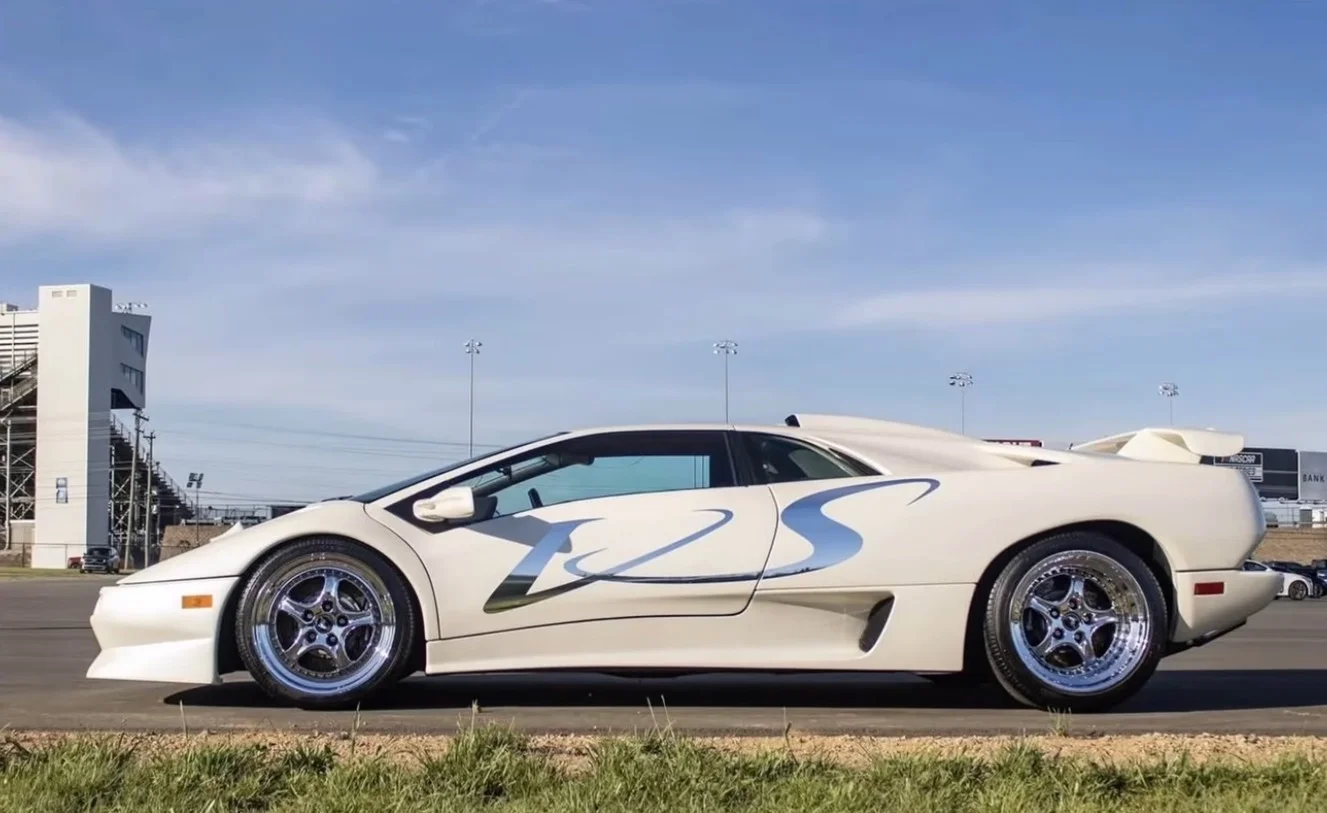
Then, much later and with the help of a guy whose nickname is ‘barn find king’, the 1998 Lamborghini Diablo SV was eventually tracked down in 2025.
But there was a problem, mainly because this Lambo was months or maybe weeks away from becoming a write-off.
The Victoria’s Secret Lamborghini barely survived a tornado
The Victoria’s Secret Lamborghini Diablo SV was eventually located in private airport hangar in small town in Illinois about one hour away from Chicago.
So far, so normal.
Bolian and his team were expecting rust, dust, saggy tires – the usual.
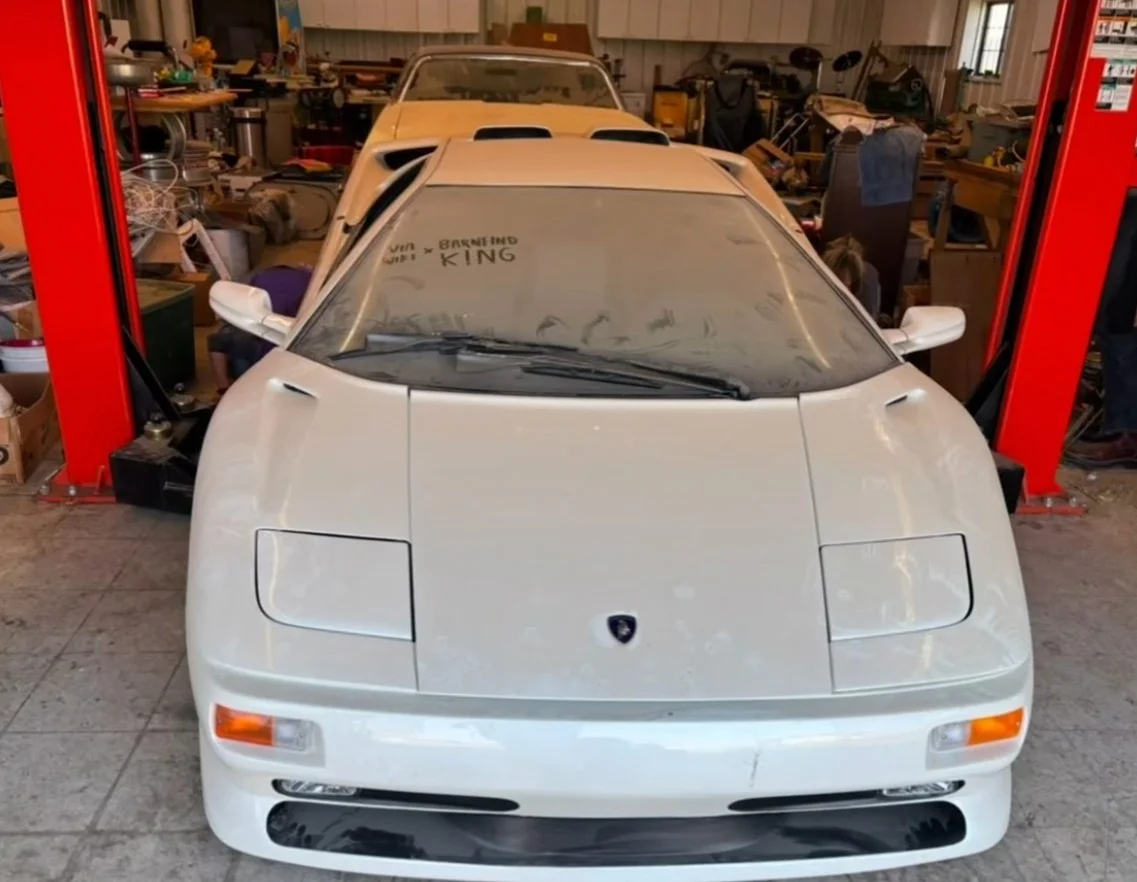
But then, in June 2026, a series of tornadoes struck this town and the exact hangar where the Lamborghini had sat for 14 years was destroyed in the storm.
The Lambo was bruised and damaged but, amazingly, it was still in one piece.
Bolian was able to find the car and buy it, and then he managed to bring it back to Georgia to restore it.

At the time of writing, the Victoria’s Secret Lambo is in great shape.
But a few more weeks, or maybe even days, of hesitation could’ve sealad its fate.

SPRINGFIELD, Mass. (WGGB/WSHM) – Before 9 a.m. on Saturday, July 4th, firefighters at the Springfield Fire Department responded to a call for a fire at a multi-family home at 479 Central Street in Springfield.
When crews arrived, they had noticed flames shooting from the windows of the home. When crews began their attack of the fire, they had also spotted a teenager and an infant trapped inside the home, both of them were rescued safely.
The fire was quickly put out and without any injuries. 8 people were displaced as a result of the fire and are currently being assisted by the Springfield American Red Cross.
The cause of the fire remains under investigation by the Springfield Arson and Bomb Squad.
Copyright 2026 Western Mass News (WGGB/WSHM). All rights reserved.
-

 Los Angeles, Ca55 minutes ago
Huntington Park announces street closures ahead of Mexico World Cup match
-

 Detroit, MI1 hour ago
Mallory McMorrow drops out of Michigan’s US Senate race
-

 San Francisco, CA1 hour ago
Waymo Vehicle Catches Fire in San Francisco
-

 Dallas, TX1 hour ago
Dallas police and fire teams seize of nearly a ton of illegal fireworks
-

 Miami, FL2 hours ago
Triple shooting, crash sends adults to hospital, Miramar police say
-

 Boston, MA2 hours ago
After monthlong break, Boston Legacy FC battles back to earn a draw with Bay FC – The Boston Globe
-

 Denver, CO2 hours ago
Denver airport to add underground walkways between concourses – The Points Guy
-

 Seattle, WA2 hours ago
READER REPORT: ‘My hero’

