Illinois
Backing for Biden from Illinois Democratic delegates is strong, but cracks are appearing, Sun-Times survey finds


As President Joe Biden fights for his political life due to concerns over his age and ability to beat former President Donald Trump, Chicago Sun-Times interviews with Illinois delegates to the Democratic National Convention in Chicago reveal cracks in the once solid support for the president.
Biden’s disastrous debate with Trump June 27 sent shockwaves through the Democratic Party and triggered widespread uncertainty over whether the president should remain at the top of the ticket.
Yet most Illinois delegates — whether elected or appointed — continue to back the nominations of Biden and Vice President Kamala Harris for a second term.
The tumult over whether Biden should stay or go has, to the consternation of the Biden-Harris campaign, drawn attention away from Trump’s impeachments, indictments and convictions — along with the dozens of false claims he made during the debate.
An unscripted news conference Biden held Thursday after the NATO summit in Washington did not resolve for Democrats doubts about Biden’s viability, even as the president repeated his vow to stay in the race.
This past week, the Sun-Times reached out to the state’s roster of Democratic delegates and interviewed 37 of them, all before the Thursday news conference.
Of those who responded, four declined to answer questions about Biden, and three said they do not back the president. One delegate was unsure, and another said it was too soon to say. The remaining 28 delegates said they are continuing to back Biden.
That nine delegates out of 37 did not offer robust endorsements of Biden at this time reveals cracks in his Illinois delegate support. The three who said they want Biden to drop out asked to remain anonymous.
Forest Park Mayor Rory Hoskins said he backs Biden staying in the race, though he recognized the situation remains fluid.
“I would like to see President Biden do what he feels is best for the country. But if he decides to step down, then I think Vice President Harris should be the candidate,” Hoskins said.
State Sen. Adriane Johnson from Buffalo Grove, a delegate elected from the north suburban 9th congressional district, said “Biden should stay on the ticket, and he has my full support.”
“Biden had one bad debate. We all fall down occasionally, but we get back up,” Johnson said. “Biden knows the job — he’s doing the job well right now. He knows right from wrong, and he tells the truth. Let’s switch gears and talk about how Trump should be removed from his party’s ticket because he is unfit, unqualified and uncouth.”
State Rep. La Shawn Ford, from Chicago’s West Side and an elected delegate from the 7th congressional district, said he stands behind Biden, “but he needs to quiet the storm.”
Ford also warned that if Biden steps down, he needs to do so in a way that avoids a divisive battle over who should replace him. “Democrats can win whether it’s Kamala or Biden. We just need one of them to be the nominee.”
Ald. Emma Mitts (37th), also elected from the 7th, said the party should “close ranks” around Biden.
Lake County Clerk Anthony Vega, an elected delegate from the 9th congressional district, said he remains with Biden “even though he is 81 years old. You can’t take away the great things he’s done to bring our country back. He has delivered time and time again.”
Robert Reiter, president of the Chicago Federation of Labor and an elected delegate elected from the 1st congressional district, said, “I am with Biden,” adding that the president has been “one of the most consequential presidents supporting the American worker.”
Another union leader, American Federation of Teachers vice president Dan Montgomery, elected from the 9th congressional district said he’s “absolutely, unequivocally behind our president, and I will throw my full support behind him happily.”
State Sen. Laura Murphy, from Des Plaines, an appointed at-large delegate, said Biden’s debate performance “was very disappointing, but that looks like the way the convention is going to break, and I want anyone that’s going to defeat Donald Trump.”
Highland Park Mayor Nancy Rotering, an elected delegate from the 10th congressional district, said she’s sticking with Biden because he “is excellent on so many issues that matter: gun violence prevention, reproductive freedom, accessible health care, support for Israel, and strengthening the economy.”
The top Democrats in Illinois, Gov. J.B. Pritzker and Mayor Brandon Johnson, as hosts for the Aug. 19-22 convention, have made strong public comments backing Biden as he is struggling to save his candidacy. So has Sen. Tammy Duckworth, a co-chair of the Democratic National Committee and a Biden-Harris campaign co-chair.
Last Wednesday, Sen. Dick Durbin asked by reporters in the Capitol, “How concerned are you about Biden’s chances?”
Durbin replied “I am very concerned. It’s going to be a close race.”
Three of 14 Illinois Democrats in the House called for Biden to step aside.






MORRIS, Ill. (WLS) — A man was killed and another was injured in a shooting outside of a bar in Grundy County.
The shooting happened early Saturday outside of Clayton’s Tap in the 100 block of West Washington Street in Morris, Illinois, officials said.
ABC7 Chicago is now streaming 24/7. Click here to watch
The Grundy County Sheriff’s Office responded to the scene, where they found two men with gunshot wounds. One was pronounced dead at the scene and the other was taken to a hospital in critical condition.
The victim who died was identified by the Grundy County Coroner’s Office as 35-year-old Julian Rosario of Channahon.
A suspect in the shooting, 22-year-old Marshall Szpara of Seneca, was arrested and “initially charged with two counts of aggravated battery with a firearm, pending further review from the Grundy County States Attorney’s office,” Morris police said.
No further information was available.
Copyright © 2026 WLS-TV. All Rights Reserved.

A volunteer firefighter is facing arson charges after he allegedly set a fire in a Lee County wildlife preserve, scorching hundreds of acres.
According to authorities, 21-year-old Trent Schaefer, a volunteer firefighter in Ohio, Illinois, was charged with one count of arson in connection to a fire that occurred in the Green River State Wildlife Management Area Friday.
On that date, temperatures had soared into the 60s, winds were whipping at more than 30 miles per hour, and humidity plunged below 30%, leading the National Weather Service to issue warnings on the danger of wildfires in Illinois.
It is alleged that Schaefer was seen by witnesses getting out of a vehicle and igniting multiple small fires within the nature preserve, which then coalesced into a larger blaze.
Those witnesses were able to restrain the suspect until Lee County sheriff’s deputies arrested him.
Image taken by Lee County Sheriff’s Office
By the time firefighters arrived on scene the blaze had already spread, and multiple departments were called in to assist with the fire, including the Illinois Department of Natural Resources.
Firefighters were able to bring the blaze under control by the late afternoon, but not before it burned more than 700 acres, according to authorities.
Schaefer is also a suspect in several other arsons around Lee County, but he has not been charged in any other fires at this time.
Illinois State Police are assisting with the investigation, and no further information was immediately available.
Illinois
Who is running for Illinois governor in 2026? What to know as primary Early Voting sites open

With Election Day for the 2026 Primary quickly approaching, many voters are considering who to mark their support for when they cast their ballot.
There are several big races on the ballot, including the gubernatorial race that has the potential to make history.
Though rumors are swirling that sitting Governor J.B. Pritzker has his eyes on a potential run for president in 2028, he’s still in the running for re-election. If he retains his seat, he’ll be the first Democratic governor to secure a third term in office in Illinois history.
While Pritzker is the only Democrat aiming for governor on the ballot, there is a slew of Republican candidates vying for a face-off with the incumbent in November.
Voters with their mind made up on which candidate they support can head to their local early voting site to cast their ballot before Election Day.
Though downtown sites and some across the suburbs have been open since early February, early voting sites will open in all 50 of Chicago’s and in several suburb on Monday, March 2.
For those still deciding how to mark their ballot, here’s a look at the gubernatorial candidates.
Democrats:
Governor J.B. Pritzker and Christian Mitchell
Current Governor of Illinois J.B. Pritzker is taking aim at a third term, promising to continue building on the work of his first two terms. According to his campaign website, some of his intentions for a third term include “[tackling] the affordability crisis,” continuing to protect access to reproductive health care in Illinois, and investing in education.
Chrisitan Mitchell is running alongside Pritzker for lieutenant governor. After representing the 26th District in the Illinois House of Representatives from 2013 to 2019, Mitchell served as deputy governor to Pritzker from 2019 to 2023. Mitchell led efforts to ban assault weapons, make Illinois a leader in clean energy and create jobs through infrastructure projects as deputy governor, according to his campaign bio.
Republicans:
Ted Dabrowski and Dr. Carrie Mendoza
Ted Dabrowski is a Wilmette resident and former president of Wirepoints, a media outlet focused on conservative economic policies and financial data. From 2011 to 2017, Dabrowski worked as a spokesperson and Vice President of Policy at the Illinois Policy Institute, a right-leaning think tank.
Dabrowski, who has never previously held political office, aims to cut and cap property tax rates, veto any and all tax increases, and repeal both Illinois’ sanctuary laws and zero-emissions energy policy, according to his campaign website.
“We must return power to the people, remove barriers to prosperity, embrace educational freedom, push political power down to its lowest level and restore the rule of law,” his campaign website says.
Dr. Carrie Mendoza, a Chicago-native with more than 25 years of experience as a physician, is running to be Dabrowski’s lieutenant governor, according to her campaign biography. Like Dabrowski, Mendoza has never held political office. Her campaign biography says she is “driven by innovation and a passion for justice.”
James Mendrick and Dr. Robert Renteria
The first Republican candidate to enter the race, DuPage County Sheriff James Mendrick is campaigning on a push for public safety initiatives.
Sheriff since 2018, Mendrick has partnered with DuPage County Health Department to provide Medicated Assisted Treatment to inmates fighting opioid addiction and advocated for the use of a drug deactivation pouch system to protect people and the state’s waterways from dangerous medications, according to his campaign website.
“He is committed to ending soft-on-crime policies, defending parental rights, and delivering quality education to every child in the state,” his campaign website says.
Dr. Roberta Renteria veteran of the U.S. Army and is a prolific author and activist, according to his campaign biography.
“Dr. Renteria uses his personal story, business acumen and leadership skills to address bullying, gangs, violence, drugs, suicides and school dropout,” his campaign biography says. His books and curriculums are taught in 25 countries around the world, and he has given many Ted Talks.
Darren Bailey and Aaron Del Mar
Former state senator Darren Bailey, who unsuccessfully ran for governor of Illinois in 2022, is giving another go at assuming the political seat. A third-generation downstate farmer, Bailey’s campaign is focused on reducing government spending, cutting taxes, and cracking down on crime, according to his campaign website.
In addition to his farm work, Bailey founded a private Christian school with his wife Cindy.
He fought against spending, raising taxes and sanctuary state policies while in the Illinois House and later in the State Senate.
Aaron Del Mar is an entrepreneur who became the youngest-ever Councilman for the Village of Palatine at 29 years old in 2016. He oversees public safety and infrastructure and guides community organizations in the position, according to his campaign biography.
Rick Heidner and Christina Neitzke-Troike
Though businessman Rick Heidner has never held office, he has led several notable companies, including Gold Rush Gaming, Ricky Rocket’s Fuel Centers, Prairie State Energy, and Heidner Properties, according to his campaign website.
A lifelong Illinoisian, Heidner is “running to make Illinois safe again, affordable again, and full of opportunity again,” his website says.
Christina Neitzke-Troike is looking to step up into the lieutenant governor seat from her current role as Mayor of Homer Glen after nearly two decades in several elected positions.
Neitzke-Troike hopes to bring her “unparalleled understanding of how state mandates affect local budgets, property taxes, and public services” to Springfield, according to her campaign biography.

Prep talk: Birmingham’s Slava Shahbazyan celebrates winning state wrestling title

Pakistan calls troops, orders 3-day curfew as 24 killed in pro-Iran rallies

US says Kuwait accidentally shot down 3 American jets

Utah mom in upscale ski community killed husband to fund romance and lavish lifestyle, DA says

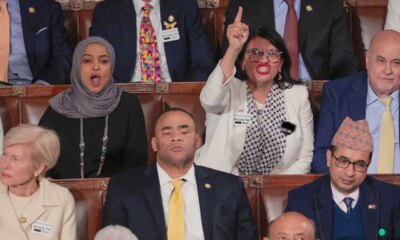
Ilhan Omar doesn’t have any regrets for her ‘unavoidable’ outburst at State of the Union

Florida High School Football Rankings: Top 25 teams – Oct. 21

Cleary's 21 help Le Moyne down Central Connecticut State 69-64 in OT

How old is Bo Nix? What to know about Oregon quarterback ahead of 2024 NFL Draft

99th annual Pony Swim held in Virginia

Indiana Members Credit Union announced as new anchor tenant at Bottleworks District
Pakistan calls troops, orders 3-day curfew as 24 killed in pro-Iran rallies
US says Kuwait accidentally shot down 3 American jets

House Republicans push Johnson to go to war with Senate over SAVE Act

Israel FM says Europe too divided, slams Spanish PM

Satellite images provide view inside Iran at war
-

 World4 days ago
Exclusive: DeepSeek withholds latest AI model from US chipmakers including Nvidia, sources say
-

 Massachusetts5 days ago
Mother and daughter injured in Taunton house explosion
-

 Denver, CO5 days ago
10 acres charred, 5 injured in Thornton grass fire, evacuation orders lifted
-

 Louisiana1 week ago
Wildfire near Gum Swamp Road in Livingston Parish now under control; more than 200 acres burned
-

 Technology1 week ago
YouTube TV billing scam emails are hitting inboxes
-

 Politics1 week ago
OpenAI didn’t contact police despite employees flagging mass shooter’s concerning chatbot interactions: REPORT
-

 Technology1 week ago
Stellantis is in a crisis of its own making
-

 News1 week ago
World reacts as US top court limits Trump’s tariff powers