Detroit, MI
Vitti urges Michigan leaders to see what Detroit schools are doing


Detroit Public Schools Community District Superintendent Nikolai Vitti has a message for much of the state of Michigan as well as for his district’s parents and other stakeholders.
Come see what Detroit is doing, Vitti urged in his annual State of the Schools address Thursday night.
“There are visitors across the country, superintendents, constantly coming in to learn what we’re doing,” Vitti said. “It needs to happen in Michigan.”
The usual narrative, Vitti said, of Detroit schools being the worst in the state, or even the nation, or that the state’s scores are being dragged down by Detroit? That narrative has been flipped on its head, he said. Reform is essential, he said, but other districts in Michigan should be looking to learn from what Detroit is doing.
“The conversation shouldn’t be, well, we need to change Michigan’s education because of Detroit being the problem,” Vitti said. “The data is not indicated. Now, (it’s) what do we learn from what DPSCD (has done) in the last 10 years that can be scaled, around recruiting teachers, around using one-time money for facilities and developing teachers, around core curriculum, around intervention, around training teachers.”
Nine years ago, for example, 59 schools were designated for the highest level of state academic support, meaning they either were performing in the bottom 5% in the state or, for high schools, had a graduation rate below 60%. Now, 25 schools meet one or both of those two criteria.
Vitti did not declare the work over, however. Several times during the speech, he highlighted the work left to be done, with attendance, test scores, and graduation rates.
But with many of those same data points, Vitti said, Detroit is on an upward trajectory, while the state averages are dropping. That means while the rest of the state is going backward in some areas, Detroit is still finding ways to move forward, he argued.
A Michigan Department of Education spokesperson couldn’t immediately be reached for comment.
The district has closed the gap between its data and the state averages, most notably on graduation rates. Five years ago, Detroit’s graduation rate was 16 percentage points below the state average. In the 2023-24 school year, the most recent year of available graduation data, it was just 5 points below, although the state average did increase from 80% to 83% during that time.
Early literacy is an area where Detroit’s students are finally starting to show growth, even though their overall scores still are low.
The percentage of students in grades three through seven testing proficient on the state test (or for seventh grade, the PSAT exam) has risen 4 points since the 2016-17 school year, from 11% to 15%. That represents roughly an additional 820 students testing proficient, which Vitti said Thursday goes beyond whether students can read, but how they can apply what they have read.
In that same time frame, for the same group of students, the state average dropped 5 percentage points, from 46% to 41%.
In grades three through eight in math, Detroit has grown five percentage points over the last nine years, while the state average has dropped two points.
“The point here is we’re doing something better and different, and the trend is disciplined,” Vitti said. “Now we’ve got to celebrate that while we continue to narrow that gap and exceed the performance of the state. It is sustained, continual work.”
New Detroit Board of Education President LaTrice McClendon said in her remarks ahead of Vitti’s that the work is not done.
“We have made progress, but we still have a great deal of work to do,” she said. “Our district has come a long way but the needs of our students remain significant. And the expectations we set for ourselves must continue to rise.”
She said the moment was not for “comfort” but for “clarity.”
“There is no finish line for public education,” McClendon said. “Not for Detroit, not anywhere.”
Vitti attributed Detroit’s literacy growth in large part to the district’s embracing of curriculum rooted in what’s known as the science of reading, a way of teaching reading that aligns with how the brain learns to read. Detroit was an early adopter of the science of reading, which starts with a heavy dose of phonics but also emphasizes vocabulary and reading comprehension.
The Michigan Legislature passed two literacy laws aimed at pushing districts toward the science of reading, but it fell short of a strict mandate. The Michigan Department of Education is now lobbying the legislature for a requirement that districts must only use programs from a list vetted by the state for their strength in teaching the components of the science of reading.
Vitti said after his speech he would support such a mandate.
“Yeah, the state should say: ‘These are all curriculum that would be sufficient at being at grade level,’” Vitti said. “‘And here’s the list, but you got to pick from the list.’”
The state has published such a list, but it is only a recommendation that districts use programs from that list. Grant money is also available to choose a program from the list, adding an incentive for districts looking to make a change.
Vitti said the push from the Michigan Department of Education, now led by new State Superintendent Glenn Maleyko, the former Dearborn Public Schools leader, is an example of “visionary leadership” that he said has been lacking.
Vitti said Gov. Gretchen Whitmer has been supportive of education, but he would like to see more reforms. He pushed whoever becomes the next governor to look at both the need for more aid and more equitable funding, going to those most in need, and to look at reforms of the system, not just one or the other.
“I think you can’t just hold everyone accountable,” Vitti said. “I always talk about, for every degree of accountability, there has to be a degree of support, and you got to balance the two.”
Prior Republican governors and legislatures have emphasized accountability measures, while Democrats have focused more on funding, he said.’
“And I think it actually needs to be a balance of the two.”
jpignolet@detroitnews.com



If you need help with the Public File, call (313) 222-0566
At WDIV, we are committed to informing and delighting our audience. In our commitment to covering our communities with innovation and excellence, we incorporate Artificial Intelligence (AI) technologies to enhance our news gathering, reporting, and presentation processes. Read our article to see how we are using Artificial Intelligence.
Detroit, MI
Fangirl Culture is Front and Center as Detroit Mercy Theatre Company Presents a Zany Y2K Comedy

I’m Gonna Marry You Tobey Maguire closes Detroit Mercy’s 55th Season
DETROIT — Detroit Mercy Theatre Company (DMTC) closes the inaugural season of the new Detroit
Mercy Black Box Theatre with I’m Gonna Marry You Tobey Maguire by Samantha Hurley, playing April 10-19 on University of Detroit Mercy’s McNichols Campus.
I’m Gonna Marry You Tobey Maguire is set in 2004 and follows 14-year-old Shelby Hinkley, who is obsessed with Hollywood star Tobey Maguire and creates a play to kidnap and marry him in her basement.
“This play is as hilarious as it is heartfelt,” said DMTC managing director Sarah Rusk. “Shelby truly believes Tobey Maguire is her destiny, and through her obsession we get a look into the complicated emotions of growing up during the Y2K era.”
“I absolutely love working with young actors,” said director Cassandra Svacha.

“Watching them create and rise to the challenge is thrilling. I’m Gonna Marry You Tobey Maguire to college-aged kids is like a period piece; none of them were alive when this story takes place so it’s extra fun to have them dive into this world in an anthropologic way. They aren’t reminiscing or remembering 2004, they have to study that world and build it for themselves.”
I’m Gonna Marry You Tobey Maguire runs six performances April 10-19 at the new Detroit Mercy Black Box Theatre on University of Detroit Mercy’s McNichols Campus. The DMTC Ticket Office is open Tuesday-Thursday 10 a.m.- 2 p.m., with tickets being available for purchase anytime online at www.DetroitMercyArts.com.
Individual tickets are $25 for adults, $18 for seniors and Detroit Mercy faculty, staff and alumni, and $10 for veterans and students (ages 4-college). Discounts are available for groups of 10 or more. To schedule your group, contact Sarah Rusk at 313-993-3273.
Those looking to buy tickets should note that the play is rated R and contains adult language and
Detroit, MI
Detroit Pistons and A Kid Again team up to give children with illnesses a special night at the arena

DETROIT (WXYZ) — More than 600 family members facing life-threatening conditions stepped into Little Caesars Arena on Wednesday night to enjoy a Detroit Pistons game, thanks to a partnership with the organization A Kid Again.
Watch Christiana Ford’s video report:
Detroit Pistons host a special game night for kids with illnesses
Nine-year-old Kendall Yarbrough, who has lupus, picked out her outfit the night before the game. At center court, her focus was on being the best fan she could be.
“Feeling good, pretty good,” Yarbrough said, getting ready to go down to the court for the fan tunnel.
WXYZ-TV
Her mom surprised her with the news the night before.
“Yesterday she told me I was coming and I got really excited and I couldn’t really sleep,” Yarbrough said.
For the fourth year, A Kid Again partnered with the Pistons to create a behind-the-scenes adventure tailored for children with medical conditions. The event removes barriers like dietary restrictions and accessibility issues so families can focus on having a good time.
“We give them opportunities to come to events like tonight to meet with other families going through similar situations as well as just giving them a time that they can be a family and be together,” Amy Vining said.
WXYZ-TV
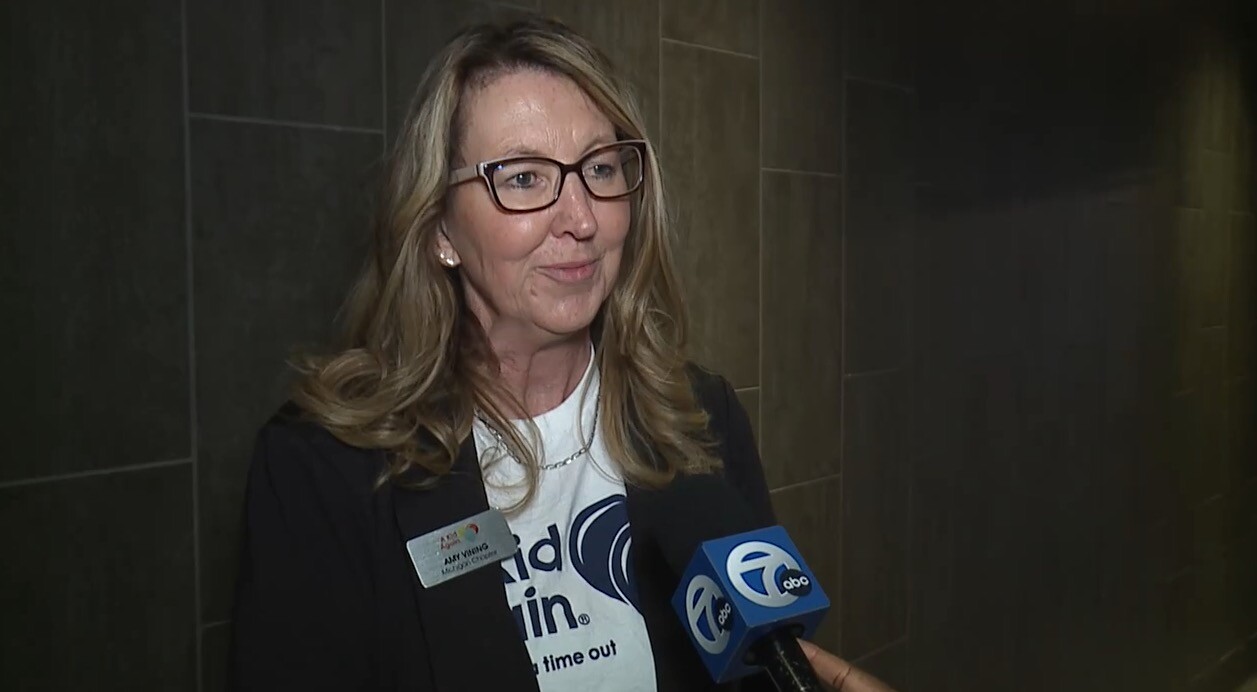
Vining, the executive director of A Kid Again, has a personal mission to help these families.
“My youngest was born with a condition called craniosynostosis. He had his skull remodeled at 4 months old at CS Mott Children’s Hospital, and I’ve always been a part of the non-profit community,” Vining said. “Going through that experience with my own child, his surgery corrected itself, but I saw so many children that were a part of the hospital at that time that were going to have lifelong complications from the conditions that they had, and I knew at some point in my non-profit journey that I wanted to give back to those families.”
Vincent Larkins, a 9th grader living with an undiagnosed rare neuromuscular disorder, also attended the game with his mom and three brothers who share the same disorder.
“It seems like it’s a very big deal, and I’m pretty excited to see the players up in person. I’ve never done something like this before, so I’m pretty happy,” Larkins said.
WXYZ-TV

Their mom, Alison Zanella, says the event provided a rare moment of rest for the kids who stood alongside players during the National Anthem.
“The only normal kid thing they do is go to school. Everything else is therapy and doctors appointments every day,” Zanella said.“It was really just about a chance to give the kids a break and let them be kids for the night.”
WXYZ-TV
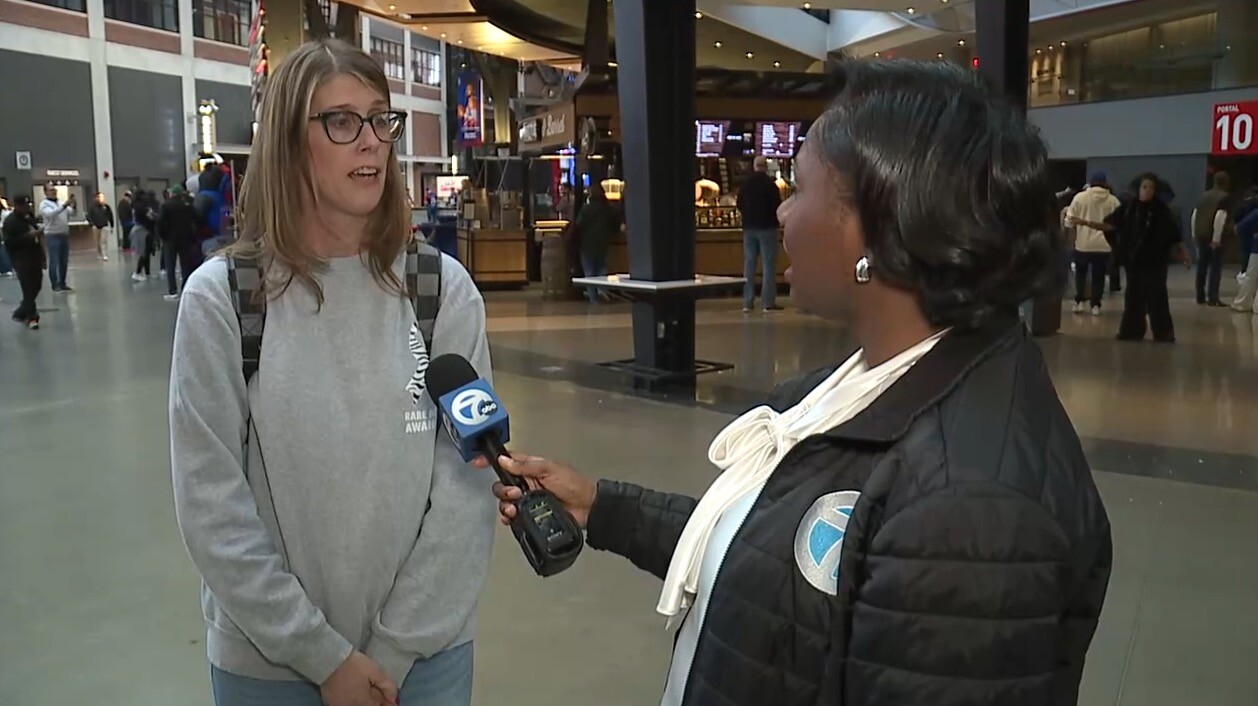
A Kid Again is a national organization with a mission to foster hope, happiness, and healing for children with life-threatening health conditions and their families. The organization provides cost-free, consistent, year-round activities that create meaningful shared experiences and joy-filled memories.
A Kid Again Michigan was established in December 2021 and currently serves more than 1850 families throughout the state.
——————————————————————
This story was reported on air by a journalist and has been converted for this platform with the assistance of AI. Our editorial team verifies all reporting on all platforms for fairness and accuracy.

Thousands head to Columbus for 23rd annual Home Improvement Show at Ohio Expo Center

Oklahoma City Comets preliminary 2026 roster

Merkley Announces Additional Oregon Town Halls April 2-4

Pennsylvania-born indie rockers Tigers Jaw return with new album release

A new safety role at Rhode Island College comes into sharper focus after Brown shooting – The Boston Globe

Florida High School Football Rankings: Top 25 teams – Oct. 21

How old is Bo Nix? What to know about Oregon quarterback ahead of 2024 NFL Draft

Cleary's 21 help Le Moyne down Central Connecticut State 69-64 in OT

99th annual Pony Swim held in Virginia

Indiana Members Credit Union announced as new anchor tenant at Bottleworks District

Video: Will ICE Change Under Its New Leader?

DHS shutdown breakthrough comes at cost for Republicans as funding fights nears end

Rubio joins crucial G7 talks as Iran war set to dominate second day

A surprise resignation could open the door for an independent to win a Montana Senate seat

Video: Savannah Guthrie Says She Believes Her Mother Was Taken for Ransom
-

 Detroit, MI1 week ago
Drummer Brian Pastoria, longtime Detroit music advocate, dies at 68
-

 Science1 week ago
How a Melting Glacier in Antarctica Could Affect Tens of Millions Around the Globe
-

 Movie Reviews1 week ago
‘Youth’ Twitter review: Ken Karunaas impresses audiences; Suraj Venjaramoodu adds charm; music wins praise | – The Times of India
-
 Science1 week ago
I had to man up and get a mammogram
-

 Sports6 days ago
IOC addresses execution of 19-year-old Iranian wrestler Saleh Mohammadi
-

 New Mexico5 days ago
Clovis shooting leaves one dead, four injured
-
 Business1 week ago
Disney’s new CEO says his focus is on storytelling and creativity
-

 Texas1 week ago
How to buy Houston vs. Texas A&M 2026 March Madness tickets