Midwest
Chicago spent $80K to renovate office for first lady Johnson as city faces billion dollar budget shortfall

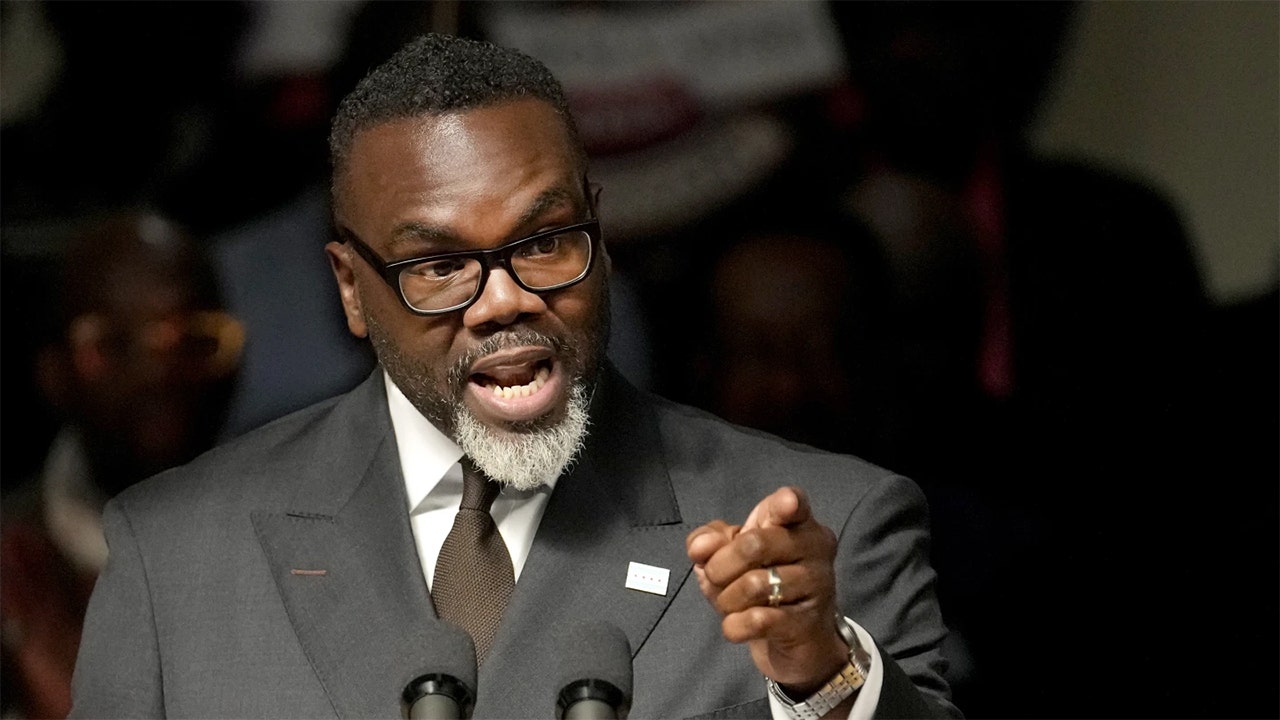
Invoices and receipts from Chicago Mayor Brandon Johnson’s administration have raised new questions about extravagant spending as the city faces a nearly billion dollar budget shortfall.
Documents uncovered by local news station NBC 5 revealed that in the grip of fiscal crisis, the city spent more than $80,000 to redecorate and renovate an office in the Chicago Cultural Center for first lady Stacie Johnson.
“The invoices and receipts, obtained by NBC 5 Investigates through a series of Freedom of Information Act requests, show that work order requests began in February and continued through August of this year to renovate and redecorate Room 306 in the Chicago Cultural Center,” the report said.
Electricians, carpenters and painters on the city’s payroll were contracted for the work, according to an invoice from the city’s Fleet and Facility Management department, also called 2FM, NBC 5 reported. The workers accrued more than 350 hours of labor at a cost of over $25,000.
CHICAGO PROSECUTOR DECLINES TO CHARGE ‘DANGEROUS’ COLUMBIAN MIGRANT IN SHOOTING DEATH OF 17-YEAR-OLD
Chicago Mayor Brandon Johnson’s office is facing scrutiny after the city spent $80,000 on renovations to first lady Johnson’s office. (AP Photo/Charles Rex Arbogast)
Another invoice reportedly shows the city paid more than $43,000 for furniture, including a $2,200 office chair and a $4,400 desk labeled the “First Lady’s Desk” on the document. The city spent another $4,600 on a desk for a staffer and more than $8,300 on two club chairs, according to the outlet.
The invoice was dated Aug. 13, with a Sept. 12 due date, NBC 5 reported.
Mayor Johnson’s office did not respond to Fox News Digital’s request for comment.
CHICAGO MAYOR COMPARES VIEWPOINT OF THOSE WHO DISAGREE WITH HIM ABOUT SCHOOL SPENDING TO SLAVERY
Under Johnson’s administration, Chicago faces a nearly $1 billion budget shortfall in 2025. (Vincent Alban/Getty Images)
Confronted with the invoices and asked to defend the city’s spending, Johnson told NBC 5, “So, the Cultural Center has always been a location for dignitaries; every first lady has had office space there. Renovations for my office or any other office is standard procedure. Our commitment to invest in people is still to invest in people.”
The mayor pushed back against follow-up questions about the optics of excessive spending at a time when his administration is considering layoffs of city workers to cut costs.
ENTIRE CHICAGO SCHOOL BOARD TO RESIGN OVER TEACHERS UNION DISPUTE WITH DEM MAYOR: ‘DEEPLY ALARMING’
Johnson was elected in 2023 as a favorite candidate of the left, on a platform of increasing spending on city services. (AP Photo/Charles Rex Arbogast)
“The purchase of a desk is not going to change the financial structural damage that has been in place for a very long time. So this is why we ask – and I mean this respectfully – we ask far more profound questions than that. We ask, how do we make sure that the structural damage that’s been created over the course of decades – we reroute the rivers, if you will, to make sure that we get to the places where there is dry land. And that’s what we are doing,” he said.
When NBC 5 pressed the issue, Johnson criticized the outlet’s questions. “So I’ve been mayor for 17 months, and you have a question of how I feel about optics? Just go back on review the tape. If I were to allow my leadership to be based on someone’s opinion of me, it would be a derelict of duty. I never question my position to invest in people. I don’t do this for optics; I do this to transform lives.”
The mayor said he is more focused on the optics of hiring young people for summer jobs, building affordable housing and ensuring that schools have counselors and social workers, as well as investing in Chicago’s South and West sides.
But Johnson still has not put forward a plan to close the city’s projected $982 million budget gap.
Read the full article from Here


Midwest
Terrifying moment caught on camera as road collapse suddenly swallows vehicles at busy intersection
NEWYou can now listen to Fox News articles!
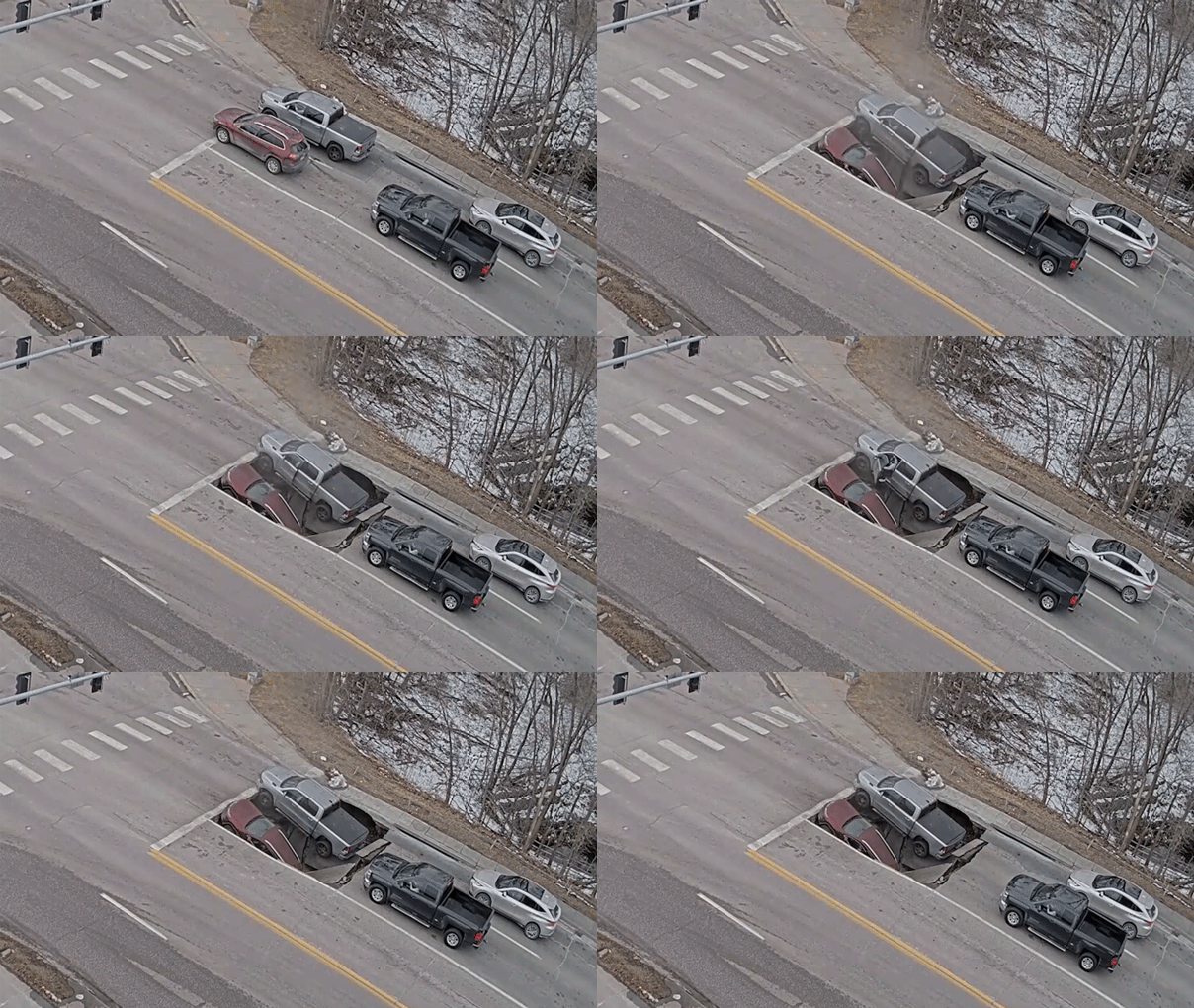
Dramatic video showed the moment a road collapsed below two unsuspecting motorists near the University of Nebraska-Omaha Tuesday, sending their vehicles feet below ground.
Footage taken by university security cameras appeared to show the two vehicles rolling up to an intersection, side-by-side, before a car pulled up behind them, seemingly triggering the collapse.
Emergency crews responded to the incident at 67th and Pacific streets at about 3:30 p.m., local outlet WOWT reported.
The collapse appeared to be triggered by a pickup truck behind the two cars. (UNO Public Safety/TMX)
The vehicles’ occupants had escaped the hole by the time authorities arrived.
“This caught everybody by surprise,” University of Nebraska-Omaha Public Safety Lt. Dan Martin told the outlet.
Dust could be seen as the vehicles fell into the pavement. (UNO Public Safety/TMX)
SOUTH KOREAN TOURISTS DISAPPEAR DURING ROAD TRIP BETWEEN GRAND CANYON, LAS VEGAS
No injuries were reported, though WOWT reported a water main broke during the collapse.
It is unclear what led to the collapse.
The outlet reported a heavy-duty tow truck with a crane retrieved the cars a few hours later, and crews worked to pull concrete from the crater.
It is unclear what led to the road collapse. (UNO Public Safety/TMX)
CLICK HERE TO DOWNLOAD THE FOX NEWS APP
Martin warned the sinkhole could expand, though it appears no additional sinkholes had been spotted as of Wednesday night.
Officials told WOWT the street will remain closed for “several days,” and motorists should avoid the area.
Related Article

Read the full article from Here

“Slow down and move over” is the message that Michigan State Police is sending to drivers after one of its troopers in a parked patrol car was struck while investigating a crash this weekend. The driver of that vehicle fled the scene.
Michigan State Police tells CBS News Detroit that we’re two months into the year, and it has had six incidents across the state where patrol cars were struck by oncoming vehicles. One of those incidents occurred on Sunday evening.
“Could have been much more tragic,” said MSP Lieutenant Rene Gonzalez, First District public information officer.
Gonzalez says on Sunday, an MSP trooper was near M-10 and Schaefer Highway in Detroit, simply doing his job, when his patrol car was hit from behind.
“Trooper was out there, and he was investigating a crash when, at the time, a Jeep SUV drove into the rear of the parked vehicle,” Gonzalez said.
The impact slid the trooper’s car into a concrete wall. The 29-year-old Detroit woman driving the Jeep SUV struck the center median, got out of the vehicle, and ran away.
“Not sure why they did it. Maybe not paying attention if they were distracted. They’re attempting to locate her at this time,” said Lt. Gonzalez.
The trooper walked away with minor injuries. Gonzalez says this incident is an example of why Michigan’s Move Over Law was put in place many years ago. The law, which went into effect in 2019, requires drivers to move over into the next lane and reduce their speed by at least 10 mph when emergency or service vehicles — police, fire, rescue, ambulance and road service — have their lights activated.
Drivers who are not able to move over are still required to reduce their speed.
“Trying to do our jobs, however, people are not paying attention. The law is easy. It’s simple. You see us, you see our lights activated, you have to slow down ten miles below the posted speed limit, and then if able, move over to the next occupied available lane,” Gonzalez said.
Gonzalez says crashes like this can be deadly and often avoided.
“One life lost over something that was a totally preventable crash, it’s way too much. We’re asking that you slow down and move over when you see our lights. It’s a simple message that we’ve been pushing out for years,” he said.
Sunday’s crash remains under investigation. Michigan State Police detectives are still working to track down the 29-year-old suspect.
In the meantime, police are out enforcing the Move Over Law.

Sister Bay, Wisconsin: 2026 USA TODAY 10BEST Readers’ Choice Awards
West Virginia Lottery results: See winning numbers for Powerball, Lotto America on March 2, 2026

This Small Wyoming Town Has The Best Downtown

Wisconsin lawmakers crack down on cryptocurrency scams

2 Aspira charter high schools to close by April due to financial issues

Florida High School Football Rankings: Top 25 teams – Oct. 21

Cleary's 21 help Le Moyne down Central Connecticut State 69-64 in OT

How old is Bo Nix? What to know about Oregon quarterback ahead of 2024 NFL Draft

99th annual Pony Swim held in Virginia

Indiana Members Credit Union announced as new anchor tenant at Bottleworks District

Trump sends official notification to Congress on strikes against Iran

Unexpected birth brings hope to near-extinct Amazon tribe

Supreme Court blocks redrawing of New York congressional map, dealing a win for GOP

Map: Earthquake Shakes Central California

Gas prices could jump as Middle East tensions threaten global oil supply
-

 World5 days ago
Exclusive: DeepSeek withholds latest AI model from US chipmakers including Nvidia, sources say
-

 Massachusetts5 days ago
Mother and daughter injured in Taunton house explosion
-

 Denver, CO5 days ago
10 acres charred, 5 injured in Thornton grass fire, evacuation orders lifted
-

 Louisiana1 week ago
Wildfire near Gum Swamp Road in Livingston Parish now under control; more than 200 acres burned
-

 Technology1 week ago
YouTube TV billing scam emails are hitting inboxes
-

 Politics1 week ago
OpenAI didn’t contact police despite employees flagging mass shooter’s concerning chatbot interactions: REPORT
-

 Technology1 week ago
Stellantis is in a crisis of its own making
-

 News1 week ago
World reacts as US top court limits Trump’s tariff powers