Lifestyle
You could subscribe to holiday gift-giving. Or you can move different like Goth Shakira

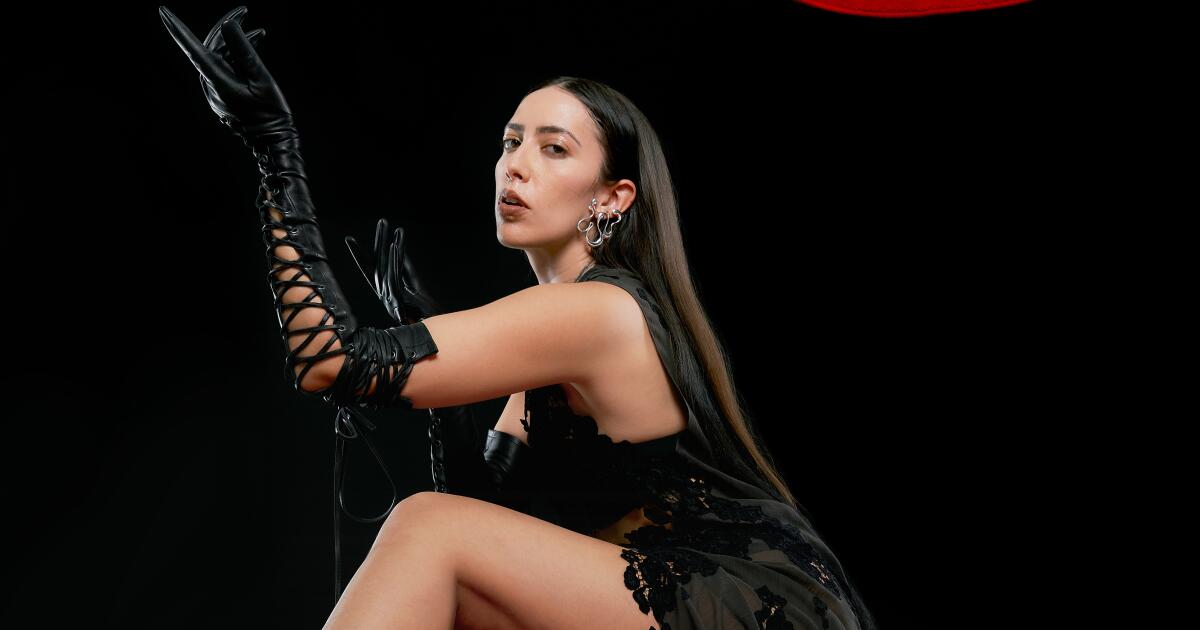
Goth Shakira wearing Acne Studios dress and gloves, Kachorovska shoes and Jéblanc earrings.
(Jennelle Fong and Yasara Gunawardena / For The Times)
One might follow Goth Shakira for their “whimsigoth crypto nun” looks posted from the bathrooms of Tom Bradley, for their poetic takes on digital existence, for their deep cuts of darkwave en Español and uncanny images of art, or for being an OG long-form confessional meme queen (a contribution that has garnered academic study). The digital director is known for a specific kind of output that feels uniquely Goth Shakira: one that combines an esoteric gaze with an artistic one — a sharp observation of the world around us and worlds beyond us. An Aquarius whose ultimate gifts of space and freedom can’t be bought, Goth Shakira takes her own path. The rest of us just want to follow along.
Name, occupation, neighborhood: Dre, a.k.a. Goth Shakira, digital director, Koreatown.
Ascetic, observant and karmic are three words that describe my essence.
My mantra for the end of the year is “I am.”
The gift I would buy myself that coincides with my astrological sign: The ultimate Aquarian gifts of freedom and space can’t be bought — just given or taken.
An L.A. artist whose work I want in every room of my home: My decor is very simple and minimal because I like my home to feel like a hermitage. I don’t really like having things on my walls, but I appreciate sculptures and found objects, or works made with earthen elements. A silver breastplate or lacquered body cast by multidisciplinary artist Holly Silius would be a dream, as would a work by Lizette Hernández in dissolved salts and stoneware.
The designer/brand I rocked the most this year: I’m almost always wearing a piece by Latina-owned and L.A.-based brand Gil Rodriguez. Their Trinity zippered catsuit is one of my most favorite pieces I’ve ever had — I have worn it on a 16-hour flight with slippers and to a party paired with vintage Prada stiletto boots. They’re elevated basics that I know I will own for a long time; they feel like the new vintage. The pieces are also very compatible with an L.A. lifestyle because I can wear a Gil outfit as a pool coverup or to the park, and it’s so elegant and well made that I don’t have to drive all the way home to change if I decide to go to a gallery opening or drinks afterwards.
“The ultimate Aquarian gifts of freedom and space can’t be bought — just given or taken,” says Goth Shakira.
(Jennelle Fong and Yasara Gunawardena / For The Times)
Goth Shakira wears Heaven by Marc Jacobs top, Shushu/Tong skirt, Vegan Tiger trench coat, MyUS scarf, Heaven by Marc Jacobs boots, Frou York necklace, Serpenti earrings, Jéblanc and Lilou Paris rings.
(Jennelle Fong and Yasara Gunawardena / For The Times)
The clothing item in my closet I consider high art: A vintage Comme des Garçons black wool skirt that I thrifted in Kyoto earlier this year. It has an incredible structure that allows it to transform into an off-the-shoulder dress and culottes. I travel for work and only take a carry-on, and I end up packing this piece a lot because of its versatility and masterful design. I hope to enjoy it for many years to come.
Breathwork, daily meditation, kundalini yoga, morning pages and at least seven to 10 white candles from the botánica burning in my apartment at any given time is the spiritual practice that’s grounding me lately.
The thing that has been sitting in my online shopping cart for months: This silver Ann Demeulemeester “Charliese” fingernail ring that sits above your top knuckle and looks like a wabi-sabi acrylic.
What I’m getting the people I love this season: My Aquarius placements don’t subscribe to the capitalist gifting obligations of mass holidays — because my Capricorn placements are always giving my loved ones little presents year-round. My favorite things to give are candles, books, love notes, natal chart readings, money, dinners, work opportunities, time, loyalty, space, active listening, my healing abilities and surf trips.
The one thing I wish the people I love would band together and buy me this season: OK, so I don’t subscribe to holiday gift-giving, but I might accept two things and two things only: a Moog Etherwave theremin, and the August 1995 issue of Playgirl with the Peter Steele editorial. It’s a goth girl/gay grail.
The zine/book/item on my coffee table I want people to see: “California Surfing and Climbing in the Fifties” and “AfroSurf.” The former is a rare find that I scored on eBay, and an important piece of history photography-wise, but it features all white people — despite the presence of Californian surfers of color, like the Black Mexican waterman Nick Gabaldón, who were going to great lengths to surf in Malibu during the time of beach segregation. To counter the predominantly white canon of surf documentation, “AfroSurf” is a gorgeously designed and historically rich celebration of surfing culture in Africa, including everything from photos to essays to poems to playlists to ephemera. It’s a book every creative should own.
Goth Shakira wearing Jéblanc and Lilou Paris rings.
(Jennelle Fong and Yasara Gunawardena / For The Times)
I will never stop rocking my beloved vintage black leather trench coat with fur trim that I thrifted in pristine condition in Montreal about 10 years ago.
The cause or organization I’m supporting right now: Red Comunitaria Trans is an advocacy group for Colombian trans communities. Red Condor Collective is a Colombian diaspora initiative that secures material support for activists in Colombia, including those protesting the genocide in Gaza.
The sounds fueling my creative right now are Deftones B-sides, pretty much anything shoegaze/distorted/DIY coming out of Arizona or Texas right now (Glixen, Bedlocked, Teethe), Cocteau Twins live at Ministry of Sound in 1996, demo cuts from the Smashing Pumpkins studio sessions for “Gish” and “Pisces Iscariot,” Natalia Mantini’s “casted in caves: black moon lilith” mix for Dublab, Dungeons & Dragons ambience videos that I project on my wall, the same 20-minute Tibetan bowl sound file looped for eight hours, field recordings of waves receding over rocks at the tide pools, the sound of the little solar-powered garden fountain outside my window <3.
I’m manifesting a project in 2024 with: There’s so much amazing shoegaze/goth/darkwave/ambient/experimental music coming from Latine artists in L.A. right now — Closed Tear, Beli and Wisteria, for example. I love to see independent L.A. designers have more of a presence as well, like Latina-owned brand Siempre, a.k.a. World of Siempre. Venice local-run and -owned surf archival project and streetwear brand corelords is one of my favorite visual inspirations lately. On the wellness and skincare front, I’m really into what Latine-owned Noto Botanics does — their scrub is one of my favorites. I’ve had my eye on skinwear brand Humanoid, and they’re one of the most exciting beauty initiatives coming out of L.A. right now.
The meal I’m cooking on rotation right now: I’m on a lifelong mission to create anything that even closely resembles my abuela’s ajiaco, but I must confess that I’m a total disappointment to my ancestors in the domesticity department. At least I have the caldo from the neighborhood spot to warm my heart in the meantime.
This is the highly specific thing inspiring my style most lately: Black trans women and nonbinary people, and senior citizens. Always.
The color I’m dreaming in/obsessed with: It’s always the shade of the lipstick I’ve been wearing for about half my life at this point: Diva by MAC, a deep, cool-toned burgundy that’s almost black. It’s also the same shade that Courtney Love wore in the ‘90s. It’s so melancholic, elegant, vampiric and earthy all at the same time.
The 2023 drop I missed that still haunts me: The Stüssy x Our Legacy “Surfman” jacket that dropped earlier this year. I had it in my cart but didn’t pull the trigger in an effort to exercise restraint, because I already have a pretty robust Stüssy collection. But I think about that jacket all the time, and now it’s on resale sites for three times the retail price (and, of course, never in my size).
All of 2024 I’ll be smelling like: Byredo’s De Los Santos eau de parfum, with a bit of Hwyll by Aesop layered on top — and, inevitably, a hint of the hinoki incense and palo santo that I’m always burning in my home.
Goth Shakira’s mantra for the end of the year is “I am.”
(Jennelle Fong and Yasara Gunawardena / For The Times)
Makeup: Carla Perez
Hair: Belen Gomez
Styling Assistants: Stacey Barton, Karina Boylan, Annunziata Santelli



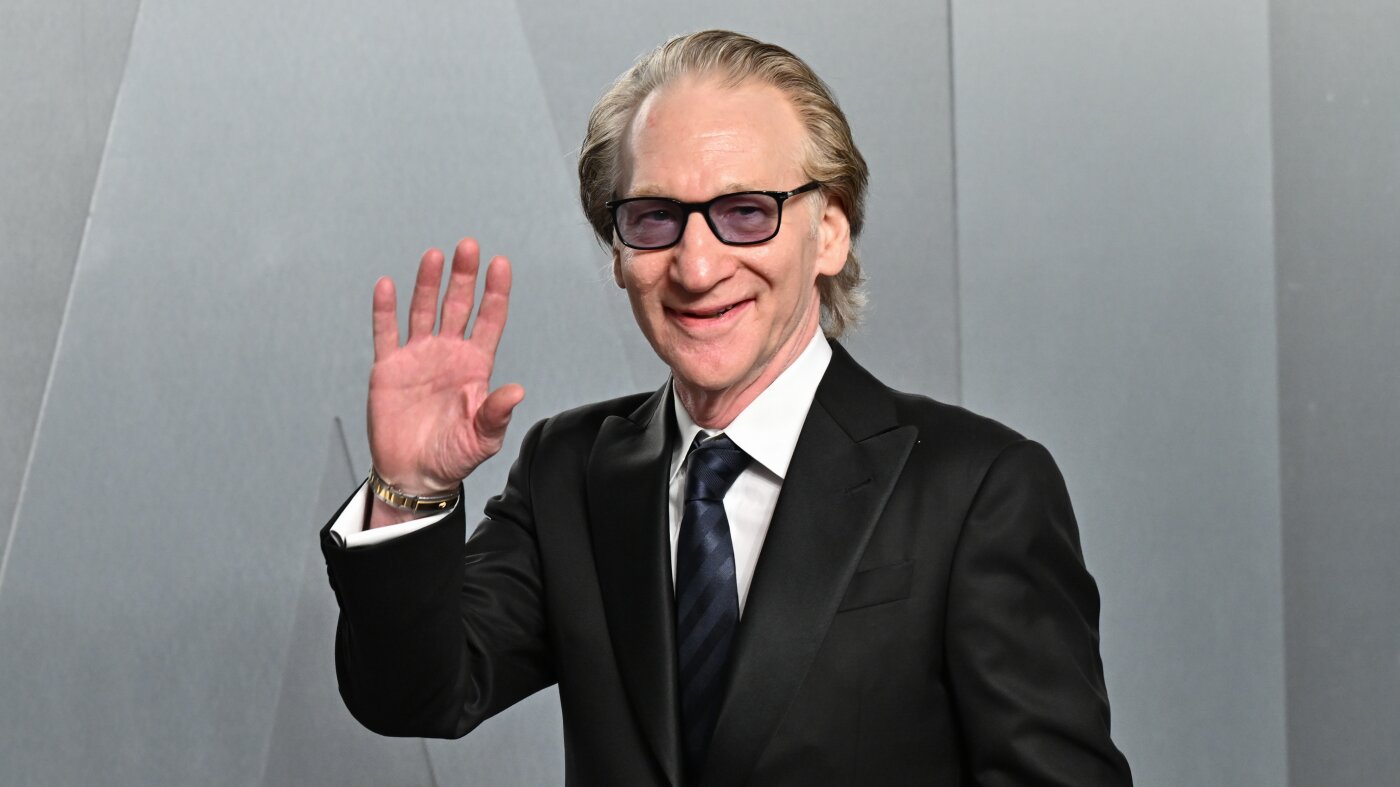
Satirist Bill Maher is this year’s recipient of the Mark Twain Prize for American Humor. Maher will receive the award at the Kennedy Center on June 28th. The show will stream on Netflix at a later date.
Evan Agostini/Invision/AP
hide caption
toggle caption
Evan Agostini/Invision/AP
Bill Maher will be receiving the Mark Twain Prize for American Humor after all.
There’s been some confusion about whether the comedian and longtime host of HBO’s Real Time with Bill Maher would, indeed, be getting the top humor award. After The Atlantic cited anonymous sources saying he was, White House press secretary Karoline Leavitt called it “fake news.” But today the Kennedy Center made it official.
“For nearly three decades, the Mark Twain Prize has celebrated some of the greatest minds in comedy,” said Roma Daravi, the Kennedy Center’s vice president of public relations in a statement. “For even longer, Bill has been influencing American discourse – one politically incorrect joke at a time.”
Is President Trump, chair of the Kennedy Center’s board, in on the joke?
Maher once visited Trump at the White House and he tends to be more conservative than many of his comedian peers but after their dinner Trump soured on Maher, calling him a “highly overrated LIGHTWEIGHT” on social media.
Maher’s acerbic wit has targeted both political parties and he’s been particularly hard on Trump recently, criticizing his decisions to wage a war with Iran and his personnel choices.
“Trump said, ‘when oil prices go up, we make a lot of money.’ Um, who’s ‘we?,’” Maher said in a recent monologue.
Past recipients of the Mark Twain Prize include Conan O’Brien, Dave Chappelle, Jon Stewart, Julia Louis-Dreyfus, Tina Fey, Eddie Murphy and Carol Burnett.
In a statement released through the Kennedy Center, Maher said, “It is indeed humbling to get anything named for a man who’s been thrown out of as many school libraries as Mark Twain.”
Maher will receive the Mark Twain Prize at the Kennedy Center on June 28. The show will stream on Netflix at a later date.


Workers react to the media after updating signage outside the Kennedy Center on Dec. 19, 2025, in Washington, D.C.
Jim Watson/AFP via Getty Images
hide caption
toggle caption
Jim Watson/AFP via Getty Images
Rep. Joyce Beatty of Ohio is asking a federal court in Washington, D.C., to force President Trump and the board and staff of the Kennedy Center to revert to calling the arts complex The John F. Kennedy Center for the Performing Arts.
The motion, which Beatty filed on Wednesday, asks a federal circuit court judge to reverse the Trump administration and the center’s current board and staff’s decision to call the complex “The Trump-Kennedy Center.”
In the filing, Beatty’s attorneys wrote: “Can the Board of the Kennedy Center — in direct contradiction of the governing statutes — rename this sacred memorial to John F. Kennedy after President Donald J. Trump? The answer is, unequivocally, ‘no.’ By renaming the Center — in violation of the law — Defendants have breached the terms of the trust and their most basic fiduciary obligations as trustees. Shortly after President John F. Kennedy’s assassination, Congress designated the Kennedy Center as the ‘sole national memorial to the late’ President in the nation’s capital.”

In a statement emailed to NPR Thursday, Roma Daravi, the vice president of public relations for the Kennedy Center, wrote: “We’re confident the court will uphold the board’s decision on the name change and the desperately needed renovations which will continue as scheduled.” NPR also reached out to the White House for comment, but did not receive a reply.
In December, White House press secretary Karoline Leavitt announced that the complex would heretofore be called “The Trump-Kennedy Center.” Although the new moniker was never approved by Congress, the Center’s website and publicity materials were immediately updated to reflect the administration’s chosen name, and the same day as Leavitt’s announcement, Trump’s name went up on the signage of the complex’s exterior, over that of the slain President Kennedy.
Later that month, Rep. Beatty who serves as an ex-officio member of the Kennedy Center’s board of trustees, sued Trump, members of the Kennedy Center board appointed by Trump, and some ex-officio members, arguing that the complex’s name had been legislated by Congress in 1964. Wednesday’s motion is part of that lawsuit.

In a press release sent to NPR on Wednesday, Rep. Beatty said: “Donald Trump’s attempt to rename the Kennedy Center after himself is not just an act of ego. It is an attempt to subvert our Constitution and the rule of law. Congress established the Kennedy Center by law, and only Congress can change its name.”
For many patrons, artists and benefactors of the Kennedy Center, the name change was the last straw in politicizing the performing arts hub. Following the White House announcement of the new name, many prominent artists withdrew planned performances there, including the composer Philip Glass (a Kennedy Center Honors award recipient, who received his prize during the first Trump administration), the famed Broadway composer and lyricist Stephen Schwartz and the 18-time Grammy-winning banjo master Béla Fleck.
The Washington National Opera (WNO), which had been in residence at the Kennedy Center since 1971, also severed its ties in January after ticket sales dropped precipitously. Earlier this month, WNO artistic director Francesca Zambello told NPR, “We did try as best as we could to encourage [the patrons] that we are a bipartisan organization, but people really voted with their feet and with their pocketbooks. And so we realized that there was really no choice for us.”

On Monday, a coalition of eight architecture and cultural groups also sued Trump and the Kennedy Center board in federal court over the complex’s scheduled closing in July for unspecified renovations. Their suit seeks to have the White House and board members comply with existing historic preservation laws, and to secure Congressional approval before moving ahead with the renovation plans.

Jogging 101: Benefits for Your Body and Mind
Movie reviews reveal A Poet and All That’s Left of You dominate March with perfect 100% scores – Art Threat

Phillies third baseman Alec Bohm sues his parents, accuses them of misusing his money

Video: Will ICE Change Under Its New Leader?

Video: Trump’s Signature to Appear on Dollar Bills

Florida High School Football Rankings: Top 25 teams – Oct. 21

How old is Bo Nix? What to know about Oregon quarterback ahead of 2024 NFL Draft

Cleary's 21 help Le Moyne down Central Connecticut State 69-64 in OT

99th annual Pony Swim held in Virginia

Indiana Members Credit Union announced as new anchor tenant at Bottleworks District
Video: Will ICE Change Under Its New Leader?

DHS shutdown breakthrough comes at cost for Republicans as funding fights nears end

Rubio joins crucial G7 talks as Iran war set to dominate second day

A surprise resignation could open the door for an independent to win a Montana Senate seat

Video: Savannah Guthrie Says She Believes Her Mother Was Taken for Ransom
-

 Detroit, MI1 week ago
Drummer Brian Pastoria, longtime Detroit music advocate, dies at 68
-

 Science1 week ago
How a Melting Glacier in Antarctica Could Affect Tens of Millions Around the Globe
-

 Movie Reviews1 week ago
‘Youth’ Twitter review: Ken Karunaas impresses audiences; Suraj Venjaramoodu adds charm; music wins praise | – The Times of India
-
 Science1 week ago
I had to man up and get a mammogram
-

 Sports6 days ago
IOC addresses execution of 19-year-old Iranian wrestler Saleh Mohammadi
-

 New Mexico4 days ago
Clovis shooting leaves one dead, four injured
-

 Texas1 week ago
How to buy Houston vs. Texas A&M 2026 March Madness tickets
-

 Tennessee3 days ago
Tennessee Police Investigating Alleged Assault Involving ‘Reacher’ Star Alan Ritchson