Lifestyle
‘What you see is really me,’ says ‘Wicked’ star Cynthia Erivo

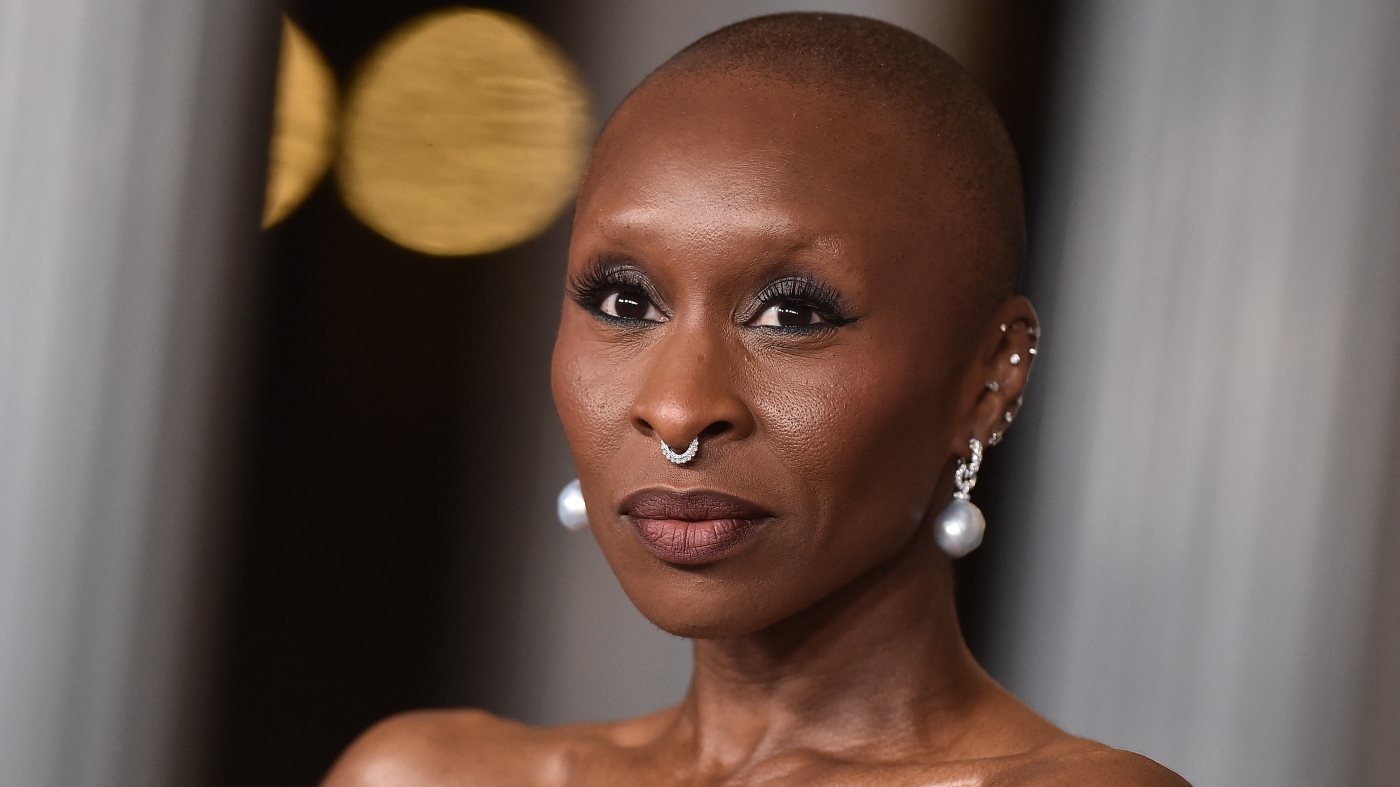
Cynthia Erivo attends LACMA Art+Film Gala at the Los Angeles County Museum of Art on Nov. 1, 2025.
Lisa O’Connor/AFP via Getty Images
hide caption
toggle caption
Lisa O’Connor/AFP via Getty Images
There’s a moment in the new movie, Wicked: For Good, when Elphaba, the so-called Wicked Witch, stops defending herself to a world that has misunderstood her and embraces her own power. Cynthia Erivo, who plays Elphaba, sees a connection between her character’s trajectory and her own.
“There were so many sort of real parallels — the relationship with her father, the relationship to being in spaces that don’t really include you,” Erivo says. “The feelings you see in the movie are very real feelings.”
Erivo grew up in London as the child of Nigerian immigrants. From an early age, it was evident that she had a powerful singing voice. She attended the Royal Academy of Dramatic Art, but felt like an outsider.
“It was a tough experience to be there. I just didn’t think I fit,” she says. “And I think there was sort of a lack of wanting to understand where I was coming from or who I was as a person.”

Erivo first broke through on Broadway in The Color Purple, winning a Tony Award for her portrayal of Celie. She went on to earn an Oscar nomination for her portrayal of Harriet Tubman, and later played Aretha Franklin in Genius Aretha.
In Wicked: For Good, Erivo reprises her role as Elphaba, alongside Ariana Grande as Glinda, in this final chapter of the Wicked story. Both Wicked movies were filmed at the same time, which proved challenging at times.

“There were days where, luckily, you would sort of know where the character was at this point [in the story],” Erivo says. “But there were some times where you’re sort of guessing really, because you hadn’t shot a certain scene, you’re just sort of assuming that the scene is gonna feel this way.”
Erivo also has a new memoir, Simply More: A Book for Anyone who Has Been Told They’re Too Much, which details her childhood in South London and her path to the stage.

Erivo reprises her role of Elphaba in Wicked: For Good.
Giles Keyte/Universal Pictures
hide caption
toggle caption
Giles Keyte/Universal Pictures
Interview highlights
On her physical training for Wicked
I’d [swim] laps, then sing and then I’d run. … It’s the idea that if I’m doing something that’s strenuous and I can sing it whilst I’m doing the thing that’s strenuous, when I’m standing still, it’ll just be there. I won’t actually have to work that hard for it to be there. … Once your body has it in it, it just sort of lives with you. And so that’s what I wanted for myself.
On getting into character through perfume

I started doing this years and years ago. The first time I did it, I think I did with Harriet [Tubman] and hers was, like, cedarwood and lavender, I think it was, but like essence with a base oil, not a perfume, because I wanted it to feel like something she could find, that she could discover, make, as opposed to something you could just buy in a store and spray on oneself. Because of the time, because of who she was, I wanted it to feel like it was of the Earth. And then I realized how powerful it was for me. And so I kept doing it with my characters. …

So Elphaba, who’s younger, I sort of messed around with big florals, like really deep florals. So tuberose, rose, lilies and then I mixed it with a tobacco oud. It was a scent called Witchy Woo. When I found it, I thought, there’s no way this is going to work. It will be way too on the nose. … I was staying at a Soho Farmhouse in the UK and they have this little sort of gift shop and in the back they have a few perfumes … I sprayed some on my hand and immediately I wasn’t convinced, but you know how perfume changes? … My body is like, no, this is a really good scent. There was a reason it was there for you, go back for it.
On her decision to cut, and then shave, her hair
It started a long time ago, just as I was coming out of drama school. I just knew that I wanted something different. Around that time, everyone who was auditioning, girls who were auditioning wanted long hair and a particular kind of aesthetic, and I sort of repelled against the idea because I didn’t want any distractions. I don’t know what gave me the idea, what gave [me] the wherewithal to think, I want to lessen the distraction. I want them to just see my face. I want, when I walk in, for them to see a canvas that can transform. A vessel. That what you see is really me, and I can change into the character in front of your very eyes.
After I left drama school, I cut my hair. I went to get a haircut and the hairdresser was very, very scared to cut it, because my hair was quite long. It came down past my shoulders. … If you’re African, often you cut your hair if you lose someone. So there’s an understanding of loss. You know that the old adage when a woman cuts her hair or changes her hairstyle, a life shift has happened. That is very true of the Nigerian tradition. And so, for me, I felt like I went for my own life shift. … It was sort of leaving [drama school] behind and taking from it what I needed and letting go of whatever else I didn’t. And when I cut my hair, I felt strangely like myself. I’ve felt like I’ve been steadily moving towards cutting it off completely, and Wicked was the moment when I took it off completely.
On regretting a time she sang backstage, allowing another actor to lip-sync to her voice
It’s one of those moments that I’ve started to learn to forgive myself for because … previously I’ve felt so mad at myself. So I guess there’s a part of me that’s a little bit ashamed that I would sort of give up my voice in that way. But it’s also why I’m vehemently protective of the way I use my voice. I do not say yes to everything at all. It has to mean something for me to sing, and it has to make sense. I will never give my voice to someone like that again, because it felt like someone removing a gift that was meant for me and giving it to someone else. It just felt, in the moment, really awful, and I remember feeling really wrong. It felt wrong.
On not growing up with her father, and not having a relationship with him as an adult

I think I’m in a real place of acceptance, and a strange apathy as well. I don’t wish him harm, but it’s not like I’m waiting for some grand resolution. I’m sort of OK with it being exactly what it is. I have no desire to start a relationship. I have no desire to mend a relationship. But it doesn’t really occupy my thoughts.
If the point of doing the things you love or the point of doing a thing that you’re good at is to make someone care about you, is to prove that you are meant to be loved, is to prove that you are worthy of being loved, it doesn’t sustain. Because really and truly, the most important love is that of yourself. It has to come from you first.
Ann Marie Baldonado and Susan Nyakundi produced and edited this interview for broadcast. Bridget Bentz, Molly Seavy-Nesper and Beth Novey adapted it for the web.



Happy new year! I’m Jaclyn Cosgrove, an outdoors reporter at the L.A. Times.
The deluge of rain and snow has paused, and the sun is out in Los Angeles. It’s a beautiful time for a winter hike in L.A. County.
I’d love for you to join me and Times wellness writer Deborah Vankin, alongside our friends at Zócalo Public Square, at 9 a.m. Jan. 31 as we hike through Placerita Canyon Natural Area, an east-west canyon east of Santa Clarita with lush oak woodland, chaparral and a seasonal creek.
We will start our trek with a gentle stroll to the Oak of the Golden Dream, where the first authenticated gold discovery by colonizers took place in California in 1842.
Then Vankin and I will lead 40 hikers along Canyon Trail, which will be 3.6 miles round trip. The hike includes an area where natural “white oil” bubbles up from the earth, which locals reportedly used to collect to fill their Ford Model T fuel tanks.
Parking is free and easy. We will meet in front of the Placerita Canyon Nature Center (19152 Placerita Canyon Road in Newhall).
We will have water bottles and snacks for attendees, but you’re also welcome to bring your own. You must be 18 or older and will be required to sign a waiver prior to attending. (Please consider arriving 15 minutes early to leave time for waiver signing.)
Grab a spot on Tixr.
Note: The hike will be rescheduled if rain is in the forecast.
A winter hike with the Los Angeles Times and Zócalo Public Square

Lee Byung-hun stars in No Other Choice.
NEON
hide caption
toggle caption
NEON
In an old Kids in the Hall comedy sketch called “Crazy Love,” two bros throatily proclaim their “love of all women” and declare their incredulity that anyone could possibly take issue with it:
Bro 1: It is in our very makeup; we cannot change who we are!
Bro 2: No! To change would mean … (beat) … to make an effort.
I thought about that particular exchange a lot, watching Park Chan-wook’s latest movie, a niftily nasty piece of work called No Other Choice. The film isn’t about the toxic lecherousness of boy-men, the way that KITH sketch is. But it is very much about men, and that last bit: the annoyed astonishment of learning that you’re expected to change something about yourself that you consider essential, and the extreme lengths you’ll go to avoid doing that hard work.
Many critics have noted No Other Choice‘s satirical, up-the-minute universality, given that it involves a faceless company screwing over a hardworking, loyal employee. As the film opens, Man-su (Lee Byung-hun) has been working at a paper factory for 25 years; he’s got the perfect job, the perfect house, the perfect family — you see where this is going, right? (If you don’t, even after the end of the first scene, when Man-su calls his family over for a group hug while sighing, “I’ve got it all,” then I envy your blithe disinterest in how movies work. Never change, you beautiful blissful Pollyanna, you.)
He gets canned, and can’t seem to find another job in his beloved paper industry, despite going on a series of dehumanizing interviews. His resourceful wife Miri (Son Ye-jin) proves a hell of a lot more adaptable than he does, making practical changes to the family’s expenses to weather Man-su’s situation. But when foreclosure threatens, he resolves to eliminate the other candidates (Lee Sung-min, Cha Seung-won) for the job he wants at another paper factory — and, while he’s at it, maybe even the jerk (Park Hee-soon) to whom he’d be reporting.
So yes, No Other Choice is a scathing spoof of corporate culture. But the director’s true satirical eye is trained on the interpersonal — specifically the intractability of the male ego.
Again and again, the women in the film (both Son Ye-jin as Miri and the hilarious Yeom Hye-ran, who plays the wife of one of Man-su’s potential victims) entreat their husbands to think about doing something, anything else with their lives. But these men have come to equate their years of service with a pot-committed core identity as men and breadwinners; they cling to their old lives and seek only to claw their way back into them. Man-su, for example, unthinkingly channels the energy that he could devote to personal and professional growth into planning and executing a series of ludicrously sloppy murders.
It’s all satisfyingly pulpy stuff, loaded with showy, cinematic homages to old-school suspense cinematography and editing — cross-fades, reverse-angles and jump cuts that are deliberately and unapologetically Hitchcockian. That deliberateness turns out to be reassuring and crowd-pleasing; if you’re tired of tidy visual austerity, of films that look like TV, the lushness on display here will have you leaning back in your seat thinking, “This right here is cinema, goddammit.”
Narratively, the film is loaded with winking jokes and callbacks that reward repeat viewing. Count the number of times that various characters attempt to dodge personal responsibility by sprinkling the movie’s title into their dialogue. Wonder why one character invokes the peculiar image of a madwoman screaming in the woods and then, only a few scenes later, finds herself chasing someone through the woods, screaming. Marvel at Man-su’s family home, a beautifully ugly blend of traditional French-style architecture with lumpy Brutalist touches like exposed concrete balconies jutting out from every wall.

There’s a lot that’s charming about No Other Choice, which might seem an odd thing to note about such a blistering anti-capitalist screed. But the director is careful to remind us at all turns where the responsibility truly lies; say what you will about systemic economic pressure, the blood stays resolutely on Man-su’s hands (and face, and shirt, and pants, and shoes). The film repeatedly offers him the ability to opt out of the system, to abandon his resolve that he must return to the life he once knew, exactly as he knew it.
Man-su could do that, but he won’t, because to change would mean to make an effort — and ultimately men would rather embark upon a bloody murder spree than go to therapy.

AUSTIN, Texas – Austin-Bergstrom International Airport will nearly double in size over the next decade.
The airport currently has 34 gates. With the expansion projects, it will increase by another 32 gates.
What they’re saying:
Southwest, Delta, United, American, Alaska, FedEx, and UPS have signed 10-year use-and lease agreements, which outline how they operate at the airport, including with the expansion.
“This provides the financial foundation that will support our day-to-day operations and help us fund the expansion program that will reshape how millions of travelers experience AUS for decades to come,” Ghizlane Badawi, CEO of Austin-Bergstrom International Airport, said.
Concourse B, which is in the design phase, will have 26 gates, estimated to open in the 2030s. Southwest Airlines will be the main tenant with 18 gates, United Airlines will have five gates, and three gates will be for common use. There will be a tunnel that connects to Concourse B.
“If you give us the gates, we will bring the planes,” Adam Decaire, senior VP of Network Planning & Network Operations Control at Southwest Airlines said.
“As part of growing the airport, you see that it’s not just us that’s bragging about the success we’re having. It’s the airlines that want to use this airport, and they see advantage in their business model of being part of this airport, and that’s why they’re growing the number of gates they’re using,” Mayor Kirk Watson said.
Dig deeper:
The airport will also redevelop the existing Barbara Jordan Terminal, including the ticket counters, security checkpoints, and baggage claim. Concourse A will be home to Delta Air Lines with 15 gates. American Airlines will have nine gates, and Alaska Airlines will have one gate. There will be eight common-use gates.
“Delta is making a long-term investment in Austin-Bergstrom that will transform travel for years to come,” Holden Shannon, senior VP for Corporate Real Estate at Delta Air Lines said.
The airport will also build Concourse M — six additional gates to increase capacity as early as 2027. There will be a shuttle between that and the Barbara Jordan Terminal. Concourse M will help with capacity during phases of construction.
There will also be a new Arrivals and Departures Hall, with more concessions and amenities. They’re also working to bring rideshare pickup closer to the terminal.
City officials say these projects will bring more jobs.
The expansion is estimated to cost $5 billion — none of which comes from taxpayer dollars. This comes from airport revenue, possible proceeds, and FAA grants.
“We’re seeing airlines really step up to ensure they are sharing in the infrastructure costs at no cost to Austin taxpayers, and so we’re very excited about that as well,” Council Member Vanessa Fuentes (District 2) said.
The Source: Information from interviews conducted by FOX 7 Austin’s Angela Shen

Falcons hire franchise legend Matt Ryan to major front office role

CES 2026 showstoppers: 10 gadgets you have to see

In-N-Out Burger outlets in Southern California hit by counterfeit bill scam

Commentary: California made them rich. Now billionaires flee when the state asks for a little something back.
Take a winter hike with the Los Angeles Times and Zócalo Public Square

Florida High School Football Rankings: Top 25 teams – Oct. 21

Cleary's 21 help Le Moyne down Central Connecticut State 69-64 in OT

How old is Bo Nix? What to know about Oregon quarterback ahead of 2024 NFL Draft

99th annual Pony Swim held in Virginia

Video: ‘It Didn’t Have to Happen This Way:’ U.Va. Faculty Call for Review of Police Response to Protests
What Canada, accustomed to extreme winters, can teach Europe

New video shows fatal Minnesota ICE shooting from officer’s perspective

Federal judge blocks Trump from cutting childcare funds to Democratic states over fraud concerns

Russia-Ukraine war: List of key events, day 1,416

Trump administration can’t block child care, other program money for 5 states: Judge
-

 Detroit, MI7 days ago
2 hospitalized after shooting on Lodge Freeway in Detroit
-

 Technology4 days ago
Power bank feature creep is out of control
-

 Dallas, TX5 days ago
Defensive coordinator candidates who could improve Cowboys’ brutal secondary in 2026
-

 Dallas, TX2 days ago
Anti-ICE protest outside Dallas City Hall follows deadly shooting in Minneapolis
-

 Iowa4 days ago
Pat McAfee praises Audi Crooks, plays hype song for Iowa State star
-

 Health6 days ago
Viral New Year reset routine is helping people adopt healthier habits
-

 Nebraska3 days ago
Oregon State LB transfer Dexter Foster commits to Nebraska
-

 Delaware1 day ago
MERR responds to dead humpback whale washed up near Bethany Beach