Lifestyle
What is the 'shadow self' and why is everyone talking about their hidden desires?

Earlier this year, a spiritual coach and reiki healer who goes by the name Zen Oasis posted a video to TikTok explaining the idea of “the shadow self” to her 167,000 followers.
Sitting lotus-style in a yellow halter top with a stick of sage smoldering in one hand, the Atlanta native described an exercise she did to become acquainted with her own shadow — a term coined by the early 20th century psychologist Carl Jung to describe the parts of our psyches that we have buried deep in our subconscious.
“I sat down and wrote down all the things I can’t stand about people. The things that really got me like, yech, ick,” she said, one hand raised in disgust. “Then I looked at that really long list and took my top five, and I was just like, ‘You know what? This is me. This is me all day.’”
“It might sound a type of way,” she said. “But this was the best way for me to see the things I can’t see about myself.”
The video, which has been viewed more than 36,000 times, is just one of over 48 million on the social media platform that explores the topic of shadow, and one more piece of evidence of a wide-ranging resurgence of Jungian fascination.
“People are really uncertain about the world and where it’s going to go and they are coming to Jung because they want to find solutions,” said Christophe Le Mouel, director of the C.G. Jung Institute of Los Angeles.
At a time when conversations around self-discovery are surging, the analyst’s theories on the collective unconscious, archetypes and shadow are increasingly influencing the work of social media-savvy healers, therapists and life coaches. It’s also the inspiration for new tarot-like card decks, thought provoking Etsy prints and the recently published “The Shadow Work Journal” that sold more than a million copies thanks in part to a wildly successful TikTok marketing campaign.
Sixty-three years after his death, Jung’s ideas — especially the concept of the “shadow” — are having a moment.
“Reading his work, I was like man, this stuff is 100 years old, but it resonated so deeply,” Zen Oasis said in a phone call. “It helped me synthesize what I already knew intuitively.’”
How did Jung define the shadow? And why is the idea having a resurgence today? To learn more I called up Lisa Marchiano, a Jungian analyst from Philadelphia and co-host of the popular podcast “This Jungian Life,” which itself has more than 50,000 subscribers, and author of the new book “The Vital Spark.”
In an interview, Marchiano discusses how Jung defined shadow, why we all have one and the reasons behind people’s renewed interest in the concept.
This interview has been edited for length and clarity.
What is the shadow self?
If it’s referring to Jung’s concept of the shadow, I will say that he didn’t use the term “shadow self.” He talked about the shadow.
The shadow is the part of ourselves that we’ve disowned. Jung once said the shadow is everything we don’t want to be. It’s something that we think that we’re not. “Oh, we’re not like that.” “I’m not like that.” Well, actually, we are like that, we just don’t have a conscious relationship with those parts of ourselves. But we could, and that’s the really constructive part about getting curious about shadow.
Is it a fundamental idea in Jungian psychology?
Jung had so many insights that have entered everyday parlance. Shadow is one of them but also synchronicity, introversion and extroversion, the collective unconscious. But shadow is certainly a fundamental idea of Jung’s. He felt that doing shadow work was really the first part of the work of analysis and the work of what he called individuation because it’s the entry point into the depths.
Does everyone have a shadow?
In Jungian theory we all have a shadow and it’s made up of two components. There’s a personal shadow and then there’s the collective shadow. To keep things simple I’ll talk mostly about the personal shadow.
Where do our shadows come from?
So, we’re born with all kinds of potential and in the course of growing up and developing a healthy, functioning ego, we find there are parts of ourselves that we have to push aside. This is normal. It’s necessary. It’s healthy. It happens to all of us. Some of what gets relegated to the shadow is stuff that really might cause a problem in a collective society like aggression or greed. But also a lot of what gets pushed into the shadow might be more constructive.
What are some ways to identify what’s in our shadow?
In every family there is usually something that you are not supposed to be. In some families you are absolutely not supposed to be lazy and if you wind up sitting around watching TV that is the worst thing and it means that you’re lazy. Other families you might not be allowed to be impractical or whimsical. In my family you were not allowed to be immodest or boastful. If you’re wondering about your shadow, it can be helpful to ask yourself what was the one thing you were not allowed to be in your family. That will often be a clue to what might be in your shadow.
Why is it useful to examine one’s shadow?
When shadow is totally unconscious we tend to project it. When you feel really hot outrage at someone else, you need to ask yourself: “Where is that in me? What’s that about internally?”
The other reason that it’s helpful to do shadow work is that a lot of what is in the shadow is actually full of vitality and energy that we can use in service to life and growth. Jung reportedly said once that 99% of the shadow is pure gold.
To use myself as an example, I was like, “I can’t seek center stage, I can’t look for attention, I have to be very modest.” But when I got over myself a little bit and did my shadow work, my ability to put myself out there has proven to be very vivifying and enlivening and it has helped me in my career.
How does one embark on shadow work?
The first answer to that is to get curious about what’s in shadow. Notice what gets you really hot. When do you have an outsized reaction of outrage to someone or something? When do you notice that sense of self-righteousness and that huge inflation that comes with being just and on the right side of history? It might be good to say, “Hmm. Wait a second. Who am I hating on right now? And where might that be in me?”
And then just continuing to be open to that. Where might we be a little greedy, a little selfish? Where might we be behaving in shadowy ways?
Why do you think this idea is resonating so strongly right now?
I think that Jung’s ideas have a perennial quality. They always return and with renewed freshness and interest. I definitely think “The Shadow Work Journal” helped it initially, but why did it catch fire? Why did it explode in the public imagination?
I think people appreciate Jung’s ideas and return to them because they sense that there is just an inherent truth in it.
Jung said our ability to do this work could make the difference between whether or not the human race survives. And given how polarized we are, I don’t know that I disagree with that. So in a way, it’s very gratifying to hear that this kind of language is permeating social media.
But I know that things can get flattened and oversimplified and changed on social media so I’m not without some concern about it. One of my concerns is the idea that shadow work is something you can do and be done with. That’s not the way it works. You’re always working on shadow — you can’t make it go away. What you can do is strive to be more conscious of it.

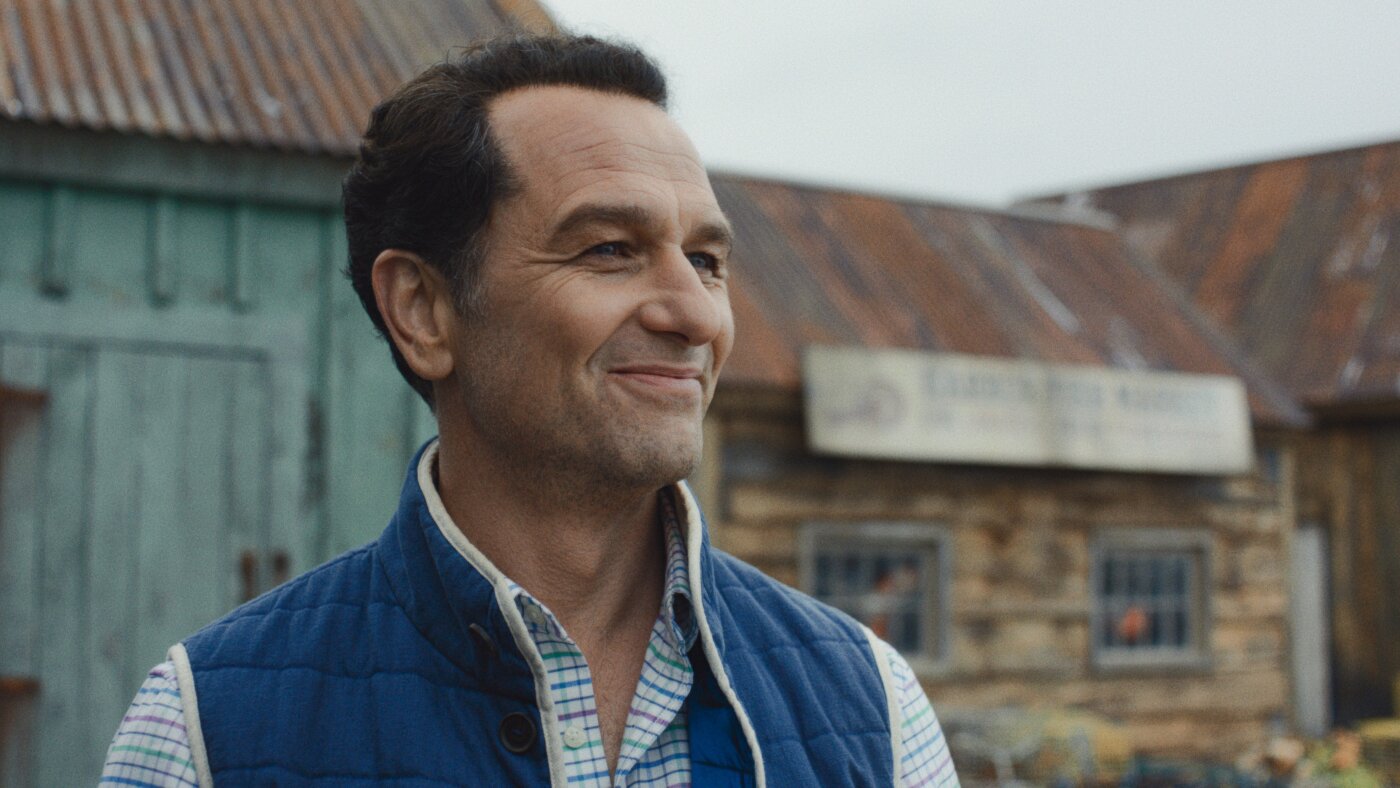
Matthew Rhys was nominated for his role in Widow’s Bay.
Apple TV
hide caption
toggle caption
Apple TV
The 2026 Emmy nominations are here. We’re unpacking the record-breaking nominations for Hacks, plus a big day for Widow’s Bay, The Pitt, and The Bear. We’ll also talk about the snubs and make some early predictions of who will win.
Connect with Pop Culture Happy Hour:
Letterboxd / Facebook
Our weekly newsletter
Support Pop Culture Happy Hour+


Can you say no to a friend’s wedding?
Getty Images/Getty images
hide caption
toggle caption
Getty Images/Getty images
Are we spending too much on other people’s weddings?
Going to a friend’s weddings can be so fun and meaningful… but it can also really hurt your wallet. A survey by LendingTree found that 31% of people who had been to a wedding in the past five years had accrued debt to attend. So what’s driving up the cost of weddings for guests? And what makes it so hard to say no to these expenses?
Brittany breaks it down with Allyson Rees, senior analyst at trend forecasting firm WGSN, and Annie Joy Williams, assistant editor at The Atlantic.
This episode was produced by Liam McBain, with additional support from Corey Antonio Rose. It was edited by Neena Pathak. Our Supervising Producer is Cher Vincent. Our Executive Producer is Barton Girdwood. Our VP of Programming is Yolanda Sangweni.
-

 News29 minutes ago
Three more people charged with damaging Reflecting Pool after Trump’s multimillion-dollar restoration | CNN Politics
-

 Los Angeles, Ca2 hours ago
Loved ones search for missing 34-year-old Southern California woman
-

 Detroit, MI2 hours ago
Chickens, geese found at vacant home after nonprofit reports them stolen
-

 San Francisco, CA2 hours ago
What’s next for San Francisco Giants as MLB trade deadline approaches?
-
 Dallas, TX2 hours ago
Dallas millionaire files lawsuit against groundwater district
-

 Miami, FL2 hours ago
7 more women arrested at southwest Miami-Dade massage parlors, accused of prostitution in undercover sting
-

 Boston, MA3 hours ago
‘They’re my buddies’: 96-year-old Back Bay woman befriends French soccer team
-

 Denver, CO3 hours ago
Denver officers cited for separate incidents, 1 fired

