Lifestyle
Splendid day trips you can take from Las Vegas — each less than a two-hour drive

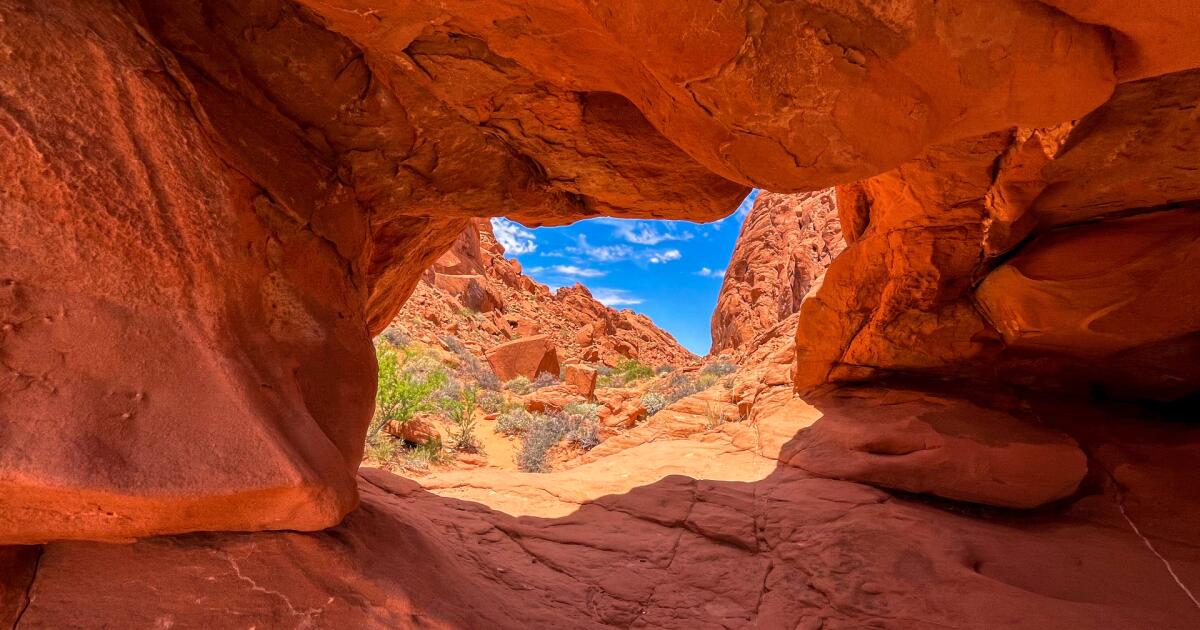
I have a new system for beating the casinos in Las Vegas: I don’t spend a penny on the slots, the tables or the sports books. Instead, I bet heavily on red and green.
Red rocks and green waters, that is. Hiking and kayaking.
I tested the system on a series of day trips last month. Though I slept three nights in a hotel on the Strip, I headed out of town every day.
First: Red Rock Canyon National Conservation Area. Later, Valley of Fire State Park and the Colorado River’s Black Canyon, where the waters of Emerald Cave eerily glow. Then a night of minor league baseball.
None of these adventures took me more than 60 miles from the Strip (a.k.a. Las Vegas Boulevard). Yet the psychological distance seemed enormous. Maybe it’s no surprise that many climbers and other outdoorsy types have moved to Las Vegas for the access it gives them to rocks, mountains and such.
You know that semi-vacant look on so many slot machine players’ faces? You don’t see that so much on the trail or the river, even when the path is uphill or the paddling is against the wind. And it’s tough to find a poker face in the Las Vegas Ballpark when management is staging an Elvis karaoke competition between innings.
Here’s a rundown.
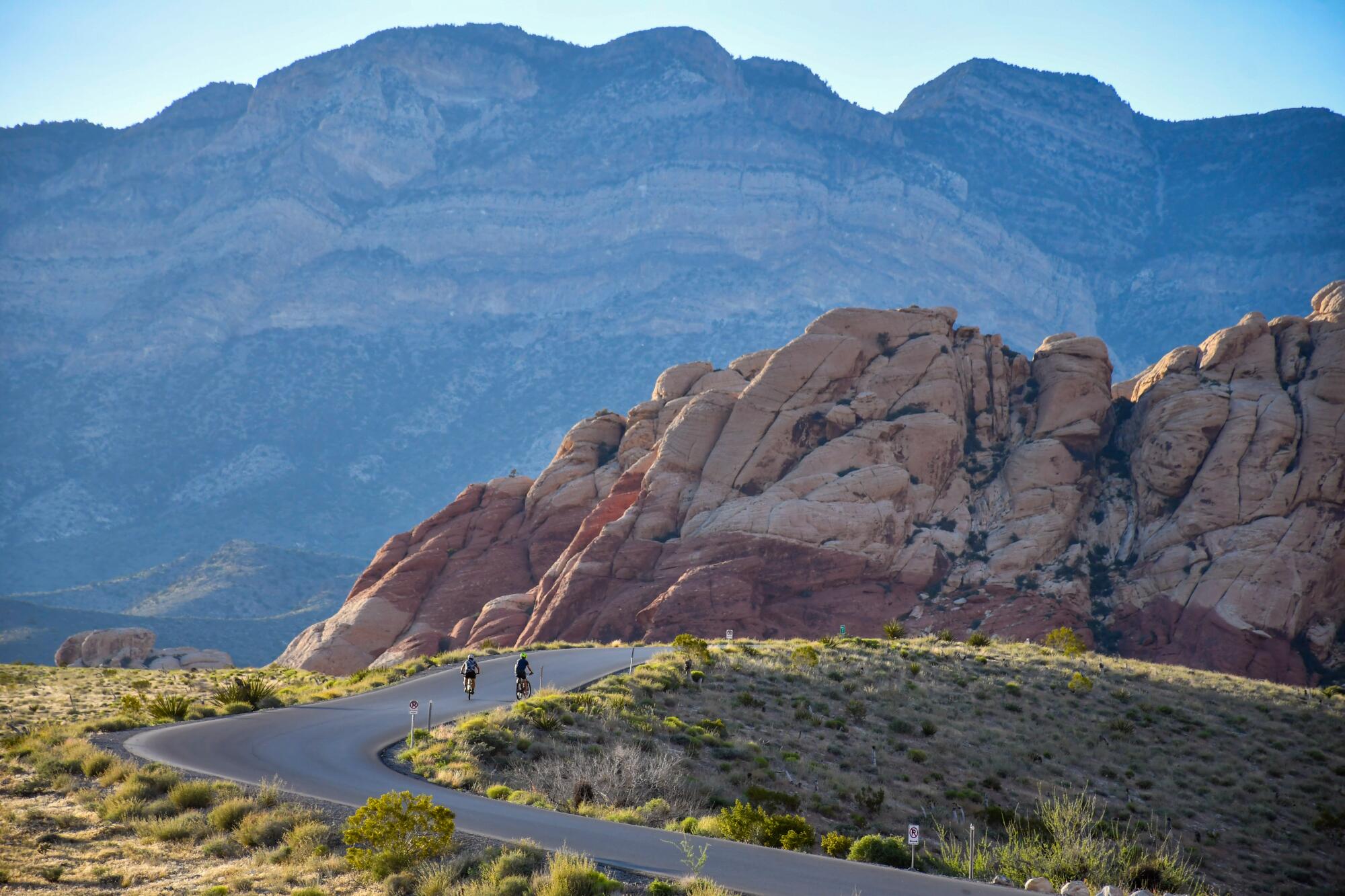
Red Rock Canyon National Conservation Area is near the Las Vegas suburb of Summerlin, about 15 miles from the Strip.
(Christopher Reynolds / Los Angeles Times)
Red Rock Canyon
Driving distance from the Strip: About 30 minutes from the Stratosphere tower.
What makes it great: You’ll have no trouble finding the scenery at the Red Rock Canyon National Conservation Area.
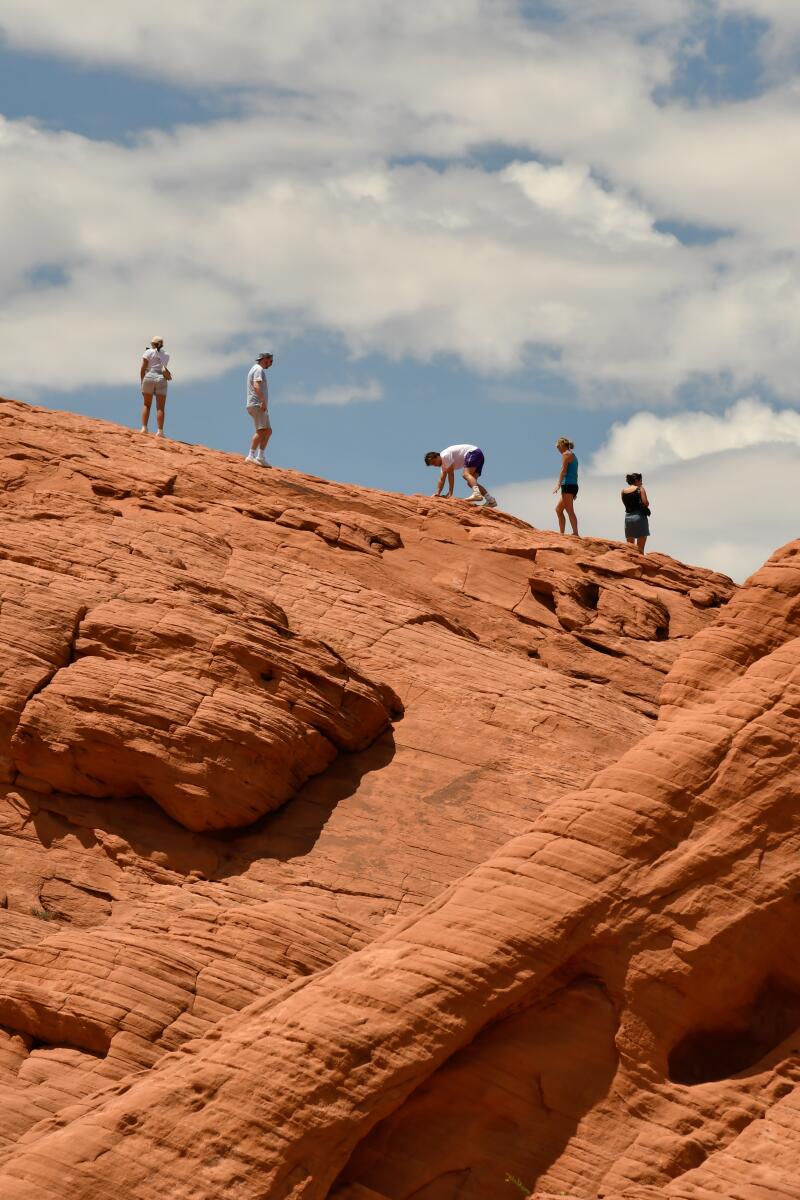
Solitude might take a little longer, because the canyon is immensely popular and only an 18- to 22-mile drive from the Strip, depending on your route. Once there, you can hike, bike or drive a 13-mile loop through a landscape of stacked and tumbled boulders, some fiery red, some chalky white, many so strangely striated that you may suspect they’ve been scrubbed with steel wool.
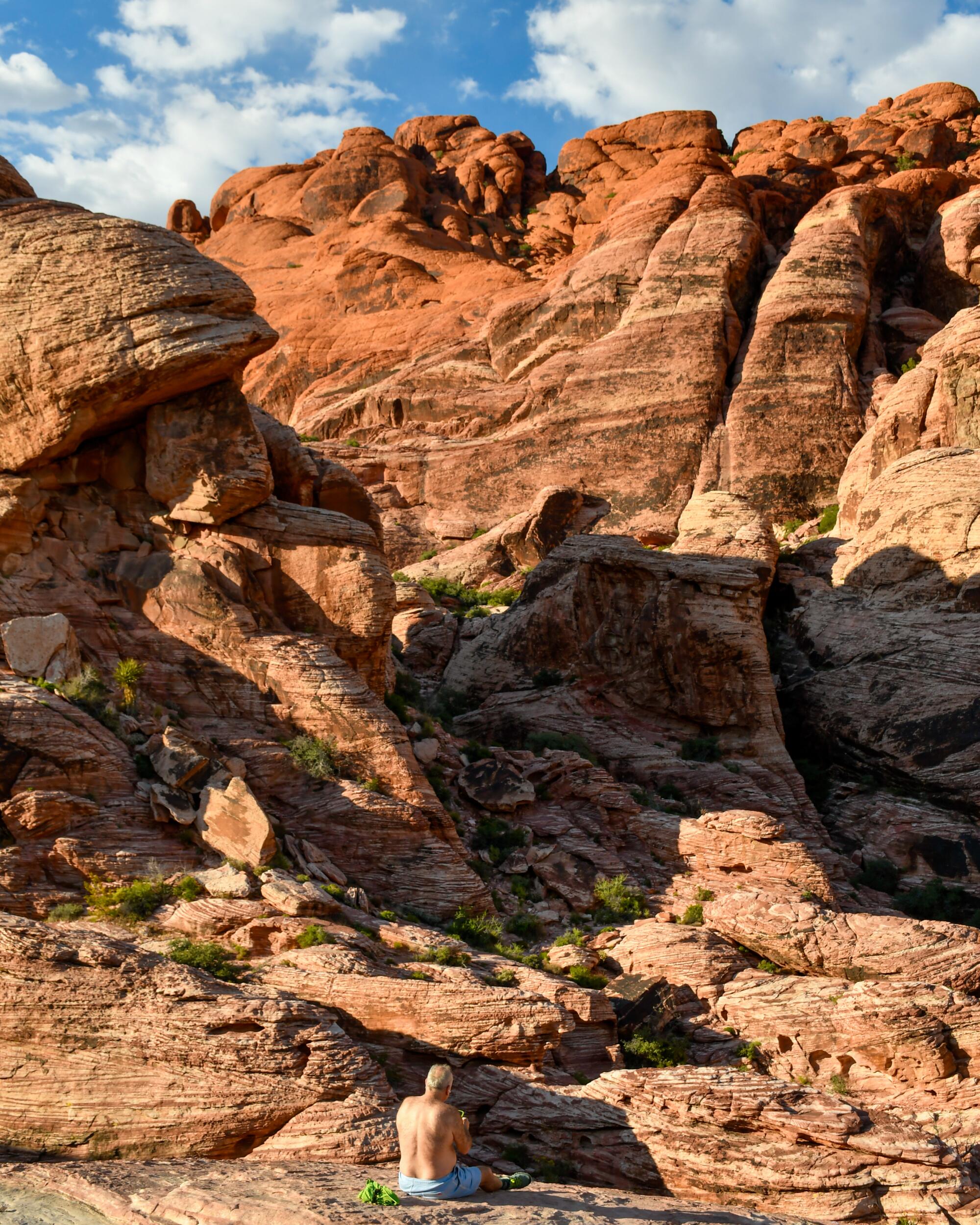
Red Rock Canyon Conservation Area near Summerlin offers hiking and biking opportunities.
(Christopher Reynolds / Los Angeles Times)
Many of the formations are Jurassic sand dunes that have been hardened to sandstone by time. You can drive between or hike on 16 trails threaded through the rocks, junipers and some Joshua trees too.
For drivers and cyclists, it’s a one-way route, with a speed limit of 35 mph, on a wonderfully smooth two-lane blacktop. For hikers, the trails range from 800 feet to 14 miles, easy to difficult, and there are more just beyond the loop.
If you go: Once you start driving the loop, you’ll almost immediately want to pull over because the scenery is so arresting. Don’t. It’s illegal. And the first parking lot, Calico Hills, comes up soon, followed by about 10 more in 13 miles. Most have restrooms.
I made my visit just before sunset. Early morning would be good too — you get dramatic light and avoid the worst of the heat.
In cooler months (Oct. 1 through May 31), you’ll need to book a timed reservation to drive through between 8 a.m. and 5 p.m. In summer, you don’t need a timed reservation, but you’ll still need to pay $20 per car (unless you have a national parks pass).
Black Canyon and Emerald Cave
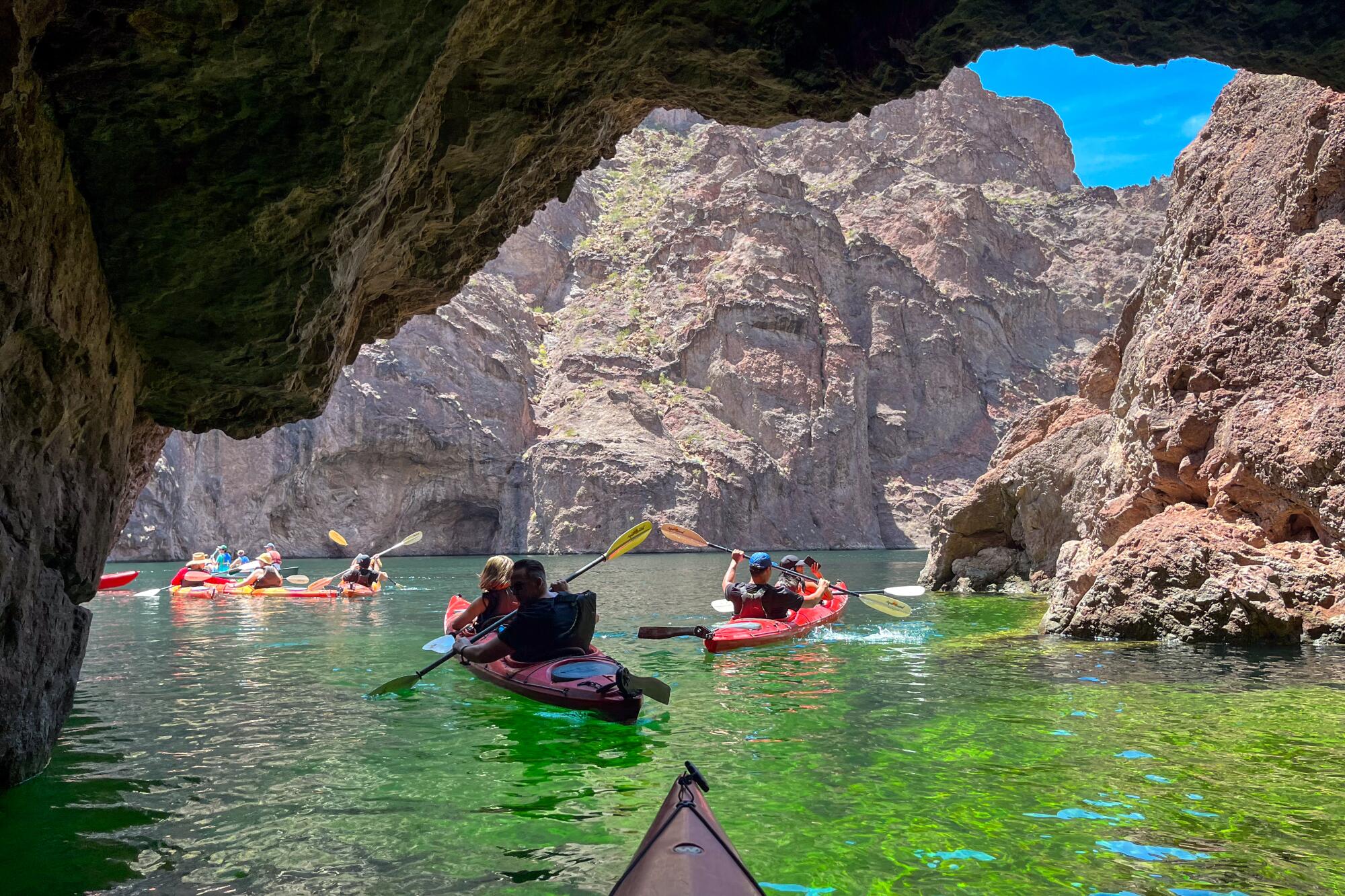
The Emerald Cave has become a favorite of Instagrammers.
(Christopher Reynolds / Los Angeles Times)
Driving distance from the Strip: About an hour and 15 minutes.
What makes it great: What if you flooded a red rock canyon and set multitudes of Nevadans and visitors loose on assorted watercraft? Lake Mead National Recreation Area, a 38-mile drive east of Vegas, is the lively answer to that question.
Most of the action is on the lake itself, which was created in 1936 by the construction of Boulder Dam (now Hoover Dam) along the Colorado River. But about 15 miles downriver from the dam, you’ll find Willow Beach and the Black Canyon Water Trail, a great place to kayak.
After a 60-mile drive southeast from the Strip, I was floating with a tour group in gentle waters (no rapids here) at the foot of 1,500-foot cliffs.
“Let’s go to Arizona,” our guide said — which simply meant paddling from one side of the river to the other.
I had signed on with Blazin’ Paddles, one of several kayak tour companies that paddle out of Willow Beach Marina on the Arizona side. The marina is about 15 miles downriver from the dam. Because it’s part of Lake Mead National Recreation Area, entrance is $25 per car.
There were dozens of kayakers in groups ahead of me, in part because paddling in a shady canyon is a pretty good way to spend a 95-degree day, in part because Instagram has made Emerald Cave a star.
The cave, a 2-mile paddle from Willow Beach, is only about the size of a two-bedroom apartment. But the way its waters glow green makes for great pictures. It’s the centerpiece of most half-day tours, and guides say they’ve fit as many as 23 kayaks in there at a time.
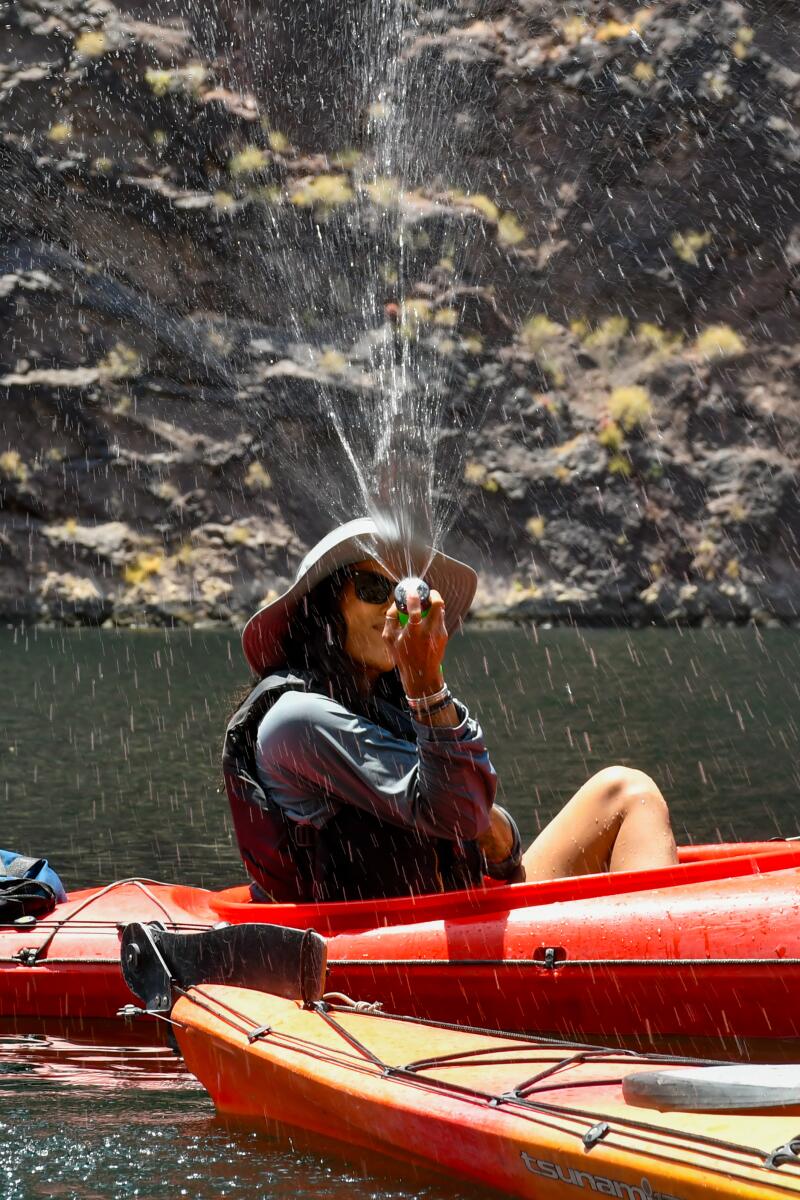
You can explore the Colorado River in an inflatable watercraft.
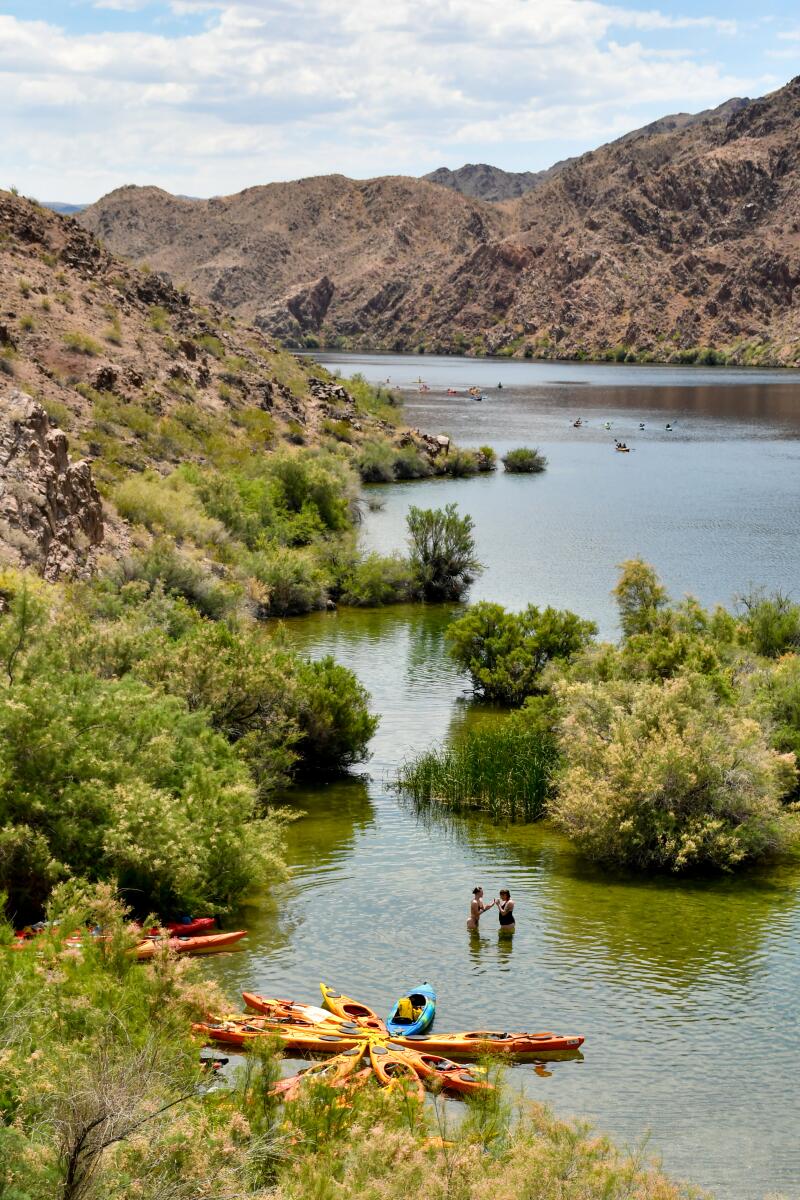
Kayak tours from Willow Beach explore the Colorado River. (Christopher Reynolds / Los Angeles Times)
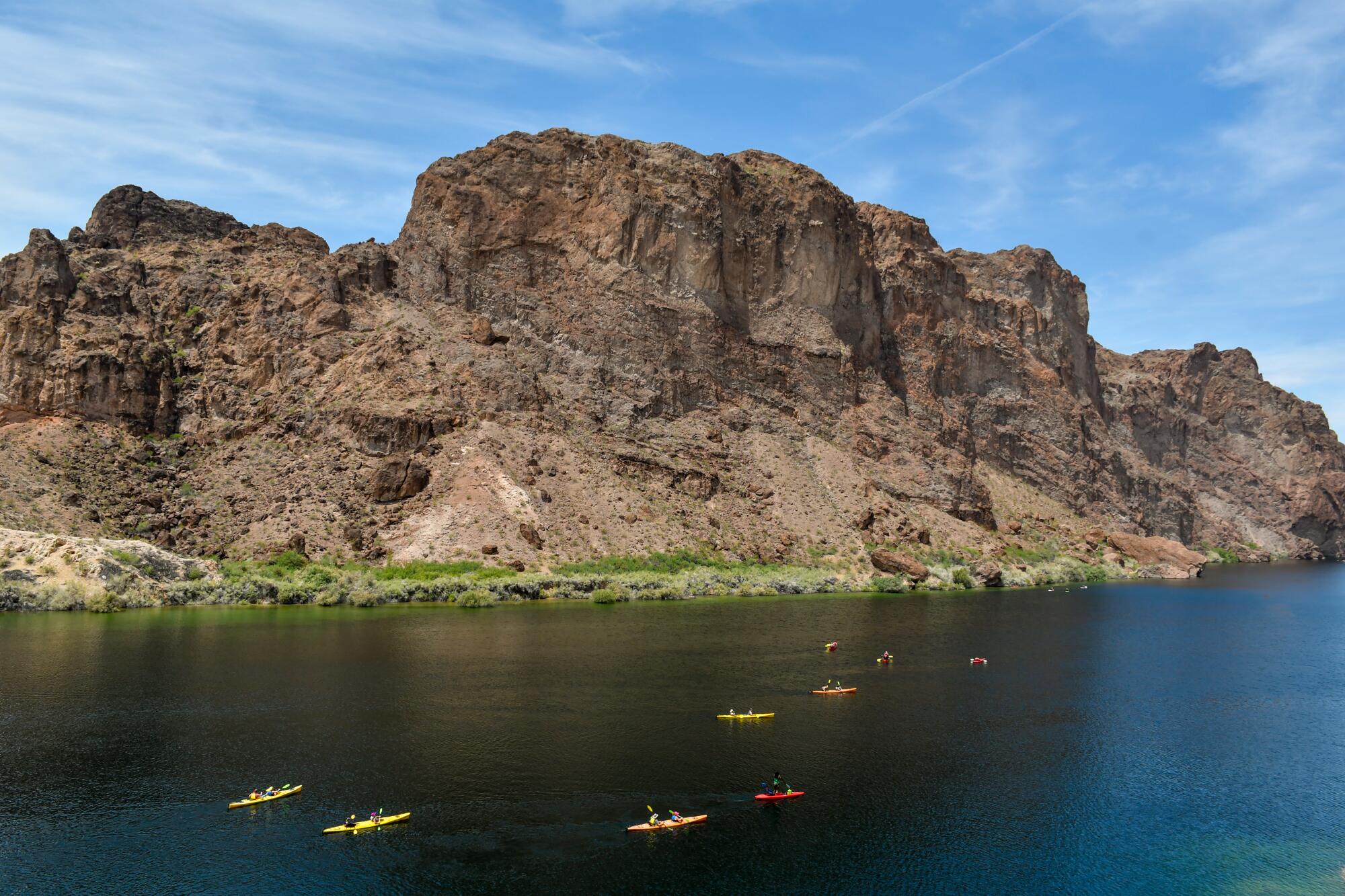
Mountain buttes rise above kayaks floating in the Colorado River’s Black Canyon, just below Hoover Dam.
(Christopher Reynolds / Los Angeles Times)
If your excursion is like mine, you’ll run into a traffic jam outside the cave and the wait will be about 45 minutes. Sometimes it’s over an hour, guides say.
But remember, you’ll be in a kayak beneath tall cliffs, keeping an eye out for desert bighorn sheep, possibly engaging in splash skirmishes with fellow paddlers. Life could be worse. And once you’re in the cave, the sight is memorable. If you’ve ever taken a rowboat into the Blue Grotto on the Italian isle of Capri, this cave’s interior will give you déja vù in another hue.
For the record, we wedged 17 kayaks and a canoe into the cave. And on the way back to the marina, we spotted a bald eagle.
Four miles of kayaking, with a cave in the middle and a stop to hop out for a view, is just about perfect for a three-hour excursion. I paid $110. (With shuttle bus service from the Strip, it’s $149.)
If you go: The best time for Emerald Cave photos is said to be midday, when I was there. But if you get there early or late, you’ll have less company.
There’s a store at Willow Beach Marina that sells snacks, sunblock, hats, water shoes, dry bags and boating and fishing supplies; open 7 a.m. to 5 p.m. daily in summer. There’s also a restaurant, Black Canyon Grill, open daily for lunch in summer; open Fridays to Sundays for most of March, April, May, September and October; and closed November to February.
You can also take a quick, free look at Hoover Dam (22 miles from Willow Beach) by parking in a free lot on the Arizona side of the river (parking is $10 on the Nevada side) and walking across the dam. Entry to the Visitor Center exhibits and observation deck is $10. There are also guided dam tours available, first come, first served. Boulder City, 6.5 miles from the dam, has several restaurants and antique shops.
Valley of Fire State Park
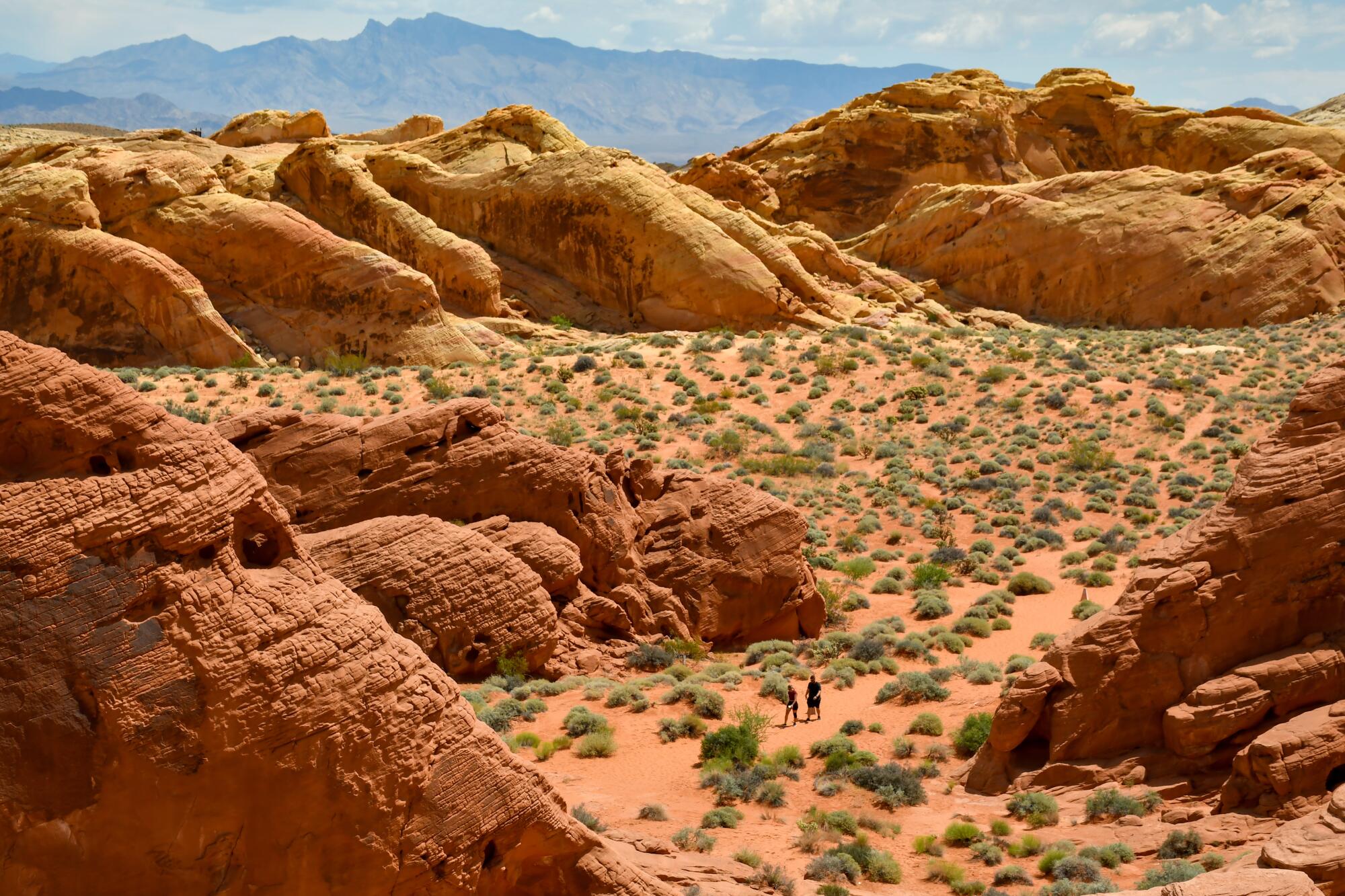
Valley of Fire State Park is about 45 miles northeast of Las Vegas.
(Christopher Reynolds / Los Angeles Times)
Driving distance from the Strip: About 55 minutes.
What makes it great: Even after I saw Red Rock Canyon, I didn’t fully understand how easily outback Nevada can pass for outback Utah. The Valley of Fire — about 55 miles northeast of the Strip — educated me further.
It also lured me into a few furnace-hot gullies and showed me miles of red sandstone, gray limestone, slot canyons and crazy-shaped boulders, all scattered on a desert floor that long ago was an ocean floor. Some boulders are decorated with petroglyphs older than all of our leading presidential candidates put together.
More specifically, because I read some signs, I can tell you that the petroglyphs are more than 2,000 years old, and also that a petroglyph is cut into stone; a pictograph is painted on stone.
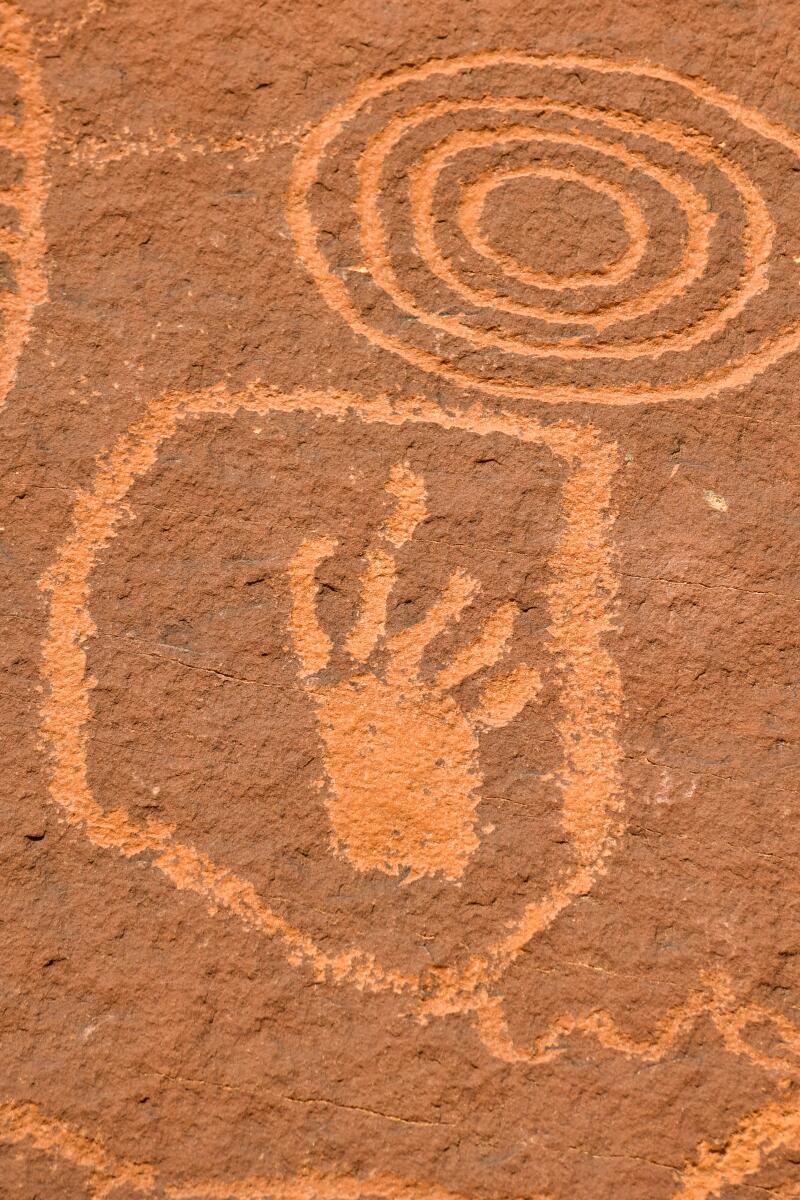
Petroglyphs at Valley of Fire State Park.
(Christopher Reynolds / Los Angeles Times)
Valley of Fire, Nevada’s first state park, has one through road, two campgrounds and several rock-climbing spots. But keep this place’s name in mind. It gets so hot (up to 120 degrees) that from May 15 to Sept. 30 this year, rangers have closed all trails longer than 1 mile.
Sticking within that limit, I wandered among the Beehives rock formations near the park’s western entrance and climbed the stairs to Atlatl Rock (where an ancient inscribed hand seems to be giving the finger to all who pass). I also walked the 0.7-mile Mouse’s Tank Trail and 1-mile Rainbow Vista trail, but it was close to 100 degrees, and the sandy path may give you that swimming-in-syrup sensation.
If you go: Park entrance is $10 per vehicle ($15 for out-of-state vehicles). The rangers’ 1-mile limit means that until October, nobody can hike the Fire Wave, Seven Wonders Loop or the White Domes Loop.
Still, it’s a thrill to follow White Domes Road north from the visitor center as it twists and squeezes between boulders.
The Moapa Valley town of Overton, 9 miles north of the park’s eastern entrance, is home to the Lost City Museum, created in the 1930s to showcase Native artifacts that long predate the creation of Lake Mead. On Overton’s Main Street, the Inside Scoop cafe has ice cream and makes a topnotch $8 tuna salad sandwich.
Aviators baseball in Las Vegas Ballpark
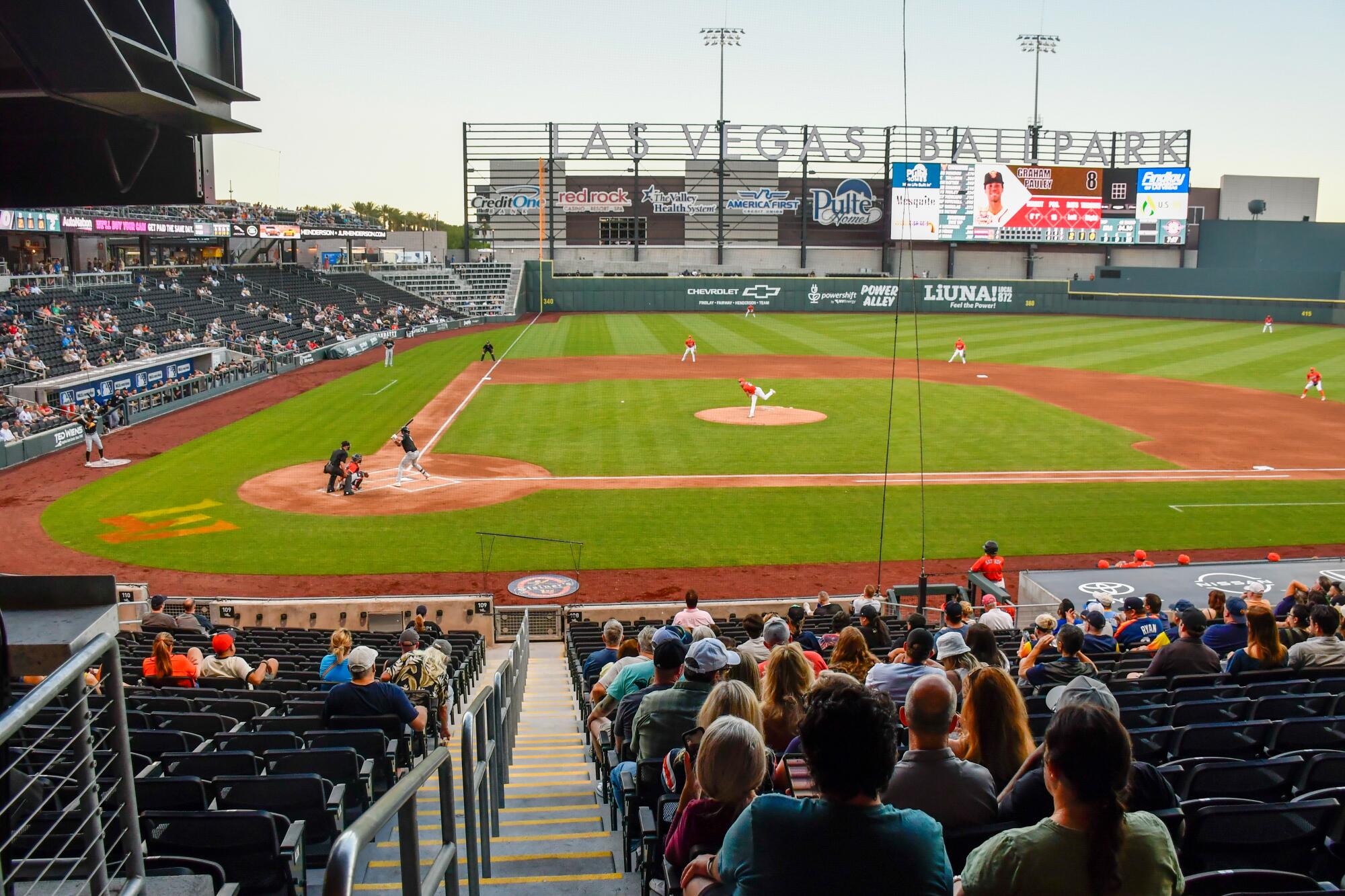
Las Vegas Ballpark, home to the minor-league Las Vegas Aviators, is in the Vegas suburb of Summerlin, about 12 miles west of the Strip.
(Christopher Reynolds / Los Angeles Times)
Driving distance from the Strip: About 25 minutes.
What makes it great: Strictly speaking, the Las Vegas Ballpark isn’t a full day trip, but this may be the most family-friendly of these excursions, so it needs to be here.
The ballpark, home to the AAA Aviators baseball team, stands in the Vegas suburb of Summerlin, about 15 miles from the Strip. You could spend all day in a casino and still make 7 p.m. game time. (Or you could head for the ballpark after exploring Red Rock Canyon, which is practically next door.)
Whenever you arrive, your blood pressure is likely to ease once you step in. It’s a gorgeous ballpark, completed in 2019 with a capacity of just 10,000, so it feels intimate. You can spread a blanket on the grassy berm overlooking right field, and there’s a good chance a local 15-year-old will be singing the national anthem.
But there’s also a bright, high-resolution scoreboard, a swimming pool beyond center field (yes, that costs extra) and food options that include tri-tip sandwiches and avocado chicken burritos.
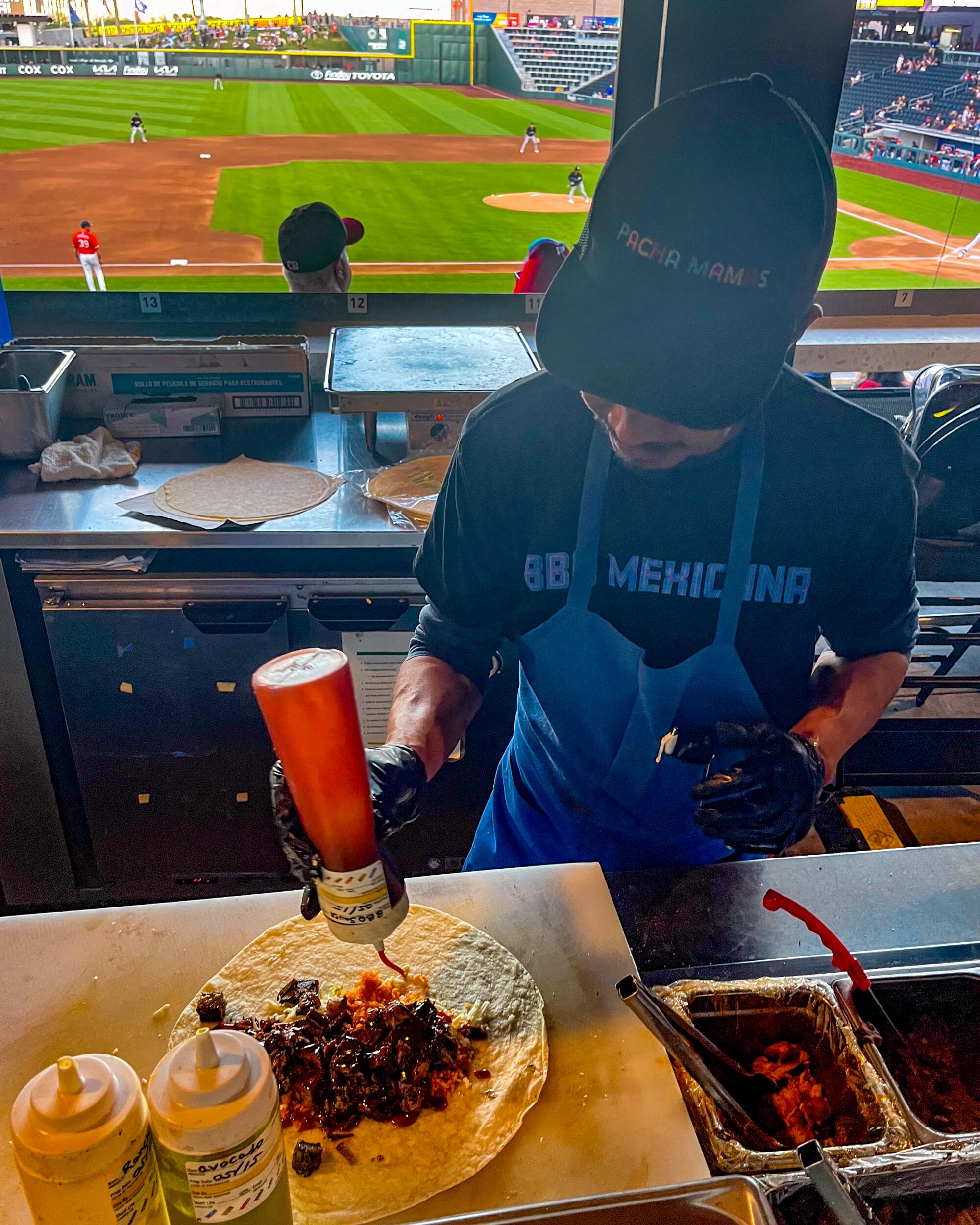
Food options include burritos and tri-tip at Las Vegas Ballpark.
(Christopher Reynolds / Los Angeles Times)
You can count on silly games between innings (including a cardboard airplane-throwing contest), brand ambassadors handing out merch and kids scrambling for foul balls. Beers start at $10, hot dogs at $6.50. (And there are cocktails, because Las Vegas.)
On the night I came, attendance was 5,042 people and 99 dogs (because it was bring-your-dog night).
Unless you’re a devotee of the El Paso Chihuahuas, Salt Lake Bees or Reno Aces, you won’t recognize any of these hopeful young players. But that will hardly matter — especially if (as I witnessed) the center fielder makes a leaping grab to save a 9-7 win for the home team.
If you go: Tickets start at $14 (for a spot on the berm in right field), but if you buy online in advance, the middleman fees will push that to about $20.
Las Vegas, a Dodgers farm team from 2001-08, is now a farm team for the Oakland Athletics. It’s a tad awkward that the Athletics have announced that they’ll be moving to Las Vegas in a few years. But for now, the Aviators are here and you can be too.
There are no slot machines in the ballpark and no sports betting area. In fact, the only casino with a prominent ad posted is nearby Red Rock Resort.
You can check the schedule to see when the Aviators are playing at home. The season runs through Sept. 22, and the AAA national championship game will be in the ballpark on Sept. 28.



Neve Campbell in Scream 7.
Paramount Pictures
hide caption
toggle caption
Paramount Pictures
The OG Scream Queen Neve Campbell returns. Scream 7 re-centers the franchise back on Sidney Prescott. She has a new life, a family, and lots of baggage. You know the drill: Someone dressing up as the masked slasher Ghostface comes for her, her family and friends. There’s lots of stabbing and murder and so many red herrings it’s practically a smorgasbord.
Follow Pop Culture Happy Hour on Letterboxd at letterboxd.com/nprpopculture

Abriana Vicioso is the host of the Flower Hour, which takes place monthly.
(Jennifer McCord / For The Times)
Each flower carries a personal history. For Abriana Vicioso, the calla lily was her parents’ wedding flower — a symbol of her mother’s beauty. “She had this big, beautiful white calla lily in her hair,” Vicioso says. “I love my parents. They’re the reason I’m here. I’ll never forget where I came from.”
The Flower Hour begins with Vicioso announcing, with a warm smile: “Today is about touching grass.” The florist-by-trade gestures behind her to hundreds of flowers contained in buckets — blue thistles, ivory anemones and calla lilies painted silver — all twisted and unfurling into the air. “Tonight is going to be so sweet and intimate,” Vicioso says, eyeing the beautiful chaos at her feet. A grin buds across her face.
Moments before the workshop, participants sit at candlelit tables exchanging horoscopes and comparing their favorite flowers. A mention of the illustrious bird-of-paradise flower elicits coos and awe from the women. Izamar Vazquez, who is from Jalisco, Mexico, reveals her fondness for roses, which make her feel connected to her Mexican roots.
Vicioso hosts her flower-themed wellness workshop near the iconic Original Los Angeles Flower Market in downtown L.A. In January, the first Flower Hour event sold out, prompting her to make it a monthly series. Vicioso describes the event as a “three-part journey” where participants are invited to drink herbal tea, smoke rose-petal-rolled cannabis joints and create a floral arrangement. “The guide is to connect with the medicine of flowers,” Vicioso says.


Rose petal joints, tea and flower arranging are all part of The Flower Hour event’s offerings.
The event is hosted at the Art Club, a membership-based co-working space. “The Flower Hour is really beautiful. Everyone gets to explore their creativity while meeting new people,” says Lindsay Williams, the co-owner of the Art Club.
The idea for Flower Hour came to Vicioso during a conversation with her mother. “We joke all the time that flowers were destined to make their way into my life,” she says. She works as a florist and models on the side, even appearing in the pages of Vogue. Vicioso grew up in a Caribbean household, where flowers and offerings were part of daily life. “In my culture and religion, a lot of my family practices — an Afro-Caribbean religion — we build altars.”
Like many cultures, flowers carry sentimental value in her religion. “I’m Caribbean, so a lot of my family practices a Yoruba religion, which comes from Africa. In the Caribbean, it’s well known as Santería.”

-
Share via
After a difficult year and a breakup, Vicioso wanted to marry her love of flowers with community building. Because Vicioso uses cannabis medicinally, the workshop naturally includes a smoking component. “My family has smoked cannabis for a lot of reasons for a long time. It’s a really healing plant,” she explains.
In the workshop, even the cannabis gets the floral treatment. Vicioso presents her rose-petal-wrapped joints on a silver platter at each table. She rolled each by hand. “If you’ve never smoked a rose-petal-rolled joint, the difference with this is it’s going to have roses that have a slight tobacco effect,” she announces.
During the workshop, Vicioso stresses the importance of buying cannabis from local vendors. The cannabis provided was purchased from a Northern Californian vendor. The wellness workshop aims to reclaim the healing ritual of smoking cannabis. “This is a plant that has been commercialized,” Vicioso says. “There’s a lot of Black and Brown people who are in jail for this plant.”
The resulting workshop is what Vicioso describes as “an immersive wellness experience that is the intersection of wellness, creativity, community and an appreciation of flowers.” The workshop serves as a reminder to enjoy Earth’s innate beauty in the form of flowers — including cannabis. “It’s this gift that the universe gave us for free and that I have this deep connection with,” Vicioso says.


Conversation cards to generate discussion among participants (top, letf). The workshop serves as a “third space” for Angelenos to engage in tactile creativity and community building outside of traditional nightlife settings.
After enjoying lavender chamomile tea and smoking a joint, Vicioso introduces the flowers to the group before inviting them to pick their own. She emphasizes each flower’s personality traits, describing green dianthus as a “Dr. Seuss” plant. Then, there are calla lilies with their “main character moment.” It gets personal. “Start thinking of a flower in your life that you can discover,” she says. “If you’re feeling like you need inspiration, you can always remember that these flowers have stories.”
Vicioso infuses wisdom into her instruction on floral arrangements: There are no mistakes. Let the flowers tell you where they want to go, she urges. Intuition will be your guide — the wilder, the better.
“Hecho in Mexico” reads a sticker on a bunch of green stems. “Like me,” says Vazquez with a laugh. “They’re all doing their own thing. Like a family,” she says later, arranging stems.

The Flower Hour participants and Vicioso, center, chat as they build their own floral arrangements at the sold-out event.
Two participants — Vazquez and Rebeca Alvarado — are friends who run a floral design company together called Izza Rose. Like Vicioso, the friends have a connection to flowers through their Latin American culture. They met Vicioso in the floral industry and were overjoyed to discover her workshop.
“This is a great way to connect with other people,” says Vazquez.
Alvarado agrees, adding: “You’re getting to know people outside of going to bars. You can connect in different ways when there’s an activity.”
Vazquez uses flowers to stay connected to her Mexican heritage, adding that she prefers to support Mexican vendors. In recent months, the downtown L.A. flower market has struggled to recover from ongoing ICE raids. “Some are scared to come back,” says Vazquez.


Hand-rolled cannabis joints wrapped in rose petals are presented on a silver platter at The ArtClub (top, right). The Flower Hour aims to reclaim the healing rituals of cannabis and flowers.
Another participant, Barbara Rios, was attracted to the workshop for stress relief. “You can hang out with your friends, but it’s nice to do things with your hands,” she says. “I work a stressful job, and it’s nice to have that third space that we’re all craving.”
On this February night, the participants were predominantly women, save for one man. In the future, Vicioso hopes that more men learn to engage with flowers. “There’s a statistic about men receiving flowers for the first time at their funerals, and I think we have changed that,” she says.
To conclude the workshop, Vicioso encourages participants to build lasting friendships and incorporate flower arranging into their daily practice — even if it’s just with a small, inexpensive bouquet.
“Get some flowers together, go to the park, hang out with each other and hang out with me,” she says. Participants leave with flower arrangements in hand. In the darkness of the night air, it briefly looks as though the women carry silver calla lilies that are blooming from their palms.

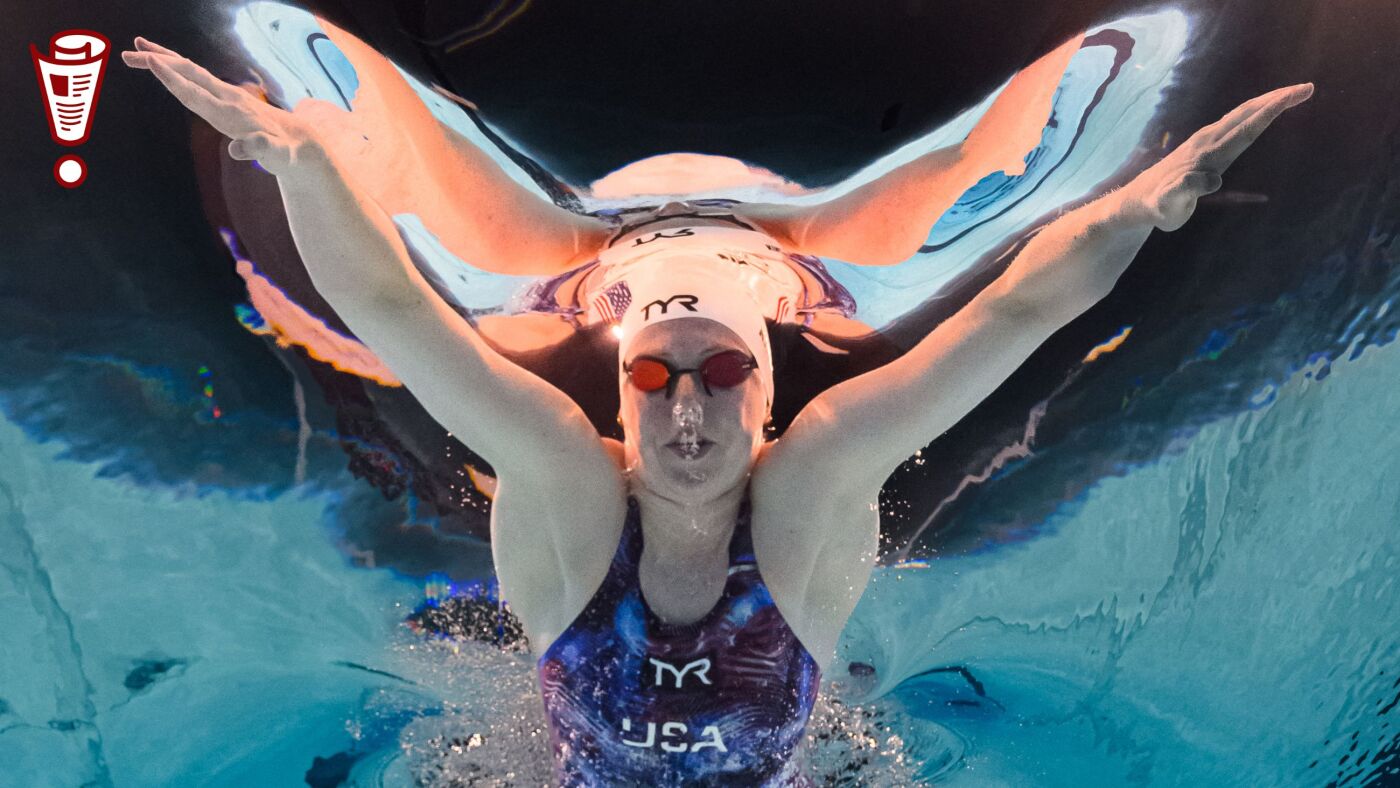
An underwater view shows US’ Lilly King competing in a heat of the women’s 200m breaststroke swimming event during the Paris 2024 Olympic Games at the Paris La Defense Arena in Nanterre, west of Paris, on July 31, 2024. (Photo by François-Xavier MARIT / AFP) (Photo by FRANCOIS-XAVIER MARIT/AFP via Getty Images)
François-Xavier Marit/Getty Images
hide caption
toggle caption
François-Xavier Marit/Getty Images
This week’s show was recorded in Bloomington, Indiana with host Peter Sagal, judge and scorekeeper Bill Kurtis, Not My Job guest Lilly King and panelists Alonzo Bodden, Josh Gondelman, and Faith Salie. Click the audio link above to hear the whole show.
Who’s Bill This Time
State of the Union is Hot; The Tribal Council Convenes Again; A Glow Up In the Doll Aisle
Panel Questions
The Toot Tracker
Bluff The Listener
Our panelists tell three stories about a travel hack in the news, only one of which is true.
Not My Job: Olympic Swimmer Lilly King answers our questions about Lil’ Kings
Olympic Swimmer Lilly King plays our game called, “Lilly King meet these Lil’ Kings” Three questions about short kings.
Panel Questions
Cleaning Out The Cabinet; Bedtime Stacking
Limericks
Bill Kurtis reads three news-related limericks: Getting Cozy With Cross Country Skiing; Pickleball’s New Competition; Bees Get Freaky
Lightning Fill In The Blank
All the news we couldn’t fit anywhere else
Predictions
Our panelists predict, after American Girls, what’ll be the next toy to get an update.

Rep. Kevin Kiley announces run in California’s redrawn 6th Congressional District

How the Colorado Rockies Are Actually Building Its Opening Day Roster

Lawmakers again push to restore Shore Line East service to 2019 levels

Delaware Supreme Court upholds reforms to curb ‘DExit’ concerns

Florida High School Boys Basketball 2026 Playoff Brackets, Schedule (FHSAA) – March 2, 2026

Florida High School Football Rankings: Top 25 teams – Oct. 21

Cleary's 21 help Le Moyne down Central Connecticut State 69-64 in OT

How old is Bo Nix? What to know about Oregon quarterback ahead of 2024 NFL Draft

99th annual Pony Swim held in Virginia

Indiana Members Credit Union announced as new anchor tenant at Bottleworks District

Map: Earthquake Shakes Central California

Gas prices could jump as Middle East tensions threaten global oil supply

Pakistan calls troops, orders 3-day curfew as 24 killed in pro-Iran rallies

US says Kuwait accidentally shot down 3 American jets

House Republicans push Johnson to go to war with Senate over SAVE Act
-

 World5 days ago
Exclusive: DeepSeek withholds latest AI model from US chipmakers including Nvidia, sources say
-

 Massachusetts5 days ago
Mother and daughter injured in Taunton house explosion
-

 Denver, CO5 days ago
10 acres charred, 5 injured in Thornton grass fire, evacuation orders lifted
-

 Louisiana1 week ago
Wildfire near Gum Swamp Road in Livingston Parish now under control; more than 200 acres burned
-

 Technology1 week ago
YouTube TV billing scam emails are hitting inboxes
-

 Politics1 week ago
OpenAI didn’t contact police despite employees flagging mass shooter’s concerning chatbot interactions: REPORT
-

 Technology1 week ago
Stellantis is in a crisis of its own making
-

 News1 week ago
World reacts as US top court limits Trump’s tariff powers