Lifestyle
Sam Keen, Philosopher of the Men’s Movement, Is Dead at 93


Sam Keen, a pop psychologist and philosopher whose best-selling book “Fire in the Belly: On Being a Man” urged men to get in touch with their primal masculinity and became a touchstone of the so-called men’s movement of the 1990s, died on March 19 in Oahu, Hawaii. He was 93.
His death, while on vacation, was confirmed by his wife, Patricia de Jong. The couple lived on a 60-acre ranch in Sonoma, Calif.
Mr. Keen, who described himself as having been “overeducated at Harvard and Princeton,” fled academia in the 1960s for California, where he led self-help workshops and wrote more than a dozen books. He became a well-known figure in the human potential movement of that era.
In the 1970s, he delivered lectures around the country with the mythology scholar Joseph Campbell. He also gave workshops at two of the wellsprings of the New Age: Esalen Institute in Big Sur, Calif., and Omega Institute in Rhinebeck, N.Y. Mr. Keen’s specialty was helping middle-class seekers slough off the expectations of family and society, and discover what he called their “personal mythology.”
A long conversation that the ruggedly handsome Mr. Keen had with the journalist Bill Moyers, broadcast on PBS in 1991, brought him national exposure the month that “Fire in the Belly” was published. The book spent 29 weeks on the New York Times best-seller list.
Mr. Keen told Mr. Moyers that he had spent much of his early life trying to meet expectations about masculinity, especially those placed on him by women.
“They were the audience before whom I dramatized my life,” he said, “and their applause and their approval was crucial for my sense of manhood.”
In “Fire in the Belly,” which was partly inspired by a men’s discussion group he belonged to, Mr. Keen argued that men must discover a new kind of manhood apart from the company of women.
“Only men understand the secret fears that go with the territory of masculinity,” he wrote.
“Fire in the Belly” and an earlier, bigger best seller, “Iron John” (1990) by the poet Robert Bly, became the twin handbooks of the men’s movement, a psychological response to the gains made by feminism.
The movement’s principal authors and workshop leaders claimed that modern men had become “feminized” by demands that they get in touch with their feelings, seek consensus rather than lead, and become domesticated rather than follow their warrior spirit.
At woodsy retreats, men beat on drums, screamed primally and broke down in tears, grieving injuries that had been done to them by society, and especially by absent fathers.
The movement was an easy target for parody, which came from many cultural quarters. But books like Mr. Bly’s and Mr. Keen’s attracted large readerships, both male and female. In 1992, the year after the wrenching Supreme Court confirmation hearings of Clarence Thomas, which alerted many Americans to the issue of workplace sexual harassment, Mr. Keen was invited to lead a private seminar on gender dynamics for senators in Washington.
The men’s movement of the 1990s might have sowed some early seeds of what became the current “manosphere,” the world of misogynistic influencers who celebrate harassment and violence toward women. But Mr. Keen himself was not a misogynist, and he embraced feminism. He applauded its analysis of a patriarchal society that wounded both women and men, and he wrote that women’s liberation was “a model for the changes men are beginning to experience.”
From the men’s movement, Mr. Keen went on to become a guru of the flying trapeze, encouraging men and women to overcome their psychological fears by learning to swing from a circus bar 25 feet off the ground.
He set up a trapeze on his property in the foothills of Sonoma County and wrote “Learning to Fly: Trapeze — Reflections on Fear, Trust, and the Joy of Letting Go” (1999).
Alex Witchel, a Times reporter who visited him and took him up on the challenge, noted that Mr. Keen, then 67, wore tights and slippers and “looked like a bony old bird, his frame lean and spare from years of flying.”
Samuel McMurray Keen was born on Nov. 23, 1931, in Scranton, Pa., the second-oldest of five children of J. Alvin Keen, the director of a Methodist church choir, and Ruth (McMurray) Keen, a teacher. His early years were spent in Maryville, in East Tennessee.
When Sam was 11, his family moved to Wilmington, Del., where his parents ran a mail-order business selling uniforms to military nurses.
He graduated from Ursinus College in Collegeville, Pa., outside Philadelphia, and then earned a Doctor of Theology degree from Harvard Divinity School and a Ph.D. in philosophy of religion from Princeton University.
In 1968, on a sabbatical from the Louisville Presbyterian Theological Seminary in Kentucky, he visited the West Coast and became, as he once told an interviewer, “engulfed in the California madness.” He never returned to academia.
He became a freelance journalist, writing for Psychology Today and other magazines and interviewing some of the leading lights of New Age spirituality, including Carlos Castaneda, Chogyam Trungpa and Mr. Campbell, whose “The Hero With a Thousand Faces” inspired both the Grateful Dead and “Star Wars.”
His early book “To a Dancing God” (1970) described his rejection of the conservative Christianity in which he was raised and his embrace of direct spiritual experience.
A later book, “Faces of the Enemy” (1986), a study of the use of propaganda to prepare citizens for war, was made into a PBS documentary.
Mr. Keen’s marriage to Heather Barnes ended in divorce after 17 years. A second marriage, to Janine Lovett, also ended in divorce. Besides Ms. de Jong, whom he married in 2004, he is survived by a son, Gifford Keen, and a daughter, Lael Keen, from his first marriage; a daughter, Jessamyn Griffin, from his second marriage; six grandchildren; and three siblings, Lawrence Keen, Ruth Ann Keen and Edith Livesay.
Mr. Keen’s emergence as a spokesman for the men’s movement was somewhat accidental. He had been leading various types of workshops when his publisher, sniffing something in the air, asked him to write about modern manhood.
As “Fire in the Belly” caught fire with readers, Mr. Keen was disdainful of some of the more easily lampooned aspects of the movement.
“I wouldn’t be caught dead with a drum,” he said.



Lifestyle
L.A. Affairs: It’s hot when a man drives to me. But would this new guy make the trek from the Valley?

I met Dan on Hinge.
He lives in Woodland Hills, and I live in Venice. In Los Angeles, this is considered a long-distance relationship. In another city it might be nothing. Here, it’s a factor.
But I believe that with the right person, you can make anything work, so I stay open. I’m a native New Yorker, and if I were living in Brooklyn and a guy lived on the Upper West Side, that would be a 45-minute subway ride, which is truly nothing in New York. So with that same logic, I try to have flexibility with men in L.A.
When we started planning our first date, Dan suggested three options: a hike on mushrooms, a wine tasting or a walk on the beach.
A hike on mushrooms is something I’d only do with someone I already trust, not someone I just met online. I don’t do first-date hikes because I don’t like feeling trapped if the guy’s a dud. So I chose the wine tasting.
Then I learned the wine tasting was in West Hills.
On a Friday night, driving there from Venice would be insane. So I said I didn’t want to meet there because of the traffic. He suggested Malibu. That was also not ideal on a Friday.
I was getting annoyed — this was a pink flag because in my dating world, the guy is supposed to come to the woman’s neighborhood in the early days. I’ve gone out with plenty of men from the Valley who effortlessly suggested they come to me. It’s not rare or impossible.
I suggested he come to the Westside. I didn’t specifically say Venice, and in hindsight, I probably should have. He landed on Brentwood, which was manageable for both of us. On our first date, we met at an Irish pub on Wilshire Boulevard. He was cuter and more interesting than I had expected, and with the Guinness flowing, we had fun.
When I got home, he texted me: “Well, I like you 🙂 Less the tik tok and the lack of rock music in your life, but it’s not a deal breaker — there are other qualities 🙂 What are your thoughts?”
I noticed the slight negativity but was mostly dazzled that a man texted immediately after the date to say he liked me. In the modern dating economy, this felt rare.
The next day, both of our evening plans fell through, so we made a last-minute date. The wine tasting he originally suggested still sounded like fun, and although it meant me driving to the Valley, I was up for it now that we’d met.
We sipped flights at Malibu Wines & Beer Garden in its airy, romantic courtyard and played a flirty version of Truth or Dare. Halfway through, he dared me to kiss him.
We ended with sushi on Ventura Boulevard and a short make-out session in his car. He invited me to Thanksgiving at his uncle’s, which felt too soon, but also sweet.
After the second date, he texted and said he had his kids that week and was also hosting an event on Thursday, so his only day to meet was Wednesday. I said great.
On Tuesday night, he checked if we were still on, and I said yes.
Then he texted: “I’m flexible on time but not on location. I have a big event on Thursday, hopefully you can come to me again.”
My stomach tightened. This again?
So I texted back: “I drove to you last time, which was a bit of an exception for me especially in the early days, but the wine tasting location sounded special. Usually guys come to my area. How about we switch it up this time?”
He replied: “I appreciate the effort! Because of my event, I’d rather be close to a computer just if needed … Here is what i offer:
— I’ll come to your area anytime next week/end
— Lunch/dinner on me
I want to continue where we stopped last time 😉 No pressure of course, but let’s snuggle”
I responded: “Ok let’s meet next week. Snuggles sound nice … let’s see what happens …”
Then he wrote: “So I won’t see you tomorrow?”
I replied: “Unless you wanna come to me and bring your laptop along, let’s rain check until you have more flexibility.”
He said: “Dang, you are hard. I’ll let you know tomorrow around midday if it’s ok.”
And then — surprise — he decided to come.
He drove to Venice for a 5 p.m. date. He said his ETA was 5 p.m., and it ended up being 5:25 p.m., typical 405 Freeway.
When he showed up, he was in a cranky mood. On our way to KazuNori in Marina del Rey, I thanked him for picking me up and told him I think it’s hot when the guy comes to the girl.
“You’re just saying that because you want me to come to you more,” he said, not playfully, but aggressively.
That was basically the end for me. But there I was, in his car, heading to dinner. So I stayed pleasant and tried to make the best of it.
I shared that in the early stages of dating, I find it’s good etiquette for the guy to come to the woman’s neighborhood. He immediately disagreed and started ranting about how dating rules are ridiculous and how they swing in women’s favor. He resented paying for dates and declared he wasn’t looking to “sponsor a woman’s life.”
“If women want equality and equal rights,” he said, “then it should apply all across the board, including dating, and the man shouldn’t have to pay.”
I said women don’t actually have equal rights because we get paid less than men and often receive lower salaries than men in the same position.
I tried to change the subject and reset the mood, but he insisted we keep hashing it out.
I tried to explain masculine/feminine dynamics: providing and protecting, giving and receiving.
“What does the man get out of this arrangement?” he asked.
It was like watching someone’s personality warp into Mr. Hyde. Then he brought up another point: He’s a single dad of two kids, so he gets tired; and because I don’t have kids, that should factor into who drives where.
At this point, I was barely engaging and focused on eating my hand rolls, and I couldn’t wait to get home.
The check came, and I happily split it, wanting nothing further from him.
In the car back to my place, he remarked: “It’s obvious we’re never gonna see each other again.”
Obvious, but did it need to be stated?
Then he showed me a Spotify playlist he’d made for me of his favorite electronic music, because he knows I like EDM.
“Oh, that’s sweet,” I said.
“Yeah, that’s how I show interest. Through things like this, not who drives to who,” he replied.
When I got out of the car, we wished each other luck, and I headed inside and shut the door.
Two hours later, he sent me the playlist. I’ve yet to listen to it.
It wasn’t the distance that ruined it. It was the resentment. I’m not looking for a man who feels burdened by the effort. I’m looking for a man who sees the value of courting a woman in the first place.
The author is a writer, comedian and former psychologist who lives in Venice. She is the creator of the new vertical series “Manfari.” She’s on Instagram: @solange_neue and @manfari.show.
L.A. Affairs chronicles the search for romantic love in all its glorious expressions in the L.A. area, and we want to hear your true story. We pay $400 for a published essay. Email LAAffairs@latimes.com. You can find submission guidelines here. You can find past columns here.

Lonnie Bunch III is the 14th Secretary of the Smithsonian. He’s pictured above in September 2017.
J. Scott Applewhite/AP
hide caption
toggle caption
J. Scott Applewhite/AP
In a memo addressed to staffers sent Tuesday, the secretary of the Smithsonian, Lonnie G. Bunch III, defended the institution after the White House issued a 162-page report that characterizes the National Museum of American History as a place which has become “subject to institutional capture by a radical, activist ideology that is fundamentally opposed to telling the noble, honest story of the great country we know and love.”
In his email, which NPR has obtained, Bunch wrote in part: “While there will always be room for improvement, this report is not a fair characterization of the work and totality of the National Museum of American History. At the Smithsonian, our work is driven by scholarship, accuracy and an uncompromising commitment to tell the fullness of America’s story. As public servants and the keepers of this institution, we are charged with helping a nation find understanding, hope and clarity and as part of that duty, we are dedicated to excellence, reflection and growth.”

He continued: “We remain focused on what grounds us: a steadfast commitment to scholarship, nonpartisanship, independence, accuracy and integrity. For nearly 180 years, the Smithsonian has worked alongside partners across government — from the White House to Congress to our governing Board of Regents — guided by our enduring mission to increase and diffuse knowledge. That purpose remains: to pursue knowledge with rigor and to serve the American public with clarity and care.”
The White House report was issued on July 4 by the Domestic Policy Council under the title “Saving America’s Story: How Ideological Capture at the Smithsonian Institution’s National Museum of American History Erases Our Heritage.”

The council faults the National Museum of American History on a multitude of fronts, saying it underemphasized the Founding Fathers and early colonial and Revolutionary history; was not sufficiently celebratory of the country’s 250th anniversary; and that it engaged in “anti-white,” “illegal alien” and transgender activism.
It also accuses the museum of trying to “indoctrinate” teachers and students through its exhibitions, programming and teaching resources.
In the report, the council also specifically criticizes museum director Anthea Hartig, who has led the National Museum of American History since 2019 and is concurrently the president of the Organization of American Historians, calling her “an activist advancing an ideological agenda contradictory to the museum’s founding purpose of fostering patriotism.”
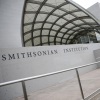
The Trump administration has made the Smithsonian museums one of its primary targets in its efforts to reshape cultural narratives to align with its viewpoints. In August 2025, the White House requested a “comprehensive internal review” of eight Smithsonian museums, including the National Museum of American History, following an executive order issued by President Trump in March 2025 in which he called for the removal of “improper ideology” from the Smithsonian’s offerings.
According to the Smithsonian’s charter, all of its 21 museums, 14 education and research centers, and the National Zoo are meant to be run independently of the federal government. The Smithsonian is overseen by Bunch and a board of regents, which includes Vice President Vance, Supreme Court Chief Justice John Roberts and other members appointed by Congress.
In an interview with NBC’s Meet the Press on Sunday, Bunch spoke about the Smithsonian’s 250th anniversary special exhibition at the Smithsonian Castle, which is called “American Aspirations.”
He told NBC: “It’s really important for people to understand that America is much an ideal as it is a place, that it’s a series of aspirations that have really shaped who this country is. And so for me, what is so powerful is to say, ‘Let us honor the words of Thomas Jefferson and the founders, but let us use those to challenge us to be better.’”
Jennifer Vanasco edited this story.

-

 Idaho50 seconds ago
You Asked: Where is the 1976 Bicentennial Time Capsule for the State of Idaho?
-

 Illinois8 minutes ago
Illinois election board ‘reviewing’ threat of prosecution from DOJ on noncitizen voting
-

 Indiana11 minutes ago
Creole Chrome Looks for Graded Glory in Indiana Derby
-

 Iowa16 minutes ago
PETERSON: Pollard’s “outside the lines” mindset was exactly what Iowa State needed
-

 Kansas23 minutes ago
Kansas parents charged after child fatally shoots 5-year-old, 8-year-old
-

 Kentucky26 minutes ago
Affordable Care Act rates rate hikes could strain Kentucky families, WKAS warns
-

 Louisiana31 minutes ago
Moncus Park gets helping hand from 260 youth volunteers across Louisiana
-

 Maine38 minutes ago
Maine’s high court keeps transgender athlete referendum off 2026 ballot

