Lifestyle
Paramount and Skydance are merging — here are 3 questions we have about the deal


The Paramount logo is displayed at Columbia Square along Sunset Boulevard in Hollywood, Calif. on March 9, 2023.
Patrick T. Fallon/AFP via Getty Images
hide caption
toggle caption
Patrick T. Fallon/AFP via Getty Images
There may be no more giddily optimistic time in media than the moment after a big deal is announced.
In the case of the $8.4 billion agreement that would bring in new owners to run Paramount Global, there are a lot of hopes and dreams riding on incoming CEO David Ellison and how he might reshape a media company which includes everything from Paramount Studios and the CBS broadcast network, to cable channels like MTV and BET and the Paramount+ streaming service.
Film lovers dream that if the new company goes forward, it will maintain Paramount as an independent brand, combining Ellison’s Skydance Media with a venerated film studio over 112 years old that’s based in the middle of Los Angeles (they also hope this means the company won’t largely be sold off for parts or swallowed by another huge business, like Sony).
Media insiders wonder if Ellison – backed by $6 billion from his family, including father and Oracle co-founder Larry Ellison – can leverage new technologies and Silicon Valley sensibilities to make the company more successful.
And keen observers of power in America hope that nepo baby-turned-mogul David Ellison will serve his family and the company better than previous owner (and fellow nepo baby) Shari Redstone, who inherited Paramount’s parent company National Amusements after the 2020 death of her father, Sumner Redstone. She proceeded to see it lose billions of dollars in value amid a changing media landscape, uncertain leadership and fitful sale negotiations.
Yeah, this may sound like a lot of media nerd nonsense – navel-gazing from an industry notorious for its self-obsession and myopic focus. But a successful rescue of Paramount can also point the way toward a shiny future for an increasingly uncertain media industry, where profits, product and audience are harder to come by. And failure could mean the company that is home to NCIS, Star Trek, MTV and Yellowstone might vanish into media history.
To succeed, Ellison and his backers must answer a load of pressing questions. Here are the ones which loom largest in my mind:
Can new owners really turn around a company that’s grounded in media businesses currently in serious decline?
One of Paramount Global’s biggest challenges is that it’s a media company packed with several businesses that are all struggling at once. Cable channels hobbled by cord cutting. A streaming service which isn’t expected to turn a profit until sometime next year. A broadcast network with an aging audience. A regional theater chain facing declines in moviegoing. And, as the global financial services company Moody’s noted in a recent statement, Paramount is merging with a smaller media company that doesn’t own or control much of its own intellectual property: Skydance Media.
Ellison and Jeff Shell, the former NBCUniversal CEO who would be president of the new company when the deal closes, told Wall Street analysts some of their ideas in a call Monday morning, saying Paramount+ would likely succeed as a part of an “ultimate bundle” of streaming services, with plans to completely rebuild the platform’s technology. When it came to their more traditional businesses, like cable TV channels, they talked of managing the decline while implementing $2 billion in cost savings.
But I think mid-level streaming services struggle because they have a tough time offering enough content to convince customers they should be prioritized above or alongside big players like Netflix and Disney+. Will redesigning the platform and getting wedged into a bundle next to bigger players really help distinguish their company?
How will the company be run until the deal closes … in 2025?
The purchase isn’t expected to close until sometime next year. Until then, Paramount Global will likely still be run by the group of three co-CEOs who currently guide the company. Which means a plan could still go forward that the CEOs announced last month, cutting $500 million in costs while exploring the sale of some assets. Black culture-focused cable channel BET has long been the subject of speculation that it might be sold to a mogul like Tyler Perry or Weather Channel owner Byron Allen, for instance.

Producer David Ellison attends the Royal Film Performance and UK Premiere of “Top Gun: Maverick” at Leicester Square on May 19, 2022 in London, England.
Eamonn M. McCormack/Getty Images for Paramount Pictures
hide caption
toggle caption
Eamonn M. McCormack/Getty Images for Paramount Pictures
Last month, online archives for MTV News, CMT news and Comedy Central, which were filled with decades of journalism on pop and country music, were pulled down without warning or explanation by the company. Will more surprise cutbacks surface over the next few months that limit or eliminate content?
In an odd way, it might make sense for Paramount to make more painful reductions now, before the new owners are officially in charge, so Ellison, Shell and their teams can take over outside the shadow of layoffs or serious cutbacks.
When Ellison and Co. take over, it will mean that yet another Hollywood studio will be dominated by Silicon Valley money, including MGM’s purchase by Amazon and the rise of major players like Apple TV+ and Netflix. Which leads to another big question: Will Paramount Global leverage the resources and innovation of the tech world to reinvent a major studio for the modern media moment, or have the forces which are hobbling the company progressed too far?
Will something else happen that could overturn the deal?
Federal regulators must weigh in. And there’s a 45 day window where Paramount’s board of directors could field another offer (though they would have to pay the Skydance group $400 million). Also, stockholders outside the Redstone family who feel shortchanged could file a lawsuit.
But in the rosy glow of a just-announced deal, all these challenges seem like rapidly shrinking images in the rearview mirror. A new brain trust has emerged, aimed at proving that a mid-level media company can survive in today’s times, as the daughter of one business titan hands the reins of her complicated company to the son of another.
Whether any of this adds up to a solution which can save Paramount while also helping cure what ails modern media on a larger scale, may be the biggest question of all.








An underwater view shows US’ Lilly King competing in a heat of the women’s 200m breaststroke swimming event during the Paris 2024 Olympic Games at the Paris La Defense Arena in Nanterre, west of Paris, on July 31, 2024. (Photo by François-Xavier MARIT / AFP) (Photo by FRANCOIS-XAVIER MARIT/AFP via Getty Images)
François-Xavier Marit/Getty Images
hide caption
toggle caption
François-Xavier Marit/Getty Images
This week’s show was recorded in Bloomington, Indiana with host Peter Sagal, judge and scorekeeper Bill Kurtis, Not My Job guest Lilly King and panelists Alonzo Bodden, Josh Gondelman, and Faith Salie. Click the audio link above to hear the whole show.
Who’s Bill This Time
State of the Union is Hot; The Tribal Council Convenes Again; A Glow Up In the Doll Aisle
Panel Questions
The Toot Tracker
Bluff The Listener
Our panelists tell three stories about a travel hack in the news, only one of which is true.
Not My Job: Olympic Swimmer Lilly King answers our questions about Lil’ Kings
Olympic Swimmer Lilly King plays our game called, “Lilly King meet these Lil’ Kings” Three questions about short kings.
Panel Questions
Cleaning Out The Cabinet; Bedtime Stacking
Limericks
Bill Kurtis reads three news-related limericks: Getting Cozy With Cross Country Skiing; Pickleball’s New Competition; Bees Get Freaky
Lightning Fill In The Blank
All the news we couldn’t fit anywhere else
Predictions
Our panelists predict, after American Girls, what’ll be the next toy to get an update.

Law Roach
Zendaya and Tom’s Wedding Already Happened …
Y’all Missed It!!!
Published
Zendaya and Tom Holland are married … so claims her longtime stylist, Law Roach.
Here’s the deal … the celebrity stylist — who started styling Zendaya way back in 2011 — spoke to Access Hollywood on the Actors Awards red carpet where he sang out “The wedding has already happened, you missed it.”
Waiting for your permission to load the Instagram Media.
The AH reporter asks in shock if that’s true … and, Law responds by saying it’s “very true” before walking off.
This isn’t the first time Tom and Zendaya’s relationship status has made headlines on a red carpet … remember at the Golden Globes in 2025, Zendaya had a ring on that finger — and, the next day, we found out the two were engaged.

TMZ.com
Zendaya and Tom met on the set of “Spider-Man: Homecoming” in 2016, started dating a couple years later and went public with their relationship in 2021.
We’ve reached out to Tom and Zendaya’s teams … so far, no word back.

Online prediction market platforms allow people to place bets on wide-ranging subjects such as sports, finance, politics and currents events.
Photo Illustration by Scott Olson/Getty Images
hide caption
toggle caption
Photo Illustration by Scott Olson/Getty Images
The rise of prediction markets means you can now bet on just about anything, right from your phone. Apps like Kalshi and Polymarket have grown exponentially in President Trump’s second term, as his administration has rolled back regulations designed to keep the industry in check. Billions of dollars have flooded in, and users are placing bets on everything from whether it will rain in Seattle today to whether the US will take over control of Greenland. Who’s winning big on these apps? And who is losing? NPR correspondent Bobby Allyn joins The Sunday Story to explain how these markets came to be and where they are going.
This episode was produced by Andrew Mambo. It was edited by Liana Simstrom and Brett Neely. Fact-checking by Barclay Walsh and Susie Cummings. It was engineered by Robert Rodriguez.
We’d love to hear from you. Send us an email at TheSundayStory@npr.org.
Listen to Up First on Apple Podcasts and Spotify.

Utah mom in upscale ski community killed husband to fund romance and lavish lifestyle, DA says

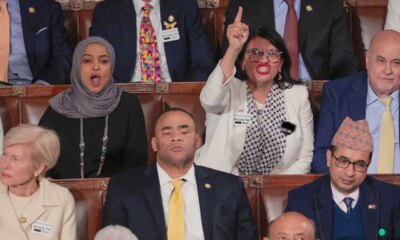
Ilhan Omar doesn’t have any regrets for her ‘unavoidable’ outburst at State of the Union

FAA restricts Texas airspace after Pentagon reportedly strikes down Customs and Border Protection drone

Federal prosecutor admits ‘extraordinary’ timing in Abrego Garcia smuggling case charges

NJ Gov Mikie Sherrill booed at Devils game honoring US Olympic hockey hero Jack Hughes

Florida High School Football Rankings: Top 25 teams – Oct. 21

Cleary's 21 help Le Moyne down Central Connecticut State 69-64 in OT

How old is Bo Nix? What to know about Oregon quarterback ahead of 2024 NFL Draft

99th annual Pony Swim held in Virginia

Indiana Members Credit Union announced as new anchor tenant at Bottleworks District

House Republicans push Johnson to go to war with Senate over SAVE Act

Israel FM says Europe too divided, slams Spanish PM

Satellite images provide view inside Iran at war

Video: What the Texas Primary Battle Means for the Midterms

Dems’ potential 2028 hopefuls come out against US strikes on Iran
-

 World4 days ago
Exclusive: DeepSeek withholds latest AI model from US chipmakers including Nvidia, sources say
-

 Massachusetts5 days ago
Mother and daughter injured in Taunton house explosion
-

 Denver, CO5 days ago
10 acres charred, 5 injured in Thornton grass fire, evacuation orders lifted
-

 Louisiana1 week ago
Wildfire near Gum Swamp Road in Livingston Parish now under control; more than 200 acres burned
-

 Technology1 week ago
YouTube TV billing scam emails are hitting inboxes
-

 Politics1 week ago
OpenAI didn’t contact police despite employees flagging mass shooter’s concerning chatbot interactions: REPORT
-

 Technology1 week ago
Stellantis is in a crisis of its own making
-

 News1 week ago
World reacts as US top court limits Trump’s tariff powers