Lifestyle
Netflix acquires Ben Affleck’s AI company


Hollywood A-lister Ben Affleck says his company InterPositive’s AI tools “take out all the logistical, difficult, technical stuff that often gets in the way” of the filmmaking process.
Clive Mason/Getty Images
hide caption
toggle caption
Clive Mason/Getty Images
Netflix is acquiring Ben Affleck’s AI-powered filmmaking tool company, InterPositive, for an undisclosed sum.
In a video accompanying the company’s announcement on Thursday, Ben Affleck said InterPositive’s technology helps filmmakers to build their own, proprietary AI models based on the scenes they’ve already shot, and then use that data to help solve otherwise laborious details.
“You can use your own model to remove the wires on stunts, reframe a shot, get a shot you missed, shape the lighting, enhance the backgrounds,” said the Oscar-winning director, producer, writer and actor, who has also joined Netflix as a senior advisor.
In an email to NPR, the International Alliance of Theatrical Stage Employees (IATSE), the main union supporting Hollywood’s technical workers, including camera operators, lighting and sound technicians, grips, script supervisors, among other industry disciplines, said it does not comment on mergers and acquisitions.
This is just the latest agreement the Oscar-winning filmmaker has struck with Netflix. Earlier this week, Affleck and Matt Damon’s production company, Artists Equity, signed a major multi-year partnership with the streamer. The agreement gives Netflix first dibs to develop and distribute all of the pair’s future streaming-focused projects. Affleck has also made and released multiple movies in collaboration with Netflix, most recently The Rip, a thriller starring Affleck and Damon as Miami narcotics officers who find a secret hoard of drug money.
Despite his tech interests, Affleck has expressed a desire to keep humans at the center of the creative process. He is among the hundreds of Hollywood insiders to sign on to the Creators Coalition on AI. The group, established late last year, describes itself on its website as “a central hub for cross-industry discussions about how AI is impacting the entertainment industry.”
“This is not a full rejection of AI,” the group stated. “The technology is here. This is a commitment to responsible, human-centered innovation.”
“The InterPositive team is joining Netflix because of our shared belief that innovation should empower storytellers, not replace them,” said Elizabeth Stone, Netflix’s chief product and technology officer, in a press release. She said the partnership would “continue building towards a future of entertainment where technology plays a part in how stories are made, but people — and their ideas, craft and judgment — remain at the core of great storytelling.”
The deal between InterPositive and Netflix comes just over a week since the streamer pulled out of its plan to acquire Warner Brothers Discovery. Paramount agreed to acquire the media giant in a deal valued at around $110 billion. On Feb. 26, the Warner Brothers Discovery board declared Paramount’s bid to be “superior” to an $83 billion deal it had previously struck with Netflix.
Kimberly A. Owczarski, an associate professor at Texas Christian University who studies media franchises, told NPR in an email that Netflix’s decision to partner with a filmmaker of Affleck’s prominence sends out a positive message to an industry reeling from the threats posed by the growing adoption of AI across the entertainment landscape.
“His status in the industry as a star, filmmaker, and producer gives substantial weight as he promotes a responsible use of AI in filmmaking,” Owczarski said.
Jennifer Vanasco edited this story.








Lifestyle
Nature needs a little help in the inventive Pixar movie ‘Hoppers’ : Pop Culture Happy Hour

Piper Curda as Mabel in Hoppers.
Disney
hide caption
toggle caption
Disney
In Disney and Pixar’s delightful new film Hoppers, a young woman (Piper Curda) learns a beloved glade is under threat from the town’s slimy mayor (Jon Hamm). But luckily, she discovers that her college professor has developed technology that can let her live as one of the critters she loves – by allowing her mind to “hop” into an animatronic beaver. And it just might just allow her to help save the glade from serious risk of destruction.
Follow Pop Culture Happy Hour on Letterboxd at letterboxd.com/nprpopculture
Subscribe to Pop Culture Happy Hour Plus at plus.npr.org/happyhour

Kim Kardashian
never denied rare hermés bag for north west …
It Never Happened!!!
Published
Kim Kardashian is not the celebrity who got turned away trying to buy a rare Hermès bag for her daughter, despite a viral claim suggesting otherwise … TMZ has learned.
Sources familiar with the situation tell TMZ … the story circulating online that Kim once attempted to purchase a coveted Mini Kelly bag for her daughter North West and was rejected simply never happened.

We’re told Kim has maintained a very friendly relationship with the luxury brand for years but not through the channels described in the report.
According to our sources, Kim has a very friendly relationship with the brand and has only used the same contact for over ten years in Paris and not the press office.
The sources also shut down the central claim behind the rumor telling us Kim did not request a bag for North, nor did she visit any Hermes store recently or get turned down.
We’re told those close to the situation are particularly bothered by the story because it involves a child. One source said, “They find it very disturbing that anyone would make up stories about a child for clicks.”
The claim appears in journalist Amy Odell’s “Back Row” newsletter, which cited a former employee of the Beverly Hills Hermès boutique who alleged Kim and Kanye West once tried to purchase a black Mini Kelly bag for North but were denied.
The ultra-rare alligator Mini Kelly is one of the most coveted Hermès bags on the market and can fetch more than $75,000 on resale.
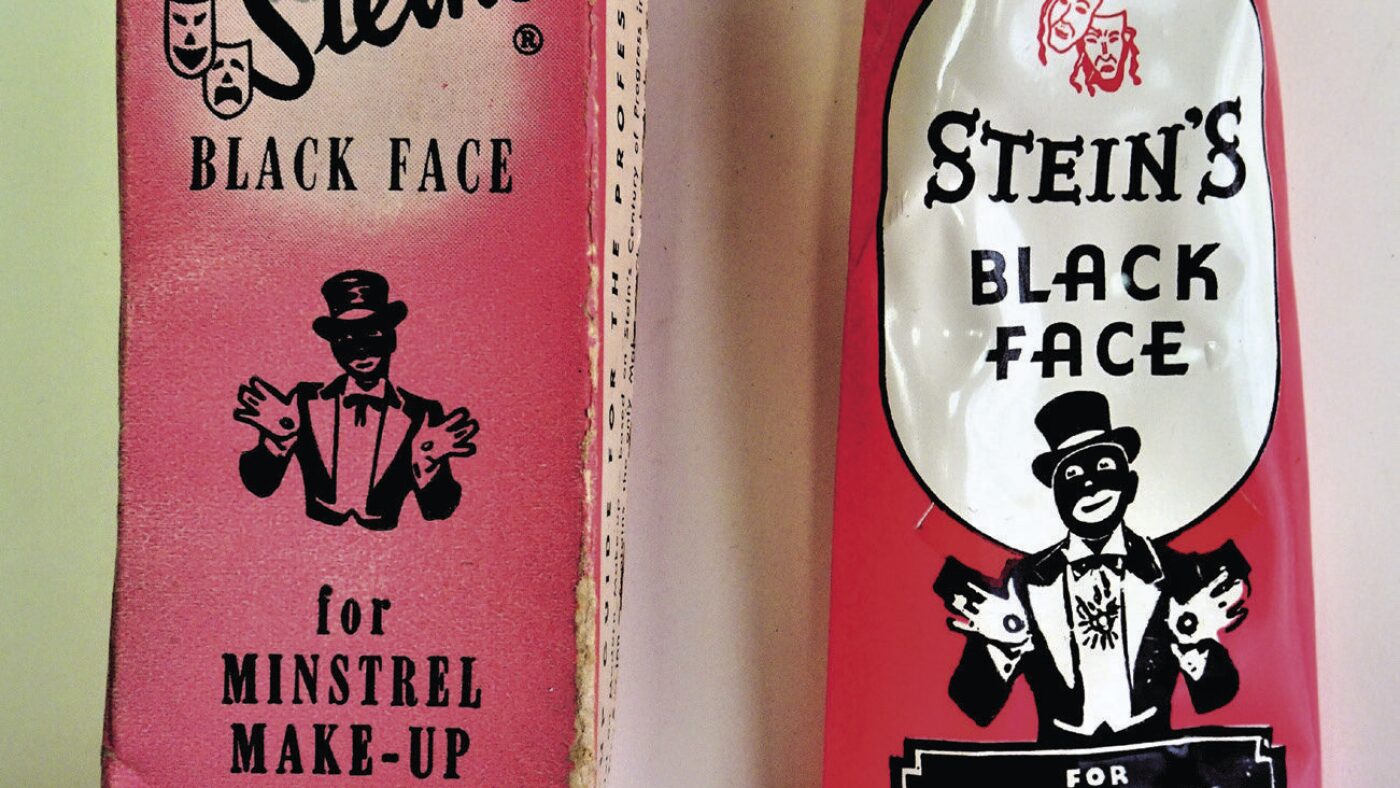
In 2013, historian Rhae Lynn Barnes was researching blackface in America when she encountered a stumbling block at the Library of Congress: Various primary sources on the subject were listed as “missing on shelf.”
Barnes spoke to one of the librarians, and explained that she was writing a history of minstrel shows and white supremacy. Barnes says the librarian admitted that, in 1987, she had personally hidden some of these books because she feared the material would be used by the Ku Klux Klan.
“Once [the librarian] understood the research I was doing … a few hours later, she came up with a cart packed to the brim with all of the material that I had been hoping to see,” Barnes says.
In her new book Darkology: Blackface and the American Way of Entertainment, Barnes traces the origin of minstrel shows, performances in which an actor portrays an exaggerated and racist depiction of Black, often formerly enslaved, people.
Barnes says minstrel became so popular in the 1800s that the stars began publishing “step-by-step guides” explaining how amateurs could create their own shows. By the end of the century, amateur minstrel performances became one of the most popular forms of entertainment in the U.S. Many groups, including fraternal orders, PTAs, police and firemen’s associations and soldiers on military bases, put on their own shows.

During the Great Depression, Barnes notes that President Franklin D. Roosevelt’s Works Progress Administration sought to “preserve American heritage” by promoting blackface. As part of the effort, she says, the government distributed lists of “top minstrel plays that they recommended to schools, to local charities, to colleges.” Roosevelt was such a fan of minstrel shows that he co-wrote a script, to be performed by children with polio.
Barnes credits the civil rights era and especially mothers with helping de-popularize blackface in the 1970s, first in schools and then in the larger culture. “They successfully get the shows out of school curriculum piece by piece. And by 1970, most of these publishing houses are going under because of the incredible work of Black and white mothers who worked with them,” she says.
Interview highlights
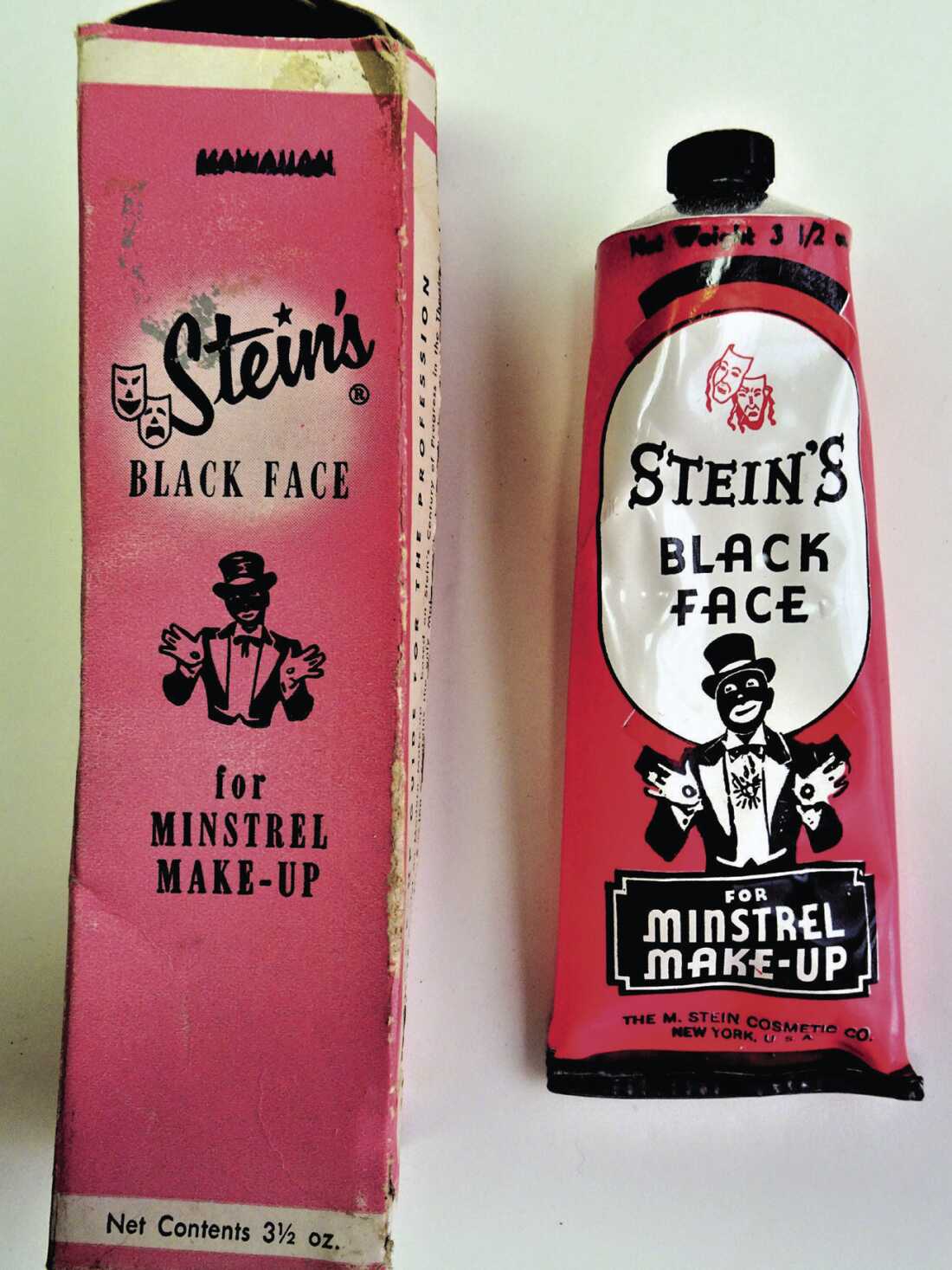
Stein’s makeup company created multiple shades of blackface for performers in amateur minstrel shows.
WW Norton
hide caption
toggle caption
WW Norton
On commercial blackface makeup that replaced shoe polish and burnt cork
It’s an entire commercial empire. So Stein’s makeup was one of the largest. They were a theatrical makeup company. And you’ll actually find today when you go into Halloween stores that a lot of these blackface makeup companies still exist today for Halloween costume makeup and also for clown makeup. …
Burnt cork was incredibly difficult to get off of your face. You’re essentially taking fire ash and then mixing it with shoe polish or some sort of shiny ingredients, and so it was incredibly hard to get it off. So when Stein and these other cosmetic companies begin to create the tubes … that did come in 29 colors and you could pick which bizarre racial calculus you wanted to represent, they would come off with cold cream or makeup remover and that was one of their selling points — now it’s easy to take off.
On Stephen Foster‘s songs for minstrel shows, like “Oh Susannah!”

What’s interesting about those songs is they are romanticizing the relationship between an enslaved person and their enslaver. And so when we have commentary, even from the president now, who recently said slavery wasn’t so bad, well, slavery was horrific, but if you were raised on a diet of Stephen Foster music, and going to minstrel shows, you can somewhat understand how somebody at the time could easily be led to believe that slavery was a grand old party because that’s what it was supposed to be telling you. It’s pro-slavery propaganda.
On the slogan “Make America Great Again” originating from early 20th-century minstrel shows
“Make America Great Again” or “This Is Our Country” or “Take Back Our Country” are all slogans and songs that were very common in minstrel shows. And so a lot of minstrel shows reinterpreted slavery in a fantastical way, that the Civil War ended and that in these minstrel shows there was Black rule and that everything America held dear was desecrated. And so this [blackface] “Zip” character … sometimes he’s named “Rastus” — he has different names that he goes by — runs for office, political office, becomes president, and he’s the first Black president and the first thing he does is he takes away America’s guns. Sound familiar? And so a lot of these terms that you could perhaps say [are] dog whistles in white of supremacy are taken line for line from these minstrel shows.
On not censoring this history
Historians right now are in somewhat of a culture war in that it is our patriotic duty as American citizens and as patriots to help make sure that the American public has access to our history in all of its complexity. And the truth is that you can’t understand the victories and the triumphs without understanding how far Americans had to push. And I think that’s especially true of blackface. When we didn’t adequately understand how long blackface was a mainstay in American culture. Because many historians believe that it had died out by 1900, when in fact it only accelerates and increases up through the 1970s. And so if you just say, “Oh, it just died out. It was no longer in fashion,” then what you’re losing is the incredible, dangerous, and brave work of thousands of Black and white mothers across the United States in the 1950s and the 1960s, of students who stood up during Jim Crow America and said, “This is not OK. We are humans. We deserve dignity. And we want you to understand our history.” …
I think these are the hard conversations Americans actually want to have. And I think America is completely ready for those hard conversations and moving forward.
Anna Bauman and Susan Nyakundi produced and edited this interview for broadcast. Bridget Bentz, Molly Seavy-Nesper and Meghan Sullivan adapted it for the web.

Israeli air strike targets building in south Lebanon

Ed Martin, outspoken Justice Department lawyer, is formally accused of ethical violations | CNN Politics

‘Utterly unaffordable’: Study reveals how deep blue city’s minimum wage law is ravaging key industry

What’s next for Kristi Noem? 2026 Senate chatter grows after DHS exit

Savannah Guthrie spotted in NYC as search for missing mother enters sixth week with few answers

Florida High School Football Rankings: Top 25 teams – Oct. 21

Cleary's 21 help Le Moyne down Central Connecticut State 69-64 in OT

How old is Bo Nix? What to know about Oregon quarterback ahead of 2024 NFL Draft

99th annual Pony Swim held in Virginia

Indiana Members Credit Union announced as new anchor tenant at Bottleworks District
Israeli air strike targets building in south Lebanon
Ed Martin, outspoken Justice Department lawyer, is formally accused of ethical violations | CNN Politics

Trump reveals top issues GOP should focus on to secure midterms victory: ‘I’ve never been more confident’

NATO intercepts another Iranian missile in Turkish airspace

Is Iran another Iraq? : Sources & Methods
-

 Wisconsin1 week ago
Setting sail on iceboats across a frozen lake in Wisconsin
-

 Massachusetts1 week ago
Massachusetts man awaits word from family in Iran after attacks
-

 Maryland1 week ago
AM showers Sunday in Maryland
-

 Florida1 week ago
Florida man rescued after being stuck in shoulder-deep mud for days
-

 Pennsylvania5 days ago
Pa. man found guilty of raping teen girl who he took to Mexico
-

 Sports6 days ago
Keith Olbermann under fire for calling Lou Holtz a ‘scumbag’ after legendary coach’s death
-

 Virginia6 days ago
Giants will hold 2026 training camp in West Virginia
-

 Politics1 week ago
Mamdani’s response to Trump’s Iran strike sparks conservative backlash: ‘Rooting for the ayatollah’