Lifestyle
Modern death cafes are very much alive in L.A. Inside the radical movement

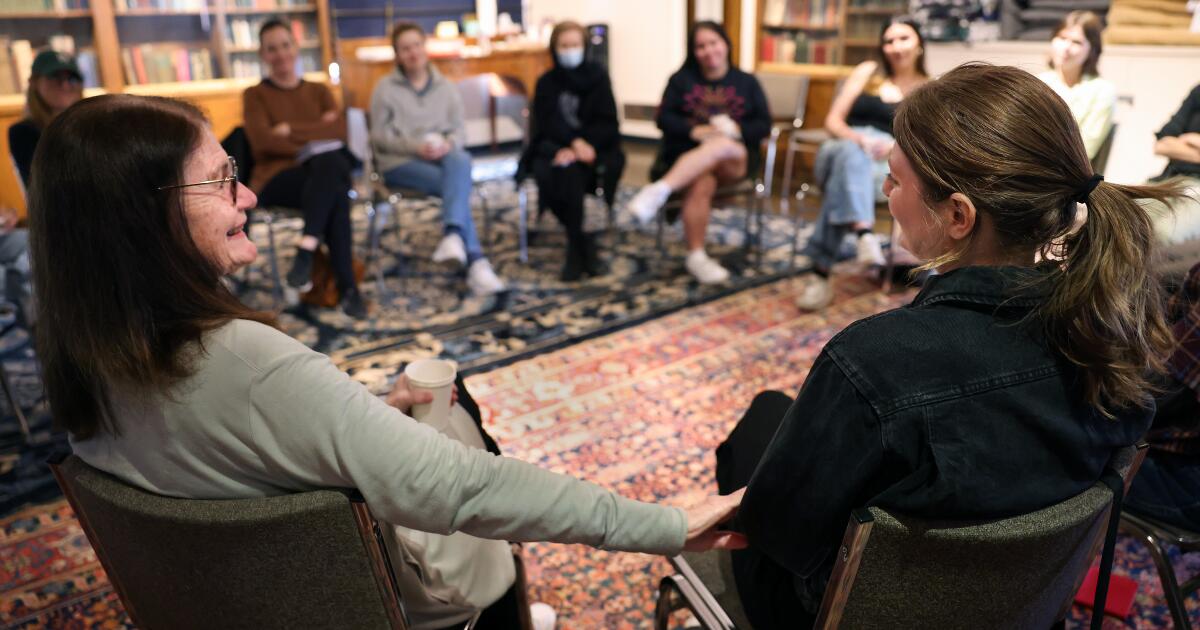
In a second-story room in Los Feliz’s Philosophical Research Society, about a dozen people sit in a circle. Many of them are here for the first time and not entirely sure what to expect. The sandwich board sign in the courtyard below offers only a cryptic hint: “Welcome! Death cafe meeting upstairs.”
As the group settles in on this Thursday afternoon in May, organizer Elizabeth Gill Lui lays out the only two directives: “have tea and cake, and talk about death.”
Lui, a 73-year-old artist who wears chunky jewelry and bold glasses, starts by reading a passage from the musician Nick Cave’s recent memoir. It’s about how, in the face of staggering grief, speaking and listening can be a form of healing — which is ultimately what Lui hopes will transpire over the next couple of hours, in this room decorated with patterned carpets and tall bookcases.
“The tradition in Southern California has long been about the journey. Making the most of the journey creatively, playfully, intellectually. That’s what I also like about the death cafe.”
— Elizabeth Lui, artist and organizer of a twice-monthly death cafe at the Philosophical Research Society
To initiate the exchange, she instructs the group to “go around in a circle and say what brought you to death cafe.” It’s a simple enough question, but one that elicits complex, deeply personal responses. Some attendees say they’ve come because they’re struggling with how to care for aging parents, or because they lost a loved one during the pandemic. Others have recently been through a life transition — a move back home, a college graduation, recovery from an illness. Or they’re wrestling with anxieties about their mortality. No matter the reason, everyone seems to be seeking some form of comfort, connection and community.
Reading material suggested by Elizabeth Lui, who hosted a death cafe at the Philosophical Research Society.
“The tradition in Southern California has long been about the journey. Making the most of the journey creatively, playfully, intellectually,” Lui tells me in the Philosophical Research Society’s regal library. “That’s what I also like about the death cafe. It has this edge of humor to it. If you’re at a dinner party and it’s boring, you can just say, ‘Have I told you about the death cafe I go to?’ and everybody just laughs. It’s such a great entree to the conversation.”
Lui’s twice-monthly gathering is one of several death cafes that have sprung up over the past two years in Los Angeles. Heavy Manners Library, an art space and lending library specializing in independent books and zines, holds one every other month. Its organizer, Emily Yacina, has made a habit of bringing donuts for the mostly 20- and-30-something tattooed crowd. Artist Ailene deVries held a death cafe in April at Gorky, an Eastside feminist collective that hosts workshops and pop-up events. North Figueroa Bookshop in Highland Park announced its first death cafe last summer, led by death doula Hazel Angell. A collaged flier for the meeting showed a skeleton hand clutching a butterfly above a succinct description written in gothic font: “A group discussion of death with no agenda, objectives or themes.”
The agenda-less ethos of the death cafe was developed in 2011 by Jon Underwood. The then 38-year-old Buddhist student and former government worker is widely credited for hosting the first modern death cafe at his home in East London. He was inspired to organize it after reading about Swiss “cafe mortels,” gatherings designed by the late sociologist Bernard Crettaz in 2004 to break the stigma around talking about death.
Underwood died unexpectedly in 2017 due to complications from leukemia, but the movement he kickstarted remains very much alive. A website maintained by Underwood’s mother and sister includes a how-to guide for those looking to start their own death cafe, and a directory that lists more than 18,000 death cafes around the world.
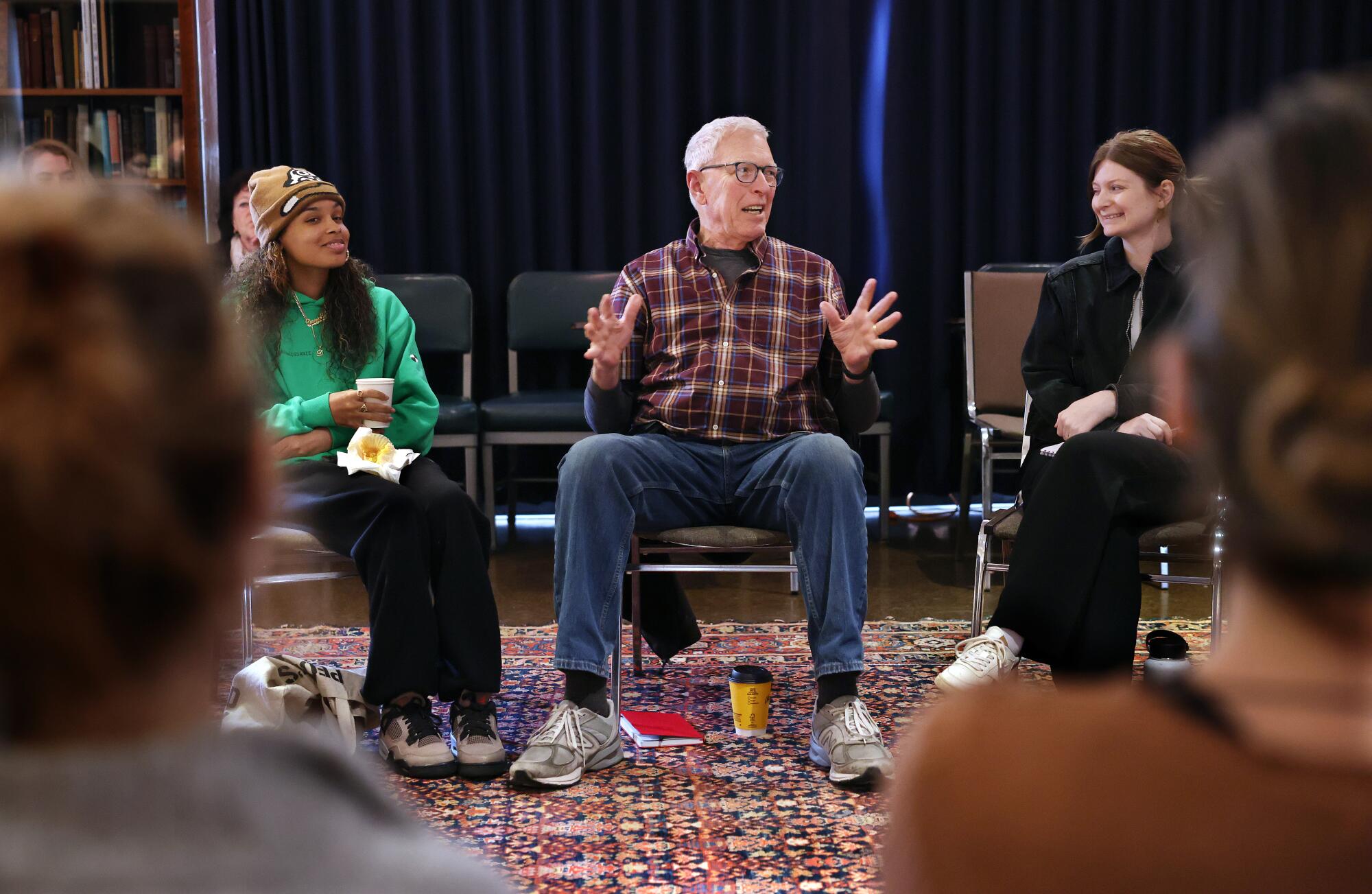
Greg Golden, 73, center, shares his experience beside fellow death cafe participants Danielle Tyas, 23, left, and Haley Twist, 32, right, at the Philosophical Research Society.
Megan Mooney, a clinical and medical social worker who serves as a volunteer spokesperson for Underwood’s umbrella organization, says she’s seen an increase in death cafe listings since 2020.
“COVID really made people have to face their own mortality,” she said in a Facebook message. “There was no escaping it …There was a huge demand for people wanting to talk about death for the first time.”
That was certainly true for Lui, who says the “pervasiveness of death” during the first couple years of the pandemic led her to get certified as an end-of-life doula in March 2022.
“I really was alarmed by the fact that we couldn’t form a consensus on how to deal with the pandemic and deal with the widespread phenomenon of this many deaths,” she said. “I don’t think the seriousness of it was something that we were even able to grasp because we avoid this topic at all costs.”
Though Lui’s death cafe may be the most frequently held one in Los Angeles, it’s not the county’s first. Hospice social worker Betsy Trapasso claims that distinction, after having launched a death cafe from her home in Topanga Canyon in 2013.
“It’s not a support group. It’s not a grief group,” Trapasso told The Times that year. “My whole thing is to get people talking about [death] so they’re not afraid when the time comes.”
During the event, Trapasso asked the group of aging professionals to inhale some lavender oil to relax at the start of the session. (Though she no longer hosts a death cafe, she maintains a Facebook page where she posts articles and events related to aging, grief and end-of-life care.)
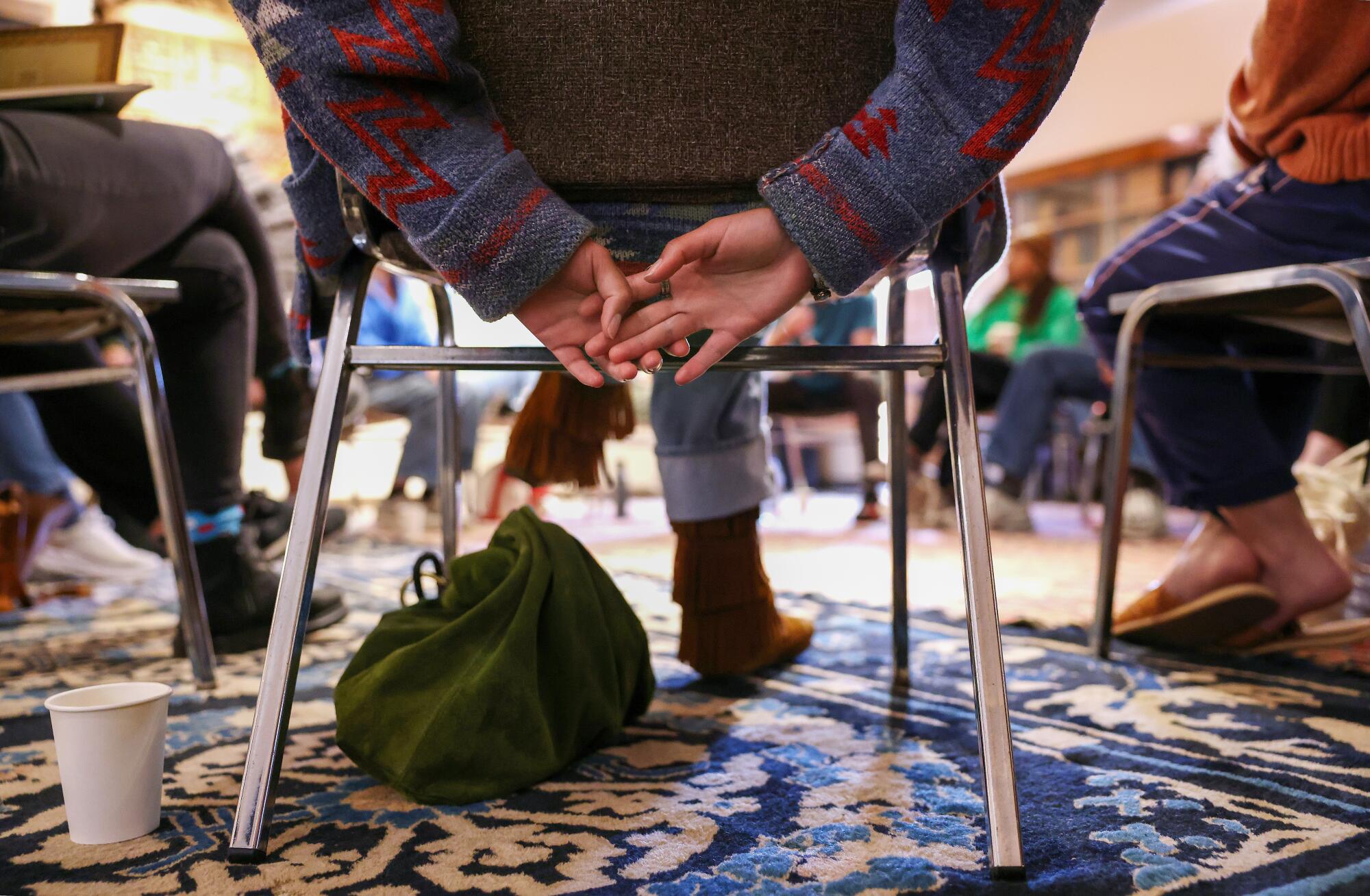
Participants sit in a circle at the death cafe.
More than a decade later, there are no bongos or essential oils at L.A.’s latest wave of death cafes and, most noticeably, their attendees skew younger. At the Thursday and Saturday sessions I attended at the Philosophical Research Society, most people were in their 20s, 30s and early 40s. At Heavy Manners Library on a Tuesday night, the group would not have looked out of place at a music show at the Echoplex down the street.
Lui sees the attendance of the millennials and zoomers at her death cafes as evidence of an unfortunate reality: that younger generations are experiencing the loss of loved ones. Some of them have cited suicide, alcoholism and drug overdoses as the cause.
“Young people are being exposed to friends dying, and more often than I think people realize,” she said.
Yacina, who leads the death cafe at Heavy Manners Library, is one of them. The 28-year-old indie rock musician says a good friend of hers died during her sophomore year of college, and she found the experience isolating, profound and “identity-forming.” Then, in 2021, she mourned the death of yet another friend, whom she later wrote a song about. Yacina said she realized “there’s no escape to people dying, and in fact, it’s actually the one true thing that we all can count on.” It led her to wonder: “Why don’t we talk about it more?”
Upcoming L.A. death cafes
She organized the Echo Park death cafe in June 2022, just a few months before Lui started one in Los Feliz. Like Lui, Yacina had recently gotten certified as an end-of-life doula, and the pandemic had planted the idea of death more firmly in her consciousness. In a phone interview, she recalled worrying that she could lose her parents to COVID-19.
“It was such a scary feeling, but the truth is, you could lose anyone at any time,” she said.
It’s a truth that deVries, the 27-year-old artist who recently held a death cafe at Gorky and plans to hold another in Long Beach this summer, had to learn the hard way.
“When I was 18, my partner just suddenly passed in a very traumatic way, so I wasn’t really sure where to put the conversation,” she said. “I think the death cafe was the first time that I felt I had a container to express my interest.”
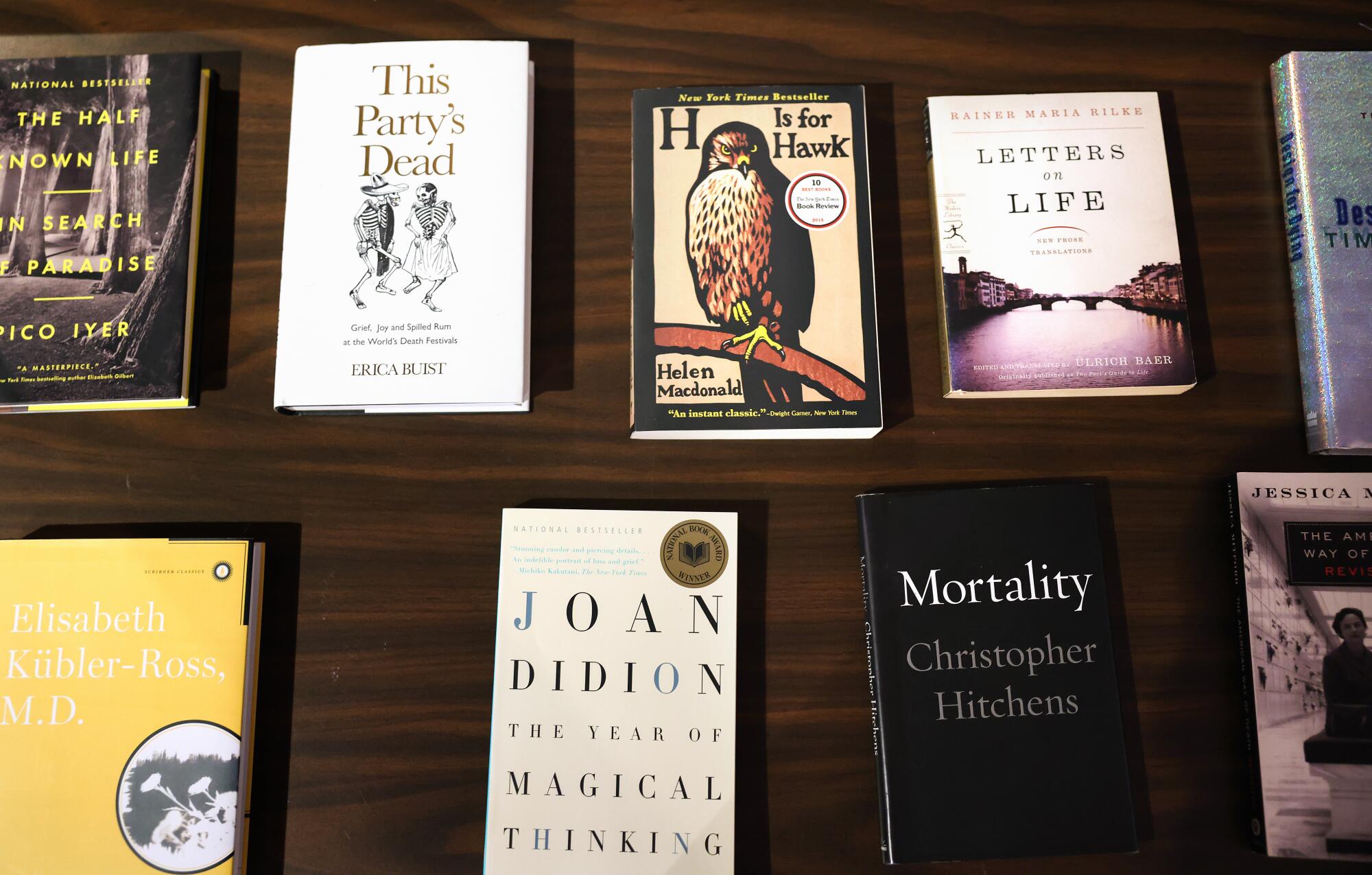
Reading material suggested by Elizabeth Lui.
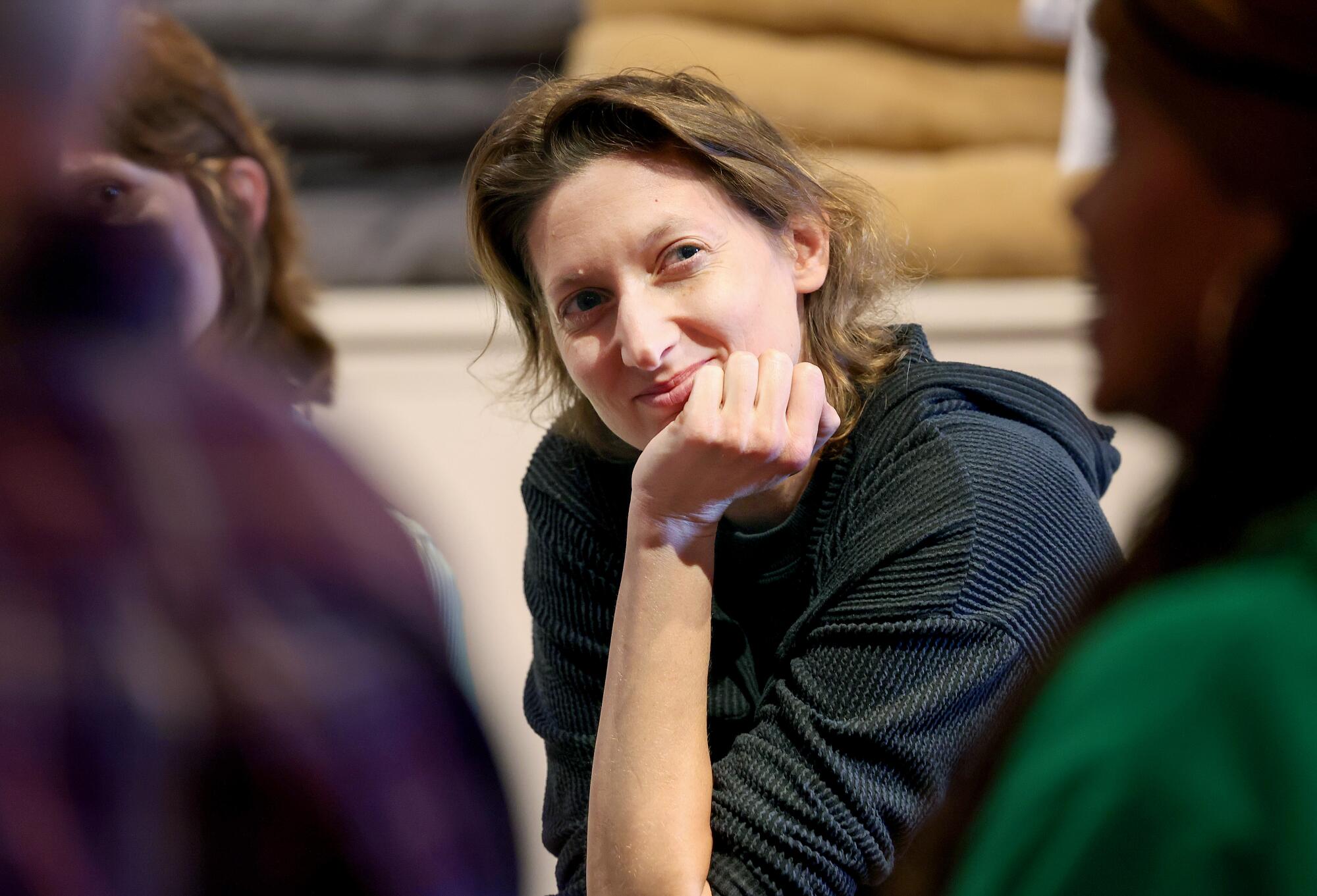
Sara Alessandrini, 35, listens closely as another participant shares during the death cafe.
Not everyone who attends these events has experienced a death in their family or community. Some attendees instead see death as a potent metaphor for life’s big changes and all the grief that comes along with them.
“It also helped me with living life in the moment and letting go of certain things,” said Sara Alessandrini, a 35-year-old filmmaker who attends Lui’s death cafe at the Philosophical Research Society.
When it’s her turn to share her reason for coming to the Thursday afternoon group, Alessandrini announces to the group that she wants to reflect not on the death of a person, but of her childhood. She talks about boundaries and healing. It prompts others to chime in, openly sharing stories about their upbringings. When the conversation comes to a pause, Lui offers some warm advice to Alessandrini: “I think you need to protect yourself even better than you think you’re protecting yourself.”
Lui often takes on a maternal role in the group. During one of my visits, she asks for an attendee’s phone number so she can text them a message of support on a day they say they’re dreading. At a separate session, she gets up from her chair to console someone in emotional distress. After the meetings, she emails death-themed book and movie recommendations to newcomers, who often comprise the majority of attendees. Timothy Leary’s “Design for Dying,” the Oscar-winning Japanese drama “Departures,” and the Sundance-winning documentary “How to Die in Oregon,” are all on her list.
Since many of her attendees are artists themselves, she sends out invites to their events, which often intersect with ideas about death. Recent examples include an online radio program featuring songs for funerals and a solo show about grief debuting at the Hollywood Fringe festival this month.
Lui sometimes signs her emails: “Hope to see you when it fits.” She wants attendees to know there’s no obligation to return to her death cafe. Even still, the group can sometimes get large and unwieldy. At one recent death cafe, Lui recalled, there were 30 people, “and that was a little too much.”
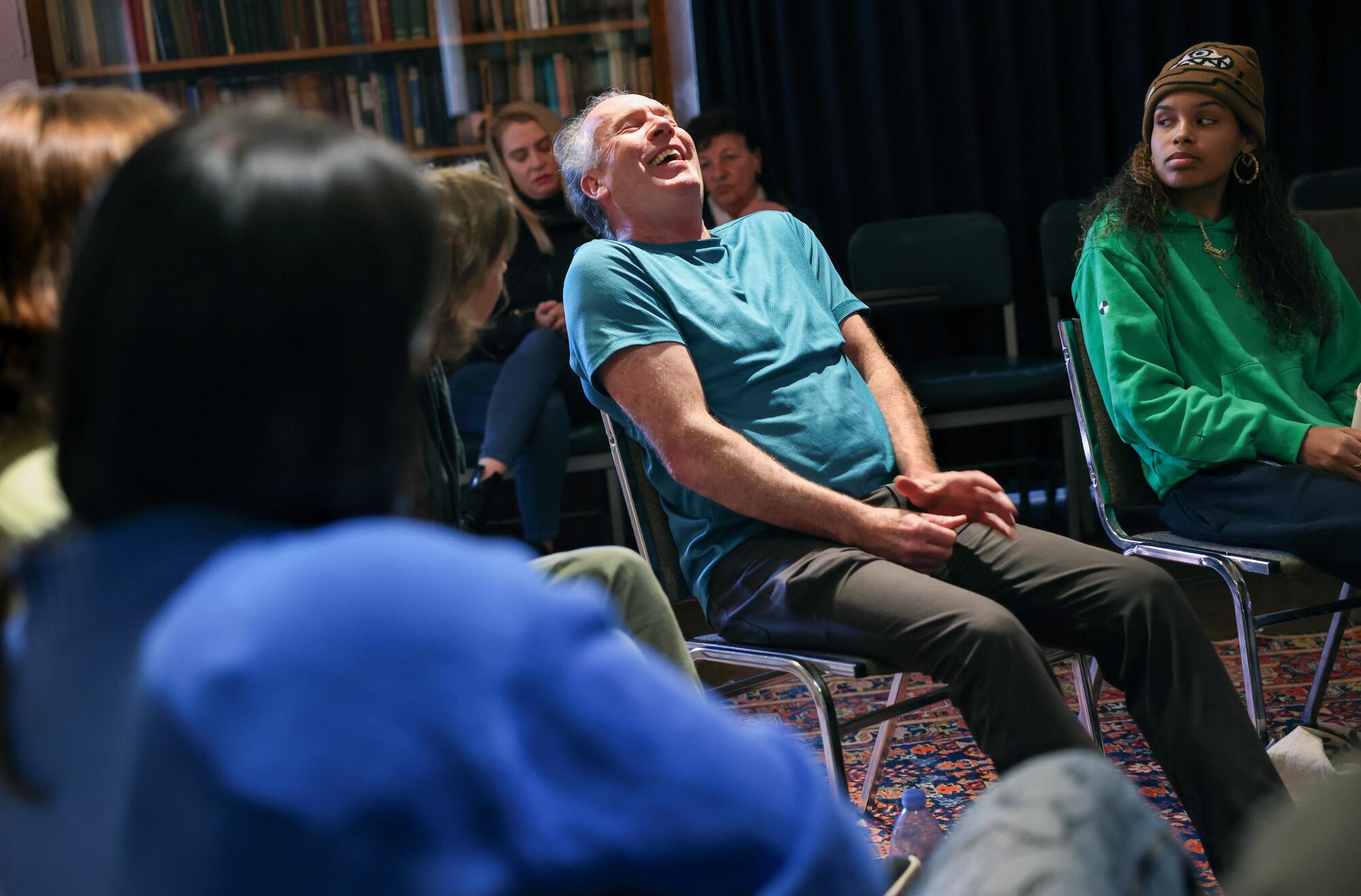
Michael Allison, 62, laughs a little while sharing with the group of participants in the death cafe.
The death cafe can sometimes feel like group therapy. But Lui makes no claims of being a therapist. “I think in a good way, we’re not therapists,” she told me. “Because we’re not just nodding and listening and letting them figure out their own truth. We actually have some ideas about where you find meaning in your life.”
At the Thursday afternoon death cafe at the Philosophical Research Society, everyone has so much to say that the conversation stretches for hours. Toward the end, it becomes loose and playful, resembling a late-night heart-to-heart. Between bouts of tears and laughter, someone asks: Do you think you know that you’re dead after you’ve died? Another poses a question: Is it just me, or has anyone else ever wondered if your dead parent can see you when you’re having sex? The room giggles, and it reminds one attendee to share her own story about her deceased mother.
At some point, Lui asks whether anyone knows the time. It’s 6 p.m. — meaning the death cafe has stretched on for four hours, twice as long as scheduled. Lui frantically apologizes, but nobody seems to mind. They hang around, talking and eating cupcakes.
“Maybe we need a weekend retreat or something?” Lui suggests. But even a few days wouldn’t be enough to contain everyone’s questions about one of life’s greatest mysteries. For now, her cafe will have to suffice.


On-air challenge
Based on the clue, name two words that have the same number of letters and begin and end with the letters provided. (Ex. Rocks / five letters / S and E —> Slate, Shale)
1. European languages in 7 letters starting with S and ending with .
2. Ancient stringed instruments / 4 letters / L and E
3. Birds / 6 letters / P and N
4. Parts of the body / 5 letters / T and H
5. Things seen in a classroom / 5 letters / C and K
6. Newsstand magazines / 7 letters / E and E
7. Books of the Bible / 4 letters / A and S
8. Foods from Italy / 5 letters / P and A
Last week’s challenge
Next weekend will be the 186th convention of the National Puzzler League, in Bloomington, Ind., which I’ll be attending as always. Two other people who will be there are Henri Picciotto and Joshua Kosman, who created this week’s challenge. Name two words that are opposites. They share a single letter. Remove that shared letter from each word, put a hyphen between the two starting words, and you’ll get a term you sometimes see in food ads. What are the two words?
Challenge answer
Slow, fast –> low-fat
Winner
Debra Waller of Burlington, Kentucky
This week’s challenge
This week’s challenge comes from Steve Baggish, of Arlington, Mass. Take the 10-letter name of a popular TV series for which most of its seasons have been filmed in a foreign country. Remove the first and last letters, and the remaining letters can be rearranged to spell the name of a country. What are the two names?
If you know the answer to the challenge, submit it below by Thursday, July 16 at 3 p.m. ET. Listeners whose answers are selected win a chance to play the on-air puzzle.

“Portraits 2019 – 2026” by Tyler Matthew Oyer at Night Gallery
“Location Unknown, 2023 – TANA 2023.”
(Tyler Matthew Oyer and Night Gallery)
Experience Tyler Matthew Oyer’s photographic exhibition, “Portraits 2019-2026.” This immersive show moves through seven years of portraits through Oyer’s lens, capturing subjects’ raw individuality. Showcasing “the panoramic and the intimate,” the photographs line the entirety of the gallery in identical scales and frames, emphasizing that every face carries equal presence and beauty. The exhibition coincides with Oyer’s fifth portrait book release, which features selections from his extensive archive. Open July 18 through Aug. 15. 2050 Imperial St., Los Angeles. nightgallery.com
Paloma Wool opening

Paloma Wool’s first permanent store in L.A. houses footwear, bags, a fresh new menswear line and exclusive specialty projects. This new space contrasts a bright, vivid backdrop with dark furnishings, alluding to the brand’s edgy, crisp designs. Open now. 8410 Melrose Ave., Los Angeles. palomawool.com
Noah Los Angeles opening

Founders Brendon Babenzien and Estelle Bailey-Babenzien bring the East Coast to L.A. this summer with the opening of Noah’s first West Coast location. Blending classic menswear with skate and surf culture, the space also features an in-store skate bowl, reflecting the brand’s roots while tapping into Los Angeles’ laid-back vibe. Open now. 911 N. Orange Drive, Los Angeles. noahny.com
H. Lorenzo opening

H. Lorenzo’s new flagship store reflects the brand’s commitment to highlight both established and emerging designers from around the world. It also showcases rare collectible furniture, including pieces by woodworker George Nakashima. By day, the space takes on an ever-evolving approach to display; by night it transforms into a hub for cultural programming and community gatherings. Open now. 8801 Beverly Blvd. West Hollywood. hlorenzo.com
Bang & Olufsen opening

Bang & Olufsen’s new flagship is using music to connect people from all over the world, reimagining the classic retail experience into an immersive sound house perfect for showcasing Los Angeles’ vibrant and diverse entertainment culture. Customers can experience the brand’s latest technology in a setting inspired by Nordic design and Southern California living. Open now. 370 N. Robertson Blvd., West Hollywood. bang-olufsen.com
Maison Louis Marie opening

Upgrade your scent game this summer with a visit to Maison Louis Marie’s new flagship store in Silver Lake. Designed in collaboration with Via Clover, the fragrance house has curated a light, modern space, blending French and Californian aesthetics where customers browse everything from Fleur de la Passion hair and body mist to No. 10 Aboukir candles at their own pace. Open now. 3920 Sunset Blvd., Los Angeles. maisonlouismarie.com
Molteni&C L.A. flagship redesign and new collection

Italian craftsmanship and contemporary living come together in Molteni&C’s newly redesigned Beverly Hills flagship. After exploring thoughtfully curated living spaces featuring coffee tables designed by Vincent Van Duysen, be sure to check out the brands’ latest Outdoor Collection, ideal for the heat of L.A.’s long summers. Open now. 147 N Robertson Blvd., West Hollywood. molteni&c.com
Zegna’s new fragrance line

Zegna’s new fragrance line, Memorie, is shaped by place, ritual and intention. Inspired by the Alps of northern Italy, each of the six scents captures a moment, place or object from founder Ermenegildo Zegna’s life, preserving memory through fragrance. Available now. zegna.com
“Animals” by Alex Gardner at Perrotin

“Catapult,” 2025. Acrylic on canvas. Unframed: 48 1/16 x 96 1/16 inches. Framed: 51 7/8 x 99 3/4 x 5 inches.
(Don Lewis/Alex Gardner; Perrotin)
Join Long Beach artist Alex Gardner for the final days of his first solo exhibition in a decade as he reimagines the meaning of fatherhood at Perrotin. Through a series of acrylic paintings, Gardner explores intimate connections between parents and children, partners and siblings, inviting viewers to identify themselves within his signature faceless figures. Open through July 11. 5036 W. Pico Blvd., Los Angeles. perrotin.com

A promo image of Peter Sagal, Jason Narducy, and Alzo Slade
NPR and James Richards IV/NPR and Jason Narducy
hide caption
toggle caption
NPR and James Richards IV/NPR and Jason Narducy
This week, we’re live in Milwaukee with musician Jason Narducy. Plus, panelists Alonzo Bodden, Adam Burke, and Negin Farsad talk the World Cup, Love Island, and new rules for summer travel.
-
 Sports51 seconds ago
Dodgers swept by Diamondbacks in first winless series of season as they stagger into All-Star break
-

 World13 minutes ago
At least 27 dead as fire engulfs popular Bangkok pub near Chatuchak market
-
 News43 minutes ago
Want to own a real T. rex? It could cost you $30 million
-

 Los Angeles, Ca2 hours ago
Rare, corpse flower double bloom underway at Huntington Library
-

 Detroit, MI3 hours ago
Around 400 pairs of shoes intended for charity giveaway stolen from Detroit nonprofit, organization says
-

 San Francisco, CA3 hours ago
How to watch San Francisco Giants vs. Colorado Rockies
-

 Dallas, TX3 hours ago
3 unanswered questions before training camp: Dallas Cowboys edition
-

 Miami, FL3 hours ago
“Love & Hip Hop: Atlanta” star Tommie Lee among 6 arrested during World Cup match in Miami, sheriff says

