Lifestyle
L.A. Affairs: Nothing scared me more than intimacy — except L.A. freeways. But I had to face them both

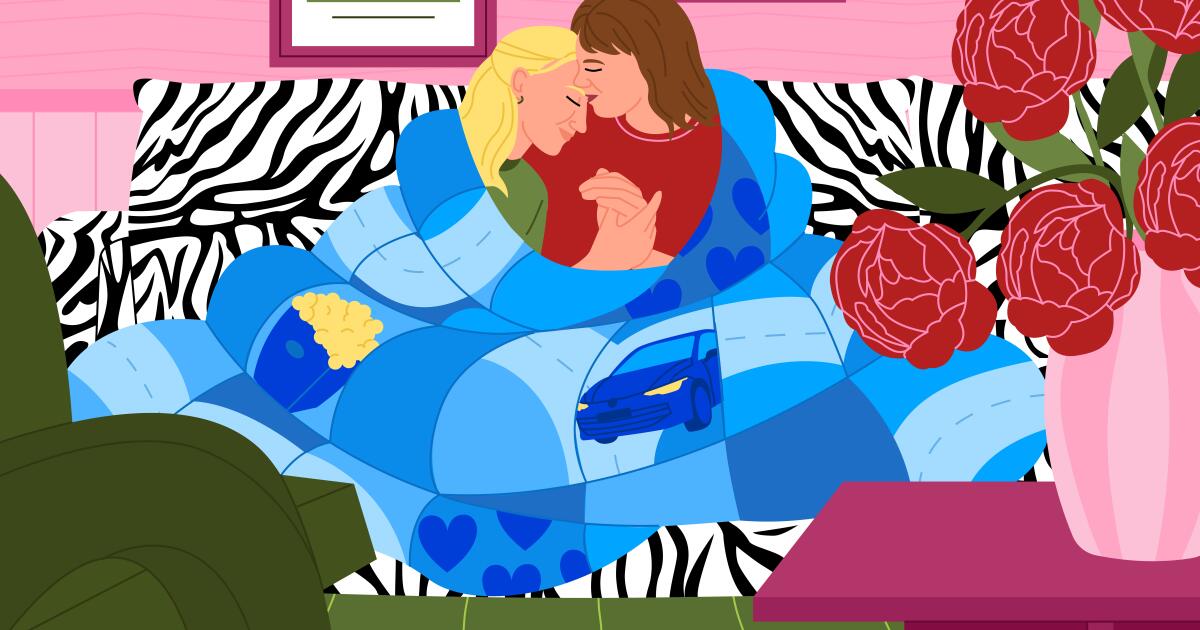
The first time I ever drove on the freeway was to tell my girlfriend that I loved her. At this point, I had lived in L.A. for four years. “You can’t not drive in L.A.,” everyone said when I moved here. But I worked from home and lived relatively close to most of my friends. I had Lyft and Uber, a TAP card and a borderline unhinged love of walking. My excuse was that I didn’t have a car and couldn’t afford to buy one, which wasn’t a lie. But the real reason was I was scared of driving and I had decided to succumb to that fear.
I wasn’t always an anxious driver. Growing up in Massachusetts, I got my license at 16 and cruised around in my grandma’s 1979 Peugeot that had one working door and wouldn’t have passed a safety inspection. But I felt invincible. Then I grew into a neurotic adult with an ever-growing list of rational and irrational fears — from weird headaches and mold to running into casual acquaintances at the grocery store.
In my early 30s, I developed a terrible phobia of flying. “It’s so much safer than driving in a car!” people said to comfort me. So I did some research. This did not assuage my fear of flying, but it did succeed in making me also afraid of driving. I lived in New York City at the time, where being a nondriver was easy. In L.A., it was less easy, but I made it work.
When I was single, I appreciated that dating apps let me sort potential matches by location. I set my limit to “within five miles” from my apartment in West Hollywood and tried to manifest an ideal partner who would live within this perfectly reasonable radius. This proved somewhat complicated. My first boyfriend in L.A. moved from Los Feliz to Eagle Rock six months into our relationship, and we broke up. There were other issues, but the distance was the final straw.
I did eventually get a car but was restricted by my intense fear of the massive, sprawling conduits of chaos known as the L.A. freeways. Lanes come and go. Exits appear out of nowhere. And everyone drives like they’re auditioning for “The Fast and the Furious.” So I took surface streets everywhere, even when it doubled my driving time. I became pretty comfortable behind the wheel as long as I remained in my little bubble of safety. Then I fell in love.
Spencer and I met 14 years ago through a close mutual friend when we both lived in Brooklyn. Our friend had talked her up so much that I was nervous to meet her as if she were a celebrity, but she immediately made me feel at ease. She’s confident and comfortable in her skin but also exudes a warmth that makes people feel secure. At the time, I was newly sober, and feeling comfortable — especially around someone I’d just met — was rare.
Not long after we met she moved to Philly, and our lives went in different directions. She was starting med school. I was writing for an addiction website and doing stand-up comedy. She was living with her long-term girlfriend. I was trying to date the most emotionally unavailable people I could find, which my therapist (and every self-help book in Barnes & Noble) attributed to a fear of intimacy.
A decade later, we both ended up in Los Angeles. She had broken up with her girlfriend and was a resident at UCLA. I was taking screenwriting classes and walking everywhere. We texted a few times to hang out, but then the COVID-19 pandemic hit, keeping her busy in the hospital and me busy at home spraying my groceries with Clorox. Multiple vaccines later, we finally met up at the AMC theater at the Century City mall. Just as I remembered, she felt like home.
Over the next few months, we went to about nine movies together, our hands occasionally touching in a shared bucket of popcorn, before I finally got the courage to tell her I had developed feelings for her. We’d become close friends at this point, and the stakes felt alarmingly high. Also, she was emotionally available. Uncharted territory for me.
“I like like you,” I said one night while we were on my couch watching “Curb Your Enthusiasm.” My voice was shaking and also muffled, because I was hiding under a blanket.
This confession was one of the scariest things I’ve ever done, and I’ve done a lot of scary things — gotten sober, did stand-up in front of my entire family (don’t recommend this), come out as queer to a bunch of conservative Midwesterners on a study-abroad trip (one girl took a selfie with me and sent it to her mom with the note, “I met a bisexual and she’s really nice!”). But I learned in recovery that sometimes when something is scary, we are meant to run toward it rather than away from it. That night, Spencer pulled the blanket off my head and told me she felt the same.
This beautiful, confident “Curb”-loving doctor did have one red flag. She lived in Santa Monica, at the end of a six-mile stretch on the 10 Freeway. On side streets, getting from my apartment to hers could take up to an hour or longer in traffic. After a few months, we were seeing each other so often that the commute had become unmanageable.
Also unmanageable were my feelings. One night, about four months into our relationship, I told two close friends that I loved Spencer but was scared to tell her. The absence of these words had become a weight between us, triggering insecurities and petty fights. My friends urged me to tell her and thought I should do it that night (we’d been watching “Yellowjackets” and were feeling a little dramatic). I felt emboldened. But it was 10 p.m. on a work night and it would take 45 minutes to get to her house by my usual route.
I called her. “I’m coming over!” I said. Twenty minutes later, I was merging onto the 10. I drove too slowly, got off at the wrong exit and gripped the steering wheel so hard my fingers went numb. But when I got to Spencer’s apartment, I was bolstered by adrenaline and the rush of having conquered my fear. I had driven on the 10 — at night. I could survive anything. I told her I loved her. She said it back. I didn’t even hide under a blanket.
This was two years ago. Since then, I’ve driven on the 10 hundreds of times between Spencer’s apartment and mine. Now we live together, which significantly cuts down on the commute. I still prefer a side street, but I’ll take the freeway if I have to. Since mastering the 10, I’ve also braved the 5 Freeway, the 101 Freeway and even the 405 Freeway. Spencer always tells me I’m “brave.” I’m starting to believe her.
The author is an L.A.-based writer, editor and comedian and co-host of the podcast “All My Only Children.” She’s on Instagram and Threads: @maywilkerson
L.A. Affairs chronicles the search for romantic love in all its glorious expressions in the L.A. area, and we want to hear your true story. We pay $400 for a published essay. Email LAAffairs@latimes.com. You can find submission guidelines here. You can find past columns here.







An underwater view shows US’ Lilly King competing in a heat of the women’s 200m breaststroke swimming event during the Paris 2024 Olympic Games at the Paris La Defense Arena in Nanterre, west of Paris, on July 31, 2024. (Photo by François-Xavier MARIT / AFP) (Photo by FRANCOIS-XAVIER MARIT/AFP via Getty Images)
François-Xavier Marit/Getty Images
hide caption
toggle caption
François-Xavier Marit/Getty Images
This week’s show was recorded in Bloomington, Indiana with host Peter Sagal, judge and scorekeeper Bill Kurtis, Not My Job guest Lilly King and panelists Alonzo Bodden, Josh Gondelman, and Faith Salie. Click the audio link above to hear the whole show.
Who’s Bill This Time
State of the Union is Hot; The Tribal Council Convenes Again; A Glow Up In the Doll Aisle
Panel Questions
The Toot Tracker
Bluff The Listener
Our panelists tell three stories about a travel hack in the news, only one of which is true.
Not My Job: Olympic Swimmer Lilly King answers our questions about Lil’ Kings
Olympic Swimmer Lilly King plays our game called, “Lilly King meet these Lil’ Kings” Three questions about short kings.
Panel Questions
Cleaning Out The Cabinet; Bedtime Stacking
Limericks
Bill Kurtis reads three news-related limericks: Getting Cozy With Cross Country Skiing; Pickleball’s New Competition; Bees Get Freaky
Lightning Fill In The Blank
All the news we couldn’t fit anywhere else
Predictions
Our panelists predict, after American Girls, what’ll be the next toy to get an update.

Law Roach
Zendaya and Tom’s Wedding Already Happened …
Y’all Missed It!!!
Published
Zendaya and Tom Holland are married … so claims her longtime stylist, Law Roach.
Here’s the deal … the celebrity stylist — who started styling Zendaya way back in 2011 — spoke to Access Hollywood on the Actors Awards red carpet where he sang out “The wedding has already happened, you missed it.”
Waiting for your permission to load the Instagram Media.
The AH reporter asks in shock if that’s true … and, Law responds by saying it’s “very true” before walking off.
This isn’t the first time Tom and Zendaya’s relationship status has made headlines on a red carpet … remember at the Golden Globes in 2025, Zendaya had a ring on that finger — and, the next day, we found out the two were engaged.

TMZ.com
Zendaya and Tom met on the set of “Spider-Man: Homecoming” in 2016, started dating a couple years later and went public with their relationship in 2021.
We’ve reached out to Tom and Zendaya’s teams … so far, no word back.

Online prediction market platforms allow people to place bets on wide-ranging subjects such as sports, finance, politics and currents events.
Photo Illustration by Scott Olson/Getty Images
hide caption
toggle caption
Photo Illustration by Scott Olson/Getty Images
The rise of prediction markets means you can now bet on just about anything, right from your phone. Apps like Kalshi and Polymarket have grown exponentially in President Trump’s second term, as his administration has rolled back regulations designed to keep the industry in check. Billions of dollars have flooded in, and users are placing bets on everything from whether it will rain in Seattle today to whether the US will take over control of Greenland. Who’s winning big on these apps? And who is losing? NPR correspondent Bobby Allyn joins The Sunday Story to explain how these markets came to be and where they are going.
This episode was produced by Andrew Mambo. It was edited by Liana Simstrom and Brett Neely. Fact-checking by Barclay Walsh and Susie Cummings. It was engineered by Robert Rodriguez.
We’d love to hear from you. Send us an email at TheSundayStory@npr.org.
Listen to Up First on Apple Podcasts and Spotify.

Prep talk: Birmingham’s Slava Shahbazyan celebrates winning state wrestling title

Pakistan calls troops, orders 3-day curfew as 24 killed in pro-Iran rallies

US says Kuwait accidentally shot down 3 American jets

Utah mom in upscale ski community killed husband to fund romance and lavish lifestyle, DA says

Ilhan Omar doesn’t have any regrets for her ‘unavoidable’ outburst at State of the Union

Florida High School Football Rankings: Top 25 teams – Oct. 21

Cleary's 21 help Le Moyne down Central Connecticut State 69-64 in OT

How old is Bo Nix? What to know about Oregon quarterback ahead of 2024 NFL Draft

99th annual Pony Swim held in Virginia

Indiana Members Credit Union announced as new anchor tenant at Bottleworks District
Pakistan calls troops, orders 3-day curfew as 24 killed in pro-Iran rallies
US says Kuwait accidentally shot down 3 American jets

House Republicans push Johnson to go to war with Senate over SAVE Act

Israel FM says Europe too divided, slams Spanish PM

Satellite images provide view inside Iran at war
-

 World4 days ago
Exclusive: DeepSeek withholds latest AI model from US chipmakers including Nvidia, sources say
-

 Massachusetts5 days ago
Mother and daughter injured in Taunton house explosion
-

 Denver, CO5 days ago
10 acres charred, 5 injured in Thornton grass fire, evacuation orders lifted
-

 Louisiana1 week ago
Wildfire near Gum Swamp Road in Livingston Parish now under control; more than 200 acres burned
-

 Technology1 week ago
YouTube TV billing scam emails are hitting inboxes
-

 Politics1 week ago
OpenAI didn’t contact police despite employees flagging mass shooter’s concerning chatbot interactions: REPORT
-

 Technology1 week ago
Stellantis is in a crisis of its own making
-

 News1 week ago
World reacts as US top court limits Trump’s tariff powers