Lifestyle
L.A. Affairs: Could a chance romance help me feel whole again after a family tragedy?

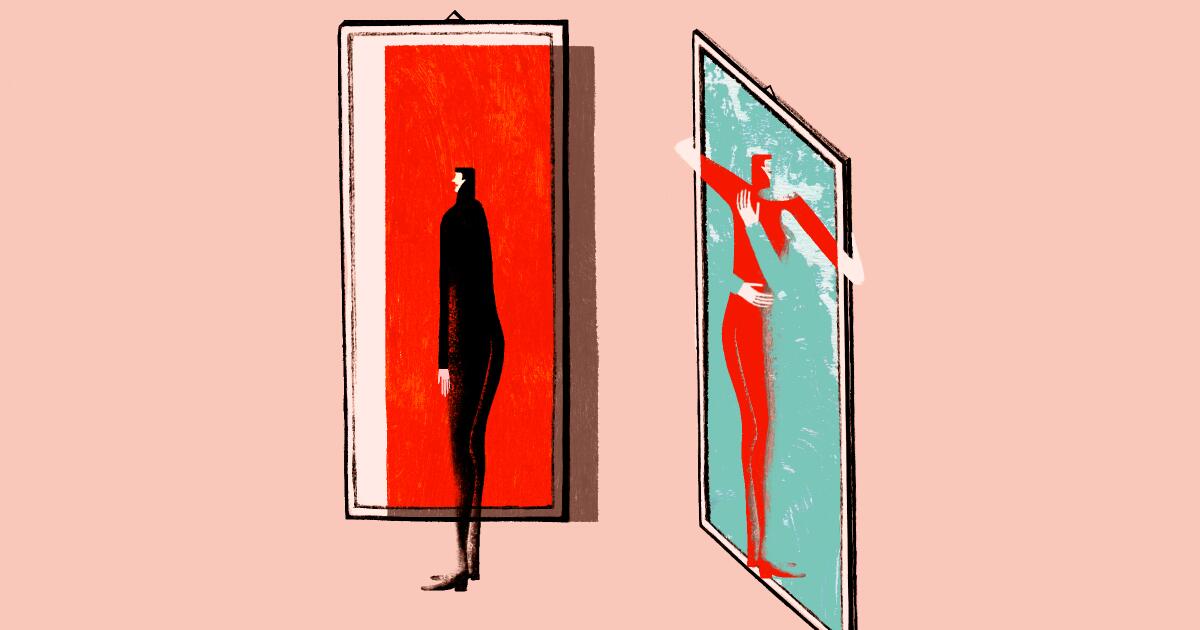
In December 2022, I was at Zara in the Glendale Galleria, helping my sister find a coat suitable for a funeral, when he first messaged.
“How are ya?”
It was a loaded question. My 27-year-old brother went to sleep the week before and never woke up, and our family didn’t know why. I was a wreck but I swiped through dating apps seeking a sense of normalcy. Among the suitors, one guy seemed special: artsy and attractive with empathetic eyes. So, I divulged.
“Admittedly not great. My brother died last week,” I responded.
“Well, I know we’re near strangers,” he wrote. “But if you want to talk to someone removed from it, I’m happy to.”
I was taken with his kind response to my overshare, and we established a long-distance rapport (he had just moved from L.A. to New Orleans after a relationship ended).
Three months later, he came to town. I was at a house party in the Pacific Palisades when he texted.
My phone screen showed the time as 11:09 p.m.
“Is this a booty call?” I texted back.
“It is, yeah. Like, adjacent.”
I pondered the proposition. Still grieving, I was acutely aware of mortality and eager for anything to make me feel the opposite. I requested his location.
As I drove east on the 10 Freeway, more texts illuminated on my dash.
“I took a buncha ecstasy. Fair warning.”
Apparently, he was eager to feel something too.
He hopped in my car outside Prime Time Pub. His hair was pulled back and he smelled like beer. We were matching in gray thermals and black pants. I was relieved to feel attracted to him.
“I’m enamored with your face,” he said. So it seemed we were on the same page — or same MDMA.
Throughout the night, his brazen statements continued. “I love your big eyes,” he remarked. “How are you not married?”
I was cautious of his molly-colored claims. Even so, as he followed me into my apartment and leaned down to kiss me, I co-conspired, standing on my toes to meet him.
By morning, his tone was more practical. He shared his plans to sign a lease in New Orleans.
But before he left, he took me to dinner at Tsubaki in Echo Park. Later that night, back in my bed, he ran his fingers over the freckles between my ribs, and said they resembled the constellation Cassiopeia, channeling a scene out of “Serendipity.”
I had wanted to feel something and I was starting to. Yet I was wary of feeling joy.
The next night, I was barhopping the Sunset block in Silver Lake, when I bumped into him having dinner. What were the chances? He kissed my forehead; I stepped on his foot.
Two days later, he ran into me at the reservoir. I slid my headphones around my neck, stunned.
The coincidences humbled me; suddenly, the clamp clenching my atrium loosened a notch. Nevertheless, he left for the Gulf Coast, and we carried on a touch-and-go dialogue, a “Serendipity” JPEG here, photos of his new apartment there.
Then, one night in April, I was having dinner at Greekman’s when he stumbled in. I couldn’t believe it. Here, we’d been planted in the same place unplanned a third time, and yet he hadn’t told me he was in town.
He sent olive oil ice cream to my table, an olive oil branch.
“You looked like you saw a ghost,” he’d later say, conveying that he hadn’t reached out because he needed to remain single.
I understood even if my ego didn’t, and defaulted back to dating apps. Then, something extraordinary happened.
The first two men I went out with had just vacationed in New Orleans. I wrote it off as a Baader-Meinhof frequency illusion, but the signs didn’t stop. One day it was a Louisiana license plate, the next an LSU sweatshirt at Starbucks or Linda Ronstadt’s “Blue Bayou” on the radio.
After a month, I couldn’t ignore the onslaught. I fired off a text.
“I was thinking of you earlier,” he replied.
That was all it took for me to suggest I visit. He obliged, and thus set in motion plans for our third date (if you counted the booty call, which I did).
I booked a plane ticket and checked the forecast: excessive heat warning. We barely left the hotel room. When we did, we traipsed through the French Quarter holding hands. We ate beignets on Bourbon Street and went night swimming.
“How did he die?” he asked as we simmered by the pool.
“Liver failure. Maybe from alcohol or genetics. We don’t really know. He was 27,” I shared, surprised by my vulnerability.
A few weeks after the trip, he invited me back for his photography show. I couldn’t attend, but to show support, I bought a nude he took in the mirror, with proceeds going to Planned Parenthood.
The next time he flew to L.A., I was giddy to reunite, but the sentiment deflated when, in a postcoital moment, he put on his sneakers.
“You’re leaving?”
“We’ll both sleep better this way,” he said in a tone I didn’t recognize.
I didn’t sleep at all. The conversation carried over to morning, when by phone he confirmed my feelings had outpaced his.
“Are you OK?” he asked.
“Yes, I’m fine,” I lied.
But when we hung up, I sobbed. As tears fell from my chin, I wondered how long they had been needing to come out.
In the following days, I moved through the world in a state of compounded grief. Back at the reservoir, the path felt lackluster — a reminder that there was no divine order. I stopped seeing New Orleans signs.
But after the dust settled, in their place came winks from another 6-foot-plus figure from my past, another ghost: Turtles, Pokémon and license plates with my brother’s name, JJ.
I realized they had always been there; they were just too painful to pull into focus. It was easier to get caught up in a blossoming love story than to confront the unending horror of loss.
Weeks later, the full-frontal photo arrived via FedEx, and I asked my friends for their input. “Return to sender” and “Gift the world’s most elevated d— pic to the Louvre,” they suggested.
I weighed their opinions, until a fresh perspective crystallized. In life as in love, art and death, we get to choose what we see and how we interpret it.
So, I hung the photo on my wall.
Some days the image reminds me of getting my heart broken. On others, I recall my courage in being vulnerable — and how I started to open my heart back up.
The author is a screenwriter who lives in Silver Lake. She’s working on a novel.
L.A. Affairs chronicles the search for romantic love in all its glorious expressions in the L.A. area, and we want to hear your true story. We pay $400 for a published essay. Email LAAffairs@latimes.com. You can find submission guidelines here. You can find past columns here.



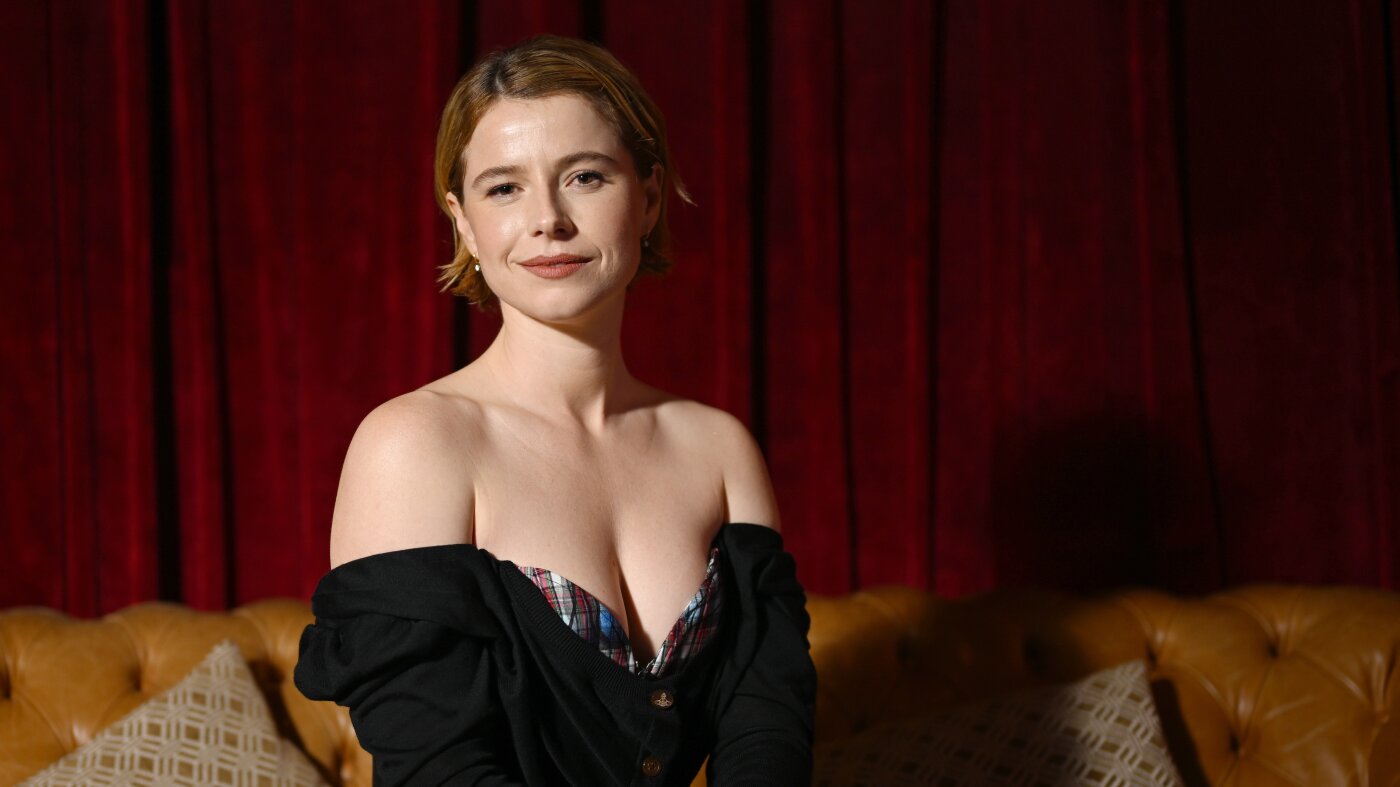
Jessie Buckley has been nominated for an Academy Award for best actress for her portrayal of William Shakespeare’s wife in Hamnet.
Kate Green/Getty Images
hide caption
toggle caption
Kate Green/Getty Images
Actor Jessie Buckley says she’s always been drawn to the “shadowy bits” of her characters — aspects that are disobedient, or “too much.” Perhaps that’s what led her to play Agnes, the wife of William Shakespeare, in Hamnet.
Buckley says the film, which is based on Maggie O’Farrell’s 2020 novel, offered a chance to counter a common narrative about the playwright’s wife: that she “had kept him back from his genius,” Buckley says.

But, she adds, “What Maggie O’Farrell so brilliantly did, not just with Agnes and Shakespeare’s wife, but also with Hamnet, their son, was to bring these people … and give them status beside this great man. … [And] give the full landscape of what it is to be a woman.”
The film is nominated for eight Academy Awards, including best actress for Buckley. In it, she plays a woman deeply connected to nature, who faces conflicts in her marriage, as well as the death of their son Hamnet.
Buckley found out she was pregnant a week after the film wrapped. She’s since given birth to her first child, a daughter.

“The thing that this story offered me, that brought me into this next chapter of my life as a mother was tenderness,” she says. “A mother’s tenderness is ferocious. To love, to birth is no joke. To be born is no joke. And the minute something’s born into the world, you’re always in the precipice of life and death. That’s our path. … I wanted to be a mother so much that that overrode the thought of being afraid of it.”

Jessie Buckley stars as Agnes and Joe Alwyn plays her brother Bartholomew in Hamnet.
Courtesy of Focus Features/Courtesy of Focus Features
hide caption
toggle caption
Courtesy of Focus Features/Courtesy of Focus Features
Interview highlights
On filming the scene where she howls in grief when her son dies
I didn’t know that that was going to happen or come out, it wasn’t in the script. I think really [director] Chloé [Zhao] asked all of us to dare to be as present as possible. Of course, leading up to it, you’re aware this scene is coming, but that scene doesn’t stand on its own. By the time I’d met that scene, I had developed such a deep bond with Jacobi Jupe, who plays Hamnet, and [co-stars] Paul [Mescal] and Emily Watson, and all the children and we really were a family. And Jacobi Jupe who plays Hamnet is such an incredible little actor and an incredible soul, and we really were a team. …

The death of a child is unfathomable. I don’t know where it begins and ends. Out of utter respect, I tried to touch an imaginary truth of it in our story as best I could, but there’s no way to define that kind of grief. I’m sure it’s different for so many people. And in that moment, all I had was my imagination but also this relationship that was right in front of me with this little boy and that’s what came out of that.
On what inspired her to pursue singing growing up
I grew up around a lot of music. My mom is a harpist and a singer and my dad has always been passionate about music, so it was always something in our house and always something that was encouraged. … Early on, I have very strong memories of seeing and hearing my mom sing in church and this quite intense mercurial conversation that would happen between her, the story and the people that would listen to her. And at the end of it, something had been cracked between them and these strangers would come up with tears in their eyes. And I guess I saw the power of storytelling through my mom’s singing at a very young age, and that was definitely something that made me think I want to do that.
On her first big break performing as a teen on the BBC singing competition I’d Do Anything — and being criticized by judges about her physical appearance
I was raw. I hadn’t trained. I had a lot to learn and to grow in. I was only 17. I think there was part of their criticism which I think was destructive and unfair when it became about my awkwardness, or they would say I was masculine and send me to kind of a femininity school. … They sent me to [the musical production of] Chicago to put heels on and a leotard and learn how to walk in high heels, which was pretty humiliating, to be honest, and I’m sad about that because I think I was discovering myself as a young woman in the world and wasn’t fully formed. … I was different. I was wild, I had a lot of feeling inside me. I could hardly keep my hands beside myself and I think to kind of criticize a body of a young woman at that time and to make her feel conscious of that was lazy and, I think, boring.
On filming parts of the 2026 film The Bride! while pregnant
I really loved working when I was pregnant. I thought it was a pretty wild experience, especially because I was playing Mary Shelley and I was talking about [this] monstrosity, and here I was with two heartbeats inside me. Becoming a mom and being pregnant did something, I think, for me. My experience of it, it’s so real that it really focuses [me to be] allergic to fake or to disconnection.
Since my daughter has come and I know what that connection is and the real feeling of being in a relationship with somebody … as an actress, it’s very exciting to recognize that in yourself and really take ownership of yourself.
I’m excited to go back and work on this other side of becoming a mother in so many ways, because I’ve shed 10 layers of skin by loving more and experiencing life in such a new way with my daughter. I’m also scared to work again because it’s hard to be a mother and to work. That’s like a constant tug because I love what I do and I’m passionate and I want to continue to grow and learn and fill those spaces that are yet to be filled — and also be a mother. And I think every mother can recognize that tug.
On the possibility of bringing her daughter to travel with her as she works
I haven’t filmed for nearly a year and I cannot wait. I’m hungry to create again. And my daughter will come with me. She’s seven months, so at the moment she can travel with us and it’s a beautiful life. And she meets all these amazing people and I have a feeling that she loves life and that’s a great thing to see in a child. And I hope that’s something that I’ve imparted to her in the short time that she’s been on this earth is that life is beautiful and great and complex and alive and there’s no part of you that needs to be less in your life. You might have to work it out, but it’s worth it.
Lauren Krenzel and Susan Nyakundi produced and edited this interview for broadcast. Bridget Bentz, Molly Seavy-Nesper and Beth Novey adapted it for the web.

Bruce Campbell
I’m Battling Cancer
Published
Bruce Campbell has revealed he has cancer, but says it’s a type that’s treatable, though not curable.
“The Evil Dead” actor shared the news Monday in a message to fans, writing, “Hi folks, these days, when someone is having a health issue, it’s referred to as an ‘opportunity,’ so let’s go with that — I’m having one of those.” He continued, “It’s also called a type of cancer that’s ‘treatable’ not ‘curable.’ I apologize if that’s a shock — it was to me too.”

Campbell said he wouldn’t go into further detail about his diagnosis, but explained his work schedule will be changing. “Appearances and cons and work in general need to take back seat to treatment,” he wrote, adding he plans to focus on getting “as well as I possibly can over the summer.”
As a result, Campbell says he has to cancel several convention appearances this summer, noting, “Treatment needs and professional obligations don’t always go hand-in-hand.”
He says his plan is to tour this fall in support of his new film, “Ernie & Emma,” which he stars in and directs.
Ending on a determined note, Campbell told fans, “I am a tough old son-of-a-bitch … and I expect to be around a while.”

Neve Campbell in Scream 7.
Paramount Pictures
hide caption
toggle caption
Paramount Pictures
The OG Scream Queen Neve Campbell returns. Scream 7 re-centers the franchise back on Sidney Prescott. She has a new life, a family, and lots of baggage. You know the drill: Someone dressing up as the masked slasher Ghostface comes for her, her family and friends. There’s lots of stabbing and murder and so many red herrings it’s practically a smorgasbord.
Follow Pop Culture Happy Hour on Letterboxd at letterboxd.com/nprpopculture

Wisconsin lawmakers crack down on cryptocurrency scams

2 Aspira charter high schools to close by April due to financial issues

Home Gym Supplies Squat Rack Cage Package Released to Market for Exercise Lovers by Strongway Gym Supplies

‘Hoppers’ review: Who can argue with hilarious talking animals?

‘God of War’ Creator Says TV First Look Is ‘So Dumb’ and ‘Terrible’: Looks Like He’s ‘S—ing in the Woods’

Florida High School Football Rankings: Top 25 teams – Oct. 21

Cleary's 21 help Le Moyne down Central Connecticut State 69-64 in OT

How old is Bo Nix? What to know about Oregon quarterback ahead of 2024 NFL Draft

99th annual Pony Swim held in Virginia

Indiana Members Credit Union announced as new anchor tenant at Bottleworks District

Trump sends official notification to Congress on strikes against Iran

Unexpected birth brings hope to near-extinct Amazon tribe

Supreme Court blocks redrawing of New York congressional map, dealing a win for GOP

Map: Earthquake Shakes Central California

Gas prices could jump as Middle East tensions threaten global oil supply
-

 World5 days ago
Exclusive: DeepSeek withholds latest AI model from US chipmakers including Nvidia, sources say
-

 Massachusetts5 days ago
Mother and daughter injured in Taunton house explosion
-

 Denver, CO5 days ago
10 acres charred, 5 injured in Thornton grass fire, evacuation orders lifted
-

 Louisiana1 week ago
Wildfire near Gum Swamp Road in Livingston Parish now under control; more than 200 acres burned
-

 Technology1 week ago
YouTube TV billing scam emails are hitting inboxes
-

 Politics1 week ago
OpenAI didn’t contact police despite employees flagging mass shooter’s concerning chatbot interactions: REPORT
-

 Technology1 week ago
Stellantis is in a crisis of its own making
-

 News1 week ago
World reacts as US top court limits Trump’s tariff powers