Lifestyle
Julian Barnes says he’s enjoying himself, but that ‘Departure(s)’ is his last book

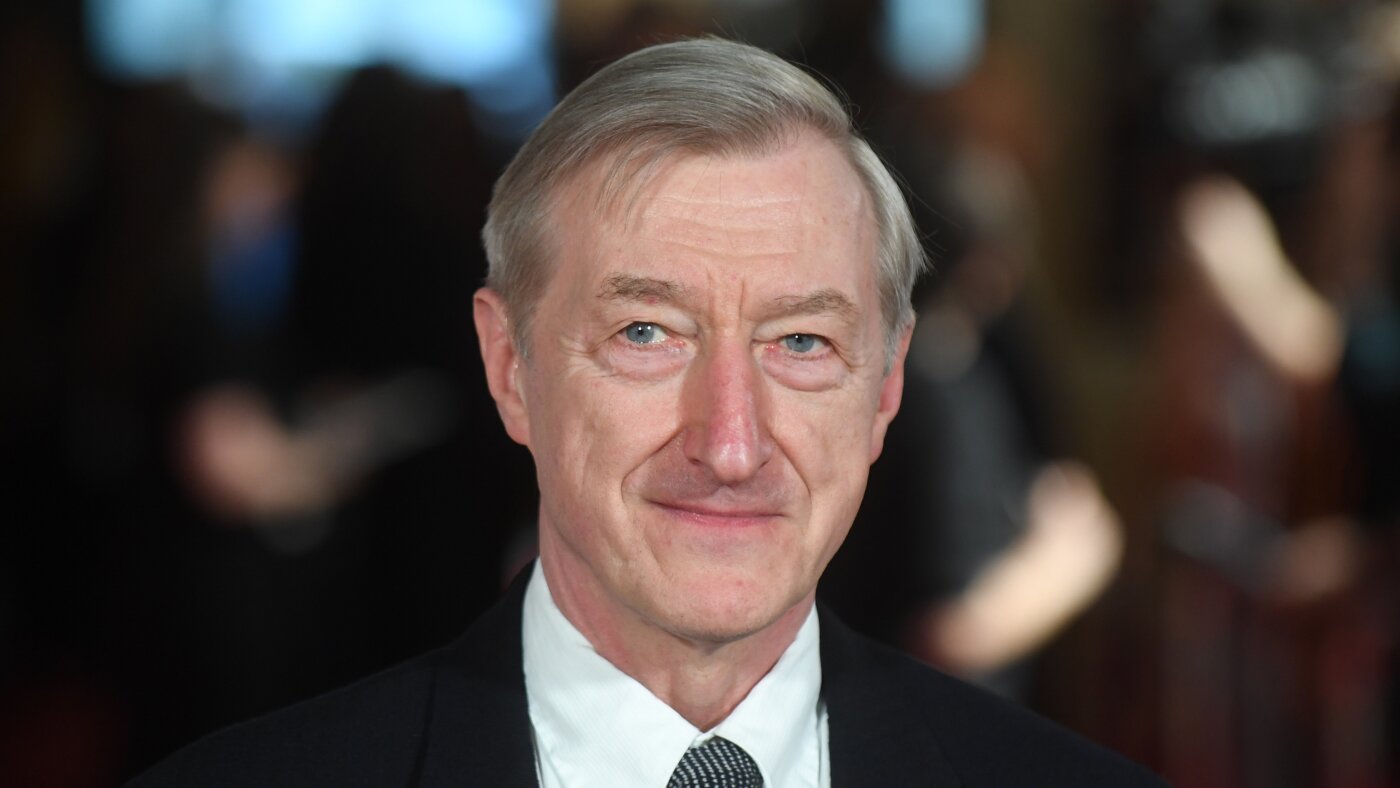
Booker Prize-winning novelist Julian Barnes turns 80 on Monday and has been very busy. “I can’t remember a period of months when there’s been so much going on,” he says. He’s pictured above in London in 2017.
Stuart C. Wilson/Getty Images Europe
hide caption
toggle caption
Stuart C. Wilson/Getty Images Europe
Six years ago, British author Julian Barnes was diagnosed with a rare form of blood cancer. But rather than feel angry or fearful, Barnes experienced a strange calm; he approached the disease with what he calls his “novelist’s interest.”
“I love talking to doctors and consultants and nurses. They stick their needles into your arm and take off pints of blood,” he says. “It’s very interesting. Though like many things, it does get a bit tedious on the 34th time of taking a pound of blood out of you.”
Cancer means that Barnes, who turns 80 on Jan. 19, will spend the rest of his life on chemotherapy drugs. Still, he says, he doesn’t grieve for his aging and ailing body.

“We are these creatures who come into this earth unbidden, not consulted, and we live a certain amount of time — much longer than our ancestors,” he says. “But because we live longer, our body begins to break down and the medical costs increase.”
Barnes’ new book, Departure(s), will publish the day after his birthday. Part memoir, part fiction, the book chronicles Barnes’ cancer diagnosis and his reflections on death. In a way, Departure(s) is a companion to his 2013 book, Levels of Life, which detailed the death of his wife Pat Kavanagh, who was also his literary agent. (Kavanagh died in 2008, just weeks after being diagnosed with a rare, hyper-aggressive brain tumor.)

Despite his frequent meditations on death, Barnes says he is “alive and enjoying myself.” He remarried in August, and is looking forward to his birthday and the publication of his book, which he says will be his last.
“It’s been a very strange five months up to now,” he says. “I can’t remember a period of months when there’s been so much going on.”
Interview highlights

On his “hybrid” books
I often write hybrid books, and Departure(s) is a hybrid. It’s not a term that publishers like. They like to have something that says “fiction” or “nonfiction.” … Quite a few of [my books] are actually hybrid, which mix autobiography, fiction, nonfiction, art criticism, whatever is relevant to my thinking about the book.
I’ve always been quite relaxed about this, but I know that it does annoy some people, and indeed, the character Julian Barnes is attacked at one point by one of the participants in this love affair, who he hasn’t met for 40 years or so. And she says, “I don’t like this hybrid stuff you do. I think you should stick to one thing or another.” And it was rather enjoyable to have a character rebuking me for the book that I was writing. I sort of enjoyed that. And I get cross with her and I say, “Well, you may like or not like one of my books, but I want you to know that I know exactly what I’m doing when I’m writing.”
On thinking about death on a daily basis

I was talking to a friend of mine who said, “Oh, I don’t think about death. I’m only 60, I’ll think about when it’s nearer the time.” And you think, well, death doesn’t quite necessarily operate in that fashion. Death could be an out-of-control motorbike coming around a corner and taking you out. You won’t have had much time to think in those three seconds before it hits you. One of my French gurus is the 17th-century philosopher Montaigne, and he said we should think about death on a daily basis. We should make it our familiar. That’s the best way of treating it. Not as some awful sort of ghastly skeleton with a scythe in its hand coming to chop us off. He says we should … almost domesticate it, tame it in this way, and then we should hope to die while planting out our cabbages. That’s a wonderfully sort of wise approach to it all. I haven’t got a vegetable garden anymore. I used to have one, and when I planted cabbages they didn’t do very well. That’s the only fault I can find with Montaigne’s view of death.
On how he expects his wife’s death will inform his own
She had a catastrophic diagnosis and was dead in 37 days. It was like being taken downhill in an avalanche and every day something got worse. It was, by a long way, the most appalling thing that’s just happened to me in my life, and the most blackest. The thing that most deprived you of sort of hope and balance really. It took me years to get over it, but I don’t think I shall mourn my own departure in quite the same way. …
You could say that she showed me how to die with grace and also with a consideration for other people who were coming to see her. She never got cross. She never became tragic or upset. So in some ways we were well-suited because I have that sort of temperament as well.
On experiencing suicidal thoughts
If you or someone you know may be considering suicide or is in crisis, call or text 988 to reach the Suicide & Crisis Lifeline.
I remember very clearly when I thought that I might kill myself. It was a few weeks after my wife had died and I was walking home and I looked across at the curb on the other side of the road … and I thought, of course you can kill yourself, that’s permissible, it’s not unforgivable in my morality. I’m extremely unhappy. I’m bereft. I’m lost, though I have many friends. I think I said, or a friend said to me — I can’t remember which way around it was — “Give it two years.” I said, “OK, I’ll give it to two years.”
But before that two-year period had elapsed, I discovered the reason why I couldn’t kill myself: I wasn’t allowed to kill myself, and that’s because I was the best rememberer of my wife. I knew her and I had celebrated her, in all her forms and in all of her nature. And I had loved her deeply. And I realized that if I killed myself, then I would in a way be killing her, too. I’d be killing the best memories of her. They would disappear from the world. And I just wouldn’t allow myself to do that. And at that point it just turned on its head and I knew I would have to live.
On his support of assisted dying

I think if I’m in extreme pain, with no chance of a cure for whatever illness I have, and I think if I’m getting no pleasure out of life, and as I see it, people are not getting any pleasure out me and my existence, then I have the perfect human right to end my own life. I don’t want to go to some industrial estate in Switzerland to do it, that sounds pretty grim. That’s why I’m a great believer and supporter of assisted dying in the U.K.
On the fallibility of memory

I used to believe — as I think most people do when they’re young — that memory was somehow something rather stable, that it was like you had something happen to you and you wanted to remember it, and so you took it along to one of those storage units which are along the sides of lots of main roads and outside city centers, and you deposited it there. And then when you needed that memory, you went there, you opened the box, you took it out, and there it was, as pure and as truthful as when you put it in. I went along with this sort of view of memory for quite a long time until I realized that actually memory deteriorates like everything else. And that, in fact, the more times you tell a story, the more times you subtly alter it, the more time you make yourself come out of it a little better, or you add a joke, and so on and so forth. So you could say that your best memories, the ones you’re fondest of, are your least reliable memories.
Anna Bauman and Nico Gonzalez Wisler produced and edited this interview for broadcast. Bridget Bentz, Molly Seavy-Nesper and Beth Novey adapted it for the web.



Bruce Campbell
I’m Battling Cancer
Published
Bruce Campbell has revealed he has cancer, but says it’s a type that’s treatable, though not curable.
“The Evil Dead” actor shared the news Monday in a message to fans, writing, “Hi folks, these days, when someone is having a health issue, it’s referred to as an ‘opportunity,’ so let’s go with that — I’m having one of those.” He continued, “It’s also called a type of cancer that’s ‘treatable’ not ‘curable.’ I apologize if that’s a shock — it was to me too.”

Campbell said he wouldn’t go into further detail about his diagnosis, but explained his work schedule will be changing. “Appearances and cons and work in general need to take back seat to treatment,” he wrote, adding he plans to focus on getting “as well as I possibly can over the summer.”
As a result, Campbell says he has to cancel several convention appearances this summer, noting, “Treatment needs and professional obligations don’t always go hand-in-hand.”
He says his plan is to tour this fall in support of his new film, “Ernie & Emma,” which he stars in and directs.
Ending on a determined note, Campbell told fans, “I am a tough old son-of-a-bitch … and I expect to be around a while.”

Neve Campbell in Scream 7.
Paramount Pictures
hide caption
toggle caption
Paramount Pictures
The OG Scream Queen Neve Campbell returns. Scream 7 re-centers the franchise back on Sidney Prescott. She has a new life, a family, and lots of baggage. You know the drill: Someone dressing up as the masked slasher Ghostface comes for her, her family and friends. There’s lots of stabbing and murder and so many red herrings it’s practically a smorgasbord.
Follow Pop Culture Happy Hour on Letterboxd at letterboxd.com/nprpopculture

Abriana Vicioso is the host of the Flower Hour, which takes place monthly.
(Jennifer McCord / For The Times)
Each flower carries a personal history. For Abriana Vicioso, the calla lily was her parents’ wedding flower — a symbol of her mother’s beauty. “She had this big, beautiful white calla lily in her hair,” Vicioso says. “I love my parents. They’re the reason I’m here. I’ll never forget where I came from.”
The Flower Hour begins with Vicioso announcing, with a warm smile: “Today is about touching grass.” The florist-by-trade gestures behind her to hundreds of flowers contained in buckets — blue thistles, ivory anemones and calla lilies painted silver — all twisted and unfurling into the air. “Tonight is going to be so sweet and intimate,” Vicioso says, eyeing the beautiful chaos at her feet. A grin buds across her face.
Moments before the workshop, participants sit at candlelit tables exchanging horoscopes and comparing their favorite flowers. A mention of the illustrious bird-of-paradise flower elicits coos and awe from the women. Izamar Vazquez, who is from Jalisco, Mexico, reveals her fondness for roses, which make her feel connected to her Mexican roots.
Vicioso hosts her flower-themed wellness workshop near the iconic Original Los Angeles Flower Market in downtown L.A. In January, the first Flower Hour event sold out, prompting her to make it a monthly series. Vicioso describes the event as a “three-part journey” where participants are invited to drink herbal tea, smoke rose-petal-rolled cannabis joints and create a floral arrangement. “The guide is to connect with the medicine of flowers,” Vicioso says.


Rose petal joints, tea and flower arranging are all part of The Flower Hour event’s offerings.
The event is hosted at the Art Club, a membership-based co-working space. “The Flower Hour is really beautiful. Everyone gets to explore their creativity while meeting new people,” says Lindsay Williams, the co-owner of the Art Club.
The idea for Flower Hour came to Vicioso during a conversation with her mother. “We joke all the time that flowers were destined to make their way into my life,” she says. She works as a florist and models on the side, even appearing in the pages of Vogue. Vicioso grew up in a Caribbean household, where flowers and offerings were part of daily life. “In my culture and religion, a lot of my family practices — an Afro-Caribbean religion — we build altars.”
Like many cultures, flowers carry sentimental value in her religion. “I’m Caribbean, so a lot of my family practices a Yoruba religion, which comes from Africa. In the Caribbean, it’s well known as Santería.”

-
Share via
After a difficult year and a breakup, Vicioso wanted to marry her love of flowers with community building. Because Vicioso uses cannabis medicinally, the workshop naturally includes a smoking component. “My family has smoked cannabis for a lot of reasons for a long time. It’s a really healing plant,” she explains.
In the workshop, even the cannabis gets the floral treatment. Vicioso presents her rose-petal-wrapped joints on a silver platter at each table. She rolled each by hand. “If you’ve never smoked a rose-petal-rolled joint, the difference with this is it’s going to have roses that have a slight tobacco effect,” she announces.
During the workshop, Vicioso stresses the importance of buying cannabis from local vendors. The cannabis provided was purchased from a Northern Californian vendor. The wellness workshop aims to reclaim the healing ritual of smoking cannabis. “This is a plant that has been commercialized,” Vicioso says. “There’s a lot of Black and Brown people who are in jail for this plant.”
The resulting workshop is what Vicioso describes as “an immersive wellness experience that is the intersection of wellness, creativity, community and an appreciation of flowers.” The workshop serves as a reminder to enjoy Earth’s innate beauty in the form of flowers — including cannabis. “It’s this gift that the universe gave us for free and that I have this deep connection with,” Vicioso says.


Conversation cards to generate discussion among participants (top, letf). The workshop serves as a “third space” for Angelenos to engage in tactile creativity and community building outside of traditional nightlife settings.
After enjoying lavender chamomile tea and smoking a joint, Vicioso introduces the flowers to the group before inviting them to pick their own. She emphasizes each flower’s personality traits, describing green dianthus as a “Dr. Seuss” plant. Then, there are calla lilies with their “main character moment.” It gets personal. “Start thinking of a flower in your life that you can discover,” she says. “If you’re feeling like you need inspiration, you can always remember that these flowers have stories.”
Vicioso infuses wisdom into her instruction on floral arrangements: There are no mistakes. Let the flowers tell you where they want to go, she urges. Intuition will be your guide — the wilder, the better.
“Hecho in Mexico” reads a sticker on a bunch of green stems. “Like me,” says Vazquez with a laugh. “They’re all doing their own thing. Like a family,” she says later, arranging stems.

The Flower Hour participants and Vicioso, center, chat as they build their own floral arrangements at the sold-out event.
Two participants — Vazquez and Rebeca Alvarado — are friends who run a floral design company together called Izza Rose. Like Vicioso, the friends have a connection to flowers through their Latin American culture. They met Vicioso in the floral industry and were overjoyed to discover her workshop.
“This is a great way to connect with other people,” says Vazquez.
Alvarado agrees, adding: “You’re getting to know people outside of going to bars. You can connect in different ways when there’s an activity.”
Vazquez uses flowers to stay connected to her Mexican heritage, adding that she prefers to support Mexican vendors. In recent months, the downtown L.A. flower market has struggled to recover from ongoing ICE raids. “Some are scared to come back,” says Vazquez.


Hand-rolled cannabis joints wrapped in rose petals are presented on a silver platter at The ArtClub (top, right). The Flower Hour aims to reclaim the healing rituals of cannabis and flowers.
Another participant, Barbara Rios, was attracted to the workshop for stress relief. “You can hang out with your friends, but it’s nice to do things with your hands,” she says. “I work a stressful job, and it’s nice to have that third space that we’re all craving.”
On this February night, the participants were predominantly women, save for one man. In the future, Vicioso hopes that more men learn to engage with flowers. “There’s a statistic about men receiving flowers for the first time at their funerals, and I think we have changed that,” she says.
To conclude the workshop, Vicioso encourages participants to build lasting friendships and incorporate flower arranging into their daily practice — even if it’s just with a small, inexpensive bouquet.
“Get some flowers together, go to the park, hang out with each other and hang out with me,” she says. Participants leave with flower arrangements in hand. In the darkness of the night air, it briefly looks as though the women carry silver calla lilies that are blooming from their palms.

Ulysses Jenkins, Los Angeles artist and pioneer of Black experimental video, dies at 79

‘Evil Dead’ Star Bruce Campbell Reveals He Has Cancer

Rep. Kevin Kiley opts against challenging fellow Republican Tom McClintock

Can fire-resistant homes be sexy? ‘You be the judge,’ says this Palisades architect

Shaikin: Clayton Kershaw’s ‘perfect’ ending has one final chapter in WBC

Florida High School Football Rankings: Top 25 teams – Oct. 21

Cleary's 21 help Le Moyne down Central Connecticut State 69-64 in OT

How old is Bo Nix? What to know about Oregon quarterback ahead of 2024 NFL Draft

99th annual Pony Swim held in Virginia

Indiana Members Credit Union announced as new anchor tenant at Bottleworks District

Unexpected birth brings hope to near-extinct Amazon tribe

Supreme Court blocks redrawing of New York congressional map, dealing a win for GOP

Map: Earthquake Shakes Central California

Gas prices could jump as Middle East tensions threaten global oil supply

Pakistan calls troops, orders 3-day curfew as 24 killed in pro-Iran rallies
-

 World5 days ago
Exclusive: DeepSeek withholds latest AI model from US chipmakers including Nvidia, sources say
-

 Massachusetts5 days ago
Mother and daughter injured in Taunton house explosion
-

 Denver, CO5 days ago
10 acres charred, 5 injured in Thornton grass fire, evacuation orders lifted
-

 Louisiana1 week ago
Wildfire near Gum Swamp Road in Livingston Parish now under control; more than 200 acres burned
-

 Technology1 week ago
YouTube TV billing scam emails are hitting inboxes
-

 Politics1 week ago
OpenAI didn’t contact police despite employees flagging mass shooter’s concerning chatbot interactions: REPORT
-

 Technology1 week ago
Stellantis is in a crisis of its own making
-

 News1 week ago
World reacts as US top court limits Trump’s tariff powers