Lifestyle
Join the L.A. Times on a fall hike


Howdy! I’m Jaclyn Cosgrove, an outdoors reporter at the L.A. Times. I write about the best trails, bodies of water, campgrounds and more that you should visit in and around Los Angeles County. I’m also the voice behind The Wild, our weekly outdoors newsletter. I am often out hiking alongside Maggie May, my trusty trail dog, whether it’s for work or fun. As the seasons change, I’d love to meet you out on the trail to determine if fall foliage does in fact exist in L.A.
I’m inviting 30 L.A. Times subscribers to join me on a hike from 9 a.m. to 11 a.m. Oct. 19. This is the second event in our subscriber-exclusive hiking event series. (We’re already busy planning fun outdoors events for 2025.)
We will start from the lower parking lot of the Gabrielino Trail and take an easy three-mile stroll along the Arroyo Seco. This is one of my favorite hikes in all of Angeles National Forest, as it includes a river, a shaded path and plenty to look at and listen to. Along the way, we’ll be on the lookout for native trees, like bigleaf maples and black walnut trees, that change colors with the season. (And yes, you’re welcome to take photos for Instagram, iNaturalist or both!)
The trail starts with a very brief steep incline up a paved road before quickly flattening out. We’ll walk along a paved path parallel to the river, which after about half a mile turns into a dirt trail. We will follow this pleasant path as it heads northwest through the canyon.
I’ll bring Maggie, as this is one of her favorite hikes, too. Your leashed dogs are also welcome to join us. You may want to bring a towel for Fido, as we will likely cross the river at least once.
We will turn around one and a half miles in, but you can hike the additional two miles (an additional four miles round trip) to the Brown Mountain Dam waterfall on your own if you’d like to continue (preferably with a downloaded or paper map).
Rather than parking in the small paved lot off Windsor Avenue, you’ll want to continue north on Explorer Road until you reach a large sandy parking lot. Parking is free, and no pass is required.
Please park toward the northern end of the lot. We will meet here, near the short bridge that leads to a back entrance of NASA’s Jet Propulsion Lab (where we won’t be going, but which does host occasional public tours). Please wear good shoes, a hat and sunscreen. We will have water bottles for attendees but you’re also welcome to bring your own. You must be 18 or older and will be required to sign a waiver prior to attending. Grab a spot on eventbrite.com.

Lifestyle
The BoF Podcast | Decoding Paris Haute Couture: Wonder, Restraint and the Call of the Void


Lifestyle
L.A. Affairs: It’s hot when a man drives to me. But would this new guy make the trek from the Valley?
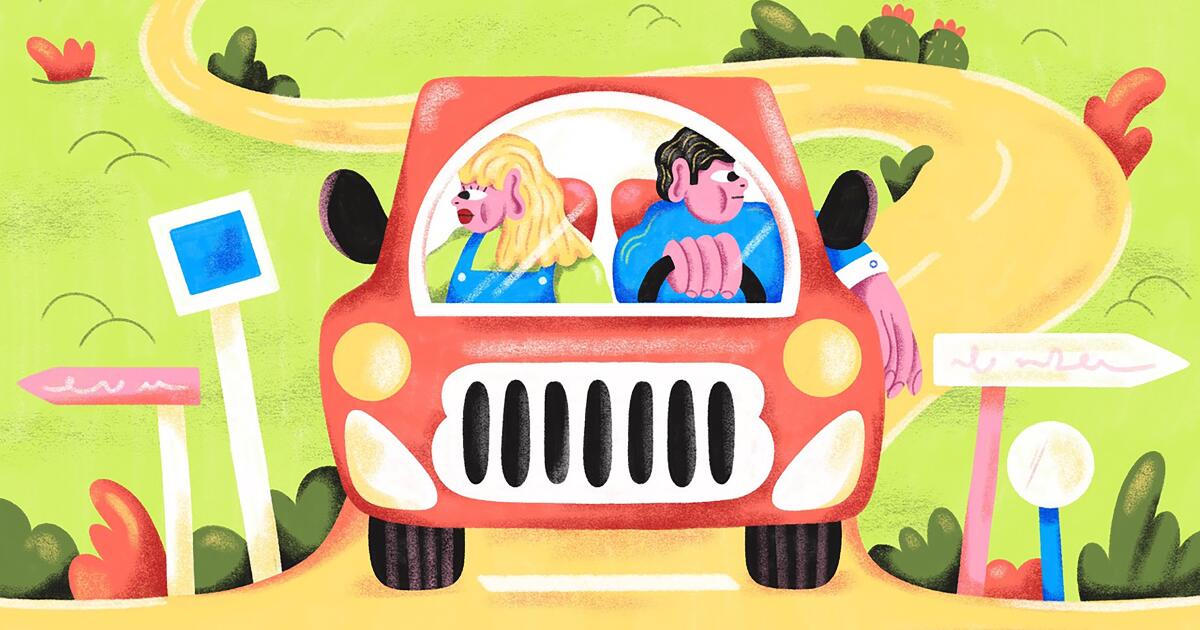
I met Dan on Hinge.
He lives in Woodland Hills, and I live in Venice. In Los Angeles, this is considered a long-distance relationship. In another city it might be nothing. Here, it’s a factor.
But I believe that with the right person, you can make anything work, so I stay open. I’m a native New Yorker, and if I were living in Brooklyn and a guy lived on the Upper West Side, that would be a 45-minute subway ride, which is truly nothing in New York. So with that same logic, I try to have flexibility with men in L.A.
When we started planning our first date, Dan suggested three options: a hike on mushrooms, a wine tasting or a walk on the beach.
A hike on mushrooms is something I’d only do with someone I already trust, not someone I just met online. I don’t do first-date hikes because I don’t like feeling trapped if the guy’s a dud. So I chose the wine tasting.
Then I learned the wine tasting was in West Hills.
On a Friday night, driving there from Venice would be insane. So I said I didn’t want to meet there because of the traffic. He suggested Malibu. That was also not ideal on a Friday.
I was getting annoyed — this was a pink flag because in my dating world, the guy is supposed to come to the woman’s neighborhood in the early days. I’ve gone out with plenty of men from the Valley who effortlessly suggested they come to me. It’s not rare or impossible.
I suggested he come to the Westside. I didn’t specifically say Venice, and in hindsight, I probably should have. He landed on Brentwood, which was manageable for both of us. On our first date, we met at an Irish pub on Wilshire Boulevard. He was cuter and more interesting than I had expected, and with the Guinness flowing, we had fun.
When I got home, he texted me: “Well, I like you 🙂 Less the tik tok and the lack of rock music in your life, but it’s not a deal breaker — there are other qualities 🙂 What are your thoughts?”
I noticed the slight negativity but was mostly dazzled that a man texted immediately after the date to say he liked me. In the modern dating economy, this felt rare.
The next day, both of our evening plans fell through, so we made a last-minute date. The wine tasting he originally suggested still sounded like fun, and although it meant me driving to the Valley, I was up for it now that we’d met.
We sipped flights at Malibu Wines & Beer Garden in its airy, romantic courtyard and played a flirty version of Truth or Dare. Halfway through, he dared me to kiss him.
We ended with sushi on Ventura Boulevard and a short make-out session in his car. He invited me to Thanksgiving at his uncle’s, which felt too soon, but also sweet.
After the second date, he texted and said he had his kids that week and was also hosting an event on Thursday, so his only day to meet was Wednesday. I said great.
On Tuesday night, he checked if we were still on, and I said yes.
Then he texted: “I’m flexible on time but not on location. I have a big event on Thursday, hopefully you can come to me again.”
My stomach tightened. This again?
So I texted back: “I drove to you last time, which was a bit of an exception for me especially in the early days, but the wine tasting location sounded special. Usually guys come to my area. How about we switch it up this time?”
He replied: “I appreciate the effort! Because of my event, I’d rather be close to a computer just if needed … Here is what i offer:
— I’ll come to your area anytime next week/end
— Lunch/dinner on me
I want to continue where we stopped last time 😉 No pressure of course, but let’s snuggle”
I responded: “Ok let’s meet next week. Snuggles sound nice … let’s see what happens …”
Then he wrote: “So I won’t see you tomorrow?”
I replied: “Unless you wanna come to me and bring your laptop along, let’s rain check until you have more flexibility.”
He said: “Dang, you are hard. I’ll let you know tomorrow around midday if it’s ok.”
And then — surprise — he decided to come.
He drove to Venice for a 5 p.m. date. He said his ETA was 5 p.m., and it ended up being 5:25 p.m., typical 405 Freeway.
When he showed up, he was in a cranky mood. On our way to KazuNori in Marina del Rey, I thanked him for picking me up and told him I think it’s hot when the guy comes to the girl.
“You’re just saying that because you want me to come to you more,” he said, not playfully, but aggressively.
That was basically the end for me. But there I was, in his car, heading to dinner. So I stayed pleasant and tried to make the best of it.
I shared that in the early stages of dating, I find it’s good etiquette for the guy to come to the woman’s neighborhood. He immediately disagreed and started ranting about how dating rules are ridiculous and how they swing in women’s favor. He resented paying for dates and declared he wasn’t looking to “sponsor a woman’s life.”
“If women want equality and equal rights,” he said, “then it should apply all across the board, including dating, and the man shouldn’t have to pay.”
I said women don’t actually have equal rights because we get paid less than men and often receive lower salaries than men in the same position.
I tried to change the subject and reset the mood, but he insisted we keep hashing it out.
I tried to explain masculine/feminine dynamics: providing and protecting, giving and receiving.
“What does the man get out of this arrangement?” he asked.
It was like watching someone’s personality warp into Mr. Hyde. Then he brought up another point: He’s a single dad of two kids, so he gets tired; and because I don’t have kids, that should factor into who drives where.
At this point, I was barely engaging and focused on eating my hand rolls, and I couldn’t wait to get home.
The check came, and I happily split it, wanting nothing further from him.
In the car back to my place, he remarked: “It’s obvious we’re never gonna see each other again.”
Obvious, but did it need to be stated?
Then he showed me a Spotify playlist he’d made for me of his favorite electronic music, because he knows I like EDM.
“Oh, that’s sweet,” I said.
“Yeah, that’s how I show interest. Through things like this, not who drives to who,” he replied.
When I got out of the car, we wished each other luck, and I headed inside and shut the door.
Two hours later, he sent me the playlist. I’ve yet to listen to it.
It wasn’t the distance that ruined it. It was the resentment. I’m not looking for a man who feels burdened by the effort. I’m looking for a man who sees the value of courting a woman in the first place.
The author is a writer, comedian and former psychologist who lives in Venice. She is the creator of the new vertical series “Manfari.” She’s on Instagram: @solange_neue and @manfari.show.
L.A. Affairs chronicles the search for romantic love in all its glorious expressions in the L.A. area, and we want to hear your true story. We pay $400 for a published essay. Email LAAffairs@latimes.com. You can find submission guidelines here. You can find past columns here.
-

 Technology4 minutes ago
No, Flock isn’t threatening people for debating surveillance
-

 World7 minutes ago
Israel signals readiness for another Iran strike as Trump declares ceasefire over
-

 Politics12 minutes ago
Kelley Paul: America’s Founders were the ‘first civil rights heroes’
-

 Health19 minutes ago
Your resting heart rate could reveal more about your health than you think, doctors say
-

 Sports22 minutes ago
Shohei Ohtani ruled out of MLB All-Star Game as Dodgers plan to manage nagging injury
-

 Technology34 minutes ago
Fake VA shoe offer targets veterans
-
 Business37 minutes ago
Los Angeles hotels saved by last-minute surge in World Cup bookings
-
 Entertainment42 minutes ago
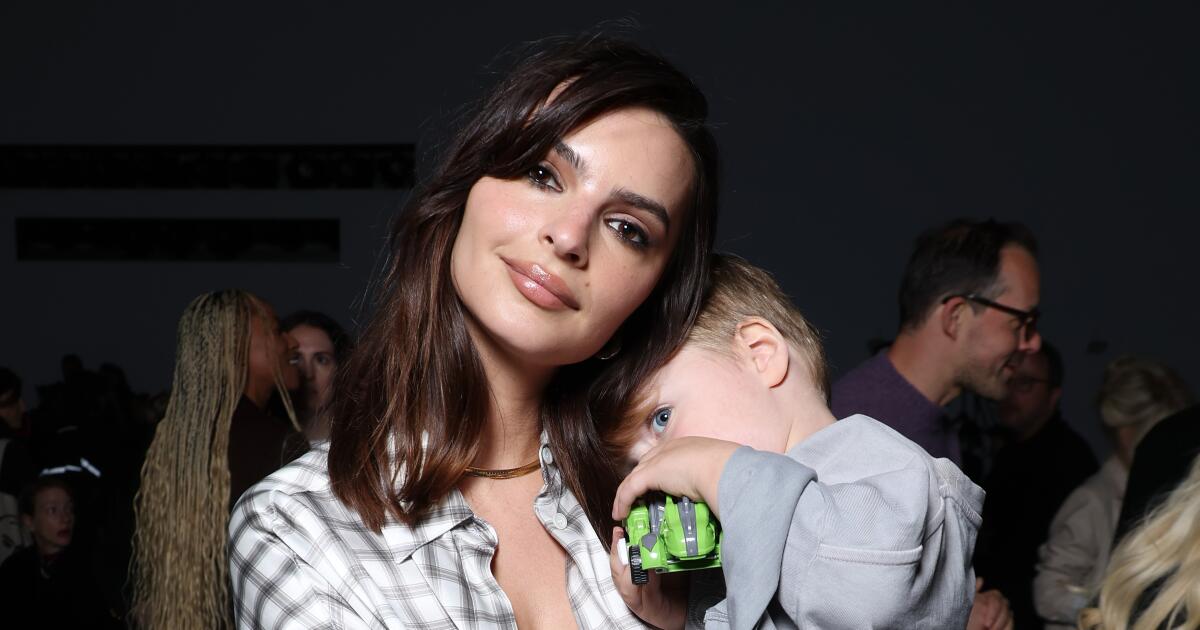
Emily Ratajkowski’s viral essay on sex life as a single mom scores her a seven-figure book deal

