Lifestyle
Jeremy Allen White, Travis Barker, Matty Healy Among NYT's Hot 'Rodent Men'


The new sex symbols of Hollywood have arrived — and they’re now being dubbed “rodent men,” whose critter features ladies just can’t resist … so says The New York Times.
The publication’s Styles team just put together a comprehensive list of hot “rodent men” … with Jeremy Allen White, Travis Barker and Matty Healy among the poster boys … err, poster rats?
“Challengers” stars Mike Faist and Josh O’Connor are getting a lot of non-traditional love on social media these days — lotsa folks think they look like hotter, human versions of Stuart Little — and now thanks to them, “rodent men” is a full-blown category of hunk.
Waiting for your permission to load the Instagram Media.
The NY Times is diving face-first into the topic … like a subway rat going after some discarded pizza … and their list is quite something.
Rami Malek, Willem Dafoe and Adam Driver all have the qualities of the hot rodent man … which the NYT characterizes as “an unconventional mousy man” with a toothy smile, angular face and big ears who comes off as edgy and elusive.

Simu Liu also got labeled a “rodent man” by the NYT … his name coming up when the paper was looking for “racially diverse Rodent Men,” but his inclusion is catching flak online.
As for why the “rodent man” is a suddenly desirable figure these days … well, the NYT has some wild theories … one staffer suggests it’s a pushback against AI, filters and photo edits, while another says it’s more about women feeling safe with non-stereotypical masculinity.
Timothée Chalamet came up as a name some consider to be a “rodent man” … but the NYT doesn’t see it, saying he’s more feline than rodent.
Is that … a compliment?!?




We are more connected than ever before, with our high-speed internet, pinging smartphones and ever-updating apps and social media networks. (iPhone 17e, anyone?!)
And yet, we are also lonelier than ever, especially younger generations who are even more likely to be on their digital devices for longer periods of time. Gen Z, it turns out, is the loneliest generation of them all, according to the 2025 Cigna Group report “Loneliness in America.” It found that 67% of Gen Zers reported being lonely (65% of millennials, who also grew up with digital technologies, did as well, as compared with 60% of Gen Xers and 44% of baby boomers).
What’s more, about 1 in 5 teenagers ages 13 to 17 experiences high rates of loneliness, according to a World Health Organization’s 2025 report; and according to the Centers for Disease Control and Prevention, 40% of high school students reported “persistent feelings of sadness and hopelessness” in 2023.
Dr. Shairi Turner, chief health officer of the nonprofit Crisis Text Line — a free, 24-7 text-based mental health service — calls it “a public health crisis” that is especially affecting Gen Z for a reason.
“They’re 14-29 now, so they’re digital natives, very comfortable with being connected to people by phone,” she says. “But that connection isn’t a replacement for human connection. It gives the illusion of being close, but without real interpersonal interaction.”
That’s compounded by the COVID-19 pandemic and increased single parent households, she says.
“This is a generation that lived through the pandemic during some key developmental years — some of their formative years may have been in lockdown, using smartphones, [instead of] developing critical social skills,” Turner says. “And Gen Z is more likely to have been raised in single-parent households, and may have come home to an empty home where one parent was working or they were going back and forth between homes.”
So where to go from here? Note the warning signs, Turner says.
“Is your child spending more time with their phone than their friends?” she says. “Are your kids coming home upset about interactions at school or with their friends more times than not? And: Are they avoiding in-person extracurricular activities like sports or clubs? These are all things to look out for.”
Here are Turner’s top three tips for helping your Gen Z kids cope with loneliness.
Be present and engage in active listening
“Give them the space to share their feelings. Just be present and listen to your child — don’t put words in their mouth. Create that safe space so they know they can share with you that they’re feeling lonely. Ask open-ended questions. Instead of saying ‘did you have a good day?’ where they can say ‘yes’ or ‘no,’ ask a question that elicits more: ‘What did you do today that you enjoyed?’ Or: ‘Is there anything you found challenging today?’ Brainstorm with them options or ways that they could have handled a situation differently; or do some role playing with your child, so they feel prepared the next day.”
Plan outdoor social activities
“That can be with your child or with your child and their friends. Connect in a low-pressure way: ‘Let’s bring some kids over and go to the park.’ Plan something around a shared interest, like soccer or baseball, where they’re enjoying the sport together and they don’t have to sit and talk in a high-pressure way — they can just have fun. Our report on young people in crisis shows that outdoor third space areas — parks and recreation — help young people cope with their mental health. These same young people identified sports and opportunities for social connection as helpful to their mental health and well-being.”
Explore mental health resources
“Know what the school resources are, what’s available, before your child needs mental health support. Are there counselors, school psychologists? What’s the bevy of resources in school or in the community if my child is in need — therapists, local support groups? Our Crisis Text Line is great because it’s on the phone and most young people are comfortable with that and they can text our volunteers and it’s confidential. It’s about being prepared and aware.”
Ultimately, Turner says, young people are resilient — their brains are still growing — and intentional parenting goes a long way toward offsetting the effects of digital devices and social media.
“It’s never too late to encourage — and model — positive interpersonal skills,” Turner says. “Meaning: human to human connection.”

Michelle Pfeiffer stars as Stacy Clyburn in The Madison.
Emerson Miller/Paramount+
hide caption
toggle caption
Emerson Miller/Paramount+
Since introducing his Yellowstone TV series, starring Kevin Costner, in 2018, Taylor Sheridan has made a very successful career of building dramas around veteran stars. Now Sheridan has a new official sequel series — Marshals, on CBS — and a seemingly unrelated series, The Madison, that I suspect will connect to the Yellowstone storyline before too long.
The Madison is a six-episode drama, starring Michelle Pfeiffer and Kurt Russell. It streamed half its episodes when it premiered March 14 on Paramount+ and has been renewed already for a second season. All six episodes were written by Sheridan and directed by Christina Alexandra Voros, who directed many episodes of both Yellowstone and its prequel, 1883.

The Madison is set up as a sort of dramatic Green Acres, and presents Pfeiffer and Russell as Stacy and Preston, wealthy New Yorkers who are close to approaching their 50th wedding anniversary. They have daughters, and granddaughters, and Preston also has a cabin and some land he shares with his brother Paul in Madison River Valley, Mont. He goes there when he can to relax; when he does, his wife Stacy stays behind in the city.
Before long, Stacy decides to take her daughters and granddaughters to see the Montana cabins for the first time. The whole family is there: One older divorced daughter with two girls — a teenager, and one in grade school — and the younger married daughter, who has just been mugged.

The Madison, like Yellowstone and all its prequel series, is all about legacy and responsibility and relationships — but focusing on the women instead of the men. Some scenes and concepts in The Madison are absurd in the extreme, like the idea that the streets of New York are more dangerous than any wild west. But there also are moments of true beauty and calm — and the valley setting itself, I suspect, eventually will link to previous series in the Yellowstone canon.
Fly-fishing figures prominently here, as it does in most other Yellowstone-connected series — but Sheridan and The Madison, with Russell fully enjoying the peace of the river, nails the emotion. The new CBS sequel, Marshals, which also has a male-bonding fly-fishing scene, does not.

Luke Grimes plays Kayce Dutton in Marshals.
Sonja Flemming/CBS Entertainment
hide caption
toggle caption
Sonja Flemming/CBS Entertainment
Marshals, which premiered March 1 on CBS, stars Luke Grimes as Kayce Dutton, one of the sons of Costner’s John Dutton from Yellowstone. Sheridan co-wrote the first episodes, but Marshals isn’t nearly as good a series as The Madison. It finds a way to get Kayce hired as a U.S. Marshal, but mostly to give the character a chance to run around with more advanced weaponry. And his relationship with his son Tate, played by Brecken Merrill from Yellowstone, is explored a lot less credibly, and dramatically, than the maternal dynamics on The Madison.
Marshals adds to the Yellowstone legacy, with its allusions to long-established storylines like a seventh-generation land surrender, and modern clashes that echo deadly standoffs of old. But it’s The Madison, like 1883 and 1923, that brings the best out of Sheridan. And bringing back veteran movie stars Pfeiffer and Russell? Even in a modern Western, that’s a real Bonanza.



Imagine waking up early, eager to peep dazzling carpets of brilliant orange flowers at the Antelope Valley California Poppy Reserve. Instagram posts promised a spectacle.
You drive to the reserve north of Los Angeles, but the rolling hills aren’t alive with color.
Bummer. The bloom is over.
Thanks to AI, and a local scientist, such disappointment may soon be a thing of the past.
This year, Steve Klosterman, a biologist who works on natural climate solutions, launched a “wildflower forecast,” powered by a deep-learning model, satellite imagery and weather data.
In a sense, Klosterman, of Santa Monica, developed the tool to meet his own need.
Last spring, the Midwest transplant was hankering to see some wildflowers. He assumed there was some online resource that offered predictions or leveraged satellite images.
“Surely, there must be something,” he recalled thinking. “But there was nothing.”
There are tools. The state reserve operates a live cam trained on one swath of land. Theodore Payne, a California native plant nursery and education center, runs a wildflower hotline, where people can call in and hear weekly recorded reports on hot spots.
“These are all essential resources,” Klosterman said. “At the same time, they’re limited.”
Klosterman isn’t green when it comes to plants. His PhD, at Harvard, focused on the timing of new leaves on trees in the spring and color change in the fall.
For a class project, a team he was part of built a website that predicted those leaf changes in the Boston area. It was a hit.
California poppies bloom in Lancaster, near the state natural reserve, in mid-March.
(Kayla Bartkowski / Los Angeles Times)
To create the poppy bloom predictor, Klosterman turned to AI initially developed for medical imaging. He has harnessed it to instead analyze satellite images of the Antelope Valley.
The model scans 10-by-10-meter squares of land to determine whether poppies are present by their telltale orange color. (It also identifies tiny yellow flowers called goldfields.)
The model is trained on satellite images — which go back nine years — along with past weather data.
It then uses the current forecast, and recent flower status, to peer into the future.
If the mercury is going to hit 100 degrees and wind is picking up — and in previous years that led to withering flowers — that will guide the prediction.
Right now, the model can forecast five days out and is, as Klosterman puts it, “very much a work in progress.” It would be better, more powerful, if it had 100 years to learn from.
As more data are collected, it might someday be able to forecast a week or two out.
Right now, poppies are popping at the reserve in the western Mojave Desert.
It rained throughout the fall and into winter, and poppies need at least seven inches of rain to make a good showing, said Lori Wear, an interpreter at the reserve.
Snowfall in January seems to push them to another level, but that didn’t happen this season. So it’s a good bloom, but not extraordinary, she said.
Still, poppies — California’s state flower — blanket swaths of the protected land.
“It almost looks like Cheeto dust,” she said, “like somebody had Cheetos on their fingers and just smeared it on the landscape.”
Poppies here have typically peaked around mid-April, but variable weather in recent years has made it hard to predict, she said. Klosterman believes right now is likely the zenith.
Also blooming now: goldfields, purple grape soda lupine and owl’s clover. Wear described the latter, also purple, as looking like a “short owl with little eyes looking at you and a little beak.”

An SUV drives through blooms near the reserve. “It almost looks like … somebody had Cheetos on their fingers and just smeared it on the landscape,” said Lori Wear, an interpreter at the reserve.
(Kayla Bartkowski / Los Angeles Times)
On Sunday, Klosterman experienced the blooms for himself, using his technology as a guide.
It offers predictions in two forms. The first is the amount of the valley — shown in a satellite image — covered in poppies and goldfields, expressed as a percentage. The other is an overlay of orange and yellow splotches on the land.
The map showed a fairly high concentration of poppies near a stretch of Highway 138. He went there and, lo and behold, vibrant flowers awaited him. He sent proof: a smiling selfie in front of a sea of blossoms.
Klosterman’s tool may help answer arguably more complex questions than poppy or no poppy, such as a more precise understanding of the conditions the flowers need to thrive.
Experts know rain is key, but it’s more complicated than that.

Steve Klosterman takes a selfie in a field of California poppies.
(Steve Klosterman)
Heavy rain can supercharge invasive grasses, crowding out the blooms. Natives actually tend to do better after several years of drought, once invasives not adapted to the arid climate die out. That’s what led to an epic superbloom in 2017, Joan Dudney, an assistant professor of forest ecology at UC Santa Barbara, told The Times in 2024.
Klosterman wondered if the recent heatwave would desiccate them. But his model didn’t show that, and neither did his trip. So it’s possible other factors play a significant role in their persistence, such as length of day.
The model could also shed light on what could happen to the flowers as the climate warms. Will they migrate to the north? Will there be fewer blooms?
To game that out, Klosterman said you could invent and plug in a weather forecast with higher temperatures.
For now, Klosterman’s forecast is limited to the Antelope Valley. But if it expands to other areas, and other flower types, it could help people like Karina Silva.
Silva woke up at 5 a.m. last Wednesday to travel from her Las Vegas home to Death Valley National Park, hoping to beat the heat and the crowds to the superbloom.
But several hours later, she and her husband, David, were still trying to find it.
The hillside behind her was sprinkled with desert golds, but the display fell short of the riotous eruption of flowers posted on social media. The superbloom ended in early March, according to park officials.
“I was just thinking it was going to be this explosion of different colors,” Silva said by the side of the road overlooking Badwater Basin.

‘Quad God’ Ilia Malinin avenges Olympic disappointment with backflip for third straight world title

Baseball is changing forever with robot ump challenges

How the landmark verdict against Meta and YouTube could hit their businesses
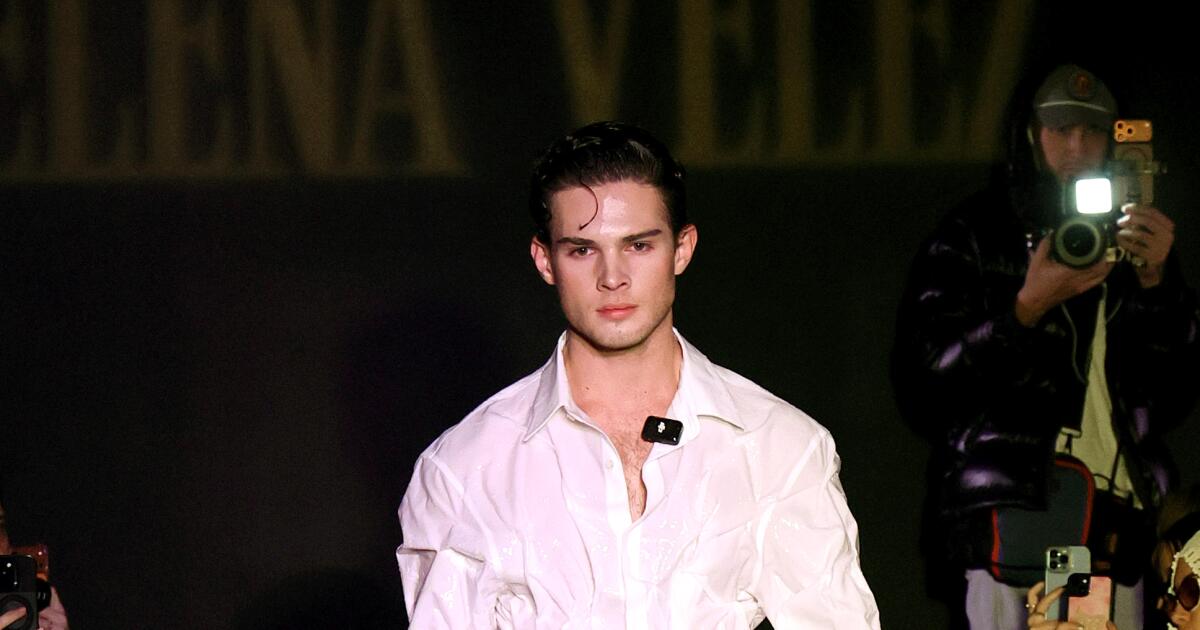
Florida manosphere influencer Clavicular arrested on suspicion of battery
Gen Z is the loneliest generation. Here’s what can help

Florida High School Football Rankings: Top 25 teams – Oct. 21

How old is Bo Nix? What to know about Oregon quarterback ahead of 2024 NFL Draft

Cleary's 21 help Le Moyne down Central Connecticut State 69-64 in OT

99th annual Pony Swim held in Virginia

Indiana Members Credit Union announced as new anchor tenant at Bottleworks District

Hundreds of thousands march through London in stand against the far right

2 students killed, 7 other people injured in Tennessee bus crash during school field trip

Dem senators dodge crucial question on illegal alien accused of killing Chicago college student

EU Parliament unblocks key political hurdle in digital euro talks

Man arrested in plot to firebomb Palestinian activist’s home after undercover op
-

 Detroit, MI1 week ago
Drummer Brian Pastoria, longtime Detroit music advocate, dies at 68
-

 Movie Reviews1 week ago
‘Youth’ Twitter review: Ken Karunaas impresses audiences; Suraj Venjaramoodu adds charm; music wins praise | – The Times of India
-

 Sports1 week ago
IOC addresses execution of 19-year-old Iranian wrestler Saleh Mohammadi
-

 New Mexico6 days ago
Clovis shooting leaves one dead, four injured
-
 Business1 week ago
Disney’s new CEO says his focus is on storytelling and creativity
-

 Tennessee5 days ago
Tennessee Police Investigating Alleged Assault Involving ‘Reacher’ Star Alan Ritchson
-

 Technology6 days ago
YouTube job scam text: How to spot it fast
-

 Texas1 week ago
How to buy Houston vs. Texas A&M 2026 March Madness tickets