Lifestyle
Influencers want to adopt the ‘analog lifestyle’ for 2026. Here’s how to join them

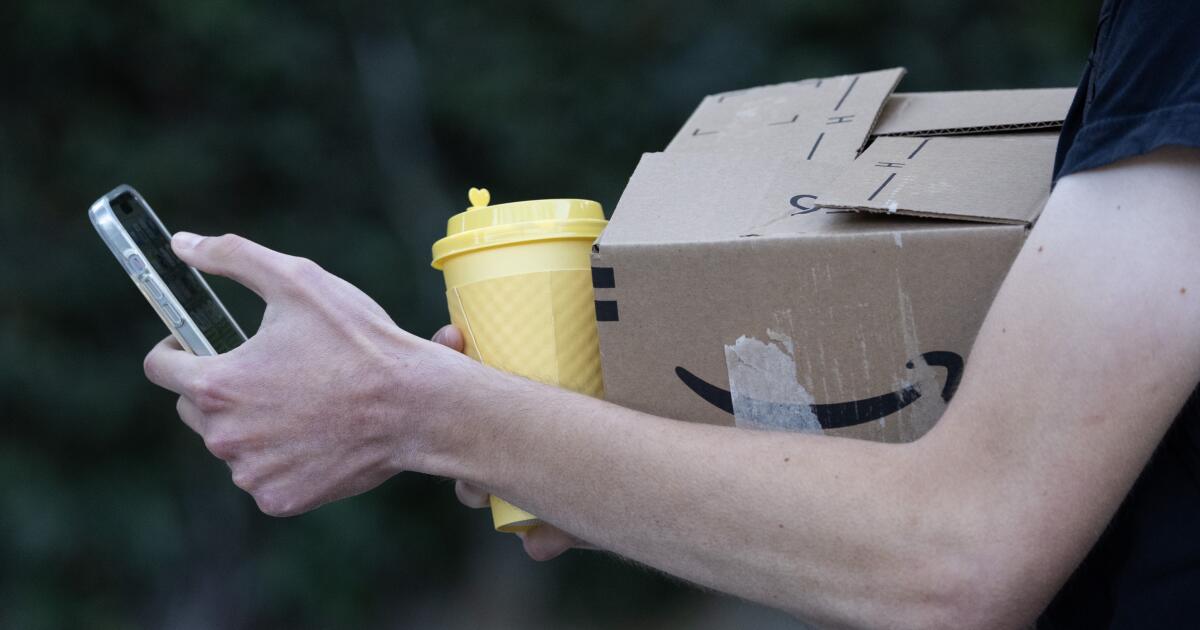
At the dawn of 2026, social media influencers at home and abroad proclaimed it the year of the “analog lifestyle,” a call to reduce digital connectivity as smart tech and screen time dominate a person’s attention span.
Selly Tan, an influencer from California, said people are “craving something real again,” and vowed to print her photos, read more books and magazines and take up hobbies that don’t need Wi-Fi.
Rosie Okatcha, an influencer from the U.K., proclaimed the year would be “The Age of Analog” with consumers swapping music streaming for iPods and vinyl records, and choosing crafting over doomscrolling.
Sanchi Oswal, an influencer from Germany, said in a post she felt going analog would reduce her “exposure and reliance on digital stimuli” and, in particular, to her phone.
For a generation that grew up in an entirely digital world, dependence on technology is a familiar habit that some are trying to break.
-
Share via
“From noon to 5 p.m., I’m looking at screens all day and then I’m going home and I’m just looking at my phone, scrolling on social media,” said Lillie Beacope, a senior at USC enrolled in a class on entertainment, marketing and culture. “I just feel like there’s not a chance for us within our day-to-day lives, to really get a break from technology.”
Spend any time outside, and you’ll see people of all ages are constantly on their smartphone or other digital devices for day-to-day tasks including communication, translation, navigation, delivery services, planning and entertainment. According to Pew Research Center data released in 2025, an estimated 91% of U.S. adults own a smartphone, up from 35% when the center first surveyed smartphone ownership in 2011.
The goal of the “analog lifestyle” trend is to wean people off constant digital connectivity by doing tangible activities that help a person reclaim their time.
But the smartphone isn’t the villain in this story, it’s a tool, said Natalia Khodayari, a postdoctoral researcher in the UC Davis Department of Psychiatry and Behavioral Sciences.
“It’s a handy tool, but this tool can be challenging to manage,” she said.
Why now?
Smartphone dependence has existed for years, but experts say it was compounded for people when the COVID-19 pandemic forced people indoors for weeks and months on end.
“People were upset, depressed and scared,” and all they had were their phones, Zoom and immediate family, said Karen North, a professor of digital social media and psychology at USC.
But years removed from the lockdowns, people are starting to notice how compelled they still are to look at their phones for information, to shop, or for nothing at all.
“It’s almost like biting your nails or another nervous habit,” North said.
Not only can the device itself be addictive, but many phone apps are designed to capture and keep a person’s attention, though people are becoming increasingly aware of this, said Dr. Anna Lembke, professor of psychiatry and behavioral sciences at Stanford.
“There are enormous opportunity costs to engagement on these platforms that suck [people] in, where they end up spending way more time than they plan to or want to,” Lembke said. “It’s very clear from survey studies that people are less happy now than they were 15 to 20 years ago.”
This, however, won’t be the first time people have tried to exit the online world, even if just temporarily.
In 2010, Mintel, a global market intelligence and research agency, promoted a “switching off” trend because it anticipated consumers would want to take significant breaks from their digital devices because modern technology had created “inescapable levels of connectivity.”
But the fear of missing out, or “FOMO,” that comes with disconnecting can be equally daunting, some say.
“It kind of sucks to be accessible all the time and having to reply to everything, but at the same time I think in the digital age where you are so readily accessible, to not respond is then to not be a part of a community,” said USC senior Maya Din.
Experts say these feelings are coinciding with the advent of the internet, digital media and this concept of 24/7 access.
People are trying to make sense of their unhappiness, which is leading them to “making a valid connection between their online lives and their overall psychological state of being, which is not good,” Lembke said.
Studies have shown a correlation between heavy digital dependence and mental health challenges including depression, anxiety and stress.
Even though the concept of stepping away from our digital lives isn’t new, North said TikTok challenges and social media trends “tell us, ‘It’s not just you, it’s everybody,’” and here’s what you can do about it.
How is the ‘analog lifestyle’ trend different?
The analog trend is a different way to kick the digital habit because by embracing old technology and spending time on crafting projects experts say people are trying to be entertained or relax in ways that don’t involve being online.
The goal of this trend “is a desire to rebalance time and energy and reduce distractability and related stress,” said Khodayari, whose research focuses on the mechanisms of attention and emotion.
Generally, it’s really easy to get distracted given the diversity and convenience modern-day life offers.
“Imagine when there exists one space which houses your work, relaxation, communication, music, daily planner and food services, it can be quite challenging for individuals to really stay present towards one activity or one goal on a day-to-day basis,” she said.
In 2018, a study published in the National Library of Medicine observed how many times 216 participants checked their smartphones over the course of 56 days. The study led by Dr. Larry Rosen, professor emeritus and past chair of the psychology department at Cal State Dominguez Hills, found that participants unlocked their phones more than 60 times a day for three to four minutes each time, which equaled a total of 220 daily minutes of use.
Not surprisingly, the analog lifestyle is being adopted by young adults and younger generations as a way to be more mindful, more intentional.
“I think that’s a really big theme here, is creating boundaries,” Khodayari said.
How to reduce your digital connectivity
There isn’t a one-size-fits-all approach to reducing or creating a boundary with your digital life. But as it happens, sometimes suggestions on how to go about it have to be spread online.
Influencers are posting about their “analog bag,” a canvas bag filled with craft supplies or purchasing a refurbished iPod to participate in this trend.
The recommendation has increased the search for “iPods” on EBay more than 1,200 times an hour globally between January and October 2025, according to the company. The iPod third-generation models saw a 50% increase in average sales price from global EBay users in 2025 compared with 2023. The iPod Nano third generation saw a 60% increase, while the iPod Classic sixth generation had a 40% increase.
In terms of crafting, Market Research Future, a global market research company, is projecting the craft supplies market to steadily grow from $42.83 billion globally in 2025 to $64.95 billion by 2035 that’s due in part to “individuals seeking creative outlets.”
You don’t have to spend money to participate in the analog lifestyle trend because making a drastic change or taking up a trendy hobby might not be helpful because it’s not something you’ll stick with long term, Khodayari said.
If you want to really stick with reducing your overall digital use, start with small adjustments to your habits, she said.
“Do something that makes a change that you really feel you can be consistent with,” she said.
Here are some common small adjustments people make to their routines to live the analog lifestyle:
- Remove your phone from view when you’re working on another task. Put it in a drawer or in another room entirely.
- Remove an app from your phone’s home screen or delete it entirely.
- Mute or stop unnecessary notifications.
- Swap your doomscrolling time on social media with another activity such as a walk, a craft, reading or cooking.



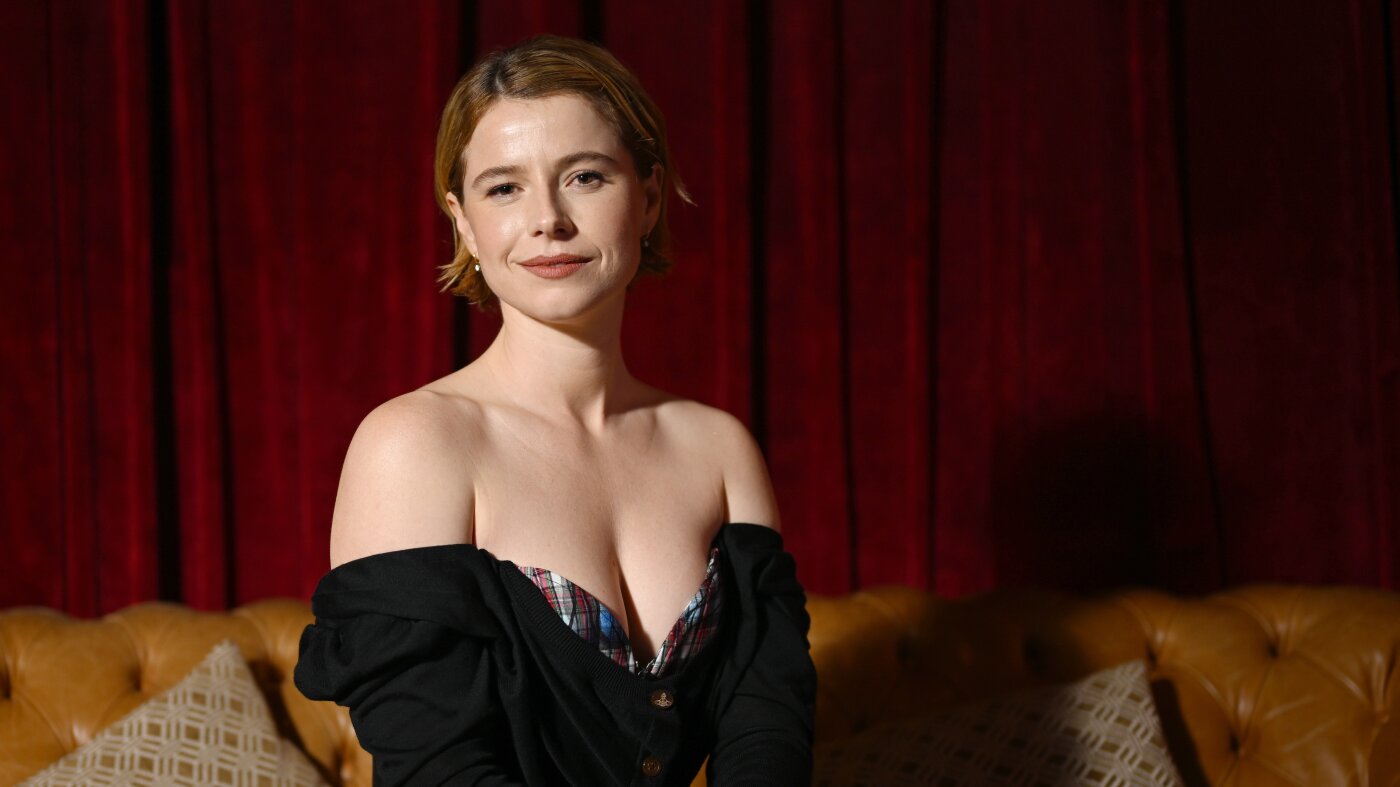
Jessie Buckley has been nominated for an Academy Award for best actress for her portrayal of William Shakespeare’s wife in Hamnet.
Kate Green/Getty Images
hide caption
toggle caption
Kate Green/Getty Images
Actor Jessie Buckley says she’s always been drawn to the “shadowy bits” of her characters — aspects that are disobedient, or “too much.” Perhaps that’s what led her to play Agnes, the wife of William Shakespeare, in Hamnet.
Buckley says the film, which is based on Maggie O’Farrell’s 2020 novel, offered a chance to counter a common narrative about the playwright’s wife: that she “had kept him back from his genius,” Buckley says.

But, she adds, “What Maggie O’Farrell so brilliantly did, not just with Agnes and Shakespeare’s wife, but also with Hamnet, their son, was to bring these people … and give them status beside this great man. … [And] give the full landscape of what it is to be a woman.”
The film is nominated for eight Academy Awards, including best actress for Buckley. In it, she plays a woman deeply connected to nature, who faces conflicts in her marriage, as well as the death of their son Hamnet.
Buckley found out she was pregnant a week after the film wrapped. She’s since given birth to her first child, a daughter.

“The thing that this story offered me, that brought me into this next chapter of my life as a mother was tenderness,” she says. “A mother’s tenderness is ferocious. To love, to birth is no joke. To be born is no joke. And the minute something’s born into the world, you’re always in the precipice of life and death. That’s our path. … I wanted to be a mother so much that that overrode the thought of being afraid of it.”

Jessie Buckley stars as Agnes and Joe Alwyn plays her brother Bartholomew in Hamnet.
Courtesy of Focus Features/Courtesy of Focus Features
hide caption
toggle caption
Courtesy of Focus Features/Courtesy of Focus Features
Interview highlights
On filming the scene where she howls in grief when her son dies
I didn’t know that that was going to happen or come out, it wasn’t in the script. I think really [director] Chloé [Zhao] asked all of us to dare to be as present as possible. Of course, leading up to it, you’re aware this scene is coming, but that scene doesn’t stand on its own. By the time I’d met that scene, I had developed such a deep bond with Jacobi Jupe, who plays Hamnet, and [co-stars] Paul [Mescal] and Emily Watson, and all the children and we really were a family. And Jacobi Jupe who plays Hamnet is such an incredible little actor and an incredible soul, and we really were a team. …

The death of a child is unfathomable. I don’t know where it begins and ends. Out of utter respect, I tried to touch an imaginary truth of it in our story as best I could, but there’s no way to define that kind of grief. I’m sure it’s different for so many people. And in that moment, all I had was my imagination but also this relationship that was right in front of me with this little boy and that’s what came out of that.
On what inspired her to pursue singing growing up
I grew up around a lot of music. My mom is a harpist and a singer and my dad has always been passionate about music, so it was always something in our house and always something that was encouraged. … Early on, I have very strong memories of seeing and hearing my mom sing in church and this quite intense mercurial conversation that would happen between her, the story and the people that would listen to her. And at the end of it, something had been cracked between them and these strangers would come up with tears in their eyes. And I guess I saw the power of storytelling through my mom’s singing at a very young age, and that was definitely something that made me think I want to do that.
On her first big break performing as a teen on the BBC singing competition I’d Do Anything — and being criticized by judges about her physical appearance
I was raw. I hadn’t trained. I had a lot to learn and to grow in. I was only 17. I think there was part of their criticism which I think was destructive and unfair when it became about my awkwardness, or they would say I was masculine and send me to kind of a femininity school. … They sent me to [the musical production of] Chicago to put heels on and a leotard and learn how to walk in high heels, which was pretty humiliating, to be honest, and I’m sad about that because I think I was discovering myself as a young woman in the world and wasn’t fully formed. … I was different. I was wild, I had a lot of feeling inside me. I could hardly keep my hands beside myself and I think to kind of criticize a body of a young woman at that time and to make her feel conscious of that was lazy and, I think, boring.
On filming parts of the 2026 film The Bride! while pregnant
I really loved working when I was pregnant. I thought it was a pretty wild experience, especially because I was playing Mary Shelley and I was talking about [this] monstrosity, and here I was with two heartbeats inside me. Becoming a mom and being pregnant did something, I think, for me. My experience of it, it’s so real that it really focuses [me to be] allergic to fake or to disconnection.
Since my daughter has come and I know what that connection is and the real feeling of being in a relationship with somebody … as an actress, it’s very exciting to recognize that in yourself and really take ownership of yourself.
I’m excited to go back and work on this other side of becoming a mother in so many ways, because I’ve shed 10 layers of skin by loving more and experiencing life in such a new way with my daughter. I’m also scared to work again because it’s hard to be a mother and to work. That’s like a constant tug because I love what I do and I’m passionate and I want to continue to grow and learn and fill those spaces that are yet to be filled — and also be a mother. And I think every mother can recognize that tug.
On the possibility of bringing her daughter to travel with her as she works
I haven’t filmed for nearly a year and I cannot wait. I’m hungry to create again. And my daughter will come with me. She’s seven months, so at the moment she can travel with us and it’s a beautiful life. And she meets all these amazing people and I have a feeling that she loves life and that’s a great thing to see in a child. And I hope that’s something that I’ve imparted to her in the short time that she’s been on this earth is that life is beautiful and great and complex and alive and there’s no part of you that needs to be less in your life. You might have to work it out, but it’s worth it.
Lauren Krenzel and Susan Nyakundi produced and edited this interview for broadcast. Bridget Bentz, Molly Seavy-Nesper and Beth Novey adapted it for the web.

Bruce Campbell
I’m Battling Cancer
Published
Bruce Campbell has revealed he has cancer, but says it’s a type that’s treatable, though not curable.
“The Evil Dead” actor shared the news Monday in a message to fans, writing, “Hi folks, these days, when someone is having a health issue, it’s referred to as an ‘opportunity,’ so let’s go with that — I’m having one of those.” He continued, “It’s also called a type of cancer that’s ‘treatable’ not ‘curable.’ I apologize if that’s a shock — it was to me too.”

Campbell said he wouldn’t go into further detail about his diagnosis, but explained his work schedule will be changing. “Appearances and cons and work in general need to take back seat to treatment,” he wrote, adding he plans to focus on getting “as well as I possibly can over the summer.”
As a result, Campbell says he has to cancel several convention appearances this summer, noting, “Treatment needs and professional obligations don’t always go hand-in-hand.”
He says his plan is to tour this fall in support of his new film, “Ernie & Emma,” which he stars in and directs.
Ending on a determined note, Campbell told fans, “I am a tough old son-of-a-bitch … and I expect to be around a while.”

Neve Campbell in Scream 7.
Paramount Pictures
hide caption
toggle caption
Paramount Pictures
The OG Scream Queen Neve Campbell returns. Scream 7 re-centers the franchise back on Sidney Prescott. She has a new life, a family, and lots of baggage. You know the drill: Someone dressing up as the masked slasher Ghostface comes for her, her family and friends. There’s lots of stabbing and murder and so many red herrings it’s practically a smorgasbord.
Follow Pop Culture Happy Hour on Letterboxd at letterboxd.com/nprpopculture

Middle Georgia DSA condemns U.S.-Israel strikes on Iran, calls escalation ‘illegal’

Blood moon to dazzle Hawaii skies tonight

University of Idaho professor awarded $10M after TikTok tarot influencer claimed she ‘ordered’ quadruple murders

Illinois lawmakers consider tightening DUI law to 0.05 BAC

Chicago Ridge man accused of stealing vehicles with tow truck, selling them for scrap metal: police

Florida High School Football Rankings: Top 25 teams – Oct. 21

Cleary's 21 help Le Moyne down Central Connecticut State 69-64 in OT

How old is Bo Nix? What to know about Oregon quarterback ahead of 2024 NFL Draft

99th annual Pony Swim held in Virginia

Indiana Members Credit Union announced as new anchor tenant at Bottleworks District

Trump sends official notification to Congress on strikes against Iran

Unexpected birth brings hope to near-extinct Amazon tribe

Supreme Court blocks redrawing of New York congressional map, dealing a win for GOP

Map: Earthquake Shakes Central California

Gas prices could jump as Middle East tensions threaten global oil supply
-

 World5 days ago
Exclusive: DeepSeek withholds latest AI model from US chipmakers including Nvidia, sources say
-

 Massachusetts6 days ago
Mother and daughter injured in Taunton house explosion
-

 Denver, CO5 days ago
10 acres charred, 5 injured in Thornton grass fire, evacuation orders lifted
-

 Louisiana1 week ago
Wildfire near Gum Swamp Road in Livingston Parish now under control; more than 200 acres burned
-

 Technology1 week ago
YouTube TV billing scam emails are hitting inboxes
-

 Politics1 week ago
OpenAI didn’t contact police despite employees flagging mass shooter’s concerning chatbot interactions: REPORT
-

 Technology1 week ago
Stellantis is in a crisis of its own making
-

 Oregon4 days ago
2026 OSAA Oregon Wrestling State Championship Results And Brackets – FloWrestling