Lifestyle
In a collection of 40+ interviews, author Adam Moss tries to find the key to creation


Adam Moss allowed NPR into a space only two other people have seen: his painting studio.
Adam Moss
hide caption
toggle caption
Adam Moss

Adam Moss allowed NPR into a space only two other people have seen: his painting studio.
Adam Moss
In a small brick building in the Lower East Side of Manhattan, you can find Adam Moss’s “den of torture.”
Prior to this interview, almost no one has been allowed in.
“Just my husband and my teacher. That’s it.” Moss said. “Two people in my entire life and I’ve had this thing for five years. So welcome.”
This space is less menacing than most dens of torture; there aren’t any medieval instruments of pain after all. Instead, the small, light-filled room overflows with brushes and palettes, and paintings of various sizes and stages of completion rest on every surface.
Adam Moss’ so-called “den of torture.” Instead of Medieval instruments of torture, he has paintbrushes and palettes.
Adam Moss
hide caption
toggle caption
Adam Moss
When Adam Moss gave up his job as editor-in-chief of New York Magazine five years ago, he started painting. He loved it, but it was agonizing.
“I really wanted to be good, and it made the act of making art so frustrating for me,” said Moss. “This [studio] is where I come many days and wrestle with trying to make something.”
Trying to make something is exactly the subject of Adam Moss’s new book, The Work of Art: How Something Comes from Nothing.
“The book is called The Work of Art,” says Moss. “And that is kind of what it’s about.”
It’s about the work.
Adam Moss’ The Work of Art: How Something Comes from Nothing features interviews with more than 40 creatives about their process, from blank page to final product.
Penguin Press
hide caption
toggle caption
Penguin Press
The book has 43 chapters, each one dedicated to a single artist, and their process of creating a single work. They come from a wide range of disciplines. There are poets, painters, chefs, sand castle sculptors and crossword puzzle makers.
And through this collection of interviews, the book tries to answer the questions: How does a sketch become a painting? How does a scribbled lyric become a song? How does an inspiration become a masterpiece?
The book is a visual feast, full of drafts, sketches, and scribbled notebook pages.
A sample of pages from chapter 9 of the book, which profiles poet and essayist Louise Glück.
Penguin Press
hide caption
toggle caption
Penguin Press
A sample of pages from chapter 9 of the book, which profiles poet and essayist Louise Glück.
Penguin Press
Every page shows how an idea becomes a finished design.
In one chapter, Moss speaks with Amy Sillman, an abstract painter who Moss admires for her unique use of color and shape.
“Amy was also a dream subject for this project,” Moss writes. “Because to reach the finish line of most of her paintings, she paints dozens of paintings, or even more, each usually pretty wonderful.”
Amy Sillman’s artistic process
-
Amy Stillman/Penguin Press
-
Amy Stillman/Penguin Press
-
Amy Stillman/Penguin Press
-
Amy Stillman/Penguin Press
-
Amy Stillman/Penguin Press
-
Amy Stillman/Penguin Press
-
Amy Stillman/Penguin Press
-
Amy Stillman/Penguin Press
-
Amy Stillman/Penguin Press
The chapter contains 39 images, demonstrating the full evolution from first draft to finished product of her work, Miss Gleason.
Each image is accompanied by a quote from Sillman, explaining what step that particular draft represented in her process.
In another chapter, Moss speaks with the musician Rostam, who describes the process of writing the song “In a River.”
Musician Rostam Batmanglij, pictured here performing in 2017, shared his songwriting process with Adam Moss.
Emma McIntyre/Getty Images
hide caption
toggle caption
Emma McIntyre/Getty Images
Musician Rostam Batmanglij, pictured here performing in 2017, shared his songwriting process with Adam Moss.
Emma McIntyre/Getty Images
For Rostam, the creative process occurred in large part on his iPhone, in a collection of draft lyrics written in the notes app, and melodies in recorded as voice memos.
Voice memo draft of Rostam’s “In a River”
Eventually, those notes and recording on his phone evolved into a completed song.
Rostam’s animation video for his song “In a River.”
YouTube
So, what is the key to creating a masterpiece? Moss did not find an answer. All of artists featured across the book are unique, and so are their creative processes.
However, Moss did point to some frequently shared traits.
One commonality Moss found was that many artists describe themselves as having ADHD.
“Whether they have ADHD or not, [they have] the elements that we associate with ADHD,” Moss said, describing a balance of distractedness and focus.
“You need to be distracted enough for your mind, for your imagination to go fishing, and you need to be focused enough to know what to do with it.”
Moss also found that his subjects consistently found ways not to let the fear of failure or mistakes prevent them from starting.
“They tried to get through that as quickly as possible and with as little thought as possible,” Moss said. “Many of them write in longhand, giving themselves explicit permission to fail.”
However, there was one trait between Moss’s subjects that was truly ubiquitous.
“They all have a compulsion, an obsession to make something. It gets into their system and they can’t let go of it,” Moss said, explaining that the vision or the final product is secondary to the process.
“The end product is not the point,” Moss said. “what they were consumed by, why they did what they did is because they were consumed by the work. “



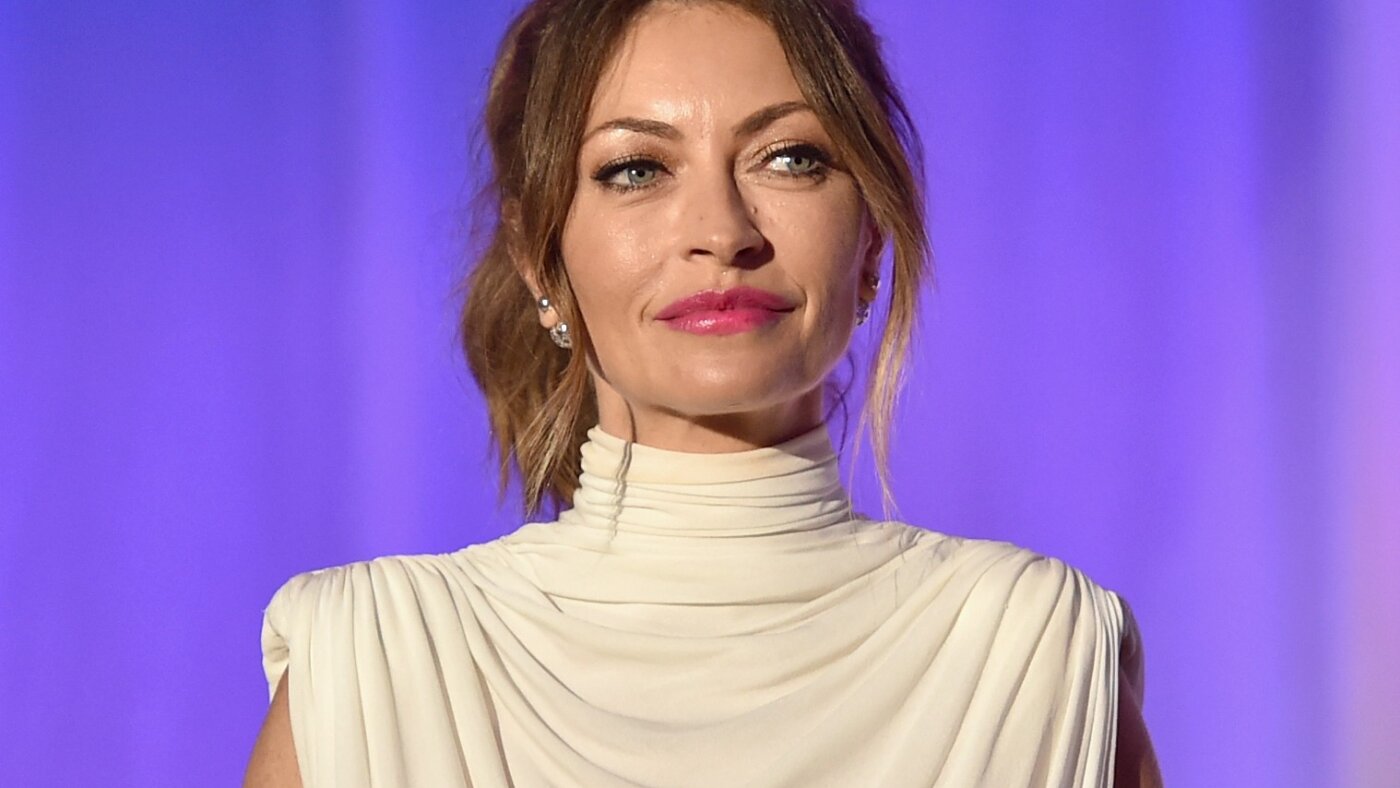
Rebecca Gayheart-Dane speaks onstage at the 16th Annual Chrysalis Butterfly Ball on June 3, 2017 in Los Angeles, California.
Alberto E. Rodriguez / Getty Images for Chrysalis Butterfly Ball
hide caption
toggle caption
Alberto E. Rodriguez / Getty Images for Chrysalis Butterfly Ball
The actor Eric Dane, who played Dr. Mark Sloan on the medical drama Grey’s Anatomy, died last month. Dane was 53, and announced he had been diagnosed with ALS last April.
The disease affects nerves in the brain and spinal cord, robbing a person of their ability to walk, breathe and often speak.
Dane’s widow, Rebecca Gayheart Dane, told NPR it was devastating to see his voice slip away.

“He was witty, acerbic, full of humor, and he always had a great story,” Gayheart Dane said. “So, as speaking became harder for him, I watched and witnessed some of his joy fade, and it was really hard and very heartbreaking.”
She is now working with ElevenLabs, an artificial intelligence company that makes synthetic voice software. The company developed a program that helps people with permanent voice loss replicate their voices, including Eric Dane’s.
Gayheart Dane spoke with All Things Considered host Juana Summers about her role as a caregiver and her complex feelings about artificial intelligence.
Listen to the full interview by clicking on the blue play button above.


Over the course of three Sundays, Image contributing photographer Jennelle Fong captured stylish visitors with their bounty at the venerated Hollywood Farmers Market. “It didn’t have to be a Sunday morning, it could’ve been a Saturday evening,” says Fong. Walking up and down the cross of the four corridors of the farmers market felt like a runway: sweat pants mixed with Hermès, coordinated ERL looks, a Converse heel and an actual Balenciaga x Erewhon bag. Even the rolling carts served as extensions of people’s accessories. The energy was radiant, easygoing, alert and nothing short of magical.


Cameron Crotty wears Liberty London sweater, Adidas skirt and Converse Chuck 70 De Luxe Heel High Top sneakers.

Audrea Wah wears thrifted dress and top, customized by herself, pants from Santee Alley and Fumsup Silver necklace.


Paige McGowan wears a Hiroko Hata skirt, vintage shirt and vintage tote.

Detail of Paige McGowan’s vintage tote.

Samantha Klein with Variety Hour petal bag and Miu Miu loafers.

Samantha Klein in vintage and Variety Hour petal bag, and Aaron Klein, right, in vintage and Big Bud Press stripe bag.

Quincy Vadan wears his personal jewelry designs, under the brand Vadan.


At left, Austin Bachlor wears a Bellagio souvenir hat, and polo top, shorts and sneakers from ERL. At right, Carlos Bachlor wears vintage top from The Dig, shorts and boots from ERL and Balenciaga x Erewhon bag.


Pups Oliver and Koko wear a sunny yellow bucket hat.

Steven Pardo carries an Enorme bag.

Anastasiia Yermak in mirrored sunglasses.


“I’m happy to be the age I am, and have no impulse to hide it,” says Harrison Ford. He’s shown above accepting the Screen Actors Guild Life Achievement Award in Los Angeles on March 1.
Valerie Macon/AFP via Getty Images
hide caption
toggle caption
Valerie Macon/AFP via Getty Images
After playing some of the most recognizable and beloved characters in cinematic history, Harrison Ford is not interested in retiring. “Without my work, I really wouldn’t know what to do with myself,” the 83-year-old actor says. “I really do love the work. … It constantly changes, and the people change, and the mission and the opportunity change, and it just makes for an interesting way to live your life.”
Ford initially struggled to find his footing in Hollywood. He worked on-and-off as a carpenter for years before landing the breakthrough role of Han Solo in the original Star Wars film. He went on to star in the Star Wars sequels, as well as the Indiana Jones movies and Blade Runner — all the while frequently performing his own action scenes.

“I don’t want to have to hide the face of the character because it’s a stunt guy,” he says. “I want [the audience] to feel the blow. I want them to see the anxiety. I want them to be there when the decision is made or when the decision is missed. I just want them to be there.”
In the current Apple TV series, Shrinking, Ford plays a therapist named Paul who’s been diagnosed with Parkinson’s disease. Thus far, he says, the show’s writers haven’t shared with him the progression of Paul’s disease. Instead, he says, “Like a true Parkinson’s patient, I don’t really know what’s coming. … I’m sort of living with the symptoms I have been last described as having.”

Recently, Ford teared up while accepting a recognition for lifetime achievement at the Actor Awards. “That speech that I wrote was not crafted to be emotional; it just happened to me,” he says. “I feel slightly embarrassed by it, because I have enough experience with these things to want to be able to manage not to be overcome.”
Interview highlights
On being asked to help in Star Wars auditions while on a carpentry job at Francis Ford Coppola‘s office
I was there sweeping up. I was just finishing the job when George Lucas walked in [who Ford knew from appearing in Lucas’ last film, American Graffiti] … and I’m standing there in my carpenter’s work belt, sweeping up the floor. It turned out to be a fortuitous occasion, because weeks later I would end up being asked if I would do them a favor and read with the other actors who were being considered for the parts. … I never was told that I was ever to be considered, and then at the end of the process, I guess they ended up with two groups of three people that were in final consideration. I’ve always been amused that in the second group, the character of Han Solo would have been played by Chris Walken. I would have loved to see that.
On his most famous ad-lib in a film

[It’s] the line in Star Wars where Princess Leia tells me that she loves me and I say, “I know,” instead of saying “I love you too,” which is the scripted line. Simply the impulse was to be more in character. And George Lucas, who had written the line, was not so happy that I didn’t give him the original version. But I really felt strongly about it. So he made me sit next to him when he previewed the film in a public movie theater in San Francisco and it got … a good laugh. And so he accepted it and left it in.
On seeing Star Wars for the first time on screen

I was blown away. I mean, I was really shocked by the power of the film. We shot in England and our English crew were not used to something like Star Wars, and so they were pretty sure that it was going to be a disaster. And we weren’t far from that opinion, ourselves, the actors.
On performing an emergency landing while flying solo in a vintage World War II airplane
Let’s just start by saying that it was a mechanical failure. … It was a 74-year-old airplane, and I was 74 years old at the time. .. Four hundred feet in the air above the airport, the engine quit. And it’s my home airport, and I was familiar with the surrounding terrain, which is cluttered with houses, wires and cars, and people. So I turned to a golf course that was there. …

In my ear was the very clear voice of one of my aviation mentors who always, when talking about mechanical failures or other kinds of failures, the advice was to “fly the airplane as far into the crash as possible.” You think about this thing when you’re a pilot, you think about the potential, the possibility of it happening, and of course you train. So when it happened, it was not really a surprise, and I thought I knew what I had to do to handle it, so I just started doing the things that needed to be done. … I don’t remember actually being scared. [My injuries] were more than described in the newspaper, but I’m over them all, thank you. I got my license back and continue to fly. … I am not a thrill seeker. I am a very conservative pilot. It’s not that I do crazy stuff for the fun of it.
On objecting to the Vietnam War draft
I was facing being drafted and I hired a lawyer to represent me to the draft board. I had to explain why I might qualify as a conscientious objector. I explained that I did not have a history of religious affiliation. My mother was Jewish, my father Catholic. … I was raised Democrat. I’m quite happy to accept other people’s versions of God, but I found in a Protestant theologian named Paul Tillich, a sentence that said: If you have trouble with the word God, take whatever is central and most meaningful to your life and call that God.
And to me that was life itself, the complexity, the biodiversity, the incredible integration and complexity of nature, to me seemed to be the same thing as God. And so I prepared an explanation that was probably so unusual that it found the edge of a desk and had a lot of things piled on top of it because it didn’t fit a niche. They never got back to me, basically. The draft board never got back to me.
Lauren Krenzel and Nico Gonzalez Wisler produced and edited this interview for broadcast. Bridget Bentz, Molly Seavy-Nesper and Beth Novey adapted it for the web.


Nijel Pack leads Oklahoma to win over South Carolina in SEC Tournament opener

‘Their time is now;’ Oregon looking for young LBs to step up in spring

Wind advisory for part of Pennsylvania for Friday and Saturday – winds gusting up to 50 mph

Rhode Island hockey star, whose trans father gunned down family, scores game-winning goal — sending team to championship

Military family members say more support services needed in eastern South Dakota

Florida High School Football Rankings: Top 25 teams – Oct. 21

Cleary's 21 help Le Moyne down Central Connecticut State 69-64 in OT

How old is Bo Nix? What to know about Oregon quarterback ahead of 2024 NFL Draft

99th annual Pony Swim held in Virginia

Indiana Members Credit Union announced as new anchor tenant at Bottleworks District
ICE Lawyer Who Told Judge She Was Overwhelmed Is Running for Congress

Dr Oz helps older woman who collapsed during Trump’s speech at Kentucky event

The Ring: Is the EU a spectator or player as war grips Middle East?

The government is investigating new claims that DOGE misused Social Security data

Reporter’s Notebook: Trump’s SAVE Act ultimatum runs into Senate reality
-

 Massachusetts1 week ago
Massachusetts man awaits word from family in Iran after attacks
-

 Detroit, MI6 days ago
U.S. Postal Service could run out of money within a year
-

 Miami, FL1 week ago
City of Miami celebrates reopening of Flagler Street as part of beautification project
-

 Pennsylvania7 days ago
Pa. man found guilty of raping teen girl who he took to Mexico
-

 Sports1 week ago
Keith Olbermann under fire for calling Lou Holtz a ‘scumbag’ after legendary coach’s death
-

 Michigan2 days ago
Operation BBQ Relief helping with Southwest Michigan tornado recovery
-

 Culture1 week ago
Try This Quiz on the Real Locations in These Magical and Mysterious Novels
-

 Virginia1 week ago
Giants will hold 2026 training camp in West Virginia