Lifestyle
Ilia Malinin’s Olympic backflip made history. But he’s not the first to do it

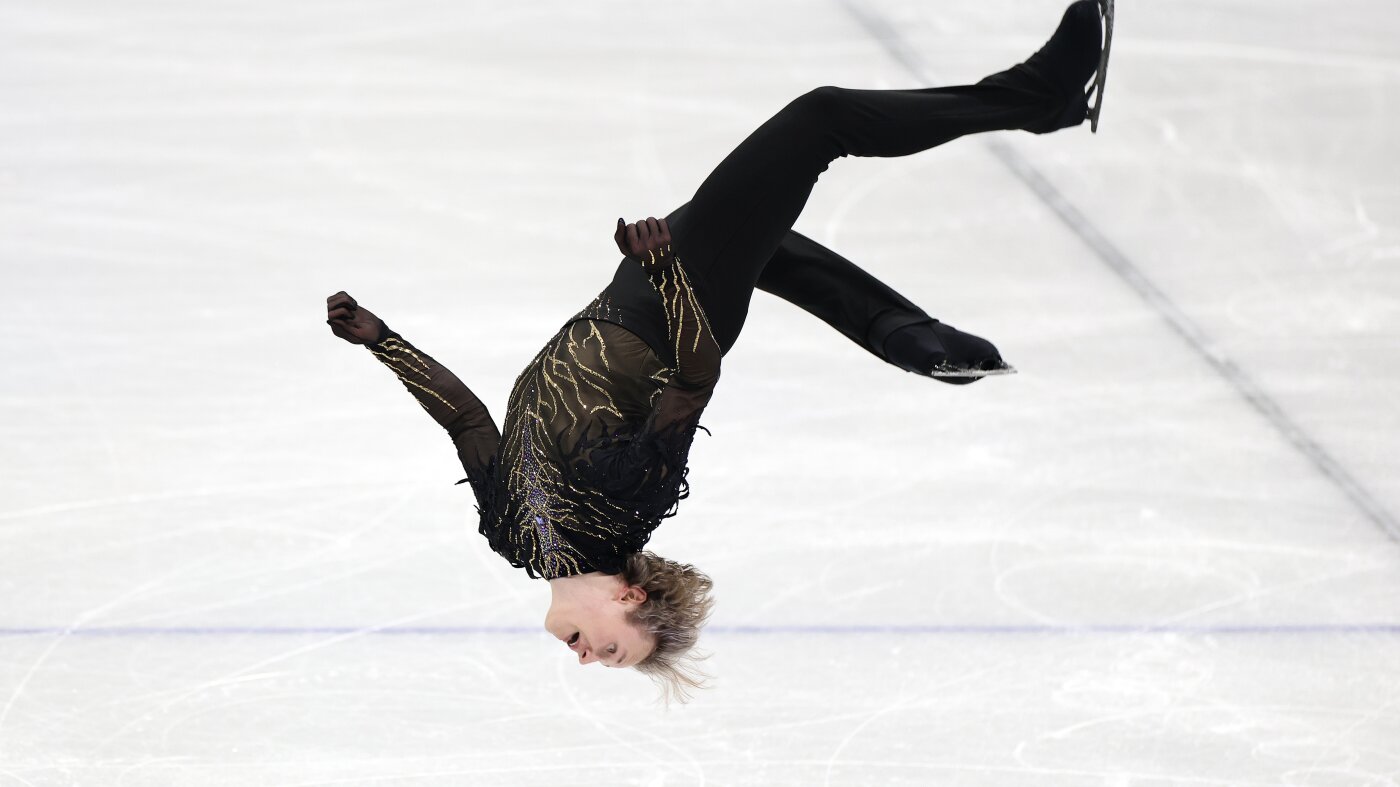
Ilia Malinin lands a backflip in his free skate in the team event on Sunday. His high score pushed Team USA to the top of the podium.
Andreas Rentz/Getty Images
hide caption
toggle caption
Andreas Rentz/Getty Images
Want more Olympics updates? Subscribe here to get our newsletter, Rachel Goes to the Games, delivered to your inbox for a behind-the-scenes look at the 2026 Milan Cortina Winter Olympics.
MILAN — Ilia Malinin’s skyward jumps have earned him the nickname the “Quad God,” but it’s his backflip that everyone seems to be talking about.
The U.S. figure skater performed the move in his first two programs on Olympic ice, landing the latter on a single blade and sending the arena into a frenzy.
“It’s honestly such an incredible roar-feeling in the environment — once I do that backflip everyone is like screaming for joy and they’re just out of control,” Malinin said. “The backflip is something that I’m sure a lot of people know the basics of … so I think just having that really can bring in the non-figure skating crowd as well.”
Malinin, who trained in gymnastics when he was younger, first debuted his backflip in competition in 2024 — the year the sport’s governing body lifted its ban on the move.
His moves in Milan aren’t just awe-inspiring, but historic: Malinin is the first person to legally land a backflip at the Olympics in five decades.
It was controversial from the start
Terry Kubicka, also an American, became the first skater to land a backflip in international competition at the 1976 Innsbruck Olympics.
“There was a lot of controversy leading up to the Olympics, because I did it for the first time a month before at the U.S. Championships,” Kubicka told U.S. Figure Skating decades later. “At the time, there was no ruling on as how it would be [scored] and the feedback that I got was that judges did not really see it as a pro or con because they didn’t know how to judge it.”
The International Skating Union, the sport’s governing body, banned the backflip the following year, in part because of the level of danger and in part because it violated the principle of jumps landing on one skate.
But the backflip didn’t totally disappear. Some elite skaters — including 1984 gold medalist Scott Hamilton — continued landing the move in non-competitive settings, like exhibition shows.
And one skater even dared to bring a banned backflip on to Olympic ice.
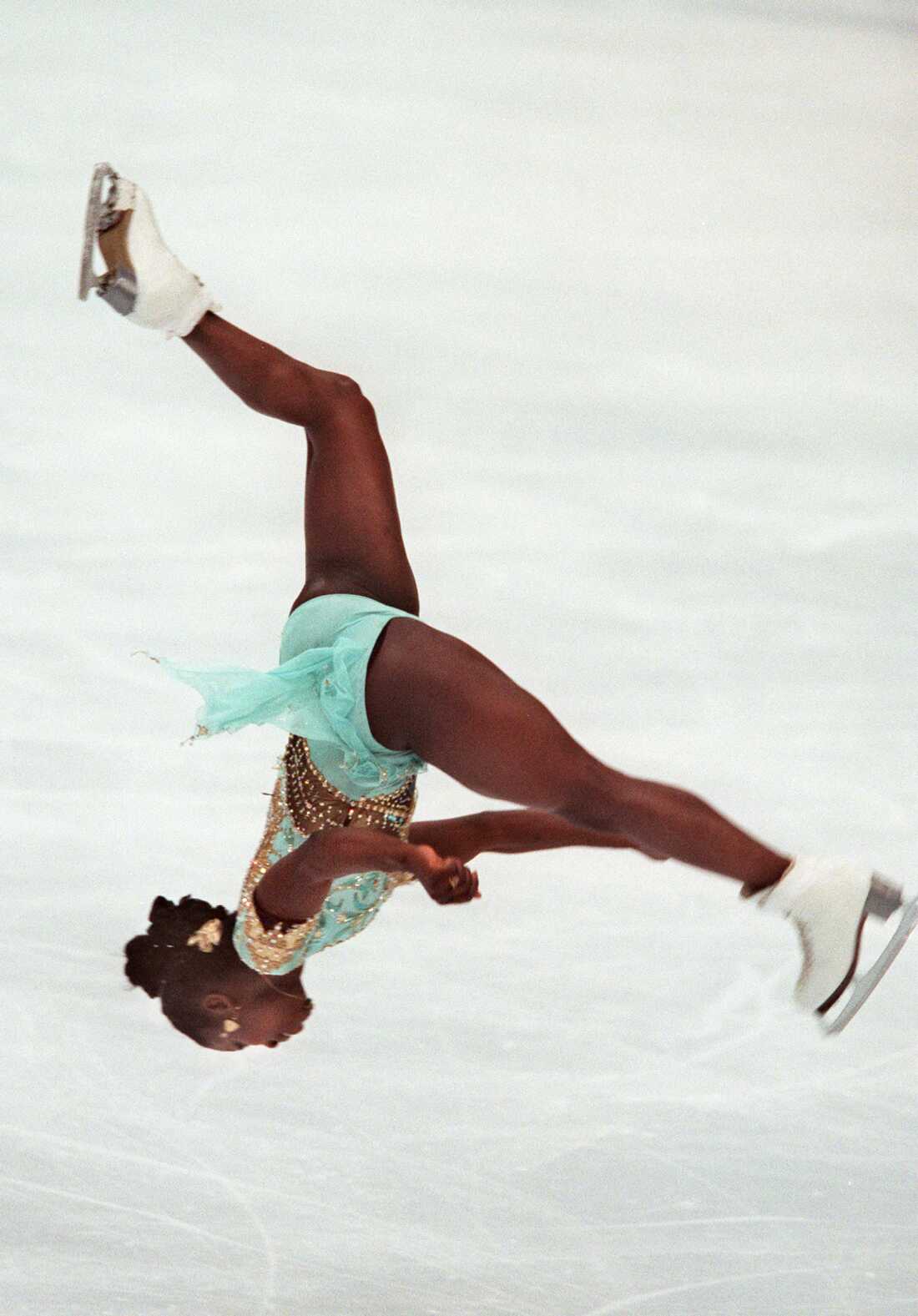
Surya Bonaly of France performed an illegal backflip at the 1998 Olympics, figuring if she wasn’t going to medal she could at least make history.
Eric Feferberg/AFP via Getty Images
hide caption
toggle caption
Eric Feferberg/AFP via Getty Images
France’s Surya Bonaly landed a backflip on one blade at the 1998 Nagano Games, even while injured, in what is widely considered a brave act of defiance.
She knew she couldn’t get the scores she needed to win, but was determined to make her mark on history anyway. It did cost her points but it also cemented her trailblazing legacy, especially as a Black athlete in sport with a relative lack of diversity.
“I appreciate more and I feel more proud of myself now, today, than years ago for when I did it,” Bonaly said in 2020.
The backflip comes back
In recent years, a handful of skaters — including U.S. defending Olympic champion Nathan Chen — have backflipped at exhibition galas, much to viewers’ delight.
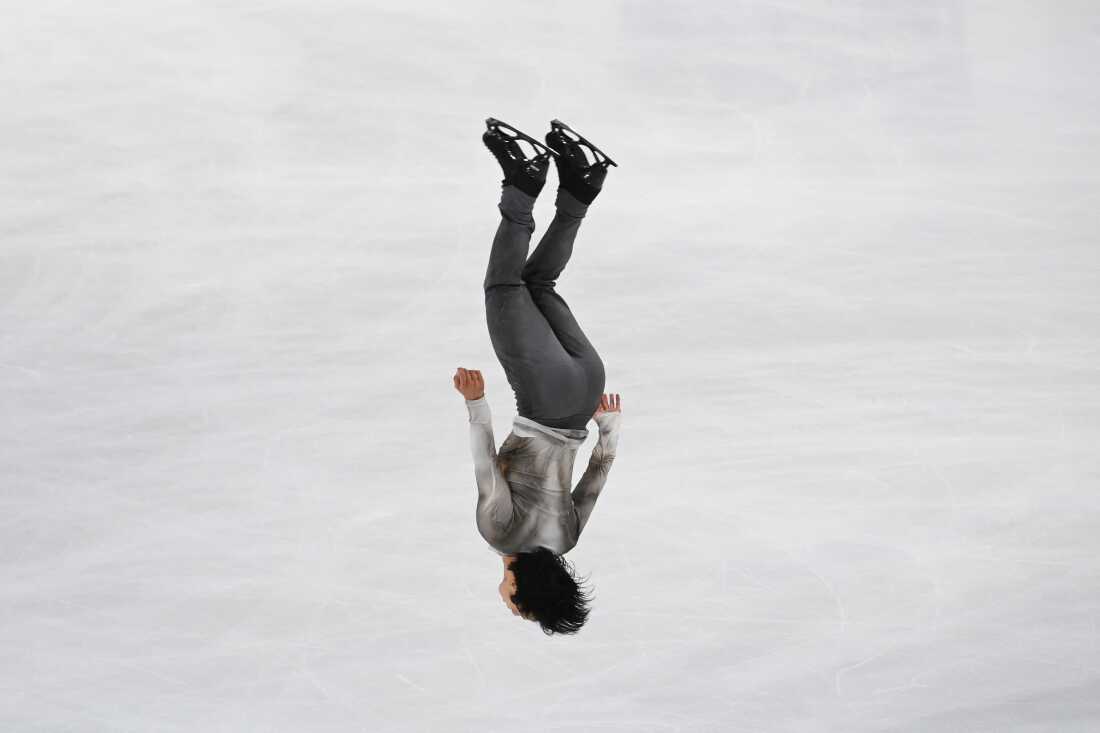
France’s Adam Siao Him Fa pictured in October 2025, once the backflip was legal. He performed it in competition the year before, when it was not.
Jean-Francois Monier/AFP via Getty Images
hide caption
toggle caption
Jean-Francois Monier/AFP via Getty Images
The move reached an even bigger crowd at European Championships in 2024, when French skater Adam Siao Him Fa landed one in his free skate program, enjoying such a comfortable lead that the deduction wouldn’t matter. He did it again at the World Championships the same year, and still walked away with a bronze medal.
In a full-circle twist, Kubicka — the first to land an Olympic backflip — was a member of the technical panel that watched Siao Him Fa do it at worlds, and gave him the requisite two-point deduction, almost exactly 50 years later.
Later that year, the International Skating Union officially reversed its backflip ban starting in the 2024-2025 season, explaining on its meeting agenda that “somersault type jumps are very spectacular and nowadays it is not logical anymore to include them as illegal movements.”
The backflip can no longer lose a skater points, but it doesn’t count toward their technical score either (it’s not a required move). It could, however, boost a skater’s artistic score and confidence.
“Oh, that’s my favorite part,” U.S. competitive skater Will Annis, 21, said after landing a backflip at the U.S. Figure Skating Championships in January. “Every time the crowd goes crazy for it, and it’s actually easier than everything else I do, so it’s really fun.”
His definition of “easier” is that “you can be a little off and still land it” on two feet.
Annis told NPR he had long been able to do a backflip on the ground, but didn’t bother learning how to bring it to the ice until he saw Siao Him Fa do it. He was inspired by that protest but didn’t have time to rebel himself: He says the ban was lifted just days before his first competition.



Abriana Vicioso is the host of the Flower Hour, which takes place monthly.
(Jennifer McCord / For The Times)
Each flower carries a personal history. For Abriana Vicioso, the calla lily was her parents’ wedding flower — a symbol of her mother’s beauty. “She had this big, beautiful white calla lily in her hair,” Vicioso says. “I love my parents. They’re the reason I’m here. I’ll never forget where I came from.”
The Flower Hour begins with Vicioso announcing, with a warm smile: “Today is about touching grass.” The florist-by-trade gestures behind her to hundreds of flowers contained in buckets — blue thistles, ivory anemones and calla lilies painted silver — all twisted and unfurling into the air. “Tonight is going to be so sweet and intimate,” Vicioso says, eyeing the beautiful chaos at her feet. A grin buds across her face.
Moments before the workshop, participants sit at candlelit tables exchanging horoscopes and comparing their favorite flowers. A mention of the illustrious bird-of-paradise flower elicits coos and awe from the women. Izamar Vazquez, who is from Jalisco, Mexico, reveals her fondness for roses, which make her feel connected to her Mexican roots.
Vicioso hosts her flower-themed wellness workshop near the iconic Original Los Angeles Flower Market in downtown L.A. In January, the first Flower Hour event sold out, prompting her to make it a monthly series. Vicioso describes the event as a “three-part journey” where participants are invited to drink herbal tea, smoke rose-petal-rolled cannabis joints and create a floral arrangement. “The guide is to connect with the medicine of flowers,” Vicioso says.


Rose petal joints, tea and flower arranging are all part of The Flower Hour event’s offerings.
The event is hosted at the Art Club, a membership-based co-working space. “The Flower Hour is really beautiful. Everyone gets to explore their creativity while meeting new people,” says Lindsay Williams, the co-owner of the Art Club.
The idea for Flower Hour came to Vicioso during a conversation with her mother. “We joke all the time that flowers were destined to make their way into my life,” she says. She works as a florist and models on the side, even appearing in the pages of Vogue. Vicioso grew up in a Caribbean household, where flowers and offerings were part of daily life. “In my culture and religion, a lot of my family practices — an Afro-Caribbean religion — we build altars.”
Like many cultures, flowers carry sentimental value in her religion. “I’m Caribbean, so a lot of my family practices a Yoruba religion, which comes from Africa. In the Caribbean, it’s well known as Santería.”

-
Share via
After a difficult year and a breakup, Vicioso wanted to marry her love of flowers with community building. Because Vicioso uses cannabis medicinally, the workshop naturally includes a smoking component. “My family has smoked cannabis for a lot of reasons for a long time. It’s a really healing plant,” she explains.
In the workshop, even the cannabis gets the floral treatment. Vicioso presents her rose-petal-wrapped joints on a silver platter at each table. She rolled each by hand. “If you’ve never smoked a rose-petal-rolled joint, the difference with this is it’s going to have roses that have a slight tobacco effect,” she announces.
During the workshop, Vicioso stresses the importance of buying cannabis from local vendors. The cannabis provided was purchased from a Northern Californian vendor. The wellness workshop aims to reclaim the healing ritual of smoking cannabis. “This is a plant that has been commercialized,” Vicioso says. “There’s a lot of Black and Brown people who are in jail for this plant.”
The resulting workshop is what Vicioso describes as “an immersive wellness experience that is the intersection of wellness, creativity, community and an appreciation of flowers.” The workshop serves as a reminder to enjoy Earth’s innate beauty in the form of flowers — including cannabis. “It’s this gift that the universe gave us for free and that I have this deep connection with,” Vicioso says.


Conversation cards to generate discussion among participants (top, letf). The workshop serves as a “third space” for Angelenos to engage in tactile creativity and community building outside of traditional nightlife settings.
After enjoying lavender chamomile tea and smoking a joint, Vicioso introduces the flowers to the group before inviting them to pick their own. She emphasizes each flower’s personality traits, describing green dianthus as a “Dr. Seuss” plant. Then, there are calla lilies with their “main character moment.” It gets personal. “Start thinking of a flower in your life that you can discover,” she says. “If you’re feeling like you need inspiration, you can always remember that these flowers have stories.”
Vicioso infuses wisdom into her instruction on floral arrangements: There are no mistakes. Let the flowers tell you where they want to go, she urges. Intuition will be your guide — the wilder, the better.
“Hecho in Mexico” reads a sticker on a bunch of green stems. “Like me,” says Vazquez with a laugh. “They’re all doing their own thing. Like a family,” she says later, arranging stems.

The Flower Hour participants and Vicioso, center, chat as they build their own floral arrangements at the sold-out event.
Two participants — Vazquez and Rebeca Alvarado — are friends who run a floral design company together called Izza Rose. Like Vicioso, the friends have a connection to flowers through their Latin American culture. They met Vicioso in the floral industry and were overjoyed to discover her workshop.
“This is a great way to connect with other people,” says Vazquez.
Alvarado agrees, adding: “You’re getting to know people outside of going to bars. You can connect in different ways when there’s an activity.”
Vazquez uses flowers to stay connected to her Mexican heritage, adding that she prefers to support Mexican vendors. In recent months, the downtown L.A. flower market has struggled to recover from ongoing ICE raids. “Some are scared to come back,” says Vazquez.


Hand-rolled cannabis joints wrapped in rose petals are presented on a silver platter at The ArtClub (top, right). The Flower Hour aims to reclaim the healing rituals of cannabis and flowers.
Another participant, Barbara Rios, was attracted to the workshop for stress relief. “You can hang out with your friends, but it’s nice to do things with your hands,” she says. “I work a stressful job, and it’s nice to have that third space that we’re all craving.”
On this February night, the participants were predominantly women, save for one man. In the future, Vicioso hopes that more men learn to engage with flowers. “There’s a statistic about men receiving flowers for the first time at their funerals, and I think we have changed that,” she says.
To conclude the workshop, Vicioso encourages participants to build lasting friendships and incorporate flower arranging into their daily practice — even if it’s just with a small, inexpensive bouquet.
“Get some flowers together, go to the park, hang out with each other and hang out with me,” she says. Participants leave with flower arrangements in hand. In the darkness of the night air, it briefly looks as though the women carry silver calla lilies that are blooming from their palms.

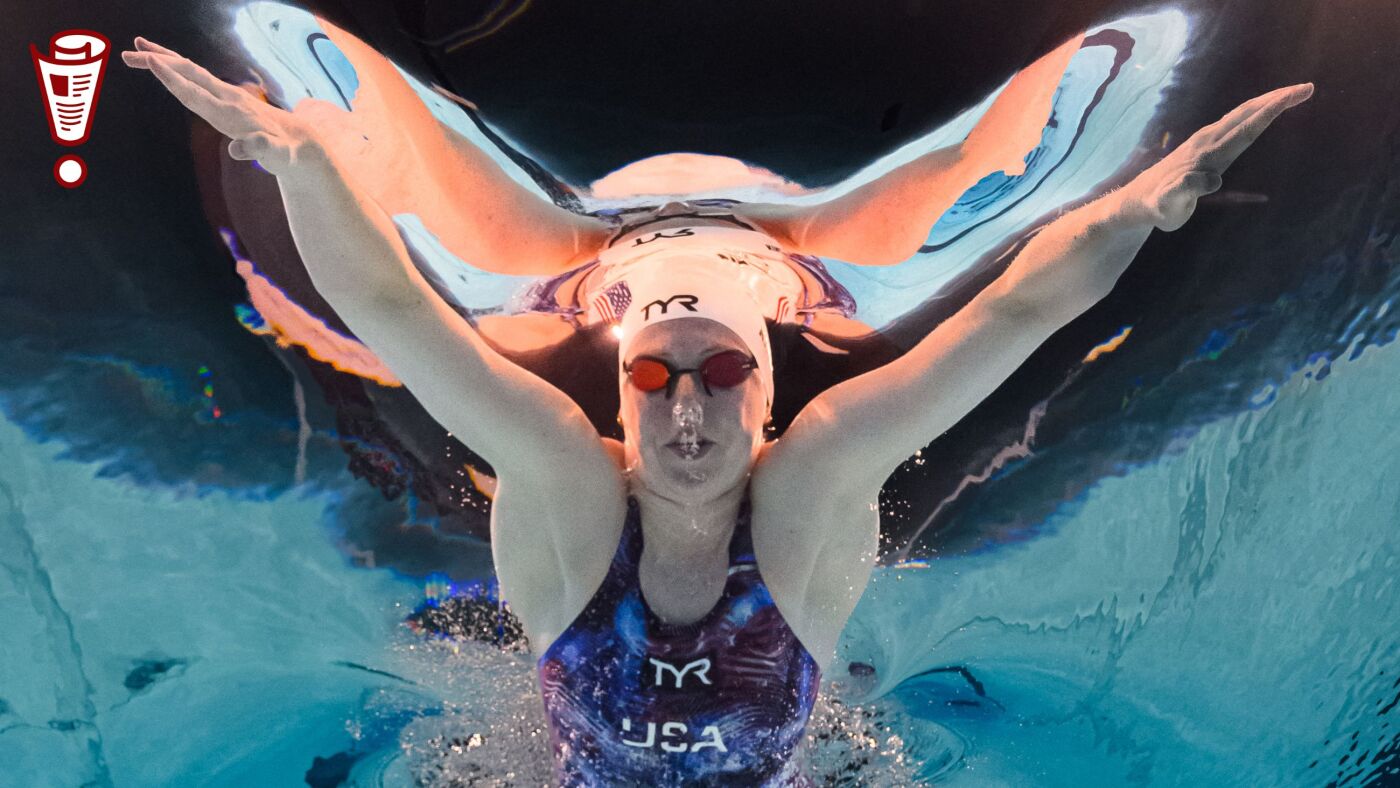
An underwater view shows US’ Lilly King competing in a heat of the women’s 200m breaststroke swimming event during the Paris 2024 Olympic Games at the Paris La Defense Arena in Nanterre, west of Paris, on July 31, 2024. (Photo by François-Xavier MARIT / AFP) (Photo by FRANCOIS-XAVIER MARIT/AFP via Getty Images)
François-Xavier Marit/Getty Images
hide caption
toggle caption
François-Xavier Marit/Getty Images
This week’s show was recorded in Bloomington, Indiana with host Peter Sagal, judge and scorekeeper Bill Kurtis, Not My Job guest Lilly King and panelists Alonzo Bodden, Josh Gondelman, and Faith Salie. Click the audio link above to hear the whole show.
Who’s Bill This Time
State of the Union is Hot; The Tribal Council Convenes Again; A Glow Up In the Doll Aisle
Panel Questions
The Toot Tracker
Bluff The Listener
Our panelists tell three stories about a travel hack in the news, only one of which is true.
Not My Job: Olympic Swimmer Lilly King answers our questions about Lil’ Kings
Olympic Swimmer Lilly King plays our game called, “Lilly King meet these Lil’ Kings” Three questions about short kings.
Panel Questions
Cleaning Out The Cabinet; Bedtime Stacking
Limericks
Bill Kurtis reads three news-related limericks: Getting Cozy With Cross Country Skiing; Pickleball’s New Competition; Bees Get Freaky
Lightning Fill In The Blank
All the news we couldn’t fit anywhere else
Predictions
Our panelists predict, after American Girls, what’ll be the next toy to get an update.

Law Roach
Zendaya and Tom’s Wedding Already Happened …
Y’all Missed It!!!
Published
Zendaya and Tom Holland are married … so claims her longtime stylist, Law Roach.
Here’s the deal … the celebrity stylist — who started styling Zendaya way back in 2011 — spoke to Access Hollywood on the Actors Awards red carpet where he sang out “The wedding has already happened, you missed it.”
Waiting for your permission to load the Instagram Media.
The AH reporter asks in shock if that’s true … and, Law responds by saying it’s “very true” before walking off.
This isn’t the first time Tom and Zendaya’s relationship status has made headlines on a red carpet … remember at the Golden Globes in 2025, Zendaya had a ring on that finger — and, the next day, we found out the two were engaged.

TMZ.com
Zendaya and Tom met on the set of “Spider-Man: Homecoming” in 2016, started dating a couple years later and went public with their relationship in 2021.
We’ve reached out to Tom and Zendaya’s teams … so far, no word back.

US cleared to use British bases for limited strikes on Iranian missile capabilities

Gas prices could jump as Middle East tensions threaten global oil supply

ChatGPT could miss your serious medical emergency, new study suggests

Charles Barkley scolds sports fans for getting wrapped up in Olympic hockey frenzy

China’s ultrasound brain tech race heats up

Florida High School Football Rankings: Top 25 teams – Oct. 21

Cleary's 21 help Le Moyne down Central Connecticut State 69-64 in OT

How old is Bo Nix? What to know about Oregon quarterback ahead of 2024 NFL Draft

99th annual Pony Swim held in Virginia

Indiana Members Credit Union announced as new anchor tenant at Bottleworks District
Gas prices could jump as Middle East tensions threaten global oil supply

Pakistan calls troops, orders 3-day curfew as 24 killed in pro-Iran rallies

US says Kuwait accidentally shot down 3 American jets

House Republicans push Johnson to go to war with Senate over SAVE Act

Israel FM says Europe too divided, slams Spanish PM
-

 World4 days ago
Exclusive: DeepSeek withholds latest AI model from US chipmakers including Nvidia, sources say
-

 Massachusetts5 days ago
Mother and daughter injured in Taunton house explosion
-

 Denver, CO5 days ago
10 acres charred, 5 injured in Thornton grass fire, evacuation orders lifted
-

 Louisiana1 week ago
Wildfire near Gum Swamp Road in Livingston Parish now under control; more than 200 acres burned
-

 Technology1 week ago
YouTube TV billing scam emails are hitting inboxes
-

 Politics1 week ago
OpenAI didn’t contact police despite employees flagging mass shooter’s concerning chatbot interactions: REPORT
-

 Technology1 week ago
Stellantis is in a crisis of its own making
-

 News1 week ago
World reacts as US top court limits Trump’s tariff powers