Lifestyle
How to buy cheap(er) Broadway tickets


Robert Downey Jr. is on Broadway this fall.
Matthew Murphy and Evan Zimmerman/Lincoln Center Theater
hide caption
toggle caption
Matthew Murphy and Evan Zimmerman/Lincoln Center Theater
It’s the time of year when people think about visiting New York City for the holidays — and maybe seeing a Broadway show. It’s an exciting season to do that, since celebrities are all over Broadway this year (Robert Downey Jr. is on stage until after Thanksgiving; George Clooney’s coming this spring. But there’s also Jim Parsons, Mia Farrow, Daniel Dae Kim, Kit Connor…).
Then again — you may be scared away by stories about $800 tickets.
As a former theater critic and a long-time arts reporter, the question I’m asked most often is: How can I get affordable tickets? I’ve steered friends, relatives and colleagues toward cheaper (if never cheap) seats. Here’s my best advice:
Be flexible, if you can.
Do you want to see a particular show (you’re a Sondheim fanatic, there’s a celebrity you love) or is it just that a Broadway show is on your bucket list? Are you flexible on dates and times? Do you care where you sit? If you can be flexible, you’ll have a better chance at finding less expensive tickets. Not every ticket costs hundreds of dollars. There are plenty of options below $100 each, especially if you’re open to seeing almost anything, or at least a wide variety of shows.
Ticket prices change depending on the day, the capacity of the theater and the seat — pricing can be fluid and depend on weekly popularity of a show. If you can, check prices for a few days and compare. The difference could be significant.
And then there are the dead times of year: January, February and September. Those are great times to buy a Broadway ticket. During these months, you can look out for Broadway Week, which offers 2-for-1 tickets, and Kids’ Night on Broadway, when a child is free with an adult, usually in February.
And then there’s seat location. Seats with an obstructed view or partial view (you may not be able to see the whole stage) and seats that are in back of the highest balcony will cost you less.
Where to look
Shows that are in previews — that is, before their opening date, when they’re still working out kinks and haven’t been reviewed by the mainstream media — are often less expensive. Shows that are struggling are often sold for less. Long-running shows (Chicago), may be priced much lower than a show that just won Best Musical at the Tony Awards (The Outsiders). Plays often cost less than musicals (though not when there are super-famous people in them).
If you want to see how ticket prices are trending, you can check out the weekly Broadway grosses, put out by the Broadway League, which details how full a theater was the previous week. A show that’s at 70% capacity is going to have lower-priced tickets than a show that’s regularly at 100% capacity. And yes, that means it’s not as popular at the moment — but it doesn’t mean you’ll like it less!

Kit Connor and Rachel Zegler in Romeo + Juliet
Sam Levy/Romeo + Juliet
hide caption
toggle caption
Sam Levy/Romeo + Juliet
But what if your daughter really wants to see Kit Connor?
Are Broadway tickets ever sold at a discount? Yes. (Might not happen for this show, though!)
Discount codes: Discount codes are often available from New York Show Tickets, TheaterMania, BroadwayBox and Playbill. Some employers offer benefits like Working Advantage, which also has discounts. Some credit cards have special orchestra pricing. If you have a large family of 15 or more who are visiting and can book well in advance, you may be able to take advantage of group ticket pricing.
The lotteries: You can put your name in for tickets in advance and hope you’re the lucky winner – they usually run for one to four tickets and cost $30-40 per ticket. Bad news: you won’t be able to choose your tickets. Good news: most lotteries are now done online instead of waiting in line. Different productions use different lotteries, which may include TodayTix or Lucky Seat. Some lotteries are for the next day — others are for the next week — so you’ll need to visit the show website for details. You’ll have a very limited amount of time to respond if you’ve won, often about an hour, so be sure to check your email/texts regularly.
Rush tickets: Rush tickets are significantly discounted, day-of tickets. To buy them, go to the box office as soon as it opens on the day of the show (you may be able to get standing room tickets then, too.) These tickets are often taken from the remaining seats available, which means that you may not be able to sit with other members of your party. Pro tip: Buying tickets at the box office saves you ticketing fees, even if you are buying full-price tickets.
You can also buy discounted, same-day tickets through TodayTix or by going in person to one of TDF’s two locations: Duffy Square on Broadway at 47th St. in Times Square (look for the large red steps) or Lincoln Center (this one is inside the David Rubenstein Atrium, which makes it better for rainy days). Get there early, be prepared to wait in a long line, and (again!) be flexible.
Resale apps: Many resell sites hike up prices of tickets — though sometimes you can find cheap seats at the very last minute — if you are willing to wait it out. My colleague (and frequent theater-goer) Janet W. Lee recommends the ticket resell app Theatr, which sells for face value or less and often has last-minute deals.
See something Off Broadway — or wait for the road show
Many Broadway shows tour, probably to a place not far from your hometown. The sets may be scaled down, depending on the production, but the casts are terrific and the tickets cost considerably less. Or visit London! Though ticket prices even there have gone up, excellent seats for the most popular West End shows are around $150.
But also, consider Off Broadway! And Off Off Broadway! Some of the best theater in New York is not actually on Broadway, and the further you get from the Main Stem, the smaller and more intimate the experience and the less expensive the ticket. Productions that debut at the non-profit Off Broadway houses like the Public Theater and Second Stage often transfer to Broadway later, so you can tell all your friends, you “saw it when.” And commercial Off Broadway houses often have very popular, long-running shows that are worth seeing, like the current production of Little Shop of Horrors.
If you’re up for seeing Off Off Broadway shows, tickets can be as little as $11 with TDF’s “Go Off-Off and Beyond” membership, which has a one-time $5 fee.

Jim Parsons — and Katie Holmes and Zoey Deutch — are in Our Town on Broadway.
Daniel Rader/ Our Town
hide caption
toggle caption
Daniel Rader/ Our Town
For young theater-goers
There are many, many programs offering less expensive tickets for students or theatergoers under 35 or 40, including tickets in the $30-35 range at Roundabout, 2nd Stage, Lincoln Center, Manhattan Theatre Club, and Playwrights Horizons. Some shows, like The Outsiders, have special rush ticket rates for people under a certain age.
Tips for locals
If you live in the area, you have many more options. You can put your name in for several lotteries weekly and look out for Broadway Week and Kids’ Night on Broadway. If you work for a non-profit, are a student, union member, retiree, veteran, government worker or fall into many other categories, you can sign up for the excellent TDF membership program for $35 a year. Membership gives you the option of buying steeply discounted tickets for Broadway, Off Broadway and Off Off Broadway, with prices ranging from $11 to $60 each. Productions that are sold out will not show up on TDF, but it’s a great way to see shows in previews, shows drawing less of a crowd, or smaller (but often wonderful) productions.
If you don’t qualify for TDF, a good option is a “ticket papering service,” which discreetly fills seats for theaters (and often classical music or jazz concerts as well) to make them appear more popular. It’s simple — you sign up with a membership fee (usually around $100), pay a small fee (about $5 or so) per ticket, and go to the show on your best behavior. To find them, Google “ticket papering services” because they can come and go, but they include services like Play By Play, Theater Extras, Stagelight and Will Call Club. Ask around on social media sites like Reddit to see if a particular service generally has the kind of tickets that interest you.
And if you just want to see great theater and don’t care if it’s on Broadway? Consider a membership to one of the city’s excellent non-profit theaters, like the Public Theater, New York Theatre Workshop, Ars Nova or Atlantic Theater Company.
Story edited by Meghan Sullivan.



From top to bottom: Bobby Hutcherson, Dexter Gordon, Esperanza Spalding, Abbey Lincoln, Herbie Hancock and Charles Mingus.
(Getty Images)

Backstage at the Blue Note L.A., Herbie Hancock and Wayne Shorter’s widow, Carolina, have come, along with me and a friend, to see Esperanza Spalding between sets one late summer Sunday. The club is new and the dressing room feels more humane than most, like a hotel banquet room. Esperanza makes an altar on the vanity and prepares the space for chanting, a prayer meeting but more unapologetic, ritualistic and communal. We make an impromptu jazz orchestra in clipped Sanskrit, and my mind wanders to the first time I heard this Lotus Sutra, when Tina Turner performed it on CNN’s “Larry King Live,” explaining that it’s how she got into her transcendent mode when she still lived with Ike in Inglewood — her means of escaping him in spirit before she ran away physically. When she finally left, she hid from Ike at Wayne Shorter’s home. With my mind on Turner, I do transcend; I feel so emboldened I could leave anything behind in peace after the session. On the way to the car, we pass Turner’s star on the Walk of Fame. Think it not strange; one perfect improvisation leads to another, jazz music is a way of life, collective improvisation is — one note calls to another, one star lights another. One runner in need of sanctuary clears another’s path, and every jazz club is half house of worship and rebellion that way.
There’s an ongoing jazz renaissance in Los Angeles, one loosely rooted in the genre’s prematurely and cyclically proclaimed death — the same way the city’s celebrities tend to become franchises in the afterlife, worth more dead than alive. Jazz haunts with debts owed to its creators, and has a knack for revivals, collectives, new venues in the old forms, and stalwart clubs revivified by benefactors and grant funding. The West Coast Blue Note to complement the one in New York’s West Village opened on Sunset Boulevard last August, enticing tourists and supper club enthusiasts. Leimert Park’s World Stage just received substantial Mellon funding. There are musicology programs, like the one at UCLA helmed by Herbie Hancock, and local hip-hop producers like Madlib (nephew of a jazz trumpeter) and the Alchemist who have been sampling and looping jazz records until they’re part of a canon beyond themselves.
Why there is renewed interest in the genre now is the question. What about the ecosystem or nervous system of Los Angeles is baiting jazz music out from its malleable shadow into a renewed prominence and even granting it rank in the clout economy? I think it has to do with the genre’s ability to orient and organize social life through collective improvisation, the fact that hip-hop, now in its 50s, is aging out of the night club and needs to highlight its proximity to jazz to reinvent aspects of its image as more subdued and inviting, less reminiscent of Diddy parties and more chanting wholesomely with elders backstage. Ultimately, the desire for a new jazz age is a wish for a new national identity as glamorous and unassailable as old Hollywood. Jazz is diplomatic yet just elitist and gatekept enough to feel like it belongs to the state and the people alike, it’s democratic with hints of classist rhetoric in some of its spheres and jazz is Black music, but that has never stopped borderline-racists from appropriating and loving it.
Jazz lore is concentrated in New York, Chicago and New Orleans, however, and even finds Paris, Antibes, Milan and Tokyo before it settles into the elements of its reputation that include L.A.-born, -raised or -influenced players and scenes. As is common for Los Angeles, the sense of exile and wasteland here makes it an overlooked frontier, a place where new worlds incubate undetected and experts are mistaken for philistines in the glare of year-round sunshine and casualness conflated with lack of rigor. L.A. and its music scenes tend to be fervently, rigorously casual — daylight blinds the spotlight as the preferred illumination for concerts and parties. And we would be right to laugh or clap back more often, retaliating against those towns that take themselves too seriously. If we had a public transportation system that didn’t induce depression, alienation and self-loathing and meaningfully breached the seemingly willful segregation covenants between neighborhoods and zones here, you could take a jazz tour of L.A. that would be heartbreaking in its range. As it is, the durability and versatility of a Los Angeles jazz consciousness depends as much on real estate as on fans and musicians; it’s as territorial and precarious as the land, which burns, trembles or courts dysfunction on a whim indiscriminate of season and somehow remains photogenic and certain of its appeal. There are awards season, fire season and season of the witch, and beneath the intersection of Kendrick and Flying Lotus, of laid-back rap and half-hippie psychedelia, jazz is each season’s encrypted soundtrack, it scores our city.

A roll call of local jazz heroes raised here: There are Charles Mingus and Eric Dolphy in Watts, coming of age together. There’s Dexter Gordon, son of a Black doctor who treated Duke Ellington whenever he was in L.A. One Christmas, Ellington and Dexter’s dad had plans to meet at the Dunbar Hotel on Central Avenue, then the city’s primary jazz mecca, a West Coast version of Manhattan’s 52nd Street, lined with venues and shops carrying an attitude that matched the textures of the music. Dr. Gordon didn’t show; he died that night of a heart attack. Dexter went from sheltered son of a doctor to brooding child hipster who left home early to tour with big bands. There is the It Club, owned by a Black gangster and visited by everyone from Miles to Coltrane to Monk, who recorded an album there. There’s Hampton Hawes, born in L.A. the same year as Dolphy, imprisoned for heroin possession after serving in Japan and eventually pardoned by Kennedy. His style on the piano carries the relaxed tension of a man for whom syncretism comes naturally, East and West, sun and sorrow. Then, there’s Abbey Lincoln, escaping to Los Angeles to pursue theater and film alongside music. There’s Dial Records, founded by Glendale-born Ross Russell, which recorded Charlie Parker and Django Reinhardt. There’s vibraphonist Bobby Hutcherson, trumpeter Don Cherry, and Ornette Coleman, who came through L.A. and worked as an elevator operator while developing bands with locals like Bobby Bradford. I interviewed Bradford a couple months back and he emphasized how modest their band-building had been. Conversations during day jobs at department stores led to woodsheds and studio recordings.

American Jazz musician Ornette Coleman (1930–2015) plays saxophone as he performs onstage at the University of Illinois, Chicago, Illinois, May 1982.
(Steve Kagan/Getty Images)

Portrait of American blues singer Ella Fitzgerald. She is shown posing in a studio in a sequined dress. Undated photo circa 1940s.
(Bettmann Archive/Getty Images)
There was less glamour in the way of the making of an avant-garde in L.A., less of a hip reputation at stake, so that these bands ended up innovating more than those in New York in some cases. Horace Tapscott built a whole hyperlocal arkestra exemplary of this freedom. And there’s Chet Baker’s sound, there’s Ella Fitzgerald returning to Beverly Hills, Miles in Malibu, who also delivered his final performance at the Hollywood Bowl. L.A. eventually became a refuge for those who became too famous or comfortable elsewhere, as it still is now. But most of the jazz world ended up moving in the other direction, fleeing to New York and Paris and never looking back as if chasing elite romance, and this was as valid an impulse as chasing the sun. Decades passed, some L.A.-reared jazzmen died young or in middle age, and then the exodus yielded a return, not always physical, but in the spirit of relentlessly laid-back improvisers who refuse to feel inferior to their East Coast counterparts.
In the belly of a whale at a jazz venue in Little Tokyo, early 2014, I gathered with Fred Moten, Kima Jones and others to memorialize Amiri Baraka a week or so after his death. I was visiting from New York at the time, Fred lived here then and taught at UC Riverside, and I emailed the owner of the Blue Whale explaining that we should be on the East Coast at Baraka’s funeral but because we were here, we had to do something to celebrate him, it was urgent. The owner, Joon Lee, responded in kind and gave us a Monday night to improvise our grief; we read Baraka’s poems to one another and told stories. It’s what he might have done if stranded in Los Angeles on the week of his death, or what he would have joined us to do, and had, while alive. A few years later, having moved back to L.A., I went to Blue Whale to see Jason Moran with his band, and it felt close to being back at the Village Vanguard hearing them, close to a real night out. In 2021 Blue Whale closed after the year in the dark we’d all had, leaving jazz in the city barren and institutionally driven. Clubs nationwide were folding, but in L.A., if one or two music venues went under, it meant monopoly by Goldenvoice-owned spaces and well-intentioned hipster havens like Zebulon, gentrifying both neighborhoods and music.
At Zebulon I can see a Black jazz performance and be one of three Black people in the audience. At World’s Stage you can see local acts with a Black crowd but fewer out-of-town groups are invited because it’s exceedingly expensive to fly a band out and lodge them for days for shows. At Catalina’s, an older crowd with less current tastes convenes. At Hollywood Bowl, you have to be ready for an Event, not just a concert or show and not quite a festival. At Sam First, you’re so far into the Westside it feels conniving and like a tech monster might hold you hostage until you give up all your data. At the new Blue Note, you’ll see blockbuster acts in the jazz world but be rushed out to make room for the next set’s crowd as if on a ride called jazz at an amusement park. The wayward party “Jazz Is Dead” has turned the hype of that phrase into a brand that angers so many of the genre’s elders and angels, to sell jazz’s death and displacement back to you as big concerts with legends like Stanley Cowell, Azymuth and Sun Ra’s Arkestra.
The true renaissance is annexed to hidden places and in our collective will to excavate them: house and private parties, venues that go under the radar and book jazz avant-gardists sans fanfare, archival interest in jazz migration to and from Los Angeles, and the fact that more young people want to find ways to hear jazz music in defiance of how they’re told to access it — in backyards and nontraditional venues. The venues are like decoys, real estate ventures that would find a way no matter the acts or genre, it turns out. I cannot be visited by the ghost of Tina Turner by way of Herbie Hancock, Esperanza and the Lotus Sutra while scrolling, and nothing in the live sets will be identical to what’s on their albums even if they play the same songs in name. What’s really making a comeback with unlimited momentum is our collective will toward experiences that can only happen live, which is what makes jazz important beyond any institutional, cultural or regional capture. In a city that feels rigid with concern about its own image projection, jazz is the only music that demands we abandon script.

American jazz musician Don Cherry (1936–1995) plays a pocket trumpet at a World Music Institute ‘Improvisations’ concert at Symphony Space, New York, New York, June 8, 1991.
(Linda Vartoogian/Getty Images)


American model Carol Alt was only 22 years old — and 5′ 11″ — when she shot to stardom after she was featured on the cover of the 1982 Sports Illustrated Swimsuit issue.
Alt was featured in Vogue, Harper’s Bazaar, Elle and Cosmopolitan, as well as, scoring sought after ad campaigns like Cover Girl, Hanes, Givenchy and Diet Pepsi.

The best Xbox controller to buy right now

Spain legalizes up to 500,000 undocumented migrants, sparking backlash

Trump return to Iowa likely ahead of high-stakes midterms, GOP gubernatorial candidate says

Sleep timing could directly impact chances of heart attack or stroke, study suggests

NCAA investigates after Dabo Swinney raises transfer portal tampering accusations against Ole Miss

Florida High School Football Rankings: Top 25 teams – Oct. 21

Cleary's 21 help Le Moyne down Central Connecticut State 69-64 in OT

How old is Bo Nix? What to know about Oregon quarterback ahead of 2024 NFL Draft

99th annual Pony Swim held in Virginia

Indiana Members Credit Union announced as new anchor tenant at Bottleworks District
Trump return to Iowa likely ahead of high-stakes midterms, GOP gubernatorial candidate says

Free trade or fair play? MEPs go head-to-head on Mercosur in The Ring
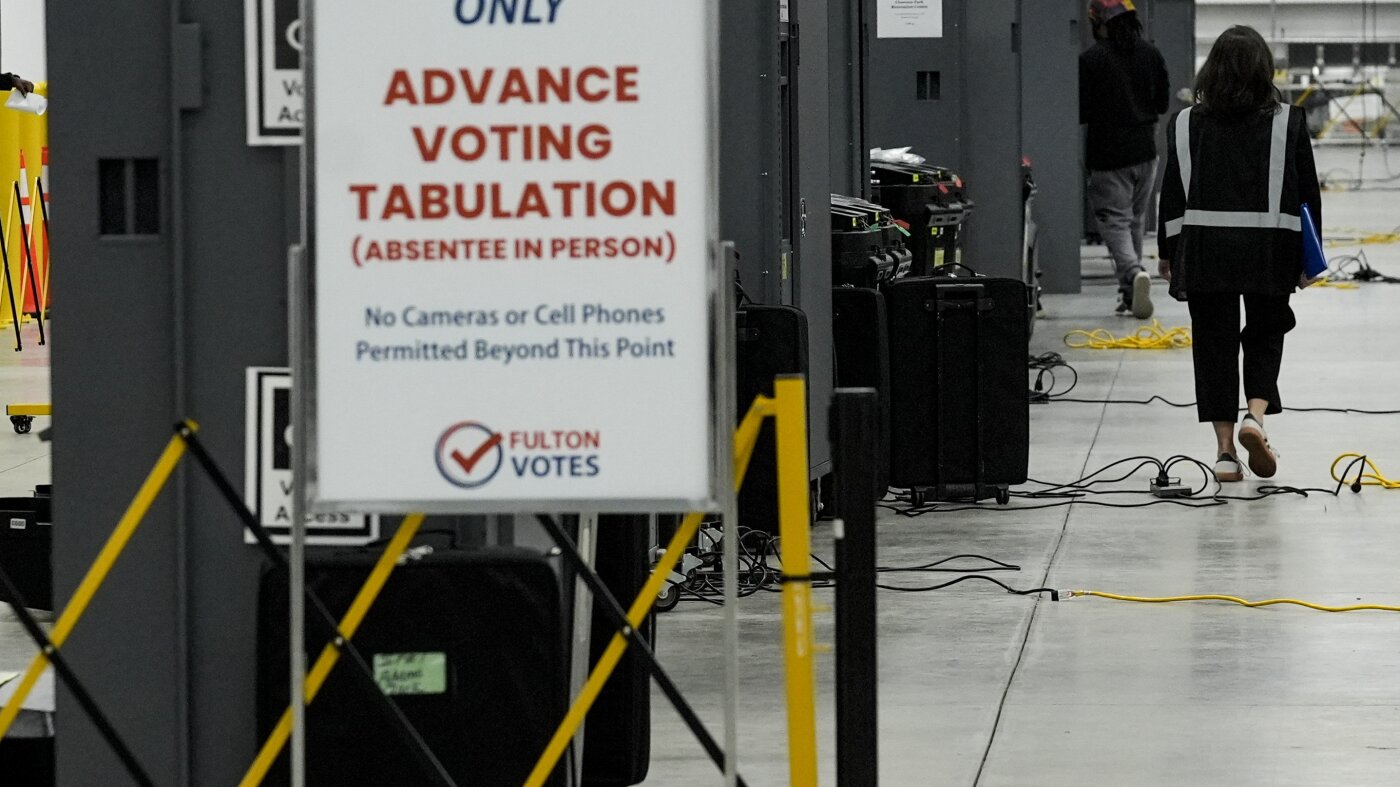
The FBI conducts a search at the Fulton County election office in Georgia

Graham pushes back on Tillis’ criticism of Noem, Miller for labeling man killed by Border Patrol a ‘terrorist’

North Korea’s Kim to outline plans to boost nuclear arsenal
-

 Illinois6 days ago
Illinois school closings tomorrow: How to check if your school is closed due to extreme cold
-

 Pittsburg, PA1 week ago
Sean McDermott Should Be Steelers Next Head Coach
-

 Pennsylvania2 days ago
Rare ‘avalanche’ blocks Pennsylvania road during major snowstorm
-

 Lifestyle1 week ago
Nick Fuentes & Andrew Tate Party to Kanye’s Banned ‘Heil Hitler’
-

 Sports1 week ago
Miami star throws punch at Indiana player after national championship loss
-

 Cleveland, OH1 week ago
Northeast Ohio cities dealing with rock salt shortage during peak of winter season
-

 Technology6 days ago
Ring claims it’s not giving ICE access to its cameras
-
 Science1 week ago
Contributor: New food pyramid is a recipe for health disasters