Lifestyle
How a forgotten California border town became a hip hideaway — with hot springs and music


The first two surprises, as you roll up Old Highway 80 into this dry and silent Sonoran Desert town, might be the steam and the music.
The steam rises from two pools at the recently reborn Jacumba Hot Springs Hotel. The music seeps from a bathhouse ruin where the hotel stages weekend performances.
On this night it’s a torch song from long ago, sung by an acoustic duo for a small, rapt, eclectic audience — hipsters in their 30s, retirees in their 70s, desert rats and spa seekers, all sitting under the open sky as night falls on the roofless building, a few million surrounding boulders and a long, tall fence that runs into the hills.
These are features that California daydreams are made of, and this emergent scene is luring visitors to an outpost 70 miles southeast of downtown San Diego.
Bar patio area of the Jacumba Hot Springs Hotel.
(Pia Riverola)
“It’s a refuge from the stressors of the city. Things seem to wash away here,” co-owner Melissa Strukel said recently.
Now, a few more surprises: The town of Jacumba Hot Springs has been down on its luck for decades. That long fence, 2,100 feet south of the hotel, is the Mexican border, where undocumented migrants pass regularly and a crisis flared last year. And the hotel’s owners are new to town and the business.
“Everything is the first time,” Strukel said.
It was four years ago, early in the COVID shutdown, that Strukel, a veteran San Diego designer and special-event rental entrepreneur, decided to take a drive.
She wound up in a town she’d never noticed before, standing outside a bedraggled old motel, smitten.

Siren Suite 11at the Jacumba Hot Springs Hotel.
(Mikael Kennedy)
So smitten, in fact, that she climbed over a wall to get a better look.
“I just knew right away that I belonged here,” Strukel said.
Soon she learned that the motel was for sale — with a catch. The owner wanted to sell it in a 150-acre package deal with most of the commercial property in town: a gas station (without gas), several homes and storefronts, a ruined bathhouse and a littered mess that was once a man-made lake.
Undeterred, Strukel enlisted her business partner Corbin Winters and they formed a plan.
They would recruit their friend Jeff Osborne, a former client and real estate business veteran. They would make the 24-room motel and restaurant into a resort with 18 rooms, two suites, restaurant, bar and global desert vibe, drawing on influences from Mexico to Marfa to Morocco.
They would replumb the hot springs to take advantage of the alkaline water’s “silky texture,” refill the lake, recruit a veteran general manager for the hotel and use the houses as vacation rentals, including two with their own soaking tubs.

Jacumba Lake is a recently revived reservoir fed by the same springs that feed the Jacumba Hot Springs Hotel. The hotel’s owners worked to refill the lake and plant the shoreline with palm trees.
(Christopher Reynolds/Los Angeles Times)
They would build a new sense of community in Jacumba Hot Springs, where the population is 540, the median age around 62, and the median income and property values are some of the lowest in the county. The nearest full-fledged grocery store is 45 minutes away; the nearest public school, several miles down the road; the nearest legal border crossing, an hour away in Tecate.
“At first I was like, ‘ah, no way,’” Osborne recalled.
But Osborne, 38, whose experience includes several years of house-flipping and short-term rental management, thought on it some more. He drove into town, spent a night in a tent by the lake and changed his mind.
By October 2020 a deal was done. Doing business as We Are Human Kind Inc., the trio paid more than $1.6 million — but less than $3.9 million, Osborne said, declining to be more specific.
Unlike many hotel owners, all three moved to town, taking on major roles in a community short on resources and long on characters.
“This community was the end of the line for a long time,” said Sam Schultz, 69, who lives east of town at the Desert View Tower with eight dogs and at least 12 cats.

Desert View Tower was built as a tourist attraction in the 1920s.
(Christopher Reynolds/Los Angeles Times)
On any day, migrants might be illegally crossing the border nearby, breaching a fence that starts, stops and varies in height, a product of shifting politics and stony slopes.
Yet most of the time, border-crossers are quickly met and taken away by the Border Patrol agents who steadily cruise the dirt roads and highway.
“I haven’t seen one person [crossing] for a couple of weeks now,” said Osborne, who lives in a stone house on a knoll known as Snob Hill. “I live less than a thousand feet from the border … and I don’t lock my doors.”
During my two days in town, I didn’t see anyone crossing, either. But I met plenty of the neighbors.
In the Exotic Desert Hideaway — a.k.a. the hotel bar — you might bump into Roman Wrosz, a 68-year-old inventor and longtime local who flies gliders at the otherwise lonely Jacumba airport.
Along the highway east of town, you will probably encounter Coyote, a 67-year-old junkyard proprietor with a booming baritone voice and a truck that says “UFO retrieval and repairs.”

Exotic Desert Hideaway bar at the Jacumba Hot Springs Hotel.
(Mikael Kennedy)

The Jacumba Hot Springs hotel includes a dark bar decorated with paintings of nudes.
(Christopher Reynolds/Los Angeles Times)
If you see a bearded man in a wheelchair working the register at Sunday breakfast in the town’s community center, that’s probably Eldon Caldwell, 75, who lives in one of the little houses the newcomers purchased.
“They inherited me as tenant,” Caldwell said. “They haven’t raised my rent. They put a shower in for me.”
While Caldwell works the register at those Sunday community center breakfasts, Winters volunteers every other week as a server — again, not standard hotelier behavior. Osborne has signed on as the center’s board president.
“It’s magnificent, what they’ve done,” said Kirk Gilliam, a 69-year-old artist/electrician who builds robot sculptures in a gallery two doors down from the Mountain Sage market on Old Highway 80.
If the new hotel team has its way, more neighbors will arrive soon to fill open hotel jobs and take over storefront vacancies.
“This is not a flip,” said Strukel.


Bathroom scene at the Jacumba Hot Springs Hotel. (Mikael Kennedy; Pia Riverola)
It is, however, one of biggest changes in town since 1919. That’s when a San Diego magnate named John Spreckels opened his “impossible railroad,” running tracks through Jacumba on the boulder-filled hill-and-valley path from San Diego to Yuma.
Next came Highway 80 and speculator Bert Vaughn, who built a four-story hotel, bathhouse and a desert view tower to lure San Diego-Arizona drivers off the road. By the 1950s, a motel and man-made lake had been added.
At the town’s peak, Osborne said, “they say there were 5,000 people here on the weekends.”
But the rail line fell idle. Interstate 8 (two miles north of town) stole most of the passing traffic in the 1970s. The bathhouse and four-story hotel burned.
For a while it seemed the town’s saviors might be a pair of nudists: In the 1990s, David and Helen Landman bought an RV park outside town, converted it into a clothing-optional resort and moved in. Then in 2012, the Landmans bought and made improvements on most of downtown. But as the pandemic began, the couple’s patience ran out. They sold the hotel and most of downtown to Strukel, Winters and Osborne, then peddled the clothing-optional resort, DeAnza Springs, to other buyers in early 2021.
By early last year, the team was deep into redesign and reconstruction, and it was clear that making over the hotel and downtown Jacumba Hot Springs would cost more than buying them did.

The Solstice Pool at the Jacumba Hot Springs Hotel.
(Kate Berry)
To bring back the lake, the three hired workers to spend months scraping with a tractor, consulted with the nonprofit group Indigenous Regeneration, then added about 70 California-native palm trees, which line a sandy shore.
Then the world intervened. In the space of a few spring days, hundreds of immigrants surged over and around the border fence.
Most had come from far beyond Mexico, speaking Chinese, Portuguese and other languages, apparently drawn by the expiration of Title 42, a pandemic-era public health measure that allowed authorities to turn away asylum-seekers more easily. A U.S. Customs and Border Protection spokesman said the migrants had been “callously placed [in the area] by for-profit smuggling organizations.”
Once across, the migrants gathered in three encampments and built campfires in the hills south of Old Highway 80, eager to be seen and considered for asylum, most of them without food, water or protection from the elements.
“It was two weeks of bad,” Strukel said.
While the Border Patrol decided how to respond, Jacumba locals spread the news. The hotel team set up a collection site and began to gather and distribute supplies with help from Border Kindness, a Mexicali-based nonprofit, and other groups.
“There were locals who brought out food and supplies, and there were others who hated them for that,” said Gilliam.

The co-owners of the Jacumba Hot Springs Hotel, seen in the old gas station that serves as their office, are (from left) Corbin Winters, Melissa Strukel and Jeff Osborne.
(Christopher Reynolds/Los Angeles Times)
The hoteliers “weren’t even open and they were using the kitchen as a place for people to bring supplies,” said Kelly Overton, executive director of Border Kindness. “There was no foreseeable benefit to them. They chose to do what they thought was the right thing. … Not everybody makes that decision when it comes to their business and their money.”
As the flow continued into 2024, the Border Patrol imposed more order and sent more buses. Then Mexico boosted its immigration law enforcement near the border and the Biden administration tightened asylum restrictions. Now, Border Patrol officials and locals agree that numbers are down again.
At the hotel, Strukel, Winters and Osborne began a gradual opening in late 2023, launching into daily operation in February, inviting newcomers to explore “an unexpected escape on the dusty edge of everything.”
Its workforce has grown to about 75 people, including general manager Natalie Richards from San Diego, chef Leo Ceja from Los Angeles and director of special programming and hospitality Juan Miron, originally from Tijuana.
I arrived on a Friday, ducking into a rustic-chic trailer that houses the front desk.

The Jacumba Hot Springs Hotel, built as a motel and dramatically reborn in 2024 as a boutique hotel, includes Moroccan design details, multiple pools, record players and curated paperbacks in guest rooms.
(Mikael Kennedy)
Beyond the Moroccan entry gate and wind chimes from Arcosanti in Arizona, every guest room features stylish tiling, a turntable and an adventurously curated selection of books and albums. (Mine included two Louis L’Amour paperbacks and albums by country crooner Charley Crockett and Ethiopian sax player Getatchew Mekuriar.)
Most guests so far have come from San Diego County, “a lot of creative professionals,” Osborne said, and “people that like things off the beaten path, that like going down dirt roads.” Rates typically start at $180 on weekdays, $360 on weekends. (The only other lodging option within five miles of town is the rustic DeAnza Springs Resort.)
That afternoon, guests lounged around the Solstice Pool and Ritual Pool (where sometimes movies are screened) or stepped inside to the warmer soaking tub in the Echo Room.
The Exotic Desert Hideaway Bar — as dim as the desert day is bright— features kitschy nudes on the walls, DJs on weekends, $5 beer during happy hour and a $78 cocktail situation known as “The Fortune Teller.” (It comes flaming in a cauldron, includes tequila and serves six.)
Down the block, Kirk Gilliam usually has his gallery open on weekends. Next to the gallery, David Lampley sells vintage clothes at the Impossible Railroad Trading Post and serves as director of auditory and visual experiences for the hotel. (If you’d like to make a mono recording on a 1938 record-cutting machine, he can help with that too.)
Out at the born-again lake, Coyote the junk dealer has contributed three kayaks and a canoe for anyone who feels like paddling. There’s no fishing, but wildlife sightings are common, including a very large cat — a black jaguar? — at water’s edge in early October.
Though the old bathhouse down the street remains in ruins, it’s busy almost every Saturday night. That’s when the hotel team dresses the roofless structure up with bistro lights and candles and invites an eclectic mix of musicians to play under the stars. Besides torch songs, sea shanties, Latino roots and rockabilly tunes have been heard.

The Jacumba Hot Springs Hotel’s amenities include an old bathhouse, now without water or roof, where the hotel stages weekly candlelight concerts. The performers are Tiny and Mary, a sibling duo.
(Christopher Reynolds/Los Angeles Times)
“I’ve been coming out here since I was a teenager, and I never told anyone about it,” singer-songerwriter Mary Simich, 31, told me. “I was afraid people would ruin it.”
Now Simich, who lives in Orange County, is trying to buy a house in town.
The border remains a wild card (especially with new presidents in office or coming soon on both sides of the border). But this dusty little town is already in transition.
Strukel, Winters and Osborne say occupancy at the Jacumba Hot Springs Hotel is now running above 90%. Entrepreneur Max Daily, semi-famous in San Diego for running the pop-up Oslo Sardine Bar, has announced plans to open an eatery on Old Highway 80 with a stage for live music. Possible name: the Jacumba Yacht Club.
Meanwhile at DeAnza Springs — the former clothing-optional resort north of town — new owners Luke Wasyliu and Kevin Cho have made clothing mandatory, upgraded infrastructure and boosted a focus on wellness, glamping and weekend music festivals, including Youtopia, an October gathering aimed at devotees of Burning Man.
“It’s gentrification,” neighbor Sam Schultz said recently, sitting near the entrance of the Desert View Tower. “And a certain amount of gentrification is good for us around here.”
What to do, see and eat in and near Jacumba
Jacumba Hot Springs Hotel, 44500 Old Highway 80, Jacumba Hot Springs; (760) 766-4333. Room rates start at $180 on weekdays, $360 on weekends.
DeAnza Springs Resort, 1951 Carrizo Gorge Road, Jacumba Hot Springs; (619) 766-4301. The campground has 311 RV sites and about two dozen rental travel trailers, tiny homes, tent sites and motel rooms, two pools and a restaurant. Neighbored on three sides by Anza-Borrego Desert State Park, it also has many trails, including the scenic 1.1-mile Temple Peak Loop Trail. Hikers pay $5 each for trail access, a good bargain. Often hosts weekend music festivals.
Desert View Tower, In-Ko-Pah Road, Jacumba; (619) 971-2845. The view from this 70-foot tower is OK. The best part of the property is the neighboring trail among boulders, where someone long ago carved and painted all sort of faces and creatures. Adult admission $9.50.
Pacific Southwest Railway Museum, 750 Depot St., Campo. Open Saturday and Sunday, 9 a.m.-5 p.m. Admission $10 for adults. The museum is a place for hard-core train people, unless you’re going on a train ride (about 10.5 miles round-trip). Those are offered on Saturdays at 10:30 a.m., 1 p.m. and 2:30 p.m., at varying prices. The museum also has a location in La Mesa.
Gaskill Brothers Stone Store Museum, Forest Gate Road and Historic Highway 94, Campo; (619) 980-2013. Includes a timeline on local history. The upstairs of the stone story museum is mostly about the Buffalo Soldiers. Open Saturdays and Sundays, 11 a.m.–4 p.m.
Camp Lockett Event & Equestrian Facility, 799 Forest Gate Rd., Campo; (619) 369-9399. Including a Buffalo Soldier Museum, horse facilities and camping area. The camp, built in 1941 and closed in 1946, was the last base of operations for Black “Buffalo Soldiers” before the U.S. Army integrated and disbanded cavalry units. The Buffalo Soldiers guarded the U.S.’ southern border and Italian prisoners of war. Museum opens Saturday 9 a.m.- 5p.m., closed in December.



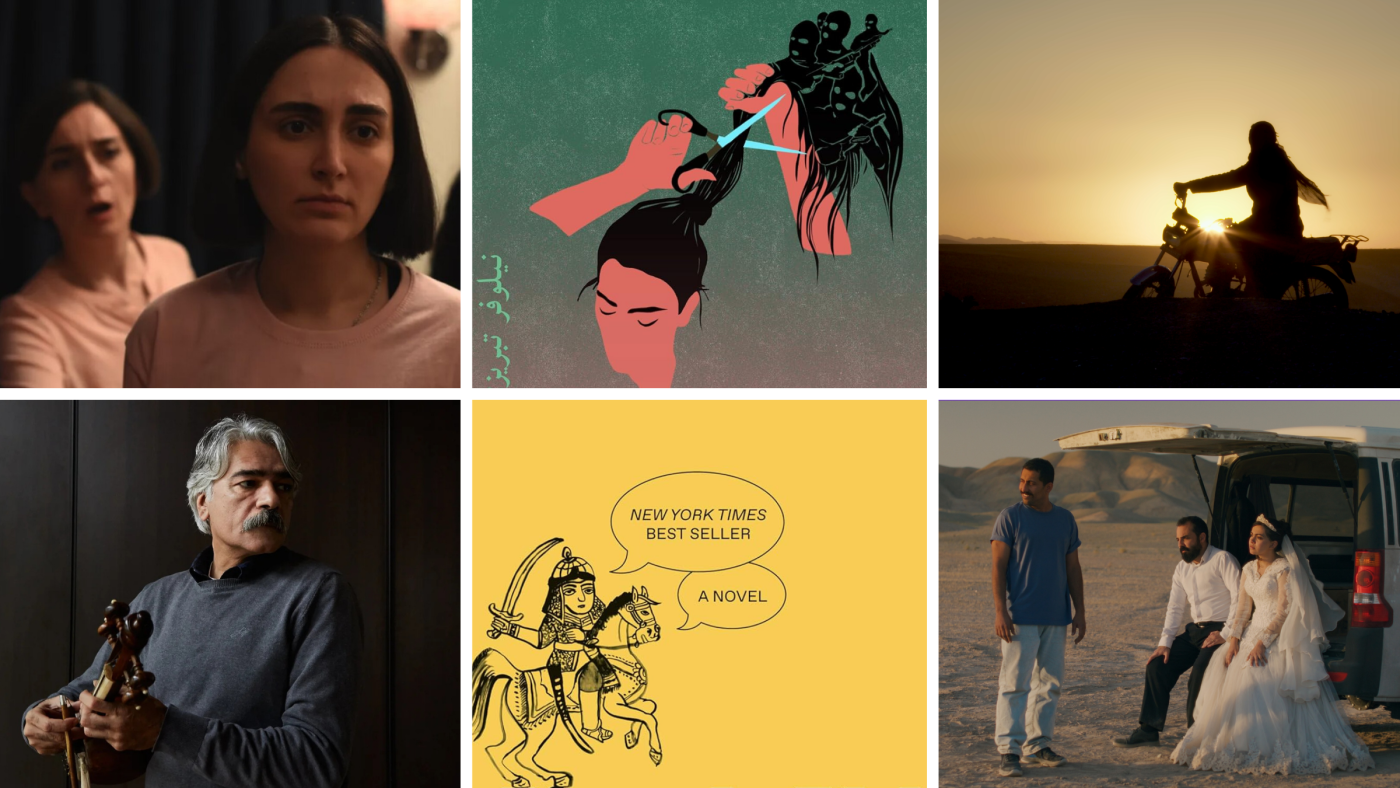
Understanding one of the world’s oldest civilizations can’t be achieved through a single film or book. But recent works of literature, journalism, music and film by Iranians are a powerful starting point. Clockwise from top left: The Seed of the Sacred Fig, For The Sun After Long Nights, Cutting Through Rocks, It Was Just an Accident, Martyr!, and Kayhan Kalhor.
NEON; Pantheon; Gandom Films Production; NEON; Vintage; Julia Gunther for NPR
hide caption
toggle caption
NEON; Pantheon; Gandom Films Production; NEON; Vintage; Julia Gunther for NPR
Few Americans have had the opportunity to visit or explore Iran, an ethnically diverse nation of over 90 million people which has been effectively shut off from the United States since the Iranian revolution of 1979. Now, with a U.S. and Israeli-led war on Iran underway, the ideas, feelings and opinions of Iranians may feel less accessible. However, some recent books, films and music made by artists and journalists in Iran and from the Iranian diaspora can help illuminate this ancient culture and its contemporary politics.
These suggestions are just a starting point, of course — with an emphasis on recent works made by Iranians themselves, rather than by outsiders looking in.
Books
For the Sun After Long Nights: The Story of Iran’s Women-Led Uprising, by Fatemeh Jamalpour and Nilo Tabrizy
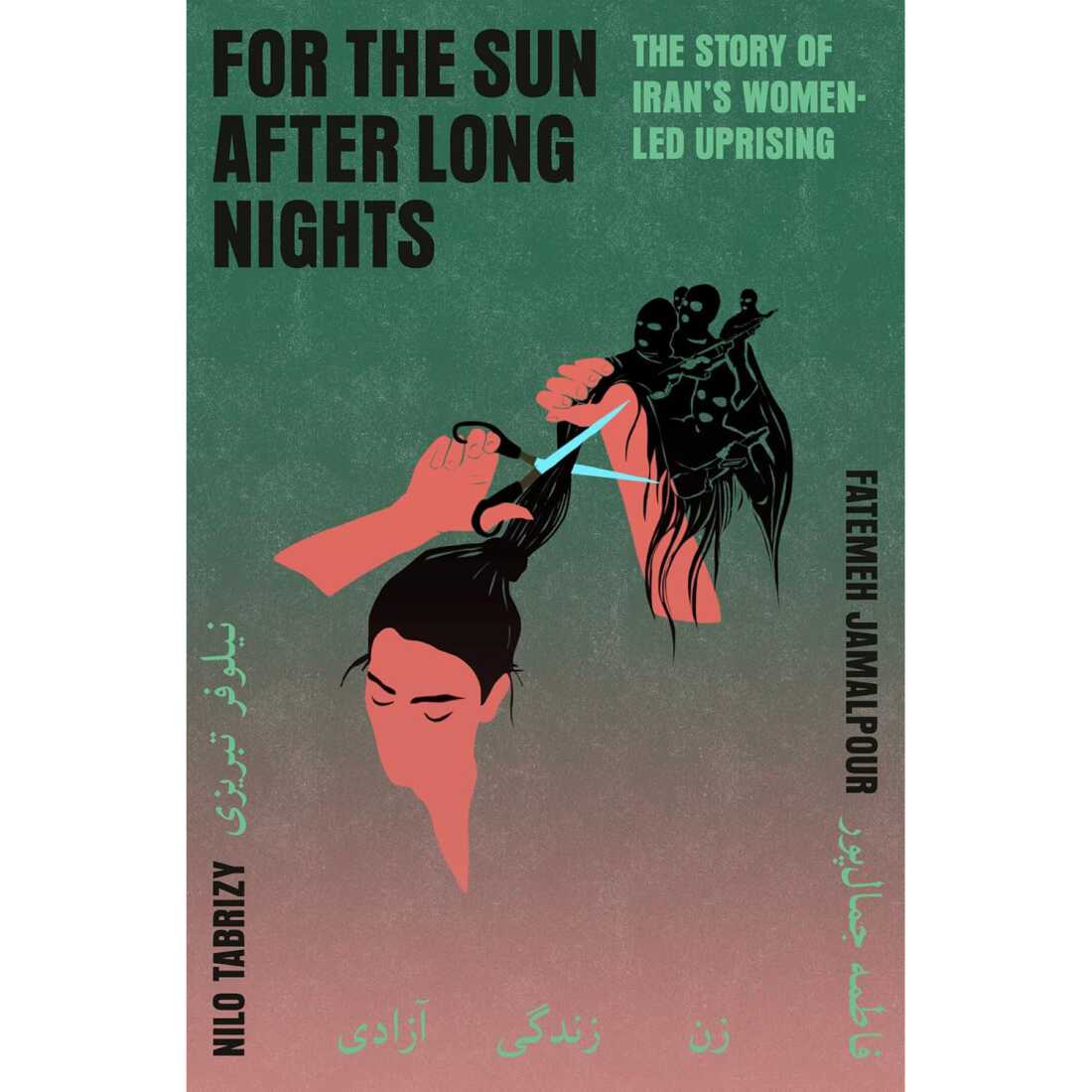
There are quite a few excellent titles that deconstruct the history of Iran from ancient times through the rule of the Pahlavi Dynasty to the Iranian Revolution. But there are far fewer books that help us understand the Iran of 2026 and the people who live there now. One standout is the National Book Award-nominated For the Sun After Long Nights: The Story of Iran’s Women-Led Uprising by journalists Fatemeh Jamalpour and Nilo Tabrizy, which chronicles — almost in real time — the Woman, Life, Freedom movement that began in 2022, during which Jamalpour was working secretly as a journalist in Tehran. In 2024-25, Jamalpour (who is now living in exile in the U.S.) and I spent a year together at the University of Michigan’s Knight-Wallace fellowship for journalists; her insights into contemporary Iran are among the best.
Gold, by Rumi, translated by Haleh Liza Gafori

If Americans are familiar with Persian poetry at all, it may well be through popular “translations” of the 13th-century Sufi poet Jalaluddin Rumi done by the late American poet Coleman Barks, who neither read nor spoke the Persian language and detached the works of Molana (“our master”), as Iranians call him, of references to Islam. (Instead, Barks “interpreted” preexisting English translations.)
In 2022, Iranian-American poet, performance artist and singer Haleh Liza Gafori offered the first volume of a corrective, in the form of fresh Rumi translations that are at once accessible, deeply contemplative and immediate. A second volume, Water, followed last year.
Martyr!: A Novel, by Kaveh Akbar
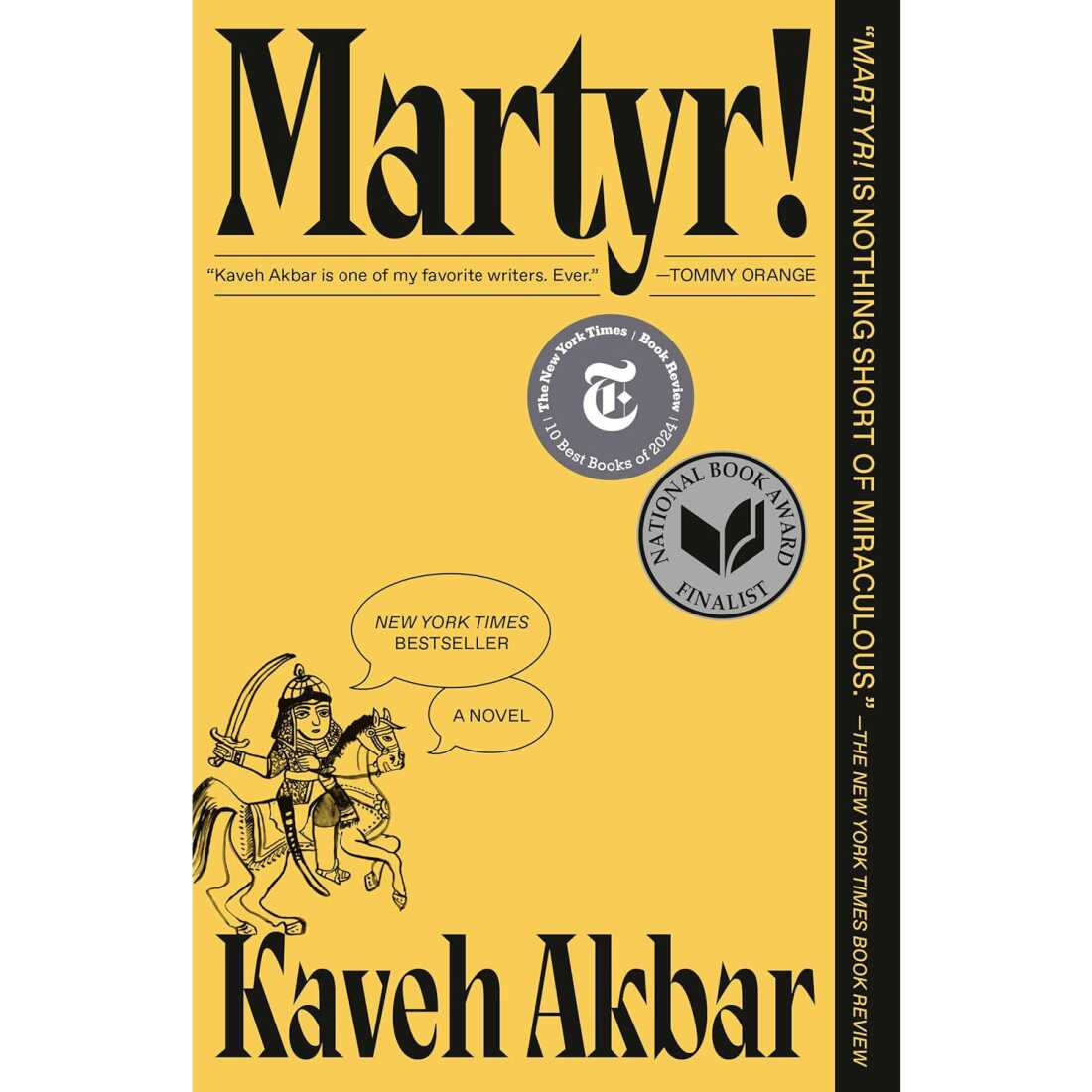
This 2024 debut novel by Kaveh Akbar, the poetry editor at The Nation, is an unflinching tour-de-force bursting with wit and insight into the complications of diaspora, the nature of identity in a post-War on Terror world and the inter-generational impact of the 1979 Revolution on Iranians. The protagonist, the Iran-born but American-raised Cyrus Shams, has struggled with addiction, depression and insomnia his whole life, and is trying his best to make sense of a world at the “intersection of Iranian-ness and Midwestern-ness.” As with so many other of the titles here, fiction and fact are woven together: the story centers around the true story of the U.S. downing an Iranian passenger plane in 1988 during the Iran-Iraq war.
The Stationery Shop: A Novel, by Marjan Kamali
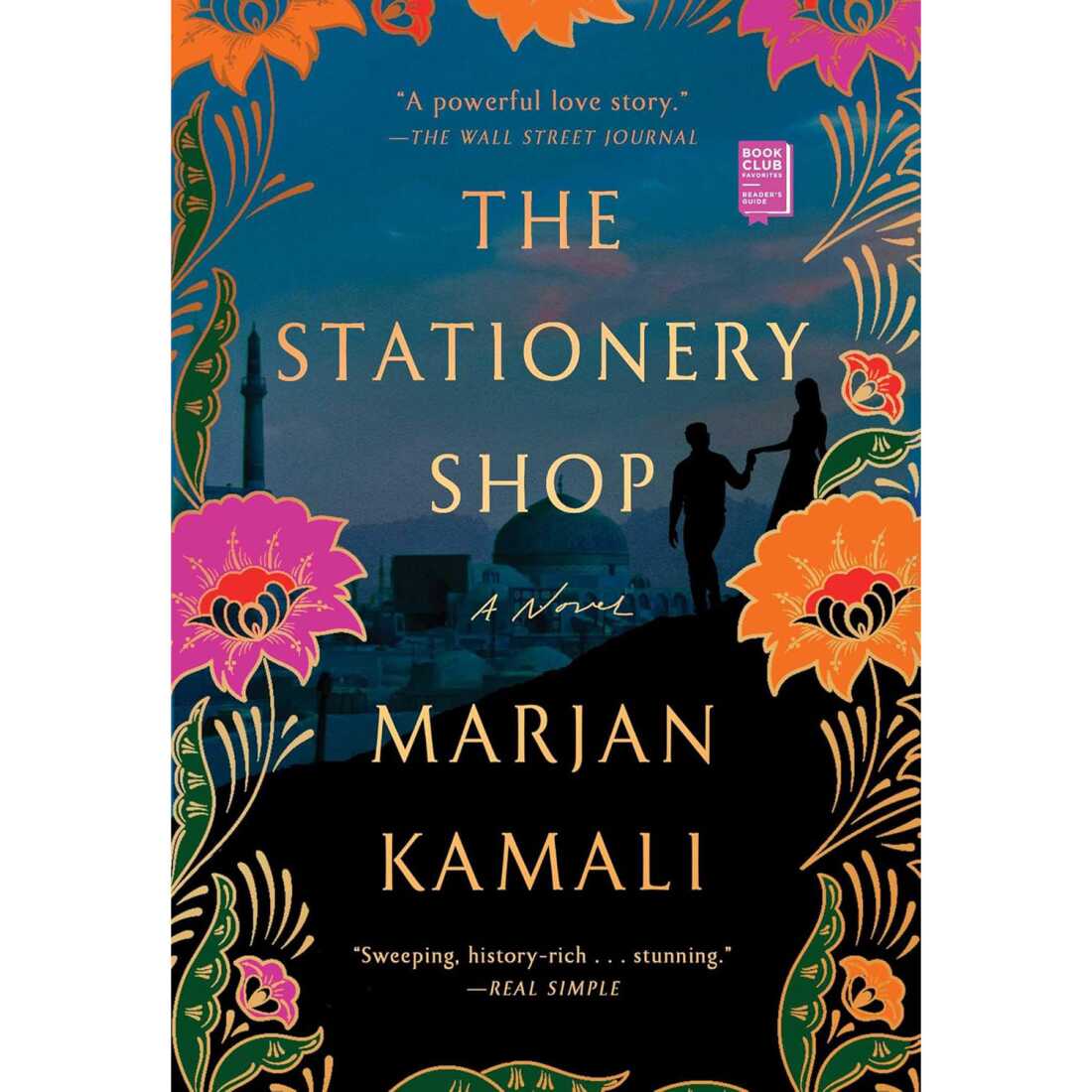
Marjan Kamali’s 2019 love story is the wistful tale of a young woman named Roya and an idealistic activist named Bahman, who meet cute in a Tehran store in the 1950s, but whose planned marriage falls apart due to turmoil both familial and political, as Iran’s democratically elected government falls in a U.S.-British lead coup that ends with the installation of the Shah. Roya flees to the U.S. for a fresh start, but the two reunite in 2013, wondering: what if life had spun out in a different direction?
Movies
Coup 53
This 2019 documentary directed by Iranian film maker Taghi Amirani and co-written by Walter Murch recounts Operation Ajax, in which the CIA and Britain’s MI6 engineered the removal of Mohammad Mossadegh, Iran’s democratically elected prime minister, and installed a friendly ruler, Shah Mohammad Reza Pahlavi, in his place. (The Shah was ousted in the 1979 revolution.) As Fresh Air critic John Powers noted in his review, “What emerges first is the backstory of the coup, which like so much in the modern Middle East is predicated on oil. Shortly after the black gold was discovered in early 20th century Iran, a British oil company now known as BP locked up a sweetheart deal for its exploitation. Iran not only got a mere 16% of the oil money before British taxes, but the books were kept by the British — and the Iranians weren’t allowed to see them.”
YouTube
Cutting Through Rocks
Sara Khaki and Mohammadreza Eyni’s film Cutting Through Rocks is up for an Oscar this season after premiering at the 2025 Sundance Film Festival. This inspiring documentary follows Sara Shahverdi — a divorced, childless motorcyclist — as she campaigns to become the first woman elected to the city council of her remote village, and who dreams of teaching girls to ride and to end child marriage.
YouTube
It Was Just an Accident
The latest film from acclaimed director Jafar Panahi — who has officially been banned from making films in Iran — is 2025’s It Was Just an Accident. Panahi, who has been jailed multiple times for his work and was recently sentenced again in absentia, has said in interviews that his inspiration for this brutal – and shockingly funny – thriller was people he met while in prison: an auto mechanic named Vahid finds himself face-to-face with the man who he is fairly certain was his torturer in jail, and eventually assembles other victims to try to confirm his suspicions. Fresh Air critic Justin Chang called It Was Just an Accident “a blast of pure anti-authoritarian rage.”
YouTube
The Seed of the Sacred Fig
This 2024 thriller — shot in secret by director Mohammad Rasoulof — centers on a family whose father, Iman, is appointed as an investigating judge in Tehran. But it soon becomes clear that his job has nothing to do with actually investigating. Iman, his wife, and two daughters come to suspect each other in our age of mass surveillance, as the city streets below erupt into the real-life Woman, Life, Freedom protests.
YouTube
Music
Kayhan Kalhor
One of the primary ambassadors of Persian classical music has been the composer and kamancheh (an Iranian bowed-instrument) virtuoso Kayhan Kalhor. Although music, like poetry, has been central to Iranian culture for centuries, all kinds of music were initially banned after the 1979 revolution. Since then, however, Iranian classical musicians have ridden many looping cycles of official condemnation, grudging tolerance, censorship and attempts at co-option by the regime.
Despite those difficulties, Kalhor has built a thriving career both inside Iran and abroad, including winning a Grammy Award as part of the Silkroad Ensemble and earning three nominations as a solo artist. Back in 2012, I invited him to our Tiny Desk to perform solo. “Didn’t know I could have goosebumps for 12 minutes straight,” a YouTube commenter recently wrote; I couldn’t put it any better.
YouTube
Saeid Shanbehzadeh
Among Iran’s 92 million people, about 40% of come from various ethnic minorities, including Azeris, Kurds and Armenians among many others. One of the most fascinating communities is the Afro-Iranians in the Iranian south, many of whose ancestors were brought to Iran as enslaved people from east Africa. Multi-instrumentalist and dancer Saeid Shanbehzadeh, who traces his ancestry to Zanzibar, celebrates that heritage with his band, and specializes in the Iranian bagpipe and percussion.
YouTube
The underground metal scene
Despite ongoing restrictions on music — including the continued ban on female singers performing in mixed-gender public settings — Iran is home to a thriving underground scene for metal and punk. Though it’s fictional, Farbod Ardebelli’s 2020 short drama Forbidden to See Us Scream in Tehran — which was secretly filmed in Tehran, with the director giving instructions remotely from the U.S. via WhatsApp — gives a flavor of that real-life scene and the dangers those artists face.
YouTube

Sen. Tillis To Kristi Noem
ICE Killings Are Like Dog You Killed
Published
Fireworks on Capitol Hill … Sen. Thom Tillis ripped into DHS Secretary Kristi Noem during a congressional hearing … comparing American citizens killed by immigration agents to a dog she killed.
Check out the video … the Republican Senator from North Carolina says Noem has shown terrible leadership and decision-making as Trump‘s DHS Secretary.
AP

Tillis says the killings of Renee Good and Alex Pretti in Minneapolis by ICE and Border Patrol remind him of a passage from Noem’s book … where she recalls killing a dog she brought on a hunting trip.
Noem said the 14-month-old dog, Cricket, was misbehaving … so she led the dog to a gravel pit and shot her.
X/@DHSgov
Sen. Tillis told her straight up … “Those are bad decisions made in the heat of the moment. Not unlike what happened up in Minneapolis. We’re an exceptional nation, and one of the reasons we’re exceptional is we expect exceptional leadership. And you’ve demonstrated anything but that.”

In 2021, Zhao made history as the first woman of color to win the best director Oscar for her film Nomadland. Her Oscar-nominated drama Hamnet has made $70 million worldwide.
Bethany Mollenkof for NPR
hide caption
toggle caption
Bethany Mollenkof for NPR
It took a very special kind of spirit to make Hamnet, which is nominated for best picture at this year’s Academy Awards. Chloé Zhao brought her uniquely sensitive, mind-body approach to directing the fictionalized story about how William Shakespeare was inspired to write his masterpiece Hamlet.
Zhao adapted the screenplay from a novel by Maggie O’Farrell, and for directing the film, she’s now nominated for an Oscar. She could make history by becoming the first woman to win the best director award more than once.
Zhao says she believes in ceremonies and rituals, in setting an intention, a mood, a vibration for any event. Before Hamnet premiered at the Toronto International Film Festival last year, she led the audience in a guided meditation and a breathing exercise.

Zhao also likes to loosen up, like she did at a screening of Hamnet in Los Angeles last month, when she got the audience to get up and dance with her to a Rihanna song.
She, her cast and crew had regular dance parties during the production of Hamnet. So for our NPR photo shoot and interview at a Beverly Hills hotel, I invited her to share some music from her playlist. She chose a track she described as “drones and tones.”
Our photographer captured her in her filmy white gown, peeking contemplatively from behind the filmy white curtains of a balcony at the Waldorf Astoria.
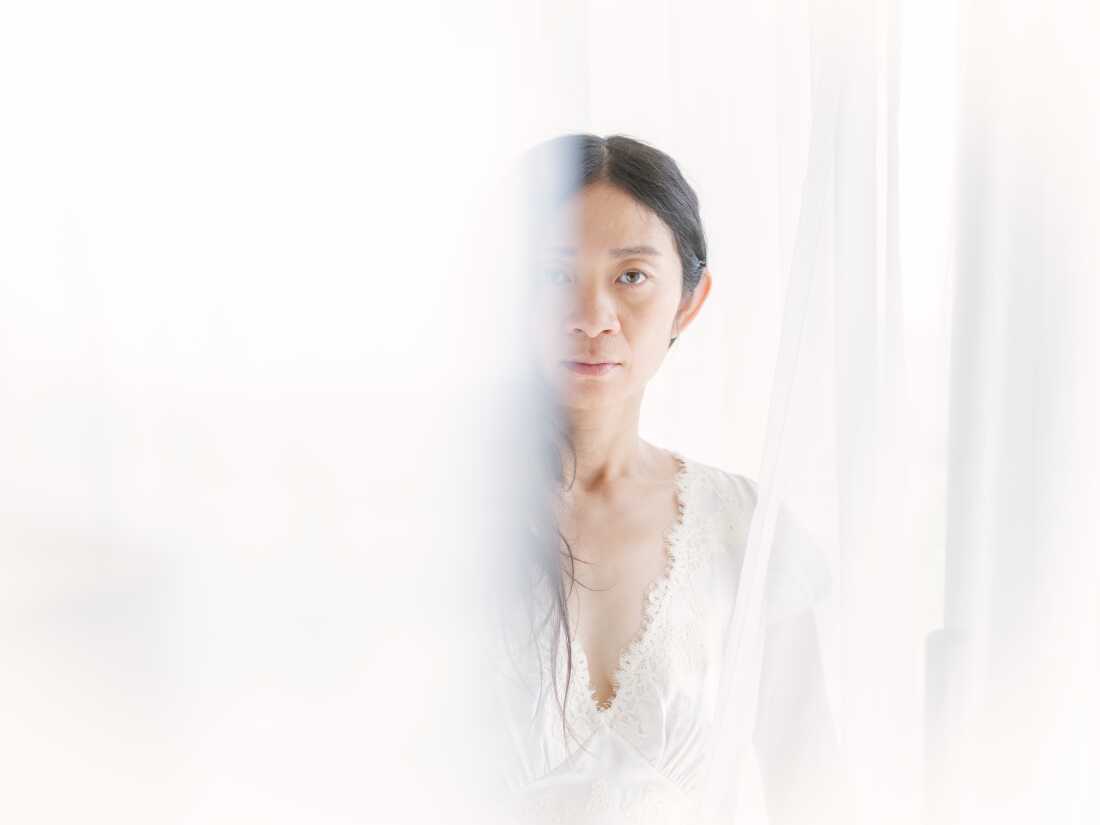
Zhao says she believes in ceremonies and rituals, and makes them a part of her filmmaking process.
Bethany Mollenkof for NPR
hide caption
toggle caption
Bethany Mollenkof for NPR
Then Zhao and I sat down to talk.
“I had a dream that we were doing this interview,” I told her. “And it started with a photo shoot, and there was a glass globe –”
“No way!” she gasped.
It so happens that on the desk next to us, was a small glass globe — perhaps a paperweight.
I told her that in my dream, she was looking through the globe at some projected images. “We were having fun and it was like we didn’t want it to stop,” I said.
“Oh, well, me and the globe and the lights on the wall: they’re all part of you,” Zhao said. “They’re your inner crystal ball, your inner Chloé.”
“Inner Chloé?” I asked. “What is the inner Chloé like?”
“I don’t know, you tell me,” she said. “Humbly, from my lineage and what I studied is that everything in a dream is a part of our own psyche.”
Dreams and symbols are very much a part of Zhao’s approach to filmmaking, which she describes as a magical and communal experience. She said it’s all part of her directing style.
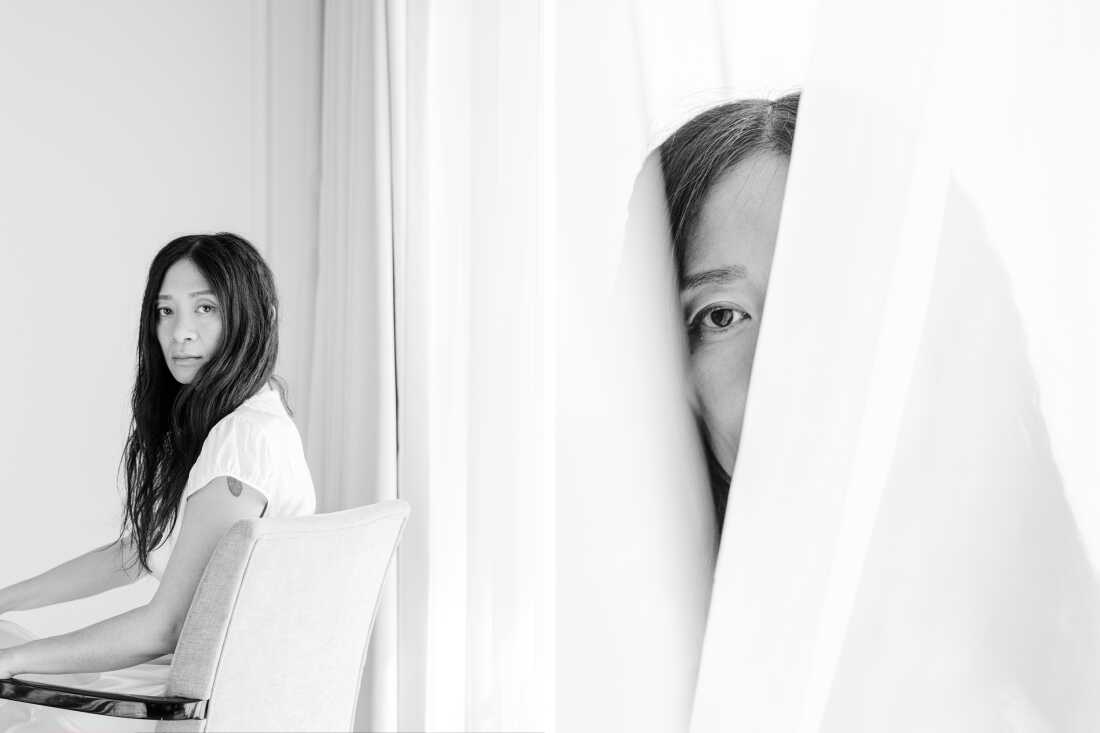
Chloé Zhao used painting and dance to connect with actors on the set of her latest film Hamnet.
Bethany Mollenkof for NPR
hide caption
toggle caption
Bethany Mollenkof for NPR
“If you’re captain of any ship, you are not just giving instructions; people are also looking to you energetically as well,” she explained. “Whether it’s calmness, it’s groundedness, it’s feeling safe: then everyone else is going to tune to you.” Zhao says it has taken many years to get to this awareness. Her own journey began 43 years ago in Beijing, where she was born. She moved to the U.S. as a teen, and studied film at New York University where Spike Lee was one of her teachers. She continued honing her craft at the Sundance Institute labs — along with her friend Ryan Coogler and other indie filmmakers.
Over the years, Zhao’s film catalogue has been eclectic — from her indie debut Songs My Brothers Taught Me, set on a Lakota Sioux reservation, to the big-budget Marvel superhero movie Eternals. She got her first best director Oscar in 2021 for the best picture winner Nomadland. Next up is a reboot of Buffy the Vampire Slayer.
“A creative life,” she notes, “is not a linear experience for me.”
Zhao still lingers over the making of Hamnet, a very emotional story about the death of a child. During the production, Zhao says she used somatic and tantric exercises and rituals to open and close shooting days.
She also invited her lead actors Paul Mescal and Jessie Buckley to help her set the mood on set. They danced, they painted, they meditated together.
“She created an atmosphere where everybody who chose to step in to tell this story was there for a reason that was deeply within them,” actress Jessie Buckley told me.

Buckley is a leading contender for this year’s best actress Oscar. She said that to prepare for her very intense role as William Shakespeare’s wife, Zhao asked her to write down her dreams “as a kind of access point, to gently stir the waters of where I was feeling.”
Buckley sent Zhao her writings, and also music she felt was “a tone and texture of that essence.”
That kind of became the ritual of how they worked together, Buckley said. “And not just the cast were moving together, but the crew were and the camera was really creating dynamics and a collective unconscious.”
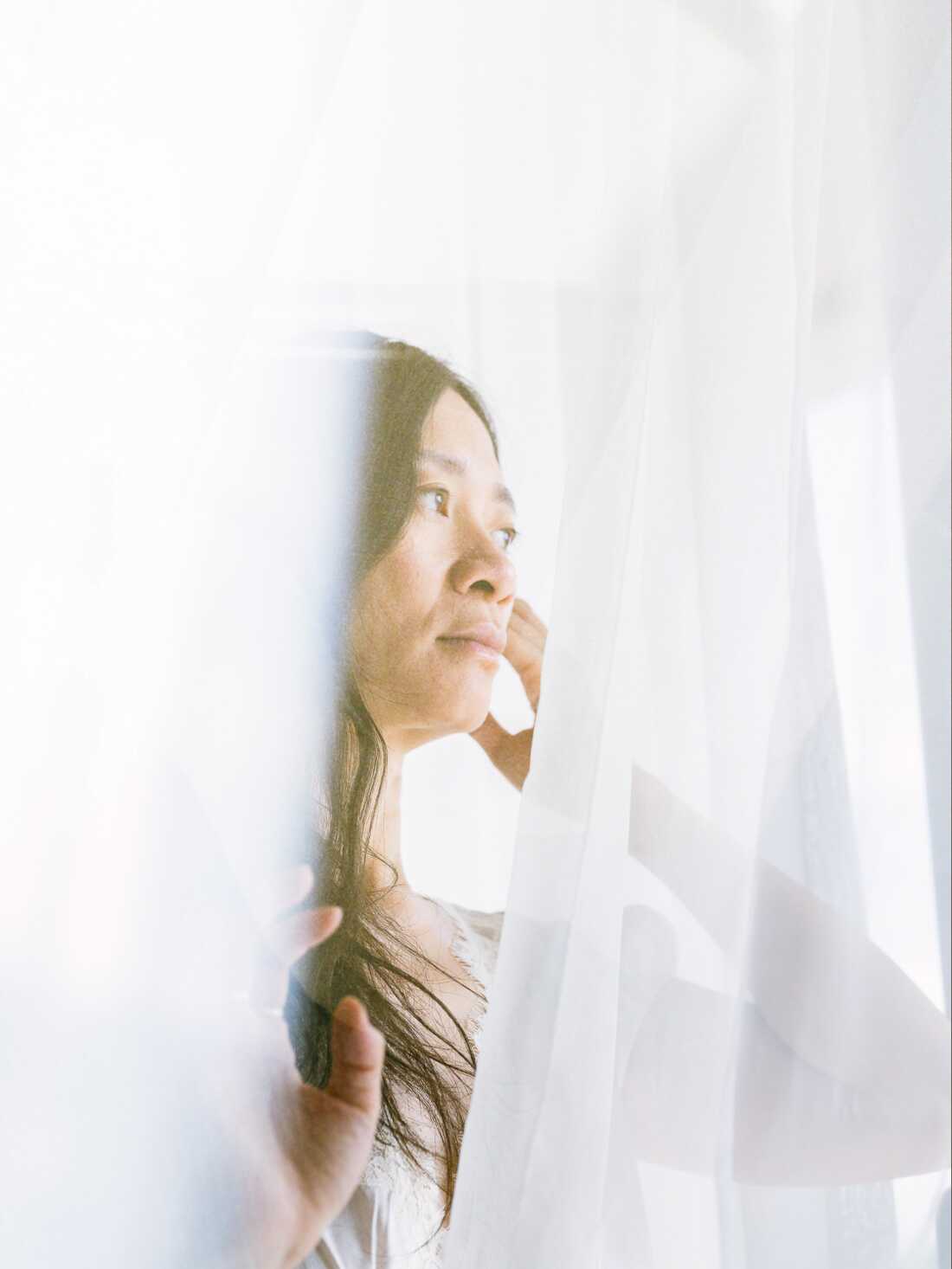
Filmmaker and Hamnet producer Steven Spielberg calls Zhao’s empathy her superpower.
Bethany Mollenkof for NPR
hide caption
toggle caption
Bethany Mollenkof for NPR
That was incredibly useful for creating Hamnet — a story about communal grief. Steven Spielberg, who co-produced the film, called Zhao’s empathy her superpower.
“In every glance, in every pause and every touch, in every tear, in every single moment of this film, every choice that Chloé made is evidence of her fearlessness,” Spielberg said when awarding Zhao a Directors Guild of America award. “In Hamnet, Chloé also shows us that there can be life after grief.”
Zhao says it took five years and a midlife crisis for her to develop the emotional tools she used to make Hamnet.
“I hope it could give people a two-hour little ceremony,” she told me. “And in the end, I hope that a point of contact can be made. That means that there’s a heart opening. But it will be painful, right? Because when your heart opens, you feel all the things you usually don’t feel. And then a catharsis can emerge.”
As our interview time came to a close, I told Zhao I have my own little ritual at the end of every interview; I record a few minutes of room tone, the ambient sound of the space we’re in. It’s for production purposes, to smooth out the audio.
Zhao knew just what I meant. She told me a story about her late friend Michael “Wolf” Snyder who was her sound recordist for Nomadland. “He said to me, ‘I don’t always need it, but just so you know, I am going to watch you. And when I tell that you are a little frazzled, I’m going to ask for a room tone … just to give you space.’” she recalled. “‘And if you feel like you need the silence space, you just look at me, nod. I’ll come ask for a room tone.’”
I closed our interview ceremony with that moment of silence, a moment of peace, for director Chloé Zhao.

Detroit Pistons’ loss to Cavs shows weaknesses before playoffs

Floats for San Francisco Chinese New Year Parade get finishing touches

Hip-hop hitmaker Cardi B coming to AAC in Dallas

Shooting in northwest Miami-Dade leaves man in critical condition, sheriff’s office says

Charlotte plays Boston on 5-game win streak

Florida High School Football Rankings: Top 25 teams – Oct. 21

Cleary's 21 help Le Moyne down Central Connecticut State 69-64 in OT

How old is Bo Nix? What to know about Oregon quarterback ahead of 2024 NFL Draft

99th annual Pony Swim held in Virginia

Indiana Members Credit Union announced as new anchor tenant at Bottleworks District

Video: Senators Question Kristi Noem on ICE Immigration Tactics

Combustible Republican Senate primary in Texas heading into overtime

Hungarian veto proves EU needs less unanimity, says new Dutch PM

Pregnant migrant girls are being sent to a Texas shelter flagged as medically risky

Fraud-plagued Minnesota sues Trump admin for withholding $243M in Medicaid payments
-

 World6 days ago
Exclusive: DeepSeek withholds latest AI model from US chipmakers including Nvidia, sources say
-

 Massachusetts7 days ago
Mother and daughter injured in Taunton house explosion
-

 Denver, CO7 days ago
10 acres charred, 5 injured in Thornton grass fire, evacuation orders lifted
-

 Louisiana1 week ago
Wildfire near Gum Swamp Road in Livingston Parish now under control; more than 200 acres burned
-

 Oregon5 days ago
2026 OSAA Oregon Wrestling State Championship Results And Brackets – FloWrestling
-

 Florida3 days ago
Florida man rescued after being stuck in shoulder-deep mud for days
-

 Maryland3 days ago
AM showers Sunday in Maryland
-

 Culture1 week ago
Try This Quiz on Thrilling Books That Became Popular Movies