Lifestyle
Franz Kafka's life wasn't so kafkaesque after all, TV miniseries shows

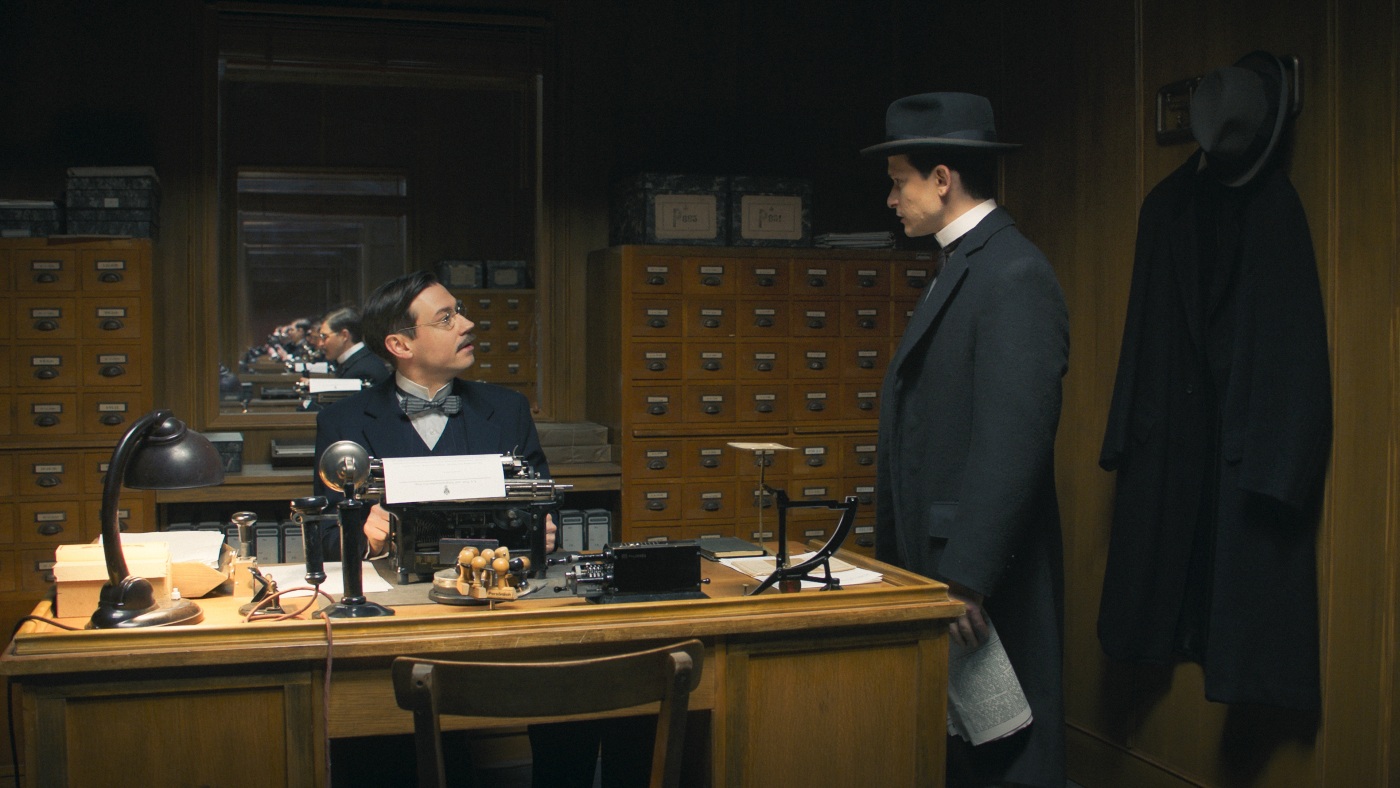
Max Brod (left), a recognized writer at the time, relentlessly promoted the writings of his friend, Franz Kafka, played here respectively by David Kross and Joel Basman in the Austrian-German series Kafka, now streaming in the U.S.
ORF/Superfilm/Nicole Albiez/Superfilm
hide caption
toggle caption
ORF/Superfilm/Nicole Albiez/Superfilm
If you’ve ever felt powerless when confronted with faceless bureaucracy, confounded by absurd accusations or simply hopeless, chances are the word “kafkaesque” might sum up your situation.
But a television miniseries released in the U.S. this month shows Prague-born author Franz Kafka, whose work inspired the word, as anything but kafkaesque. Tortured recluse he is not here.
Instead, Kafka is a wrangler of labyrinthian bureaucratic systems, so successful in fact that his bosses do all in their power to keep him at home and prevent him from enlisting in World War I. That’s the story according to Kafka, a six-part series that was co-produced by Germany’s ARD, Austria’s ORF and Superfilm.
“We all think we hear of the bureau, or the office, that it’s a dark world and it’s apocalyptic (for Kafka). But in the real world, it was a paradise,” Director David Schalko told NPR’s Michel Martin during a joint interview with Joel Basman, who plays the title role.
Schalko said he was inspired to take on the project after reading Reiner Stach’s three-volume biography of Kafka, originally published in German between 2002 and 2014. In rejecting the usual tropes of equivocating Kafka’s angst-ridden works with the writer’s life, Schalko’s biopic offers a lush, more humanly complex picture.
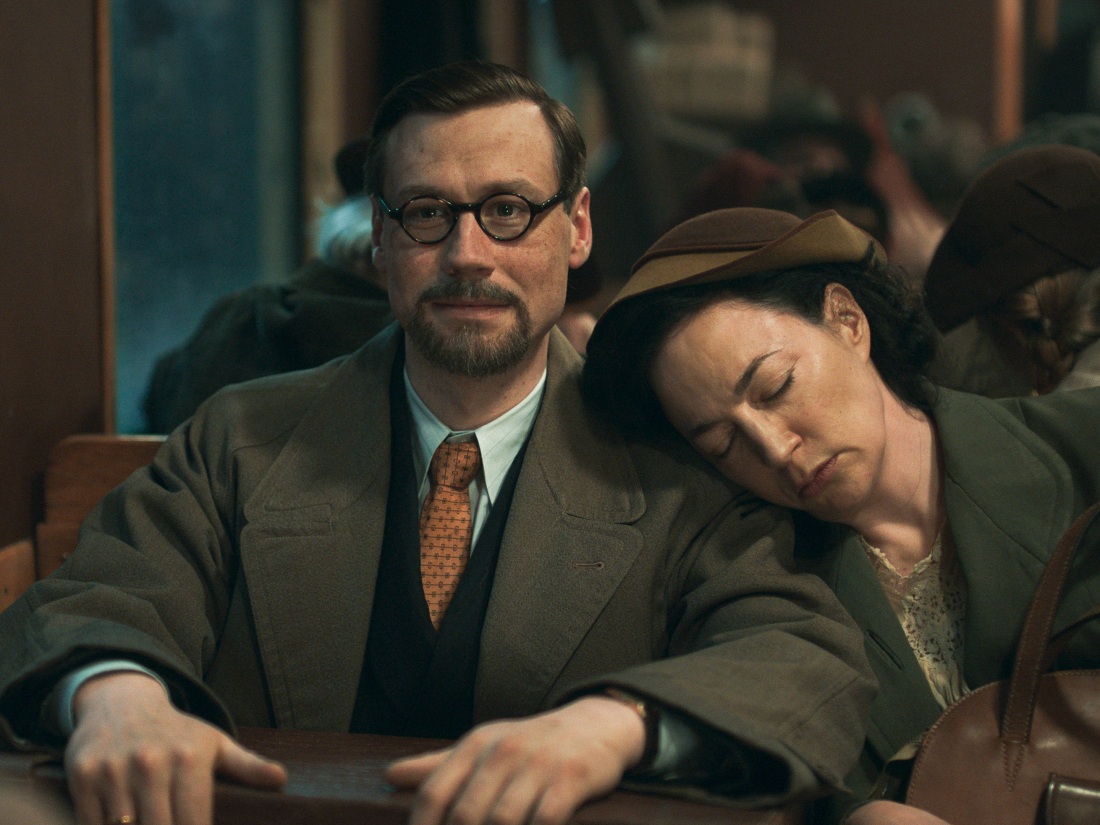
Max Brod (David Kross) and his wife Elsa (Tamara Stern) escaped Prague on one of the last trains to leave the city before Nazi forces took control, recognizing the danger to Jews like himself. He carried Franz Kafka’s papers with him in a suitcase.
Copyright ORF/Superfilm/Nicole Albiez/Superfilm
hide caption
toggle caption
Copyright ORF/Superfilm/Nicole Albiez/Superfilm
One perspective per episode
ChaiFlicks
The first theme is the author’s relationship with his close friend Max Brod — who ultimately defied Kafka’s wish to have all his manuscripts burned and instead posthumously became his biographer and literary executor.
The other episodes focus on the his (bourgeois) family, three of his lovers and his role as an insurance lawyer.
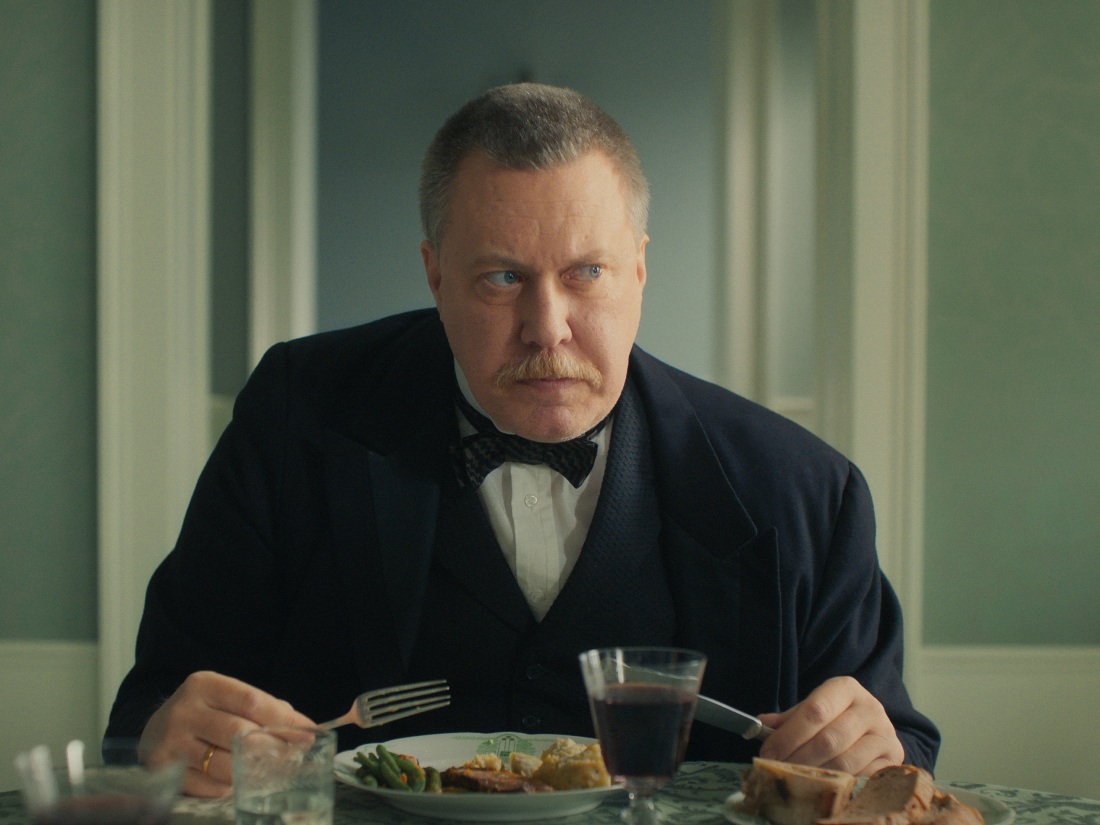
Kafka’s domineering father Hermann (Nicholas Ofczarek) plays a central role in his life and writings.
Copyright ORF/Superfilm/Nicole Albiez/Superfilm
hide caption
toggle caption
Copyright ORF/Superfilm/Nicole Albiez/Superfilm
In episode four, Kafka wins successive court cases and contracts for the company. He is held in high esteem by his superiors at the Workers’ Accident Insurance Institute. They also admire his writings and press him to review their own mediocre texts. It’s an admiration that Kafka does not reciprocate.
“He was very good rhetorically and he was fighting for the insurance company,” Schalko said. “It’s not the silent Kafka who is not able to talk in front of other people. It shows a complete different Kafka.”
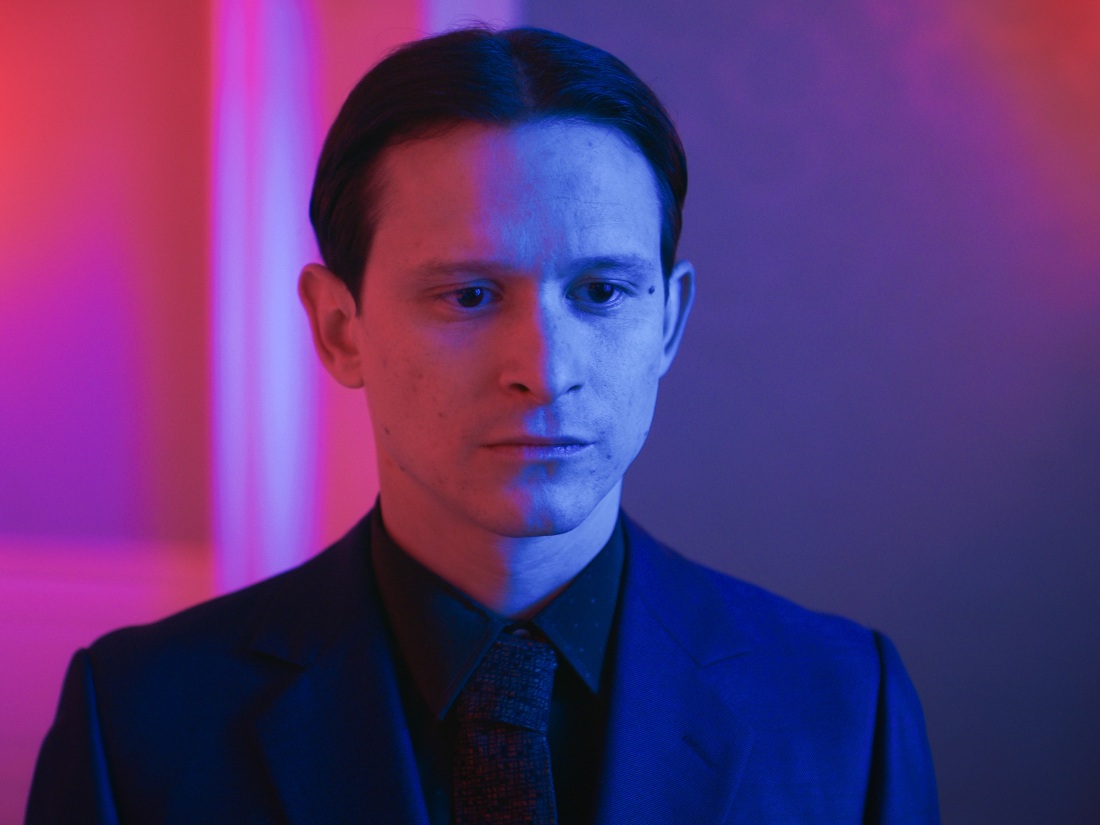
The series alternates between biographical material, historical context and scenes from Kafka’s writings.
Copyright ORF/Superfilm/Nicole Albiez/Superfilm
hide caption
toggle caption
Copyright ORF/Superfilm/Nicole Albiez/Superfilm
Basman says he felt compelled in portraying Kafka to “get away from the cliché of him being a depressed person. First of all, he’s a funny man. He’s got humor. And of course, he’s got his issues, and we all got them in our lives, but he was far away from depressed.”
A century since Kafka’s death
The series’ release coincides with the 100th anniversary of Kafka’s death this month. And it comes at a time of renewed interest in the writer, who has become an unexpected hot item among a younger generation reflecting on alienation via posts on TikTok.
Just last year, readers could finally access a new translation of Kafka’s diaries, by Ross Benjamin. Prior versions relied on a manuscript heavily edited and redacted by Kafka’s friend Brod, whose version was polished and removed lewd, homoerotic and unflattering material concerning Kafka and himself.
The unfiltered version shows a more hesitant Kafka who often left his thoughts unfinished mid-sentence — not surprising for an author who never didn’t complete the three novels he started and whose characters struggled with the impossibility of finishing tasks.
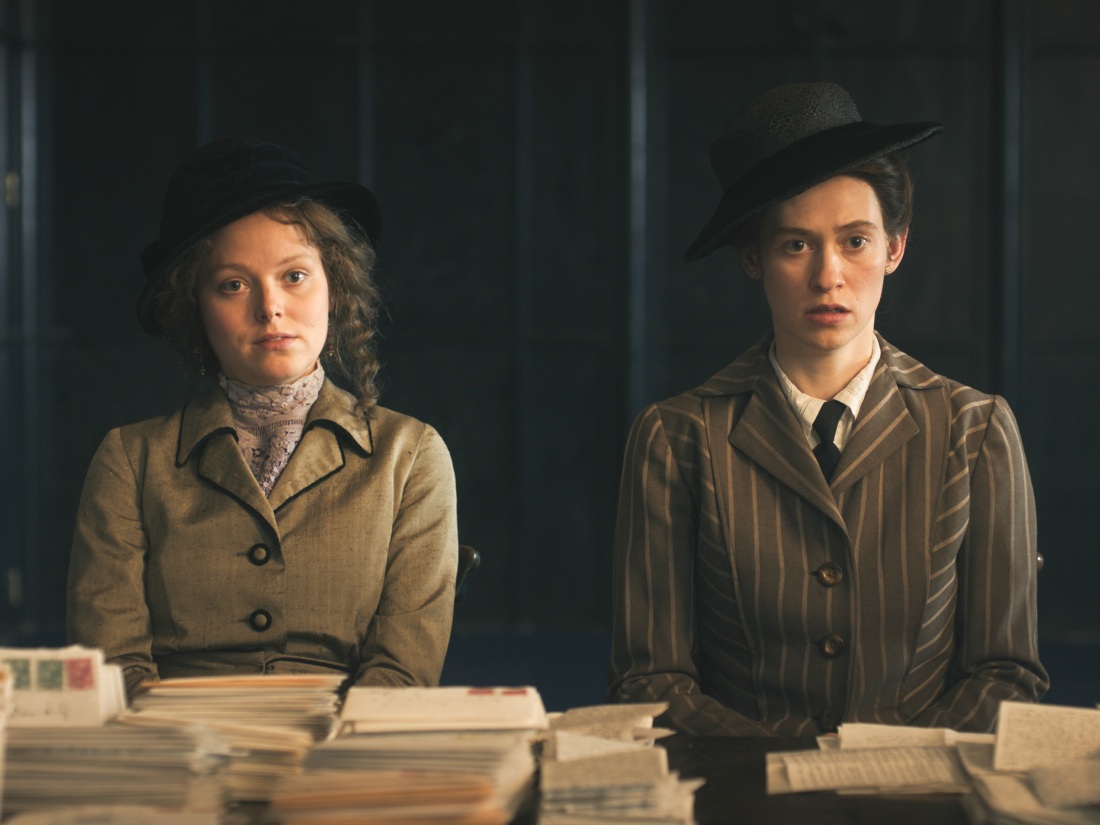
Kafka’s longtime fiancée Felice Bauer (Lia von Blarer, right) got so fed up with his constant equivocation that she confronted him alongside her friend, Grete Bloch (Marie-Luise Stockinger), an event that inspired the novel The Trial.
Copyright ORF/Superfilm/Nicole Albiez/Superfilm
hide caption
toggle caption
Copyright ORF/Superfilm/Nicole Albiez/Superfilm
“The feeling to wake up and feel like vermin, like an insect, and feeling the shame and get canceled by the others, is a feeling you know from social media very well,” Schalko said, while pointing to arbitrary arrests in Russia as another example.
“He also writes about the bureaucracy and how it feels to be a human being in a system that doesn’t see you as a human being. And that’s a big issue in our times as well.”
In a memorable scene in episode three, Kafka brings home for dinner a traditional Yiddish theater actor he befriended, Yitzhak Löwy. But Kafka’s domineering father, Hermann, disapproves and says Löwy is dirty and compares him to an insect.
The confrontation inspired Kafka to write his novella The Metamorphosis, the story of a man who turns into a bug. Kafka had also written a 100-page letter criticizing his father — the closest he came to writing an autobiography — though he neither sent nor published it.
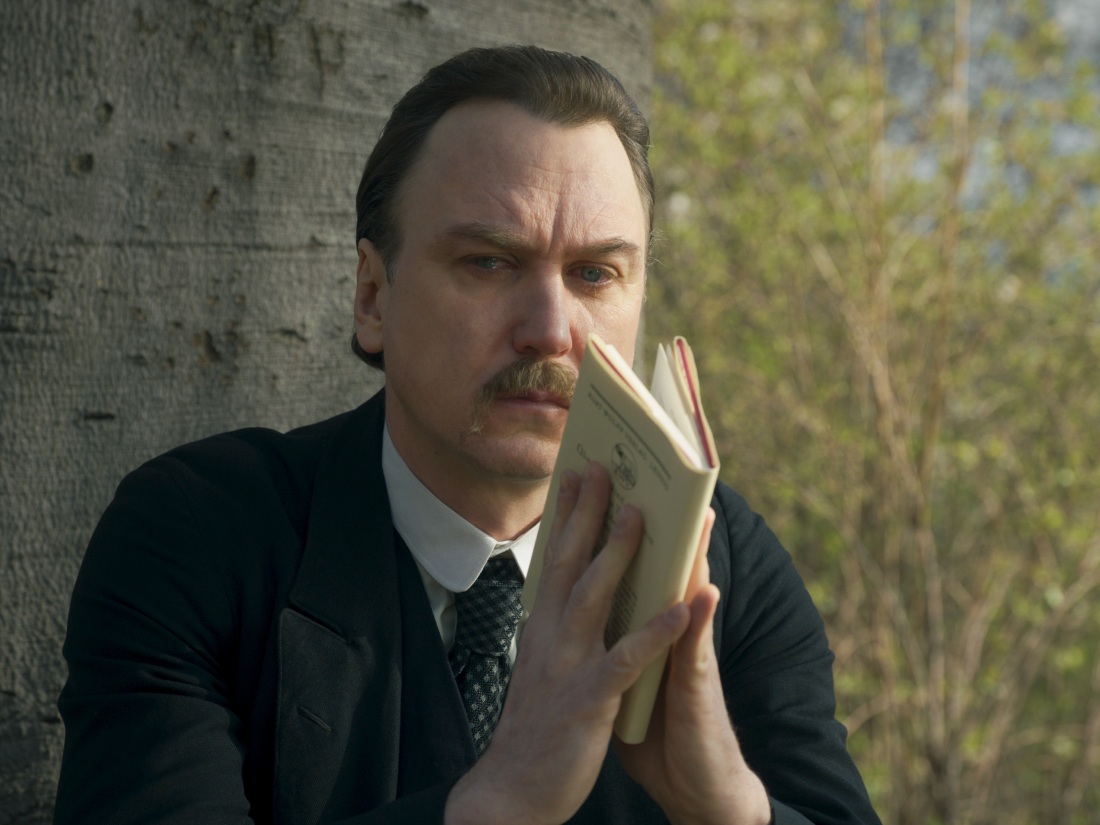
The poet Rainer Maria Rilke, played by Lars Eidinger, is shown moved to tears after reading Kafka’s The Metamorphosis, the story of a man who turns into an insect that was inspired by a confrontation between Kafka’s domineering father and the writer’s Yiddish actor friend Yitzhak Löwy.
Copyright ORF/Superfilm/Nicole Albiez/Superfilm
hide caption
toggle caption
Copyright ORF/Superfilm/Nicole Albiez/Superfilm
“For his father, it was more important to be accepted by the elites of Prague; he tried to maybe even hide his Judaism,” Basman said.
The Swiss-born actor says he could relate to this ambiguity in Kafka’s family identity because his own father is originally from Israel but he’s an atheist.
“I was never Jewish enough, but I also was never Swiss enough… I realized, okay, people want to brand you and if they can’t brand you, they don’t want you on their team,” Basman said.
“I think for Kafka, religion was also just a journey of getting to know himself because it was hidden by his father so strongly that he took this journey by himself.”
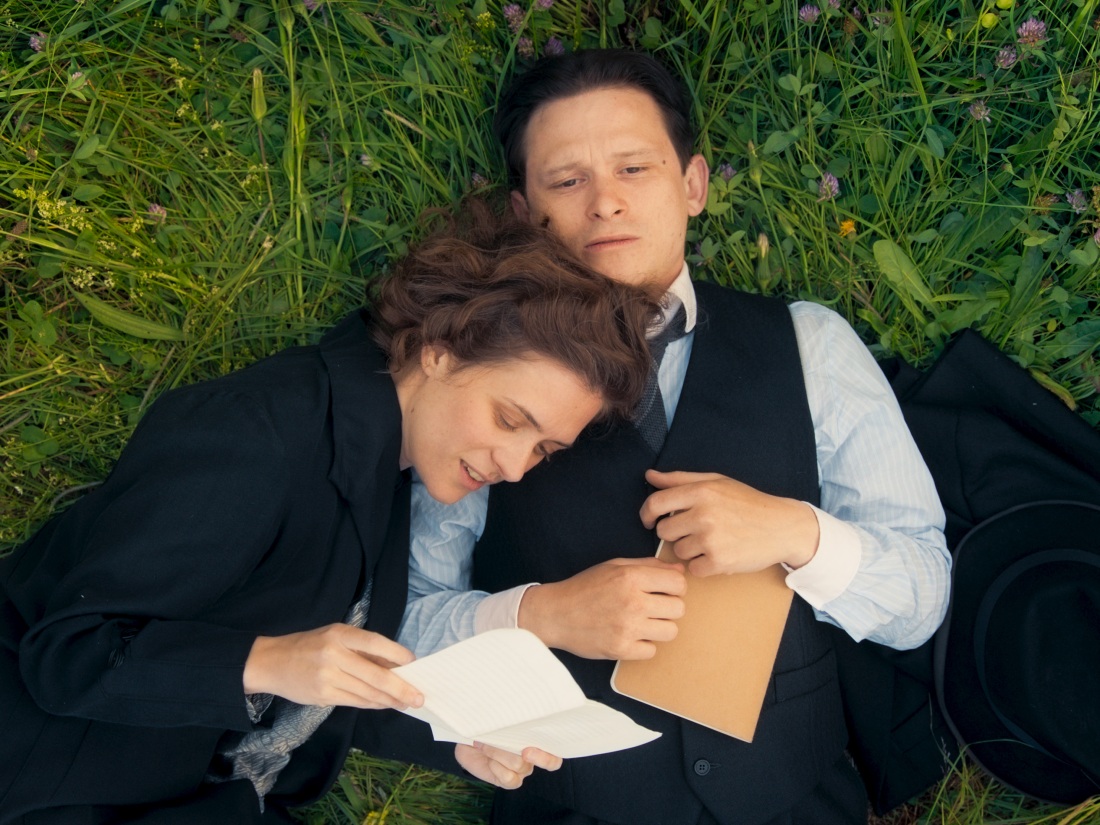
Kafka was engaged four times and never married, keeping most relationships long-distance via extensive letter-writing. His penultimate relationship was with the writer Milena Jesenská (Liv Lisa Fries), who recognizes his talent.
Copyright ORF/Superfilm/Nicole Albiez/Superfilm
hide caption
toggle caption
Copyright ORF/Superfilm/Nicole Albiez/Superfilm
Kafka and women
The women in Kafka’s life also left an indelible mark. He was engaged several times but never married. One of his fiancées was Felice Bauer, Brod’s cousin. The pair meet and only get to know each superficially before Kafka sends her hundreds of agonizing letters for months on end, through an initial parting, a second engagement and a final breakup.
Fed up with Kafka’s constant equivocation, Bauer at one point confronts him, letters in hand, with her friend Grete Bloch — another recipient of letters from Kafka — by her side. The episode drawn from the writer’s life inspired his novel The Trial, published posthumously in 1925.
The protagonist Joseph K. navigates an absurdly complex bureaucratic system and makes mistakes that make him look guilty of an unknown crime for which he is put on trial and then executed “like a dog.”
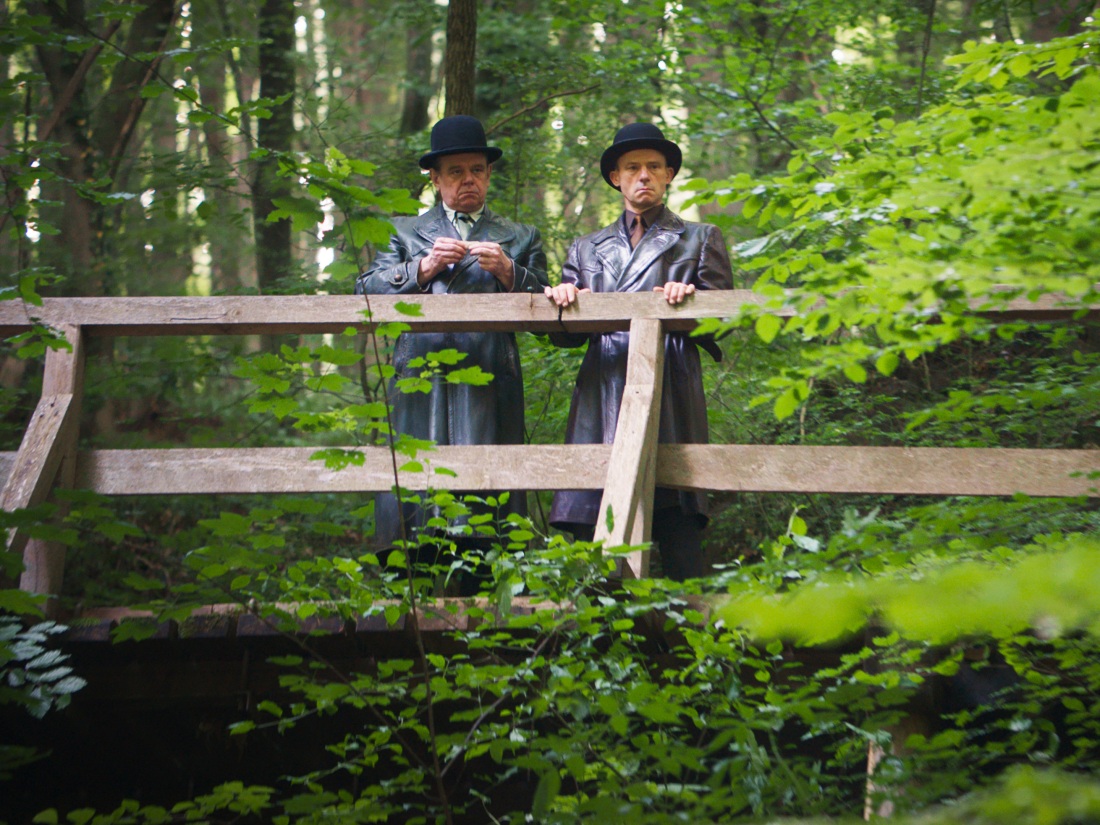
Two men in leather coats (Raimund Wallisch, left, and Gerhard Liebmann) lurk in the background, a representation of the angst and absurdities of bureaucracy that concerned Kafka.
Copyright ORF/Superfilm/Nicole Albiez/Superfilm
hide caption
toggle caption
Copyright ORF/Superfilm/Nicole Albiez/Superfilm
Kafka is available to stream on ChaiFlicks. New episodes will release weekly.
The broadcast version of this story was produced by Mansee Khurana. The digital version was edited by Obed Manuel.



Neve Campbell in Scream 7.
Paramount Pictures
hide caption
toggle caption
Paramount Pictures
The OG Scream Queen Neve Campbell returns. Scream 7 re-centers the franchise back on Sidney Prescott. She has a new life, a family, and lots of baggage. You know the drill: Someone dressing up as the masked slasher Ghostface comes for her, her family and friends. There’s lots of stabbing and murder and so many red herrings it’s practically a smorgasbord.
Follow Pop Culture Happy Hour on Letterboxd at letterboxd.com/nprpopculture

Abriana Vicioso is the host of the Flower Hour, which takes place monthly.
(Jennifer McCord / For The Times)
Each flower carries a personal history. For Abriana Vicioso, the calla lily was her parents’ wedding flower — a symbol of her mother’s beauty. “She had this big, beautiful white calla lily in her hair,” Vicioso says. “I love my parents. They’re the reason I’m here. I’ll never forget where I came from.”
The Flower Hour begins with Vicioso announcing, with a warm smile: “Today is about touching grass.” The florist-by-trade gestures behind her to hundreds of flowers contained in buckets — blue thistles, ivory anemones and calla lilies painted silver — all twisted and unfurling into the air. “Tonight is going to be so sweet and intimate,” Vicioso says, eyeing the beautiful chaos at her feet. A grin buds across her face.
Moments before the workshop, participants sit at candlelit tables exchanging horoscopes and comparing their favorite flowers. A mention of the illustrious bird-of-paradise flower elicits coos and awe from the women. Izamar Vazquez, who is from Jalisco, Mexico, reveals her fondness for roses, which make her feel connected to her Mexican roots.
Vicioso hosts her flower-themed wellness workshop near the iconic Original Los Angeles Flower Market in downtown L.A. In January, the first Flower Hour event sold out, prompting her to make it a monthly series. Vicioso describes the event as a “three-part journey” where participants are invited to drink herbal tea, smoke rose-petal-rolled cannabis joints and create a floral arrangement. “The guide is to connect with the medicine of flowers,” Vicioso says.


Rose petal joints, tea and flower arranging are all part of The Flower Hour event’s offerings.
The event is hosted at the Art Club, a membership-based co-working space. “The Flower Hour is really beautiful. Everyone gets to explore their creativity while meeting new people,” says Lindsay Williams, the co-owner of the Art Club.
The idea for Flower Hour came to Vicioso during a conversation with her mother. “We joke all the time that flowers were destined to make their way into my life,” she says. She works as a florist and models on the side, even appearing in the pages of Vogue. Vicioso grew up in a Caribbean household, where flowers and offerings were part of daily life. “In my culture and religion, a lot of my family practices — an Afro-Caribbean religion — we build altars.”
Like many cultures, flowers carry sentimental value in her religion. “I’m Caribbean, so a lot of my family practices a Yoruba religion, which comes from Africa. In the Caribbean, it’s well known as Santería.”

-
Share via
After a difficult year and a breakup, Vicioso wanted to marry her love of flowers with community building. Because Vicioso uses cannabis medicinally, the workshop naturally includes a smoking component. “My family has smoked cannabis for a lot of reasons for a long time. It’s a really healing plant,” she explains.
In the workshop, even the cannabis gets the floral treatment. Vicioso presents her rose-petal-wrapped joints on a silver platter at each table. She rolled each by hand. “If you’ve never smoked a rose-petal-rolled joint, the difference with this is it’s going to have roses that have a slight tobacco effect,” she announces.
During the workshop, Vicioso stresses the importance of buying cannabis from local vendors. The cannabis provided was purchased from a Northern Californian vendor. The wellness workshop aims to reclaim the healing ritual of smoking cannabis. “This is a plant that has been commercialized,” Vicioso says. “There’s a lot of Black and Brown people who are in jail for this plant.”
The resulting workshop is what Vicioso describes as “an immersive wellness experience that is the intersection of wellness, creativity, community and an appreciation of flowers.” The workshop serves as a reminder to enjoy Earth’s innate beauty in the form of flowers — including cannabis. “It’s this gift that the universe gave us for free and that I have this deep connection with,” Vicioso says.


Conversation cards to generate discussion among participants (top, letf). The workshop serves as a “third space” for Angelenos to engage in tactile creativity and community building outside of traditional nightlife settings.
After enjoying lavender chamomile tea and smoking a joint, Vicioso introduces the flowers to the group before inviting them to pick their own. She emphasizes each flower’s personality traits, describing green dianthus as a “Dr. Seuss” plant. Then, there are calla lilies with their “main character moment.” It gets personal. “Start thinking of a flower in your life that you can discover,” she says. “If you’re feeling like you need inspiration, you can always remember that these flowers have stories.”
Vicioso infuses wisdom into her instruction on floral arrangements: There are no mistakes. Let the flowers tell you where they want to go, she urges. Intuition will be your guide — the wilder, the better.
“Hecho in Mexico” reads a sticker on a bunch of green stems. “Like me,” says Vazquez with a laugh. “They’re all doing their own thing. Like a family,” she says later, arranging stems.

The Flower Hour participants and Vicioso, center, chat as they build their own floral arrangements at the sold-out event.
Two participants — Vazquez and Rebeca Alvarado — are friends who run a floral design company together called Izza Rose. Like Vicioso, the friends have a connection to flowers through their Latin American culture. They met Vicioso in the floral industry and were overjoyed to discover her workshop.
“This is a great way to connect with other people,” says Vazquez.
Alvarado agrees, adding: “You’re getting to know people outside of going to bars. You can connect in different ways when there’s an activity.”
Vazquez uses flowers to stay connected to her Mexican heritage, adding that she prefers to support Mexican vendors. In recent months, the downtown L.A. flower market has struggled to recover from ongoing ICE raids. “Some are scared to come back,” says Vazquez.


Hand-rolled cannabis joints wrapped in rose petals are presented on a silver platter at The ArtClub (top, right). The Flower Hour aims to reclaim the healing rituals of cannabis and flowers.
Another participant, Barbara Rios, was attracted to the workshop for stress relief. “You can hang out with your friends, but it’s nice to do things with your hands,” she says. “I work a stressful job, and it’s nice to have that third space that we’re all craving.”
On this February night, the participants were predominantly women, save for one man. In the future, Vicioso hopes that more men learn to engage with flowers. “There’s a statistic about men receiving flowers for the first time at their funerals, and I think we have changed that,” she says.
To conclude the workshop, Vicioso encourages participants to build lasting friendships and incorporate flower arranging into their daily practice — even if it’s just with a small, inexpensive bouquet.
“Get some flowers together, go to the park, hang out with each other and hang out with me,” she says. Participants leave with flower arrangements in hand. In the darkness of the night air, it briefly looks as though the women carry silver calla lilies that are blooming from their palms.


An underwater view shows US’ Lilly King competing in a heat of the women’s 200m breaststroke swimming event during the Paris 2024 Olympic Games at the Paris La Defense Arena in Nanterre, west of Paris, on July 31, 2024. (Photo by François-Xavier MARIT / AFP) (Photo by FRANCOIS-XAVIER MARIT/AFP via Getty Images)
François-Xavier Marit/Getty Images
hide caption
toggle caption
François-Xavier Marit/Getty Images
This week’s show was recorded in Bloomington, Indiana with host Peter Sagal, judge and scorekeeper Bill Kurtis, Not My Job guest Lilly King and panelists Alonzo Bodden, Josh Gondelman, and Faith Salie. Click the audio link above to hear the whole show.
Who’s Bill This Time
State of the Union is Hot; The Tribal Council Convenes Again; A Glow Up In the Doll Aisle
Panel Questions
The Toot Tracker
Bluff The Listener
Our panelists tell three stories about a travel hack in the news, only one of which is true.
Not My Job: Olympic Swimmer Lilly King answers our questions about Lil’ Kings
Olympic Swimmer Lilly King plays our game called, “Lilly King meet these Lil’ Kings” Three questions about short kings.
Panel Questions
Cleaning Out The Cabinet; Bedtime Stacking
Limericks
Bill Kurtis reads three news-related limericks: Getting Cozy With Cross Country Skiing; Pickleball’s New Competition; Bees Get Freaky
Lightning Fill In The Blank
All the news we couldn’t fit anywhere else
Predictions
Our panelists predict, after American Girls, what’ll be the next toy to get an update.

Review | Hoppers: Pixar’s new animation is a hilarious, heartfelt animal Avatar

A look at some of the contenders to be Iran’s supreme leader after the killing of Khamenei

Map: Earthquake Shakes Central California

Video: Defense Officials Give No Timeline for War in Iran as U.S. Boosts Forces

Try This Quiz on the Real Locations in These Magical and Mysterious Novels

Florida High School Football Rankings: Top 25 teams – Oct. 21

Cleary's 21 help Le Moyne down Central Connecticut State 69-64 in OT

How old is Bo Nix? What to know about Oregon quarterback ahead of 2024 NFL Draft

99th annual Pony Swim held in Virginia

Indiana Members Credit Union announced as new anchor tenant at Bottleworks District
Map: Earthquake Shakes Central California

Gas prices could jump as Middle East tensions threaten global oil supply

Pakistan calls troops, orders 3-day curfew as 24 killed in pro-Iran rallies

US says Kuwait accidentally shot down 3 American jets

House Republicans push Johnson to go to war with Senate over SAVE Act
-

 World5 days ago
Exclusive: DeepSeek withholds latest AI model from US chipmakers including Nvidia, sources say
-

 Massachusetts5 days ago
Mother and daughter injured in Taunton house explosion
-

 Denver, CO5 days ago
10 acres charred, 5 injured in Thornton grass fire, evacuation orders lifted
-

 Louisiana1 week ago
Wildfire near Gum Swamp Road in Livingston Parish now under control; more than 200 acres burned
-

 Technology1 week ago
YouTube TV billing scam emails are hitting inboxes
-

 Politics1 week ago
OpenAI didn’t contact police despite employees flagging mass shooter’s concerning chatbot interactions: REPORT
-

 Technology1 week ago
Stellantis is in a crisis of its own making
-

 News1 week ago
World reacts as US top court limits Trump’s tariff powers