Lifestyle
Country Joe McDonald, anti-war singer who electrified Woodstock, dies at 84

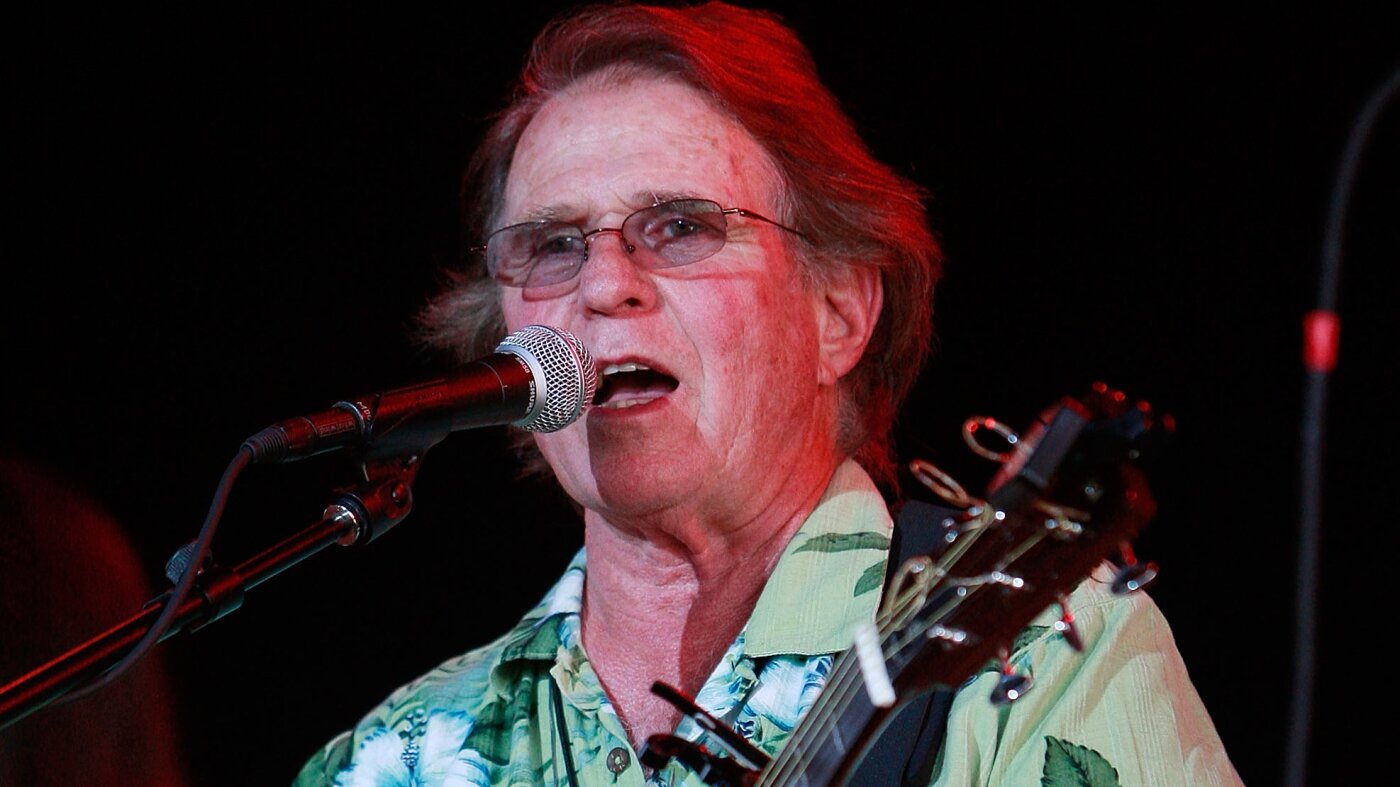
Singer Joe McDonald sings during the concert marking the 40th anniversary of the Woodstock music festival on Aug. 15, 2009 in Bethel, New York. McDonald has died at age 84.
Mario Tama/Getty Images
hide caption
toggle caption
Mario Tama/Getty Images
Country Joe McDonald, the singer-songwriter whose Vietnam War protest song became a signature anthem of the 1960s counterculture, has died at 84.
McDonald died on Saturday in Berkeley, Calif., according to a statement released by a publicist. His health had recently declined due to Parkinson’s disease.
Born in 1942, in Washington, D.C., he grew up in El Monte, Calif., outside Los Angeles, according to a biography on his website. As a young man he served in the U.S. Navy before turning to writing and music during the early 1960s, eventually becoming involved in the political and cultural ferment of the Bay Area.

In 1965 he helped form the band Country Joe and the Fish in Berkeley. The group became part of the emerging San Francisco psychedelic music scene, blending folk traditions with electric rock and pointed political commentary.
The band’s best-known song, “I-Feel-Like-I’m-Fixin’-to-Die Rag,” captured the growing anti-war sentiment of the Vietnam era. With its ragtime-influenced rhythm and sharply satirical lyrics about war and political leadership, the song quickly became associated with protests against the conflict.

McDonald delivered the song to some half a million people at the 1969 Woodstock festival in upstate New York. Performing solo, he led the crowd in a form of call-and-response before launching into the anti-war anthem, turning the performance into one of the defining scenes of the festival.
Country Joe and the Fish released several recordings during the late 1960s and toured widely, becoming closely identified with that era’s West Coast rock and protest movements.
McDonald later continued performing and recording as a solo artist, recording numerous albums across a career that spanned more than half a century. His work drew variously from folk, rock and blues traditions and often reflected his long-standing interest in political and social issues.
Although he became widely known for his opposition to the Vietnam War, McDonald frequently emphasized respect for those who served in the U.S. military. After his own service in the Navy, he remained engaged with veterans’ issues and occasionally performed at events connected to veterans and their experiences, according to his website biography.


Stephen Malkmus & the Jicks perform onstage during day two of the Boston Calling Music Festival at Boston City Hall Plaza on September 26, 2015 in Boston, Massachusetts. (Photo by Mike Lawrie/Getty Images)
Mike Lawrie/Getty Images
hide caption
toggle caption
Mike Lawrie/Getty Images
This week’s show was recorded in Chicago with host Peter Sagal, judge and scorekeeper Alzo Slade, Not My Job guest Stephen Malkmus and panelists Emmy Blotnick, Joyelle Nicole Johnson, and Gianmarco Soresi. Click the audio link above to hear the whole show.
Who’s Alzo This Time
Pool Problems; Don’t Forget to Hydrate; The Rise of Hot Podium Guy
Panel Questions
TSA Gets A Dressing Down
Bluff The Listener
Our panelists tell three stories about game shows in the news, only one of which is true.
Not My Job: Stephen Malmus, lead singer and guitarist for Pavement, answers our questions about road construction
Indie rock legend and founder of Pavement, Stephen Malkmus, joins us to play a game called, “Pavement repairs are underway!” Three questions about road construction.
Panel Questions
The Battle Over A Home Sale; The Best Three Words To Get Over A Loss and Out of a Meeting?; A New Job in the Dating World
Limericks
Alzo Slade reads three news-related limericks: Good News For Gym Slobs; Cruisin’ For A Tattooin’; Fringe Food Benefits
Lightning Fill In The Blank
All the news we couldn’t fit anywhere else
Predictions
Our panelists predict what will find after the reflecting pool is emptied

When Julio Miranda-Martin began his apartment search, he had one nonnegotiable: He wanted a dedicated dining room to entertain his friends. He was scouring Zillow in 2025 when a listing for a railroad-style, one-bedroom on the edge of West Hollywood came up that included the requisite dining room. It was also walking distance to his part-time job as a marketing coordinator at furniture store Lawson-Fenning. More importantly, at $2,500 a month it was within his budget.
-
Share via
Miranda-Martin met with his landlord the same day he found the listing, who told him he looks like his son. Feeling like finding this 950-square-foot apartment was kismet, Miranda-Martin signed the lease and set about creating a sophisticated and color-saturated sanctuary. Miranda-Martin decided he needed to make two major investments before moving in: painting the walls and changing the lighting. “I was finally able to move into a place that I actually like, not just out of necessity. I was like, let’s make it feel like my own,” says Miranda-Martin, who refers to the space as his “living canvas.”

In this series, we spotlight L.A. rentals with style. From perfect gallery walls to temporary decor hacks, these renters get creative, even in small spaces. And Angelenos need the inspiration: Most are renters.
The apartment is on the second floor of a fourplex, up a windowless staircase. Miranda-Martin embraced the lack of light and painted it a high-gloss crimson. Without natural light, he hard-wired sconces found on Facebook Marketplace that recall ornamental 18th century candlesticks. They cast a dim but moody light throughout the staircase, ending with an ornate mirror at the top. The mirror shows a glimpse of the apartment’s interior in its reflection when Miranda-Martin opens the door. “Every time people walk in, especially at night, it’s such a dramatic entry,” he explains. “It’s very cinematic,” agrees friend and co-worker Kristin Reeder, who is often a guest at his soirees, “like something from ‘Eyes Wide Shut.’ ”
1

2

3

1. Julio Miranda-Martin’s apartment decor starts in the bold staircase that leads to his door. 2. A mirror at the top of the staircase offers extra depth. 3. Julio Miranda-Martin fills the bookshelf in his dining room with books and treasures.
In contrast, the living room offers a calmer palette of sky blues and earthy browns. Miranda-Martin tends to choose paint colors based on the light. The living room, with abundant west-facing windows brings in soft, bright light. Miranda-Martin painted it with Benjamin Moore’s Navajo, a flat white, as a backdrop to the softer hues of the furniture he designed at his furniture and lighting company, Studio MM. “It adds a stillness,” he says.
The room is anchored by a large velvet couch in a rich brown. The modular couch is anchored on each side with Art-Deco influenced side tables, lamps and light blue slipper chairs he designed, setting up a cozy tableau for hosting his friends. Pale pink cushioned ottomans provide additional seating that can easily be moved around the room to accommodate additional guests.

A velvet couch acts as a statement piece in the apartment living room.
(Etienne Laurent/For the Times)
French doors separate the living room from the dining room. The chartreuse-infused dining room returns to a more dramatic colorway. With less natural light, Miranda-Martin wanted to play up the idea of dining-room-as-treehouse, reflecting the second-floor foliage visible from the small windows. Rather than trying to brighten the room, he leaned into the moodiness by buying inexpensive, USB battery-powered spotlights that are mounted on the ceiling with magnets. Taking an alcohol marker, he tinted the lights a soft amber, allowing him to highlight the art in the room without adding harsh overhead lighting.

The dining room is meant to reflect the foliage just outside the window.
(Etienne Laurent/For the Times)
A shell-adorned mirror anchors the wall facing the windows and built-in shelving, making the room feel larger. Miranda-Martin sourced two shell-shaped sconces that flank the mirror at an estate sale in San Francisco. Most of the art and home decor comes from Facebook Marketplace and Craigslist, or is thrifted from local stores. Estate sales are also a source, though Miranda-Martin feels the rising popularity of these sales in Los Angeles has led to an increase in pricing. “They’ve gotten so over the top now in L.A. [They’re] super expensive. You’re not really gonna find a deal,” he laments, citing the armed security checking bags recently at some of the hottest estate sales.
In addition to changing the lighting and painting the walls, Miranda-Martin prioritized the window treatments, with pinch pleat curtains from Ikea. “Drapery can just make a space feel super elevated,” he advises. He prefers a mix of new and vintage decor, balancing both for an eclectic but deeply personal look to his home. He tries not to overthink his aesthetic choices. “I think it’s very instinctual. I’m not really thinking, ‘Is this in good taste or is this going to be weird?,’ ” he says.
Down the hall, the bedroom’s mostly white design theme returns to a more serene composition, providing a quiet sanctuary. Miranda-Martin removed the headboard from his bed, making it seem like it’s floating between the night tables he designed. “Everything feels sort of streamlined and smooth,” says Miranda-Martin. Like the living room, the bedroom is painted the same flat white but the quality of the eastern light filtering into the bedroom casts a buttery glow.
1

2

3

1. Ceramics fill inset shelves in the kitchen. 2. A glass case in the apartment corridor between the dining room and the bedroom. 3. With its lighter decor, the bedroom was meant to be a sanctuary.
The small kitchen retains its midcentury charm, but open shelving above the counter provides an airier, more contemporary cupboard to show off Miranda-Martin’s dish and glassware collection. The easier access comes in handy when he’s entertaining. His apartment is the perfect pre-game space for him and his friends before a night on the town. He tries to make sure he pre-batches cocktails before his guests arrive.
He also likes to host more elaborate dinner parties and game nights. He attributes his love of entertaining to his upbringing as an only child in Downey. “I like hosting because I enjoy being around more people than when I was growing up,” explains Miranda-Martin. His goal, ultimately, is to bring together disparate groups of people from different spheres in a space everyone will feel comfortable in. Dinner parties at Miranda-Martin’s “feel like an event,” says Reeder. “It’s something you’re excited for and you want to get dressed up for.”
“I’m kind of going through a phase right now where I need to be around people,” admits Miranda-Martin. “I think I just hate being alone.”

Ryan Benk and Ryan Ricciardi are married by their friend Cesar Garcia this year.
Christopher Di Ruggiero
hide caption
toggle caption
Christopher Di Ruggiero
Gone is the traditional wedding officiated only by a rabbi, a priest, an imam, a pastor or an archbishop.
In a recent survey by the wedding website The Knot, 67% of couples are getting married by a friend. The share has skyrocketed since 2009, when The Knot started tracking who officiates weddings. That year, 27% of couples used a friend for their ceremony.
“Gen Z culture is really infiltrating the wedding industry, and they just do not do things in a standard, traditional way,” said Esther Lee, The Knot’s editorial director.
“They are scrutinizing every aspect of the wedding day in a sense of ‘How do I make this speak to my story?’” she said.
As people swap traditional vows for more personalized weddings, friends and family are filling many more roles beyond just bridesmaids and groomsmen. The wedding officiant is a really big one.
If you’re asked to perform a wedding for a couple, “take the role seriously,” Lee suggested. “Put a lot of hours and thought into how the ceremony will go.”
An officiant with a close tie to a marrying couple can bring a beautiful intimacy to the ceremony. But Lee warned, “Don’t wing it. You can’t wing it.”
First of all, weddings have a lot of stage directions. And the officiant is in charge of telling everyone in the congregation what to do.
“Part of the proceedings is having everyone be seated at a certain time,” said Shelby Wax, a contributing weddings editor at Vogue. She would know. “I’ve been at a wedding where we have stood up too long because an officiant forgot to say that.”
Wax suggested that officiants keep the proceedings moving without making too many jokes or doing anything to draw attention to themselves and away from the couple.
Ask the couple ahead of time for their vision of the ceremony, and find out some of the special things that draw them together and make them want to commit to marriage. And be sure to find out how long they want the ceremony to last.
You’ll also need to get any necessary credentials for legally officiating a wedding. Some jurisdictions require that wedding officiants be ordained ministers. That can be just a few clicks and is often free. The Universal Life Church ordains ministers online and boasts that it has ordained 20 million people.
“Sometimes you have to register with the state and the county and have all the forms ready to go for them to sign afterwards and mail them afterwards,” Wax said.
If the hassles and the responsibility of planning a ceremony and conducting a wedding are too much, bow out right now. The sooner the better.
But Wax suggested that you consider the invitation carefully. It’s an honor that your loved ones want you to marry them. “You know, if I was asked, I would absolutely make the time to do it,” she said.
Even if weddings have become less traditional, the event is still a joyous milestone and evokes a certain dreaminess in the people who get to witness it.
“I do feel that magic and that hope, similar to a child being born,” said Alisa Allred Mercer, a school board member in Davis County, Utah. She has officiated the weddings of a brother, two nieces, a nephew and many, many others.
If people are willing to give love a try, she said, she is happy to help.
“Each time that I am able to perform a wedding, I think the greatest thing that I’m able to give is to pour out my hope and my faith in their relationship to them,” she said.
Mercer had one final piece of advice: After you pronounce the couple married and tell them to kiss, get out of the picture.
“They do not want you in that photo — they want a photo of the two of them,” she said. “So step out of the way.”
The Knot estimates that more than 2 million couples will get married this year, and we’re not even halfway through wedding season. So if you find yourself sitting at a wedding this summer, maybe offer your silent wishes and prayers not just for the couple, but for the officiant too.
-

 Health8 minutes ago
This Protein Smoothie Trick Helps Women Over 40 Lose Twice as Much Fat
-
Lifestyle23 minutes ago
‘Wait Wait’ for June 27, 2026: With Not My Job guest Stephen Malkmus
-

 Technology33 minutes ago
Margaret Atwood says the problem with AI is ‘garbage in, garbage out’
-

 World38 minutes ago
Gulf countries strongly condemn Iran’s drone attack on Bahrain as rising tensions threaten MOU
-

 Politics45 minutes ago
Jeffries welcomes Democratic Socialists into the fold as critics warn party is revealing ‘exactly who it is’
-

 Health48 minutes ago
These leafy greens could help protect your lungs, study suggests
-

 Sports53 minutes ago
Knicks hand Mamdani-backed candidate cease and desist letter for using team’s logo in campaign: report
-

 Technology60 minutes ago
Empty envelopes in your mailbox? Do not scan that code

