Lifestyle
Can anything slow fast fashion down? Lawmakers are giving it a go

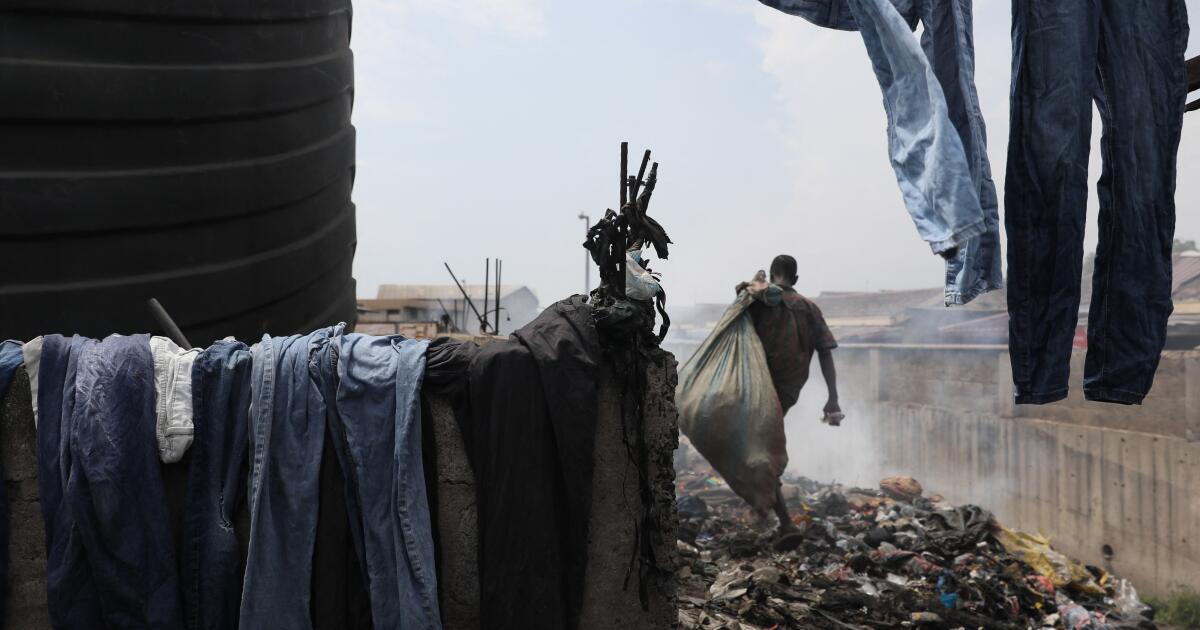
Worldwide criticism of fast fashion’s waste, labor abuses and carbon emissions has done little to slow down the industry. But new legislation could alter the flood of goods — like the floral print jumpers priced at, say, $2.99, the kids’ T-shirts selling for $4.26 or the tank tops for $4.88.
The term “fast fashion” — which emerged in the 1990s alongside Zara, a European company selling runway-inspired styles at affordable prices — has come to define trendy, low-cost clothing to wear and throw away.
The business model has been popular among shoppers and brands, which keep their inventories low, try to predict what customers want and use highly-flexible supply chains for quick turnaround. The latest iterations are epitomized by the wildly successful Chinese e-commerce platforms Shein and Temu.
A traditional retailer may offer 1,000 different styles per year, said Sheng Lu, professor and graduate director of fashion and apparel studies at the University of Delaware. Compare that to the first generation of fast-fashion brands, Zara and H&M, which put out about 20,000 per year. Shein, he added, which has garnered the label of “ultra-fast fashion,” churns out 1.5 million different styles per year.
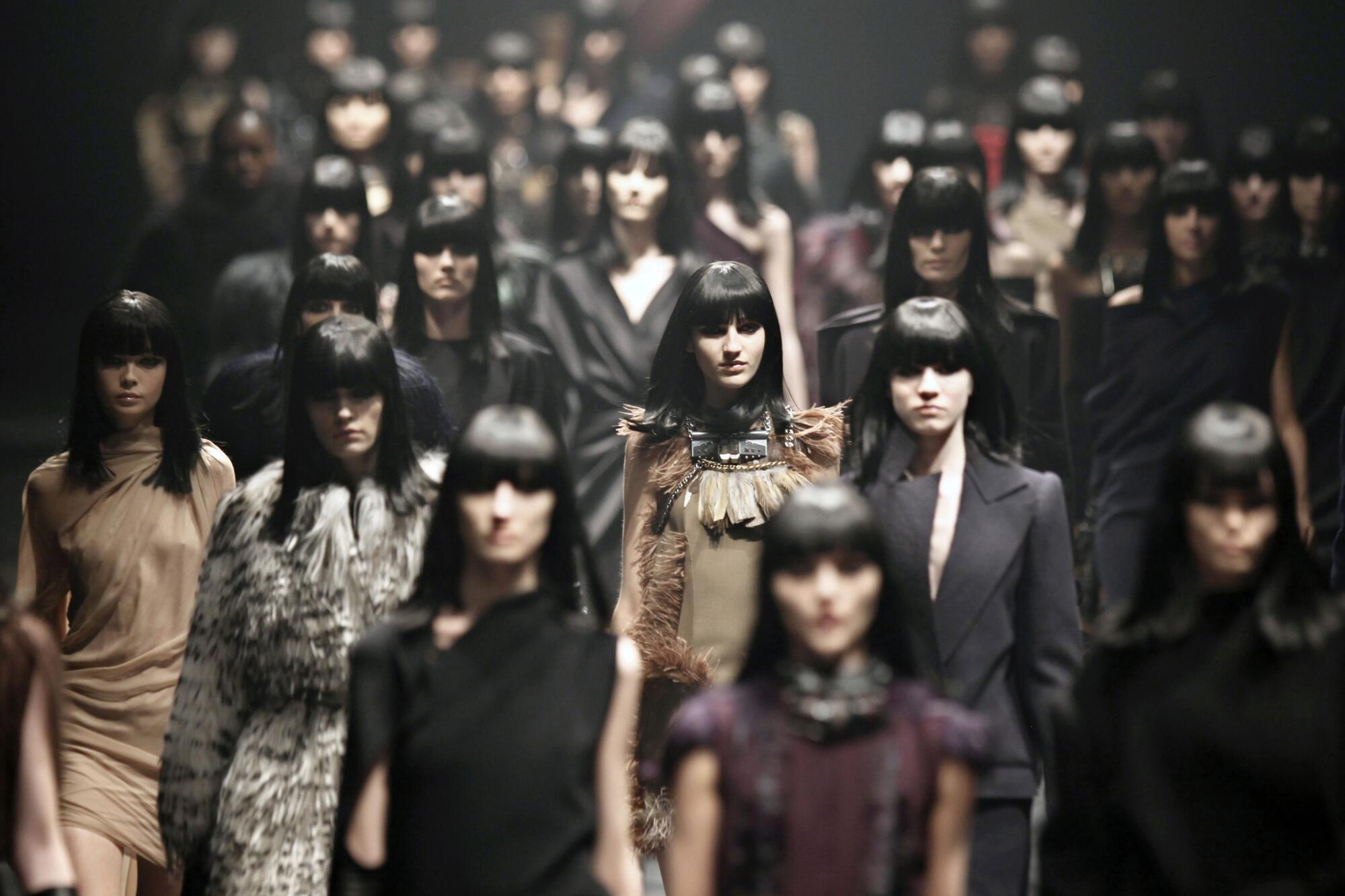
Clothing production doubled between 2000 and 2014, a consulting firm estimates, and the number of garments purchased per capita rose 60%.
(Thibault Camus / Associated Press)
According to consulting firm McKinsey & Co., which estimates the global fashion industry to be worth $1.7 trillion, clothing production doubled between 2000 and 2014, and the number of garments purchased per capita increased by 60%. At the current pace, McKinsey predicts clothing and footwear consumption will increase from 62 million tons in 2019 to 102 million tons in 2030, “equivalent to more than 500 billion additional T-shirts,” according to the Clean Clothes Campaign.
As clothing prices have plummeted — a few months ago, McKinsey reported that the average price of a product on Shein is $14, $26 at H&M and $34 at Zara — customers have fewer qualms about tossing them. Less than 1% of fashion textiles are recycled, McKinsey reported, and 3 out of every 5 garments end up in a landfill or are incinerated per year.
But as fast fashion’s popularity rises, so has the backlash against it, drawing the ire of environmental groups, labor activists and lawmakers across Europe and the United States. “The discussion on fast fashion is quickly moving from the traditional business aspect to the policy aspect,” Lu said.
Recent legislation in several countries is aimed at curbing the environmental impact of the fashion industry, whose planet-warming greenhouse gas emissions are estimated to exceed those of international flights and maritime shipping combined. McKinsey estimates that the fashion industry accounts for between 3% and 8% of the world’s greenhouse gas emissions, and could increase by another 30% by 2030.
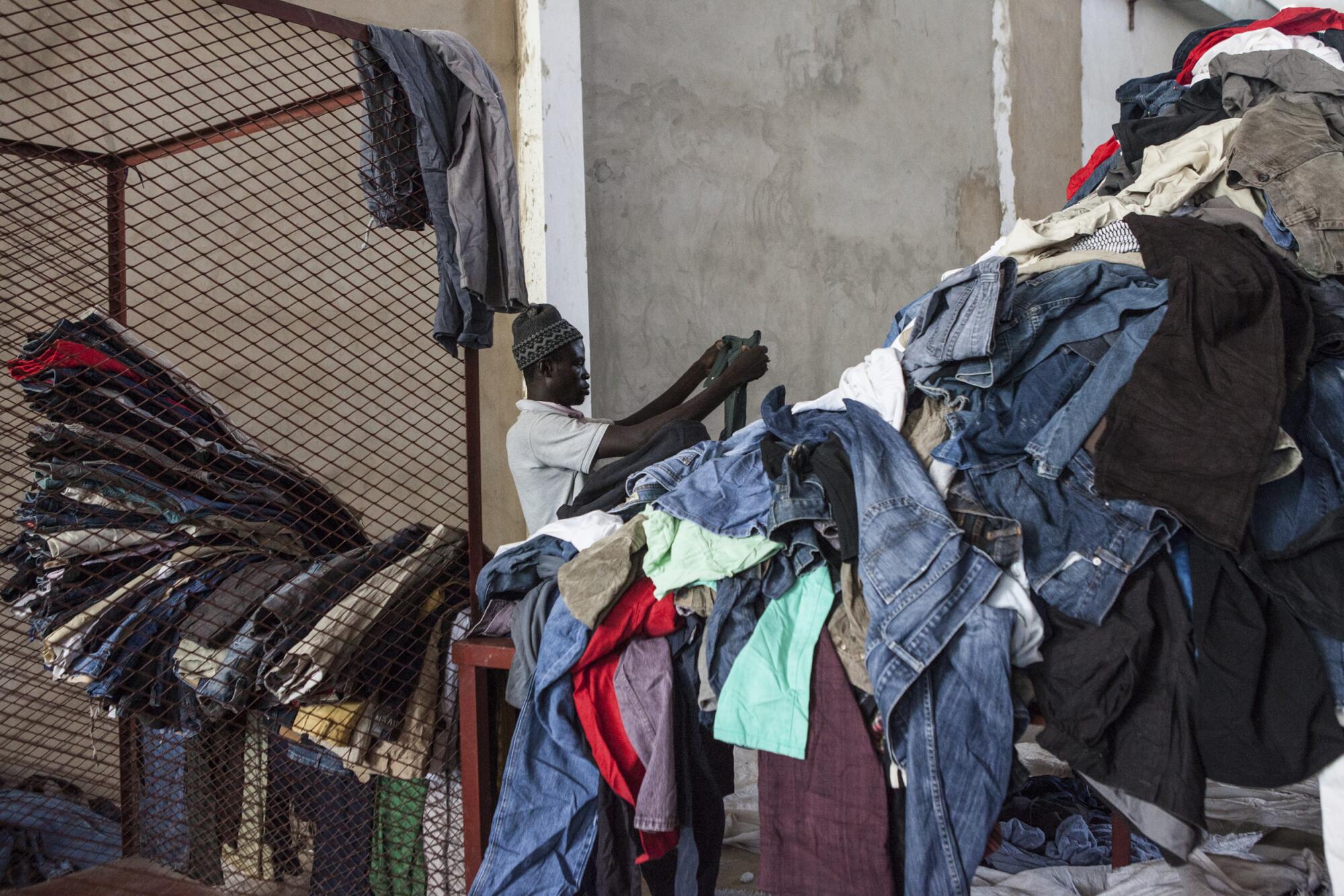
Dame Sall sorts and folds secondhand jeans imported from Italy at a warehouse in Dakar, Senegal. Secondhand T-shirts, jeans and dresses are piled high for blocks along the busy streets in Dakar’s Colobane neighborhood, where people buy them at a fraction of their original price.
(Jane Hahn / Associated Press)
France is leading the effort to push back against fast fashion. In March, the lower house of Parliament approved a bill that would ban advertising for such items and impose penalties per piece of clothing sold. France has proposed a European-Union-wide ban as well on used clothing exports to discourage discarding cheap goods that end up in landfills overseas.
New York lawmakers have crafted a bill that would require major fashion brands doing business in the state to map and disclose supply chains to avoid labor exploitation and environmental harm.
According to McKinsey’s 2024 State of Fashion report, 87% of fashion executives surveyed believe sustainability regulations will affect their business this year. “The game is changing,” Lu said. “These regulations and consumer changing behavior will really place some pressure on these fast-fashion brands.”
Shein, which uses predictive analytics to determine what clothing designs will sell best, has argued that its business model is less wasteful than traditional retailers’ because it produces only as much as customers order.
Still, those companies most associated with the phenomenon are trying to diversify their offerings to eschew the label of fast fashion and all its negative connotations.
With a new third-party marketplace, Shein customers can now find secondhand luxury goods on its site. Zara, the onetime fast-fashion pioneer, has pledged to transition to all sustainable, organic or recycled material by 2025, and incorporate offerings of higher quality and cost to its product lines.
But the influence of fast fashion isn’t going away — exemplified by the global garment supply chain, which has been altered as traditional retailers have adopted practices to increase their own speed and flexibility.
Before the advent of fast fashion, a standard piece of apparel took about two months to produce, according to Raymond Wong, a professor in the department of logistics and maritime studies at Hong Kong Polytechnic University. Now fast fashion can produce an item, from concept to delivery, in less than two weeks.
And as production capabilities have sped up, so have the life cycles of the clothing that retailers are selling. While clothing collections have traditionally been seasonal, fast-fashion brands can launch at least one new collection per month now, Wong said.
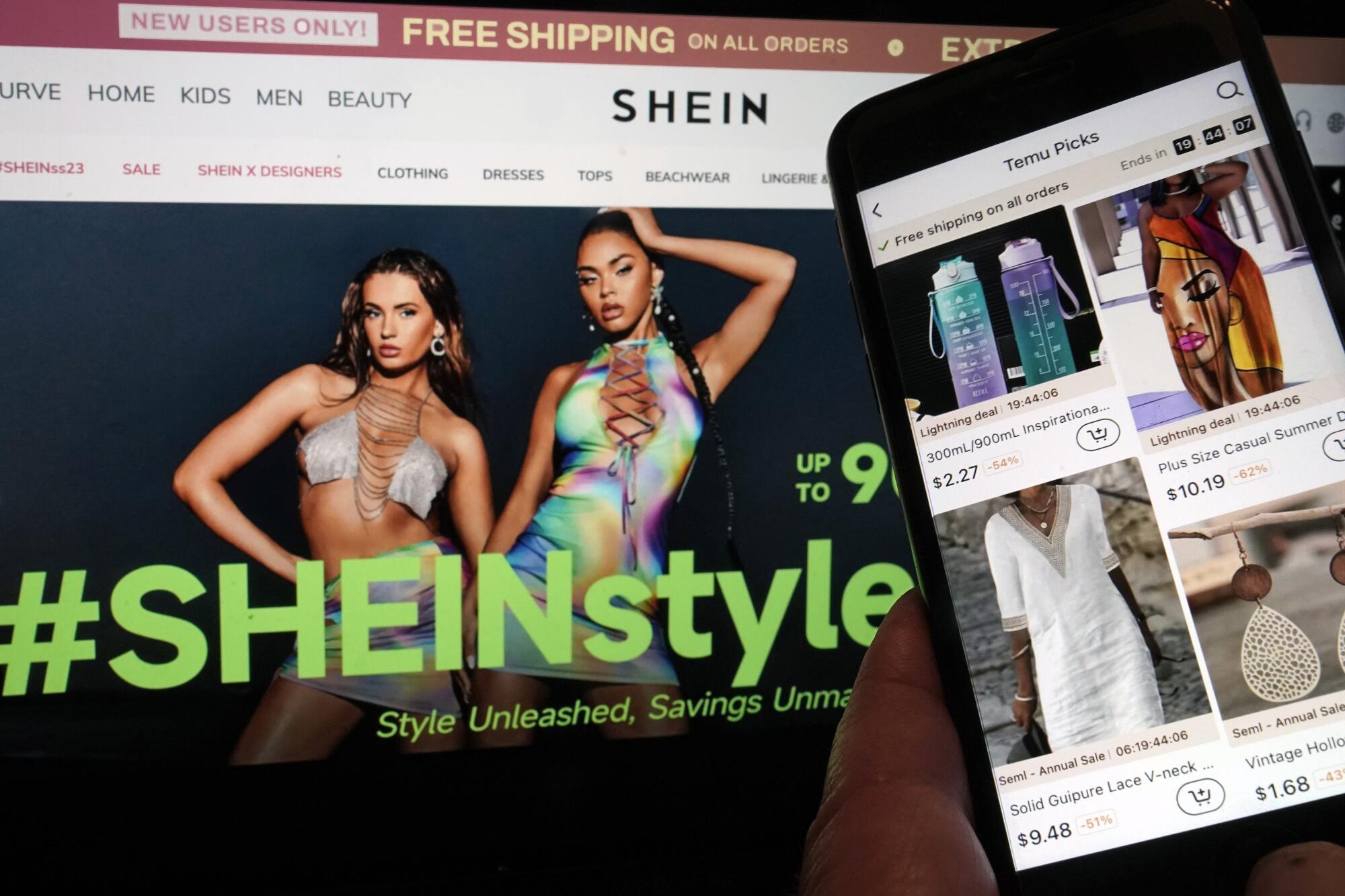
Fast-fashion sellers Shein and Temu have proved to be wildly popular in the United States.
(Richard Drew / Associated Press)
And being fast, brands have learned, pays off.
Profit margins at companies that embrace fast fashion are generally higher than traditional retailers, Wong said, because they prioritize sales volume and low-cost production. Keeping sparse inventory also means that they don’t have to offer steep discounts to offload unsold merchandise.
“This is the philosophy of the fast fashion retailer: If you can put your item in the store one day earlier, you have higher possibility and probability to sell more,” Wong said.
A more flexible production cycle means that brands are working with more vendors, manufacturers and suppliers than before. That makes assessing the supply chain for transgressions in labor and environmental standards more challenging.
Sanchita Saxena, a professor at UC Berkeley who studies labor and garment supply chains in Asia, said that while more brands are trying to improve sustainability, their cost expectations make it difficult for suppliers, many of which are taking losses on accepted orders, to take action.
The impact of fast fashion is “terrible for workers because the cycle is so quick and the turnaround time is so fast, there is no way a human being can produce the amount of goods that is required,” Saxena said. “But they’re getting incredible pressure to do that, and they’re always getting pushed on price.”
Despite concerns about the negative impacts of fast fashion and sustainability pledges, experts say consumers alone won’t have much influence in how the clothing supply chain adapts.
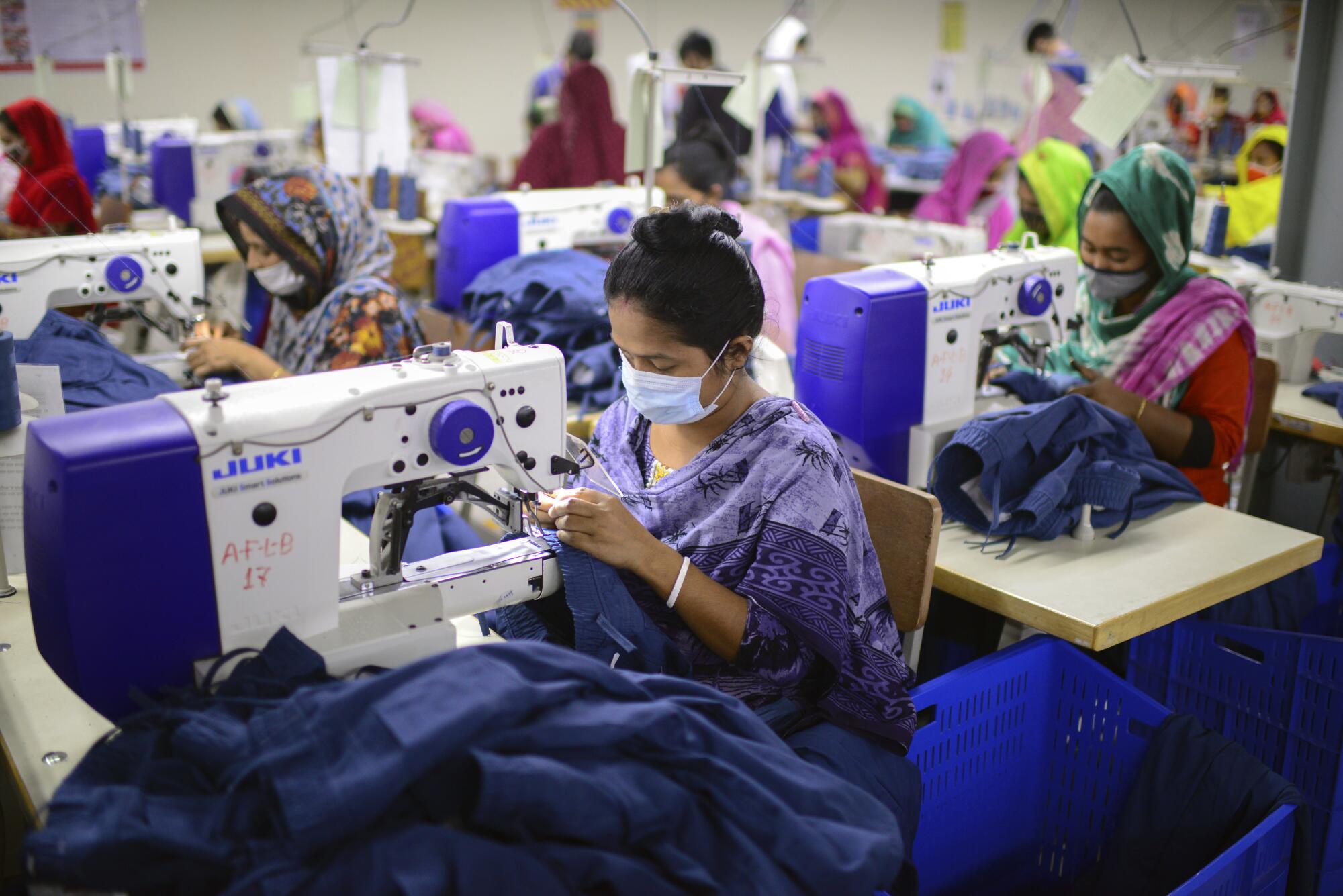
Garment employees work at Arrival Fashion Limited in Bangladesh. Critics of fast fashion have long warned consumers to stop treating clothes like throwaway items.
(Mahmud Hossain Opu / Associated Press)
“The consumer is making statements that they want to purchase more ethically and responsibly, but they’re not really showing that in the scale that is necessary to make brands act,” said Divya Demato, chief executive of San Francisco-based supply chain consulting firm GoodOps.
Temu, a low-cost shopping app that gained popularity last year, was created by the Chinese e-commerce platform Pinduoduo to tap into that price sensitivity among U.S. consumers.
According to McKinsey, 40% of U.S. consumers have shopped at Shein or Temu in the last 12 months. Many survey respondents said they intended to buy more from those fast-fashion brands in the next two to three years.
“It becomes sort of a chicken-or-egg situation. Brands say ‘Consumers want it, so we give it to them,’ and consumers say, ‘Well, brands are doing this, so we are buying it,’” Saxena said. “Which came first? I don’t know — but someone needs to stop that cycle.”
Special correspondent Huiyee Chiew in Taipei, Taiwan, contributed to this report.



As the nation marks the 250th anniversary of its founding, NPR asked students all around the country to reflect on the moment and to make podcasts about the American experience and what “life liberty and the pursuit of happiness” means to them.


We received more than 700 entries, including many conversations with immigrant parents, grandparents, aunts and uncles about why their family decided to move to the United States. Others scored high-profile interviews with veterans, government officials and even Gloria Steinem.
We listened to reenactments and retellings of histories like the Battle of Monmouth, the Stonewall riots, the Underground Railroad and a special presentation on President Theodore Roosevelt’s pets. Other podcasts take place in the present, including one in which students report on civics education in their school.
Our team chose a handful of winning entries and honorable mentions from fourth graders, middle and high schoolers. Here they are, in alphabetical order:
Winners
Abridged
Students: Grace Kepka and Angelika Garrett, Montgomery Blair High School in Silver Spring, Md.
Teacher/Sponsor: Kyle Wannen
High schooler Grace lives in Takoma Park, Md., one of the handful of cities in the United States that allow 16 year olds to vote in all local elections. In her podcast with her friend Angelika, they discuss the power of the youth vote, and how voting rights encourage residents to learn about their government and be more politically active in their communities.
Civics in Our Schools
Students: Izabella Anthony, Benjamin Baigel, Bridget Castellon, Rile DeLeon, Maxwell Gibbs, Daniel Hernandez, Malcolm Johnson, Sylpa Kafle, Mason King, Kyle Li, Maximus Lin, Emmerson Quinn, Ariella Schoenfeld, Owenize Udevbulu and Dara Widzowski, Hewlett Elementary School in Hewlett, N.Y.
Teacher/Sponsor: Jaime Harrington
“Here’s the surprising truth. Many Americans, even grownups, don’t know the basics of how our country was founded or how our government works.” In Civics in Our Schools, a group of fifth graders voice their concerns about the lack of good civics education and discuss what they can do to be better citizens.
Leaving Greece
Student: Livie Courser, Wickliffe Progressive Elementary School in Upper Arlington, Ohio
Teacher/Sponsor: Shelly Hughes
Livie interviews her grandfather about his move from Greece to the United States. “How did it feel to immigrate to the U.S.?” she asks. “Very hard. Very very hard,” he responds. He shares with his granddaughter why he took the risk, and how his move to the U.S. allowed him to work hard at a factory, dream big and eventually open up his own restaurants.
Researching the Underground Railroad
Students: Travis Bozeman and Oliver Heering, South Douglas Elementary School in Douglasville, Ga.
Teacher/Sponsor: Thomas Bruno
“Did you know around 100,000 slaves escaped using the Underground Railroad?” In a deep dive into a slice of history they learned from school, fourth graders Travis and Oliver report on the Underground Railroad. They present their research in the podcast, and weave in the expert interview they scored.
The American Dream
Student: Makayla Cheung, Mercer Island High School in Mercer Island, Wash.
Teacher/Sponsor: Lauren Schechter
In her podcast about her father, Makayla explores how different everyone’s American Dream is. Case in point, her dad moved from Hong Kong to the United States because of his talent in running. He tells Makayla he had a hard time adjusting at first and understanding his coach. But cross country, he says, didn’t require too much communication, and the sport gave him confidence and a way for him to find community and connect with other people.
The Journal
Student: Violet Maxinoski, Carmel High School in Carmel, Calif.
Teacher/Sponsor: Shelley Grahl
In an interview with her daughter Violet, Sandi Maxinoski revisits stories from her journal from the years she served in Iraq. She describes being in “cities fractured by bombings, checkpoints, smoke and uncertainty,” then returning to the United States where she felt an “intense amount of security” being able to walk down the street without the fear of something blowing up. Through these conversations, Violet discusses how the “life, liberty and happiness” she’s gotten used to shouldn’t be taken for granted.
Welcome Home, Grandpa
Student: Ursula Koestner, Roslyn High School in Roslyn Heights, N.Y.
Teacher/Sponsor: Matthew Vogt
“The Vietnam War destroyed more than it saved, even decades after its end,” high schooler Ursula says in her podcast. “My grandfather remains one of its victims despite returning home alive.” In her moving podcast, Ursula shares her family’s story and explores the generational trauma and lasting impact the Vietnam War has on veterans.
Honorable Mentions
America the Beautiful
Students: Pareena Gupta and Vidushee Bala, Amador Valley High School in Pleasanton, Calif.
Teacher/Sponsor: Stacey Sklar
America: The Ups and the Downs
Student: Alana Burwell, The Waldorf School of Philadelphia, Philadelphia, Pa.
Teacher/Sponsor: Anyta Thomas
America’s New Favorite Sport-Girls’ Flag Football
Students: Josephine Barry-Kao and Malcolm Barry-Kao, Lowell High School in San Francisco, Calif.
Teacher/Sponsor: Jacqueline Moses
An Intro to Differing Perspectives
Student: Waylon Heikinen, Ingomar Middle School in Franklin Park, Pa.
Teacher/Sponsor: Heath Gamache
Becoming American
Students: Karolina Zientek, James Gearhart, Andrea Vezmar, Troy Murray and August Hutchison, Greenwich High School in Greenwich, Conn.
Teacher/Sponsor: Lukasz Zientek
Before You Drop A Track: America’s 250th Anniversary
Student: Lukas Boulom, Public Academy For Performing Arts in Albuquerque, N.M.
Teacher/Sponsor: Su Hudson
Dawg Talk | Are we equal now?
Students: Makenna Aniszewski, Trinlee Leitner, Nagamoshitha Manivannan, Nethra Prabhu, Vaishnavi Tiwari and Sophia Van Dorn, Otwell Middle School in Cumming, Ga.
Teacher/Sponsor: David Miller
Democracy for Everyone or No One
Student: Jeju Daisy Ahn-Miles, Punahou School in Honolulu, Hawaii
Teacher/Sponsor: Christine Ahn
Everything Given Forward
Student: Lara Leon, Mountain View High School in Mountain View, Calif.
Teacher/Sponsor: Tom Chang
Fifty Stars, One Banner
Student: Naina Dhillon, Khan Lab School in Palo Alto, Calif.
Teacher/Sponsor: Emily Lindsey
Freedom’s Shore
Student: Dipa Chéry, The Kinkaid School in Houston, Texas
Teacher/Sponsor: Olen Rambow
From One Immigrant To Another
Student: Afomia Lemma, St. Mary’s Lynn in Lynn, Mass.
Teacher/Sponsor: Tiringo Endalamaw
Hope and Resistance
Student: Zinnia Bender, North Fork High School in Hotchkiss, Colo.
Teacher/Sponsor: Clara Pena
How Is My Life Like In US
Student: Yicheng Sun, Rectory School in Pomfret, Conn.
Teacher/Sponsor: Andrew Barker
Life of a Soldier
Students: Della Axelband, Peyton Johnson, Lily Epstein and Lilly Murillo, Jupiter Middle School in Jupiter, Fla.
Teacher/Sponsor: Sireesha Rutter
More Than A Photograph
Student: Josie Sloan-Westmoreland, The Learning Community School in Swannanoa, N.C.
Teacher/Sponsor: David Bird
Moving From Country to Country
Students: Ida Buerckert, Daniella Cubas, Ayano Enishi and Anastaiia Koshyk, Irving A. Robbins Middle School in Farmington, Conn.
Teacher/Sponsor: Alysson Olsen
Picketts Charge
Student: Zoe Snyder, Susquenita High School in Duncannon, Pa.
Teacher/Sponsor: Terrance Shepler
“So What??”
Student: Caroline Harris, Marin Academy in San Rafael, Calif.
Teacher/Sponsor: Kelly Kurtzig
Somewhere Over the Rainbow
Student: Lark (Miles) Jackman, Public Academy For Performing Arts in Albuquerque, N.M.
Teacher/Sponsor: Su Hudson
Teddy Roosevelt and His Pets
Student: Abbott Mearns and Keaton Rainwater, College Place Middle School in Lynnwood, Wash.
Teacher/Sponsor: Colindra Connolly
The Battle of Monmouth: A Twist on History
Students: Leonardo, Zinna and Kaiden, Marlboro Middle School in Marlboro, N.J.
Teacher/Sponsor: Tara Meara
The Freedom to Fail
Students: Abraham Coher and William Pan, Polytechnic School in Pasadena, Calif.
Teacher/Sponsor: Aliya Coher
The Government Exodus: Why Federal Workers Resign
Student: Anna Su, Montgomery Blair High School in Silver Spring, Md.
Teacher/Sponsor: Kyle Wannen
The Name I Chose Polly Bemis (September 11, 1853 – November 6, 1933)
Student: Jubilee Sung, Imaginate Ink in Irvine, Calif.
Teacher/Sponsor: Clarissa Ngo
The Pig and Potato Podcast
Student: Petra Rouhana, Maryvale Preparatory School in Lutherville, Md.
Teacher/Sponsor: Deirdre McAllister
The Small Pond of Peace
Students: Noam Dekel, Ronnie Dekel, Ian Rodriguez, Leonardo Leon-Espinoza, Singary Fofana, Ashly Arboleda-Osorio, Olumide Martin and Salma Elshaarawi, P.S. 333 Manhattan School for Children in New York, N.Y.
Teacher/Sponsor: Karin Patterson
to be united as citizens
Student: Josh Langlois, Cloverleaf Home Education in Highlands Ranch, Colo.
Teacher/Sponsor: Tony Winger
Two Worlds, One Dream
Student: Allayar Maratov, Rectory School in Pomfret, Conn.
Teacher/Sponsor: Andrew Barker
What is Home?
Student: Siobhan Allen, The Hewitt School in New York, N.Y.
Teacher/Sponsor: Jonathan Sabol

Sunday Puzzle
NPR
hide caption
toggle caption
NPR

On-air challenge
I’m going to give you two five-letter words. Add the same two letters at the end of the first one and the start of the second one, in each case to complete a familiar seven-letter word.
Ex. Later Ready –> LATERAL/ALREADY
1. Habit Tempt
2. Laten Press
3. Blank Ching
4. Since Venue
5. Shack Groom
6. Surge Stage
Last week’s challenge
Last week’s challenge came from Rawson Sheinberg. of Plymouth, Mich. Think of a U.S. city with a two-word name. Add a letter to the first word, without rearranging letters, to name a country. Then, without adding a letter, rearrange the letters of the second word to name another country. What places are these?
Answer: Los Angeles –> Laos, Senegal
Winner
Elaine Neel of Derby, Kansas.
This week’s challenge
Next weekend will be the 186th convention of the National Puzzler League, in Bloomington, Ind., which I’ll be attending as always. Two other people who will be there are Henri Picciotto and Joshua Kosman, who created this week’s challenge. Name two words that are opposites. They share a single letter. Remove that shared letter from each word, put a hyphen between the two starting words, and you’ll get a term you sometimes see in food ads. What are the two words?
If you know the answer to the challenge, submit it here by Thursday, July 9 at 3 p.m. ET. Listeners whose answers are selected win a chance to play the on-air puzzle. Important: include a phone number where we can reach you.
-

 World5 minutes ago
Experts ‘deeply’ concerned over Iran’s work at underground nuclear site
-

 Politics12 minutes ago
Trump shares news of ‘crystal clear’ Reflecting Pool, calls for vandalism suspect’s arrest
-

 Health15 minutes ago
How a 93-year-old soccer referee credits wartime rations and discipline for his longevity
-

 Sports20 minutes ago
England stuns Mexico 3-2 in instant World Cup classic, hands team first World Cup loss at Estadio Azteca
-
 Business30 minutes ago
FDA escalates recall of Utz brand potato chips before July Fourth holiday
-
 Entertainment35 minutes ago
Inside the all-star America250 concert at the L.A. Coliseum
-

 Lifestyle42 minutes ago
Luxury Clients Want Meaning More Than Status
-
 Politics45 minutes ago
Commentary: Even in ugly times, the bicentennial united us. America 250 still can

